Teleport your device anywhere instantly with one click.


 100% Security Verified | No Subscription Required | No Malware

 :

 ChatGPT
 Perplexity
 Gemini
 Claude
 Grok
A Mythical Pokémon is not simply a Legendary Pokémon that is harder to find. Mythical is a distinct franchise designation, traditionally associated with special distributions or unusual acquisition conditions. In Pokémon GO, a species may require a particular research story, a qualifying event or another dedicated mechanic. Moving to a famous coordinate does not create that eligibility.
This 2026 reference organizes the 23 distinct species in the list below, from Mew through Pecharunt, and explains how to evaluate a legitimate acquisition route. It corrects two errors in the source: the displayed species add up to 23 rather than 24, and Pecharunt belongs in Generation IX, not Generation VIII. The species list is not a claim that every entry is currently obtainable in Pokémon GO.
In this article
Part 1: What Makes a Pokémon Mythical?
The label describes a Pokémon's classification across the franchise, not its current encounter rate. Historically, many Mythicals reached players through official promotions, distribution codes or special events rather than ordinary wild encounters. Later games can provide different routes, so 'event-only forever' is too broad a definition.
Legendary Pokémon and Mythical Pokémon both feature prominently in the series' stories, but the terms are not interchangeable. Rarity, strength and a dramatic backstory do not independently determine the category. Likewise, an event encounter in Pokémon GO does not turn an otherwise ordinary species into a Mythical.
For collection planning, ask three separate questions: which species is it, which game are you playing, and what acquisition method is available to your account? Research rewards in GO and Mystery Gift distributions on a console follow different rules. Neither a National Pokédex entry nor a character's appearance in a movie proves current availability in your game.

Part 2: Mythical Pokémon by Generation
The following table counts species once, regardless of alternate forms. Its membership and generation assignments were cross-checked against the accessible Double Holo Mythical reference, a secondary source. It is a franchise checklist, not a live schedule of raids, gifts or ticketed research.
| Debut generation | Species included | Species count |
|---|---|---|
| I | Mew | 1 |
| II | Celebi | 1 |
| III | Jirachi; Deoxys | 2 |
| IV | Phione; Manaphy; Darkrai; Shaymin; Arceus | 5 |
| V | Victini; Keldeo; Meloetta; Genesect | 4 |
| VI | Diancie; Hoopa; Volcanion | 3 |
| VII | Magearna; Marshadow; Zeraora; Meltan; Melmetal | 5 |
| VIII | Zarude | 1 |
| IX | Pecharunt | 1 |
The nine row counts total 23. Deoxys formes, Shaymin formes and Hoopa forms do not add extra species to that calculation. Phione and Melmetal are included in this checklist; breeding or evolution mechanics do not justify adding an unlisted twenty-fourth name.
Generation describes introduction to the franchise, not release into GO. Meltan and Melmetal's association with Pokémon GO does not mean every other member of their generation shares the same acquisition method. Before pursuing an entry, check its own game-specific announcement instead of assuming the entire table is catchable now.
Part 3: Key Mythical Pokémon and Their Distinctive Features
Names and lore are useful for identifying the creature you want, but fictional powers do not describe a guaranteed game reward. The following profiles preserve the source's featured groups while separating story details from collection advice.
Mew, Celebi and Jirachi: Early Mythical Icons
Mew is the Psychic-type associated with the beginning of the Mythical category. Pokédex lore links it to the genetic material of other Pokémon. The long-standing story about finding Mew under the truck near the S.S. Anne is a player rumor, not a dependable acquisition instruction. In GO, look at the research assigned to your account rather than expecting an ordinary map spawn.

Celebi combines Psychic and Grass typing and is associated with forests and time travel in the series' fiction. Its Johto and Ilex Forest connections explain its imagery, not a requirement to visit a real forest coordinate. The research story A Ripple in Time is a source example of a GO acquisition path; account eligibility and task progression still need checking in the game.

Jirachi is the Steel/Psychic Wish Pokémon. Its story describes a long sleep and a brief awakening during which wishes can be granted. Those narrative intervals are not an event timetable for players. When searching for Jirachi, identify the exact game and research or distribution involved rather than assuming an old gift code or a lore description is still actionable.

Deoxys, Darkrai and Arceus: Forms, Dreams and Creation Lore
Deoxys is a Psychic-type whose origin story involves a space virus altered by laser exposure. Its Normal, Attack, Defense and Speed formes emphasize different characteristics, but remain one species for this list. If an event offers Deoxys, check which forme it names instead of assuming a single encounter automatically supplies all four.

Darkrai, a Dark-type called the Pitch-Black Pokémon, is associated with nightmares and contrasted with Cresselia in the series' stories. Its Mythical classification should not be collapsed into the phrase 'Legendary Mythical'. Collection opportunities depend on the particular game and event; a past appearance is not proof of an encounter window today.

Arceus is associated with creation myths and is normally Normal-type. In relevant main-series mechanics, its Multitype ability and Plates affect its type. That detail belongs to those games; it does not describe a GO location trick or prove that Arceus is available to catch there. Always separate a franchise profile from a live mobile-game availability claim.

The retained illustration above is labelled Shaymin in the source image metadata. It remains a separate Generation IV illustration rather than being presented as a verified picture of Arceus.
Meltan, Melmetal and Zarude, with Marshadow
Meltan and Melmetal are Steel-type Mythicals strongly associated with Pokémon GO. Meltan's liquid-metal design develops into Melmetal through evolution: the GO cost described in the source is 400 Meltan Candy. Count them as two species, but do not assume that this evolution can be performed in every other game that can store or receive them.

The official Mystery Box explanation provides a specific Meltan mechanic: sending a Pokémon from GO to a supported Let's Go game or Pokémon HOME can provide the box, which temporarily causes Meltan to appear. Follow its current activation instructions; it is not an unlimited encounter guarantee.
Marshadow is a Fighting/Ghost-type associated with moving through shadows and imitating what it observes. That fictional behavior is useful for recognizing its theme, not a hidden movement mechanic for your phone. A Sun and Moon-era introduction does not establish a current distribution, and no new claim window is asserted here.

Zarude is the Dark/Grass Rogue Monkey Pokémon associated with Sword and Shield. Its forest-dwelling groups, vines and Dada appearance contribute to its story, including its connection with Secrets of the Jungle. An alternate appearance is not another species in the count. Check a current official announcement for your game rather than buying an expired promotional code on the assumption that it still works.

Part 4: Practical Ways to Work Toward Mythical Pokémon
The useful strategy is to identify the required mechanic before spending time, travel money or research-ticket fees. A rare category does not have one universal catching method, and a location changer cannot turn an unavailable distribution into an active one.

Step 1 Check the research actually assigned to your account
Open your GO research and read the complete task chain. A Mythical Discovery for Mew and A Ripple in Time for Celebi are examples from the source. Progress through the requirements shown rather than relying on a generic checklist. If a story is not present, investigate its eligibility instead of assuming another GPS position will add it.
Step 2 Verify each limited event before participating
Use official in-game news and event announcements to identify the species, dates, time zone, ticket requirements and claim conditions. GO Fest and anniversary events can provide special opportunities, but a familiar event name does not mean the same Mythical returns every time. Distinguish an encounter reward from a chance, a cosmetic item or a research unlock.
Step 3 Use the correct console-game acquisition route
For Sword and Shield, Scarlet and Violet or another main-series game, inspect that title's own distribution instructions. Mystery Gift may involve an online delivery or a code with a claim deadline; other titles can have in-game routes and prerequisites. A GO research reward and a console gift are not interchangeable. Never treat an old code list as proof that a gift remains available.
Step 4 Plan permitted exploration around the task
If a task involves new PokéStops or a particular activity, identify safe, publicly accessible places and use the game's allowed methods. Do not trespass or rely on simulated distance as guaranteed progress. Physical access requirements, event eligibility and research assignment are separate issues; changing reported coordinates does not solve all three.
For a separate, authorized demonstration of how an app reads coordinates, a GPS utility can be relevant. That is different from promising a method to collect research rewards remotely.
 Set your map route to simulate GPS movement.
- Set your wanted movement speed.
- HD and large map view to check location.
- Fake GPS location to anywhere.
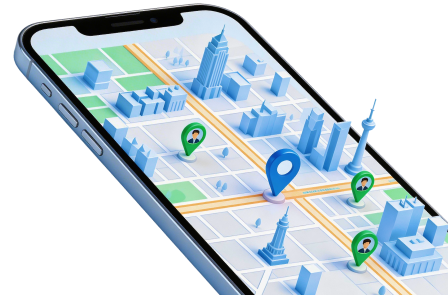
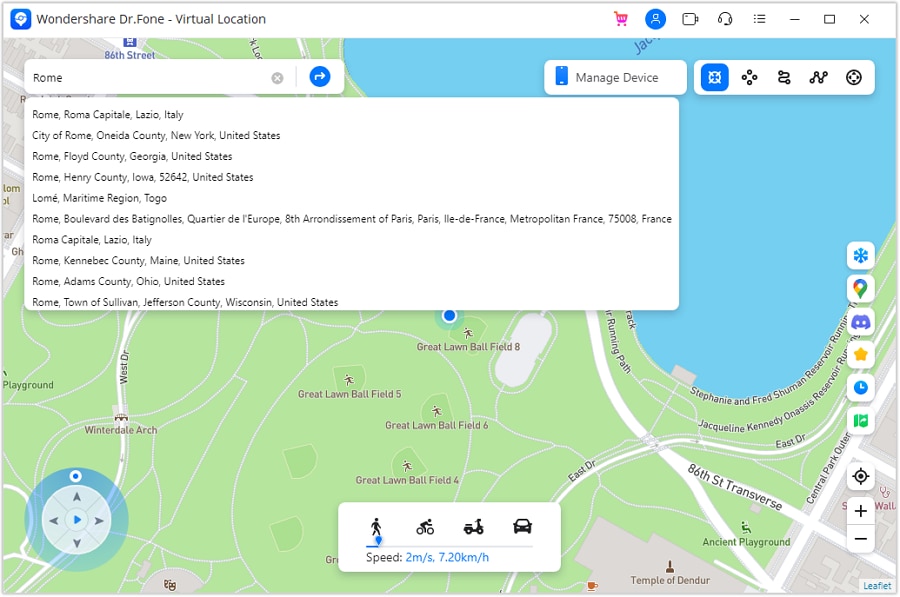
Dr.Fone - Virtual Location provides map-point selection, route simulation, configurable speeds and GPX handling on supported configurations. These features can help reproduce a location test on your own device, but cannot create a Mythical encounter, unlock paid research or alter a console game's save data.
The developer explicitly excludes Pokémon GO from Android support. Its iOS marketing does not override the game's fairness policy, which identifies GPS falsification as cheating. No route speed or cooldown reminder guarantees protection from account action.
Step 1 Prepare an allowed location test
Check that your phone and desktop system are supported, and choose an app or demonstration that permits mock coordinates. Do not connect a device without its owner's consent.
Step 2 Establish the device connection
Open Virtual Location, connect the unlocked phone and complete the displayed trust and connection prompts. Confirm that the program recognizes the intended device before proceeding.
Step 3 Review the point or route
Search for the intended location or prepare the supported route mode. Inspect the selected coordinates before applying the simulation, then observe the result only in your authorized test app.
Step 4 End the test and verify genuine GPS
Stop the simulation and confirm your actual position before navigation, live-location sharing or another location-sensitive activity. If an app rejects the mock reading, record that limitation instead of assuming every service must accept it.
The location-testing workflow is complete at this point. It is not a Mythical-catching shortcut, and its download options do not establish support for research manipulation or an otherwise unsupported game.




Conclusion
Use the generation table to identify a species, then use the game's current research, event or distribution instructions to find its acquisition route. This checklist contains 23 species through Pecharunt, correctly separated across nine debut generations. Lore, alternate forms and GPS simulation should not be confused with new species or live encounter availability. A verified requirement is more useful than a promised shortcut, especially when an account or paid event is involved.
FAQ
1. What distinguishes a Mythical Pokémon from a Legendary?
They are distinct franchise designations. Mythicals have traditionally been associated with special distributions and unusual acquisition conditions, but the exact method varies by game. Rarity alone does not determine the label.2. Can Mythical Pokémon be traded in Pokémon GO?
The official trading guide states that Mythicals such as Mew cannot be traded. Do not assume every species has identical exceptions: verify the specific Pokémon in the game's trade screen and current rules before arranging a trade or spending resources.3. Why does this list contain 23 rather than 24 species?
The listed names total 23 when each species is counted once. Pecharunt is placed in Generation IX, Zarude in VIII, and alternate forms are not counted as additional species. The source's total of 24 did not match its own names.4. Will changing GPS unlock a missing Mythical encounter?
No. Research eligibility, event windows and game availability remain separate requirements. Pokémon GO prohibits location falsification, and Dr.Fone's Android support explicitly excludes that game.
 Add Wondershare Dr.Fone as a preferred source on Google