Teleport your device anywhere instantly with one click.


 100% Security Verified | No Subscription Required | No Malware

 :

 ChatGPT
 Perplexity
 Gemini
 Claude
 Grok
'GPS signal not found. (11)' means Pokémon GO is not receiving a usable position from your phone. It is not, by itself, proof that the account is banned or the GPS hardware has failed. A frozen Trainer, missing nearby encounters or inaccessible PokéStops can all follow from that same positioning problem.
First check permission and reception, then compare the result in another map app. The useful question is whether only Pokémon GO is affected or the entire phone has lost its location. Network access, software state and old mock-location settings also deserve a check. On Android and iPhone, the menu paths differ even when the underlying diagnosis is similar.
This troubleshooting sequence separates repeatable settings checks from community suggestions. In particular, changing DNS is not equivalent to repairing GPS, and simulating a location is a different task from restoring genuine positioning.
In this article
Part 1. Why Pokémon GO cannot obtain your GPS position
A phone estimates location from more than a single signal. Satellite data, available wireless networks and device sensors can contribute, subject to the operating system's settings. The game then needs permission to use that estimate and connectivity to update its map. Failure at one layer does not identify which layer is responsible.
1. Reception is obstructed or unstable
Basements, covered garages, tunnels and the spaces between tall buildings can interrupt or distort satellite reception. A strong mobile-data indicator does not establish a strong GPS fix. Move to a safe outdoor spot with a clearer sky view and wait for the location estimate to settle before repeating the test.
2. The phone itself reports an inaccurate position
Open Google Maps or another trusted mapping app while standing still. Compare the displayed position with your actual surroundings. If both that app and Pokémon GO are wrong, investigate device-level location services and reception first. A problem across several apps, even outdoors, is more suggestive of a phone issue than one isolated to the game.
3. Location access or accuracy settings are restricted
The device-wide Location switch and Pokémon GO's individual permission are separate controls. Enabling only one is not enough. On supported Android versions, also inspect Precise Location and Google Location Accuracy. Google explains that its accuracy service can combine GPS, Wi-Fi, cellular signals and sensors; reducing those inputs may make indoor estimates less reliable.
Connectivity is another separate dependency. A map that cannot refresh over a failing data connection may resemble a positioning failure, so test permission and network access independently.
4. A mock-location provider remains selected
If you previously tested simulated locations on Android, stop that test app and inspect Developer Options for the selected mock-location app. Clear an unwanted provider, restore genuine positioning and restart the game. Do not select a different spoofing tool as an error-11 repair.
Change one relevant setting at a time. That makes it possible to distinguish a real fix from an unrelated change that happened just before reception improved.
Part 2. Troubleshoot error 11 on Android and iPhone
Use the platform-specific checks below, beginning with location permission and an outdoor test. Keep note of whether the problem happens on Wi-Fi, mobile data or both. Updating and restarting are reasonable low-disruption steps; changing network identity or adding a third-party profile should not be the default response.
2.1. Android checks and the limits of community workarounds
1. Treat switching from randomized MAC to device MAC as an optional network test
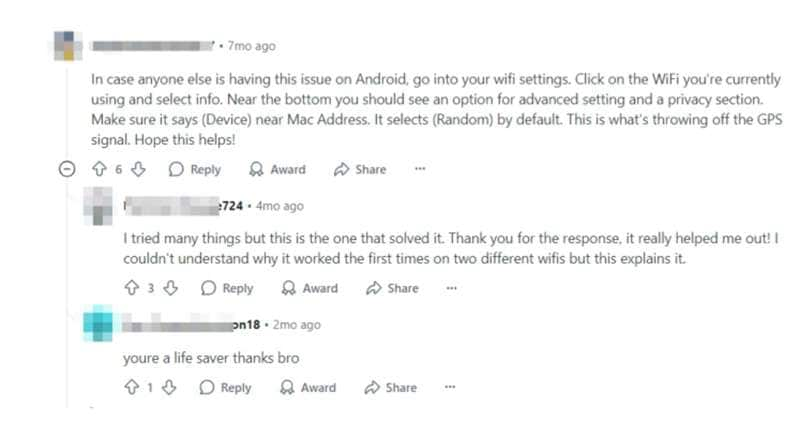
The source includes player reports that disabling MAC randomization helped on a particular Wi-Fi network. This is anecdotal, not an established satellite-reception fix. A MAC address identifies a network interface to the local network; it is not your GPS coordinate. Retain the privacy-preserving default unless you have a clear network-specific reason to compare settings.
Step 1 Inspect the Wi-Fi settings
Open the phone's Wi-Fi panel and record which network is in use.
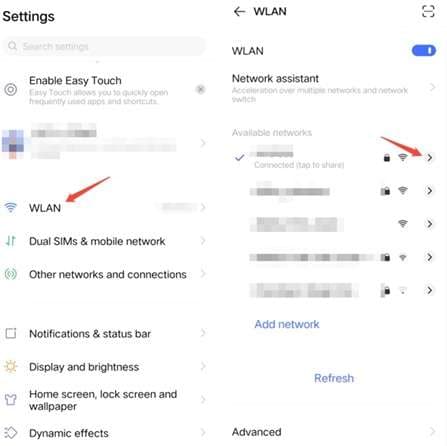
Step 2 Select that network's details
Do not modify every saved network; this test concerns only the connection associated with the issue.
Step 3 Find the privacy control
Look for MAC address type or Privacy. Labels vary by manufacturer.
Step 4 Compare the device address only if appropriate
Record the existing Randomized MAC selection before temporarily choosing Device MAC. The latter makes the device's network identity more persistent to that network.
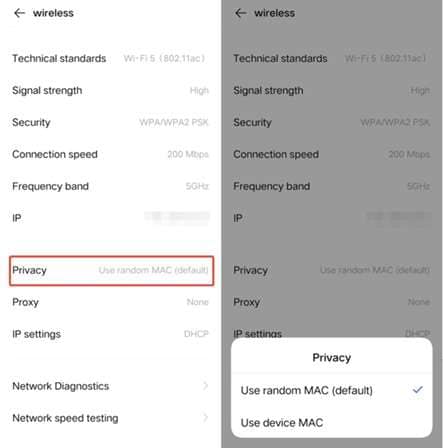
Step 5 Reconnect and compare
Rejoin the network and retest. If there is no clear benefit, restore the previous privacy setting rather than leaving a speculative change enabled.
The original community illustration is retained below as a report, not laboratory evidence. Improvement after a reconnect could have several causes and should not be advertised as a guaranteed cure.
2. Restore the game's location permission
Check both the system Location switch and the app-specific permission. Use these steps to reach the latter; your phone may use slightly different labels.
Step 1 Enter Settings
Search for Location if the device-wide switch is difficult to find, and ensure it is enabled.
Step 2 Open the installed-app list
Choose Apps or the equivalent application-management page.
Step 3 Find Pokémon GO
Select the game rather than another app with similar branding.
Step 4 Review Permissions
A denied location permission blocks normal in-game positioning.
Step 5 Allow appropriate location access
Enable location while using the app and turn on Precise Location where offered. Reopen the game after changing the setting.
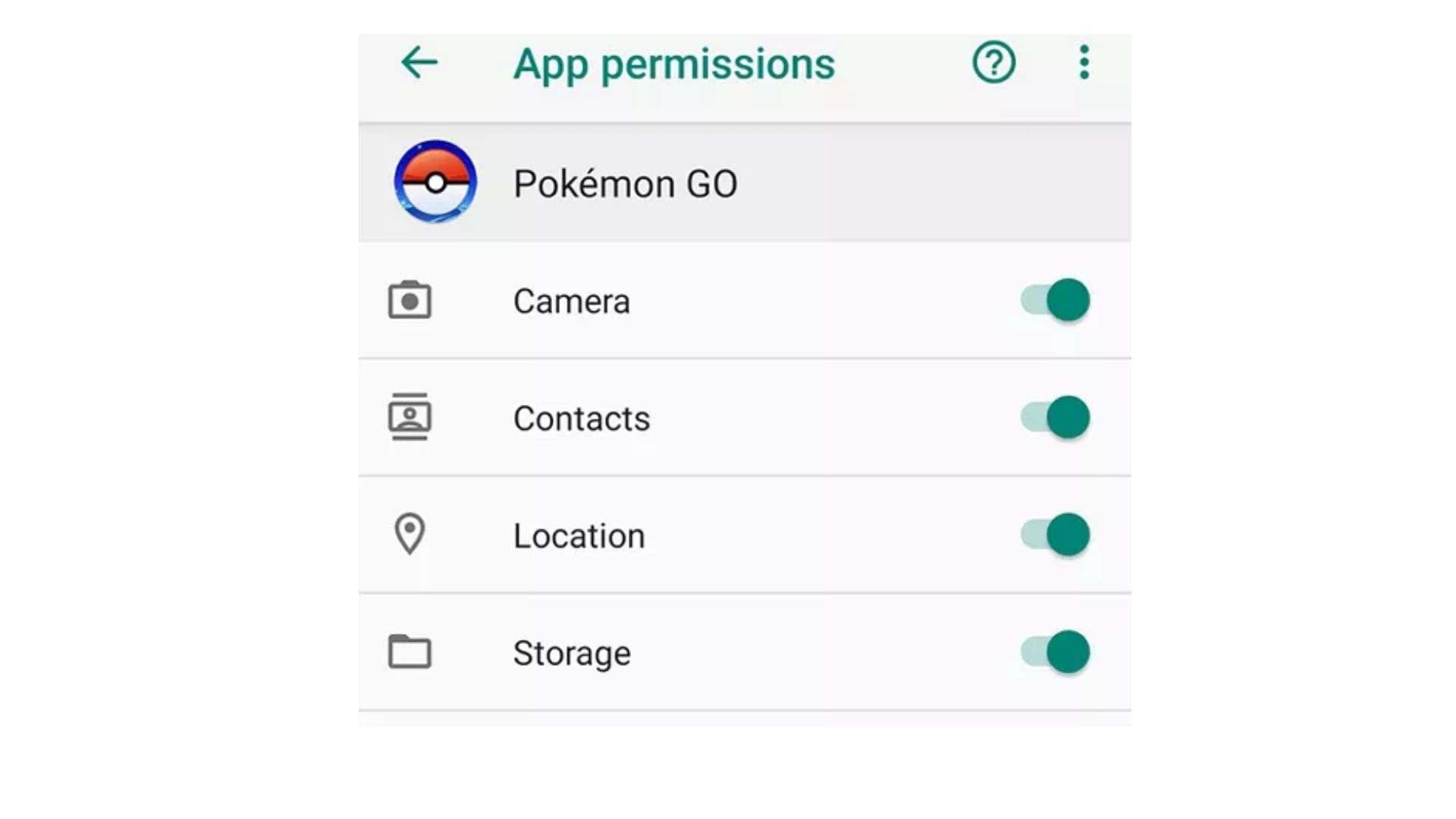
Separately inspect Google Location Accuracy under the system Location settings. Enabling additional positioning inputs can help when satellite reception alone is insufficient; it cannot overcome every hardware fault or obstruction.
3. Install an available Pokémon GO update
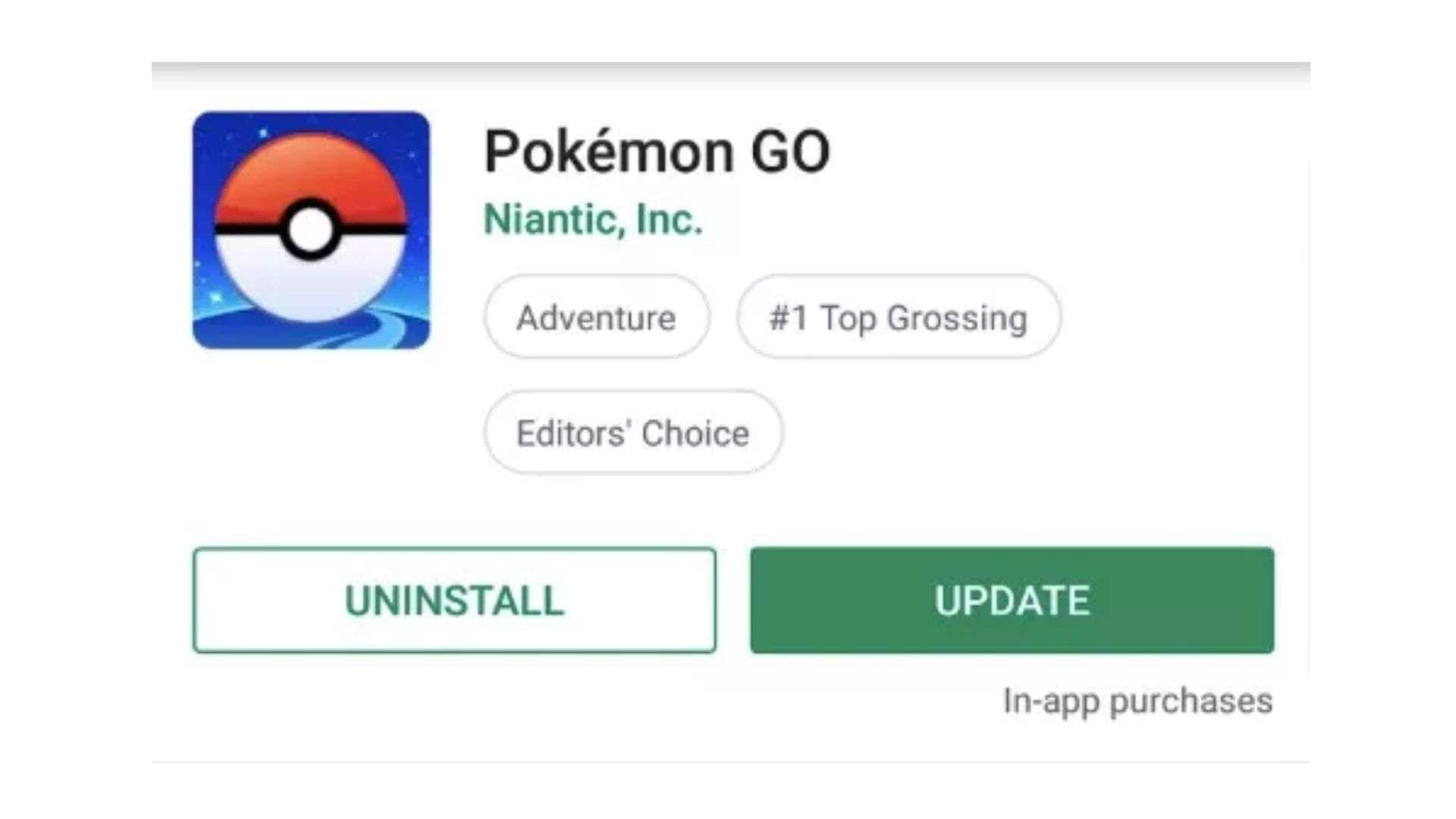
Find Pokémon GO in Google Play, confirm that it is the official listing and select Update when available. Relaunch afterward. An update addresses app-version compatibility and known software issues; it does not prove that the GPS sensor was the problem.

The mobile app's source-described functions include selecting a destination, searching across the map, revisiting saved locations and changing the reported coordinate directly on the phone without a desktop session.
- Set a simulated point for a permitted test.
- Search another region on the map.
- Check behavior in a supported social or location-based app.
- Manage previously used test destinations.
- Perform the mobile workflow without attaching a computer.
Do not infer Pokémon GO compatibility from those general capabilities. Keep real coordinates for game troubleshooting, live sharing and navigation; use an app's own sharing controls to manage privacy.
2.2. iPhone checks, plus a separate virtual-location explanation
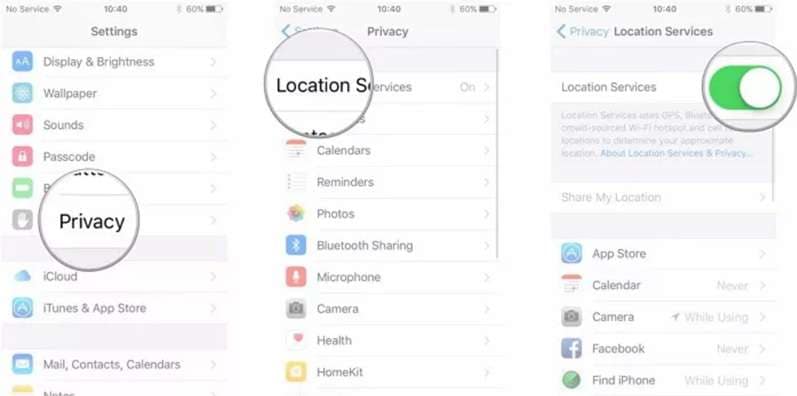
1. Enable Location Services and precise access
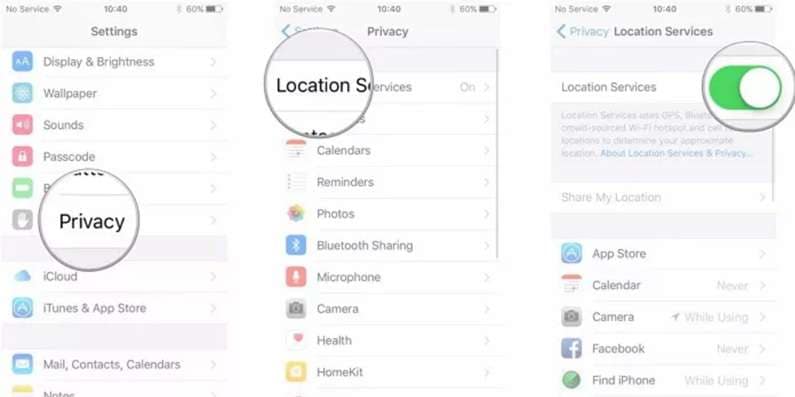
Open Settings > Privacy & Security > Location Services. Turn the master service on, select Pokémon GO and allow appropriate access while the game is being used. Inspect the Precise Location switch on that same app page. An approximate position may not be sufficient for the game's location-dependent interactions.
Apple's guidance distinguishes these per-app choices from the device-wide switch. Grant only the access needed for the feature you use; do not assume every app needs unrestricted background permission.
2. Restart before making extensive changes
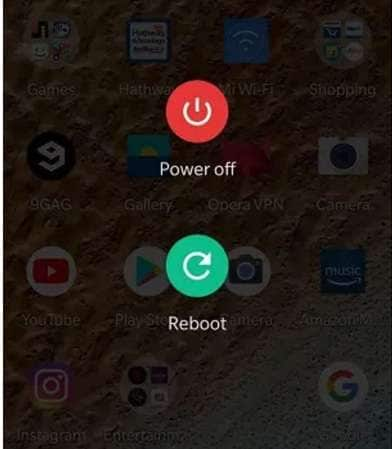
Close the game, restart the iPhone using the method for its model, then reopen Pokémon GO after the system has started. This may clear a temporary service problem. If the symptom returns immediately, repeat the outdoor map comparison instead of restarting indefinitely.
3. Evaluate the IPLocate/DNS suggestion rather than treating it as a GPS repair
The supplied IPLocate workaround is not verified as an error-11 solution. DNS resolves internet names; it does not supply a satellite position. A third-party app's name or a screenshot does not establish that it offers a trusted DNS profile, that the listed settings exist, or that installing it is necessary.
For completeness, these are the eight actions from the source and how to interpret them. They are an audit of the proposed workflow, not a recommendation to install an unverified app or configuration profile.
| Source action | What the reader should know |
|---|---|
| 1. Install IPLocate from the App Store | Installation is unnecessary for the standard permission and reception checks; the specific product and availability have not been established here. |
| 2. Grant it location access | Giving another app permission does not grant Pokémon GO permission. |
| 3. Select its DNS option | The existence and behavior of this control are unverified. |
| 4. Open iPhone DNS settings | Network-name resolution and GPS are different systems. |
| 5. Choose IPLocate as provider | Do not trust a provider or profile merely because a troubleshooting article names it. |
| 6. Revisit Location Services | This is a native iPhone setting and can be checked without the third-party installation. |
| 7. Temporarily turn Location Services off | This interrupts location-dependent apps; do not do so during navigation or another critical location task. |
| 8. Re-enable it and retest | Restore permission and compare the actual position. A successful retest alone would not prove DNS caused the original failure. |
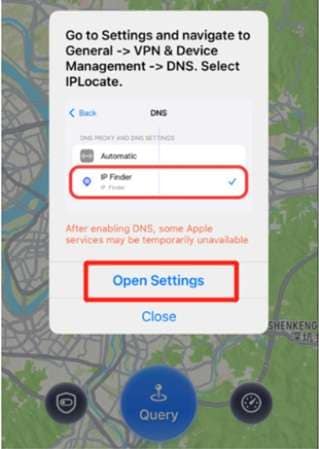
Prefer the native Location Services check and a known-good data connection. If only one Wi-Fi network fails, investigate that network with its administrator instead of installing an unfamiliar provider to repair satellite reception.
4. Understand what Dr.Fone - Virtual Location does and does not fix
 Set your map route to simulate GPS movement.
- Set your wanted movement speed.
- HD and large map view to check location.
- Fake GPS location to anywhere.
Dr.Fone - Virtual Location is a coordinate-simulation tool for supported devices. Teleporting changes a reported position; route and joystick controls simulate movement. Those features can serve permitted location testing, but they do not repair an antenna, restore missing permission or guarantee that Pokémon GO will accept a position.
Its current official page specifically says Android Virtual Location does not support Pokémon GO. iPhone marketing likewise does not establish enforcement immunity or compatibility with every game update. For error 11, restore the genuine location rather than masking the fault with simulated coordinates.
- Choose a stationary coordinate through Teleport Mode.
- Build a route when a permitted test requires changing positions.
- Set the simulated speed independently of the destination.
- Use joystick or keyboard direction controls.
- Compare walking-style and faster simulated movement where appropriate.
- Use Jump Teleport between selected test points.
- Verify support in the intended app instead of assuming universal acceptance.
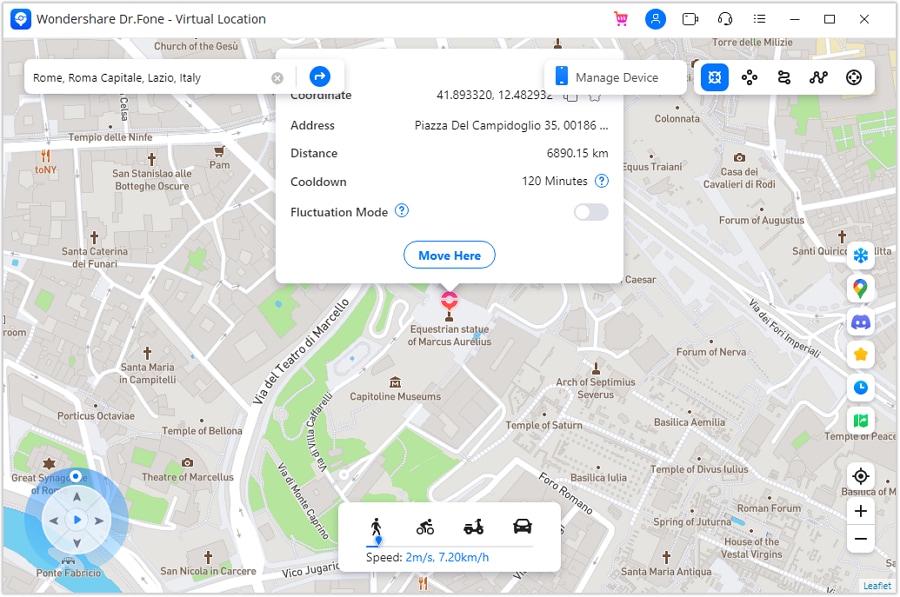
For a supported test on your own device, connect it to the desktop module, inspect the map, choose the intended destination and apply it. Route tools are optional; they do not need to be enabled to test a stationary point. Restore real positioning when finished.




5. Temporarily compare behavior without Low Power Mode
Battery restrictions can affect activity, particularly in the background. In Settings > Battery, switch Low Power Mode off for a short comparison if the issue began after you enabled it. This is a diagnostic test, not a promise that the mode disables GPS in every case. Restore your preferred setting once the comparison is complete.
6. Test the data connection separately
Switch between a working Wi-Fi network and mobile data, where available. If only Wi-Fi fails, reconnect or restart a router you own or manage. Reopen the game and compare map loading with location movement. A correct pin in another app plus a game that cannot load content points toward a different problem from no device-wide fix.
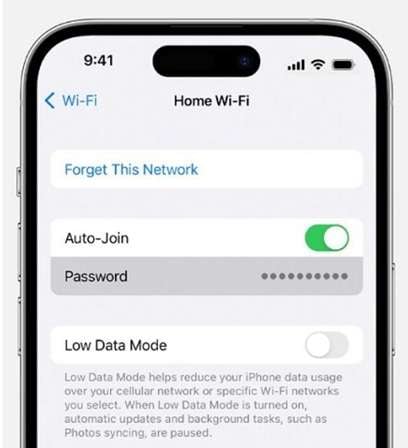
7. Give the phone a clearer view of the sky
Leave the obstructed area safely and remain still outdoors while the position updates. Do not walk into roads or restricted areas to follow a drifting pin. If several map apps remain inaccurate in an open location after the settings checks, contact device support; if only Pokémon GO fails, provide game support with the phone model, OS version and exact error.
Conclusion
The most useful way to fix Pokémon GO GPS not found 11 is to isolate the failing layer: app permission, device positioning, reception or network access. Precise access, a current game version, a restart and an outdoor comparison provide a better starting point than indiscriminate advanced-setting changes.
Dr.Fone - Virtual Location addresses a separate virtual-coordinate task, not GPS hardware repair or guaranteed game recovery. Keep the Android Pokémon GO exclusion explicit and avoid unverified DNS profiles. If the basic checks fail, report the circumstances to the relevant game or device support team rather than concealing the symptom.
FAQ
1. Does error 11 prove my phone's GPS is broken?
No. Missing permission, blocked reception and other location-service problems can produce a missing position. Compare another map app outdoors before drawing a hardware conclusion.2. Should I disable randomized MAC addresses first?
No. That suggestion is a community network experiment, not a confirmed general GPS fix. Check precise permission and reception first, and restore the privacy default if a network-specific comparison does not help.3. Can changing DNS repair satellite reception?
DNS and satellite positioning perform different tasks. The IPLocate procedure in the source is unverified and is not a reason to install an unknown DNS provider or profile.4. Is a virtual-location tool an Android Pokémon GO repair?
No. Simulating coordinates is different from restoring genuine GPS, and Wondershare explicitly excludes Pokémon GO from Android Virtual Location support. Location falsification can also trigger account penalties.
 Add Wondershare Dr.Fone as a preferred source on Google