Teleport your device anywhere instantly with one click.


 100% Security Verified | No Subscription Required | No Malware

 :

 ChatGPT
 Perplexity
 Gemini
 Claude
 Grok
Pokemon GO PvP ranking measures your progress against other Trainers in GO Battle League. It is not a permanent list of the strongest Pokemon: your league, eligible team, moves, and decisions all affect the result. A high-CP attacker that performs well elsewhere can still be unsuitable for a capped league.
If you normally spend your sessions catching Pokemon and visiting PokeStops, Trainer Battles offer a different challenge. You select three Pokemon, face another player, and work toward seasonal rewards and ranks. This guide explains the entry process, the difference between rank and rating, and the practical habits that help you improve without promising effortless wins.
In this article
Part 1. Understanding Pokemon GO's player-versus-player battles
PvP means player versus player. Instead of repeatedly attacking a computer-controlled encounter, you compete against a human who can switch Pokemon, manage energy, and decide when to protect a teammate. That makes preparation important, but it also means that the same team can produce different results depending on how you play it.
GO Battle League is the game's matchmaking-based competitive mode. The game places you against other Trainers rather than requiring you to arrange each opponent yourself. Its seasonal progression gives battles a longer-term purpose: learning a difficult matchup today can help you make a better decision in a later set.
Do not confuse a Trainer's league rank with a Pokemon's suitability for PvP. One describes account progress during the season; the other depends on the Pokemon's species, stats, moves, and the particular competition. There is no single best Pokemon that automatically wins every league or cup.
A change of pace from catching and collecting

Collection tasks and battles reward different kinds of attention. Catching expands your available roster, while competitive play asks you to choose a small team and make decisions under pressure. Alternating between them can make a familiar routine more engaging without turning every session into a climb for a higher rank.
A useful first goal is simply to understand one team. Notice which opposing types cause trouble, whether your opening Pokemon forces an early switch, and how the match changes when a shield is spent. Those observations are more actionable than treating every loss as proof that you need a completely new roster.
Practice decision-making and matchup knowledge
Wild encounters alone do not teach you how an opponent manages shields or changes Pokemon. Trainer Battles give you repeated opportunities to recognize those patterns. Begin with the mechanics you can control: select legal team members, understand their attacks, and learn what damage they take from common opposing types.
Progress does not need to be immediate. Review one recurring mistake after a set, such as leaving a vulnerable Pokemon in battle too long or using a shield when the remaining team needed it more. Regular, focused practice is more useful than assuming confidence by itself guarantees a win.
Competitive experience and event eligibility are different things

The original reason to discuss tournaments is still relevant: competitive practice can prepare you for organized play. However, a GO Battle League rank is not a universal entry ticket to every tournament or worldwide event. Each organizer publishes its own registration, eligibility, and competition rules.
Check those rules directly before making plans. A particular event may use qualification requirements, while another may allow a broader field. Treat league results as a measure of your current performance, not as proof that you are automatically qualified for every external competition.
Phone tools versus competitive progress
 Set your map route to simulate GPS movement.
- Set your wanted movement speed.
- HD and large map view to check location.
- Fake GPS location to anywhere.
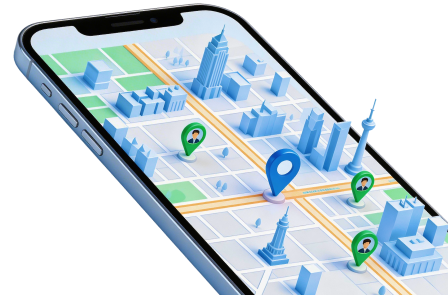
Dr.Fone - Virtual Location is a GPS simulation tool, not a way to increase your PvP rating. Its relevant functions include choosing a map destination, planning a route, and adjusting simulated movement speed. Those functions do not alter Pokemon stats, select better battle moves, or make matchmaking easier.
File transfer, repair, and other phone-management modules are separate from Virtual Location. The GPS tool's purpose is to simulate a map position for supported use cases, not to change how battles work. Its product panel should not be read as a promise of tournament eligibility, automatic wins, or protection from account enforcement.
For a permitted GPS-testing task, connect a supported phone to the desktop software, follow its connection prompts, choose Teleport Mode, search for a destination, and confirm the map position with Move Here. Verify the simulated position in the phone's maps app. When finished, follow the software's restart prompt to restore the actual location.
Pokemon GO's fairness policy explicitly treats GPS spoofing as cheating. It can lead to account restrictions or termination, so do not use location simulation as a league-ranking strategy. You can enter supported remote GO Battle League matches without pretending to travel elsewhere.




Part 2. Entering your first GO Battle League match
Look for the Battle menu in Pokemon GO once your account is eligible; the source's entry point is Trainer level 10. Your account must also be able to access the feature normally. If an option is unavailable, check the current in-game requirements and account messages rather than assuming a third-party tool can unlock it.
The main league formats are Great League, Ultra League, and Master League. Great League normally allows Pokemon up to 1,500 CP, Ultra League up to 2,500 CP, and Master League has no CP cap. Special cups may impose additional restrictions, and only the formats in the current rotation are available. Confirm the rules before spending resources on a team.
Battles are arranged in sets. The usual daily allowance is five sets of five battles across GO Battle League, not five sets for each league. Event rules may change that allowance. Winning can help satisfy progression requirements, but not every individual victory immediately awards a new rank, and participation-based requirements exist at some stages.
Step 1 Open the game
Launch Pokemon GO and allow the account to load. Resolve connection or sign-in problems before starting a competitive set.
Step 2 Open the main menu
On the map, tap the Poke Ball control at the bottom of the screen.

Step 3 Choose Battle
Select Battle to open the battle screen and review the available competitive options.
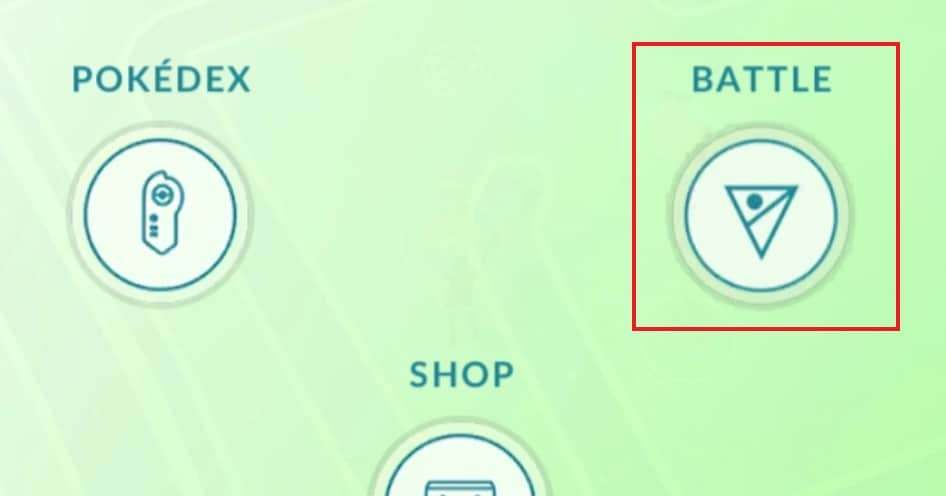
Step 4 Select an available reward track
Review the displayed rewards and entry conditions, then use the corresponding Battle button. The screenshots illustrate the source interface; current layouts and seasonal offers may differ.

Step 5 Confirm your three-Pokemon team
Choose an eligible league or cup, inspect the party, and begin matchmaking. Check each Pokemon's CP, type coverage, and attacks instead of relying only on the game's suggested lineup.
Part 3. Reading GO Battle League ranks and ratings
A new season starts your rank progression again. The standard ladder begins at Rank 1 and includes 24 ranks, with the highest four named Ace, Veteran, Expert, and Legend. Early progression uses the season's participation and win requirements; later progression also depends on your battle rating.

Rank and rating serve different purposes. Rank records the milestone you have reached, while rating reflects competitive results and can move as you win or lose. Do not expect every completed set to increase both. Read the current season's progression information, especially if a special season changes the usual ranked format.
Rewards also vary with the rank, reward track, and active season. A reward encounter or item shown in an older screenshot is not a promise that the same prize is available now. Inspect the live rewards screen before deciding which track to enter or how to allocate your play time.
Seasonal resets give everyone a new progression cycle, but they do not erase what you learned. Keep a record of recurring matchups and revisit your lineup when the rotation changes. A previously effective strategy can need adjustment after move changes or different cup rules.
Practical habits for winning more PvP battles
Build a plan around the Pokemon you can actually prepare, then refine it through matches. A diverse collection is useful, but a small, well-understood team is easier to pilot consistently than three individually strong Pokemon with the same weaknesses.
- Choose complementary roles. Different types can broaden your coverage, but three different labels do not automatically make a balanced team. Consider shared vulnerabilities and what you will switch to after a difficult lead.
- Learn the type interactions. Recognizing a resisted or super-effective attack helps you decide whether to stay in, switch, or preserve energy. Damage matters, but surviving the next matchup can matter just as much.
- Use Charged Attacks deliberately. Releasing energy quickly is sometimes correct; at other times, timing and the opponent's remaining shields change the better decision.
- Protect the team, not just a favorite. Spend Protect Shields where they preserve a realistic path to victory. The most valuable Pokemon depends on the opposing lineup and the stage of that match.
Conclusion
Improving your Pokemon GO PvP ranking starts with an eligible three-Pokemon team, an understanding of the current format, and repeated practice. Open Battle, check the active league and reward conditions, and separate seasonal rank milestones from changes in rating. There is no guaranteed winning species or software shortcut: matchup knowledge, resource decisions, and fair play remain the useful foundations.
FAQ
1. What is the best Pokemon for PvP ranking?
There is no universal choice. League restrictions, available moves, team coverage, and the opponents you face determine which Pokemon is suitable. Check the current format before investing in one.2. Are rank and rating the same?
No. Rank tracks seasonal milestones, while rating reflects competitive performance. Later named ranks depend on rating as well as reaching the relevant stage of progression.3. Do I receive five daily sets for every league?
No. The usual five-set allowance applies across GO Battle League, not separately to each format. Special events can change the daily limit, so use the live rules.4. Can a GPS changer improve battle performance?
It does not improve stats, moves, shields, or decision-making. GPS spoofing also violates the game's fairness policy and can put your account at risk.
 Add Wondershare Dr.Fone as a preferred source on Google