Teleport your device anywhere instantly with one click.


 100% Security Verified | No Subscription Required | No Malware

 :

 ChatGPT
 Perplexity
 Gemini
 Claude
 Grok
A Pokémon GO emulator search does not automatically lead to a supported way to play the mobile game on a PC. BlueStacks, Nox, and MEmu create Android environments, but installation, successful launch, working location features, and permitted gameplay are separate questions. Ripple and Xcode belong to development-tool categories and should not be advertised as equivalent consumer game players.
This 2026 review compares the five tools named in the original article and then separates emulation from phone-based GPS simulation. It does not claim that a current Pokémon GO account has been tested on every tool. If the game cannot run on your phone, check the official supported-device requirements first rather than assuming a desktop program removes every compatibility condition.
In this article
Part 1: Desktop Benefits and Their Practical Limits
People consider emulators for larger displays, keyboard access, and easier switching between windows. Those are understandable interface preferences. However, Pokémon GO is designed around mobile location and real-world interaction, so a pleasant desktop interface is not enough to establish that the game works correctly or that a proposed method follows its rules.
- Map controls: Some Android emulators offer keyboard mapping or virtual location functions. Arrow keys or a joystick can affect a supported app's controls, but that does not make simulated travel official Pokémon GO movement.
- Window switching: A desktop can make documentation and other applications easier to view alongside a game. Convenience is not approval for hacks or unauthorized access to the game.
- Input comfort: A mouse and larger screen may be easier for some users to operate. They do not guarantee accurate throws, remove mistakes, or solve all accessibility needs.
- Multiple instances: Some tools run more than one Android environment. Resource use rises with each instance, and emulator capability should not be confused with permission to operate multiple game accounts or use them to bypass restrictions.
Before investing time, distinguish a general emulator feature from a game-specific result. Record the emulator version, operating-system image, host hardware, and actual app behavior when evaluating compatibility. A screenshot or an old success report does not establish that the latest game will authenticate and remain usable.
Part 2: Five Tools Often Listed for Pokémon GO
The original five-name list mixes Android environments with browser and iOS development tools. Keeping the same order makes the differences easier to see. None of the entries below is ranked as a verified, current, account-safe Pokémon GO installation.
1. BlueStacks

BlueStacks is a desktop Android platform with gaming controls and instance-management features. Its appeal includes a larger display, keyboard mapping, and, for compatible applications, controller options. The available Android environment depends on the version and instance type; do not assume that every installation emulates the latest Android release or that every Android game is playable.
Performance depends on the host computer, graphics configuration, memory allocation, and the particular application. Marketing terms about graphics do not establish low latency for Pokémon GO. Multiple instances also consume additional resources rather than providing unlimited parallel play for free.
The source notes memory pressure and advertising as drawbacks. Treat those as factors to inspect in the current edition rather than universal benchmark results. Most importantly, a general BlueStacks feature list is not proof of current Pokémon GO support, and using a secondary account for spoofing does not turn the method into permitted gameplay.
2. Nox Player

Nox Player is another Android environment aimed at desktop gaming. Keyboard and mouse mappings and multiple instances are the sorts of features that attract users comparing it with BlueStacks. Their usefulness remains application-dependent; a virtual joystick is an input feature, not a guarantee of accepted location or successful Pokémon GO login.
The original description calls Nox lightweight and says a dedicated GPU may not be necessary. Avoid treating those claims as universal system advice. Check the current host requirements and the workload you actually plan to run. Integrated graphics, available RAM, virtualization support, and other running software can all affect performance, so there is no justified promise of playing without hitches.
If the game fails to open, do not assume the solution is more location manipulation. Determine whether the issue is the app, the selected Android image, the emulator, or the host machine. A broader game-support question cannot be resolved solely by changing key mappings.
3. MEmu Play

MEmu Play also runs Android applications in a desktop environment, with game-oriented input and instance controls. Finding an app through a store interface is only an installation step. It does not establish that the installed game will pass its runtime, location, and account checks.
The original fixed claim of four simultaneous games and an inability to run more than one account of a game is too broad. MEmu's own Multi-MEmu guidance describes creating and cloning separate environments, with the usable instance count constrained by hardware and workload. That feature should be evaluated on its own merits, not turned into a recommendation to multiply Pokémon GO accounts.
Compare the current version's input options, resource requirements, and actual stability with your intended app. Labels such as fast or stable need a stated test environment to be meaningful. No Pokémon GO performance benchmark is supplied here.
4. Ripple

Ripple is not a general native iOS game player. The Apache project description identifies it as a browser-based mobile application development and testing tool. Simulating a mobile-style browser environment is different from providing the native operating-system and application environment needed by Pokémon GO.
Screen-size testing can help a developer inspect their own web application, but selecting a screen resolution does not automatically allocate the memory required by a native game. The original suggestion that Ripple offers a discreet way to run Pokémon GO therefore should not be used as consumer setup advice. Keep it in the development-tool category rather than recommending it as a substitute for an iPhone.
5. Simulator in Xcode
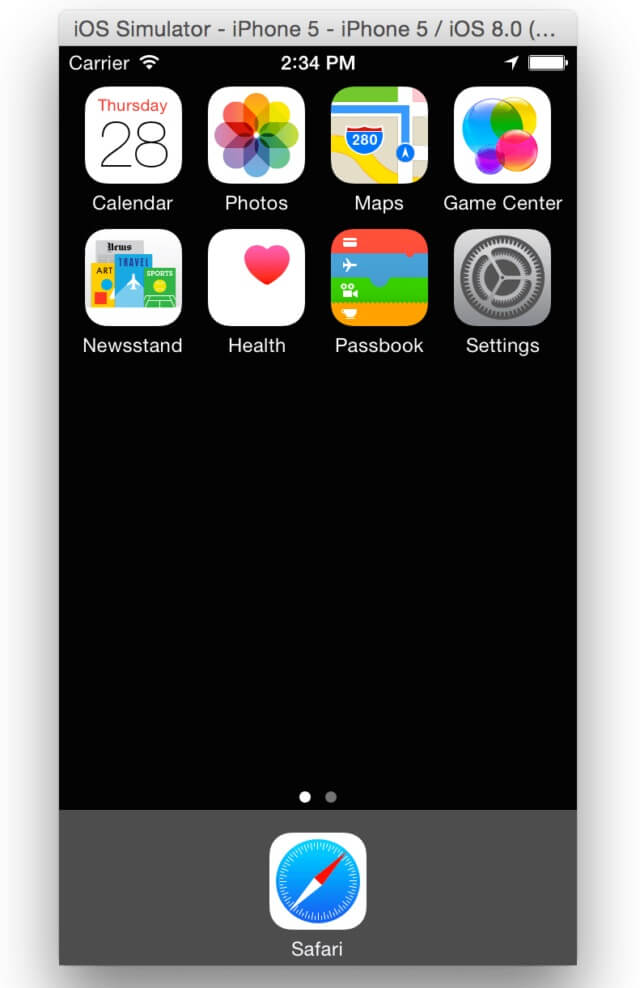
Xcode is Apple's development environment on Mac. Its simulator supports building and testing compatible app projects for simulated devices. Apple's documentation explains selecting a project scheme and run destination; it also notes that simulated devices do not reproduce every physical-device feature or performance characteristic.
That is not a general route for downloading an arbitrary App Store game and launching it as though it were your own development project. The fact that a developer can test location behavior in their app does not show that the retail Pokémon GO app can be played in Simulator. Do not equate development location testing with a working desktop game client or a permitted spoofing method.
Part 3: Alternatives to Replacing the Phone with an Emulator
If the task is changing coordinates on a real phone, a location tool belongs to a different category from an emulator. The phone still runs its own applications. That distinction can clarify troubleshooting, but it does not remove a game's location rules. If the phone is unsupported in the first place, changing its coordinates is not the same as making the game compatible.
Simulate GPS on a supported iOS phone with Dr.Fone - Virtual Location
 Set your map route to simulate GPS movement.
- Set your wanted movement speed.
- HD and large map view to check location.
- Fake GPS location to anywhere.
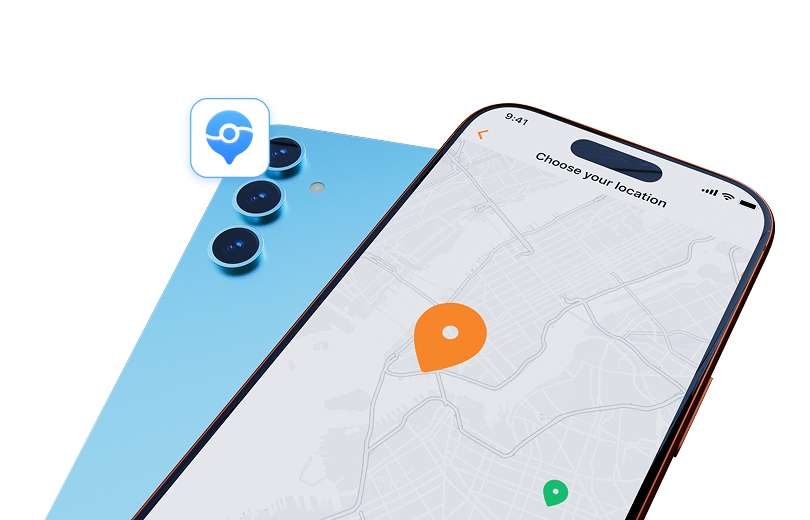
Dr.Fone - Virtual Location provides destination search and simulated movement controls for supported connected devices. Its practical features include selecting a map point, defining a route, setting movement parameters, and using joystick controls where available. It changes reported coordinates rather than running the mobile game inside a desktop Android or iOS environment.
No claim of being undetectable is justified. Launching Pokémon GO after changing the position does not guarantee account safety, and a simulated destination is not a permanent physical relocation. Review current device support and restore the real position when the test ends. The gameplay fairness policy identifies location spoofing as prohibited even when the official game app remains installed.
Step 1 Connect the supported device
Open the desktop program, select Virtual Location, connect your phone, and complete its connection and permission prompts.
Step 2 Define a destination or test route
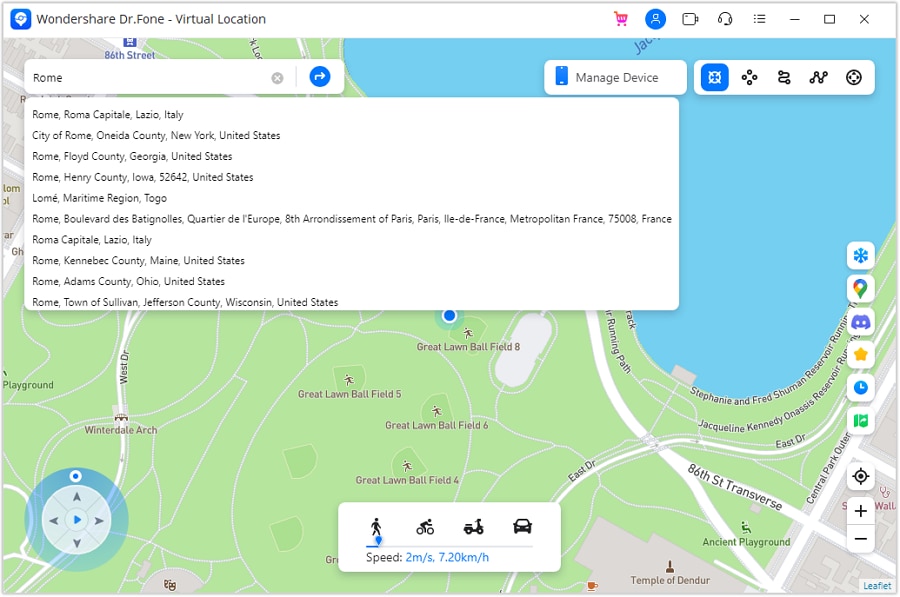
For a single position, choose Teleport Mode and search for the intended location. For movement, select the appropriate route mode and review the points and speed controls.
Step 3 Confirm the map operation
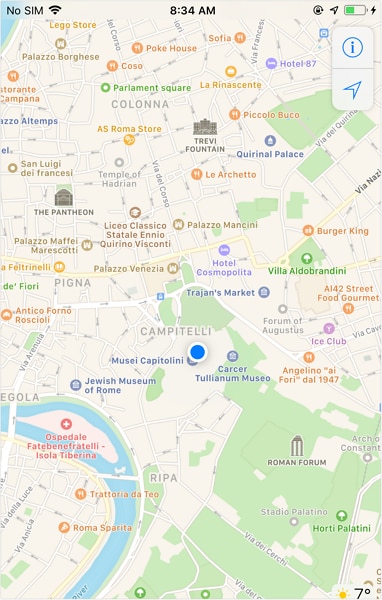
Check the destination before selecting Move Here, or the route's start control. Use the phone's Maps app to verify its reported coordinates rather than assuming the desktop display alone proves success.
Step 4 Finish and restore positioning
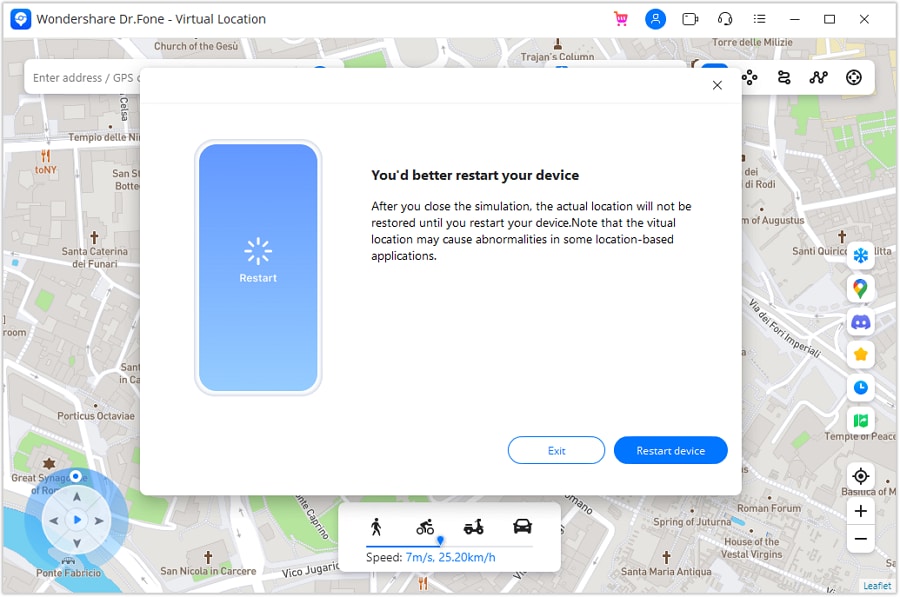
Stop the simulation when appropriate and follow the restart prompt to restore the actual location. An emulator is not involved in this connected-phone workflow.
Get more information on how to use dr. fone virtual location here.
Use the workflow for permitted location testing on a supported setup. It does not certify game compatibility, supply event access, or guarantee that an account will avoid enforcement.




Simulate GPS on Android with Fake GPS Go
Fake GPS Go is presented in the source as an Android location-spoofing option. Like other mock-location tools, its stated task is making a device report a different position. It is not a desktop Android emulator and does not replace the game application's own runtime or account checks.
Before following a setup guide, establish the exact app publisher, device requirements, and current permissions. A product name alone is not enough to identify a trusted package. Do not assume that changing location guarantees catches, Gym participation, or Raid access, and do not treat mock-location support as proof that a game permits its use.
Get more information on how to use Fake GPS Go here. Read it as background on location tools, not as confirmation of account safety or current Pokémon GO compatibility.
Conclusion
Choose tools by what they actually do. BlueStacks, Nox, and MEmu offer Android environments; Ripple and Xcode address development and testing; Dr.Fone - Virtual Location and Android mock-location apps operate on reported phone coordinates. None of those categories alone proves that Pokémon GO will run, accept movement, or permit the method. Begin with a supported device and the game's current rules rather than an unqualified emulator recommendation.
FAQ
1. Does installing Pokémon GO in an emulator prove it works?
No. Installation, launch, authentication, location behavior, and permitted use are separate checks. This review does not certify a current working emulator configuration.2. Can Ripple run the native iOS Pokémon GO app?
Ripple is a browser-based mobile development and testing tool, not a general native iOS game environment. It should not be recommended as a direct Pokémon GO player.3. Is Xcode Simulator a replacement for an iPhone game installation?
Not generally. Apple's documented workflow builds and runs compatible app projects for a selected simulator. It does not establish a way to run any retail App Store game.4. Is a GPS tool safer for a Pokémon GO account than an emulator?
No account-safety guarantee follows from that distinction. GPS spoofing remains prohibited under the published fairness policy, regardless of whether a real phone or a simulated environment is involved.
 Add Wondershare Dr.Fone as a preferred source on Google