 Teleport your device anywhere instantly with one click.


 100% Security Verified | No Subscription Required | No Malware


 :

 ChatGPT
 Perplexity
 Gemini
 Claude
 Grok
The best strategy game for your iPhone depends on whether you enjoy building an economy, negotiating with other players, or issuing orders under pressure. A campaign that rewards daily planning feels very different from a real-time battle where a misplaced squad can lose a position within seconds.
For 2026, the five source selections below offer distinct starting points: Call of War for long-form warfare, Mafia City for competitive clan progression, Forge of Empires and Rise of Cultures for developing civilizations, and Company of Heroes for battlefield tactics. The first four App Store listings are free with in-app purchases; Company of Heroes is a paid title with additional content purchases.
Use this as a play-style comparison, not a claim that one universal ranking fits everyone. Before downloading, check the listing in your region for device support, age rating, storage, network needs, and purchase terms. Those details are more useful than an unsupported promise that a free game will never encourage spending.
In this article
Part 1. Why Strategy Games Reward Deliberate Choices
Strategy games ask you to work toward an objective with limited time, information, or resources. You may need to decide between production and expansion, prepare a counter to an opponent, or accept a small loss to protect a more important position. The appeal comes from seeing how those connected decisions affect a match or a growing city.

Three features often make the genre especially engaging on a phone or tablet:
- Opportunities to practise planning: Comparing options, forecasting an opponent, and managing shortages can be satisfying challenges. Enjoying these decisions does not establish a medical or educational benefit outside the game.
- Accessible entry points: Free-to-start games let you examine a tutorial before paying. Their optional currencies, subscriptions, or speed-ups still deserve attention, especially if you want to avoid recurring spending.
- Shared objectives: Alliances and clans add negotiation, coordination, and responsibility. They can also create pressure to return at particular times, so choose a community and pace that suit your routine.
An iPad's larger display can make dense maps and small interface elements easier to inspect, while an iPhone is convenient for short check-ins. Neither screen size fixes a mismatch between the game's schedule and your available time.
Part 2. Build Better Habits Before Chasing Advanced Tactics
Success usually starts with understanding what the game rewards. A city builder may penalize an unbalanced supply chain; a battlefield game may punish moving without cover; a multiplayer campaign may depend on diplomacy as much as military strength. Learn that central loop before copying a complicated strategy from another player.

1. Learn the Economy, Controls, and Win Conditions
Complete the tutorial and inspect the descriptions of important units, buildings, and resources. Work out what actually advances the objective: capturing territory, finishing research, sustaining production, or defeating a particular force. A large army is not automatically useful if you cannot supply it or if it misses the mission goal.
On a touch screen, practise selecting units, moving the camera, and confirming commands before entering a demanding match. Keep premium currency untouched until you understand what it buys and whether the same item can be earned through ordinary play.
2. Test One Tactical Change at a Time
Build a simple plan around the situation in front of you. Identify your bottleneck, choose an objective, and keep enough resources or units available to respond if the first approach fails. A strategy copied from an experienced player may depend on upgrades, allies, or timing that your account does not yet have.
Experiment deliberately: alter one element, such as a production priority or unit combination, and observe the result. That gives you a clearer explanation of what worked than changing everything after each defeat. Avoid assuming that a paid speed-up is a substitute for understanding the underlying mechanic.

3. Review Losses Without Chasing Them
After a match, identify the earliest decision that made the result harder to recover from. Perhaps you expanded before your economy was stable, overlooked an opponent's position, or attacked with the wrong mix of units. Distinguish a planning mistake from a simple control error so that the next practice session has a specific purpose.
A loss is useful feedback, not a reason to spend impulsively or extend a session beyond your limits. Take a break when frustration replaces analysis. In alliance games, communicate what happened so your group can adapt rather than repeatedly committing to the same failed plan.

Part 3. Compare Five iOS Strategy Games by Their Main Appeal
All five original entries remain below, with their App Store links and source screenshots. Their differences matter more than calling each one the best: decide whether you want persistent multiplayer progression, a developing settlement, or a more concentrated tactical campaign.
1. Call of War: WW2
Choose it for: A large-scale military campaign that unfolds over an extended period. You control a nation, develop its economy and research, coordinate land, air, and naval forces, and decide whether diplomacy or expansion best serves your position.
The original link now leads to a listing with a longer Supremacy-branded name. Its description emphasizes real-time unit movement, alliances, multiple scenarios, and matches that can last several weeks. That makes it a stronger fit for players who enjoy checking a changing strategic map than for someone seeking a self-contained five-minute battle.
Watch for: Time commitment and in-app purchases. The App Store marks the game free with purchasable items; free entry is not a guarantee of identical progress for every player. Set notification and spending boundaries before joining a demanding match.

2. Mafia City: War of Underworld
Choose it for: Fictional crime-themed progression with clans and ongoing competition. The game's decisions revolve around developing your turf, recruiting different crew types, improving technology, and coordinating with other players rather than recreating a historical campaign.
The current listing describes real-time interaction, alliances, multiple crew categories, and recurring events. This is a persistent progression game: building strength and maintaining relationships can matter as much as the choices made in one confrontation. The theme is fictional entertainment, not guidance for real-world activity.
Watch for: Purchase offers and subscription terms. The listing includes in-app purchases and subscription descriptions, so read renewal conditions before accepting an offer. It is not reasonable to promise that tactical skill alone eliminates every progression or spending disadvantage.

3. Forge of Empires: Build a City
Choose it for: A settlement that develops through successive eras. Research, production, goods, trading, and territory expansion connect the city-building decisions to a wider progression system. The source also highlights tactical battles, giving you another use for the resources your city produces.
The App Store description confirms city development from the Stone Age onward, technology and building unlocks, trading with neighbors, and taking sectors through negotiation or battle. This gives it a different emphasis from a game centered only on rapid combat: your economy and research choices shape what you can do next.
Watch for: A required network connection and optional purchases. Treat production queues as part of the strategy rather than assuming every waiting period needs a paid shortcut. Check the current device requirement before expecting the game to run on an older tablet.

4. Rise of Cultures
Choose it for: Civilization-themed city development with a different visual presentation and progression flavor. The listing describes building cities, unlocking cultures, researching technologies, exploring territories, and trading as well as fighting. Historical personalities such as Caesar and Cleopatra appear as part of its entertainment setting.
For someone drawn to developing a city and discovering the next stage, those interconnected systems can provide a useful alternative to a war-focused map. Do not equate historical inspiration with a verified educational simulation, however, or assume that a colorful presentation guarantees a relaxed experience for every player.
Watch for: The network requirement and in-app purchases. Decide whether you enjoy the ordinary progression rhythm before buying currency or event content. The checked listing identifies iOS and iPadOS 15 or later; verify the requirement again on your own store page because listings can change.

5. Company of Heroes
Choose it for: Squad-based real-time tactics adapted from the PC game. Positioning, cover, coordinated attacks, and destructible environments shape the battlefield. Its campaign offers a more concentrated military decision-making experience than repeatedly expanding a persistent city.
The current listing describes mobile-specific controls, including a Command Wheel, a single-player campaign, and expansion packs available through in-app purchase. It also describes online multiplayer with an additional-content requirement. Check exactly what your chosen purchase includes rather than assuming the base price unlocks every campaign or mode.
Watch for: Hardware and storage. The listing specifies iOS 15 or later and recommends substantial installation headroom. It is a paid game, not a free alternative to the four entries above. Confirm your exact device in the developer's support information, particularly before purchasing for an older iPad.

| Title | Main decisions | Spending model | Most suitable preference |
|---|---|---|---|
| Call of War | Diplomacy, national economy, and real-time military movement | Free entry with in-app purchases | Extended multiplayer campaigns |
| Mafia City | Turf upgrades, crew development, and alliance coordination | Free entry with purchases and subscription offers | Persistent competitive clan progression |
| Forge of Empires | Goods, research, city layout, negotiation, and battles | Free entry with in-app purchases | Developing an economy across eras |
| Rise of Cultures | Cultural progression, construction, exploration, and trading | Free entry with in-app purchases | Civilization-themed city development |
| Company of Heroes | Squad positioning, cover, and battlefield control | Paid base game with additional content purchases | Focused real-time military tactics |
Part 4. Keep GPS Simulation Separate from These Strategy Games
The five titles above use game maps and progression systems; this guide does not establish that they require real-world GPS travel. Changing the phone's location will not generate resources, unlock premium purchases, move a squad, or alter the rules of their campaigns. Location simulation is a separate topic relevant only to apps that actually use device positioning.
 Set your map route to simulate GPS movement.
- Set your wanted movement speed.
- HD and large map view to check location.
- Fake GPS location to anywhere.

Dr.Fone - Virtual Location offers supported GPS location changes and route simulation, with map, speed, and movement controls. A legitimate use is an authorized location test on your own device where the receiving app permits simulated data.
Do not assume it works with every location-based game or that a simulated journey will award progress. Check the current device and app requirements and the app's terms. The official product page specifically excludes Android Pokemon Go support, and no iOS marketing statement guarantees immunity from game penalties.
Step 1 Check the product and permitted purpose
Review Dr.Fone - Virtual Location and confirm that the intended phone and use case are supported. Install the desktop application only after checking those conditions; it is not required for any of the five strategy selections.
Step 2 Connect your phone and open the map
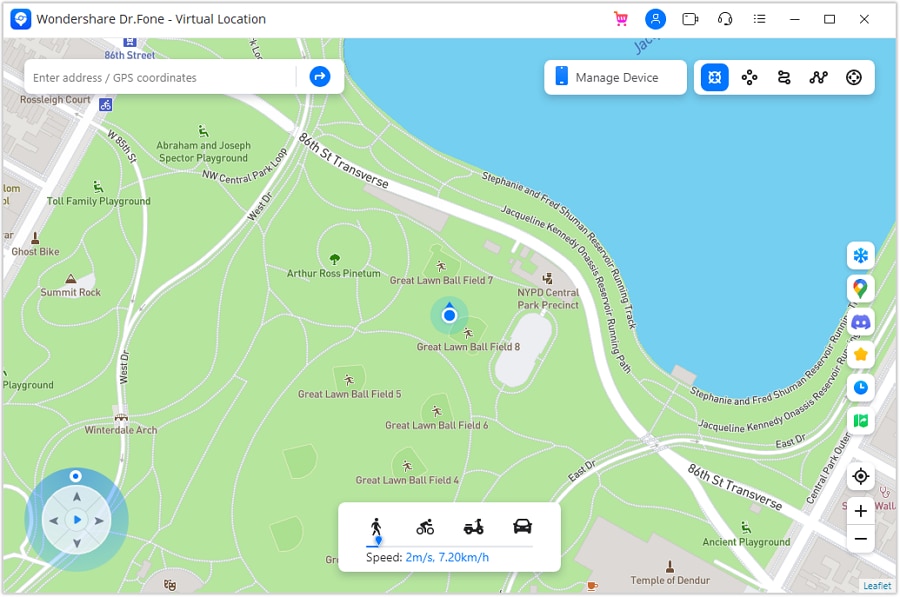
Connect your own iPhone or iPad and follow the current module's prompts. In versions using the illustrated layout, open Toolbox and then Virtual Location. Allow any necessary resources to finish loading before inspecting the detected position.
Step 3 Preview the intended location
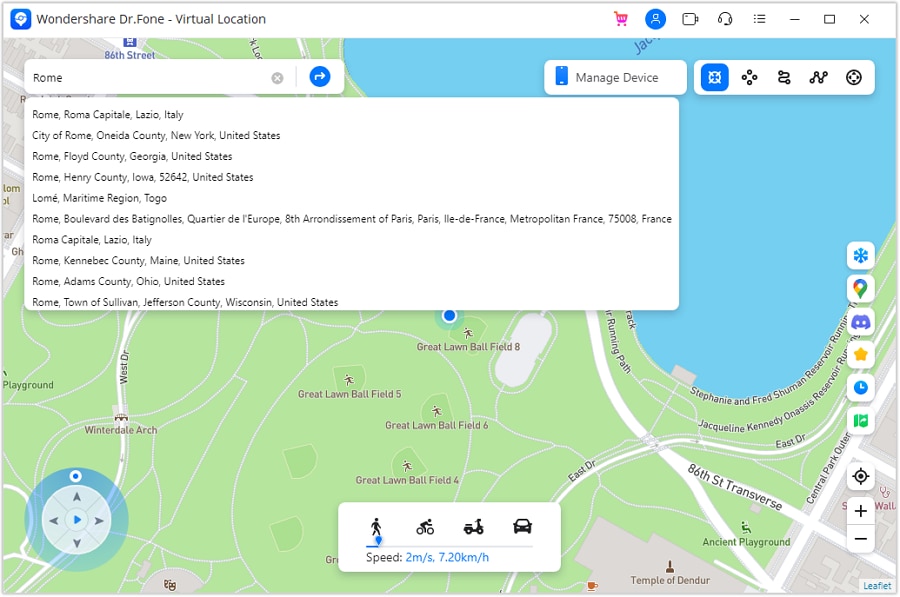
Select Teleport Mode and search for the destination relevant to your test. Confirm the result on the map rather than relying only on a place name that may refer to several different locations.
Step 4 Apply the change and verify the result
In the illustrated interface, Move Here applies the selected point. Check the receiving app only in a permitted test; apps can handle or reject simulated coordinates differently.


After the test, stop the simulation and verify that the phone reports its actual location. Restart the device if the current product guidance calls for it and the location has not returned. Do not assume one restart universally restores every app's stored or reported position.




Conclusion
Pick the strategic decisions you want to spend time making. Call of War emphasizes a broad military campaign, Mafia City ongoing clan progression, the two civilization builders developing cities, and Company of Heroes squad-level combat. Start with one title, learn its ordinary progression loop, and assess the time and spending demands before committing further.
Dr.Fone - Virtual Location belongs in a separate supported GPS-testing workflow, not as an upgrade required to enjoy these five games. Clear expectations about the game, hardware, and tool are more useful than promises of unlimited play.
FAQ
1. What should I look for in an iOS strategy game?
Choose meaningful decisions, usable touch controls, a pace that fits your schedule, and purchase terms you understand. City building, persistent alliances, and squad tactics demand different kinds of attention, so start with the play style rather than a universal ranking.2. Which option should I consider for offline sessions?
Investigate Company of Heroes' single-player modes rather than assuming persistent online games work offline. Check the current developer guidance and test your intended mode after downloading required content. Online multiplayer and some setup or content functions need a connection.3. Will every game work on my older iPad?
No. Confirm the required iPadOS version, exact device support, and free storage on each listing. A compatible operating system alone does not establish acceptable performance, and graphically demanding games deserve particular attention before purchase.4. Does free-to-play mean I never need to consider money?
No. It means you can begin without a base-game purchase, not that every feature, speed-up, or progression path is free. Review in-app purchases and subscriptions, set a budget, and decide whether the no-spend experience is enjoyable on its own.
 Add Wondershare Dr.Fone as a preferred source on Google



