Teleport your device anywhere instantly with one click.


 100% Security Verified | No Subscription Required | No Malware

 :

 ChatGPT
 Perplexity
 Gemini
 Claude
 Grok
Changing a computer's location can mean editing a Windows fallback address, overriding a browser's geolocation for testing, or changing the public IP a website sees. These settings are not interchangeable. A desktop program that controls a connected phone's GPS is a fourth, separate case: the map on the computer is an interface for the phone, not proof that the PC itself has moved.
This guide keeps the original three approaches but explains their actual scope. Use the phone workflow for supported mobile GPS testing, a browser-specific control for a web location test, and Windows location settings for the system's default address or permissions. None requires describing an ordinary PC setting as a jailbreak, and none guarantees invisible or unrestricted access to every service.

In this article
Part 1. Use a Computer to Change a Connected Phone's GPS
 Set your map route to simulate GPS movement.
- Set your wanted movement speed.
- HD and large map view to check location.
- Fake GPS location to anywhere.
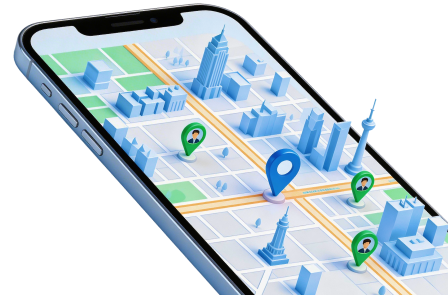
Dr.Fone - Virtual Location runs on the computer and provides GPS controls for a supported connected phone. You select a place on the desktop map, then the program applies a simulated position to that mobile device. It does not change Windows location services or the computer's public IP merely because the same point appears on its desktop map.
The original article focuses on iOS 17. Check the current software requirements for your exact phone and system before starting rather than treating that version reference as a promise for every device. The product also describes Android GPS functionality, but explicitly excludes Android Pokemon GO support. Any supported-device claim remains separate from an app's rules about simulated location.

The supplied product features are relevant to mobile GPS tasks rather than a universal computer-location change:
- Teleport Mode lets you select a map destination instead of physically taking the connected phone there.
- Route simulation can move the reported position along chosen points, with an adjustable movement speed.
- Joystick and keyboard controls provide another way to direct simulated movement where the feature is supported.
- Location-dependent social apps such as Instagram or WhatsApp may read a device position, but the app's own controls determine how it is used or shared.
- Dating services mentioned in the source, including Hinge, Bumble, and Tinder, can also use account settings or other signals; a GPS change does not guarantee a profile-region change.
Pokemon GO is not a native Windows location-setting feature, and a VPN does not turn a computer into a GPS-enabled game device. Location falsification can violate a game's rules and lead to penalties. Do not equate no jailbreak with approval by a game, complete privacy, or freedom from account risk.
Step 1 Prepare the desktop program and phone
Install Virtual Location on your computer, open it, and connect your own supported phone. Use a USB connection initially when requested and complete the device's trust and setup prompts. Use a wireless option only if the program supports it for that device and the required setup is complete.
Step 2 Select Teleport Mode
Inspect the connected device's location on the map. Activate Teleport Mode and search for the destination or coordinates, then press Enter. The desktop map is displaying the phone's working location, not changing the PC's operating-system location.
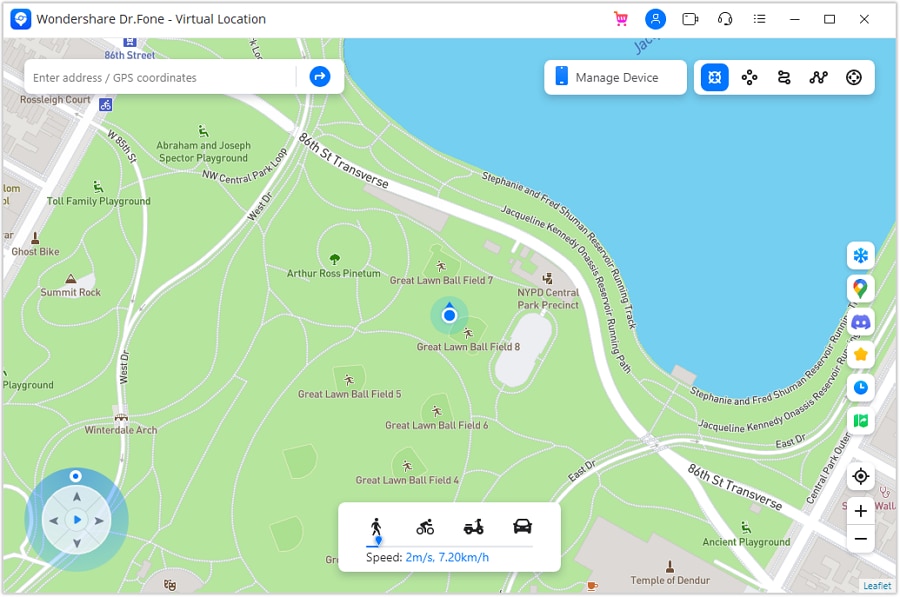
Step 3 Confirm the position and verify on the phone
Review the destination pin and select Move Here. Open the mobile device's map app to check the reported position. The matching pin in the computer interface confirms the selected test point; it does not demonstrate a PC-wide region or IP change.
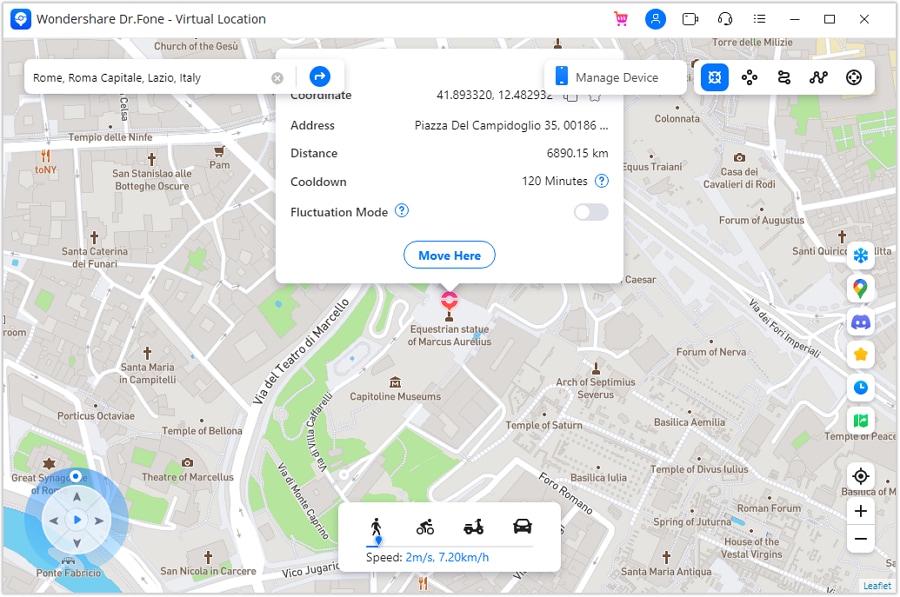
Finish the test, follow the restoration prompt or restart the phone, and confirm its actual position before real navigation or location sharing. If a browser on the computer still reports the old area, use the computer-specific controls below rather than repeating the phone procedure.




Part 2. Computer Location Controls That Do Not Require a VPN
A VPN changes the network route and public IP of the traffic it carries. By contrast, browser geolocation controls and the Windows default location affect other signals. Choose a method based on what the app actually reads; editing a fallback address cannot guarantee access to a service that checks your IP, subscription, or billing country.
VPN use may be regulated or restricted in some places, and performance can vary. That does not make every non-VPN method a complete privacy solution. If privacy is the goal, inspect location permissions and remove unnecessary access. Denying a precise location request is different from providing a simulated position or hiding all information about your region.
1. Browser Extensions: Limit the Change to the Browser's Scope
A location-related extension can modify how certain pages receive or display geolocation information, depending on its implementation. It does not automatically change all Windows applications, the router's public IP, or the GPS position of an iPhone. The original suggestion that a PC browser extension is also a general iPhone GPS method is not reliable.
Before installing an extension, inspect its publisher, requested permissions, update history, and privacy policy. Access to page data or browsing activity can be sensitive; do not assume every extension can read all saved passwords, but do take broad site-access permissions seriously. Prefer a trusted source and grant only the access needed for the task.
Step 1 Identify the signal
Determine whether the website requests browser geolocation or simply estimates a region from your IP. A geolocation extension may not affect an IP-only region check.
Step 2 Configure a browser-only test
If you select a reputable extension, follow its documented location settings and limit its site access. For web development in Chrome, a built-in alternative is DevTools: open the Command Menu, choose Show Sensors, and select a preset city or custom coordinates under Geolocation.
Step 3 Check and remove the override
Reload the test page and confirm the result. Disable the extension or reset the test override afterward. Do not interpret a changed result on one page as a change to the whole computer.

2. Windows Location Settings: Set a Fallback Address, Not a New IP
The source's so-called network-settings procedure actually opens Windows privacy and location settings. A default address is a fallback that Windows, apps, or services may use when a more exact position cannot be determined. Saving it does not assign a different public IP, reconfigure network routing, or guarantee that every site uses that address.
Microsoft explains that location can be estimated from GPS, Wi-Fi access points, cell towers, IP information, or a default location. Some desktop apps and services can use other technologies even when Windows location services are off. A default value is therefore useful for an inaccurate fallback, not an all-purpose concealment tool.
Step 1 Open the correct settings page
On Windows 11, go to Start, Settings, Privacy & security, and Location. Older Windows 10 instructions use Settings, Privacy, and Location; the available controls depend on your version and administrator policy.
Step 2 Choose the default location
Under Default location, select Set default. Follow the controls available in your installed build to select a map point or enter the device's address. Do not rely on an instruction that requires launching the retired standalone Windows Maps app.
Step 3 Save and confirm the relevant app
Save the address, then inspect the app that was using an incorrect fallback. If it continues showing a different area, check whether it uses a precise detected position, its own saved city, or the public IP instead.

The screenshot illustrates the source workflow and may differ from your current settings layout. Changing a default address is not inherently a way to damage the system, but editing unrelated adapter, DNS, or routing settings can break connectivity. There is no need to change those network settings for the fallback-address procedure described here.
Conclusion
Choose the location control that matches the device and signal. Virtual Location is a desktop-controlled workflow for a supported phone's GPS; browser tools affect particular web geolocation tests; Windows default location supplies a system fallback. None of these alone changes every website's region or guarantees privacy. Check the result in the relevant app, restore test settings, and review permissions instead of relying on an absolute safety claim.
FAQ
1. Does Virtual Location change my Windows computer's GPS?
The described workflow controls a supported connected phone's reported GPS position. Its desktop map is not evidence that Windows location services or the PC's public IP has changed.2. Does Windows Set default change my IP address?
No. It saves a fallback position for situations where a more exact location is unavailable. An IP-based service may continue showing the network's region.3. Can a browser location extension change an iPhone's system GPS?
A normal PC browser extension does not provide that system-wide iPhone capability. Review the extension's documented browser scope and permissions instead of assuming it affects other devices.4. Why does a site still know my region after a location change?
It may use an IP address, account information, cookies, or another location source. First identify which signal it uses, then adjust the appropriate setting within the service's rules.
 Add Wondershare Dr.Fone as a preferred source on Google