Teleport your device anywhere instantly with one click.


 100% Security Verified | No Subscription Required | No Malware

 :

 ChatGPT
 Perplexity
 Gemini
 Claude
 Grok
The most useful place to look for Charmander in Pokémon GO is a location with a recent, credible sighting during a period when the species is available. Check the current event announcement first, then use Nearby and fresh local reports to choose a public walking route. An undated nest pin or a claim that every warm beach produces Fire-type Pokémon is not enough to plan a trip.
Charmander remains a popular Kanto starter because it leads to Charmeleon and Charizard. Finding the first one and gathering enough Candy are separate goals, however. This guide explains how to evaluate nests, weather and events, improve an encounter once it appears, and avoid misleading claims about eggs or GPS tools. It does not publish unverified live nest coordinates or promise a catch.
In this article
Part 1. Recognize Charmander and Separate GO Stats from Core-Series Stats

Look for the small orange, lizard-like Pokémon with blue eyes and a flame at the end of its tail. In Pokédex lore, that flame reflects Charmander's condition and emotions. It is an identifying feature, not a Pokémon GO catch meter: a brighter tail does not tell you that your next throw will succeed.
Charmander is a Fire type, with weaknesses to Water, Ground and Rock attacks. Those matchups matter in battle, but they do not mean you should throw a particular type of ball or search only in a corresponding real-world habitat. Its evolutionary family is Charmander → Charmeleon → Charizard.
The familiar six-stat table belongs to the core Pokémon games, not directly to Pokémon GO. GO uses Attack, Defense and Stamina as base stats; an individual specimen's displayed HP and CP also depend on its level and individual values. The comparison below keeps that distinction explicit instead of presenting Blaze or Speed as active GO mechanics.
| Attribute | Core-series reference | Meaning in Pokémon GO |
|---|---|---|
| HP / Stamina | Base HP: 39 | Base Stamina: 118; this is not the fixed displayed HP of every caught Charmander. |
| Attack | 52 | GO base Attack: 116. |
| Defense | 43 | GO base Defense: 93. |
| Special Attack | 60 | Not a separate GO base stat. |
| Special Defense | 50 | Not a separate GO base stat. |
| Speed | 65 | Not a separate GO base stat. |
| Ability | Blaze | Do not treat this core-series Ability as an active GO catching or battle bonus. |
| Species reference height | 0.6 m | An individual specimen's recorded size can differ. |
| Species reference weight | 8.5 kg | A reference measurement, not a required weight for evolution. |
For a catching trip, ball supplies and current availability are more useful than memorizing core-series stats. After a successful catch, inspect the Pokémon's appraisal and evolution screen before deciding how to spend Candy.
Part 2. Choose a Charmander Search Location Using Current Evidence
There is no permanent worldwide list of places guaranteed to produce Charmander. Seasonal pools, featured events and local conditions can change what you encounter. Start with the game's announcements and Nearby display, then use community information as a lead to verify rather than a live spawn guarantee.
A sensible route has public access, safe walking space and several opportunities to inspect Nearby. Parks and other recreational areas are practical starting points, but the name of a city, campus or beach alone does not establish that Charmander is spawning there today.
2-1. Check Whether a Reported Charmander Nest Is Still Relevant

Players use 'nest' to describe an area with repeated encounters of a particular species. A report that Charmander appeared frequently at a park can be helpful, but it does not prove that the same species will remain there indefinitely. Older community maps may describe a previous rotation or an event that has already ended.
Step 1 Check the date and report details
Prefer recent first-hand sightings with a named public location and time. A single encounter is weaker evidence than several consistent reports, and a copied coordinate without context is not verification.
Step 2 Compare the report with active events
Ask whether a featured event caused the apparent concentration. Do not assume the same encounters continue after the event or that every nest changes on a fixed timetable.
Step 3 Confirm locally before committing more time
When you can safely visit, inspect Nearby and the map. University grounds may have access restrictions; use only areas open to you. If the reported species is absent, update your plan rather than expecting the old pin to guarantee a supply of Candy.
2-2. Use Fire-Type Weather as a Clue, Not a Habitat Guarantee
Sunny or clear in-game weather boosts Fire, Grass and Ground types. The official weather guide says matching types can appear more often and provide extra Stardust when caught. That makes a safe, accessible route worth checking when Charmander is in the applicable pool, but the boost does not force that particular species to spawn.
Tap the weather indicator to see what the game currently recognizes. You cannot activate sunshine as an item or assume that outdoor temperature exactly matches the game's weather feed. A hot residential street, dry city or sunny beach is not automatically a verified Charmander habitat; prioritize actual sightings over those generalizations.
Do not travel into extreme heat, storms or restricted terrain for a weather bonus. If the feed seems wrong, continue using Nearby and current reports rather than trying to manipulate your device clock or treating weather as a promise of higher catch success.
2-3. Verify That an Event Actually Features Charmander

A Charmander-featured event can provide more encounter opportunities than an ordinary search, but only when its announcement explicitly includes Charmander and you are within the relevant time and eligibility conditions. A Kanto theme, Fire-type theme, Community Day or Spotlight Hour name does not by itself establish the featured species.
Before setting aside time, check the announcement's local start and end times, listed wild encounters, any ticket or regional limitations, and the precise bonuses. If the event lists Charmander, prepare storage and balls before the window begins. Otherwise, do not assume that previous Charmander events are running again.
More encounters give you more opportunities to check for a shiny, but an increased shiny rate is a separate bonus. Do not infer boosted shiny odds from a Spotlight Hour or from an event merely including Charmander. Only describe a special shiny bonus when the applicable official announcement confirms it.
Part 3. Turn a Charmander Encounter into a Better Catch Attempt
Finding the species and catching the individual are different stages. Weather, nests and events concern encounter opportunities; your ball, Berry and throw affect what happens after tapping a Charmander. Even good preparation cannot make every wild encounter succeed.

- Check weather rather than trying to activate it. Sunny or clear conditions can favor Fire types in the eligible pool. Weather-boosted encounters can also have higher CP, so a boosted target is not automatically easier to capture. Treat the indicator as context, not a catch-rate button.
- Use Incense and Lures for additional eligible encounters. Standard Incense draws Pokémon to your location, and a Lure Module works at a suitable PokéStop for nearby players. Neither item selects Charmander on demand. Check current event effects before spending items; Daily Adventure Incense requires real-world movement for its attraction effect.
- Choose a ball for the target in front of you. Tap the Poké Ball button during the encounter to select an available Great Ball or Ultra Ball when appropriate. These improve catching capability, but still do not guarantee success. Keep enough supplies for more than one attempt.
- Match the Berry to your goal. A Razz Berry or Golden Razz Berry helps with capture; a Nanab Berry reduces movement. A Pinap Berry is useful when seeking more Candy from a successful catch, but it should not be mistaken for an ordinary capture-chance boost.
- Make controlled throws. Observe the attack or jump animation, spin the ball for a curveball and aim inside the colored target ring. Smaller-ring throws are more demanding; practice consistent placement rather than assuming an Excellent throw can never fail.
- Keep the search sustainable. Refresh local information, try another accessible route if reports are stale, and take breaks. Persistence increases the number of opportunities you inspect; it does not establish a deadline by which a Charmander or shiny must appear.
When gathering Candy for Charizard, remember the two stages: 25 Charmander Candy for Charmeleon and another 100 for Charizard. The full sequence therefore needs 125 Candy, separate from anything spent on powering up or other actions. Check the actual evolution button before confirming a resource spend.
Part 4. Understand GPS Tools Before Considering Worldwide Nest Claims
A location changer is not a nest detector, an event ticket or a way to make Charmander available in an encounter pool. Pokémon GO's official gameplay fairness policy explicitly includes GPS location spoofing among cheating behaviors and warns of penalties, potentially including account termination without three prior warnings. Do not treat simulated travel as a compliant substitute for the real-world search above.
 Set your map route to simulate GPS movement.
- Set your wanted movement speed.
- HD and large map view to check location.
- Fake GPS location to anywhere.
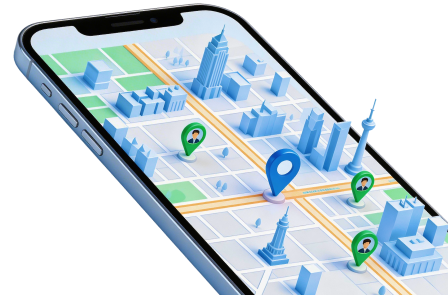
Dr.Fone - Virtual Location offers supported-phone GPS functions such as choosing a map position, planning simulated movement and using joystick controls. These can be relevant to an authorized map demonstration or location-based app test. They do not prove current Pokémon GO compatibility, identify active Charmander nests or override a game's rules.
The product page explicitly excludes Pokémon GO support on Android. Its iOS marketing and general GPS features do not establish rule compliance or immunity from penalties either. Check the exact device, operating-system and product requirements before downloading. The fixed banner's safety wording is not an account-safety guarantee, and simulated GPS does not encrypt your traffic like a VPN.
For a separate, authorized non-game demonstration on your own compatible phone, the following workflow shows what the location function actually does. Keep it separate from Pokémon GO and do not use it as an account-protection or regional-event workaround.
Step 1 Review support and connect your own device
Open the desktop Dr.Fone location module, connect the supported phone and follow the current on-screen connection and permission prompts. Do not assume the desktop program and mobile download are interchangeable for every device.
Step 2 Search for a demonstration destination
Select Teleport Mode and search for a place or coordinates you are authorized to test. Inspect the pin and map result before proceeding; a place being searchable does not establish that any Pokémon is present there.
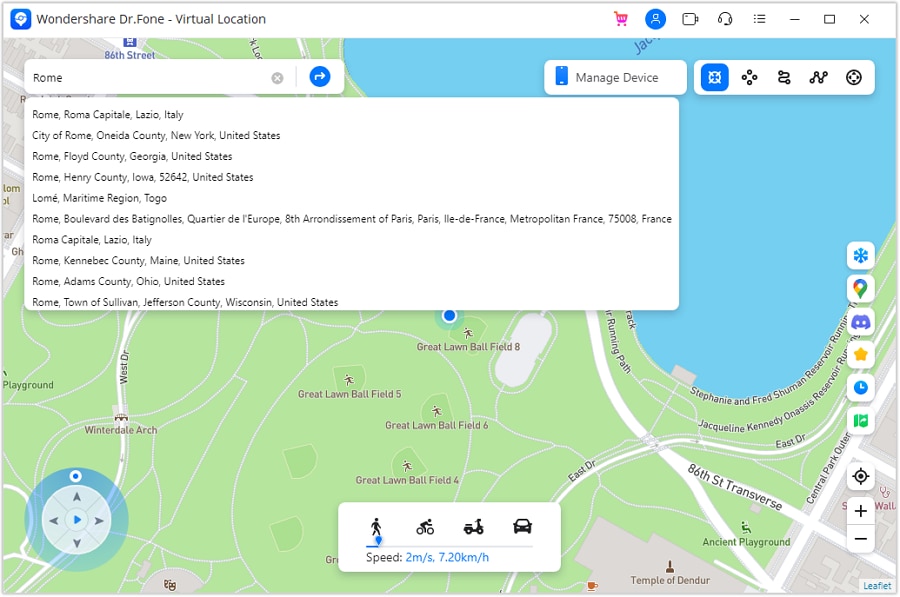
Step 3 Confirm the position and inspect a maps app
Use Move Here when you are ready for the demonstration. Check the connected phone's maps app to see whether it reports the intended test position. A successful map result is not proof that another app supports, permits or cannot detect simulated GPS.
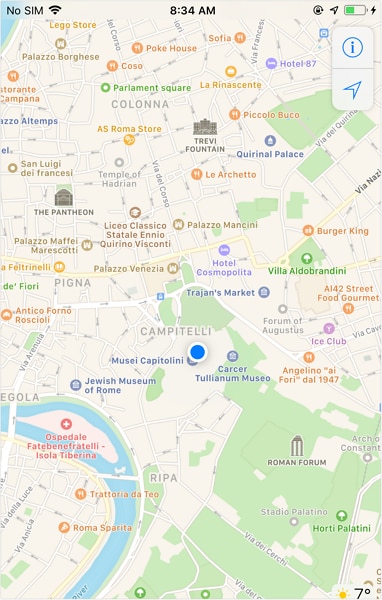
Step 4 End the test and restore the genuine position
Follow the product's restore instructions; its official Teleport Mode guide describes restarting the phone to return to the actual position. Reopen maps afterward and confirm the real location before using any service that depends on accurate coordinates.
If the maps app does not return to your real position, resolve that state before continuing with location-dependent services. For Charmander itself, return to current announcements, legitimate local reports and real-world play; a GPS demonstration does not improve the official catch mechanics.




Conclusion
Start a Charmander hunt with current evidence: an explicitly featured event, a fresh local report or an encounter visible through Nearby. Use sunny or clear in-game weather as a useful Fire-type clue, not a guarantee, and prepare balls, Berries and controlled throws for the encounter itself. Check an individual Egg's eligible species before treating hatching as an option. Dr.Fone's separate GPS features can support authorized phone demonstrations, but Android Pokémon GO support is excluded and simulated travel does not remove gameplay-policy risks.
FAQ
1. What is the quickest practical way to find Charmander in Pokémon GO?
When an active event explicitly features Charmander, its published encounter window can be a useful opportunity. If no such event is running, check Nearby and fresh local sightings before choosing a walking route. There is no universal fastest method or guaranteed catch time.2. Can Charmander hatch from an Egg I already have?
Open Pokémon, select Eggs and tap the individual Egg to inspect its eligible species. Only consider that Egg a possible Charmander source if Charmander appears in its list; even then, a hatch is not guaranteed. Do not rely on an old blanket claim about 2 km or 5 km Eggs.3. How much Candy does the full Charmander evolution line require?
Charmander needs 25 Charmander Candy to evolve into Charmeleon. Charmeleon then needs another 100 for Charizard, for 125 across both stages. Candy used for powering up is a separate expense.4. Is shiny Charmander available, and do all events boost its odds?
Shiny Charmander is available, but an encounter does not guarantee the shiny version. An event offering more Charmander encounters is not automatically an event with an increased shiny rate. Check the specific official bonus announcement rather than assuming every Spotlight Hour or themed event boosts shiny odds.
 Add Wondershare Dr.Fone as a preferred source on Google