Teleport your device anywhere instantly with one click.


 100% Security Verified | No Subscription Required | No Malware


 :

 ChatGPT
 Perplexity
 Gemini
 Claude
 Grok
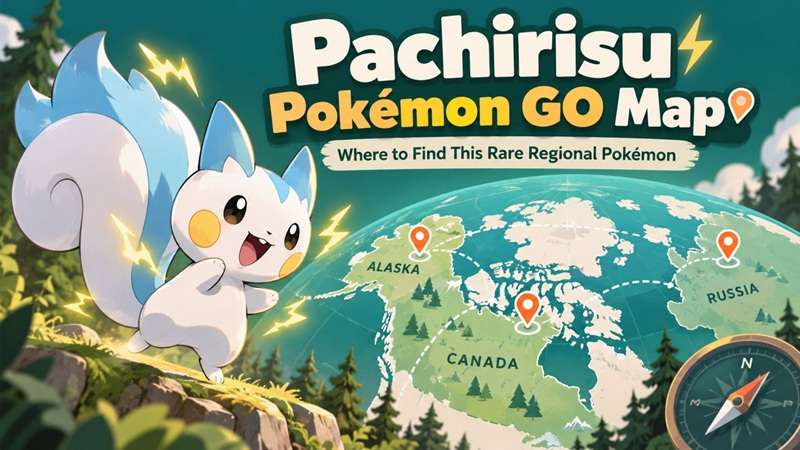
Pachirisu is associated with far-northern regions, not a single permanent coordinate. Alaska, northern Canada, and northern Russia are useful starting areas when researching its normal Pokémon GO distribution. Merely crossing a national border, however, does not establish that you are within the relevant range or that an encounter is available nearby.
The best way to read a Pachirisu Pokémon GO map is to ask what its markers actually represent: a regional boundary, an old player report, a PokéStop, or a time-sensitive sighting. Those are different kinds of evidence. Use the resources below to plan legitimate exploration, and treat virtual GPS demonstrations separately from catching the Pokémon.
In this article
Part 1: Pachirisu's Identity, Battle Profile, and Regional Appeal
The EleSquirrel Pokémon occupies entry 417 in the Pokédex and belongs to the Sinnoh generation. Its Electric typing is straightforward; finding it is not. For many collectors, limited geographic availability makes it a harder Pokédex entry than its appearance or battle strength might suggest.

Reading Pachirisu's Stats and Move Choices Correctly
Its stat distribution favors taking hits over delivering high damage. Keep base stats, CP, Pokémon level, and the moves on your individual catch separate when assessing a battle role.
| Reference | Meaning for Pachirisu |
|---|---|
| National Pokédex entry | 417; EleSquirrel Pokémon |
| Origin and typing | Generation IV, Sinnoh; Electric |
| Base Attack | 94, limiting its damage-oriented role |
| Base Defense | 172, contributing to durability |
| Base Stamina | 155, another component of its bulk |
| CP reference from the source | 1,372 is the level-40 maximum, not a universal maximum across all levels. |
| Type vulnerability | Ground attacks exploit Electric typing. |
| Moves discussed in the source | Volt Switch with Thunderbolt; evaluate the current battle format rather than assuming a universally best combination. |
Rainy in-game weather boosts Electric-type attacks, but weather is not a guarantee of a regional spawn. Likewise, a bulky stat profile does not make every matchup favorable. Ground-type opponents remain an important weakness, and battle usefulness depends on the rules and available moves in the specific format.
Where Its Normal Northern Range Helps You Search
Sinnoh is the species' fictional origin, not a real-world search destination. In Pokémon GO, the source associates its ordinary regional distribution with northern parts of the globe.

- Alaska: investigate local, recent reports within the broader regional range.
- Northern Canada: do not assume every Canadian city qualifies simply because it is in Canada.
- Northern Russia: distinguish broad regional eligibility from a confirmed, accessible encounter point.
A regional outline answers where encounters may be possible under normal conditions. It cannot answer whether one is currently at a particular street corner. Old coordinates, an isolated screenshot, or several days without seeing one do not establish an exact boundary.
When planning an actual visit, look for safe public areas with existing game activity, compare recent local observations, and inspect current official event announcements. Special availability can differ from ordinary regional distribution; this article does not claim that a particular limited-time event is active.
Part 2: Choose a Map by Its Evidence, Not Its Name
A spawn map, a community reporting service, and a landmark directory can all look convincing at first glance. Before using any of them to plan travel, inspect coverage, timestamps, contributor information, and what the legend means. An empty map may indicate missing contributors rather than an absence of Pachirisu.
1. The Silph Road: Useful Historical Context, Not a Live Search
The original Silph Road community gathered observations about species distribution and nests. That explains why older Pokémon GO guides still mention it. Trainers contributed sightings, compared locations, and used shared reports to identify promising areas.
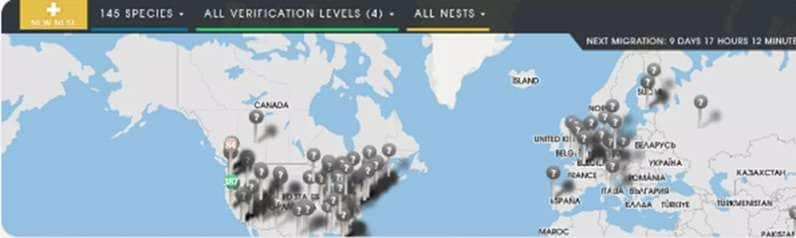
- Individual reports offered local observations rather than official spawn guarantees.
- Community comparisons helped readers investigate patterns across places.
- Archived findings can explain older advice, but cannot verify what is on the map now.

2. PokeMap: Evaluate Player-Submitted Sightings
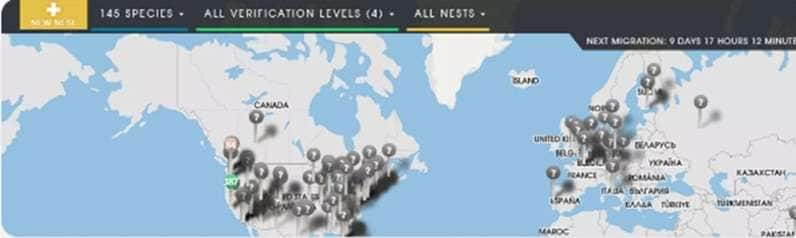
PokeMap's own instructions describe a collaborative service where visitors add discoveries and search by species. That makes contributor coverage central to its usefulness. Its real-time marketing label does not independently verify every marker.
Step 1 Identify the intended service
Open the map site and review its own help text. Similar names do not establish that two sites share data.
Step 2 Inspect northern coverage
Move to a relevant northern area and establish whether the service has usable local reports there.
Step 3 Filter and date the reports
Select Pachirisu where a species filter exists. Check any visible time or report details before treating a point as actionable.
Step 4 Separate landmarks from encounters
PokéStop and Gym markers can orient you, but they do not prove that the target Pokémon is present.
Step 5 Confirm before making plans
Read the site's limitations and compare the report with current local information. Avoid unnecessary account access or suspicious downloads.
Community submissions can be mistaken or outdated, and advertisements can make the interface harder to navigate. If no timestamp or local coverage is available, treat the result as a lead rather than a live encounter.
3. PoGo Map: Plan Around Landmarks, Not Assumed Spawns
PoGo Map describes member-contributed locations, votes, and landmark information. The page reviewed still labels worldwide Pokémon sighting reports as coming soon. Use the visible features for what they establish, not for features a tutorial assumes are available.
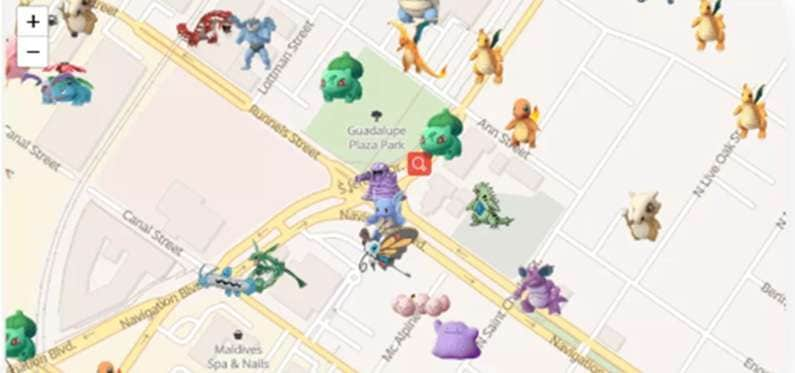
Step 1 Read the legend
Open the service and identify the markers representing Gyms, PokéStops, and other listed locations.
Step 2 Choose a relevant area
Search a northern destination that fits your legitimate travel plans and the species' broad regional range.
Step 3 Examine marker details
Review available location data and community information rather than interpreting every icon as a Pokémon report.
Step 4 Check public access
Identify accessible clusters of landmarks, then check real-world opening hours and safety separately.
Step 5 Combine with recent observations
Use the route as an exploration plan and consult current local reports for actual species sightings.
A dense group of PokéStops can be useful context for a walk, but landmark density is not proof of Pachirisu availability. A static place record and a short-lived encounter remain fundamentally different.
4. PokeHunter: Check Its Limited Geographic Coverage First
The PokeHunter page reviewed lists selected cities in California, Minnesota, Oregon, and Washington. It does not establish coverage of Alaska, northern Canada, or northern Russia. Its listed Vancouver location is in Washington, not Canada.
Therefore, do not recommend it as a verified northern Pachirisu tracker. A service can be useful for supported locations without answering this particular regional search. Confirm both the geography and the data type before relying on any marker.
| Resource | Appropriate use | Important boundary |
|---|---|---|
| The Silph Road | Context for older community research | Original mapping tools are no longer a live option. |
| PokeMap | Investigating contributed species reports | Local coverage, accuracy, and freshness require checks. |
| PoGo Map | Finding member-recorded game landmarks | A Gym or PokéStop is not an active Pachirisu sighting. |
| PokeHunter | Research in explicitly supported cities | The reviewed coverage does not verify the northern search regions. |
Part 3: Virtual Exploration Is Not a Guaranteed Catch from Home
 Set your map route to simulate GPS movement.
- Set your wanted movement speed.
- HD and large map view to check location.
- Fake GPS location to anywhere.

The original catch-from-home premise needs a clear limit: Dr.Fone - Virtual Location changes a supported phone's reported GPS position. It does not locate Pachirisu, generate encounters, move Pokémon into your collection, or confirm that a map report is still active.
The official product page excludes Pokémon GO on Android. Advertised iOS use also does not waive the game's prohibition on location spoofing or ensure compatibility. For obtaining Pachirisu without traveling yourself, investigate a legitimate trade with a willing local trainer or an officially announced availability opportunity; neither is guaranteed to be accessible at a particular time.
What Dr.Fone Can Contribute to a Location Demonstration
- Enter an address or coordinates to choose a simulated device position.
- Preview an area on a larger map without presenting it as live game data.
- Build a permitted route demonstration and select its simulated travel speed.
- Use supported joystick or keyboard controls to change movement direction.
- Follow the model-specific setup, which normally avoids jailbreak or root requirements but still requires compatibility checks.
These are GPS simulation capabilities. They are not a substitute for official game access, a spawn-scanning service, or phone privacy settings. Test only with apps and accounts where the use is permitted, and never rely on simulated coordinates for emergency navigation.
A Three-Stage Workflow for Previewing a Northern Region
Step 1 Prepare your own device
Install the appropriate official desktop package, choose Virtual Location, and connect your phone. Complete the documented trust prompts and inspect the map after the connection succeeds.
Step 2 Inspect a selected map destination
Choose Teleport Mode for an authorized demonstration rather than opening Pokémon GO.
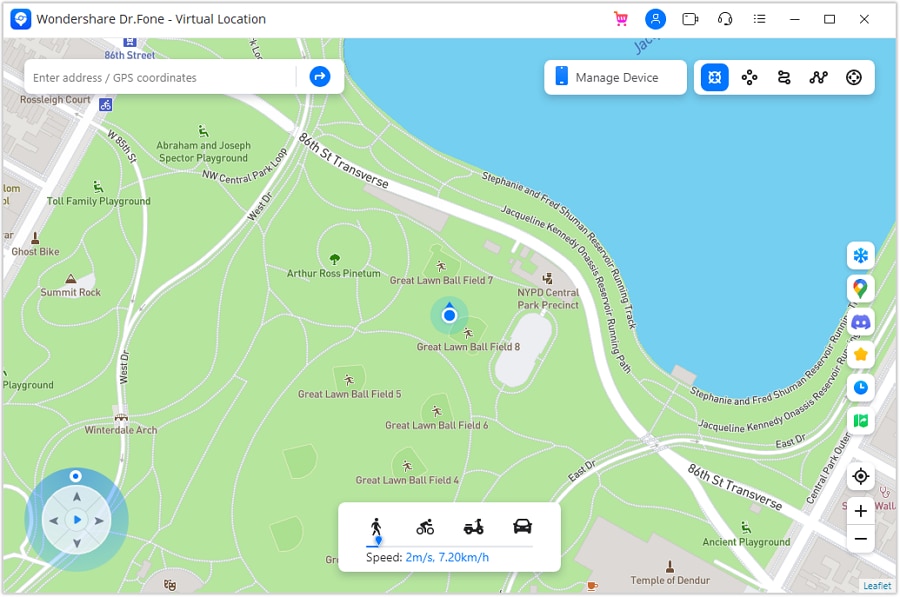
Search your chosen address or coordinates. A map search result is a geographic point, not confirmation of a Pachirisu encounter.
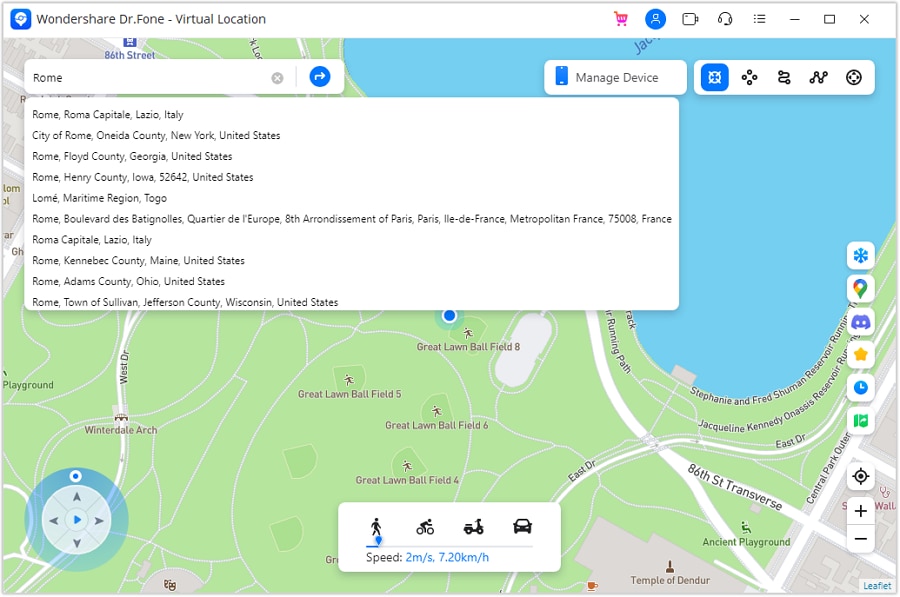
Review the marker and use Move Here if it matches the intended test. Verify the reported position in a compatible map app.

Step 3 Demonstrate and end simulated movement
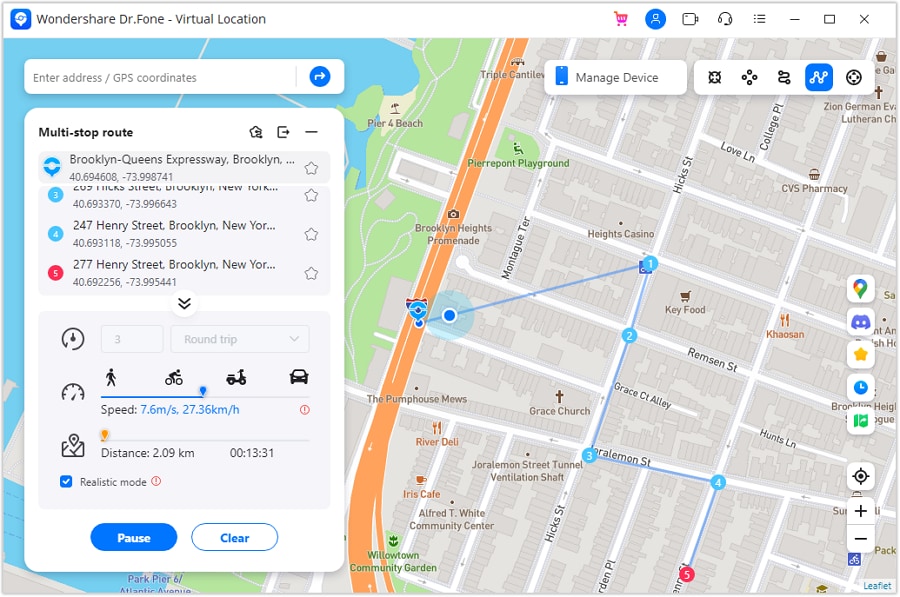
Choose a one-stop or multi-stop path, inspect its points, set a speed, and use the movement control shown by your version. Observe the route without treating it as legitimate game travel.
Directional controls can adjust supported simulations. Pause or stop the route when finished and check that normal location behavior is restored.
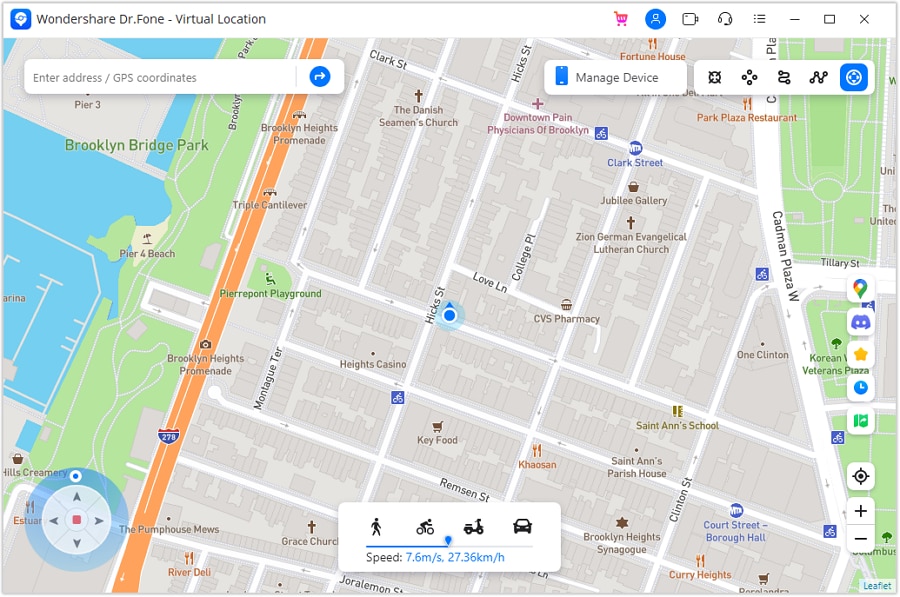
The result is a controlled map-position demonstration, not proof that you can catch Pachirisu remotely. Keep the tool's technical capabilities, the game's rules, and the quality of community spawn evidence separate.




Conclusion
Start a Pachirisu search with regional eligibility, then check local coverage and report freshness. Do not confuse discontinued tools, static game landmarks, or an old coordinate with a current encounter. None of the reviewed resources establishes a guaranteed live spawn.
Virtual Location can demonstrate GPS changes on supported devices, but cannot supply Pachirisu sightings or eliminate account risk. Legitimate travel, permitted trading, and current official availability announcements are more appropriate foundations for completing the Pokédex.
FAQ
1. Does Pachirisu appear throughout Canada?
No. The ordinary distribution is associated with northern areas; a Canadian address alone does not confirm local eligibility or a current spawn.2. Can a PokéStop map locate a live Pachirisu?
Not by itself. Landmark markers identify game locations, while an encounter report needs separate species and freshness information.3. Is the original Silph Road map still a live option?
No. Its discontinued tools should be treated as historical context rather than a current tracking service.4. Will changing GPS guarantee Pachirisu from home?
No. GPS tools do not create or verify spawns. The official Dr.Fone page excludes Android Pokémon GO, and spoofing can lead to game enforcement.
 Add Wondershare Dr.Fone as a preferred source on Google