Teleport your device anywhere instantly with one click.


 100% Security Verified | No Subscription Required | No Malware


 :

 ChatGPT
 Perplexity
 Gemini
 Claude
 Grok
There is no dependable Pokémon GO egg hatching cheat that guarantees free distance while your phone remains on a desk. Eggs need an incubator and qualifying distance. Adventure Sync can record supported activity with the game closed, but a moving map pin, a shaken phone, or a toy carrying the device is not proof that Pokémon GO will accept that movement.
If leaving home is inconvenient, separate genuine activity tracking from claims about artificial motion. This 2026 review keeps the original methods in view, explains their limits, and shows the normal incubation process. GPS simulation also carries an account-policy risk: the game's fairness rules explicitly include location spoofing as cheating. No speed setting, joystick, or desktop connection eliminates that rule.
In this article
Part 1: Evaluate At-Home Egg Hatching Tricks
Start by opening the egg you are incubating and checking its remaining distance. Progress matters only after incubation has begun. If legitimate activity is missing, review Adventure Sync and its permissions before trying an improvised mechanical solution. A delayed update can also make a short test appear more successful or less successful than it actually was.
Shaking your mobile device
The original trick involves enabling Adventure Sync, closing the game, and shaking the phone to imitate walking. Some users report changes in their activity totals, but that is not a dependable measurement of eligible egg distance. Different sensors, health permissions, app versions, and synchronization timing can produce different results. A claim such as a fixed quarter-kilometer after ten minutes should not be presented as a verified outcome.
- Enable Adventure Sync from Pokémon GO's settings if you want supported activity tracking while the app is closed.
- Grant the health and location permissions requested by your supported setup rather than assuming a toggle alone completes configuration.
- Compare actual egg progress after normal activity. Do not equate every step shown in another app with distance already credited to an egg.
Routine walking indoors may be more practical than an artificial shaking session, provided your activity is recorded and accepted. It still involves physical movement; it is not an unlimited-distance method that works by leaving the device untouched.
Bouncing a device in a sock
This variation places the phone inside a sock and swings or bounces it. Its proposed mechanism is artificial motion, not a feature supplied by Pokémon GO. There is no reliable basis here for promising a kilometer, recommending a particular sock length, or claiming consistent hatching. A phone can slip out or strike a hard surface, so this is not a sensible device-handling recommendation.
Use a secure pocket during ordinary activity instead. If you cannot complete the required movement at present, leave the egg incubating until you can do so. Do not play while driving, and do not assume that riding in a slow-moving vehicle qualifies as walking merely because a map location changes.
Part 2: What GPS Software Can and Cannot Do
A location tool can change the coordinates a supported device reports or simulate a route. Those capabilities are different from an official egg-distance entitlement. Pokémon GO decides whether to credit distance, and its gameplay fairness policy identifies GPS location spoofing as prohibited behavior. Review that distinction before putting a game account at risk.
Using Dr.Fone - Virtual Location: the iOS movement claim
The source proposes Dr.Fone - Virtual Location as a way to simulate movement from home. Its relevant functions include map destinations, routes, speed controls, and a joystick on supported configurations. Simulating a trip from a house to a park does not prove that the game will record that trip as eligible exercise or hatch an egg.
Dr.Fone - Virtual Location: map controls and a complete workflow
 Set your map route to simulate GPS movement.
- Set your wanted movement speed.
- HD and large map view to check location.
- Fake GPS location to anywhere.

The product's practical role is GPS testing and simulation. Its one-stop and multi-stop modes can define a path, while joystick controls adjust movement direction. The available interface and device support should be checked before use. Avoid describing any of these options as a guarantee of accepted Pokémon GO distance, supported game access, or protection from account action.
The official Dr.Fone - Virtual Location guide explains destination selection. Route simulation is a separate mode from teleporting directly to a point: a jump changes position, whereas a route animates coordinates over time. That distinction explains the software, but neither approach overrides a third-party game's rules.
Step 1 Connect a supported phone
Launch the desktop tool, connect your own device, and finish the required trust or permission prompts. Confirm that the map recognizes the connected phone.
Step 2 Choose the appropriate map mode
For a destination test, use Teleport Mode and search for the intended place. For a route test, use one-stop or multi-stop mode and select the route points.
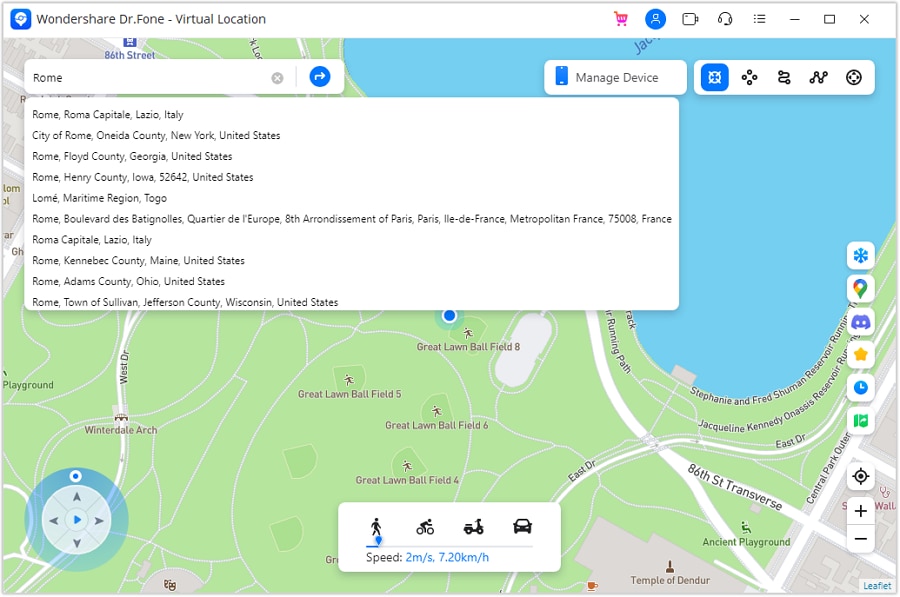
Step 3 Configure movement controls
Review the route, trip count, and speed. Start the simulation using the control shown by that mode. Joystick mode provides directional control rather than an egg-hatching command.
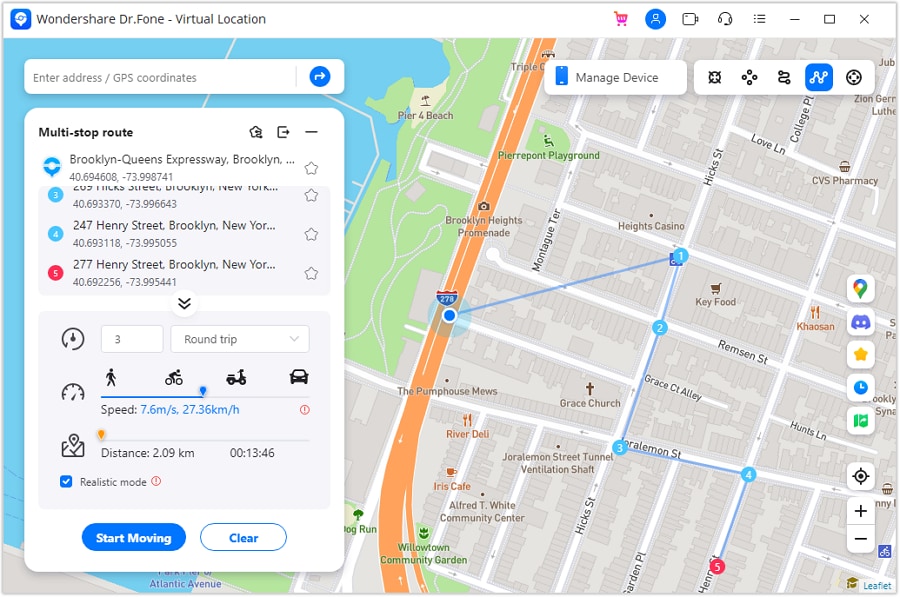
Step 4 Inspect and end the test
Check the phone's map app, pause or clear the simulation when appropriate, and restart the device to restore the real location when prompted. Do not interpret the map test as proof of in-game rewards.
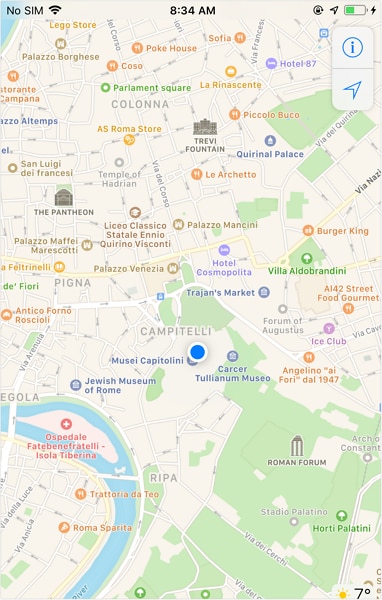
The workflow ends with verifying the device location and restoring normal positioning. For Pokémon GO egg progress, use the game's own distance display and follow its published rules instead of relying on a simulated route.




What a completed location test actually establishes
A successful test establishes that a supported phone displayed the selected coordinates. It does not establish that another app accepted them, that health activity synchronized, or that an incubated egg received distance. Keep those checks separate, and do not infer game progress solely from the desktop map animation.
Using an Android location spoofer
The Android alternative described in the original tutorial also concerns mock location and map movement. Device setup differs from iOS, so do not assume a method for one operating system applies unchanged to the other. Check the actual model, software version, permissions, and current tool support.
Changing an Android location does not make the game obliged to credit kilometers. The same account-policy warning applies even when no modified game client is installed. If your real problem is Adventure Sync not recording ordinary activity, troubleshoot its permissions and supported health integration instead of treating spoofing as the official repair method.
Part 3: Drones, Bikes, Skateboards, and Other Proposed Shortcuts
Eggs display a distance requirement that you can review before choosing how to use your incubators. Carrying a device along a route is not automatically equivalent to accepted walking distance. The following methods remain part of the original comparison, but their presence should not be mistaken for an endorsement or a measured success claim.
Method 1. The drone-carrying idea
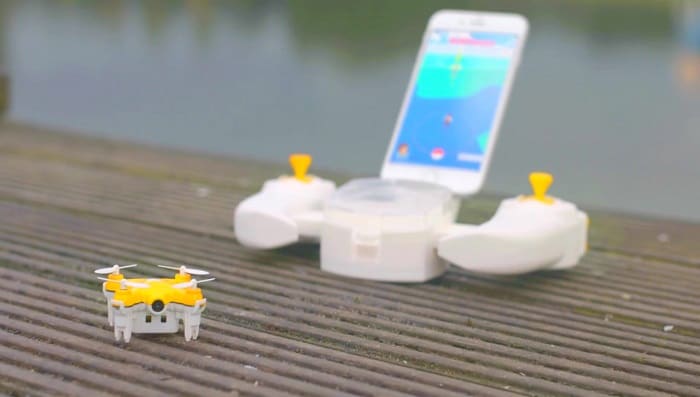
The proposed trick is to let a drone carry a phone across a distance. It introduces unnecessary risks: the device can fall, the aircraft's load and handling can change, and a flight may create hazards for people nearby. A low flight speed does not solve those concerns or prove that game distance will count. Do not attach a phone to a drone for egg hatching.
Find My or a comparable locating feature is not insurance against a dropped, damaged, or unreachable phone. Keep the device secure on the ground and use normal supported activity instead. This preserves the topic while removing the original unsafe implication that fastening and a recovery setting make the method advisable.
Method 2. Riding a bike or skateboard
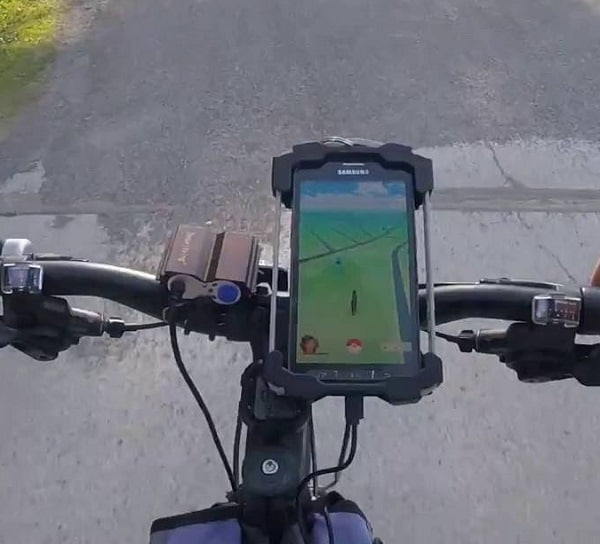
These activities can cover a real route without walking, but they are not at-home methods and their distance may not qualify the same way as walking. There is no universal speed value in this guide that guarantees credit or avoids enforcement. Treat the game's own progress display as the result, not a promise attached to a chosen riding pace.
Keep your attention on your surroundings, follow local safety requirements, and stop in a safe place before interacting with the screen. Do not ride with your eyes on a live game. If an activity is unsuitable for your situation, leave the egg for a later opportunity rather than creating a traffic or fall risk.
Method 3. Other ideas and legitimate in-game options
1. Exchange friend codes, but do not lend eggs
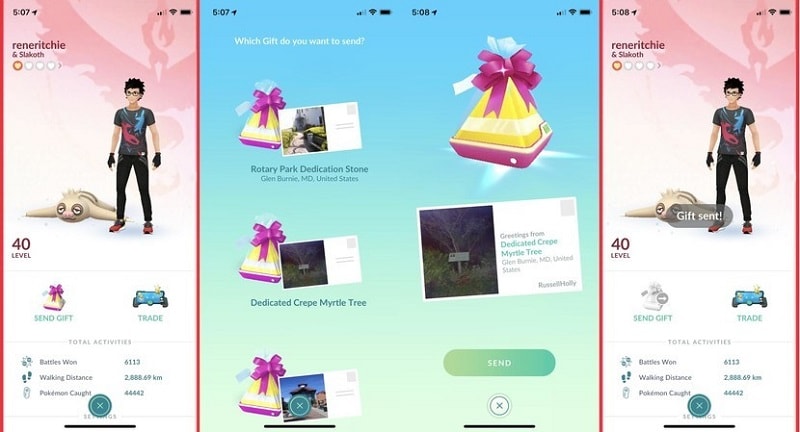
Adding friends supports the game's social features, but it does not let you send an egg already in your inventory to a friend for hatching and then receive it back. The original claim confuses gifts and egg acquisition with incubation ownership. A physically active friend cannot complete the incubation distance for an egg that remains on your account merely by receiving a friend code.
2. A model train is not a dependable distance source

A toy moving around a small track produces neither a guaranteed GPS route nor a supported promise of walking activity. Indoor location uncertainty and repetitive motion make a simple distance calculation unreliable. Do not leave a phone unattended on a moving toy, and do not assume that a slow setting turns the toy's travel into credited egg kilometers.
3. A Roomba does not provide verified walking credit
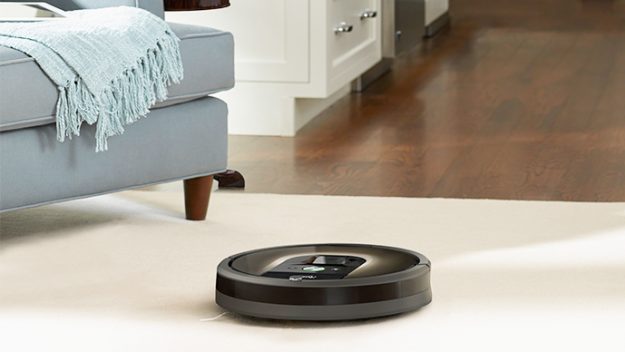
A robot vacuum can cover floor area, but the game is not measuring its cleaning route as an official exercise source. Securing a phone to it adds collision, drop, and device-damage risks without establishing that any distance will count. Let the appliance perform its intended task and troubleshoot legitimate activity tracking separately.
4. Use incubators correctly
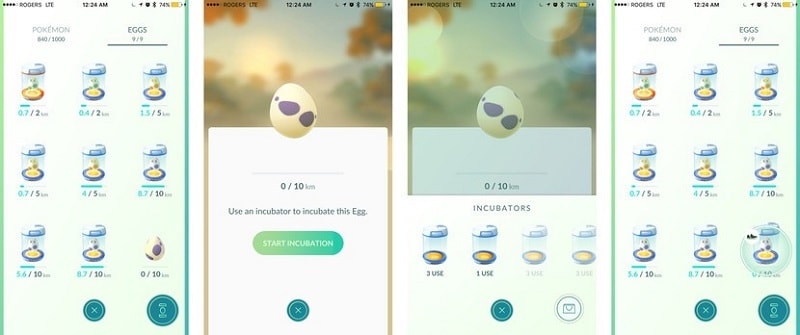
Incubators are the actual in-game requirement, not a passive timer that hatches eggs simply because you bought one. The official incubation guide says each incubator holds one egg. Your inventory includes an infinite-use incubator; additional incubators can allow several eggs to progress at the same time.
Step 1 Select an egg
From the map, open the main menu, choose Pokémon, and switch to Eggs. Tap the egg you want to hatch.
Step 2 Begin incubation
Tap Incubate and select an available incubator. Check the displayed distance requirement before allocating limited-use items.
Step 3 Record qualifying activity
Walk with the game open, or configure Adventure Sync for supported tracking while it is closed. Review progress in the egg screen; purchasing more incubators does not remove the activity requirement.
Conclusion
The practical way to improve egg progress is to start incubation correctly, configure legitimate activity tracking, and check the recorded distance. Shaking, socks, household machines, and drone flights are not dependable substitutes. Dr.Fone - Virtual Location can simulate GPS movement on a supported setup, but it cannot promise accepted Pokémon GO kilometers or exemption from the game's rules.
FAQ
1. Does shaking a phone guarantee egg distance?
No. Artificial motion produces variable reports, and health-app activity is not the same as confirmed distance credited to an incubating egg.2. Can my friend hatch an egg from my inventory?
No. Exchanging a friend code does not transfer your incubating egg to another player for completion and return.3. Do extra incubators hatch eggs while I wait?
No. They can support parallel incubation, but each egg still needs its required qualifying distance. Check its progress in the game.4. Is GPS simulation approved for Pokémon GO?
The published gameplay fairness policy lists GPS spoofing as cheating. A route or joystick feature does not guarantee accepted distance or protect an account from action.
 Add Wondershare Dr.Fone as a preferred source on Google