Teleport your device anywhere instantly with one click.


 100% Security Verified | No Subscription Required | No Malware

 :

 ChatGPT
 Perplexity
 Gemini
 Claude
 Grok
You do not need a free Pokémon GO hack for iOS to make progress. Better use of XP items, event bonuses, friendship interactions, catches, and local Gym battles can help you advance within the normal game. GPS spoofers and unofficial clients are different: falsifying location can violate the game's rules and put your account at risk.
Pokémon GO is an ongoing collection and exploration game rather than a short campaign with one finish line. This 2026 list keeps the original ten topics and detailed walkthroughs, but separates ordinary gameplay tips from unsupported shortcuts. It does not claim that a location tool is permanently free, approved by the game, or guaranteed to avoid enforcement.

In this article
Avoid unofficial downloads that ask for your game password, verification payment, or configuration access without a clear legitimate purpose.
Part 1: Rules, Fair Play, and the Risks of Free iOS Hacks

The word hack is often used loosely. Planning a Lucky Egg session or adding friends through the official app is not the same as modifying a game client, automating play, or falsifying GPS. The original blanket statement that free hacks are perfectly legal should not be used as legal advice or permission from the operator.
Read the linked Player Guidelines and Terms of Service, following any redirect to their current versions. The official fairness policy specifically identifies location falsification as cheating. Account warnings, suspension, or termination are possible, and some conduct may lead to termination without three prior warnings.
Community discussions on Reddit or Quora can help with strategy, but popularity is not authorization. Consider how a shortcut affects other players, raid groups, and local communities, and decline requests to share an account. When a claimed exploit conflicts with the published rules, choose the permitted gameplay alternative.
Part 2: Ten Pokémon GO iPhone Tips and Their Limits

The first topic explains GPS software because it appeared in the original list; it is not a recommendation to use it for prohibited gameplay. The remaining topics concern travel planning, item timing, encounters, friends, and battles. Check the current app interface and event notices before relying on an old screenshot.
1. Understand Location Spoofing Before Considering a Tool
 Set your map route to simulate GPS movement.
- Set your wanted movement speed.
- HD and large map view to check location.
- Fake GPS location to anywhere.
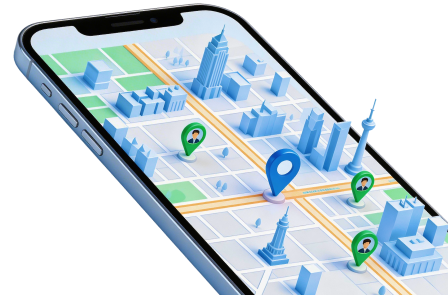
Dr.Fone - Virtual Location is a map-based GPS utility for supported devices. It can select a destination and simulate a route with configurable movement, but it does not award XP directly, prove that you physically traveled, or grant permission to spoof Pokémon GO. Device and operating-system requirements should be checked against the current product information.
The nine-step workflow below preserves the source's setup and verification coverage for a permitted location test outside gameplay. It is not a ban-avoidance tutorial. Interface labels and icon positions can differ between releases, and a free download does not establish that all product features are available without payment.
Only connect a device you control and understand the software's trust and setup prompts.
Step 1 Install the appropriate desktop edition
Obtain the software from the official source, review system requirements, and install it on a compatible computer. Do not substitute an unofficial modified Pokémon GO client.
Step 2 Connect the iPhone
Unlock the phone, connect it with a suitable cable, and complete any authorized device-trust or connection prompts. Wait until the current software recognizes the correct phone.
Step 3 Select Virtual Location
Open the Virtual Location module from the available Dr.Fone tools. The home-screen layout may differ by version, so look for the module name rather than assuming an unchanged layout.
Step 4 Start the supported connection workflow
If your release displays Get Started, select it and complete the remaining setup instructions. Starting the program alone does not confirm that a different GPS coordinate has been applied.
Step 5 Choose Teleport Mode
Use the control labeled Teleport Mode. The original third-icon description is version-specific; the official current guide describes the mode in the top-right controls, so identify it by its label and function.
Step 6 Search and confirm a test destination
Enter a place or address, inspect the map result, and apply it with Move Here when prompted. Avoid choosing a similarly named location by mistake.
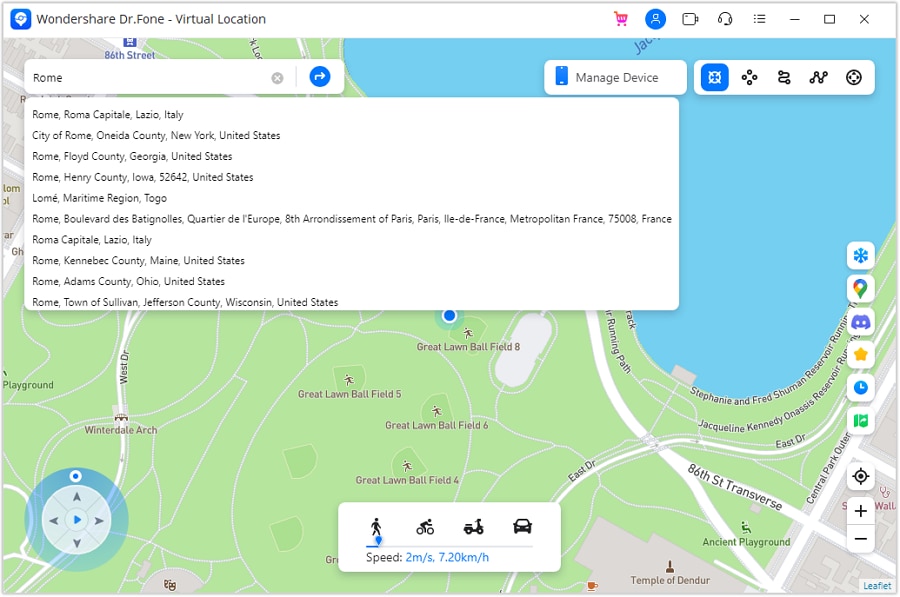
Step 7 Check the desktop map indicator
Confirm that the displayed point matches the intended test location. A moved desktop marker is one verification step, not proof that every app or remote service is using that coordinate.
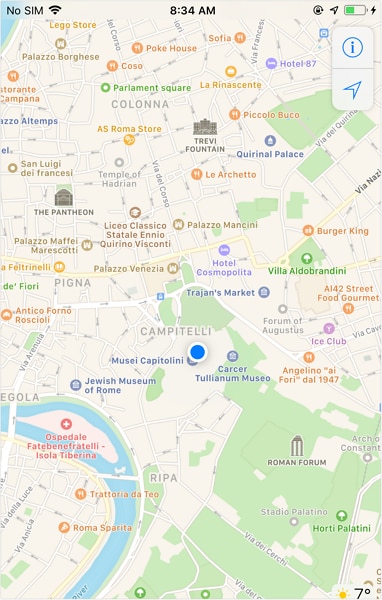
Step 8 Verify the phone's Maps position
Open Maps on the iPhone and compare its reported location with the desktop result. Keep GPS simulation away from navigation, emergency services, and any situation where accurate location is safety-critical.
Step 9 Test a permitted route and restore real GPS
For an authorized route test, return to the route controls, select one or more points, choose the available speed and repeat options, and use Start Moving. This simulates movement only; it is not guaranteed game progress. When finished, follow the software's restart-device instructions to restore the actual position and verify Maps again.
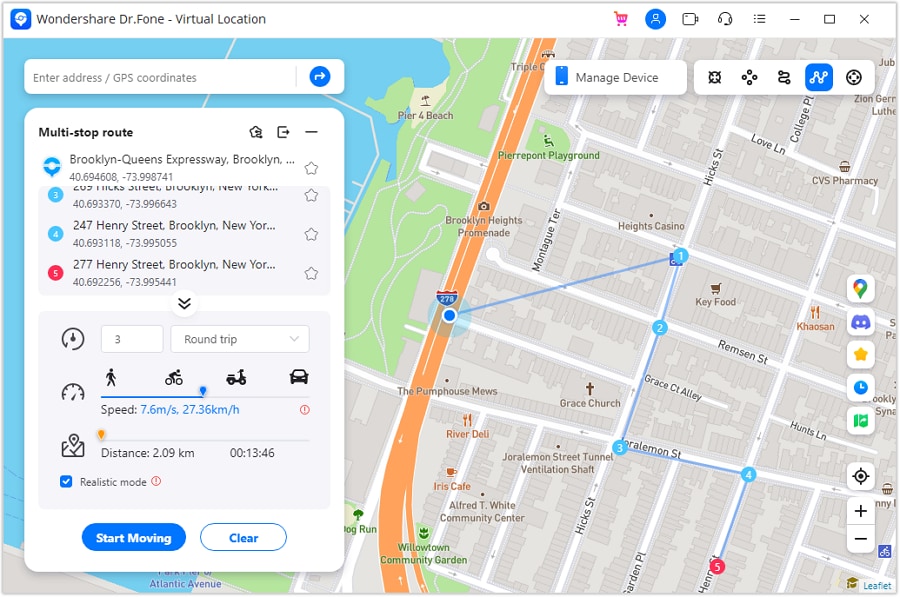
The complete setup ends with independent verification and restoring real location. No cooldown duration, speed selection, or realistic-looking route guarantees account safety in a game that prohibits falsified GPS.




2. Plan Safe Travel Instead of Playing While Riding

Walking between safe, accessible locations can create more opportunities to play. A bicycle, scooter, skateboard, or rollerblades may be transport, but they are not a reason to operate the game while moving. Stop in a safe place, away from traffic and other path users, before looking at or interacting with the screen.
Higher speed does not automatically mean more credited distance, encounters, or XP. The game has movement-related restrictions and may not count a trip as you expect. Do not bypass warnings or seek a speed threshold to evade detection. Plan a manageable walking route and respect local traffic, access, and pedestrian rules.
3. Time Lucky Eggs Around Real XP Opportunities

A Lucky Egg doubles XP for a limited duration, normally 30 minutes unless an event specifies otherwise. It is most useful when you can complete several XP-producing actions during that window. Prepare the session before activating the item rather than spending its timer organizing storage.
- Event bonuses: Read the event's exact XP and item-duration conditions. Different bonuses do not always apply to every action.
- Daily catch activity: A first-catch streak is not the same mechanic as a Research Breakthrough. Confirm the relevant reward instead of assuming every research encounter produces a special seven-day catch bonus.
- Planned evolutions: Gather eligible Pokémon and sufficient Candy before the timer starts; compare this with other available XP activities.
- Friendship milestones: Coordinate eligible interactions and watch the current game's prompts for applying a Lucky Egg. A Gift helps only if it triggers the intended milestone.
Lucky Eggs may come from eligible rewards or the shop, but they are not an unlimited free supply at every level. If you choose to buy one, inspect the current price and bundle contents rather than assuming the old 80-coin and eight-for-500 examples are still offered.
4. Check Current Pokémon GO Events
Events can change encounter availability, XP rates, item duration, or research opportunities. Some are global, some local, and some require a ticket or other eligibility. A dated reference to the next Los Angeles event in February is not a usable calendar for every reader.
Use the official Pokemon Go Events page to confirm dates, local time, location, bonuses, and participation rules. Community discussions can help you prepare supplies and plan a safe route, but the official announcement should determine what is actually included.
5. Treat Fast Catch as an Unofficial Interface Technique
Players use the term Fast Catch for an encounter-screen interaction that can reduce time spent watching the normal catch sequence. It is not an official promise of extra XP, a higher capture chance, or permanent support. Updates may change whether it works; use the standard catch flow if the interface behaves differently.
Step 1 Use the Ball selector as the held control
In the older technique, the non-throwing hand drags the Ball selector inward while keeping a finger on it. Do this only while stationary and without tools that automate input.
Step 2 Recognize the Berry-selector alternative
Some versions of the same technique use the Berry selector instead. This is an alternative held control, not a requirement to manipulate both drawers at once. If your version responds differently, stop rather than forcing the interface.
Step 3 Keep the held finger in place
The drawer may not open immediately while the finger stays down. This temporary interface behavior does not alter the species, catch odds, or reward that the server will determine.
Step 4 Throw with the other hand
Make the normal throw and wait for contact before releasing the held selector. A missed throw remains a missed throw; the technique is not a substitute for aiming.
Step 5 Close the drawer and check the actual outcome
Release the held finger, close the opened drawer, and use the encounter's exit control if it is available. The source's Escape wording does not refer to an iPhone keyboard key. Verify your Pokémon storage or journal afterward: leaving the animation does not guarantee a catch.

6. Add Friends Through the Official Social Tools
Friendship can support Gifts, cooperative play, and eligible milestone XP. It also helps when organizing challenging raids, although friendship alone does not guarantee a raid win or remote participation. Choose people you are comfortable interacting with and consider what your profile and Gifts reveal.
The old fixed 400-friend statement should not be treated as today's limit. Limits and shared social-system behavior can change; consult the current Help Center or the app if you cannot add another person. A friend request must be accepted before the friendship is established.
Step 1 Open your Trainer Profile
From Map View, select your profile to access the social tabs.
Step 2 Open Friends
Choose Friends to see your existing list and pending requests.

Step 3 Select Add Friend
Use the Add Friend control shown in your version of the app.
Step 4 Enter a Trainer Code or scan a QR code
Enter the other Trainer's 12-digit code, or open the QR option and scan their code with permission. Check that you have the intended person before sending.
Step 5 Review optional friend-discovery permissions
The source screenshot includes Facebook friend discovery. That option is version-dependent and should not be assumed available now. If a supported Contacts or linked-account option appears, review its data-access prompt before enabling it; manual codes remain a separate method.

Step 6 Send the request and wait for acceptance
Confirm Send Friend Request where shown, then allow the other Trainer to accept or decline. Do not repeatedly contact someone who has not agreed to interact.
Communities such as r/PokemonGoFriends share Trainer Codes for voluntary connections. Posting publicly may bring requests from strangers, so avoid sharing passwords, real-time whereabouts, or unnecessary personal information.
7. Use Lure Modules at an Accessible PokéStop
A Lure Module attracts encounters around the PokéStop where it is installed. It normally lasts 30 minutes, with duration or behavior sometimes changed by an event or module type. Do not assume a guaranteed five-to-ten Pokémon or confuse a stop-based Lure with an item that follows your position.
Step 1 Open a nearby eligible PokéStop
Reach the stop safely and select it while stationary. Check whether a module is already installed and whether you have the one you intend to use.

Step 2 Open the module slot
Tap the small module area above the Photo Disc in the interface shown by the app.
Step 3 Select and confirm the Lure
Choose an available Lure Module and review its effects before confirming. Stay within the normal interaction area; remote GPS manipulation is not required for this feature.

8. Choose the Correct Incense
Standard Incense attracts Pokémon to your location and typically lasts 60 minutes, with event-dependent changes. Daily Adventure Incense is a different item with a normally 15-minute window and a real-world movement requirement. An event color or special item has its own rules; not every Incense simply selects one Pokémon type.
Step 1 Open the main menu
Use the Poké Ball icon in Map View when you are safely stopped.
Step 2 Select the intended item
Open Items, choose the Incense you mean to use, read its conditions, and activate it. Plan a safe permitted walk when movement is needed, and do not interact with the phone while riding.

Eligible research, level, or event rewards may supply Incense; the shop is optional if you run out. Verify the current price instead of relying on the original 40-coin or eight-for-250 examples. Stockpiling items is not helpful if you cannot use their active time or meet their movement conditions.
9. Catch Consistently Rather Than Chasing a Fixed Species Ranking

Common, available encounters can support a steady catch routine and provide Candy for planned evolutions. Pidgey and Eevee are examples from the original guide, not guaranteed spawns or species with inherently exceptional base catch XP. Throw quality, new registrations, streaks, and active bonuses can matter more than a generic rare-versus-common label.
Not every species in the broader Pokémon franchise is necessarily released in GO at a given moment, so the original fixed count should not be used as the current in-game total. When you want a collection goal beyond routine catches, read about legendary and rare Pokemon and confirm their actual current availability through official events or encounters.
10. Build Useful Teams for Gym Battles
Gym battles involve a rival team's defending Pokémon, not a live duel against the other Trainer. Learning type matchups, choosing suitable attackers, and managing healing supplies can make these battles more efficient. Catch and evolve useful candidates instead of spending resources randomly.
Separate Gym battles, raids, and Trainer battles when planning rewards or tasks, because they are not interchangeable. Visit only accessible Gyms, respect other players, and develop a team over time. There is no supported promise that defeating more defenders produces unlimited or instant leveling.
Conclusion
The strongest practical response to a search for free Pokémon GO iOS hacks is a clear distinction between efficient play and prohibited manipulation. Coordinate Lucky Eggs with real XP opportunities, read current event terms, add friends thoughtfully, use Lures and Incense correctly, and improve catches and battle teams. GPS simulation is a separate software function, not a guaranteed leveling method or exemption from the game's fairness policy.
Keep account credentials private and prioritize safe, stationary phone use during outdoor sessions.
FAQ
1. What should I do if my Pokémon GO account was hacked?
 Secure the linked login provider immediately, change compromised credentials, and use official Pokémon GO support for lost access or ownership verification. Follow the current recovery conditions promptly; the older 72-hour description should not be read as a guaranteed recovery promise. Never pay an unofficial service to recover an account.
2. Should I use hacks to level up?
Prefer ordinary strategies supported by the game. Location falsification, unauthorized clients, and other prohibited conduct can trigger penalties. A tool being free, widely discussed, or easy to download does not make it permitted.3. Which free iPhone tips can help with progress?
Plan safe local sessions, use earned items deliberately, watch official event bonuses, coordinate eligible friendship milestones, and practice consistent catches. Optional shop purchases are not required for every strategy, and no tip guarantees a particular level-up time.4. Are Lucky Eggs, Lures, and Incense the same kind of boost?
No. Lucky Eggs affect XP, Lures attract encounters around an eligible PokéStop, and Incense attracts encounters to the user under its item-specific conditions. Their usual timers differ, and event announcements may change durations or effects.
 Add Wondershare Dr.Fone as a preferred source on Google