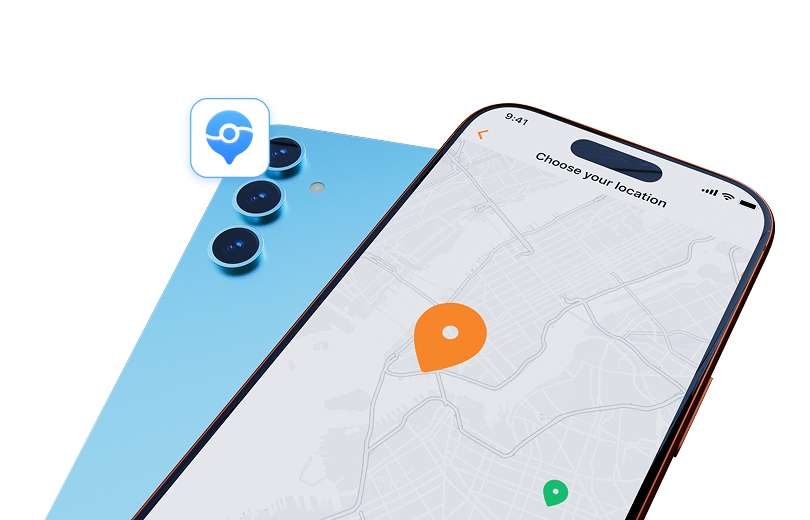
Teleport your device anywhere instantly with one click.


 100% Security Verified | No Subscription Required | No Malware

 :

 ChatGPT
 Perplexity
 Gemini
 Claude
 Grok

To unlock more Jurassic World Alive dinosaurs, collect the right DNA, preserve the coins needed for progression, and check where each target is currently available. Darting, events, incubators, and eligible hybrid recipes serve different purposes. No route guarantees that every creature can be collected immediately.
Universal and Ludia announced the worldwide launch on May 30, 2018. The game brought location-based exploration and augmented-reality creatures from the Jurassic World franchise, including creatures associated with Jurassic World: Fallen Kingdom, to mobile devices. Its roster and progression systems have developed since then, so old creature counts and spawn tables should not be treated as a complete current database.
In this article
- Part 1. Jurassic World Alive List of Dinosaurs
- Part 2. How to Get Dinosaurs in Jurassic World Alive
- Part 3. Jurassic World Alive Dinosaur Collection and Evolution
- Part 4. Getting the Resources for Catching Dinosaurs in Jurassic World Alive
- Part 5. How to Improve Your Battle Skills to Get More Dinosaurs
- Part 6. Jurassic World Alive Dinosaur Spawn Mechanics
- Part 7. General Tips for Quickly Getting Dinosaurs in Jurassic World Alive
Part 1. Jurassic World Alive List of Dinosaurs

The collection includes many prehistoric creatures and fictional hybrids, not only scientifically classified dinosaurs. New releases change the total, so a fixed claim of almost 400 entries is not a dependable complete list. Inspect the live Collection and current release information for the creatures available in your version.
The original article also points to the game’s wiki page. Treat this as a community-maintained reference, and compare individual entries with the game before spending scarce resources. For a target such as Carcharodontosaurus, check its current acquisition information instead of assuming that every listed creature is an ordinary local spawn.
Rarity and combat class are different labels. Common, Rare, Epic, Legendary, Unique, and Apex are rarity categories described by the official help material. Cunning, Fierce, Resilient, Wild Card, and mixed labels such as Cunning-Fierce, Cunning-Resilient, or Fierce-Resilient describe battle roles or class combinations. They do not form additional steps on the same rarity ladder.
Check any newer labels and special rules directly in the current roster. A high rarity is not by itself a complete reason to invest: moves, required ingredients, level costs, and the role your team needs are also important.
Part 2. How to Get Dinosaurs in Jurassic World Alive
JWA connects nearby map exploration with DNA collection. Choose a creature within the game's interaction rules, launch the in-game drone, and land darts to gather DNA. This is a virtual drone interface, not a requirement to operate a real aircraft.
Step 1 Identify a useful encounter
Inspect a nearby creature and decide whether its DNA contributes to an unlock, a level increase, or a hybrid recipe you are pursuing.
Step 2 Check your darts and access
Make sure you have the resources required for the session and can interact from a safe, permitted location. Do not trespass or use the phone while driving.
Step 3 Collect DNA through darting
Aim carefully during the drone session. The result depends on the encounter and your performance, so simply opening a creature does not guarantee enough DNA to create it.
Step 4 Review Collection progress
Return to the creature profile and compare your DNA with the displayed creation requirement. Claim the unlock when the game shows that the requirement is met.
Events, battle rewards, and incubators provide additional acquisition routes according to their current reward pools. Arena participation can contribute resources, but do not assume every win awards a drone or a fixed quantity of account XP. Read the actual reward screen before planning around a particular prize.
Part 3. Jurassic World Alive Dinosaur Collection and Evolution

DNA creates a clear progression target, but it does not remove every variable from the game. Darting performance affects what you collect, and hybrid-fusion yields can vary. The claim that all JWA collecting and progression is entirely free of chance is therefore misleading.
Evolution levels an existing creature using its required DNA and coins. Open that creature's profile and read the cost. It is not a process of merging any two similarly levelled dinosaurs into a creature exactly one level higher.
Starting levels also depend on rarity. The official help page lists Common at level 1, Rare at 6, Epic at 11, Legendary at 16, Unique at 21, and Apex at 26. These are starting-level rules, not a promise that every unlock awards the same amount of account XP or requires the same investment.
Hybrid creation is a separate, prescribed recipe. Eligible ingredient creatures must meet the specified level requirements, and you need the displayed component DNA and currency. Some hybrids can contribute to further hybrid recipes. You are not free to combine arbitrary species or design an unlisted creature.
Health, damage, speed, armor, critical chance, abilities, class, and rarity all contribute to how a creature performs. Optional subscriptions or store offers may provide specific benefits, but check their current terms; paying a monthly fee does not establish access to every absent local species. Similarly, do not budget around an unverified universal fifty-point reward for adding a creature.
Part 4. Getting the Resources for Catching Dinosaurs in Jurassic World Alive
Supply Drops are map-based resource points. The official help material describes common rewards such as darts, coins, and boost tokens; the icons on a drop are examples, not a guarantee of every displayed reward. Event drops can have a different appearance and reward rules.
Open an in-range drop and use its interaction control to collect the available reward. A normal drop has a cooldown of at least 15 minutes after collection, while some event drops can take longer. Daily caps also apply: inspect the drop's Limit Reached information or its information button before repeatedly trying to collect a capped resource.
- Darts: support DNA collection during drone encounters.
- Coins: fund displayed creature evolution and related progression costs.
- Cash and store offers: can be used for eligible purchases such as offered incubators; check the actual price and contents before spending.
- Incubators: provide rewards from their own listed pool rather than a guaranteed DNA source for any chosen creature.
- Special events: can add targeted encounters or reward opportunities, subject to the live event's attempts, timers, and eligibility rules.
Plan a session around both DNA and coin needs. Accumulating one without enough of the other can leave an evolution or hybrid project stalled. Free resources can support steady progress, but neither a supply route nor a purchase guarantees a full collection.
Part 5. How to Improve Your Battle Skills to Get More Dinosaurs

Arena battles provide another reason to develop a useful collection rather than chasing rarity alone. A team needs complementary roles and a plan for the opposing creatures, not merely a group of the rarest portraits you own.
- Read version changes: balance updates can change abilities, matchups, and resource priorities. Use the notes for your current version instead of an old tier list.
- Study strong players critically: inspect team composition and roles, but account for levels, boosts, availability, and skill before copying a leaderboard lineup.
- Balance the team: consider Cunning, Fierce, Resilient, mixed-class, and Wild Card roles alongside durability, damage, speed, and utility. No label independently wins every matchup.
- Evolve with a purpose: invest DNA and coins in creatures that support your plan. Higher stats can help, but poor move timing and an unfavorable matchup can still lose a battle.
Review losses to identify which decision or missing role mattered. Practice can improve your choices, but there is no evidence-based guarantee that every player climbs the ranks within a fixed number of weeks. Battle rewards and current event opportunities should guide collection planning alongside the map.
Part 6. Jurassic World Alive Dinosaur Spawn Mechanics
Availability depends on more than standing near a map icon. Current zones, time of day, events, and special acquisition rules all matter. The following categories explain how to interpret a creature reference without assuming that every older spawn label is a permanent rule.
- Global or Everywhere spawns: these belong to a broad location pool, with any time-of-day conditions still applying.
- Local spawns: these depend on the current local zone and may also have time restrictions. They are not all confined to one identical schedule.
- Park spawns: these relate to the game's mapped park areas. A real green space and the game's classified area do not always match exactly.
- Daily creatures: some schedules associate targets with particular days. Verify the current timetable rather than assuming a rule from an old patch remains unchanged.
- Continental or regional exclusives: when applicable, geographic availability can restrict a target. Check its current profile and events before making travel plans.
- Event exclusives: limited events can provide creatures outside ordinary nearby opportunities. Use the current event announcement, not a past event list.
- Arena-exclusive creatures: some DNA belongs to arena incubator rewards rather than normal wild encounters. Check the relevant reward pool.
- Nests: older community guides may use this label for particular location-linked encounters. Verify the actual creature and current map rules; a marked place does not guarantee the same target on every visit.
- Hybrid Pursuits: announced pursuit periods can feature component creatures. Confirm the live pursuit and scent eligibility rather than assuming every exclusive component can always be attracted.
The current official map help distinguishes six spawn areas: four local zones plus Parks and Everywhere. The local zones are Scale, Fossil, Fern, and Rock. Use the map's information icon to inspect which creatures belong to your displayed area and which remain uncollected.
Only the four local zones follow the documented monthly rotation: Zone 1 to 2 to 3 to 4, then back to 1, on the first Monday of the month. That does not mean Parks and Everywhere become the next numbered local zone. Watch any migration countdown in the game and prioritize needed DNA before it changes.
Part 7. General Tips for Quickly Getting Dinosaurs in Jurassic World Alive
The efficient approach is to connect collection activity to a small number of achievable goals. Keep DNA ingredients, coin costs, time-limited attempts, and your battle team's actual needs visible instead of chasing every rare icon without a plan.
Gather All Types of Dinosaurs
Collect useful Common and Rare DNA as well as rarer targets. Lower-rarity creatures can serve battle roles or become ingredients in a later recipe. Cunning is a combat class, not a rarity above Legendary, so compare like with like when deciding what to pursue.
A diverse collection gives you more options, but it does not require levelling everything at once. Preserve resources for your current team or a known hybrid project rather than spending coins solely because an upgrade button appears.
Create Hybrids
Choose an actual recipe from the Collection, check each ingredient's required level, and calculate the DNA and coins still missing. A hybrid preview can appear before you are eligible to create it; seeing the portrait is not proof that the prerequisites are complete.
Fusion consumes the required resources and produces hybrid DNA according to the game's rules. Because the yield can vary, leave a resource margin rather than assuming one fusion always finishes the unlock. Prioritize a hybrid that improves a specific team role or supports a planned subsequent recipe.
Use the Map to Your Advantage
Check the current local-zone icon, available nearby creatures, and event timers before starting a safe walking route. If a desired creature is not in the current pool, consider its other supported acquisition routes rather than waiting at an arbitrary point indefinitely.
Keep attention on your surroundings while moving and stop somewhere safe before darting. A creature appearing on the map is an opportunity to collect DNA, not a guarantee that a single interaction immediately adds it to the usable collection.
Collect Free Resources
Claim available Supply Drops and eligible free rewards regularly, within their cooldowns and daily caps. Look at the actual reward and event rules instead of assuming every free container includes the rare DNA you want.
Save premium currency until the benefit of an offer is clear. Consistent resource collection, selective evolutions, and well-chosen encounters are more dependable planning habits than promises of completing the entire roster quickly or without cost.
Conclusion
JWA shares location-based exploration with games such as Pokemon GO, but its DNA, darting, evolution, and prescribed hybrid recipes should be evaluated on their own rules. Both collection and battles involve decisions and limitations; describing one game as entirely skill-free or the other as entirely chance-free is misleading.
Use current creature information, distinguish rarity from combat class, and plan around the DNA and coins your next goal requires. The four rotating local zones, Parks, Everywhere, events, and reward-only routes provide different opportunities. Check each one before assuming a missing creature requires travel or a purchase.
For a separate supported positioning workflow, see Dr.Fone - Virtual Location. A map utility does not replace the game's DNA, recipe, reward, or fair-play rules.
Dr.Fone - Virtual Location: understand GPS simulation before use
 Set your map route to simulate GPS movement.
- Set your wanted movement speed.
- HD and large map view to check location.
- Fake GPS location to anywhere.
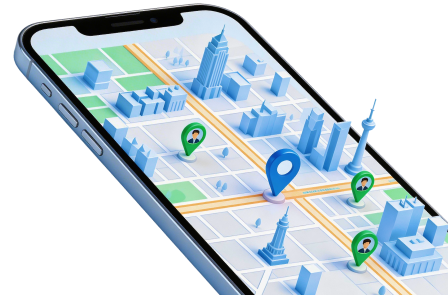
Dr.Fone - Virtual Location provides location selection, simulated map routes, and movement-speed controls on supported devices. The product page lists Jurassic World Alive among its app examples, but an app listing is not a guarantee that every current phone and game version accepts a simulated location.
Use any positioning workflow only where the app's rules permit it. Changing GPS coordinates does not grant DNA, create a hybrid, reset an event timer, bypass a geographic eligibility decision, or protect an account from penalties. For legitimate map testing, check the exact device support before connecting your own phone.
Step 1 Confirm the supported test
Review current software requirements and the receiving app's policy. Do not assume a location tool is an approved collecting shortcut.
Step 2 Connect the phone
Open the desktop program, choose Virtual Location, connect your supported device, and complete the authorization prompts.
Step 3 Select and verify a destination
In Teleport Mode, search for the desired point, inspect the map result, and select Move Here. Use a map app to check the resulting position for the permitted test.
Step 4 Return to normal positioning
After testing, follow the restoration prompt. The documented desktop workflow uses a device restart to restore the actual position.
Keep GPS testing separate from claims about creature availability or collection speed. For normal progression, return to the game's supported encounters, events, and reward systems described above.




FAQ
1. Are Cunning and Apex the same kind of category?
No. Cunning describes a combat class, whereas Apex is a rarity label. Read rarity and class separately when comparing creatures.2. Can I make a hybrid from any two dinosaurs?
No. Use a listed recipe with the required ingredient creatures, levels, DNA, and currency. Arbitrary same-level pairs do not create a new species.3. Why did the local creatures around me change?
The four numbered local zones rotate through their documented cycle, while events and other availability rules can also change the pool. Check your map icon and information screen.4. Why did a Supply Drop stop giving me coins or darts?
You may have reached a daily resource cap or the drop may still be on cooldown. Inspect its Limit Reached information and timer before trying again.
 Add Wondershare Dr.Fone as a preferred source on Google