 Teleport your device anywhere instantly with one click.


 100% Security Verified | No Subscription Required | No Malware


 :

 ChatGPT
 Perplexity
 Gemini
 Claude
 Grok
When iToolab AnyGo is not working, match the fix to the failure: a blank map, an iPhone or iPad that will not connect, or a program that crashes. These problems occur at different stages, so repeatedly reinstalling the software or changing a destination without checking the symptom can waste time.
AnyGo is designed for GPS simulation, including selected locations and movement routes. It does not physically transport you, and GPS changes are not a universal way to unlock streaming catalogs or regional app downloads. This 2026 guide explains the original troubleshooting paths and a separate location-tool workflow, with realistic compatibility and account-risk limits.
In this article
Part 1. What iToolab AnyGo Does
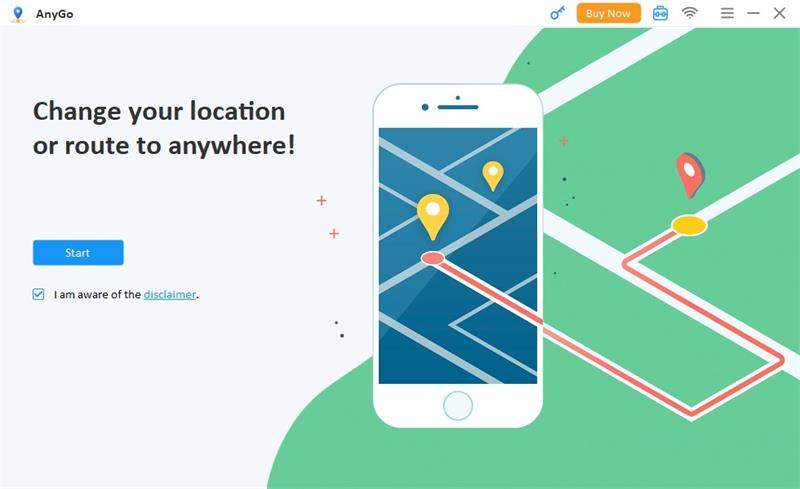
AnyGo is a location-simulation application. On supported device and software combinations, it can replace the reported GPS position with a selected point and simulate movement using route controls. The original article also describes jump mode, joystick or keyboard control, and GPX route files.
These are location functions, not evidence that every game, service, or region restriction can be bypassed. A platform may use account details or IP-based information in addition to GPS, and its terms may prohibit simulated movement. Check the current product requirements for your exact device rather than relying on an old minimum-version statement.
- Selected GPS positions and jump-style changes on supported iPhone or iPad setups.
- Repeated destination changes for controlled location testing.
- Movement controls applicable to location-based and AR test scenarios.
- Two-point, multi-point, and GPX-based route workflows described in the source.
- Changing position repeatedly can be inconvenient when the connection or software is unstable.
- A game or service can restrict the account for violating its rules; no simulator guarantees immunity.
Part 2. Fix AnyGo According to the Symptom
Issue 1: The Application Does Not Load a Map
First confirm the computer has a working internet connection by loading a normal website. If the connection is unavailable, address that before changing device settings. If general browsing works, close and reopen the location window once.
Next, use the application's menu to look for Check for updates. Install an official update if one is offered. A normal uninstall and reinstall can be considered if the installed copy is damaged, but do not assume it will cure a map-provider outage or network filtering. Record what you see if the map remains blank.
Issue 2: The iPhone or iPad Cannot Connect
Check recognition before testing a location. A destination cannot be applied reliably to a phone the desktop software has not detected.
-
Step 1 Reconnect safely
Stop any active operation, unplug the device, restart AnyGo, and reconnect the unlocked phone. Respond to legitimate device trust prompts.
-
Step 2 Test the physical connection
Try a suitable alternative USB port and a known-working data cable. A cable that charges the phone is not necessarily a functioning data connection.
-
Step 3 Check recognition and support requirements
Verify that the computer's appropriate Apple device software can recognize the iPhone. Follow AnyGo's current instructions for the installed edition and iOS version before changing drivers or reinstalling components.

Issue 3: AnyGo Keeps Crashing
Restart the application once after saving any relevant work. If the crash is reproducible, stop opening it in a loop and collect useful diagnostic information: the action that triggers the crash, the software version, the computer system, and the device model.
On Mac: In Finder, open the Go menu while holding Option to reveal Library. Inspect Library > Logs > DiagnosticReports for an applicable AnyGo crash report. The report name and location can vary, so use the vendor's instructions if it is not present.
On Windows: Inspect the application's installation directory for its log folder, as illustrated in the original article. Compress the relevant logs if support requests them. Do not send an entire unrelated user folder or publish logs publicly.
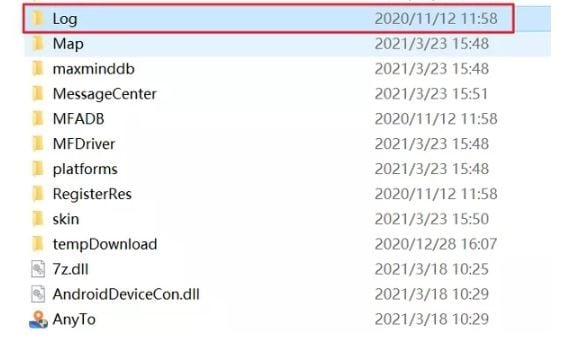
Review diagnostic files for personal information before sending them through the vendor's official support channel. A detailed crash report is more useful than repeated reinstallations with no record of the failure. If you evaluate a different GPS utility, treat it as an alternative workflow rather than proof that AnyGo has been repaired.
Part 3. Evaluate an AnyGo Alternative in 2026
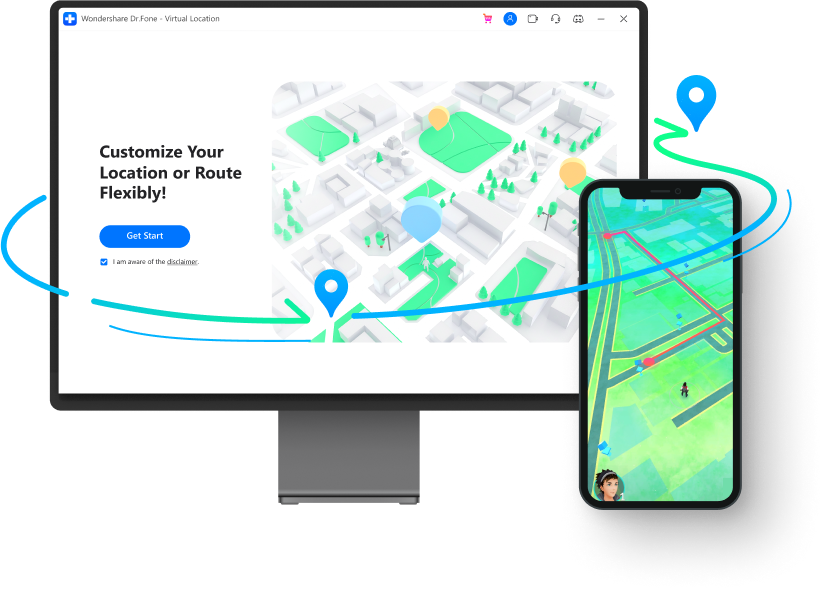
A separate option is Dr.Fone - Virtual Location. Check its current compatibility requirements before connecting a phone; neither iOS 17 nor Android 12 should be treated as a blanket assurance that every later version and connection method is supported.
 Set your map route to simulate GPS movement.
- Set your wanted movement speed.
- HD and large map view to check location.
- Fake GPS location to anywhere.

The application combines destination selection with simulated movement controls, including a joystick, one-stop and multi-stop routes, and route-file handling described below. These provide ways to test a supported phone's location behavior from a desktop map rather than continually entering coordinates by hand.
No location simulator can promise low detection, a ban-free account, access to every regional service, or reliable knowledge of another person's whereabouts. GPS simulation is not VPN encryption and should not be used to mislead family members about important arrangements. Connect your own supported phone and complete the software's setup prompts before using the following controls.
Use the Joystick for Directional GPS Control
Open the joystick control in the location interface. The original desktop layout shows a joystick button among the upper-right mode controls, commonly as the fifth icon, and a directional control in the lower-left area. Identify the mode by its label or icon rather than assuming every edition uses the same position.
Use the directional controls for manual movement. Where automatic movement is available, start it and adjust direction using the displayed arrows, control pad, or supported keyboard keys. Check the moving map marker, and stop the session when you have collected the intended test result.
Simulate Movement Between Two Points
-
Step 1 Choose the route mode and destination
Select the one-stop or two-point route function. Click the intended endpoint and inspect the distance from the current starting position.
-
Step 2 Define speed and repetition
Use the speed slider or the walking, cycling, or driving-style preset provided by your interface. Enter the number of journeys and review round-trip or loop options if shown.
-
Step 3 Start and monitor
Confirm with Move Here or the corresponding start control. Watch the marker follow the selected route. Pause or clear the simulation when appropriate; the label describes a simulated speed, not real travel.
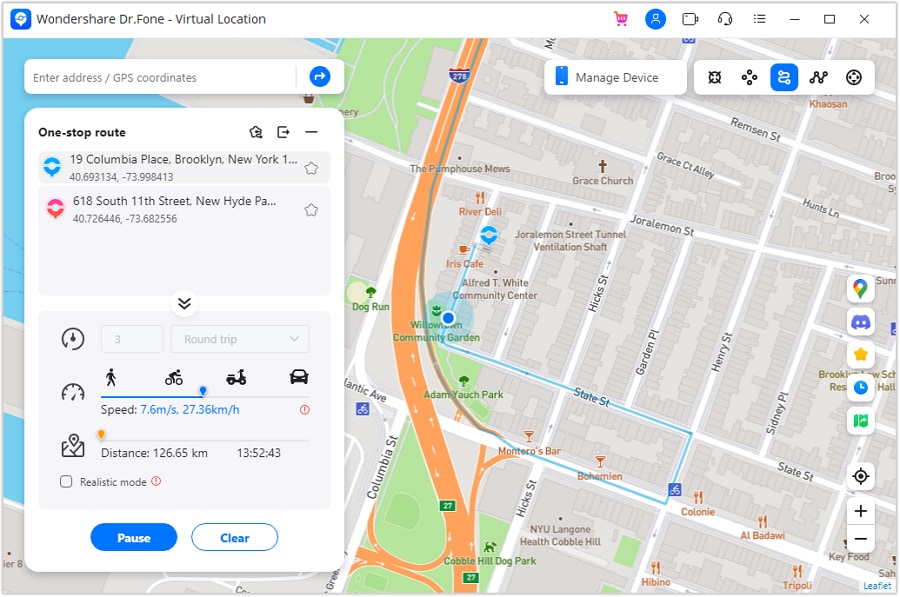
Export and Import GPX Routes
For a route you want to retain, use the export control to save a GPX file to a location you can identify later. Keep the route name meaningful so you do not accidentally reuse the wrong coordinates.
To load an existing route, choose the application's GPX import option, select the intended file, and confirm with Open. Wait for the import to finish, then inspect the displayed points and path before starting. If the file came from another person or website, check its destination rather than trusting its filename.
Teleport to a Selected Location
-
Step 1 Open the connected device's map
Enter Virtual Location, connect the supported iPhone or Android device, and complete the start or connection prompts. Windows and Mac interfaces may differ; do not assume an older interface is free of glitches.
-
Step 2 Locate the current position
Use the current-position or center control to orient the map before choosing a distant destination.
-
Step 3 Search and confirm
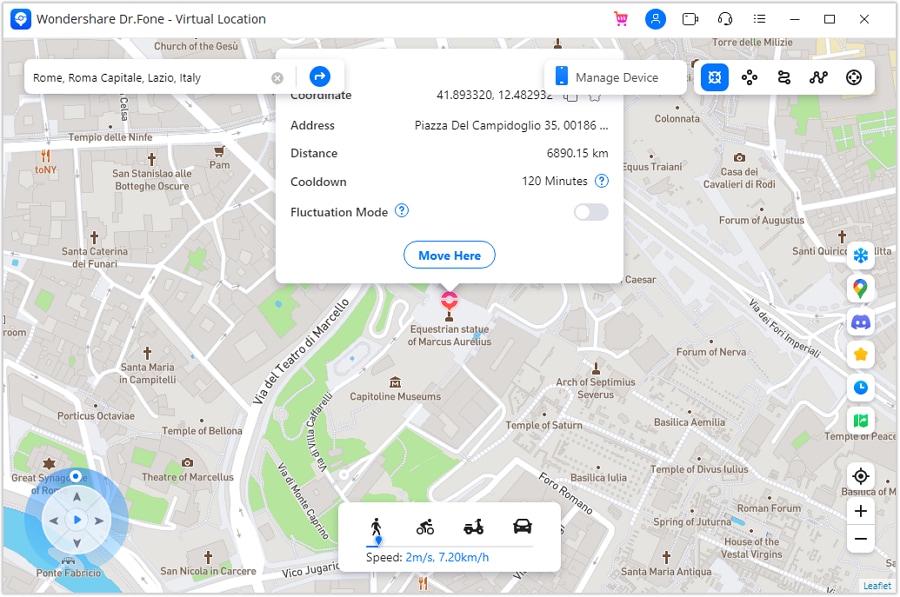
Select Teleport Mode and search for the destination, such as Rome in the original example. Inspect the result, then choose Move Here. Searching alone is not the final confirmation.
-
Step 4 Verify the phone
Open the phone's maps app and compare the reported position with the selected point. Test any third-party application separately because it may not accept simulated data.
Save a Route as a Favorite
Use the star beside the route or location to add it to Favorites where the installed edition supports that control. A favorite is a saved selection, not an instruction to start moving immediately.
Later, open the Favorites or star control in the sidebar, select the saved route, and review its points and speed. Start with the displayed Move control only after confirming that it is the route you intend to use.
Simulate a Route With Multiple Stops
Select Multi-Stop Route mode and add each intended point on the map in sequence. Review the entire path and its distance, then set the movement speed and trip count in the available controls.
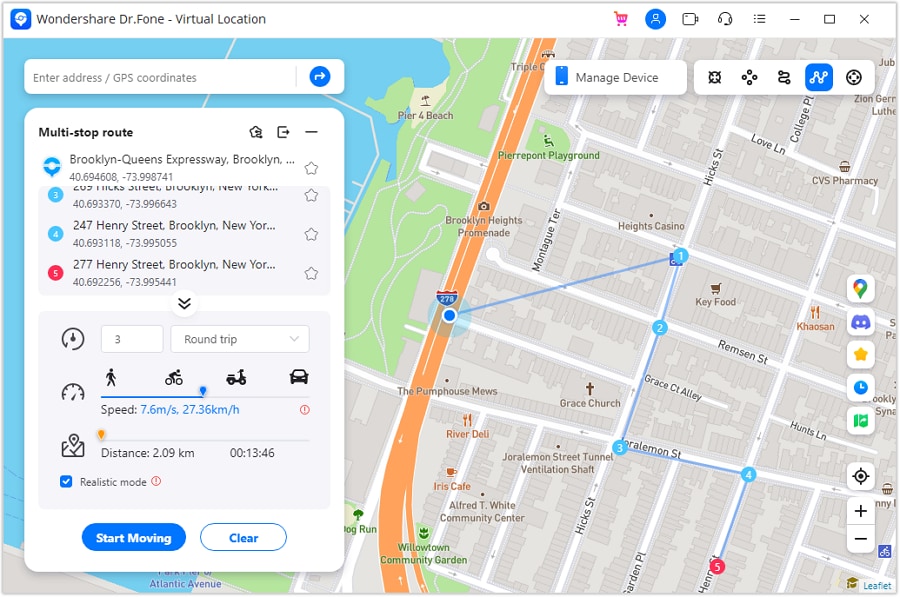
Choose Start Moving and monitor the route. Pause if the path is not what you expected, or clear the session and rebuild it. A plausible route does not make activity compliant with a game's rules or remove the risk of account restrictions.
The original video demonstrates the alternative location workflow. It should not be read as a promise to repair AnyGo's program files or remove every device incompatibility.
When the test ends, stop the simulation and follow the software's restart-device prompt to restore the actual location. Confirm normal positioning before relying on directions or sharing your whereabouts.




Conclusion
For AnyGo problems, check the network and update status for a missing map, verify cables and device recognition for connection failures, and collect relevant logs for repeated crashes. These symptom-based checks are more useful than treating every fault as a reason to keep reopening the program.
Dr.Fone - Virtual Location is a separate option for supported GPS tests. Choose it on the basis of compatibility and the controls you need, not claims that it unlocks every app or guarantees freedom from account penalties.
FAQ
-
1. What should I check if AnyGo has no map?
Verify internet access, reopen the map view once, and check for an official application update. If the map still fails, report the symptom rather than assuming it is a phone hardware problem. -
2. Why will my iPhone not connect to AnyGo?
A data-cable problem, USB port, trust prompt, missing device recognition, or unsupported software combination can interfere. Check these independently and use the vendor's current setup instructions. -
3. Which logs should I send for a crash?
Send the relevant application crash report or program logs requested by official support, together with the version and reproduction steps. Review the files for personal information first. -
4. Can a different GPS simulator guarantee my game account stays safe?
No. A game can reject simulated locations or restrict an account for violating its terms. Route controls and realistic movement settings do not provide immunity.
 Add Wondershare Dr.Fone as a preferred source on Google



