Teleport your device anywhere instantly with one click.


 100% Security Verified | No Subscription Required | No Malware

 :

 ChatGPT
 Perplexity
 Gemini
 Claude
 Grok
VPNa Fake GPS Location Free is an Android mock-location app, not a VPN. It lets you select a point on a map and ask Android to report those coordinates instead of your physical position. That makes it relevant to location testing, but it does not encrypt internet traffic, change an account's registered country, or guarantee that another app will accept the simulated position.
This VPNa review separates the app's documented controls from claims that depend on the receiving app. Below, you can compare its location search, saved places, advertising and setup requirements, then follow the Android configuration process. The original screenshots are retained as interface references; names and menu positions can differ on a current phone.
In this article
Part 1: VPNa review: map controls, limitations and value
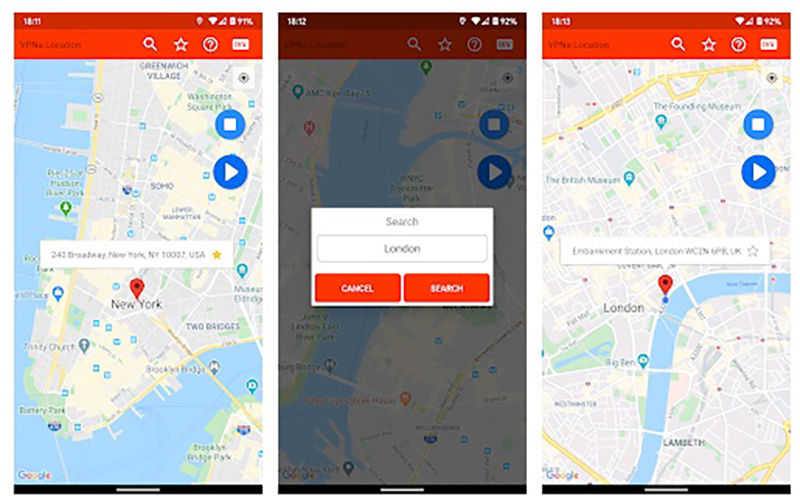
XdoApp's VPNa uses Android's mock-location facility to supply selected GPS coordinates. Its developer listing describes a no-root workflow: choose a destination, start the simulation, and save places for later. This is different from physically moving the phone, and services may combine GPS with other signals or reject mock-location providers.
- Destination search: locate a place by its name or street address; where supported by the installed version, enter latitude and longitude for a more precise selection.
- Map positioning: inspect the map and adjust the pin before starting, rather than assuming the first search result is the intended destination.
- Saved destinations: keep frequently used places so a repeated test does not require the same search every time.
- Previous selections: the interface illustrated in the original review includes location history, useful when retracing an earlier test.
- Basic use: the app is presented as free to start. An installation or a successful map selection does not establish compatibility with every game or social service.
- The documented setup does not require rooting the Android device.
- A visual destination picker makes basic coordinate selection accessible without technical GPS knowledge.
- Saved places reduce repetitive input when you revisit a test location.
- Apps can detect or refuse mock locations, and games can penalize prohibited use.
- Advertising can interrupt the free experience.
- A selected point may not appear in the receiving app; retries alone do not remove its compatibility restrictions.
Price, rating and compatibility: the supplied review quotes a $2.99 ad-free option, an Android 4.4 minimum and a 3.6/5 store score. Treat these as figures from that review, not verified current pricing, a current rating or a promise of support on a particular handset. Check the live listing visible to your account before purchasing or installing.

Verdict: VPNa is a straightforward option for basic Android mock-location experiments when the target app permits them. The useful decision is not whether the map pin moves, but whether your device supports the setup and your intended use is allowed. A service that ignores the mock position is not necessarily experiencing a VPNa installation fault.
A desktop-controlled GPS alternative
 Set your map route to simulate GPS movement.
- Set your wanted movement speed.
- HD and large map view to check location.
- Fake GPS location to anywhere.
Dr.Fone - Virtual Location provides a computer-based map interface for supported iOS and Android devices. Its GPS features include selecting a virtual destination and configuring simulated movement routes and speed. Those are location controls, not the unrelated transfer, recovery or unlocking functions of other toolkit modules.
For a permitted test on your own device, connect the phone to the computer, open Virtual Location, complete the connection prompts, choose Teleport Mode and search for the desired address. Review the result before selecting Move Here, then check the position in a maps app. The official guide notes that restarting the device restores its actual location. This alternative still cannot guarantee acceptance by another app or exemption from its rules.
Finish by ending the simulation and confirming that normal positioning has returned before using navigation or a location-sharing feature. Check the current device requirements before installing; a download button alone is not evidence that every operating-system release is supported.




Part 2: Configure VPNa on an Android phone
Start with a device you control and a use case that allows mock locations. The process has three distinct stages: expose Android's developer settings, appoint VPNa as the mock provider, and activate a destination inside VPNa. Installing the app without the provider selection is not the complete setup.
Step 1: Make Developer Options available
Open Settings and find About phone. Depending on the manufacturer, Build number may be inside a Software information submenu. Tap Build number seven times and enter the device credential if Android requests it. A confirmation message indicates that developer settings have been enabled; repeated tapping after that is unnecessary.
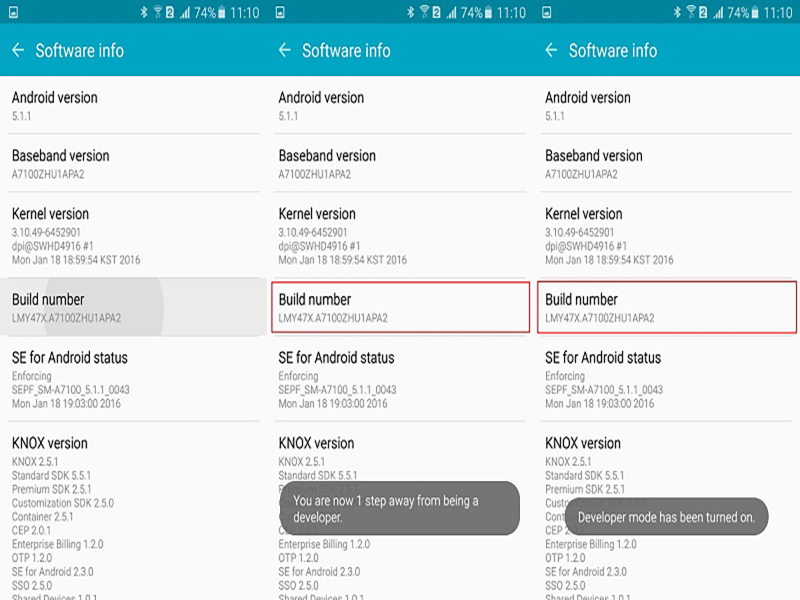
Return to Settings and locate Developer Options, sometimes under System. Older Android interfaces show an Allow mock locations switch like the screenshot below; newer ones generally provide Select mock location app. Use the setting actually present on your phone instead of searching indefinitely for an outdated label.
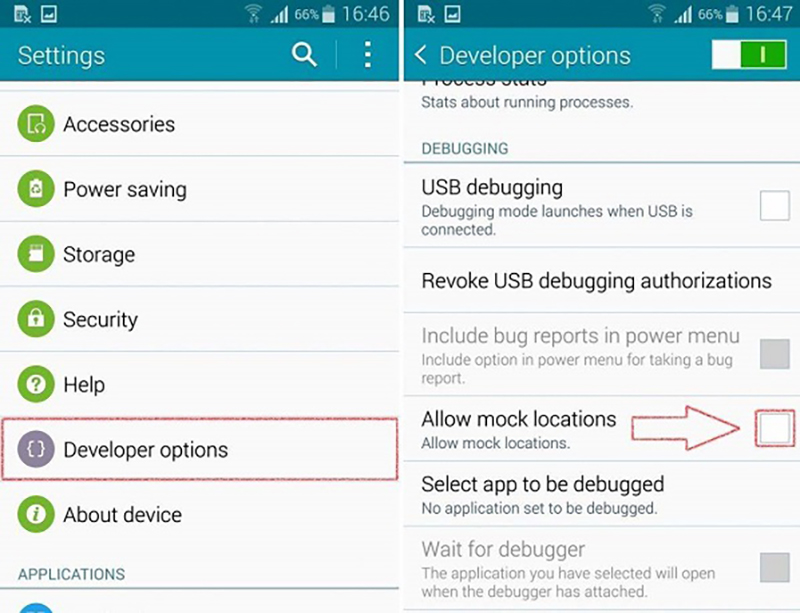
Step 2: Assign VPNa as the mock provider
Install VPNa Fake GPS Location Free from its developer's trusted store listing if it is available for your device. Avoid assuming that an APK from an unrelated download site is equivalent. After installation, return to Developer Options, open the mock-location app selector and choose VPNa. On an older interface, enable the relevant mock-location permission as directed.
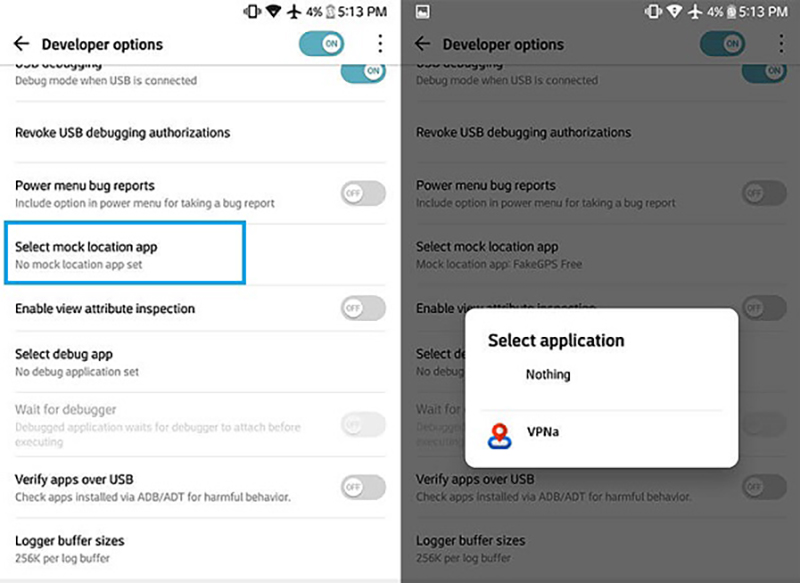
If the chooser is missing or managed by an organization, review the device's restrictions rather than disabling unrelated security controls. Only one selected mock provider should be used for the test; another active location tool can make the outcome confusing.
Step 3: Choose a destination and start the test
Launch VPNa and search for a place using the address or coordinate entry supported by your installed version. Wait for the map to resolve the result, then inspect the displayed area. Similar place names can return different towns, so verify the destination before starting.
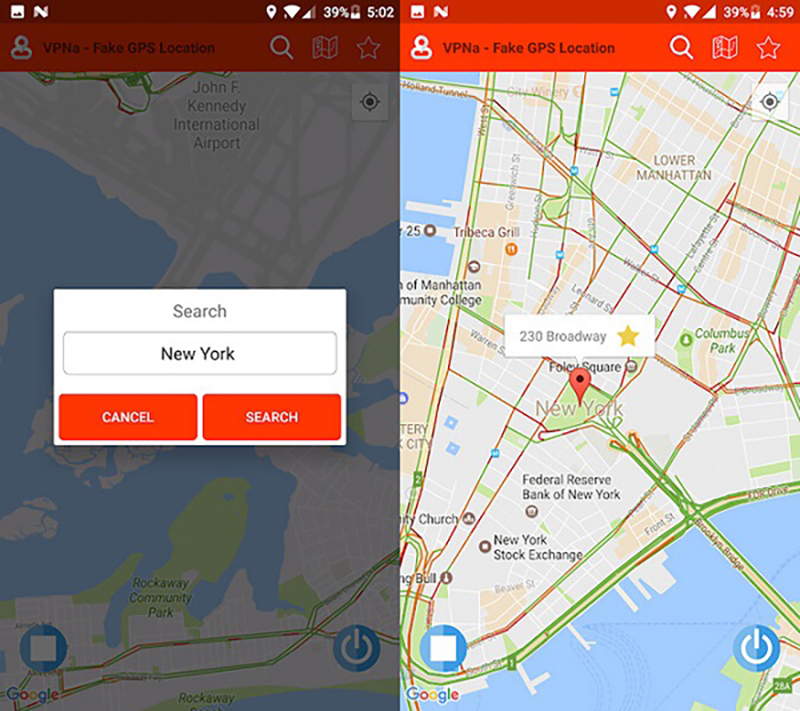
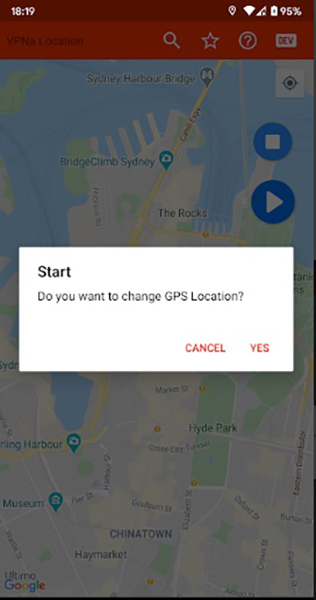
Reposition the pin if necessary, select Start and accept the app's confirmation. Check the reported position in an appropriate test app. If it remains unchanged, verify the mock-provider selection and required permissions; do not infer that repeated attempts can defeat a game's detection system. Stop the simulation when the experiment is complete and confirm that actual positioning is restored.
Obtain software from a trusted source, and read its requested permissions before proceeding.
Conclusion
VPNa offers a simple Android mock-location workflow with map selection and saved destinations, but the result depends on the device and the receiving service. Use its free entry point to assess permitted functionality, verify current store information yourself, and keep GPS simulation separate from VPN protection. A desktop alternative may suit a different workflow, but neither approach makes prohibited spoofing risk-free.
FAQ
1. Is VPNa a VPN service?
No. It supplies simulated GPS coordinates through Android's mock-location mechanism. It does not create an encrypted VPN connection or provide the IP-location functions of a VPN.2. Does VPNa require a rooted phone?
The developer documents a no-root setup using Developer Options and the mock-location provider setting. Device restrictions and app compatibility still apply.3. Why does another app show my real location?
Check that VPNa is selected as the mock provider and that a session has started. The receiving app may reject mock data or use additional location signals, so a selected pin does not guarantee its acceptance.4. Can VPNa cause a game account suspension?
Yes. The developer warns that games and other apps may suspend accounts for faking location. Review the service's rules and avoid using spoofing to gain a prohibited advantage.
 Add Wondershare Dr.Fone as a preferred source on Google