 Teleport your device anywhere instantly with one click.

 100% Security Verified | No Subscription Required | No Malware

 :
: 
 ChatGPT
 Perplexity
 Gemini
 Claude
 Grok
Grok
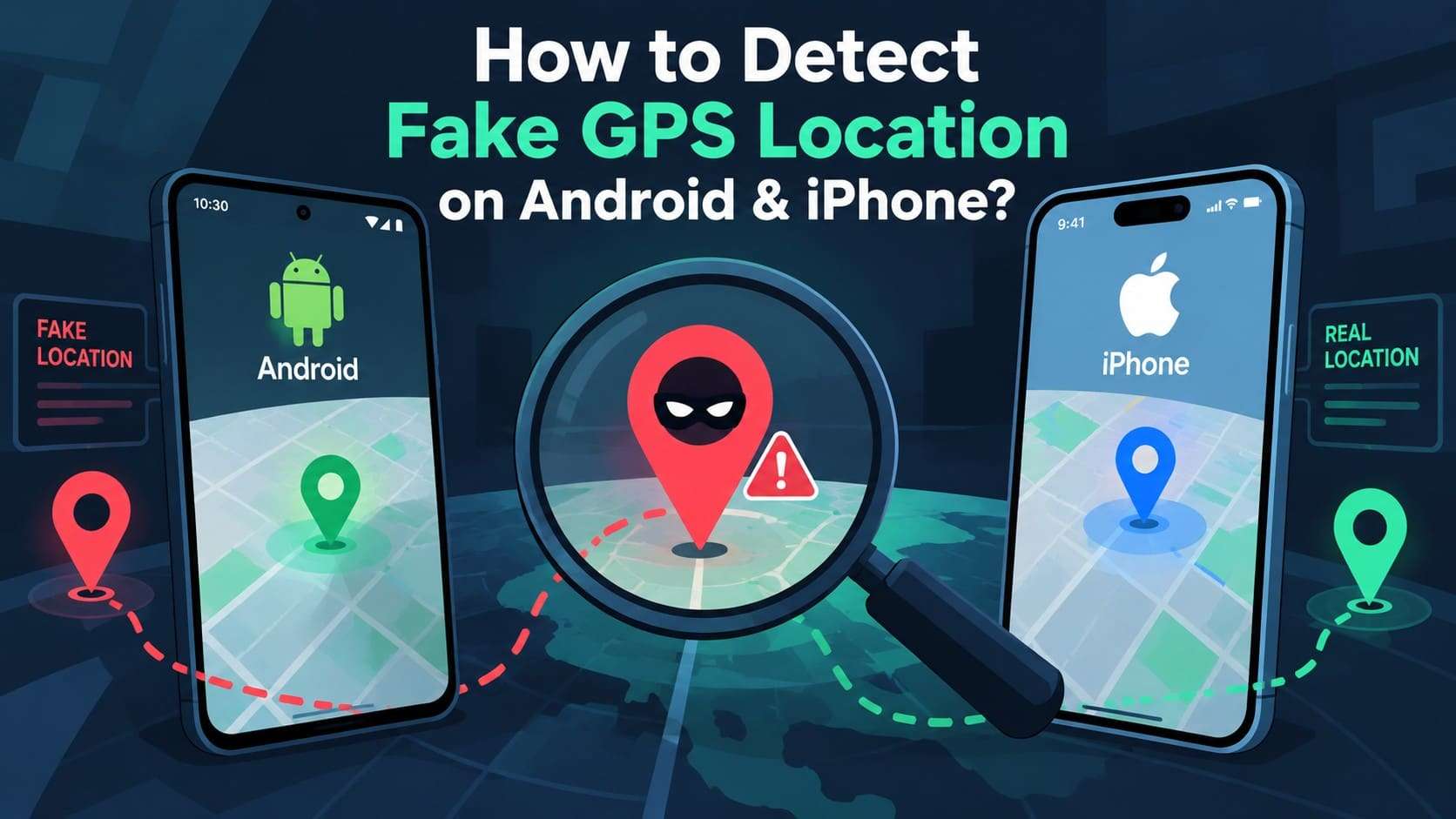
Location spoofing can make a phone appear to be somewhere it is not, creating problems for apps that rely on accurate location data. From gaming and ride-sharing to financial and attendance apps, fake GPS coordinates can bypass location-based checks. Detecting them is not always straightforward because spoofing methods work differently across Android and iPhone.
Reliable detection requires looking beyond the GPS coordinates themselves. Wi-Fi networks, IP data, movement patterns, platform signals, and device integrity can reveal inconsistencies linked to spoofing. This guide explains how to detect fake GPS locations using 7 practical methods and shows how Dr.Fone - Virtual Location can help test detection systems under controlled scenarios.
In this article
Part 1. What Is GPS Location Spoofing?
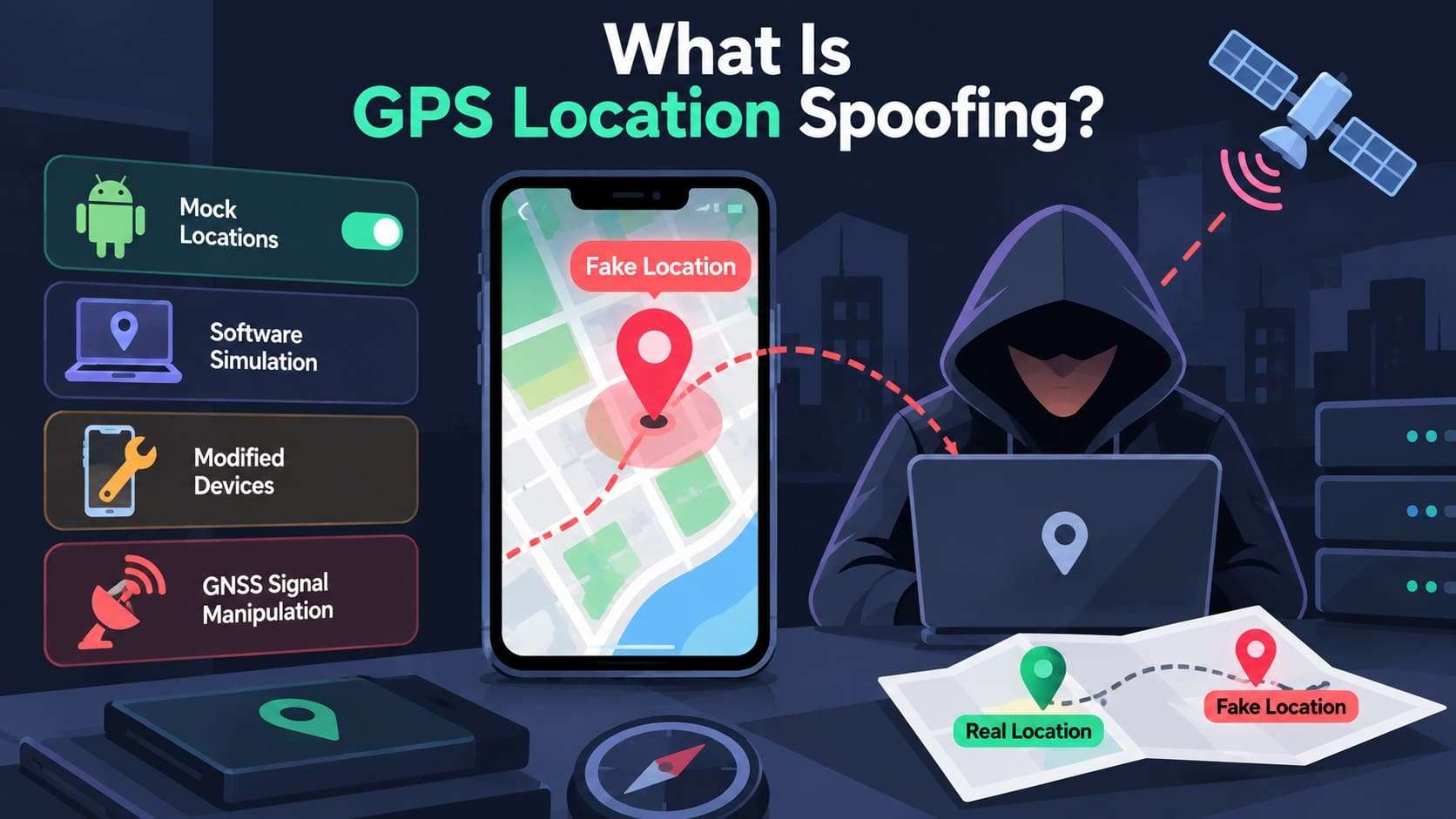
GPS spoofing is the practice of making a device or app report a location different from its actual physical position. It replaces or manipulates genuine location data with false coordinates, making the device appear somewhere else.
Such location manipulation can involve software-based changes, Android mock locations, modified devices, or manipulated GNSS signals. These methods can affect apps and services that depend on location data for navigation, gaming, ride-sharing, attendance, and other location-based functions.
Part 2. How Fake GPS Locations are Created on Android and iOS
Understanding how fake locations are created provides useful context for GPS spoofing detection. Android mock-location apps, iOS development tools, desktop location changers, modified devices, and emulators can change the location reported by a device or app. These methods work at different points within the location system, and not all of them manipulate GPS or GNSS signals directly.
| Spoofing Method | Platform | How Location Is Manipulated |
|---|---|---|
| Mock Location Apps | Android | Supplies test coordinates through Android mock-location APIs |
| Desktop Location Changers | Android & iOS | Changes the location reported by a connected device |
| Software Simulation | Android & iOS | Supplies simulated location data through development or testing tools |
| Rooted or Hooked Devices | Android & iOS | Alters location APIs or app/runtime behavior |
| Emulators and Accessories | Android & iOS | Provides location through virtual environments or external hardware |
Method 1. Android Mock Location Apps
Android includes a Select mock location app setting in Developer Options. It allows a selected app to provide test locations instead of relying on the device's actual position. Locations supplied through Android's mock-location framework can be marked as mock, making this a common way to simulate a different location during development and testing.
Mock-location apps use this capability to make supported apps receive coordinates selected by the user. While useful for testing location-based features, the same approach can make a device appear somewhere it is not without physically moving there.
Method 2. Desktop GPS Location Changers
Desktop GPS location changers can make a connected Android or iPhone report a different location without physically moving the device. Unlike mobile mock-location apps, these tools run through a computer and change the location reported by the connected phone. Dr.Fone - Virtual Location is one example that supports changing a device's location and simulating movement along routes.
Its Teleport Mode moves the reported position directly to a selected destination. One-Stop and Multi-Stop modes simulate movement along planned routes, while Joystick Mode provides manual movement control with adjustable speeds. These location-changing features work on supported Android and iOS devices without requiring users to root or jailbreak their phones.
 Set your map route to simulate GPS movement.
- Set your wanted movement speed.
- HD and large map view to check location.
- Fake GPS location to anywhere.
Guide to Use Dr.Fone to Fake Your Android or iPhone Location
To test how to detect location spoofing, use Dr.Fone to create a controlled location change on a test device. Follow these steps to set up a spoofed location for testing:
-
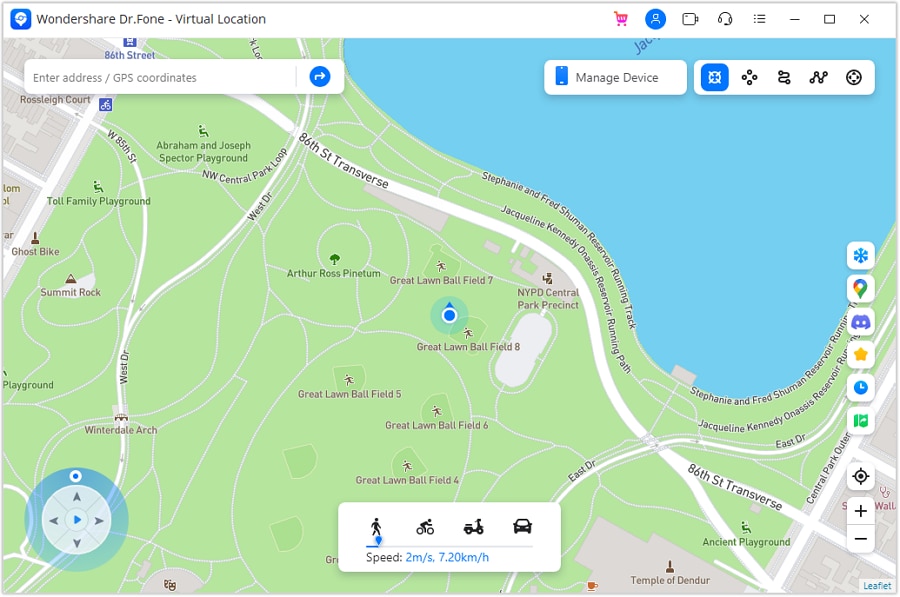
Step 1 Connect the Test Phone
Connect your test device to Dr.Fone – Virtual Location and select "Teleport Mode" from the top-right corner of the interface.
-
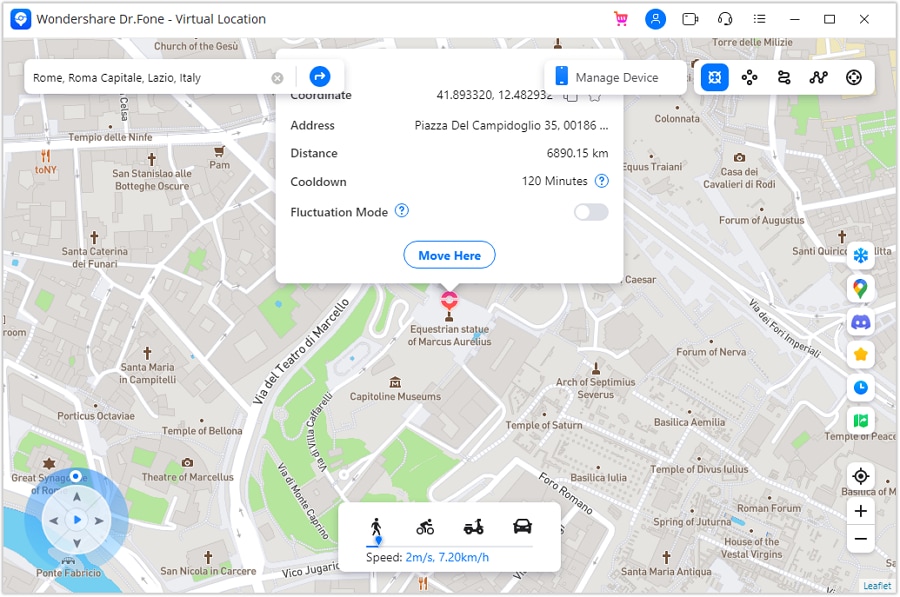
Step 2 Choose a Test Location
Enter your desired location in the search bar, select the destination, and click "Move Here" to apply the new location.
-
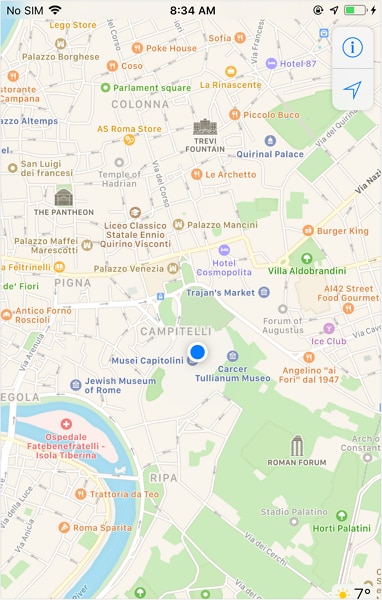
Step 3 Confirm the Location Change
Launch a maps app on the test phone to confirm the new location is active. Once verified, check how your detection system responds to the spoofed position.




Method 3. iOS Software Location Simulation
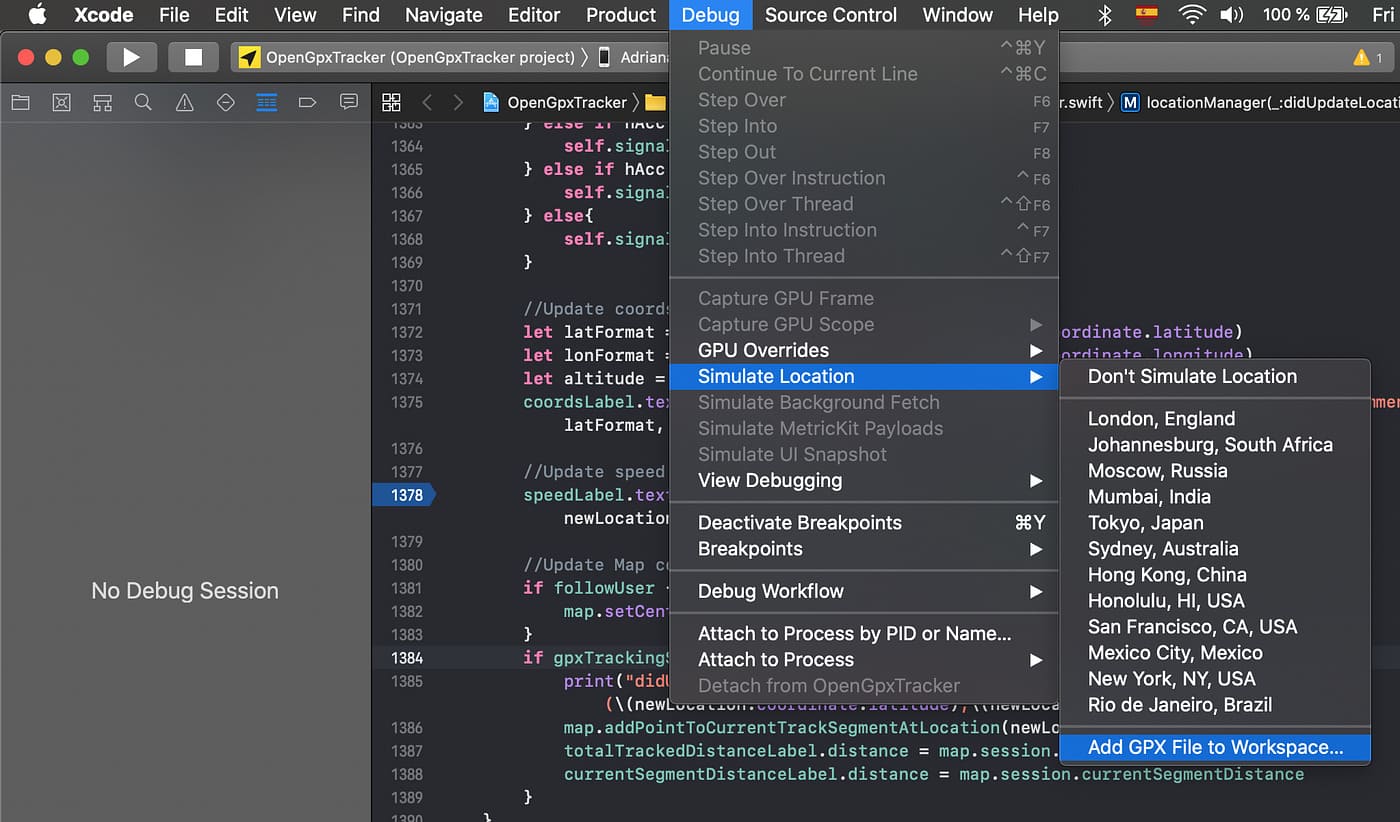
iOS software location simulation allows a device or app to receive simulated coordinates without physically moving the iPhone. During development, Xcode can provide a custom location or simulate movement along a predefined route. This approach is mainly designed for testing location-based app features across different places and movement scenarios.
Method 4. Rooted, Jailbroken, or Instrumented Devices
Rooted, jailbroken, or instrumented devices can manipulate location data at a deeper system or application level. Instead of relying only on standard mock-location features, these methods can modify location APIs, alter returned coordinates, or use runtime hooking to change how an app receives location data. Such modifications can make spoofing more difficult to distinguish from normal device-reported locations.
Method 5. Emulators and External Location Hardware
Emulators run apps in virtual device environments and can provide simulated location data without requiring a physical phone. For example, Android Studio Emulator lets developers set custom coordinates and simulate movement for testing location-based apps.
External hardware can also change the location reported by a device. Devices such as GFaker connect to an iPhone or iPad and provide alternative GPS coordinates. Supported apps may then receive the selected location instead of the device's actual position.
Part 3. Why GPS Spoofing Is a Security Problem
Anti-GPS spoofing becomes important when apps rely on location to verify users, approve actions, or provide location-based services. Spoofed coordinates can bypass these controls and create security, financial, and operational risks. The table below shows how GPS spoofing can affect different industries:
| Industry | Example Abuse | Business Risk |
|---|---|---|
| Delivery & Ride-Sharing | Faking pickups or drop-offs | Fraudulent payments |
| Gaming | Accessing location-restricted areas | Unfair play and abuse |
| Social & Dating | Misrepresenting user location | Trust and safety risks |
| Financial Services | Bypassing location-based fraud checks | Fraud and compliance risks |
| Retail Promotions | Claiming location-restricted offers | Promotion abuse and losses |
| Attendance Apps | Falsifying employee check-ins | Time and payroll fraud |
Why GPS Alone Should Not Be Trusted as Proof of Location
GPS coordinates represent the location reported by a device, but they do not independently prove its physical position. Spoofing tools can alter these coordinates, making GPS alone insufficient for sensitive location checks.
Effective GPS spoofing detection compares GPS data with independent signals, including Wi-Fi, cellular networks, IP-based location, and device integrity. Differences between these signals can indicate that the reported location does not match the device's actual position.
Part 4. 7 Ways to Detect Fake GPS Location
Different spoofing techniques leave different clues across Android and iOS. For a clearer comparison, the table below outlines seven ways to detect fake location, along with their strengths and limitations.
| Detection Method | Android | iOS | Strength | Main Limitation |
|---|---|---|---|---|
| OS Mock Flag | Yes | No | Direct mock indicator | Mock framework only |
| Core Location Source | No | Yes | Detects software simulation | iOS 15+ only |
| Cross-Reference Signals | Yes | Yes | Finds location inconsistencies | Requires additional data |
| Impossible Travel | Yes | Yes | Detects unrealistic location jumps | Misses plausible movement |
| Device/App Integrity | Yes | Yes | Identifies integrity risks | Not location-specific |
| Spoofing-App Presence | Limited | No | Adds supporting risk context | App visibility restricted |
| Backend Risk Scoring | Yes | Yes | Combines multiple signals | Requires sufficient signals |
Method 1. Check Android's Native Mock Location Flag
Android provides a built-in signal for mock location detection. On Android 12 (API level 31) and later, "Location.isMock()" indicates whether a location is marked as mock. Earlier Android versions can use the now-deprecated "isFromMockProvider()" method. These checks can identify locations supplied through Android's mock-location framework, but they cannot detect every spoofing method. Follow these steps to implement the check:
-
Step 1 Download and install Android Studio, then create a new Android project using Kotlin. Connect an Android phone with USB debugging enabled and request its location through Android's location APIs. Make sure the app has the required location permission before retrieving coordinates.
-
Step 2 After receiving a "Location" object, check "isMock" on Android 12 (API level 31) and later. Use the deprecated "isFromMockProvider()" only when supporting earlier Android versions.
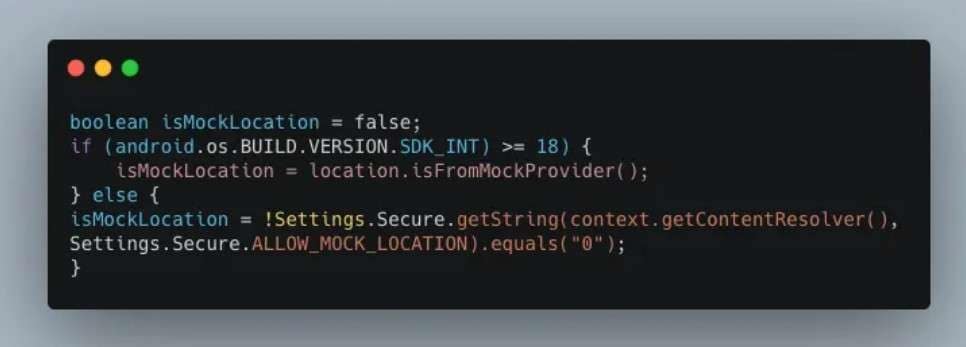
-
Step 3 In Android Studio, open "View > Tool Windows > Logcat" and search for "MockCheck" to view the result generated by your app.
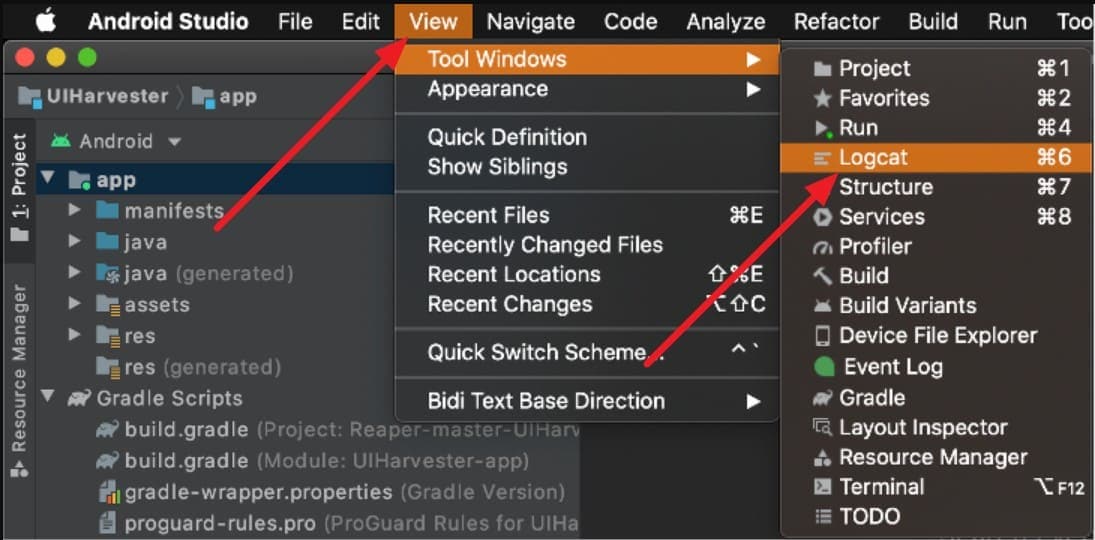
-
Step 4 Android labels the location as mock when the result returns "true." A "false" result simply indicates that no mock marker was found and cannot verify the location as genuine.
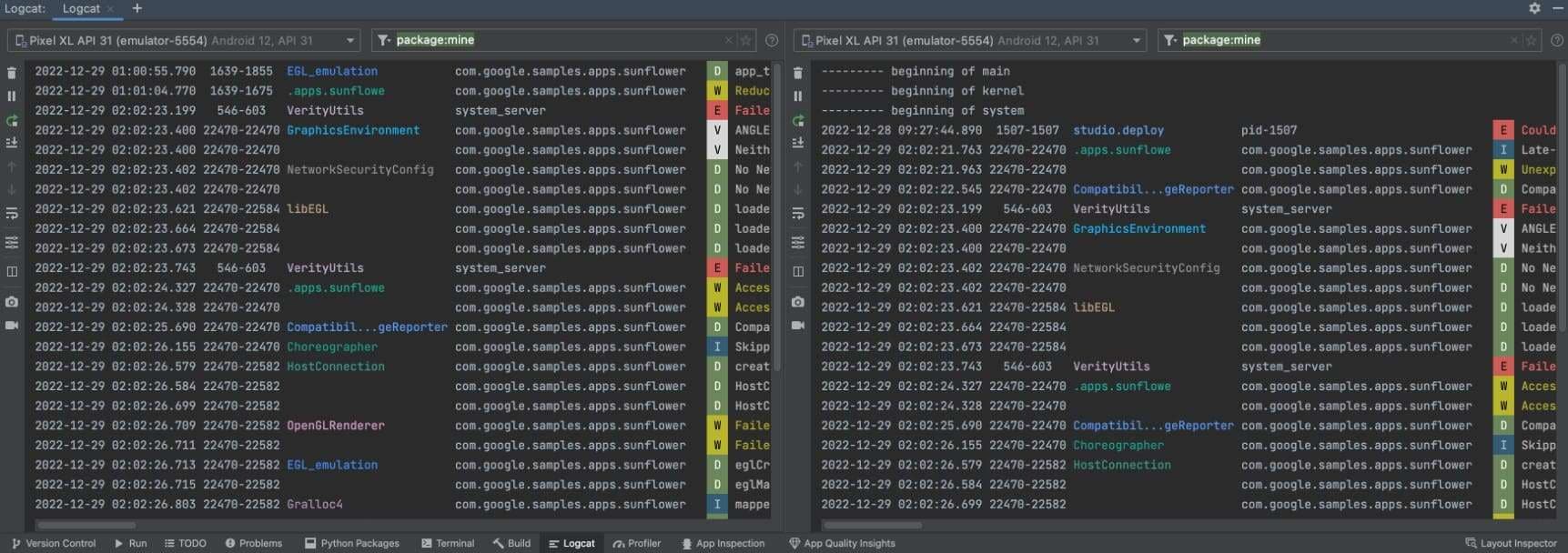
Method 2. Check iOS Core Location Source Information
On iPhone, iOS 15 and later offers CLLocationSourceInformation to help detect location spoofing through location-source data. Its sourceInformation property indicates whether a location was software-simulated or produced by an external accessory. Follow these steps to inspect this information in your app:
-
Step 1 Open Xcode on your Mac > Choose "File > New > Project" > Select "iOS" and "App" > Click "Next."
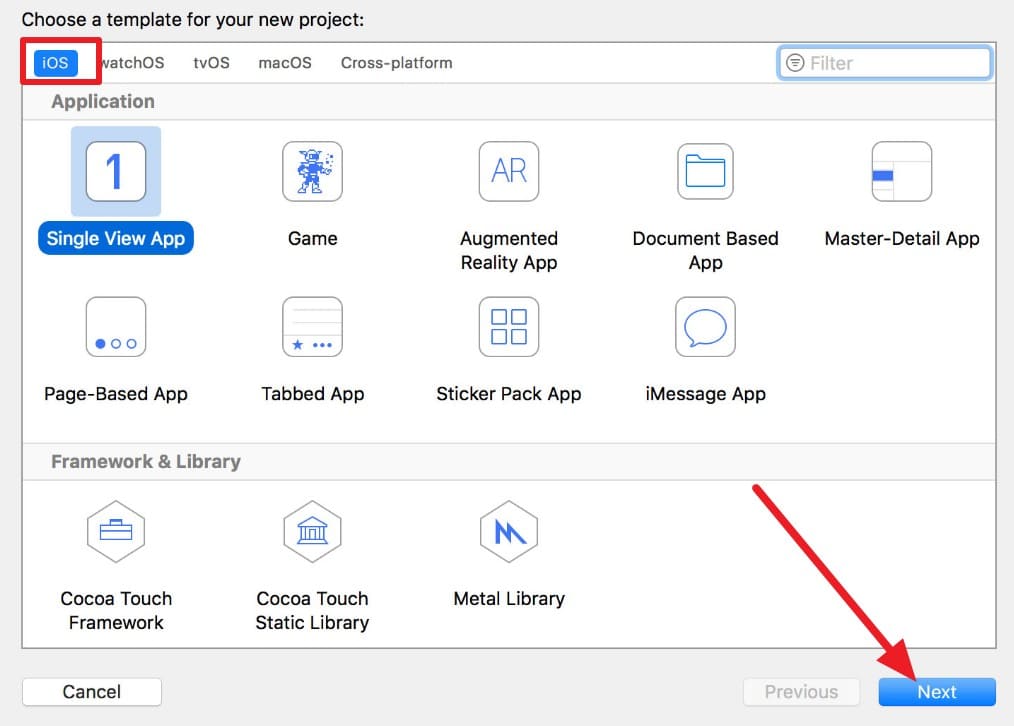
-
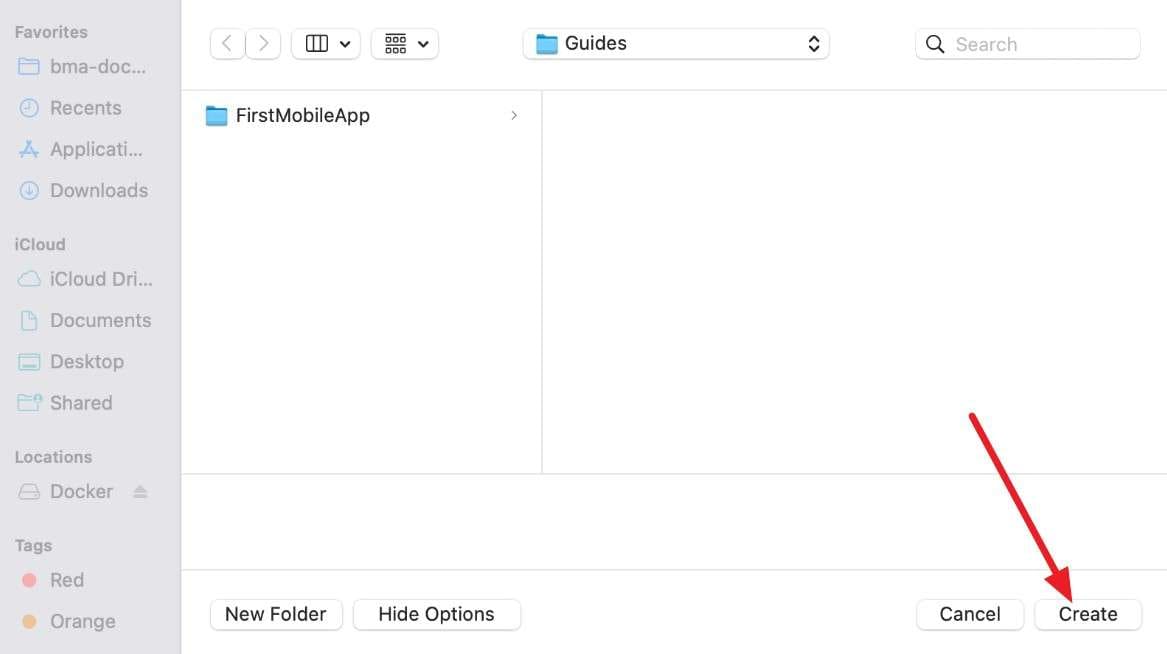
Step 2 Enter your app name and reverse-domain identifier, then choose where you want to save the project on your Mac. Click "Create" to generate the new Xcode project.
-
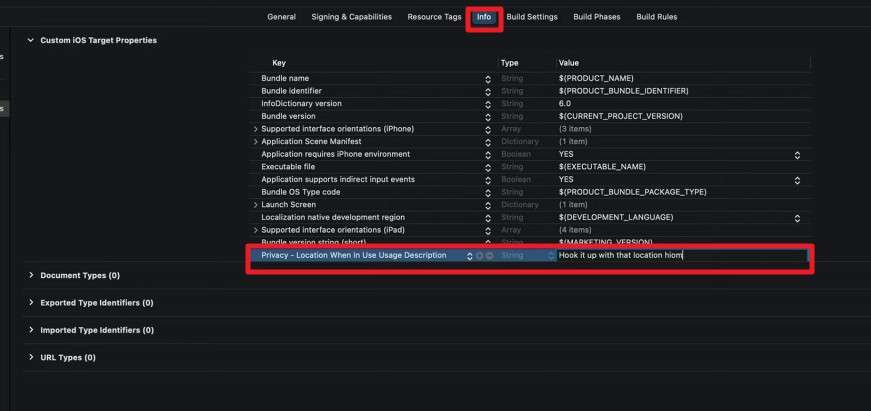
Step 3 Open the target's "Info" settings in Xcode and add "Privacy – Location When In Use Usage Description" (NSLocationWhenInUseUsageDescription). Enter a brief message explaining why the app requires location access.
-
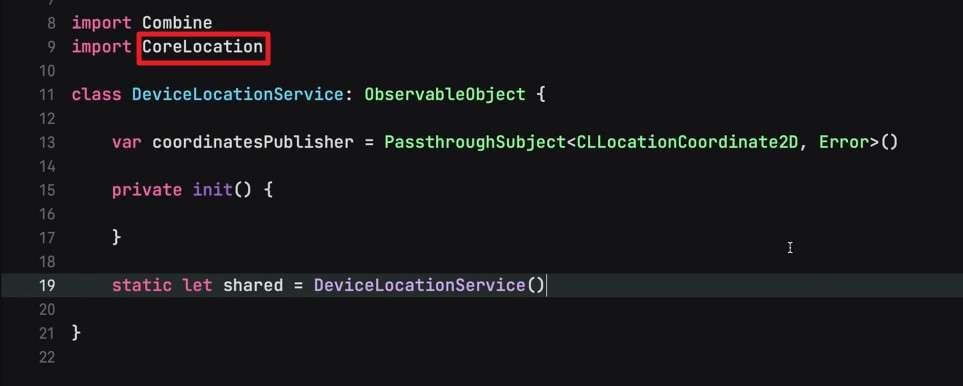
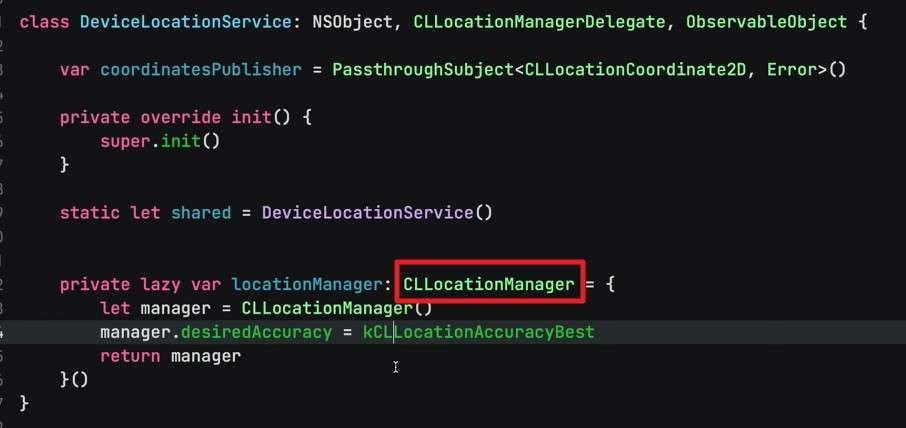
Step 4 Open the Swift file that will manage location updates and import "CoreLocation." Create a "CLLocationManager," assign its delegate, and make the class conform to "CLLocationManagerDelegate."
-
Step 5 Implement "locationManager(_:didUpdateLocations:)" and take the latest "CLLocation" object.
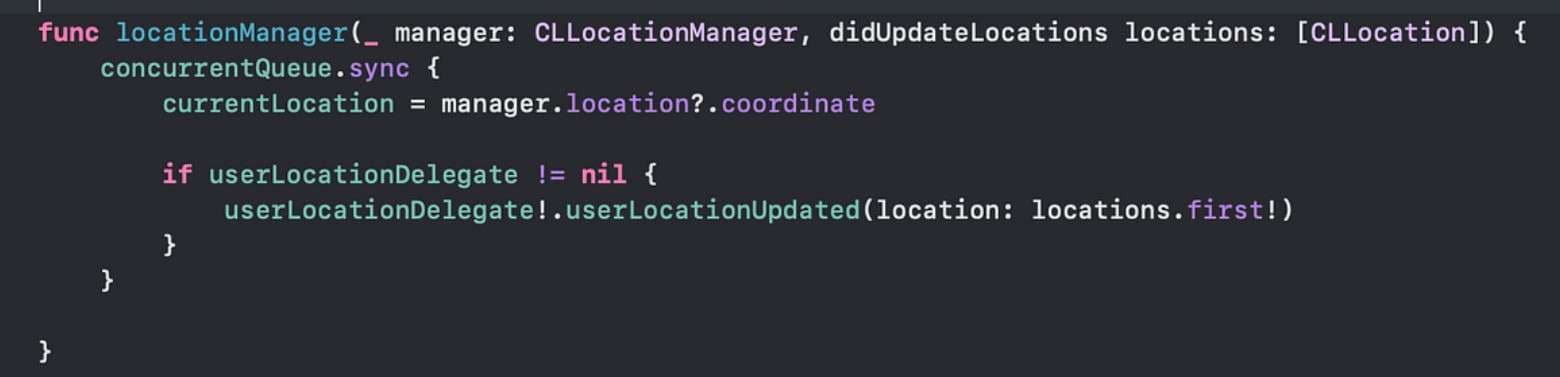
-
Step 6 On iOS 15 and later, inspect the location's "sourceInformation" to detect fake location indicators. Check whether Core Location identifies it as software-simulated or produced by an external accessory.
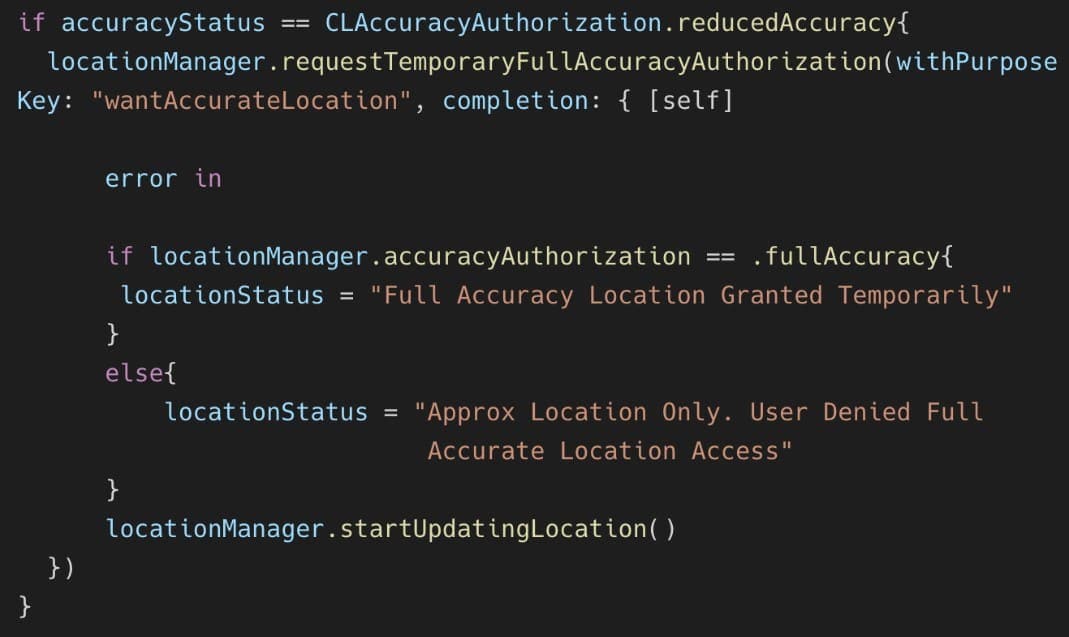
-
Step 7 When "isSimulatedBySoftware" returns "true," Core Location identifies the location as software-simulated. A "true" result for "isProducedByAccessory" means an external accessory provided the location, which does not necessarily indicate spoofing. Test the detection by comparing a normal device location with one simulated through Xcode.
Method 3. Cross-Reference GPS with Wi-Fi, Cellular, IP, and Bluetooth Signals
A reported GPS position can be compared with other available signals to detect fake location inconsistencies. Wi-Fi networks, cellular data, IP-based location, and Bluetooth signals can provide supporting context, depending on platform permissions and available data. A mismatch alone does not confirm spoofing.
Compare these signals across multiple location updates to identify persistent inconsistencies. Combine repeated mismatches with other GPS spoofing detection indicators, such as mock-location flags, movement patterns, and device integrity results.
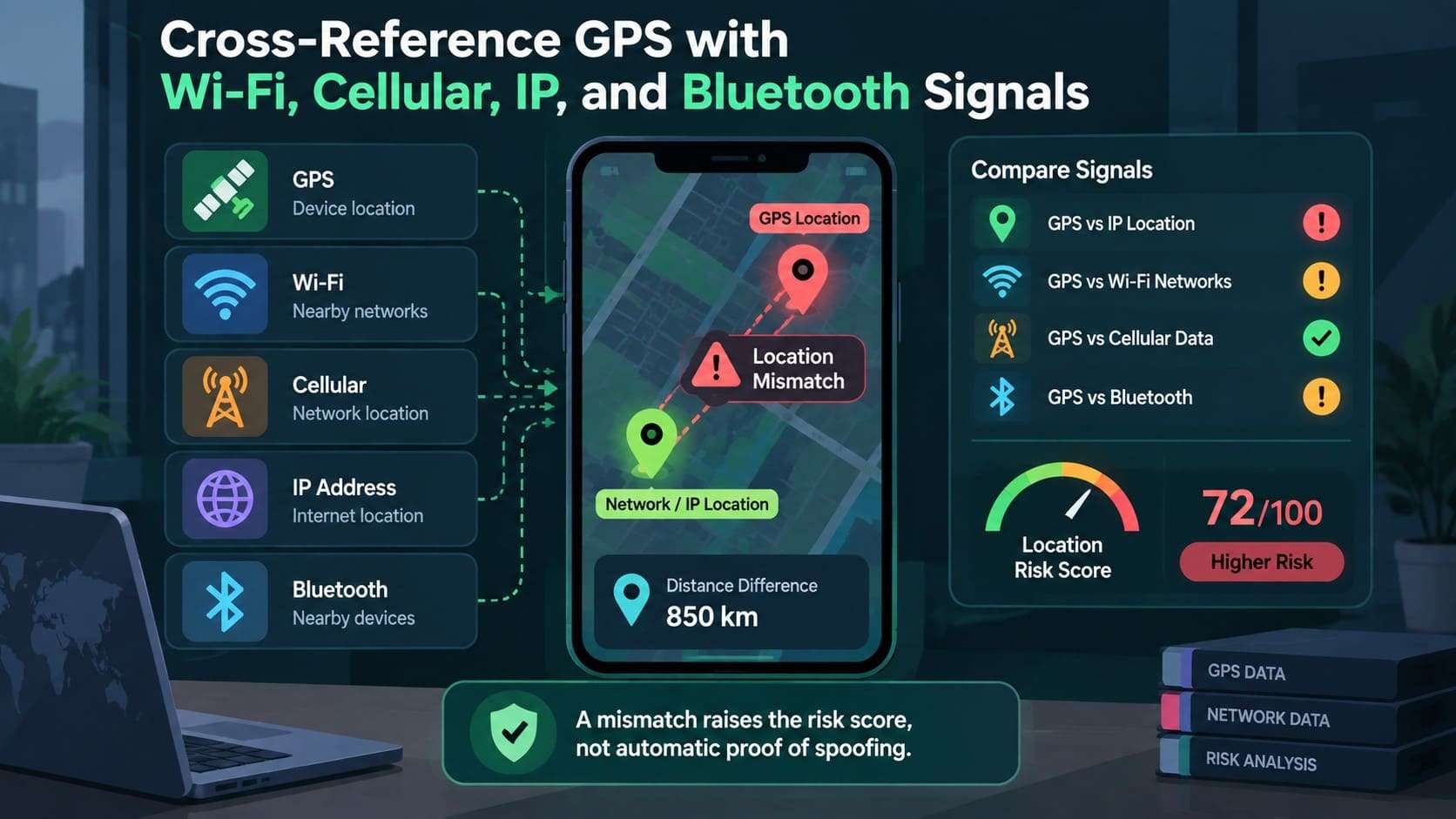
Why Multi-Signal Verification Is Stronger
GPS coordinates can be manipulated, while other signals may continue reflecting the device's actual environment. Wi-Fi, cellular, IP, and device information can reveal inconsistencies that location-only checks may miss. Comparing several independent signals provides stronger context and makes GPS spoofing detection more reliable than relying on coordinates alone.
Method 4. Detect Impossible Travel and Unrealistic Movement
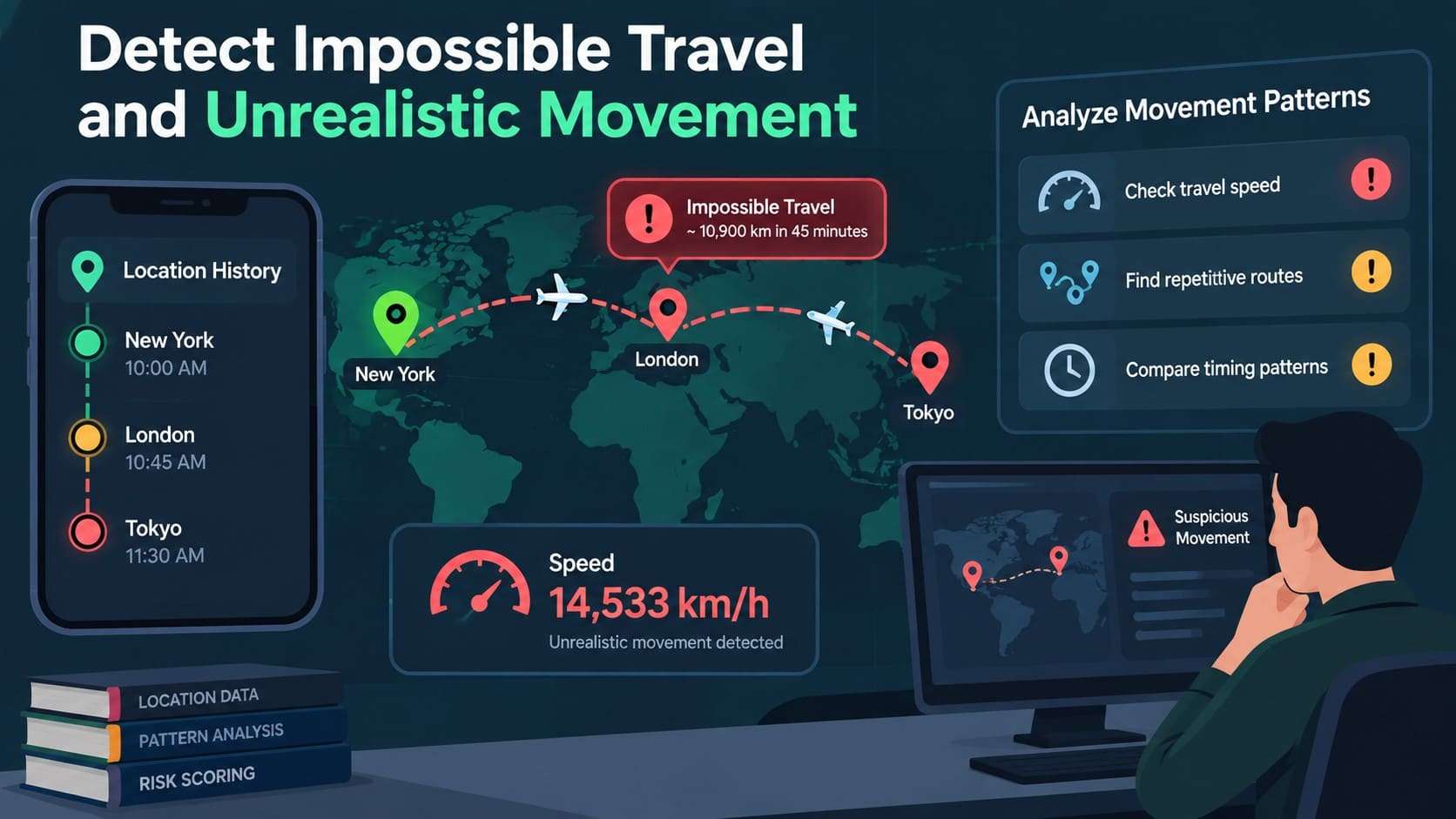
A single location may appear legitimate even when it is spoofed. One approach to detecting location spoofing is comparing consecutive locations with their timestamps. Calculate the distance and elapsed time between readings to identify movement that would be physically unrealistic.
Repeated routes, unusual speeds, and sudden long-distance jumps can also indicate suspicious movement. Combine these patterns with mock-location flags, source information, and other signals rather than treating movement anomalies as proof of spoofing.
Method 5. Check Device and App Integrity Risks
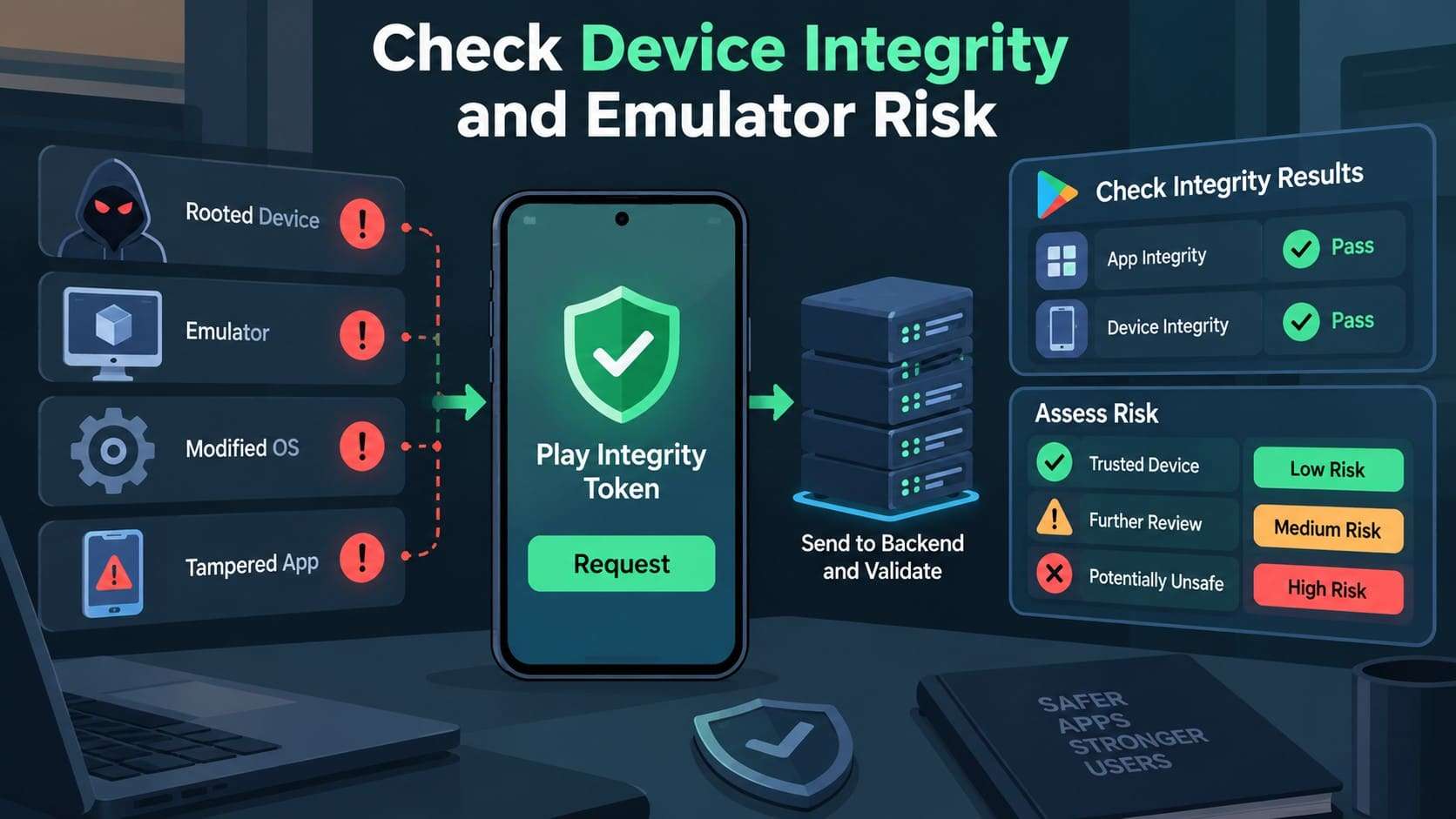
A compromised device can weaken GPS spoofing detection because location data may be processed in an untrusted environment. On Android, Play Integrity can assess whether the app and device meet expected integrity requirements. Verify these verdicts on the server during sensitive location-based actions.
Integrity issues can indicate device modification, app tampering, or certain untrusted environments. However, they do not prove that GPS coordinates are fake. Combine integrity results with location, movement, and other detection signals when assessing spoofing risk.
Where Google Play Integrity Helps
Integrity checks assess the trustworthiness of the app and device environment, not the accuracy of specific GPS coordinates. They can identify app tampering, compromised devices, and certain virtual environments that may increase location-spoofing risk. However, an integrity verdict does not prove that a device is completely safe. For stronger mock location detection, combine integrity results with location, movement, and other relevant signals.
Method 6. Detect Spoofing-Capable Apps or Mock-Location Configuration
Another way to detect location spoofing app activity is to look for spoofing-related apps or mock-location configurations on Android. These indicators can show that a device has the capability to manipulate its reported location. However, Android restricts how apps can discover other installed packages, so this method cannot identify every location changer.
iOS provides even less visibility into other installed apps, making this approach primarily useful on Android. Since having a spoofing-capable app does not mean it is actively changing location, combine this check with other detection signals.
Method 7. Build Backend Risk Scoring
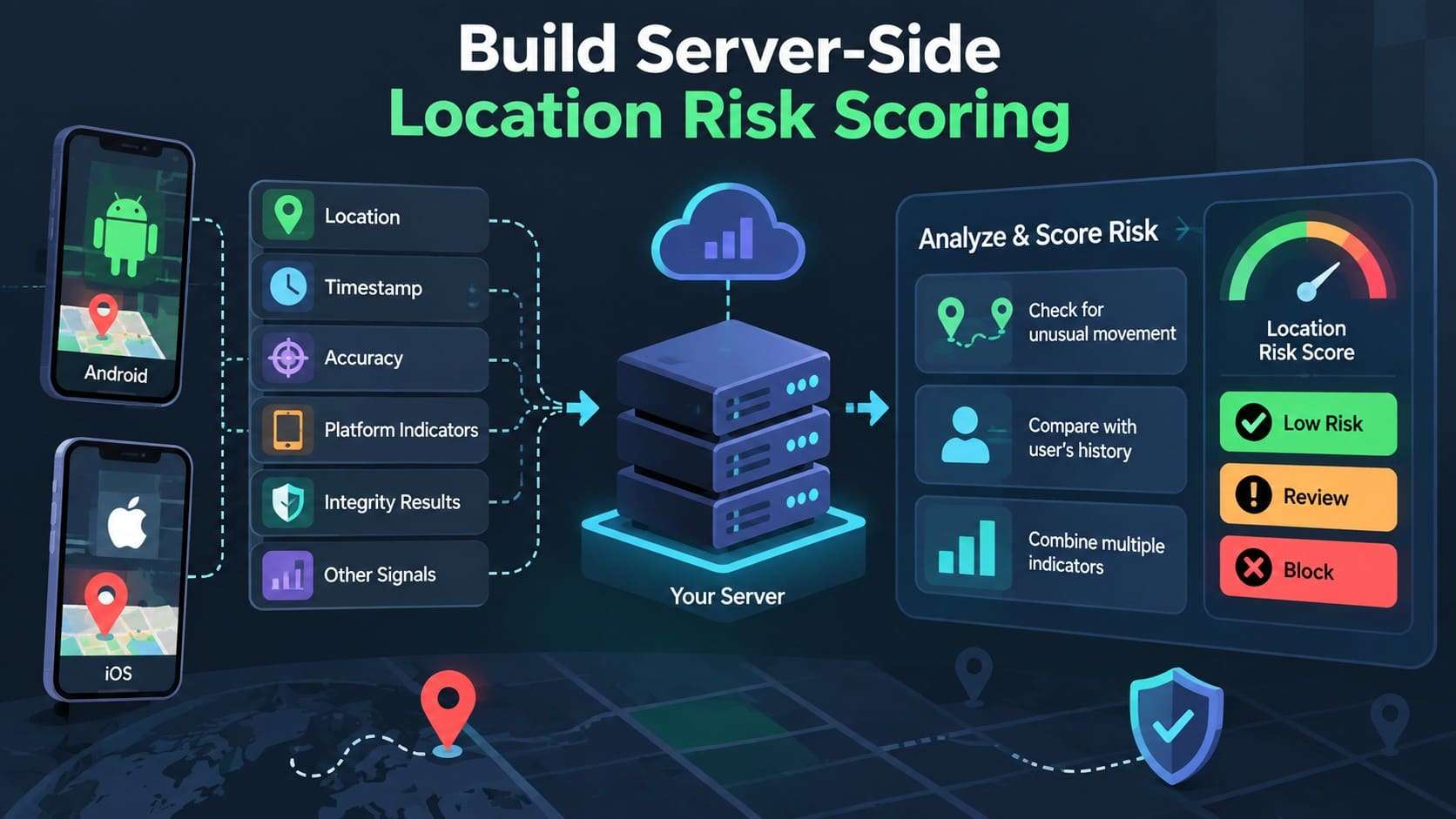
Client-side checks alone may not provide enough evidence to identify location spoofing. To detect location spoofing at scale, send permitted location, movement, platform, and integrity signals to the app's backend. The backend can evaluate these signals together and assign a location risk score.
It can also compare current activity with recent trusted events to identify impossible travel, unusual movement, or repeated location inconsistencies. Higher-risk results can then trigger additional verification instead of automatically treating one signal as proof of spoofing.
Part 5. How to Test Your GPS Spoofing Detection System?
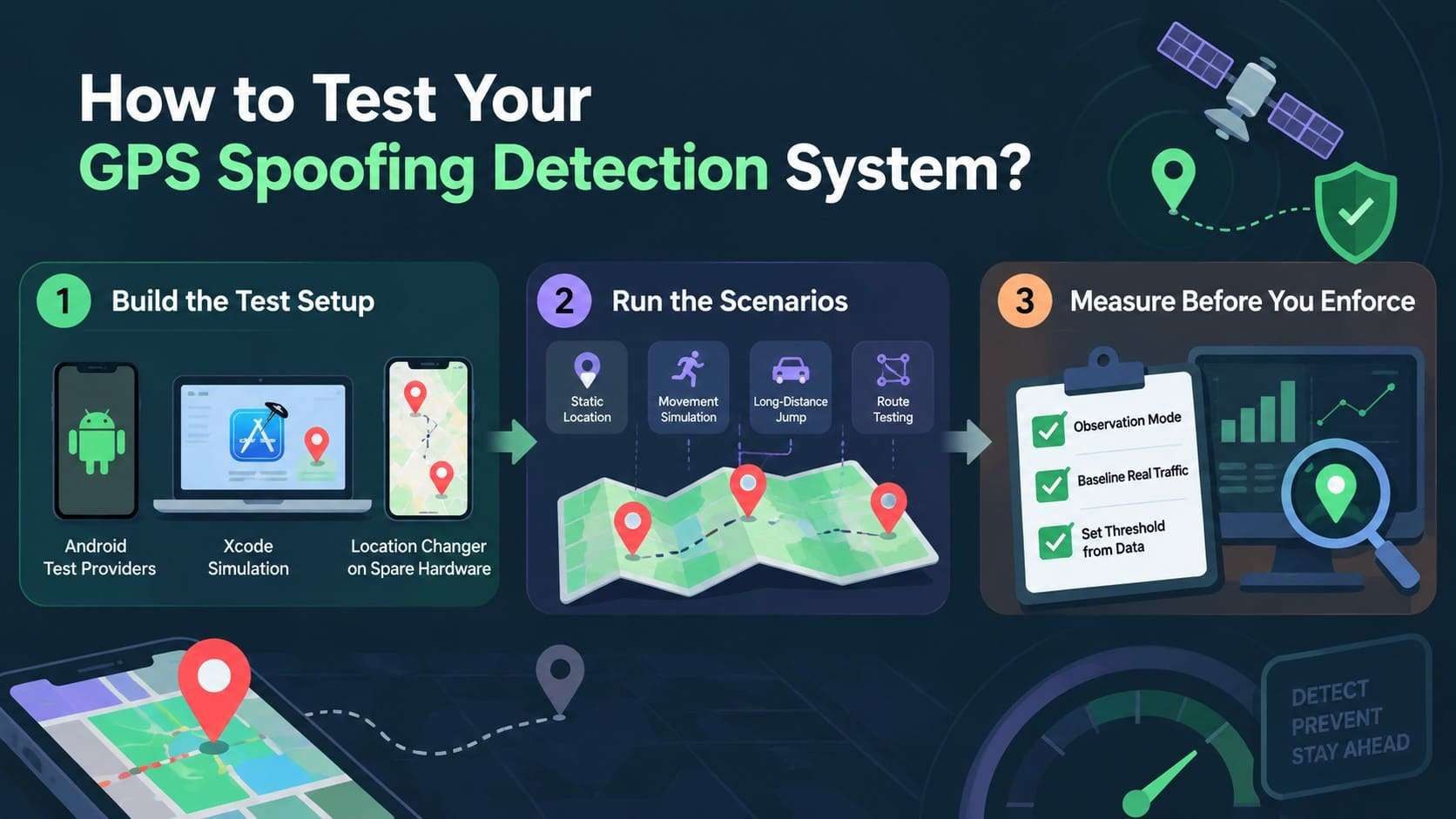
Before deploying GPS spoofing detection, build a controlled test setup and run different spoofing scenarios across Android and iOS. The following process helps evaluate detection signals, compare platform behavior, and set enforcement thresholds based on actual results.
Build the Test Setup
- Android Test Providers: Use Android's testing framework to create controlled and repeatable test locations without relying on third-party spoofing tools.
- Xcode Simulation on iOS: Use Xcode to simulate locations during development. You can load GPX data to test how your app responds to different coordinates.
- Location Changer on Spare Hardware: Use a dedicated test phone and location changer to reproduce teleportation and route movement. This provides more realistic scenarios to detect GPS spoofing.
Run The Scenarios
- Test Different Location Patterns: Test static fake locations, sudden long-distance jumps, paced movement, and simulated routes. Each pattern can challenge different detection methods.
- Record Each Detection Signal: Track which detection signals respond to each scenario and identify cases where expected checks fail to trigger.
- Compare Platform Results: Evaluate Android and iOS results using a consistent risk policy while accounting for the different signals available on each platform.
Measure Before You Enforce
- Run in Observation Mode First: Collect detection results without immediately blocking users. This helps identify false positives before enforcement begins.
- Baseline Your Real Traffic: Review the integrity and location signals produced by legitimate users before deciding which results should indicate higher risk.
- Set Thresholds from Data: Define enforcement thresholds using observed detection results and false-positive rates instead of relying on a single signal.
GPS Spoofing Detection Test Scenarios
| Test Scenario | Expected Signal | Detection Control |
|---|---|---|
| Static Fake Location | Mock or simulation indicator | OS source check |
| Cross-Country Teleport | Impossible travel | Speed and distance check |
| Simulated Walking | Movement or signal inconsistency | Movement and cross-signal checks |
| Unrealistic Speed | Implausible velocity | Movement plausibility check |
| GPS and IP Mismatch | Location disagreement | Cross-signal comparison |
| Compromised Device | Device integrity risk | Combined risk scoring |
Conclusion
Detecting a fake GPS location becomes more reliable when several signals are evaluated together. Platform indicators can reveal mock or simulated locations, while network data, movement patterns, and device integrity provide additional context. Testing these methods with controlled location changes also helps identify detection gaps before they affect real users.
A strong approach to detecting fake GPS locations combines these checks through server-side risk scoring rather than relying on one signal. This helps reduce false positives while strengthening location-based security across Android and iPhone.
FAQ
-
1. Can an app detect an Xcode-simulated location on an iPhone?
Yes. On iOS 15 and later, Core Location provides "isSimulatedBySoftware" to indicate software-simulated location data. Apps can use this information to identify Xcode-simulated locations during location checks. -
2. Does Android's isMock() detect every type of GPS spoofing?
No. Android's isMock() identifies locations marked as mock by the system. Spoofing methods that bypass Android's mock-location framework may not trigger this indicator. -
3. How can businesses reduce false positives when blocking suspicious locations?
Businesses can combine multiple location signals instead of relying on a single detection result. Testing rules before enforcement also helps identify false positives and set more reliable blocking thresholds.
 Add Wondershare Dr.Fone as a preferred source on Google



