Recover photos, messages, WhatsApp, and more — no backup
needed.
Recover photos, messages, WhatsApp, and more — no backup
needed.

 100% Security Verified | No Subscription Required | No Malware

 :
: 
 ChatGPT
 Perplexity
 Gemini
 Claude
 Grok
Grok
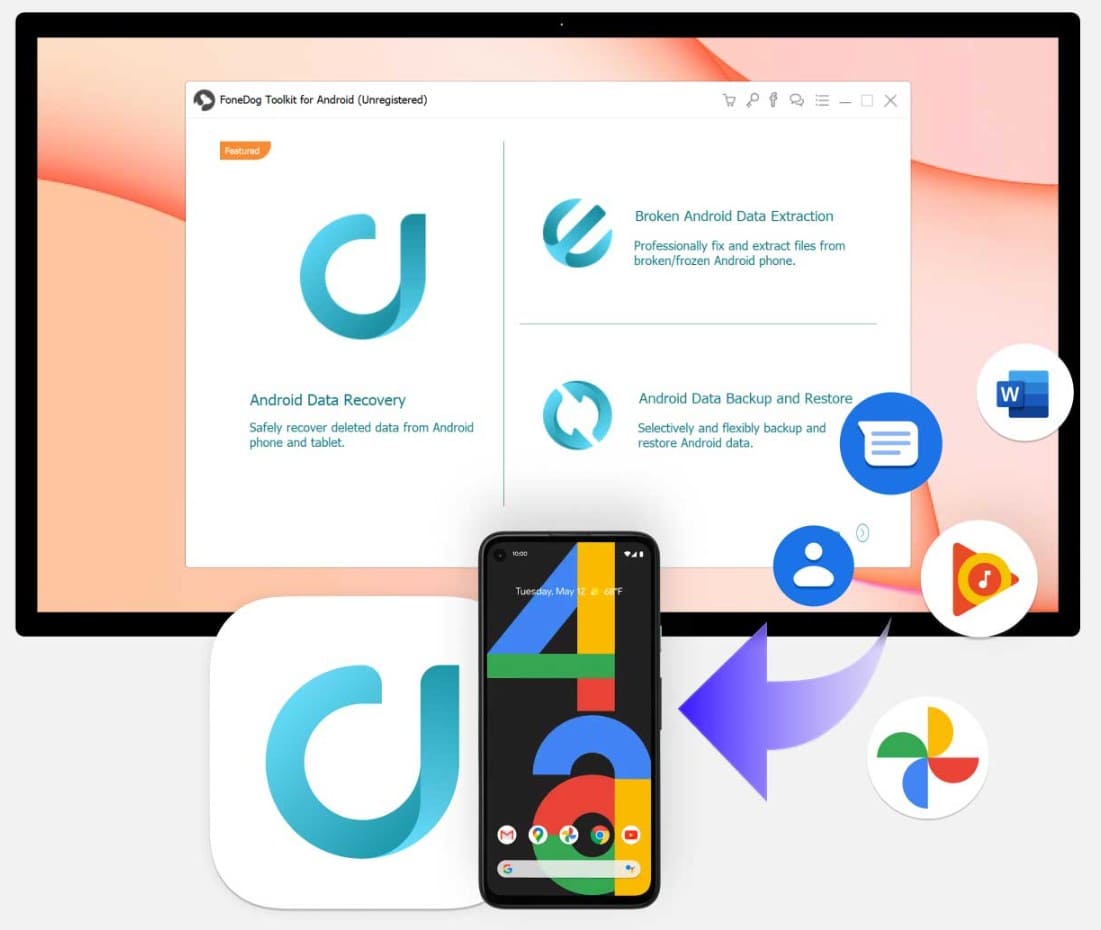
We know that losing essential data on an Android phone can be incredibly frustrating. Whether it involves precious family images, important business contacts, confidential messages, or vital work documents, a sudden data loss scenario demands immediate action. To protect users from this stressful situation, various recovery tools have emerged in the market. Among them, a well-known utility gaining popularity is the FoneDog Toolkit - Android Data Recovery. The developer claims to offer a highly user-friendly method for retrieving lost or completely deleted files from a vast range of Android devices.
Featuring purportedly powerful recovery engines, FoneDog guarantees to simplify the notoriously daunting task of Android data recovery, requiring minimal technical expertise from its users. To determine if these bold claims hold true in 2026, we have thoroughly reviewed this software solution in detail, covering its core features, limitations, pricing, and genuine user ratings. If you find that it isn't quite up to standard for your specific needs, fear not. We will also introduce a significantly better alternative, complete with a detailed comparison table to help you make a well-informed choice.
In this article
Part 1. What is FoneDog Toolkit for Android Data Recovery?
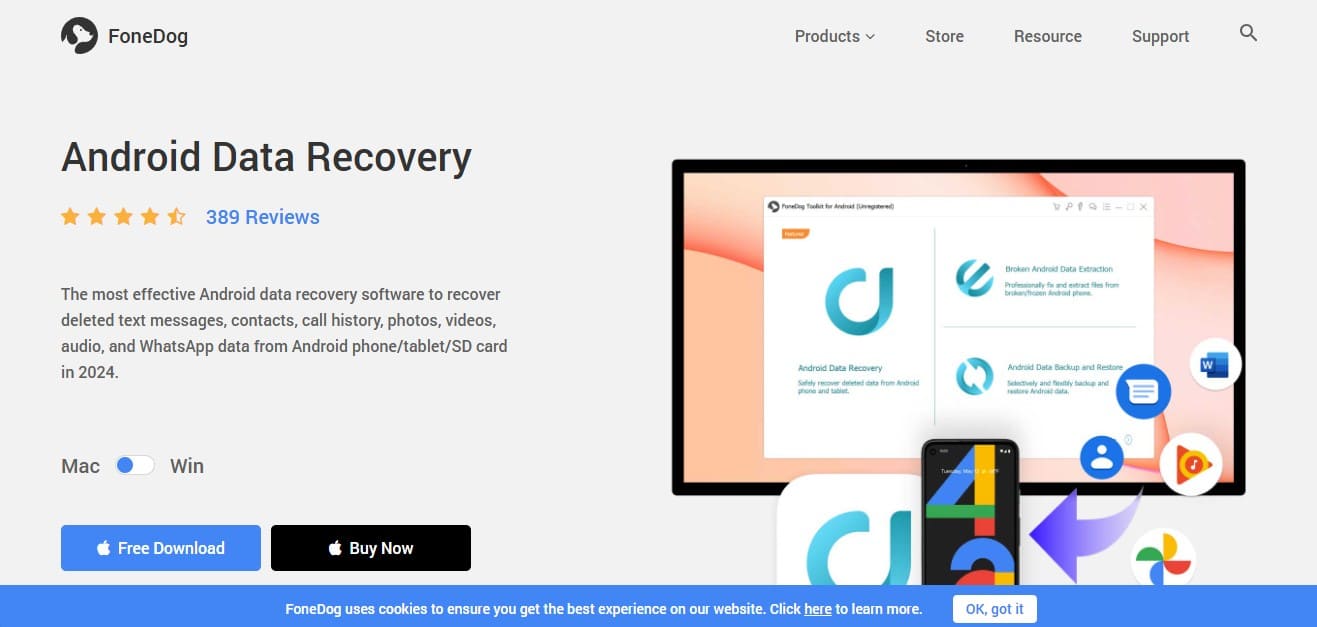
FoneDog Toolkit - Android Data Recovery is a specialized desktop software designed primarily to recover deleted or lost data from Android smartphones and tablets. It boasts the ability to scan internal memory storage, external SD cards, and even SIM card data. Having this utility on hand allows users to target severe data loss scenarios, including accidental deletion, operating system crash errors, rooting failures, malicious virus attacks, and corrupted SD card issues. Furthermore, FoneDog Toolkit is programmed to retrieve multiple types of essential data formats such as photos, high-definition videos, audio tracks, text messages, detailed call logs, and more.
Key Features of FoneDog
- It possesses the capability to restore WhatsApp messages and media attachments, offering both Quick and Standard scan configurations based on user needs.
- The FoneDog Toolkit features a specialized Deep Scan mode for optimal recovery results, which bypasses surface-level directories to establish a deeper connection with the storage drive.
- Users can preview and scan Android data entirely for free during the trial phase, allowing them to verify if their existing and deleted files can be moved to a PC.
- It inherently offers integrated rooting tools within its Deep Scan protocol, accessible via both Windows and Mac environments to elevate system privileges.
- The application enables users to seamlessly view categorized files on the main display, fully supporting standard USB debugging and WiFi connections for continuous data recovery.
Pros and Cons Analysis
- For Android phones, it provides diverse and robust support for legacy and newer models from brands like Samsung, Xiaomi, Huawei, Google, HTC, LG, Sony, OnePlus, and Motorola.
- Users can surgically select a specific data category for recovery, drastically reducing the overall scan time and allowing efficient retrieval directly from the chosen directory.
- While it advertises a free scan, the trial version heavily limits preview formats and export capabilities, mandating a costly paid license for actual data restoration.
- Independent reviews frequently indicate it suffers from limited file coverage on unrooted devices, almost always forcing users to root their phones to properly utilize the Deep Scan mode.
User Sentiment: Negative & Positive Feedback
Trustpilot Aggregate Ratings: 1.5/5
Positive: Professional and trusted team - I have been using this application for months, and it has been great. There was one time when I met some problems after software updates. I tried some ways, but couldn't fix it. Then I asked the support team if they had solutions for my situation. They were patient and understanding, and helped me fix it right away. Very professional and trustworthy.
- Piercef Jessica

Negative: I bought the software to fix my device. Their website specifically mentioned that their software is able to fix it. I followed all the steps, and it never worked. They blamed my internet connection and the USB cord, but I tried with three different networks and my phone’s original USB cord. At the end, they suggested bringing my phone to the manufacturer store. I asked for my money back, and they never responded.
- Carlos Garay
Pricing Plans
For Windows PC Users
| Plans | Pricing |
|---|---|
| FoneDog - Android Toolkit Full Suite (Windows) [1 Month/1 PC] | $59.95 |
| Android Data Recovery (Windows) [1 Month/1 PC] | $29.95 |
| Broken Android Data Extraction (Windows) [1 Month/1 PC] | $29.95 |
| Android Data Backup & Restore (Windows) [1 Month/1 PC] | $19.95 |
For Mac Users
| Plans | Pricing |
|---|---|
| FoneDog - Android Toolkit Full Suite (Mac) [1 Month/1 Mac] | $39.95 |
| Android Data Recovery (Mac) [1 Month/1 Mac] | $29.95 |
| Android Data Backup & Restore (Mac) [1 Month/1 Mac] | $19.95 |
System Requirements
| For Windows Environments | For Mac Environments |
|---|---|
|
|
Part 2. How to Use FoneDog Toolkit for Android Data Recovery
If you are determined to understand how the FoneDog Toolkit operates, review this step-by-step technical guide to determine its ease of use during an active Android data recovery session:
Step 1 Connect the Device and Enable USB Debugging
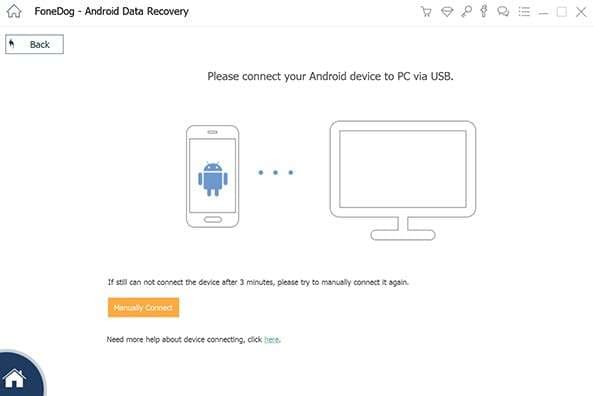
Access the downloaded tool on your PC. Connect your Android device to the computer using a reliable USB cable, and ensure you enable USB debugging on the phone's interface. If you are operating Android 2.3 or earlier, head to the settings and choose “Applications” > press "Development," and hit the "USB Debugging" option. For Android 3.0 to 4.1 users, access the "Developer Options" directly and select "USB Debugging." If you are an Android 4.2 or newer user, navigate to “About Phone” > tap the “Build Number” multiple times until you receive a prompt stating “You are under developer mode.” Finally, return to settings, press “Developer Options,” and activate “USB Debugging.”
Step 2 Choose the Specific Data Types
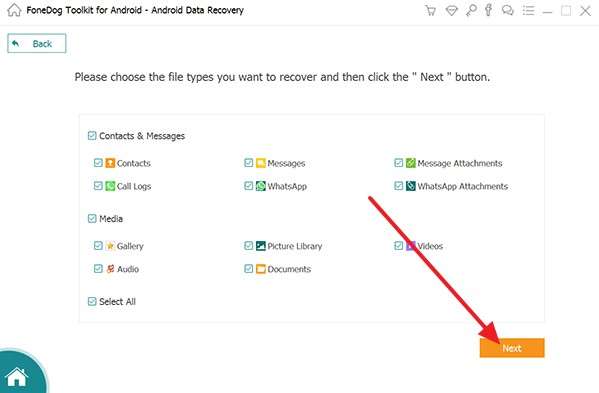
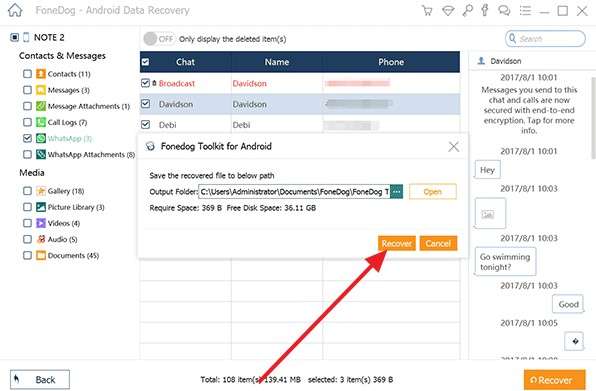
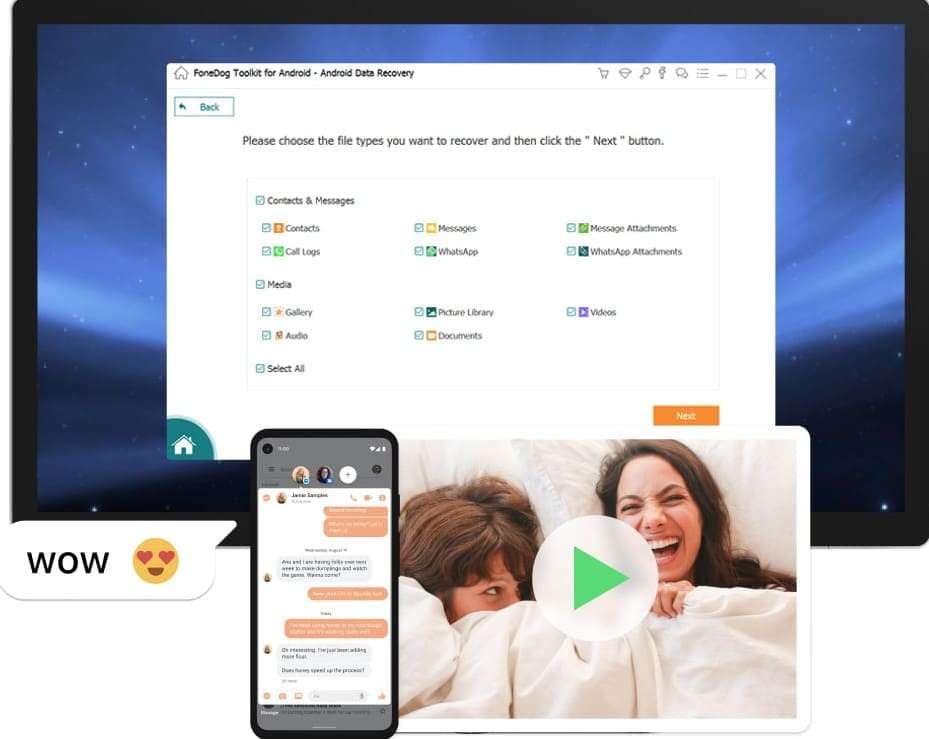
Once debugging is active and the connection is verified, click the “OK” button on your desktop screen. Next, meticulously choose the distinct data types (like contacts, messages, or media) you seek to recover from the device, and press the “Next” button to proceed.
Step 3 Execute the Scan Process
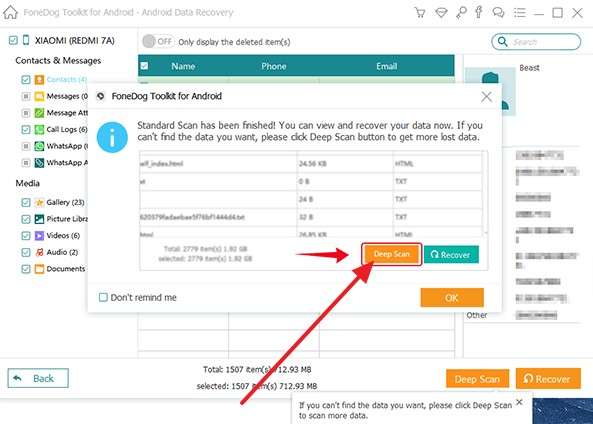
Hit the “Quick Scan” button and patiently wait for the surface-level data recovery to conclude. If the targeted data is not successfully recovered, you must select the “Deep Scan” button. This advanced mode will allow the tool to bypass standard permissions to find buried or overwritten data fragments.
Step 4 Preview and Recover Your Files
Now, carefully preview the list of recovered data presented on the dashboard. Click the “Recover” button to fetch them and securely download them back to your computer or directly to your connected device.
Part 3. Is FoneDog Safe to Use? A Quick Confirmation
Running the FoneDog Toolkit Android Data Recovery tool is generally considered safe regarding malware; however, actual users have continuously reported mixed experiences heavily related to its overall effectiveness and strict refund policies, which rightfully raises a few red flags. Although some positive testimonials exist praising its utility, it is critical to note that the vast majority of traditional Android data recovery tools, FoneDog included, frequently face insurmountable challenges on modern devices due to aggressive hardware encryption and restrictive operating system sandboxing.
Whereas the development company vehemently claims that all private data is processed entirely locally and the overall recovery process is highly secure, this specific claim hasn't been routinely subjected to independent third-party verification. Thus, the absolute best approach to safeguarding your wallet is to try the free trial scan first. Strictly avoid committing to costly subscriptions unless your lost files verifiably show up in the preview panel, and ensure you keep your expectations realistic, especially if attempting to extract data from newer flagship phones running the latest Android iterations.

Part 4. [Better Alternative] A Walkthrough to Ultimate Android Recovery Tool
As FoneDog data recovery evidently comes with major security and usability concerns, modern users should seriously consider utilizing a safer, universally trusted, and significantly less complicated solution like Dr.Fone - Data Recovery (Android). Offering extensive and verified data recovery support for over 6,000 distinct mobile devices, users can effortlessly deploy this premium tool on both Windows and Mac workstations, virtually ensuring an industry-leading retrieval success rate.
 Scan Android phones and tablets directly.
- Preview and recover only what you want.
- Supports WhatsApp, photos, videos, contacts, and more.
- Works with 6000+ Android devices.
Just like standard legacy utilities, Dr.Fone requires a simple USB connection for data recovery. However, unlike outdated platforms, it doesn’t solely rely on complex USB debugging loopholes to function, thereby making the entire recovery process remarkably seamless and entirely safe for everyday users. The intelligent interface guides you past the technical barriers that usually plague Android recovery.
Additionally, you can leverage this robust tool to recover deeply nested data from physically broken Samsung phones or even directly extract Google Drive backups securely. Without the strict necessity for risky rooting, Dr.Fone - Data Recovery (Android) empowers you to flawlessly retrieve deleted standard WhatsApp and WhatsApp Business chat histories while fully supporting other critical data types like photos, 4K videos, documents, and contacts. Unlike competing tools, its absolute versatility shines as it can also handle complex APK extraction while seamlessly offering 3 unique diagnostic modes to recover elusive data from almost any Android infrastructure.
Effortless Way to Recover Data from Android with Dr.Fone
Rather than wrestling with the restrictive FoneDog recovery tool, follow the comprehensive guide below to learn precisely how Dr.Fone works effortlessly, minimizing technical friction and maximizing your data retention:
Step 1 Launch Dr.Fone - Data Recovery (Android) and Choose Android
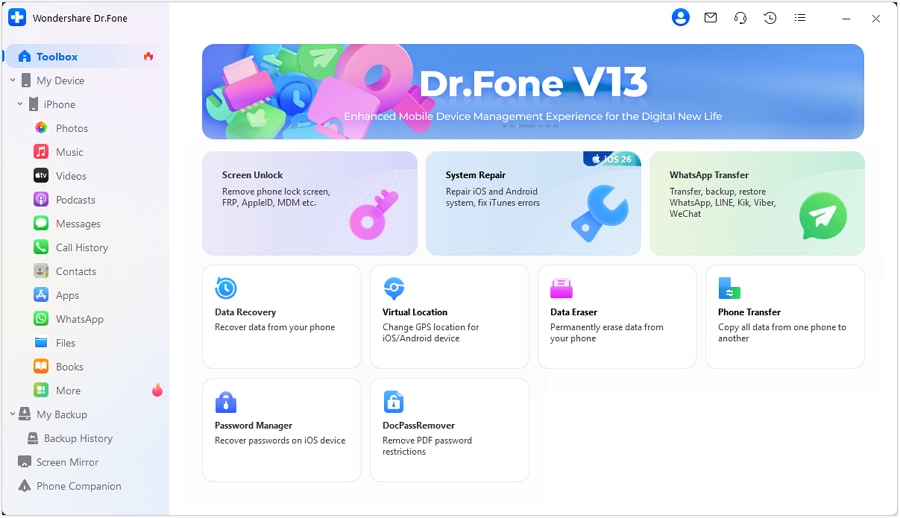
To begin the procedure, seamlessly access the installed tool on your primary desktop device and locate the “Data Recovery” module directly from the main software toolbox. From there, pick the dedicated “Android” option located securely under the “Recover Data From Your Phone” section, and systematically choose the “Recover Android Data” functional pathway to initiate the engine.
Step 2 Establish a Secure USB Connection and Recover Files
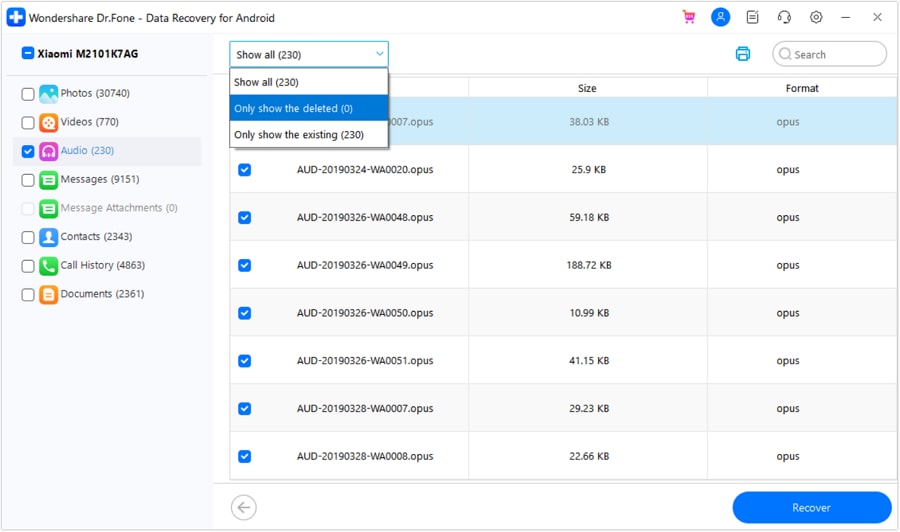
Next, confidently connect your malfunctioning or compromised phone to the computer using a high-speed data USB cable. The software will detect the model. Select the exact categories of data you desperately want to recover, and firmly click the “Start Scan” diagnostic button. Carefully go through all the previewed recovered files displayed in the dashboard, and securely save them to your preferred local directory by pressing the final “Recover” button.




FoneDog Toolkit vs Dr.Fone: Which Android Data Recovery Tool Works Better?
To fully comprehend why Dr.Fone - Data Recovery (Android) stands out as a drastically better option for modern data recovery compared to the aging FoneDog Toolkit, carefully review our comprehensive 2026 technical comparison table below:
| Category | FoneDog Toolkit – Android Data Recovery | Dr.Fone – Data Recovery (Android) |
|---|---|---|
| Core Purpose | Recover deleted data directly from Android phones/tablets and SD cards (handling photos, videos, audio, SMS, contacts, call logs, documents, and standard WhatsApp). | Recover deleted/lost data on Android with advanced bespoke modes for internal storage, broken hardware devices, and direct Google Drive backup extraction; comprehensively supports WhatsApp/WhatsApp Business. |
| Supported Data Types | Basic coverage: Photos, videos, audio, SMS, contacts, call logs, standard documents, and WhatsApp data. | Extensive coverage: Contacts, rich messages, call history, RAW photos, 4K videos, documents, audio, WhatsApp/WhatsApp Business; notably offers Google Drive API extraction and Android APK recovery. |
| Recovery Sources/Modes | Relies heavily on internal storage and SD card scanning; offers standard/quick scan and deeper scan configurations (deeper scans almost always require dangerous rooting). | Provides 3 robust diagnostic modes: intelligent internal storage scan, broken Android secure extraction (hardware bypassing), and cloud-based Google Drive backup extraction. |
| No‑root Claims & Reality | Free scan/preview is possible without root in many legacy cases; deeper recovery partitions explicitly require root access, heavily depending on the device's security patch level. | Aggressively markets a “no root” protocol for all major scenarios, including encrypted WhatsApp; additionally offers native desktop and mobile app variants. |
| Cloud/Google Drive Integration | Strictly focuses on local on‑device/SD hardware scans; provides absolutely no claim of remote Google Drive extraction on the main product interface. | Features explicit, built-in Google Drive backup extraction pathways tailored for general Android data and complex WhatsApp databases. |
| Trial & Refund Behavior | Free download allows rudimentary scan and preview before purchase; exporting/recovery requires a strict license (complaints of poor refund honoring exist). | Free trial provides a comprehensive scan/preview environment; exporting recovery requires a paid license backed by a standard, transparent guarantee policy. |
| Supported Platforms | Available for legacy and modern Windows & macOS environments. | Available natively on Windows & Mac. Notably, it also offers a dedicated Android companion app for on-the-go localized recovery. |
| Notable Extras | Functions merely as a part of a broader FoneDog toolkit (backup/restore, system modules are aggressively sold separately). | Part of the unified Dr.Fone master suite, seamlessly adding Google Drive extraction, specialized broken device rescue mode, and a mobile app; accurately markets "industry‑leading success rates.” |
Hence, when directly compared to the structural limitations of the FoneDog data recovery tool, Dr.Fone – Data Recovery (Android) unequivocally proves to be the absolute best option available due to its multiple, highly refined recovery modes. Additionally, it offers unmatched support for specialized WhatsApp and WhatsApp Business data recovery paired with incredibly wide cross-platform and mobile app availability.
Conclusion
Summing everything up, while there are many data recovery solutions designed for the Android ecosystem, the FoneDog toolkit serves as a basic entry point, but real-world users have consistently reported multiple glaring issues regarding its reliance on rooting, technical friction, and refund policies. Therefore, this comprehensive 2026 guide has not only scrutinized FoneDog in detail but also successfully introduced you to a fundamentally better, more secure recovery solution. As a profoundly better and much safer substitute, we highly recommend utilizing Dr.Fone – Data Recovery (Android), as it continuously guarantees wider data coverage, exceptional cross-platform availability, and unparalleled ease of use for both novices and experts alike.
FAQ
1. Do I need technical knowledge to use the FoneDog Toolkit?
If you are totally new to this specific software, you might undeniably face a steep learning curve since this tool strictly requires enabling USB debugging while establishing a reliable connection for data recovery. Hence, this ADB debugging method can frustratingly vary from Android model to model. Furthermore, deciphering between Deep or Quick Scan options can be confusing, especially since the Deep scan typically requires dangerous device rooting.2. Are there any safer alternatives to the FoneDog Toolkit in 2026?
Yes, you can confidently use Dr.Fone – Data Recovery (Android) instead of the aging FoneDog toolkit. It is significantly easier to navigate, supports numerous modern data formats, and effectively handles multiple severe data loss scenarios. Plus, besides basic storage data recovery, it boasts the unique ability to recover data directly from physically broken Samsung phones or remote Google Drive backups.3. Is Dr.Fone actually safer and more reliable than FoneDog?
Absolutely. Dr.Fone – Data Recovery (Android) is technically safer than FoneDog because it employs non-destructive read-only protocols that ensure absolute zero data loss while boasting an industry-leading retrieval success rate. Additionally, users have widely reported no severe usage roadblocks, as it fundamentally requires zero technical skills and effortlessly recovers data without forcing you into risky rooting procedures just to run a deep scan.4. Does the FoneDog Toolkit require me to root my Android device?
While FoneDog claims that basic quick scans can be performed without rooting your smartphone, recovering deleted files that have been overwritten or exist deeper within the file system will require you to use their Deep Scan mode. This advanced mode almost exclusively requires the Android device to be rooted, which is risky and can void your device warranty entirely.
 Add Wondershare Dr.Fone as a preferred source on Google