Bypass iCloud Activation Lock and Android FRP without password.

 100% Security Verified | No Subscription Required | No Malware

 :
: 
 ChatGPT
 Perplexity
 Gemini
 Claude
 Grok
Grok
A phone lock serves as the primary shield for your Android device, safeguarding your personal information from unauthorized access. Modern smartphones offer advanced security features, such as fingerprint and facial recognition, to secure the Android lock screen.
However, many users still rely on traditional PINs, patterns, or passwords. It's a common and distressing scenario to forget your Android screen lock credentials, leaving you completely locked out of your own device. This can be particularly stressful if you need urgent access to your contacts, photos, or apps.
Fortunately, being locked out doesn't have to be a permanent problem. We've compiled several effective techniques to help you unlock your phone and set a new screen lock. While some methods are technical, tools like Wondershare Dr.Fone - Screen Unlock (Android) offer a streamlined solution to regain access in just a few steps. This guide will walk you through all available options.
In this article
Part 1. Understanding Android Screen Lock Options
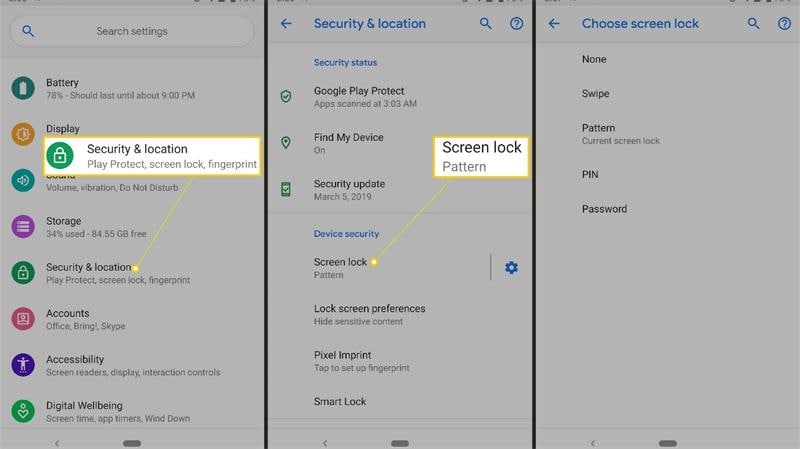
Android provides several types of screen locks to secure your device. You can typically choose a PIN, password, pattern, or biometric options like fingerprint or face unlock. Each method has its own balance of security and convenience, and you should choose the one that best fits your needs.
You can enable, disable, or change your phone lock method at any time through the 'Security' or 'Lock screen' section in your phone's Settings app. Once you set a screen lock, your Android device will require it each time you wake the screen to prevent unauthorized use.
Here is a general overview of how to set up a screen lock on a standard Android device:
Part 2. The Easiest Way to Bypass Android Screen Lock With Dr.Fone
For a fast, straightforward, and reliable unlocking experience, we highly recommend Dr.Fone - Screen Unlock (Android). This powerful tool is designed to remove all types of Android screen locks, including PINs, passwords, patterns, and fingerprints. On many Samsung and LG models, it can even unlock the device without causing any data loss. Its intuitive interface makes it accessible to everyone, regardless of technical expertise.
If you need to regain access to your device without the hassle, Dr.Fone is the ideal solution. Stop searching and let this tool handle the complex work of removing your Android screen lock in a few simple clicks.
 Unlock Android phone in seconds.
- Remove PIN, pattern, password, fingerprint.
- Bypass Google FRP lock easily.
- Works on all Android brands & models.
- No tech skills required – user-friendly.
-
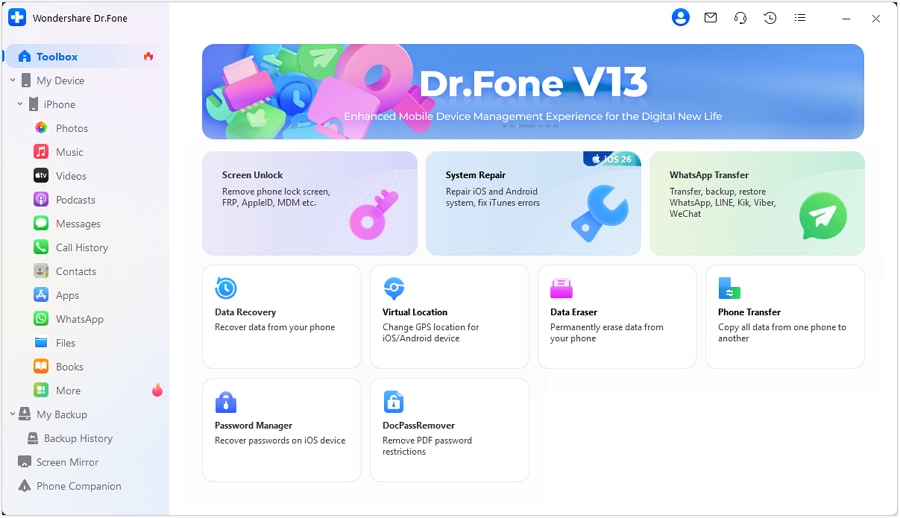
Step 1Launch Dr.Fone and Select "Screen Unlock"
Begin by opening the Dr.Fone toolkit on your computer. From the main interface, choose the "Screen Unlock" module to proceed.
-
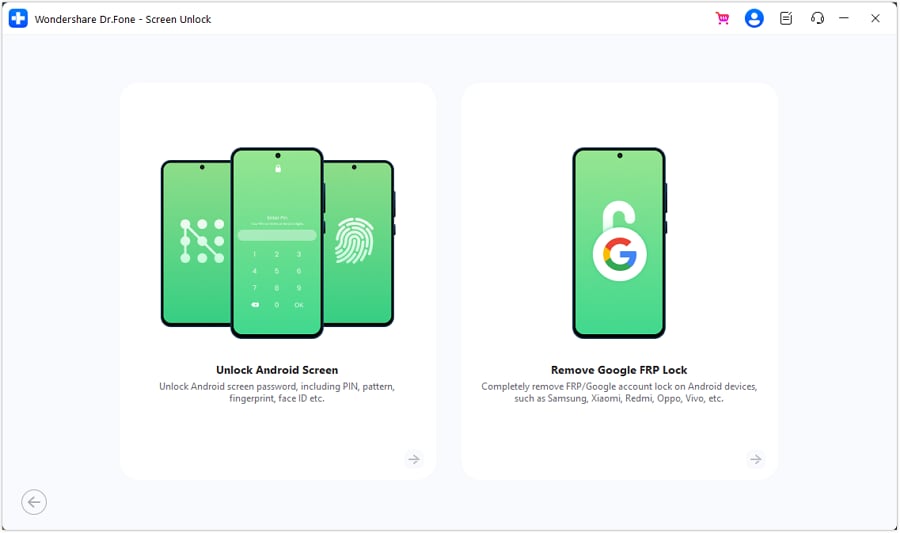
Step 2Choose "Unlock Android Screen"
Connect your Android phone to the computer. On the next screen, you will be presented with options for different device types. Select "Unlock Android Screen" to continue with the process.
-
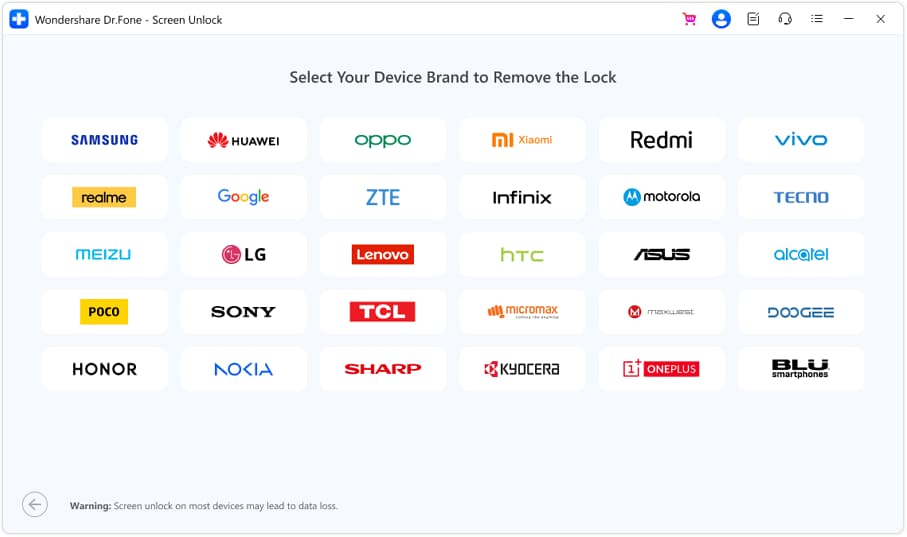
Step 3Select Your Device Brand and Model
The software offers different unlocking procedures based on the device manufacturer. For most brands, you will select the "100% Remove Screen Lock" option. It is crucial to select the correct brand from the list to ensure the highest success rate. Dr.Fone supports almost all major Android devices, including Samsung, Huawei, OPPO, Vivo, LG, and more.
-
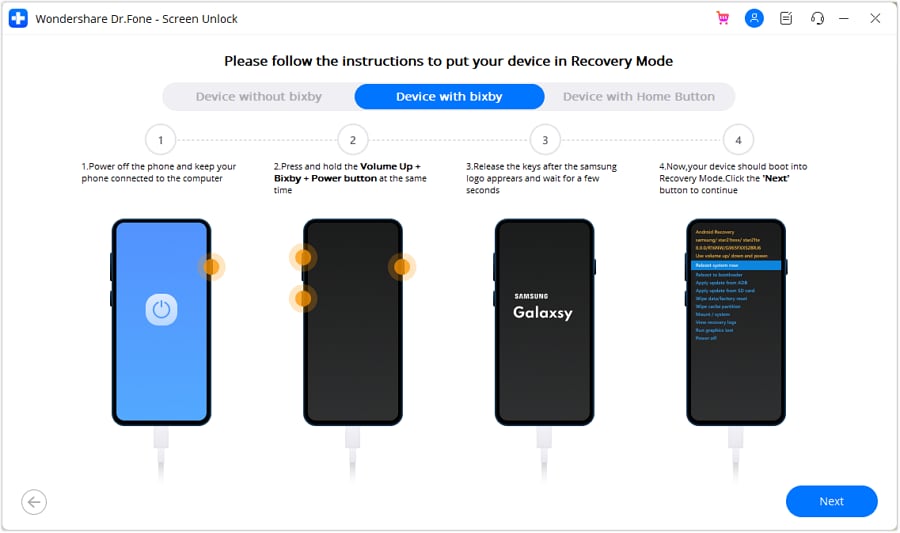
Step 4Enter Recovery Mode
To remove the lock screen, you must first put your device into Recovery Mode. Dr.Fone will provide specific, on-screen instructions tailored to your device. The process varies slightly depending on whether your phone has a Bixby button, a Home button, or neither. Follow the visual guides carefully.
-
Step 5Wipe Cache Partition and Unlock
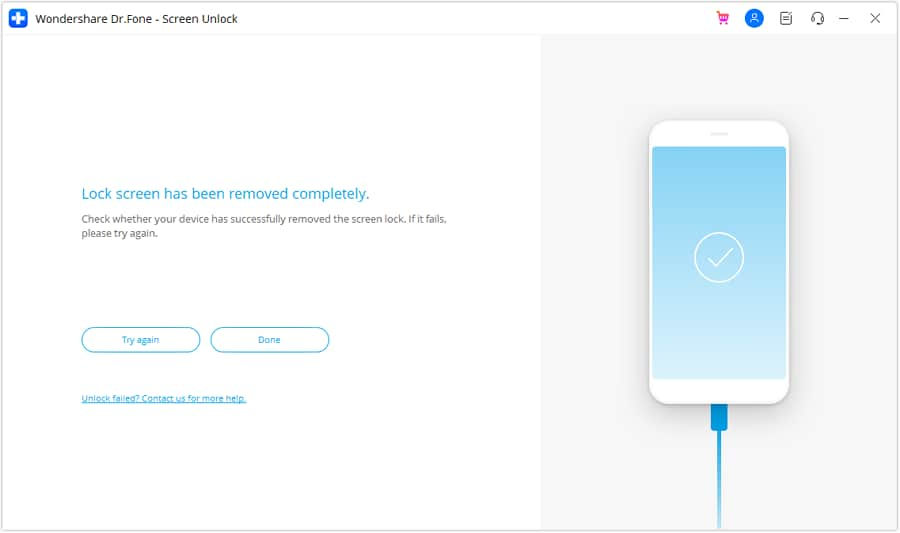
Once in Recovery Mode, you will need to follow the on-screen instructions within Dr.Fone to wipe the cache partition. This step is critical for removing the lock screen. Be sure to select the correct options using your phone's volume and power buttons as directed. After the process completes, your device will reboot without the lock screen, allowing you full access again without needing a password or pattern.




Part 3. Alternative Methods to Unlock Your Android Device
If you prefer not to use third-party software, several other methods can help you bypass your Android screen lock. However, be aware that most of these alternatives will result in the complete erasure of your device's data.
3.1. Using Google Find My Device

-
Step 1Access Find My Device
On a computer or another device, open a web browser and navigate to the Google Find My Device website. Log in with the same Google account credentials used on your locked Android phone.

-
Step 2Erase the Device
Once your device is located on the map, select the "ERASE DEVICE" option from the menu on the left. You will need to confirm your choice. This action will initiate a factory reset on your phone, wiping all data, including the screen lock. Once the process is complete, you can set up your phone as new.
3.2. Performing a Factory Reset via Recovery Mode
If you cannot use Find My Device, a manual factory reset through Recovery Mode is another option to remove the Android screen lock.
-
Step 1Enter Recovery Mode
First, power off your device completely. Then, press and hold a specific combination of buttons to boot into the recovery menu. This combination varies by manufacturer but often involves the Power and Volume Down buttons. You can search online for the specific key combination for your model.
-
Step 2Wipe Data/Factory Reset
Once in Recovery Mode, use the volume keys to navigate the menu and the power key to select an option. Find and select "Wipe data/factory reset".

-
Step 3Confirm and Reboot
Confirm your selection. The device will begin the reset process, which may take several minutes. Once finished, select "Reboot system now". Your phone will restart without a screen lock, ready for setup.
3.3. Using Android Debug Bridge (ADB)
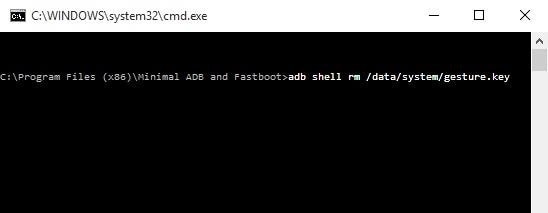
If you meet the prerequisites, you can remove the phone lock files via ADB. Connect your phone to your PC, open a command prompt or terminal, and enter the following command:
adb shell rm /data/system/gesture.key
For password or PIN locks, the file might be `password.key`. After running the command, reboot your phone. The screen lock should be temporarily disabled, allowing you to access your device and set a new one.
3.4. Booting into Safe Mode
This method works specifically for lock screens set by third-party apps, not the default Android lock screen.
-
Step 1Reboot to Safe Mode
Press and hold the power button until the power menu appears. Then, tap and hold the "Power off" option. A prompt should appear asking if you want to reboot into Safe Mode. Tap "OK".
-
Step 2Uninstall the Lock Screen App
In Safe Mode, all third-party apps are disabled. This should bypass the third-party lock screen. Go to Settings > Apps, find the problematic lock screen app, and uninstall it. After that, simply reboot your phone to exit Safe Mode. Your phone should now be accessible.
3.5. Intentionally Crashing the Lock Screen UI
For users on very old Android versions, you can try to crash the lock screen UI to gain access.
- On the lock screen, open the Emergency Call dialer.
- Enter a long string of characters (e.g., ten asterisks). Copy this string.
- Paste the string into the dialer repeatedly until you can no longer paste it.
- Return to the lock screen and open the Camera shortcut.
- Pull down the notification shade and tap the Settings icon. This will prompt you for the password.
- Long-press the password field and paste the long string of characters repeatedly. Continue pasting until the UI crashes, which may unlock the phone.

Conclusion
While screen locks are essential for protecting our privacy, forgetting the password, PIN, or pattern can be a major inconvenience. Fortunately, as this guide has shown, you have multiple options to regain access to your device. Methods like factory reset are effective but come at the cost of your data.
For a secure, efficient, and user-friendly solution, we recommend using Dr.Fone - Screen Unlock (Android). It is expertly designed to handle such problems in minutes, offering the best chance to unlock your phone without losing valuable information. Download this professional tool today for a quick and stress-free resolution.
FAQ
-
1. Will unlocking my Android phone erase my data?
It depends on the method used. Using tools like Google's Find My Device or performing a factory reset via Recovery Mode will completely erase all data. However, Dr.Fone - Screen Unlock can remove the lock screen on some supported models (primarily older Samsung and LG devices) without any data loss. For other devices, data will be erased. -
2. Can I unlock my phone if I forgot my Google account password?
Forgetting your Google account password complicates things, especially after a factory reset, as you'll face Factory Reset Protection (FRP). You would first need to recover your Google account password through Google's account recovery process. Some advanced tools, including Dr.Fone, also offer features to bypass the FRP lock if you cannot recover the account. -
3. Does Dr.Fone - Screen Unlock work on all Android models?
Dr.Fone - Screen Unlock supports a vast range of Android devices from all major manufacturers, including Samsung, Google, Huawei, LG, Motorola, and more. While the no-data-loss feature is limited to specific models, the general screen unlock function works on almost all Android phones and tablets. -
4. Is it legal to unlock a phone's screen lock?
Yes, it is perfectly legal to unlock the screen of a phone that you own. The methods and tools discussed in this article are intended for personal use to regain access to your own device after forgetting your credentials. However, using these methods to unlock a phone that does not belong to you is illegal and a violation of privacy.
 Add Wondershare Dr.Fone as a preferred source on Google