iPhone Not Charging After Water? 9 Safe Fixes to Try

Oct 23, 2026 • Filed to: Phone Repair Solutions • Proven solutions
 TL;DR:
What to do next
- After actual liquid exposure: wait at least 5 hours before cable charging or connecting an accessory, and only reconnect when the iPhone and cable are completely dry. Time alone does not prove the phone is safe.
- If a liquid alert is the issue: Apple's alert guide allows a retry after at least 30 minutes; a returning alert means more drying, potentially up to 24 hours. After a known spill, follow the longer liquid-exposure guidance. See the two timing rules.
- Need an alternative? A compatible wireless charger can bypass the connector, but first dry the iPhone, including its back. Wireless charging working does not rule out port or internal damage.
- Still not charging when dry? Test dry accessories, then seek service for persistent faults. Neither an iOS reset nor Dr.Fone can repair corrosion or a wet connector.
Ask AI for a summary
 ChatGPT
 Perplexity
 Gemini
 Claude
 Grok
Grok
If your iPhone is not charging after water exposure, disconnect the charging cable from the iPhone and unplug its other end from the power adapter or accessory. Let the iPhone and cable dry completely before reconnecting. A Liquid Detected or Charging Not Available alert can temporarily block Lightning or USB-C charging, but a phone that will not charge after getting wet can also have an accessory fault or physical damage.
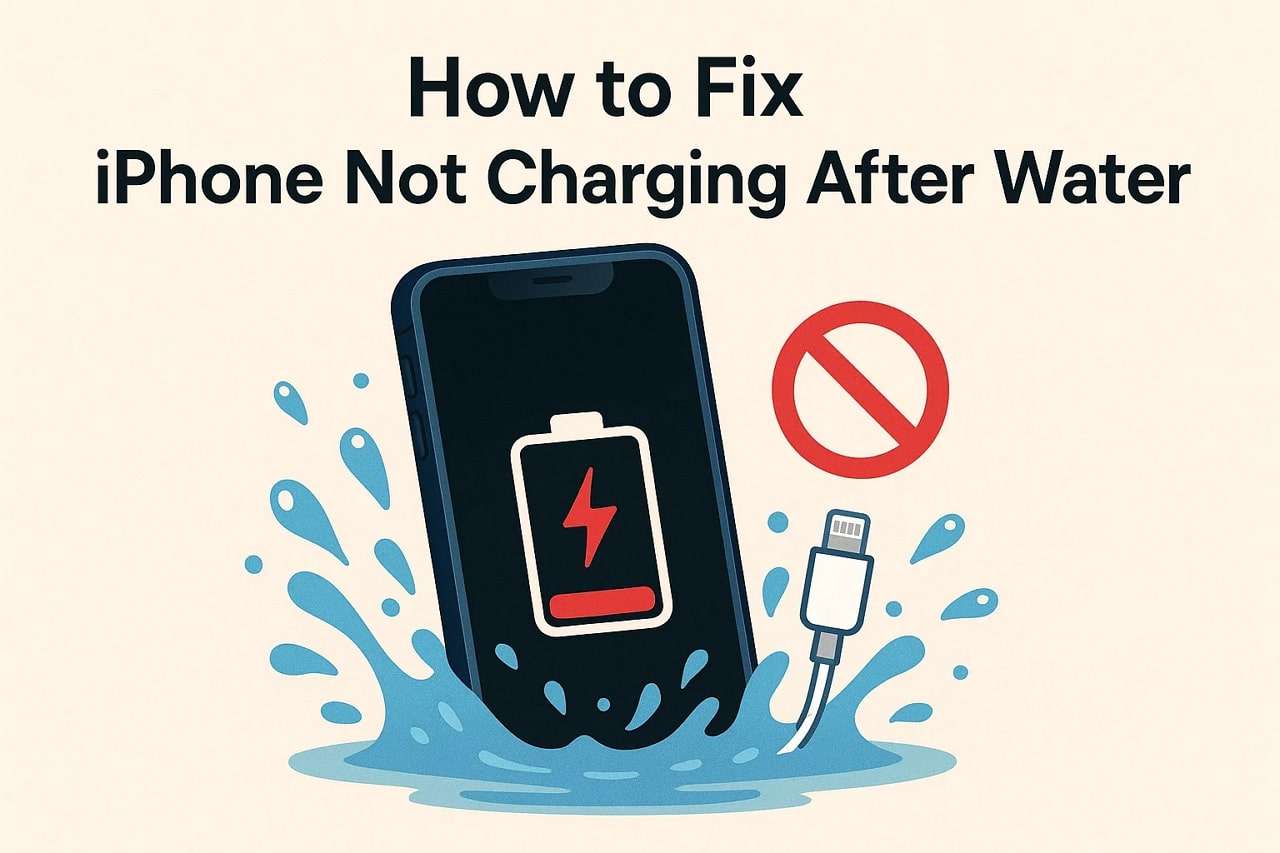
Start with safe drying and charging checks before trying software troubleshooting. If the port is fully dry but wired charging still fails, the problem may be a damaged cable, corrosion, the charging port, or other hardware. Software repair should only be considered after physical liquid damage has been ruled out.
- Part 1. Why Your iPhone Won't Charge After Getting Wet
- Part 2. How to Fix iPhone Not Charging After Water: 5 Stages & 9 Safe Fixes
- Stage 1. Immediate Safety Actions (Stop Further Damage)
- Stage 2. Drying and Waiting Methods (Restore Safety Before Charging)
- Stage 3. Testing and Workarounds (Identify the Problem Source)
- Stage 4. Optional Software Checks After the iPhone Is Dry

- Stage 5. When to Seek Professional Help (Hardware Repair)
- Part 3. Prevent Future Water-Related Charging Issues
Part 1. Why Your iPhone Won't Charge After Getting Wet
An iPhone that will not charge after getting wet can be dealing with one of several different problems: temporary moisture detection, a wet or damaged cable, corrosion in the charging port, or deeper hardware damage. The first job is to separate a temporary safety lock from a persistent charging failure.
What Happens Inside Your iPhone When It Gets Wet?
A wet connector can trigger a temporary charging block without proving that the whole iPhone is damaged. However, charging through a wet connector can corrode its pins and cause permanent connection problems. Liquid that reaches internal components can also leave a hardware problem after the exterior looks dry; appearance alone cannot distinguish the two situations.
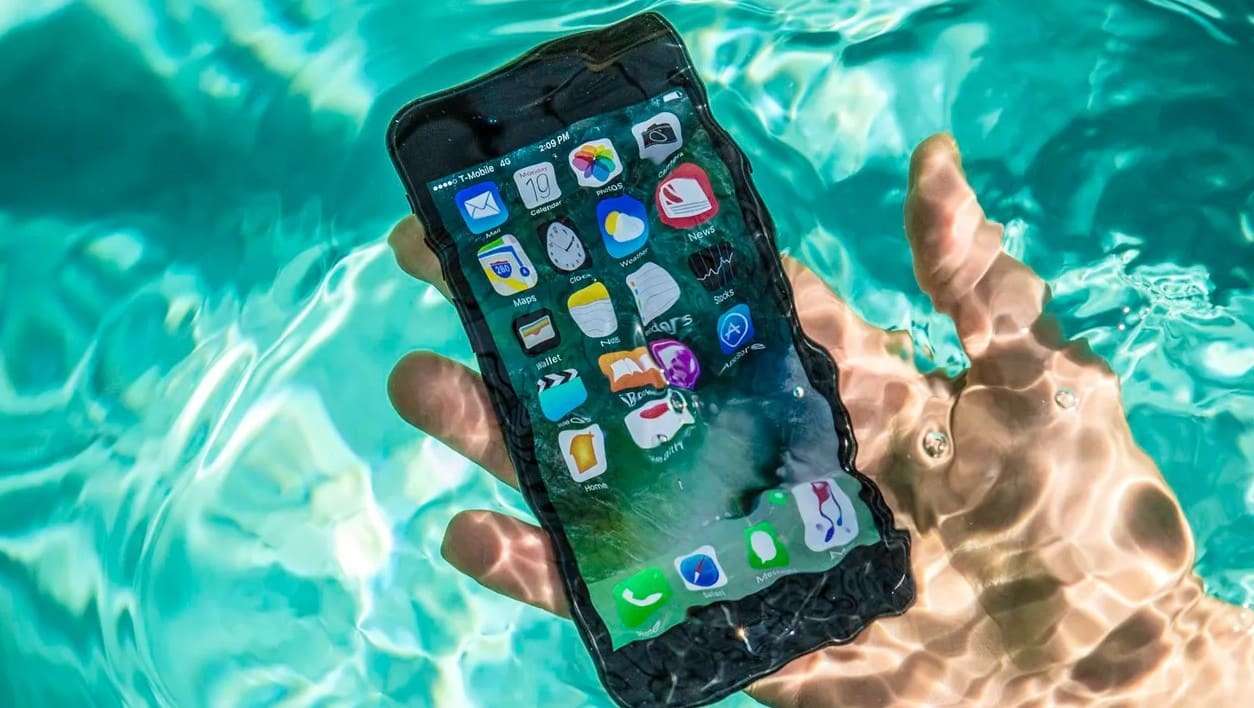
Even after visible moisture is gone, corrosion can continue to affect the charging port or internal components. If the iPhone remains unable to charge after proper drying and basic cable checks, a hardware inspection may be necessary rather than repeated software troubleshooting. Apple recommends service when a dry device continues to show the alert with Apple accessories.
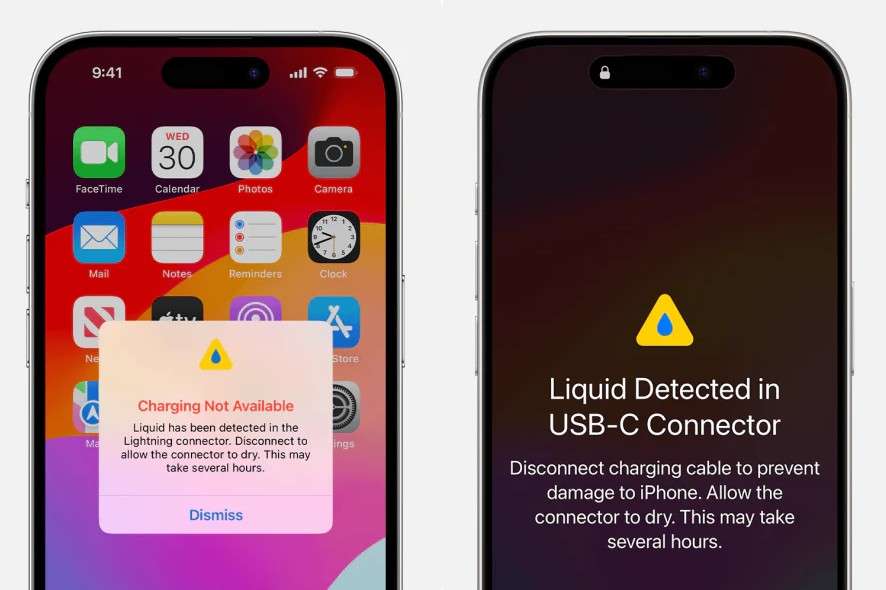
Why You See “Liquid Detected” or “Charging Not Available”
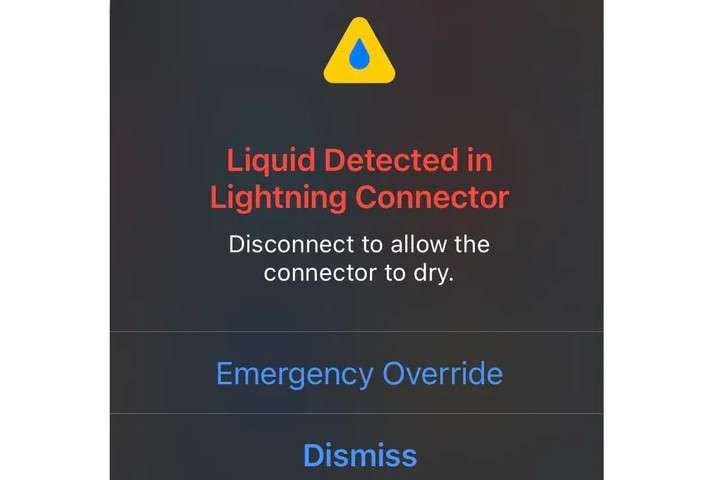
If an iPhone detects liquid in the Lightning or USB-C connector, cable, or accessory, it can temporarily block charging or accessory use to protect the connector pins. Charging while wet can cause corrosion or permanent connectivity problems.
The connector changes the alert, not the drying method. A Lightning iPhone can show Charging Not Available or Liquid detected in Lightning Connector; a USB-C iPhone can show Liquid Detected in USB-C Connector or Liquid Detected, depending on the connection. Apple documents liquid alerts for iPhone XR, XS, XS Max, and later. The same disconnect-and-air-dry guidance applies. An older iPhone, or any iPhone with no alert, is not therefore safe to charge after a spill.
- Moisture is present in the Lightning or USB-C connector.
- The cable or accessory itself is wet.
- A damaged or contaminated cable can keep triggering the alert even when the phone is dry.
- The safety block prevents wired charging until the connector, cable ends, and accessory are dry.
- If the warning appears repeatedly with a dry Apple cable or accessory, the iPhone may need service.
Common Causes of Water Damage or Charging Issues
If you dropped your iPhone in water and it won't charge, start with the exposure and symptoms below. These are possible problems, not a diagnosis of which internal component has failed:
| Cause/Source | How It Happens | What to inspect externally | Potential Outcomes |
|---|---|---|---|
| Submersion in Water | Dropping a phone in the sink, pool, toilet, etc. | Wet exterior and charging connector | Liquid alert, charging failure, or internal damage requiring assessment |
| Heavy Rain or Splashes | Use in the rain, the kitchen, the bathroom, or during sports | Connector, cable ends, and case | Temporary charging block; persistent failure needs further checks |
| Spilled Drinks (Juice, Soda, Coffee) | Sticky/sugary liquids entering the device | Visible residue on the exterior or connector | Drying alone does not establish that residue or a hardware fault is resolved |
| Sweat or High Humidity | Prolonged exposure to sweat or damp areas | Damp connector or accessory | Moisture-related alert; use the same safe drying process |
| Physical Damage (Cracks/Gaps) | Cracked screen, back glass, or loose/old port seals | Cracks or visible damage, without opening the phone | Do not rely on the phone's original water-resistance rating |
Quick Check: Moisture, Cable, or Hardware Damage?
| What you see | Most likely next check | Best next step |
|---|---|---|
| Liquid alert appears right after water exposure | Moisture safety lock | Disconnect, air-dry, and follow the timing rule for your situation. |
| Only one cable or accessory triggers the alert | Wet or damaged accessory | After drying, compare with a known-good dry cable. |
| Wireless charging works but wired charging does not | Port may still be wet or damaged | Wireless charging bypasses the connector, not the damage. Seek service if dry wired checks still fail. |
| No liquid alert, but charging still fails after drying | Cable, adapter, port, battery, hardware, or less commonly software | Rule out dry accessories first; use software checks only for a separate supported software problem, not as proof that hardware is fine. |
Part 2. How to Fix iPhone Not Charging After Water: 5 Stages & 9 Safe Fixes
Work through the stages in order, but do not run every fix automatically. Fixes 1–5 cover drying and basic checks; Fixes 6–8 are optional checks for a separate software problem, not treatments for water damage. Use Fix 9 when the symptoms point to service.
📍 Stage 1. Immediate Safety Actions (Stop Further Damage)
Fix 1. Disconnect the Charger and Power Off If Needed
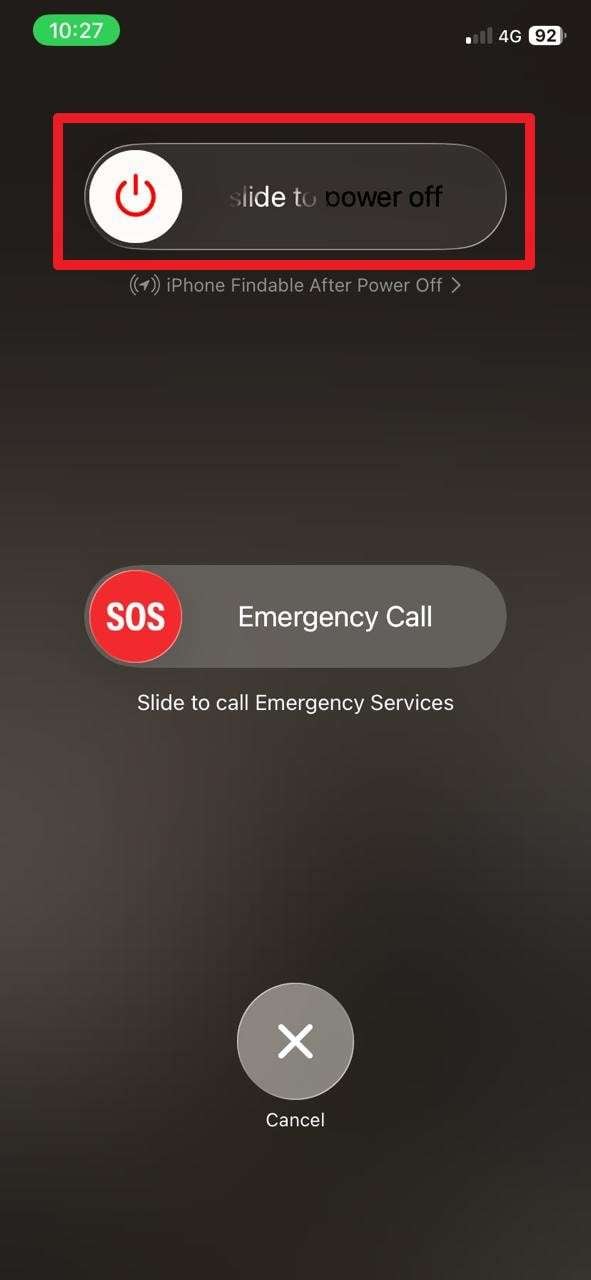
Disconnect the charging cable immediately if the iPhone or cable may be wet. Do not keep reconnecting it just to test whether charging has returned. If the iPhone had heavier water exposure and you do not need to keep it running, powering it off while it dries can reduce unnecessary electrical activity.
To power off an iPhone with Face ID: hold the side button and either volume button until the slider appears, then drag it. On iPhone 6, 7, 8, or SE (2nd/3rd generation), hold the side button; on iPhone SE (1st generation), 5, or earlier, hold the top button. The key action for a liquid alert is disconnecting wired power; do not repeatedly power on an unresponsive, liquid-exposed phone to test it.
Fix 2. Remove the Case and Connected Accessories
Remove the case and disconnect cables or accessories so moisture is not trapped around the connector. Keep the port unobstructed, but do not insert cotton swabs, paper towels, pins, or other objects into it. Also avoid opening the phone yourself unless you are qualified to service liquid-damaged electronics.
Do not open the SIM tray while the iPhone is wet. Apple says the device must be dry before opening it; removing the tray is not a shortcut for drying the connector.
📍 Stage 2. Drying and Waiting Methods (Restore Safety Before Charging)
Fix 3. Dry the iPhone Safely — No Heat or Rice!
Dry the iPhone with airflow, not heat. Gently tap the iPhone against your hand with the connector facing down to help remove excess liquid, then leave it in a dry area with some airflow. Do not use a hair dryer, external heat, compressed air, rice, cotton swabs, or paper towels in the connector.
Wipe the exterior with a soft, lint-free cloth, without pushing it into the port. Cool airflow from a fan can help; do not use heated air or try to scrape residue from the connector. This is a drying procedure, not a repair for internal liquid damage.
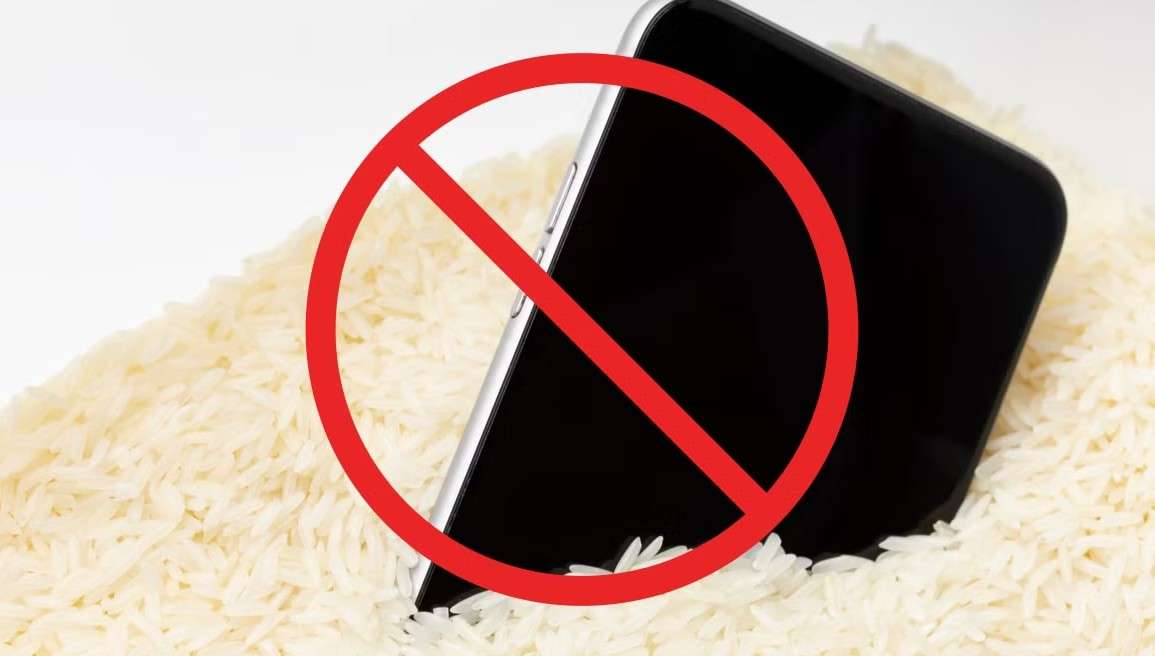
These restrictions matter because heat can damage the device, compressed air can push moisture deeper, foreign objects can damage connector pins, and rice particles can get into the port.
Fix 4. Follow the Right Drying Time Before Retrying
After actual water or other liquid exposure, allow at least 5 hours before wired charging or connecting an accessory, and wait longer if the iPhone or cable is not completely dry. This is Apple's liquid-exposure guidance. Its separate liquid-alert guide describes an initial retry after at least 30 minutes. These instructions address different situations; a 30-minute retry is not clearance to charge a phone you just dropped in water.
| Your situation | What the timing means | Next action |
|---|---|---|
| Known spill, splash, or submersion | At least 5 hours before cable charging/accessory use; iPhone and cable must also be completely dry. | Keep air-drying; do not use elapsed time alone as a safety test. |
| Liquid-detection alert, without known broader exposure | The alert guide permits a retry after at least 30 minutes of drying. | If the alert returns, unplug and continue drying with airflow; it can take up to 24 hours. |
| A day of drying but repeated alerts with dry Apple accessories, or no charging | Waiting is not evidence that corrosion or a hardware fault has been repaired. | Check dry accessories, then arrange service if the fault persists. |
Sources: Apple's guidance after liquid exposure and Apple's liquid-detection alert instructions. The longer waiting rule after a known spill is a conservative way to apply both; neither guide promises that air-drying fixes internal damage.
📍 Stage 3. Testing and Workarounds (Identify the Problem Source)
Fix 5. Test a Dry Cable, Adapter, and Wireless Charging
Only start a wired test once the drying conditions above are met. Do not connect a computer cable as a workaround for a wet charging port; it uses the same connector.
- Reconnect the power setup: unplug the cable from the adapter and the adapter from the wall, then reconnect them. Use a working outlet and inspect the dry cable and adapter for damage; do not use damaged accessories.
- Compare a known-good dry cable and adapter: if the warning appears only with one accessory, stop using that accessory and contact its manufacturer. If it returns with dry Apple Lightning or USB-C accessories, seek service rather than overriding it repeatedly.
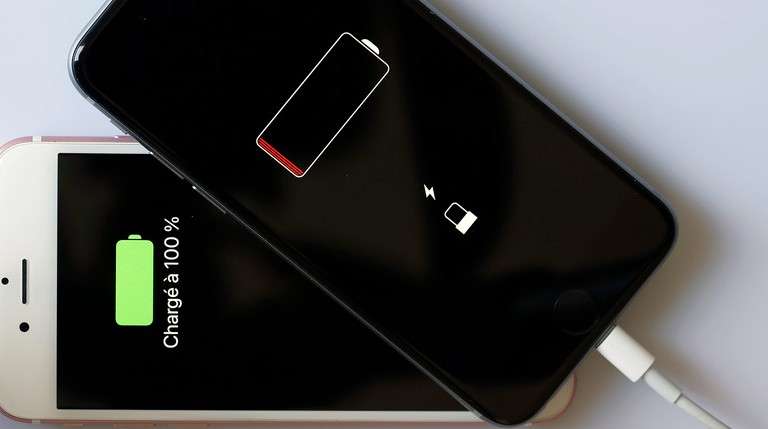
- If there is no alert but the battery is depleted: after the phone is fully dry and shows no damage symptoms, leave it connected to the known-good charger for 30 minutes. If it still shows the battery icon or will not start, use the model-specific restart below, then allow another 30 minutes of charging. If it still will not charge, arrange service rather than automatically trying firmware repair.
Dry-device restart, only after the checks above: on iPhone 8 or later, including iPhone SE (2nd/3rd generation), quickly press and release volume up, quickly press and release volume down, then hold the side button until the Apple logo appears. On iPhone 7/7 Plus, hold the side button and volume down until the Apple logo appears. On iPhone 6s or earlier, including iPhone SE (1st generation), hold the side/top button and Home until the logo appears. These are Apple's ordinary charging checks, not a method for repairing liquid-damaged hardware.
Wireless alternative: iPhone 8 and later support Qi wireless charging. Use a compatible Qi-certified charger only after drying the iPhone, especially its back. Wireless charging avoids the port, but it does not show that the port, battery, or internal components are undamaged. If the phone is unusually hot, swollen, visibly damaged, or otherwise behaving abnormally after a spill, stop charging and seek service instead.
📍 Stage 4. Optional Software Checks After the iPhone Is Dry
Choose the right branch: a dry exterior, a disappeared alert, or a working wireless charger does not establish a software fault. Use the checks below only when the phone is dry, has stable power and a reliable connection, and there is a separate software symptom such as a failed update or boot loop. A persistent charging-only failure after liquid exposure belongs in the accessory/service path first.
Fix 6. Update iOS Only for a Suspected Software Issue
An iOS update is not a fix for moisture, corrosion, or a damaged charging port. Consider updating only after the iPhone is fully dry, the device is otherwise working, and you have reason to suspect a broader software or compatibility issue. If the port still shows signs of liquid exposure or physical damage, skip this step and use hardware service instead.
Back up first if the iPhone can operate safely, connect to Wi-Fi, and use stable power only after the drying conditions are satisfied. Do not start an update while the battery is about to run out or the connection is unreliable.
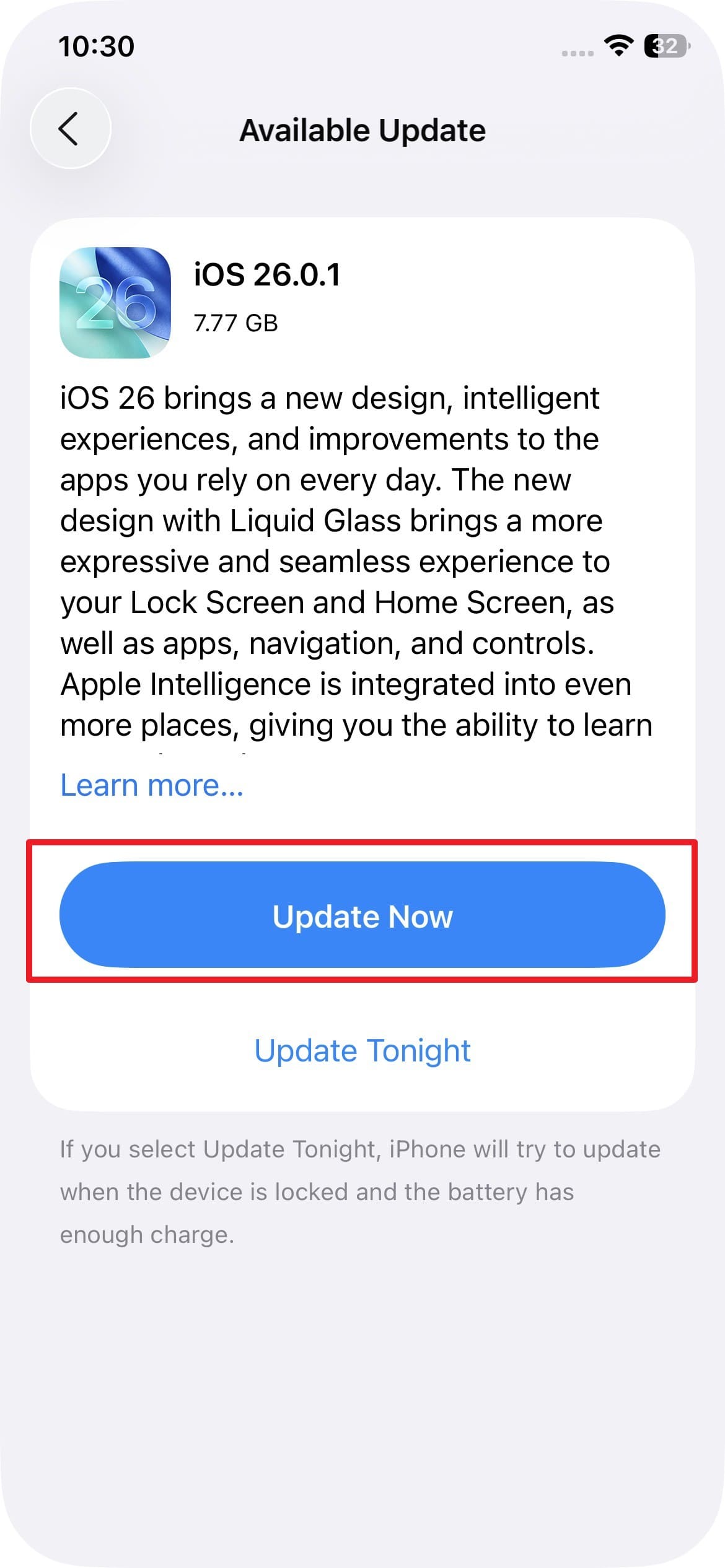
- Step 1. Open Settings > General > Software Update.
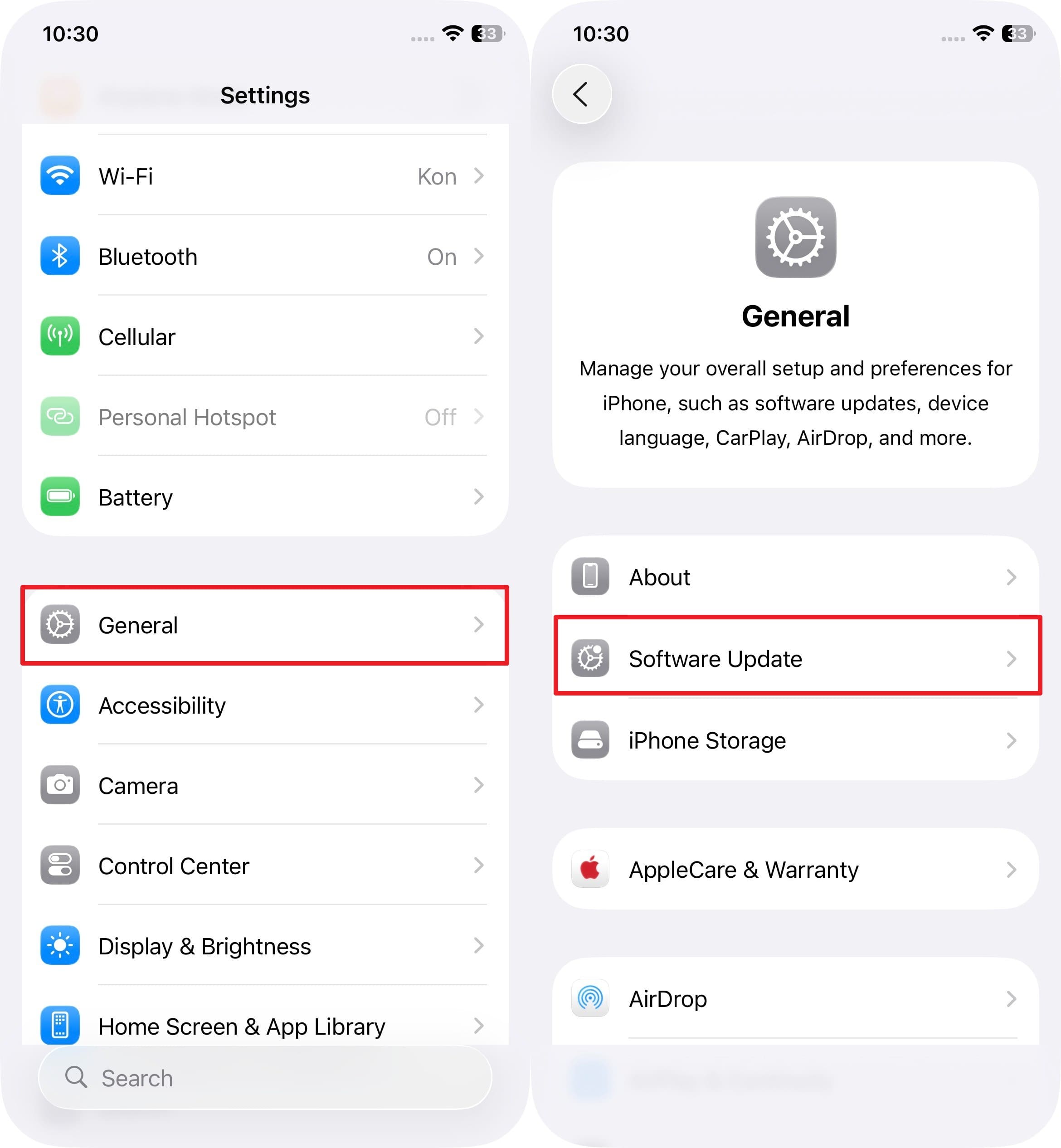
- Step 2. If an update is offered, select Download and Install or Update Now as shown, then follow the prompts. If charging or liquid alerts persist, return to the hardware checks rather than repeating updates.
Fix 7. Reset All Settings Only as a Last Software Check
Reset All Settings does not repair water damage. Use it only when the iPhone is fully dry, known-good accessories have been tested, and the charging problem appears to be part of a wider settings or software issue. This reset keeps personal data but restores system settings, so it should come after the physical and accessory checks above—not before them.
This is different from Erase All Content and Settings. Your photos, messages, and apps are not the target of a settings reset, but you will need to reconfigure affected preferences. Back up first if you need to retain your previous configuration. If you have no backup, do not escalate to erasing the iPhone or a destructive repair mode just to troubleshoot a water-related charging fault.
- Step 1. Select "Transfer or Reset iPhone" from the General settings, then choose "Reset" and select the "Reset All Settings" option.
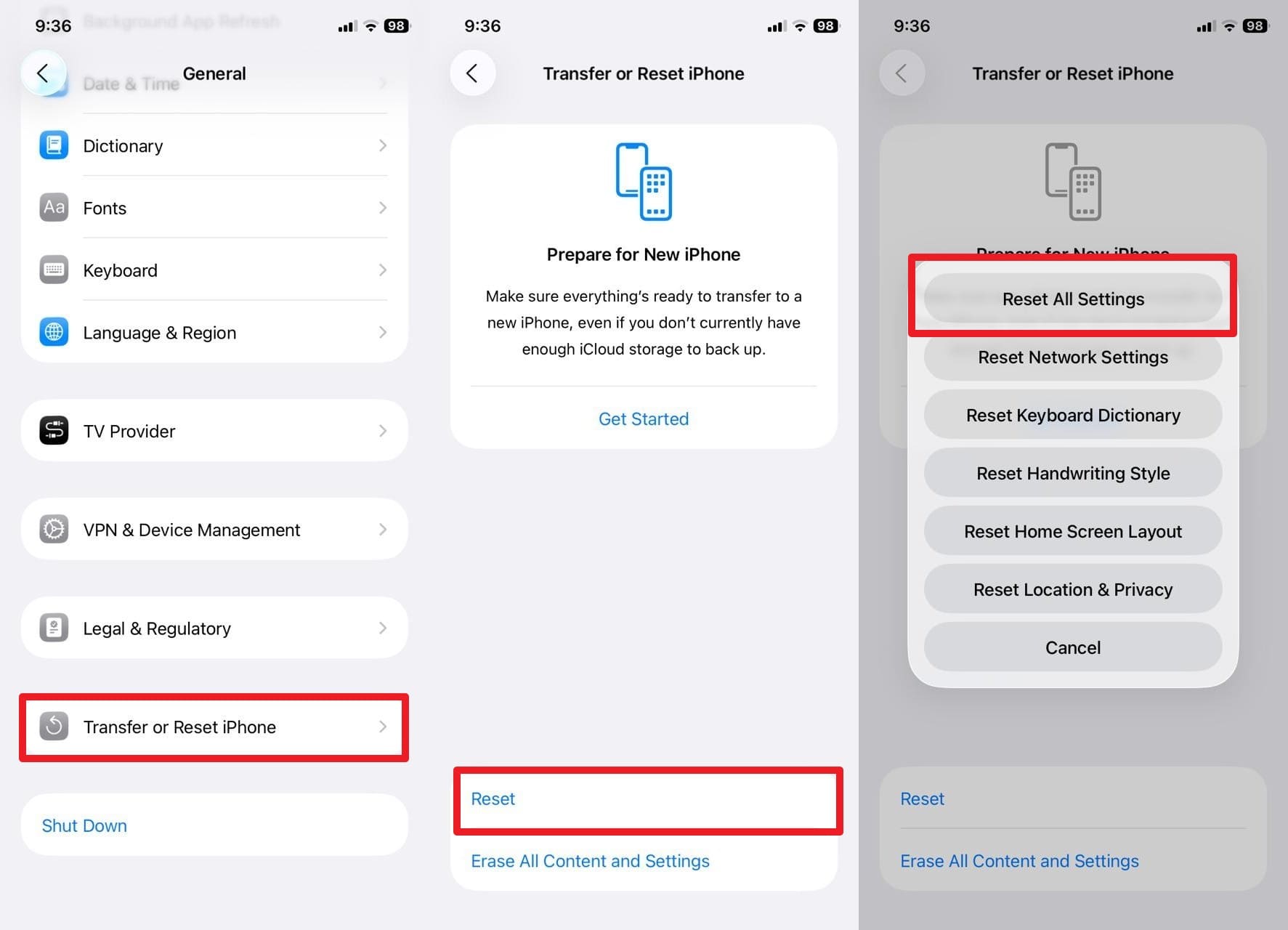
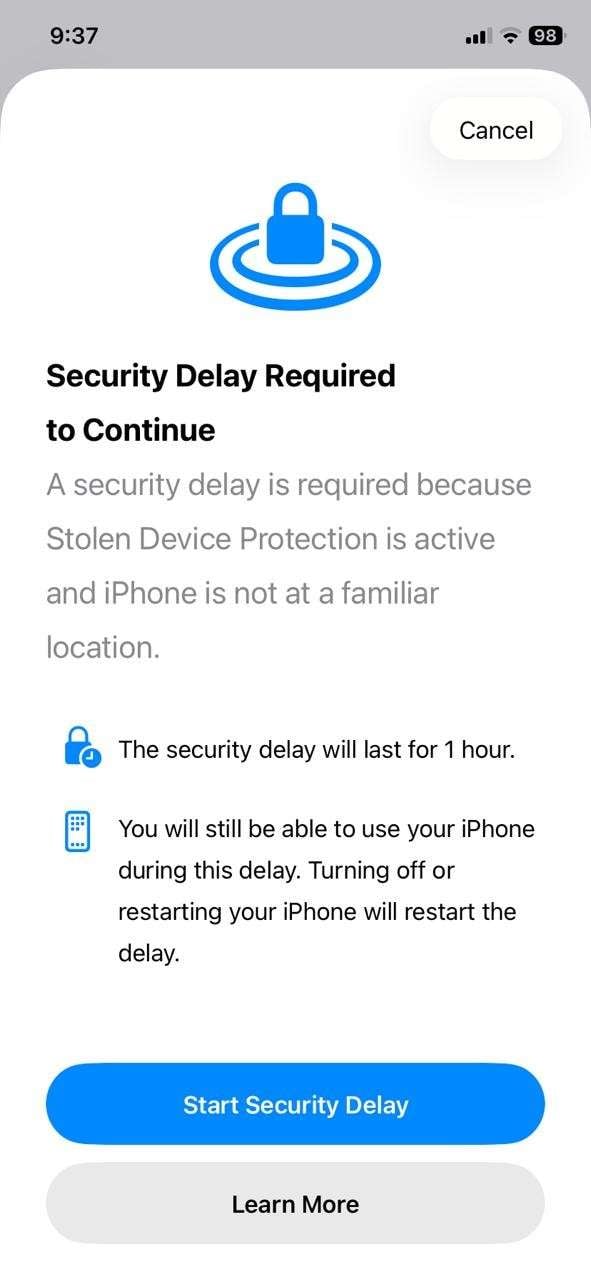
- Step 2. Enter your device passcode when requested and confirm Reset All Settings. Do not choose Erase All Content and Settings.
Fix 8. Use Dr.Fone Only for a Software-Related iOS Problem
If the iPhone is completely dry and a physical charging-port, cable, battery, or corrosion problem has been ruled out, Dr.Fone - System Repair (iOS) can be considered for a separate software-related iOS system problem. It is designed for software issues such as boot loops, Apple-logo problems, black/white screens, recovery-mode issues, and failed updates; it cannot repair a wet connector or liquid-damaged hardware.
Should you pay for software after a spill? Not to remove moisture or repair corrosion, the charging port, or a damaged battery. Hardware assessment is the relevant option for those faults. Dr.Fone is an optional Windows/Mac route for a separate supported iOS software issue; a download or trial is not a promise that every repair is free or that the phone will be fixed.
Before starting: use a completely dry iPhone and cable, a reliable computer connection, and stable power. Back up if possible. Standard Repair is designed to preserve personal data, but that is not a backup or a guarantee. Advanced Repair erases data; do not move to it without a backup merely because a wet phone will not charge. The Guide also notes that repair updates iOS and can remove a jailbreak or re-lock a previously unlocked device. Stop if you cannot establish a reliable connection without a liquid alert.

Dr.Fone - System Repair (iOS)
Repair supported software-related iOS system errors with guided firmware repair.
- Standard Repair is designed to address supported iOS system issues without erasing personal data.
- Address supported software issues such as being stuck in recovery mode, a white screen, a black screen, or a boot loop.
- Upgrade or downgrade supported iOS firmware without relying on iTunes.
- Use only for software-related problems; physical liquid damage requires hardware service.
The repair workflow requires a Windows PC or Mac. The mobile-store buttons below open a different Dr.Fone mobile app; that app does not run this desktop System Repair workflow.


The following core steps condense the current Dr.Fone iOS Standard Repair Guide. The screenshots show the Windows interface; the Mac interface can look different.
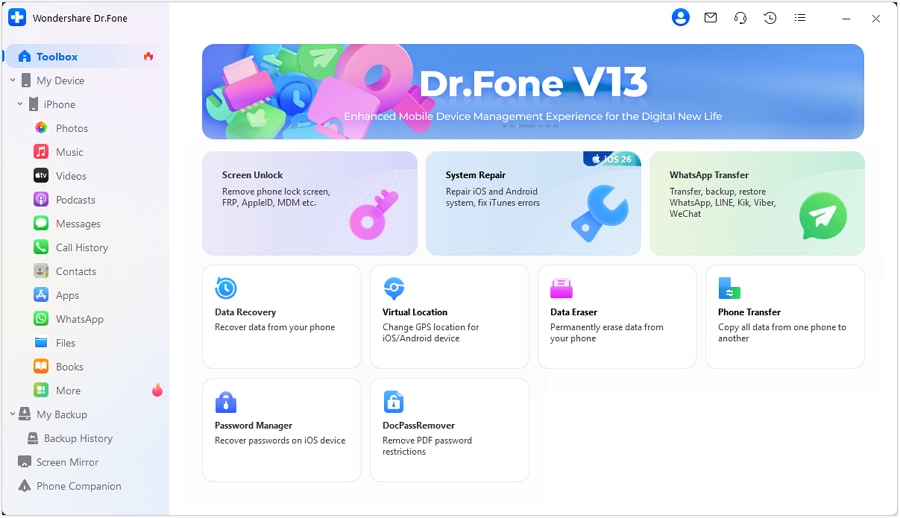
- Step 1. Open Dr.Fone on the computer and choose Toolbox > System Repair. Connect the dry iPhone, select iPhone, then iOS Repair.
- Step 2. Choose Standard Repair for the supported data-preserving repair path, rather than Advanced Repair.
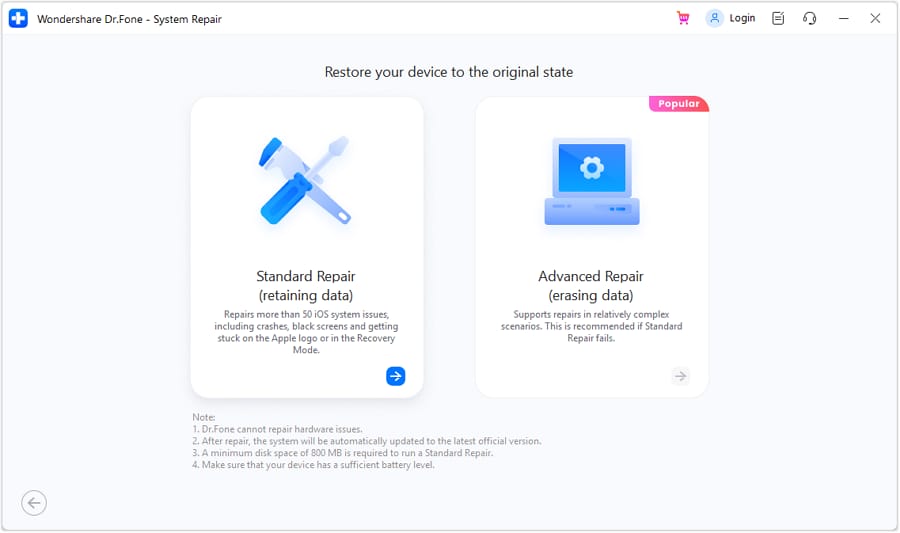
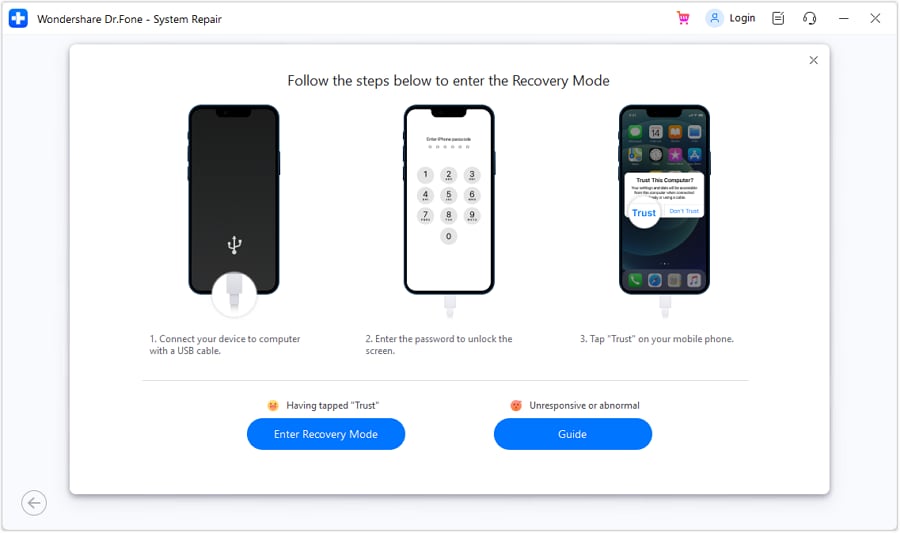
- Step 3. Follow the model-specific on-screen instructions to enter Recovery Mode. If necessary, use Guide for the manual instructions; continue with Enter Recovery Mode as prompted.
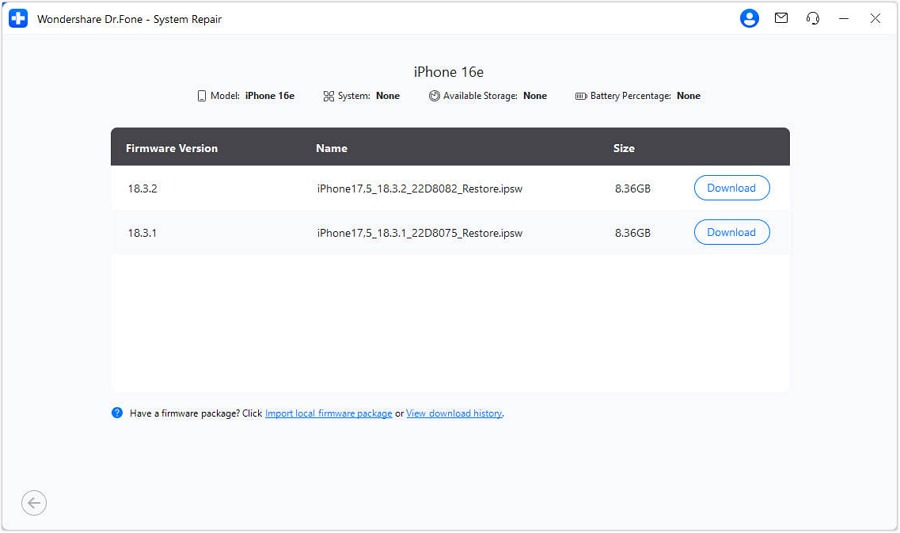
- Step 4. Review the detected device and offered firmware, then select Download for the matching firmware. Wait for the download and verification to finish.
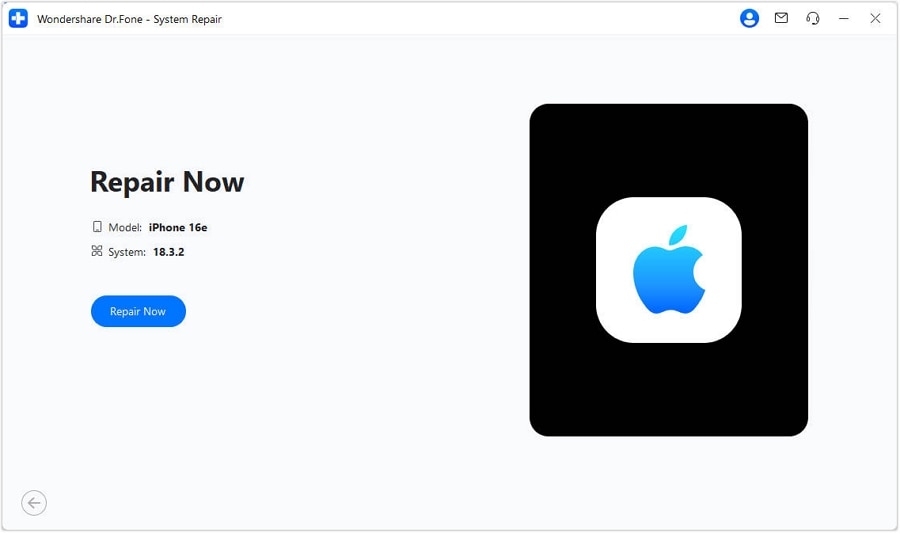
- Step 5. Click Repair Now. Keep the iPhone connected until the repair finishes, then choose Done. A completed software repair does not certify that liquid-exposed hardware is undamaged.
 safe & secure
For supported software issues after hardware faults have been ruled out.
📍 Stage 5. When to Seek Professional Help (Hardware Repair)
Fix 9. Get Apple or Qualified Hardware Service
Seek hardware service if the iPhone is fully dry but wired charging still does not work, the liquid alert keeps returning with known-good Apple accessories, the port shows corrosion or damage, or the phone has other water-damage symptoms. Liquid exposure can affect the connector, battery, or logic board, and software tools cannot repair those physical faults. Apple provides service options for persistent liquid-detection alerts.
After pool water, salt water, or a drink spill: a dry-looking port is not evidence that contaminants or damage have been removed. Do not scrape, flush, or disassemble the connector yourself; tell the service provider which liquid was involved. If the iPhone becomes unusually hot, shows swelling, or has visible damage, stop using and charging it and seek service rather than continuing these tests.
Protect the data before service: if the iPhone is operating normally and safely after drying, make a current iCloud or computer backup before a repair or replacement. Never reconnect a wet cable just to back up. If the phone cannot start and your only copy of important data is on it, tell the service provider that preserving the data matters before authorizing an erase, restore, or replacement; software repair does not guarantee recovery from a dead, liquid-damaged device.
Part 3. Prevent Future Water-Related Charging Issues
To reduce future water-related charging problems, focus on keeping the connector and cable dry and on avoiding charging in humid or wet conditions:
- Keep iPhone Dry: Avoid intentional submersion, showers, steam, and charging near water. Water resistance is not permanent and can decrease with normal wear.
- Use a Suitable Protective Case: A case is not permission to charge a wet iPhone. Follow the case maker's limits, remove a wet case to dry the exterior, and do not assume it detects moisture or prevents all liquid damage.
- Dry Hands and Cables: Make sure that your hands and charger are completely dry before you plug in. Any moisture can cause the liquid detection alert to go off or cause short circuits in the charging port.
- Avoid Damp Areas: Do not charge your iPhone in a bathroom, kitchen, or other humid areas. Steam or condensation can enter the port and cause corrosion and charging issues.
- Back Up Your iPhone Regularly: While the phone is dry and working safely, keep a current backup with iCloud, Finder/Apple Devices, or a supported backup solution such as Dr.Fone - Phone Backup. A usable backup gives you a recovery path if hardware service or replacement is needed; it is not a reason to connect a wet phone.
Conclusion
If your iPhone is not charging after water exposure, disconnect wired power, air-dry it, and follow the right waiting rule: after actual exposure, at least 5 hours and complete dryness before a cable test; an alert that returns means more drying. Test dry accessories, and do not mistake wireless charging for proof that the phone is undamaged. Persistent faults need hardware assessment. Dr.Fone - System Repair (iOS) is an optional desktop tool only for a separate supported software issue after physical faults have been ruled out.
safe & secureFor supported software issues after hardware faults have been ruled out.
FAQs
 1. Can I charge my iPhone when it says liquid is detected?2. How long should I wait before charging my iPhone after it gets wet?3. Can I use wireless charging while the charging port is wet?4. What if my iPhone says liquid is detected even when it is dry?


iPhone Issues
- iPhone Storage Full
- 1. Stuck on Apple Logo Storage Full
- 2. Erase Content Settings not Working
- 3. iPhone Lagging
- 4. iPhone Running Slow
- iPhone Update Problems
- 1. Stuck on Updating iCloud Settings
- 2. iPhone Frozen During iOS Update
- 3. iPhone Checking for Update Stuck
- 4. iPhone Cellular Update Failed
- 5. iPhone Software Update Failed
- 6. iPhone Stuck on Update Requested
- 7. iPhone Update Error 1110
- 8. iPhone is Findable and Won’t Turn On
- 9. iPhone Won't Update
- 10. Update Server Couldn't Be Contacted
- 8. iPhone & iPad Security Updates
- 9. Update iPhone with/without iTunes
- 10. Can't Download or Update Apps
- iPhone Media Problems
- 1. Apple Music Song Not Available
- 2. iPhone Not Ringing
- 3. iPhone Echo Problem
- 4. iPhone Ringer Problems
- 5. iPhone Plays Music by Itself
- 6. Ringer Volume Changes by Itself
- 7. Music Won't Play on iPhone
- 8. Blurry Photos & Videos on iPhone
- 9. iPhone Volume Problems
- iPhone Sound Problems
- 1. YouTube no Sound
- 2. iPhone Microphone Problem
- 3. Test iPhone Microphone
- 4. Headphones No Sound from iPhone
- 5. No Sound on iPhone Game
- 6. iPhone Sound Not Working
- 7. iPhone Screen Recording no Sound
- iPhone Calling Problems
- 1. iPhone No Sound on Calls
- 2. Screen Goes Black During Call
- 3. iPhone Recent Calls Not Showing
- 4. iPhone Dropping Calls Issue
- 5. iPhone Calling Problem
- iPhone Camera Problems
- 1. iPhone Camera Black
- 2. iPhone Camera Blurry
- 3. iPhone Camera Not Working
- 4. iPhone Front Camera Not Working
- 5. TrueDepth Camera Not Working
- 6.Out-of-Focus Photos on iPhone 15
- iPhone Network Problems
- 1. Airpods Won't Connect to iPhone
- 2. iPhone Disabled Connect to iTunes
- 3. iPhone Not Syncing Problems
- 4. iPhone Internet Not Working
- 5. iPhone Keep Disconnecting from Wifi
- 6. iPhone WIFI Not Working
- 7. PC Not Recognizing iPhone
- 8. iPhone Stuck on Connect to iTunes
- 9. iPhone Not Showing up in iTunes
- 10. iTunes Not Detecting Your iPhone
- 11. iPhone Bluetooth Disconnect
- 12.Apple CarPlay Keeps Disconnecting
- iPhone Screen Problems
- 1. White Spots in iPhone Screen
- 2. iPhone Bleeding Screen
- 3. Turn Off iPhone When Frozen
- 4. Fix Orange Dot on iPhone
- 5. iPhone Green Screen Flickering
- 6. Green Lines in iPhone Screen
- Other iPhone Problems
- ● Manage/transfer/recover data
- ● Unlock screen/activate/FRP lock
- ● Fix most iOS and Android issues
- Free Download Free Download Free Download




Daisy Raines
staff Editor
Generally rated4.5(105participated)