Resolve common problems and system crashes on both iPhone and Android devices.

 100% Security Verified | No Subscription Required | No Malware

 :
: 
 ChatGPT
 Perplexity
 Gemini
 Claude
 Grok
Grok

I updated to the iOS 18 beta and it's really lagging on my phone. Is there a straightforward way to downgrade from the iOS 18 beta back to the stable iOS 17? I need clear instructions.
A Concerned iPhone User
Each new iOS beta release brings exciting features, but it can also introduce unexpected bugs, performance issues, and battery drain. These problems can disrupt your daily use, making you eager to return to a more stable version. Many users find the official iTunes method for downgrading complex and unforgiving, often leading to confusion and potential data loss.
Fortunately, you don't have to rely on iTunes. It is entirely possible to downgrade iOS 18 without iTunes, and this guide is here to show you exactly how. We'll walk through the safest and most effective solutions for downgrading your iOS, ensuring your data remains secure throughout the process.
In this article
Part 1. Common Reasons to Downgrade from iOS 18 Beta
While testing the latest software is exciting, beta versions are inherently unstable. Many users choose to revert to the previous stable iOS for practical reasons. Understanding these motivations can help you decide if downgrading is the right choice for you.
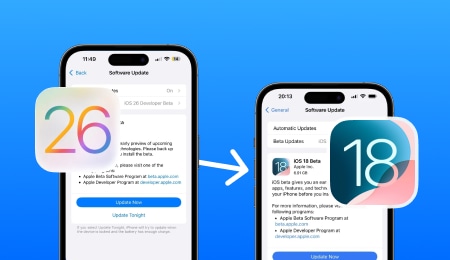
Here are some of the most common issues that prompt users to downgrade:
- Performance Problems: The new iOS version may feel sluggish, freeze, or have significant lag on your device, especially on slightly older iPhone models.
- Battery Drain: Beta software is often not optimized for power consumption, leading to your iPhone's battery draining much faster than usual.
- App Incompatibility: Critical apps you rely on for work or daily life may not be updated for the beta yet, causing them to crash or function improperly.
- Persistent Bugs: From Wi-Fi connectivity issues to UI glitches, persistent bugs can make using your device a frustrating experience.
- Preference for Stability: Many users simply prefer the reliability and smoothness of a stable, public release over the new features of a potentially flawed beta.
Part 2. The Golden Rule: Back Up Your iPhone Before Downgrading
Before you even think about starting the downgrade process, the single most important action is to back up your iPhone. Downgrading your iOS involves completely erasing your device, and without a backup, you will lose all your photos, messages, contacts, and other personal data. While iTunes and iCloud are options, they have limitations.
For a comprehensive and flexible backup, using a third-party tool like Wondershare Dr. Fone is highly recommended. It allows you to selectively back up and restore data, including multimedia files that iTunes backups often miss. Follow these steps to secure your data before downgrading from iOS 18.
-
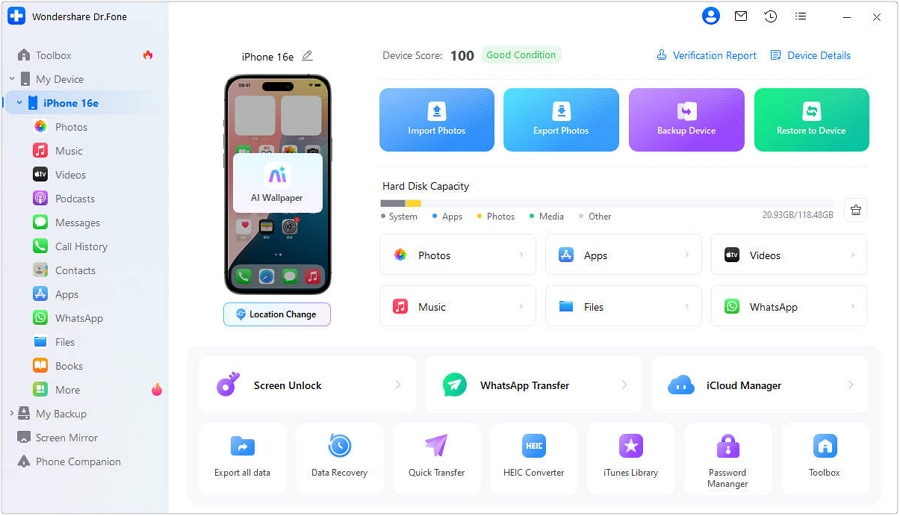
Step 1 Connect Your iPhone and Launch Dr.Fone
Download, install, and open Wondershare Dr.Fone on your computer. Connect your iPhone using a USB cable and wait for the program to recognize it. From the main toolbox, select the "My Backup" feature.
-
Step 2 Initiate the Backup Process
In the My Backup dashboard, click the "Back Up Now" button. The software will automatically detect all the data types on your device that are available for backup.
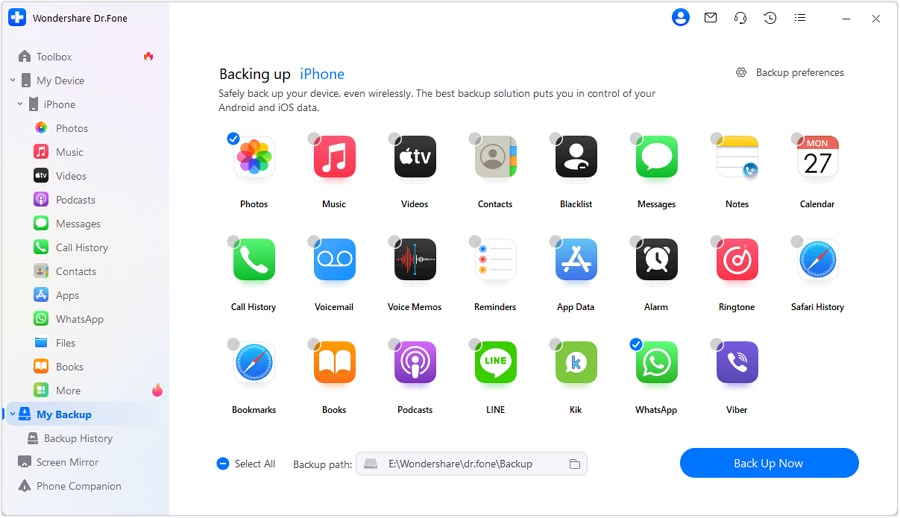
-
Step 3 Wait for the Backup to Complete
Dr.Fone will now begin backing up all your selected files to your computer. Keep your iPhone connected and wait for the progress bar to reach 100%. Once finished, you'll have a secure copy of your data, ready for restoration after the downgrade.
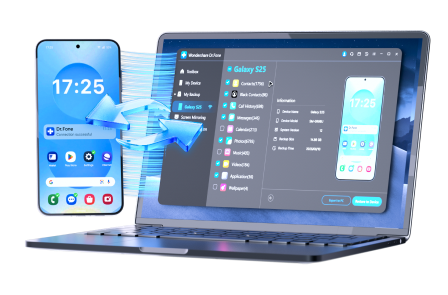
 Effortlessly manage data through preview, delete, export, etc.
- Transfer all data between devices.
- Robust backup solutions for reliable data protection.
- Mirror screens to PC for meetings, teaching, and control.
Part 3. How to Downgrade iOS 18 to iOS 17 Without iTunes [Easy & Safe]
If you find the iOS 18 beta problematic, returning to the stable iOS 17 is your best bet. Using Dr.Fone - System Repair (iOS) offers a streamlined and secure way to perform the downgrade without the complexities of iTunes. Its intuitive interface and automated firmware detection make the entire process safe and accessible, even for non-technical users.

-
Step 1 Launch Dr.Fone and Select System Repair
Open Dr.Fone on your computer and connect your iPhone. From the main menu, choose the "System Repair" module. Then, click on "iOS Upgrade/Downgrade" to access the downgrade tools.
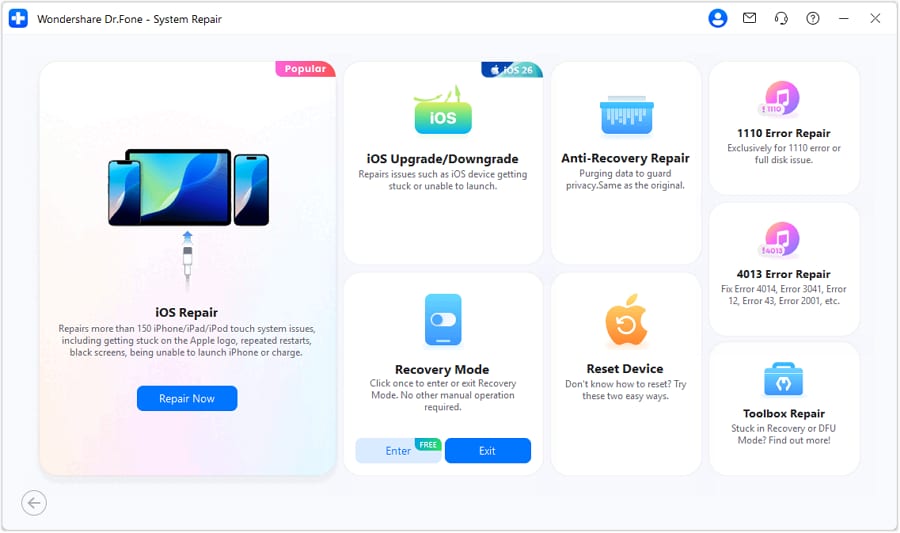
-
Step 2 Choose the Downgrade Option
On the next screen, select "Downgrade iOS" to continue. This mode is specifically designed to install an older, signed iOS version on your device safely.

-
Step 3 Select and Download the iOS 17 Firmware
Dr.Fone will automatically detect your iPhone model and display a list of available firmware versions you can downgrade to. Select the iOS 17 version from the list and click "Download" to get the official firmware file (IPSW).
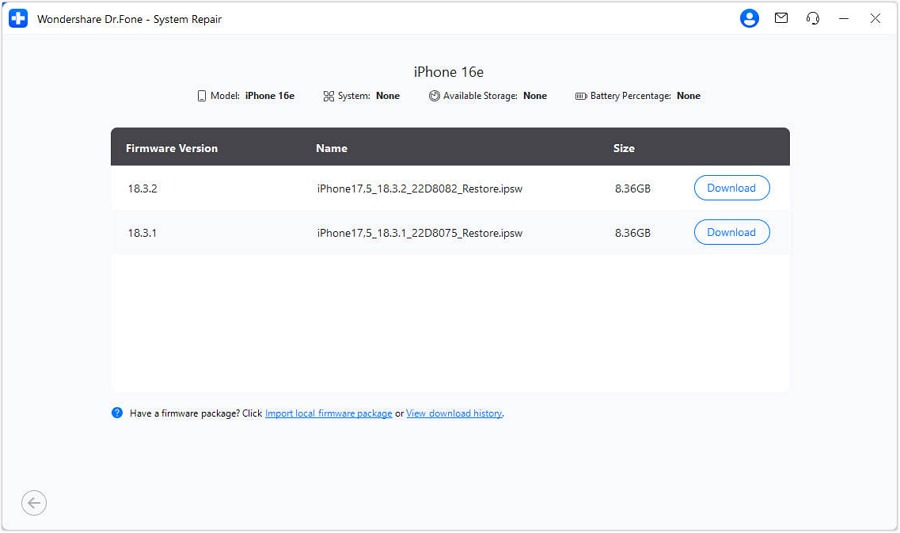
-
Step 4 Start the Downgrade Process
Once the firmware is downloaded and verified, click the "Repair Now" button to begin the downgrade. Dr.Fone will handle the entire installation process. Keep your phone connected until it reboots automatically with iOS 17 successfully installed.
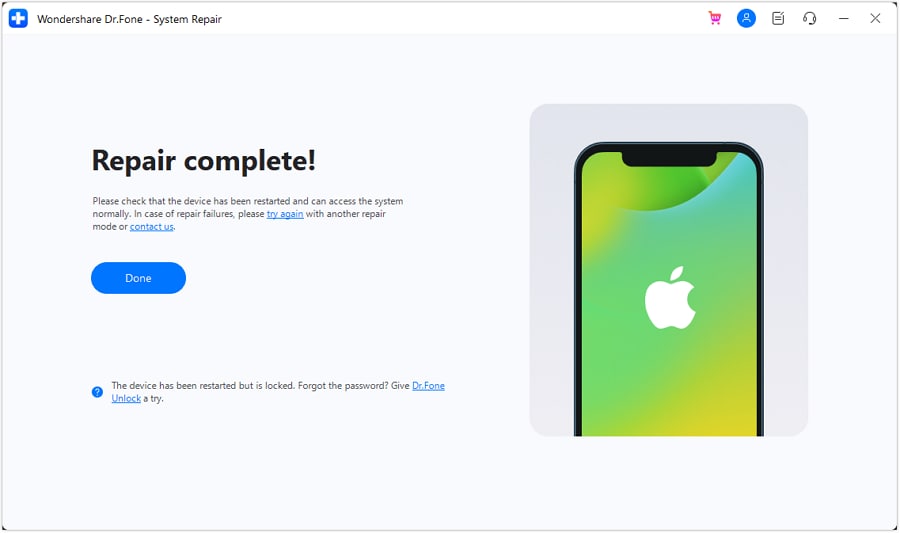
- Fix iOS issues, no data loss.
- One-click repair for all iOS problems.
- Solve recovery mode, Apple logo, black screen, etc.
- Upgrade or downgrade iOS without iTunes
Part 4. Can You Jailbreak to Downgrade iOS? Understanding the Risks
In the past, jailbreaking was a popular method for advanced users to customize their iPhones, which sometimes included downgrading iOS. Tools like Tiny Umbrella were used to save "SHSH blobs," which were digital signatures required to install older iOS versions. However, this method is now largely obsolete and extremely risky for modern iPhones.
Apple's security has become much more sophisticated. Today, you can only install iOS versions that Apple is actively "signing." Once Apple stops signing an older version (usually a week or two after a new release), it's impossible to downgrade to it, even with SHSH blobs from the past.

Attempting to use outdated jailbreak tools or methods to downgrade your iOS is not recommended. Here is a breakdown of the pros and cons.
- Theoretically offers more control (for experts).
- Largely a legacy method with no modern benefits.
- High Risk of Bricking: A mistake can permanently disable your iPhone.
- Voids Warranty: Jailbreaking immediately voids your Apple warranty.
- Security Vulnerabilities: It removes Apple's built-in security, exposing your data to malware.
- Extremely Complex: Requires deep technical knowledge and is not for average users.
Given the significant risks and the fact that it's nearly impossible on modern iOS versions, jailbreaking is not a viable or recommended method for downgrading iOS.
Conclusion
Downgrading from an iOS beta like iOS 18 to a stable version like iOS 17 is a common need for users seeking better performance and fewer bugs. While the process might seem daunting, it's manageable with the right approach. The most critical step is to always back up your device to prevent data loss. For a hassle-free and safe downgrade experience that avoids the complexities of iTunes, we strongly recommend using a dedicated tool like Dr.Fone - System Repair (iOS). It provides a guided, secure, and efficient way to return your iPhone to a stable operating system.
Frequently Asked Questions
-
1. Can I downgrade from iOS 18 without a computer?
No, downgrading iOS is not possible without a computer. The process requires connecting your iPhone to a PC or Mac to install the older firmware file (IPSW). There are no over-the-air (OTA) methods to downgrade. -
2. Will downgrading my iOS void the warranty?
No, downgrading using legitimate methods like Dr.Fone or iTunes/Finder does not void your Apple warranty. You are simply installing official Apple software. However, if you use jailbreaking methods to modify your system, that will void your warranty. -
3. What happens if the downgrade process gets stuck or fails?
If a downgrade fails, your iPhone might get stuck on the Apple logo, in recovery mode, or in a boot loop. This is where a tool like Dr.Fone - System Repair is invaluable, as its repair function can often fix these issues without causing data loss. -
4. Can I downgrade to any iOS version I want, like iOS 16?
Unfortunately, no. You can only downgrade to an iOS version that Apple is currently 'signing' or authorizing. Typically, this is limited to the most recent stable public version. Once Apple stops signing an older version, it becomes impossible to install it.
 Add Wondershare Dr.Fone as a preferred source on Google