 Teleport your device anywhere instantly with one click.


 100% Security Verified | No Subscription Required | No Malware


 :

 ChatGPT
 Perplexity
 Gemini
 Claude
 Grok
You can access your own WhatsApp messages on another authorized device, but a phone number is not a key to someone else's conversations. In this guide, 'track WhatsApp messages' means managing your own chat access, recovering an available copy of your own history, or evaluating transparent supervision that is lawful and properly agreed.
Message access, backup recovery, activity indicators, and shared GPS position are separate subjects. We explain each without covert monitoring instructions. Parents should consider the child's age, local law, informed participation, and the privacy of other people in the conversation. Device ownership or payment for monitoring software does not automatically authorize reading every private exchange.
In this article
- Part 1. Can You Track WhatsApp Messages from Another Phone?
- Part 2. How to Track WhatsApp Messages for Free with Authorized Access
- Part 3. WhatsApp Tracker Apps for Parents: Features, Consent, and Risks
- Part 4. How to Find Deleted WhatsApp Messages with Dr.Fone - Data Recovery
- Part 5. How to Stop Someone from Tracking Your WhatsApp Messages and Location
- Pro Tip. How to Change Your WhatsApp GPS Location with Dr.Fone - Virtual Location
Part 1. What Another Authorized Device Can Show
WhatsApp uses end-to-end encryption for personal messages and calls. That protects communication between participating endpoints; it does not mean a person holding an unlocked endpoint cannot see the conversation displayed there.
For your own account, linked devices provide an official additional-access route. A chat backup serves a different purpose: restoring a saved history. Online status, read receipts, and a location shared in a chat are not equivalent to permission to read the chat itself.
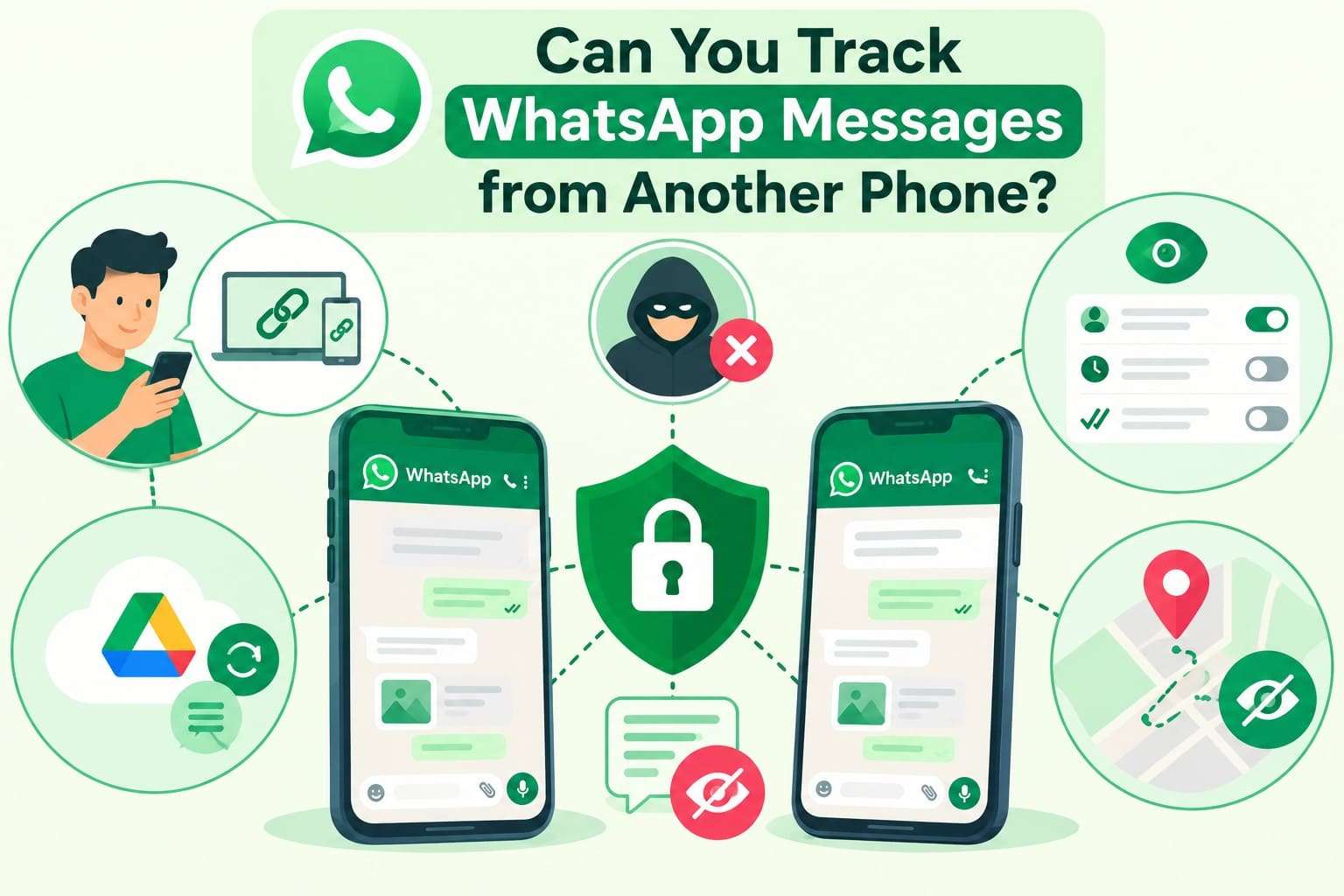
Which Data Is Available, and Under What Conditions?
Ask what legitimate source contains the information before choosing any app. An advertisement promising message access from a number alone does not establish a working or lawful service.
| Information sought | Legitimate access route | Important limit |
|---|---|---|
| Available current chats | Your unlocked account or an explicitly approved linked session | Keep access limited to the agreed account and purpose. |
| Chats on a companion phone | The official account-linking process | The account owner must knowingly authorize it. |
| Deleted history | An existing backup or supported recoverable data | Missing data cannot be guaranteed to reappear. |
| Last seen and online indicators | What the other user's privacy choices make visible | Visibility does not reveal message content. |
| Live location | An active share directed to your chat or group | The sender controls the sharing period and can stop it. |
| Another person's private chats without permission | No authorized route supplied here | A number, relationship, or shared household is not sufficient authorization. |

Part 2. Free Official Methods for Your Own Account
Use linked devices when you want ongoing access to available chats. Use restoration when you need history saved in a backup. Neither method provides a way around another person's account controls, and neither guarantees that every old or deleted message will be present.
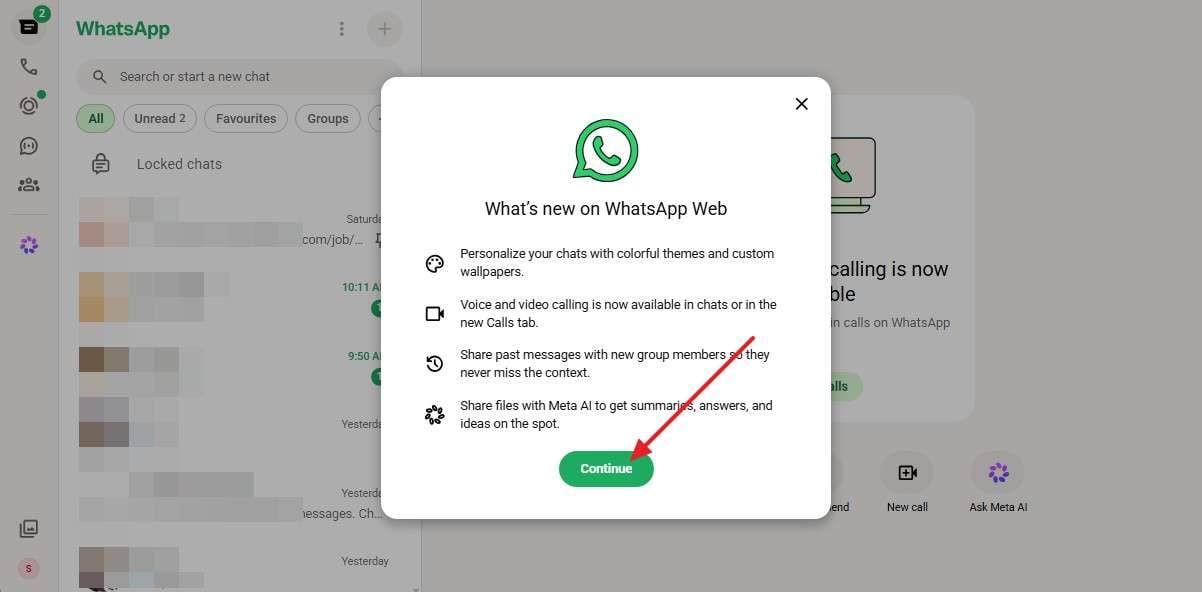
Method 1. Link WhatsApp Web with the Owner's Active Approval
The standard linked-device workflow supports additional devices, with the source describing up to four linked companions. Check the current limit shown by your app. Perform the following steps with your own phone, or with the owner present and knowingly approving the access and its duration.
Step 1 Open the genuine web client
On your trusted computer, visit web.whatsapp.com. Confirm the address before displaying or scanning the linking QR code.
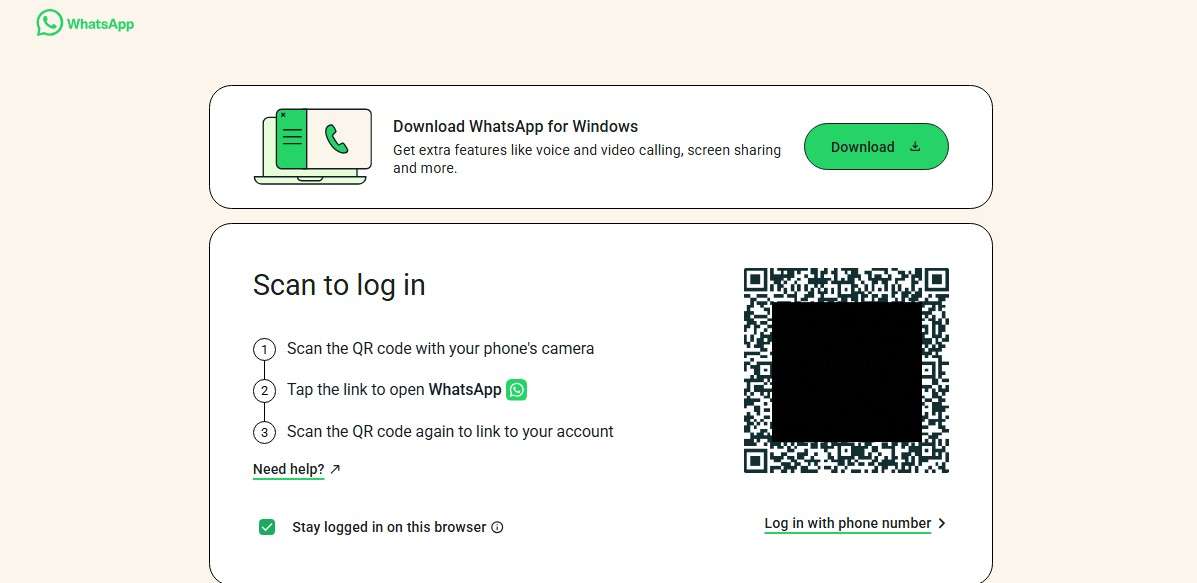
Step 2 Approve from the primary phone
Have the owner open Linked Devices and choose Link a Device. On Android this is commonly under the three-dot menu; on iPhone it is under the account or settings area. Complete required device authentication and scan only the intended computer's QR code.
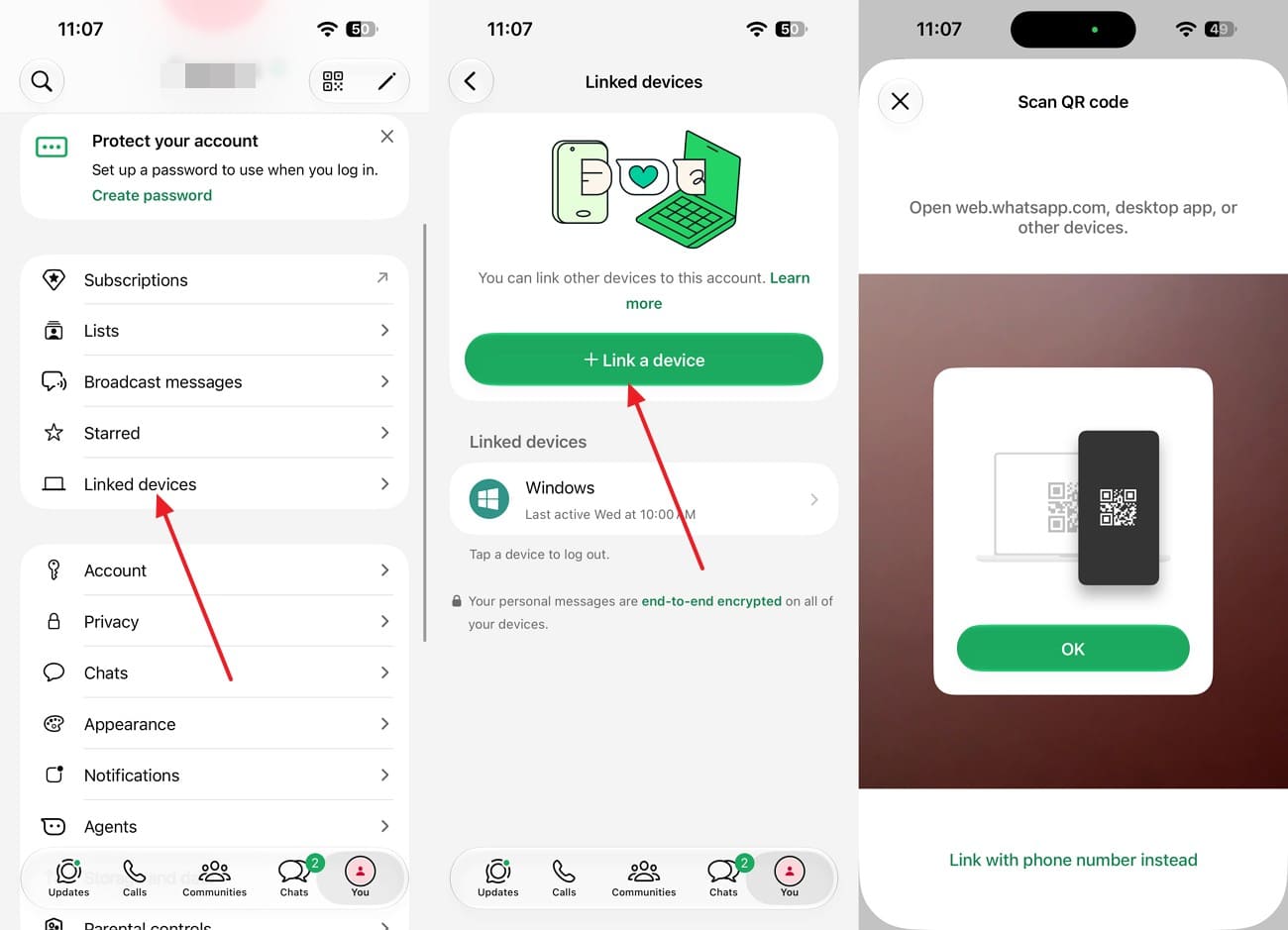
Step 3 Review synchronization and session access
Continue through the displayed prompts and allow the available history to synchronize. Confirm the new session appears in Linked Devices. Agree when to log out, and remove the session when its purpose ends.
Method 2. Restore an Existing Google Account or iCloud Backup
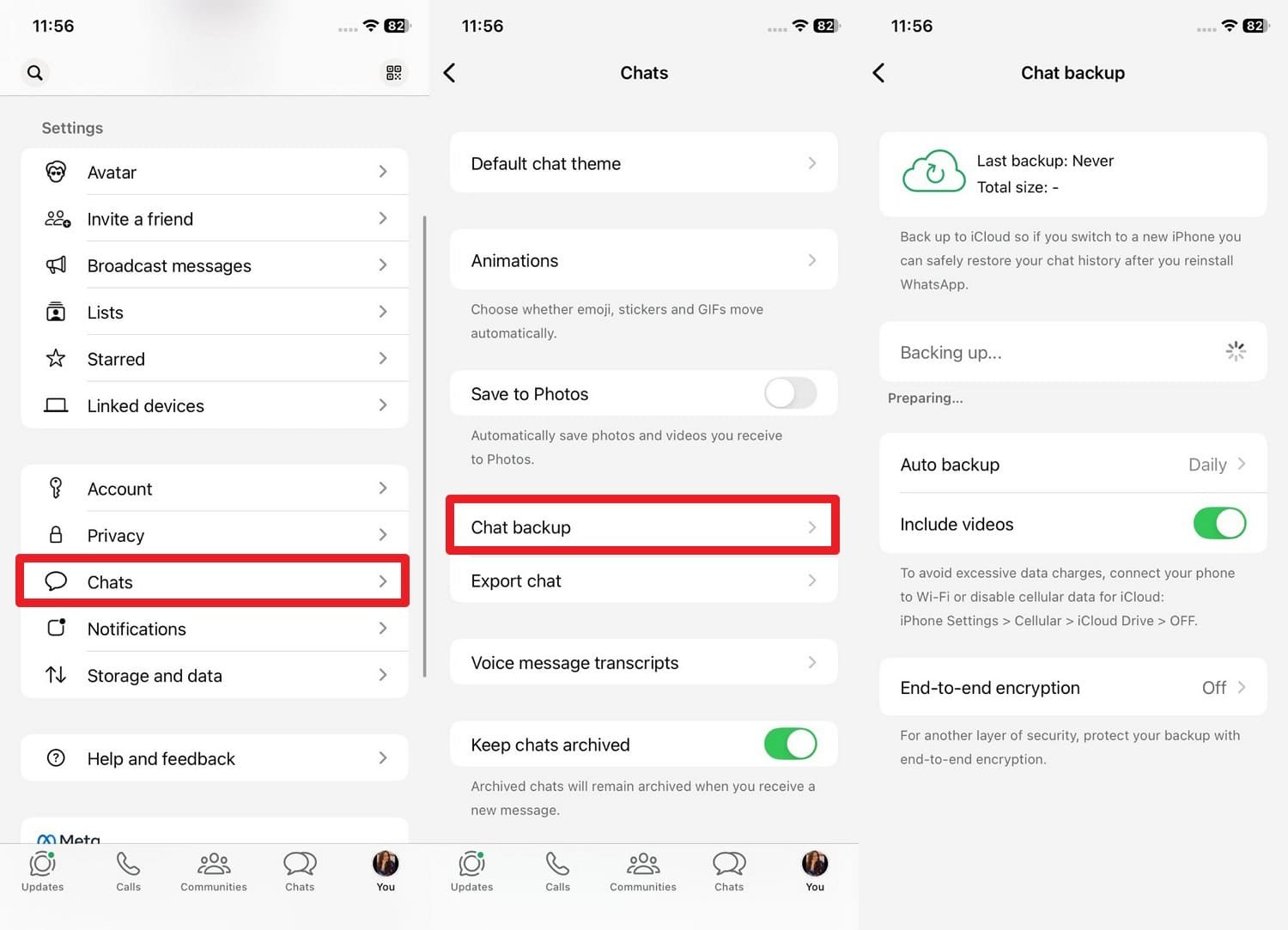
A backup is a snapshot, not a live feed. Android restoration uses the relevant Google Account backup; iPhone restoration uses iCloud. You need legitimate access to the original number and associated backup account, plus any required encrypted-backup authentication. Plan the restoration before removing the current installation, because newer history may not merge into an older backup.
Step 1. Inspect the saved history first. In WhatsApp settings, open Chats and Chat Backup. Record the backup date, account, and encryption requirements. A backup created after a conversation was deleted may not contain that conversation.
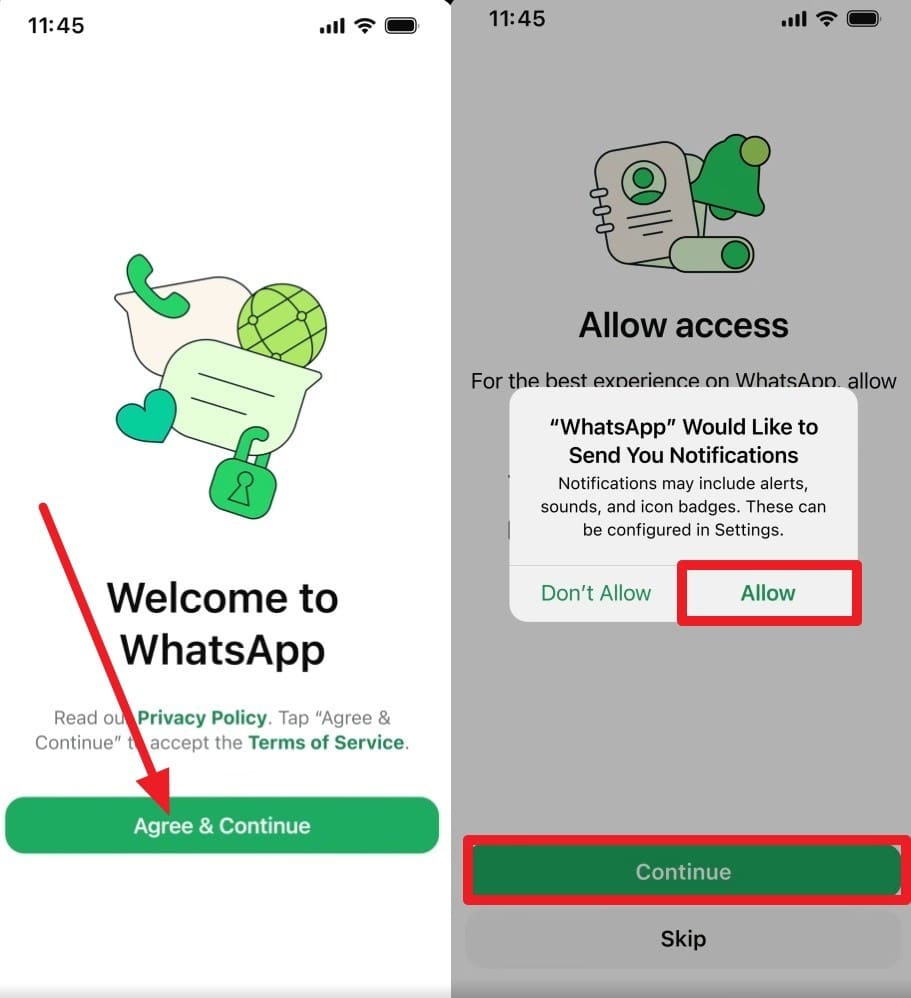
Step 2. Follow the iPhone restore setup if applicable. Reinstall the official WhatsApp app only after reviewing the data implications. Accept its setup prompts and verify the same number used for the saved history. This verifies account ownership; it does not authorize access to someone else's backup.
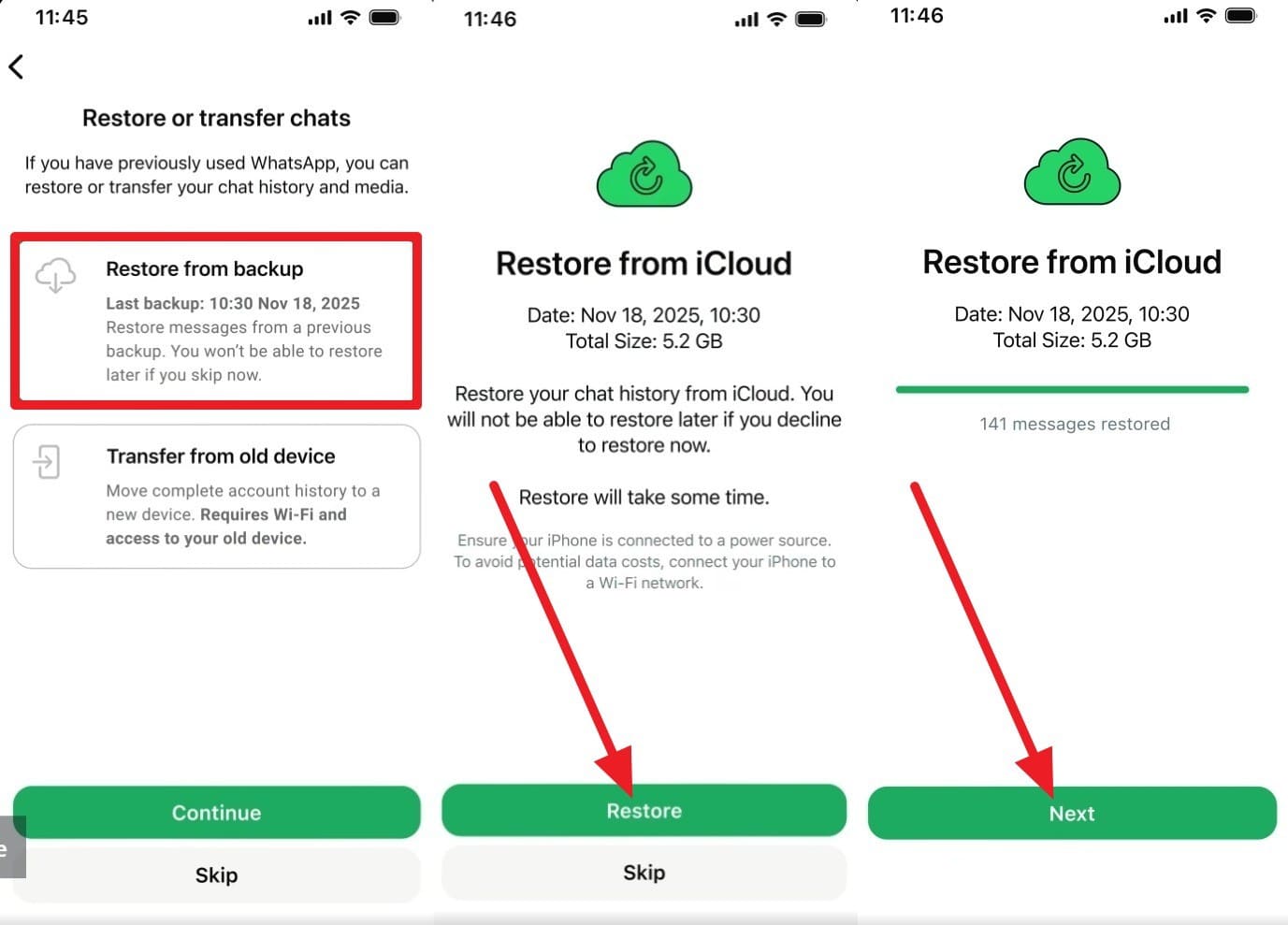
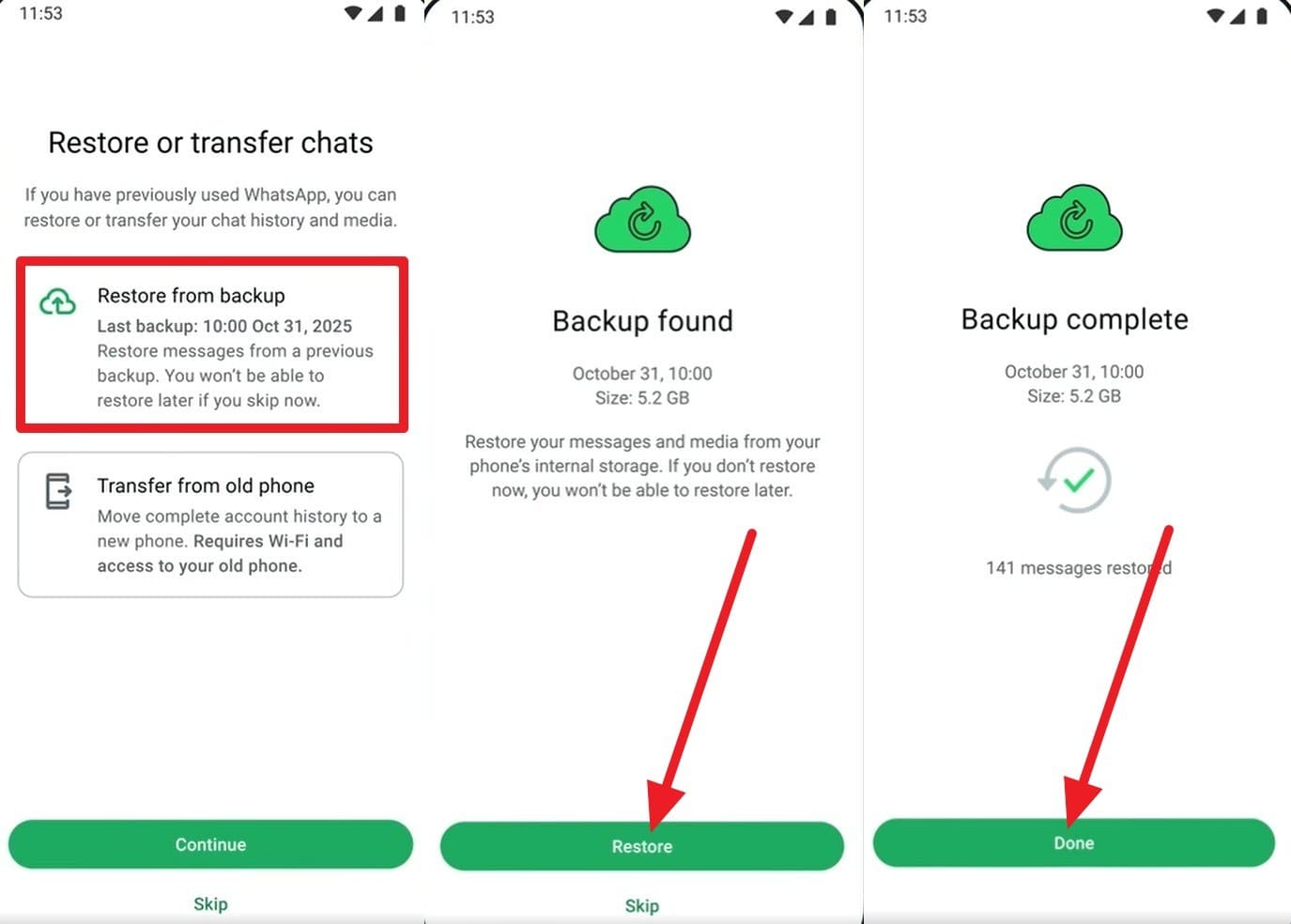
Step 3. Restore the detected iCloud history. When a compatible backup is offered, choose the restore option and follow the displayed authentication. Depending on the backup configuration, this may require its password, a 64-digit key, or a supported passkey flow. Do not claim that a recovery app can bypass missing encryption credentials.
Step 4. Use the Android setup instead for an Android restore. Install from Google Play, accept the legitimate permissions needed for restoration, and verify your original number. Make sure the phone is signed into the Google Account that holds the backup. These Android steps are an alternative platform path, not extra steps to perform on an iPhone.
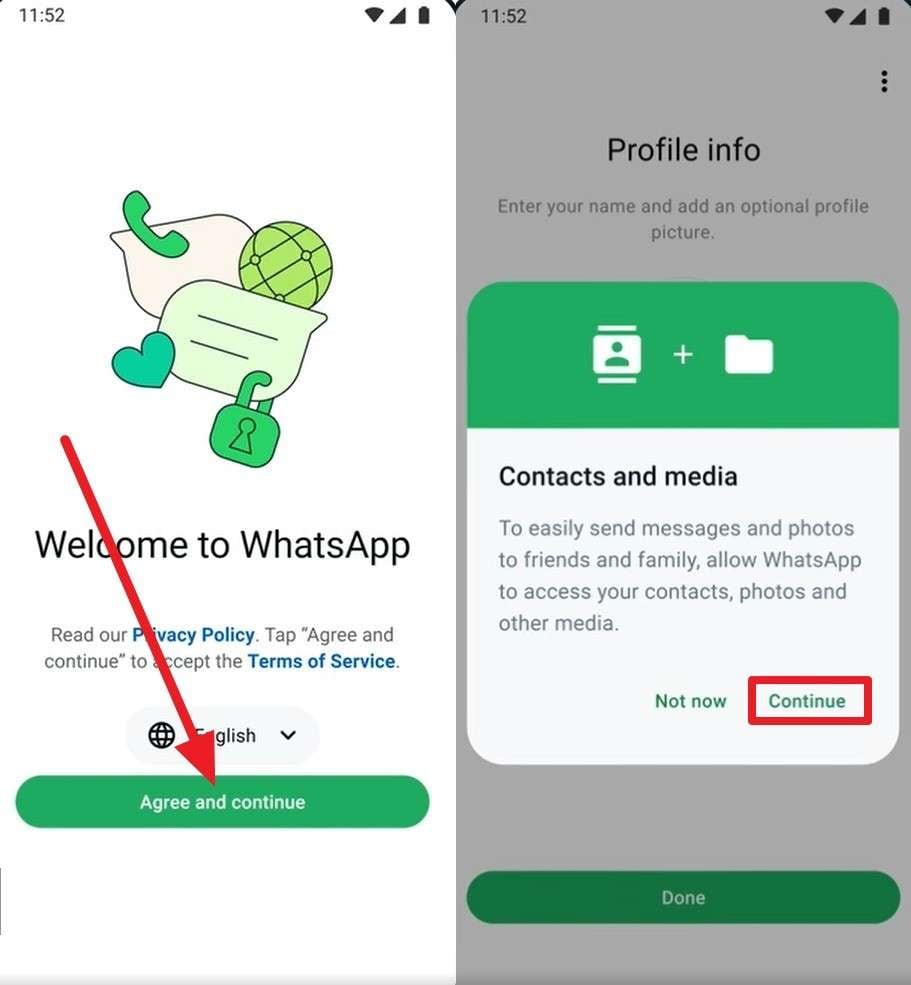
Step 5. Complete the Android backup restoration. Select the detected backup and Restore when offered. Keep a stable connection and wait for the displayed completion state. Review the resulting history before assuming that every attachment or deleted message was included.
Part 3. Assess Parental-Monitoring Claims Before Granting Access
Third-party monitoring tools can collect highly sensitive information about both a child and their contacts. Start with a transparent family safety discussion and the least intrusive controls that address the concern. Any supervision must have an appropriate legal basis and informed participation; a guardian's permission does not automatically resolve every privacy or communications-law issue.
The following source references are included to explain the advertised categories and risks, not to endorse covert surveillance. Their capabilities have not been independently tested here. Do not disable device security, obtain credentials through deception, or install software secretly.
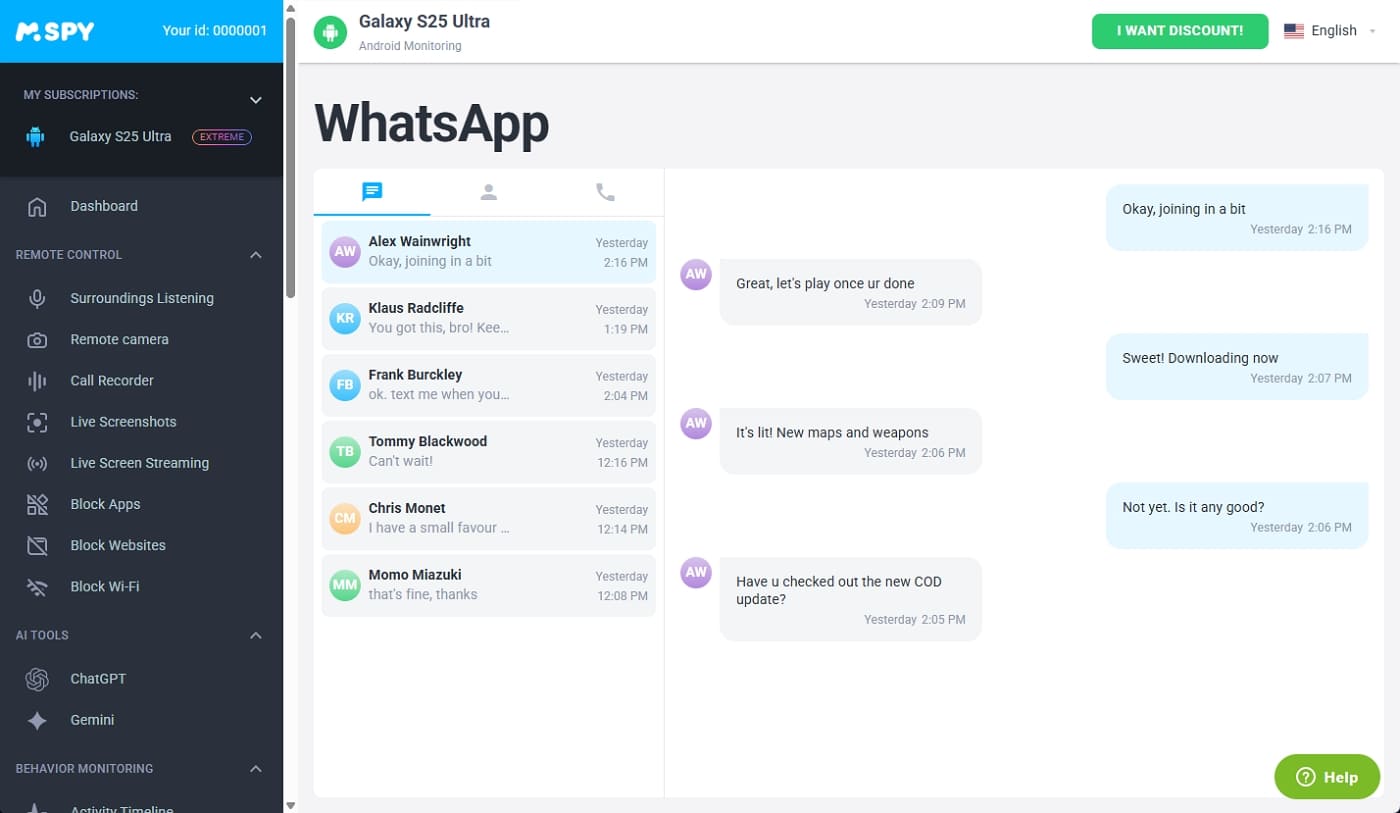
1. mSpy: Evaluate the Scope of Claimed Access
The source describes a paid service marketed for WhatsApp activity, shared media, calls, and other phone activity. Whether a particular feature operates depends on the device, permissions, installation method, and current software. A sales claim is not proof of universal message access.
Before considering any transparent, lawful arrangement, inspect what data leaves the phone, where it is stored, who can view it, and how consent and removal work. Prefer limiting collection to the actual safety purpose rather than exposing entire conversations and contacts.
2. Spyera: Treat Discreet-Operation Claims as a Warning
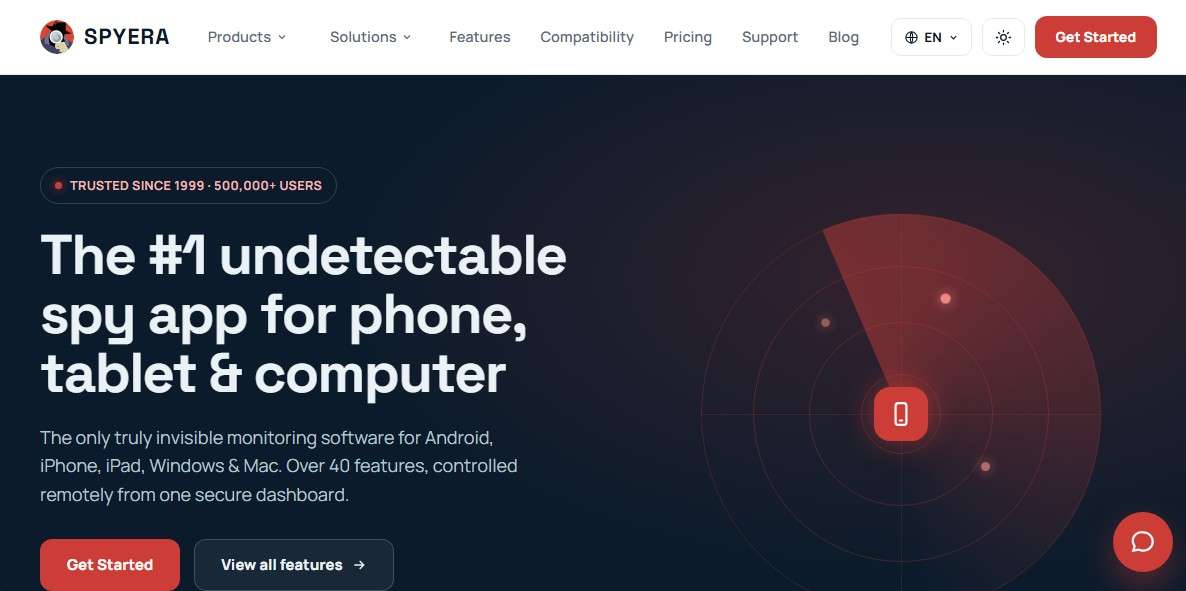
The original description lists message, media, group-chat, and call-recording claims. These are vendor assertions, not a verified capability matrix. Recording calls can introduce additional consent requirements, and broad device access can compromise the privacy of people who never agreed to monitoring.
Do not rely on an 'undetectable' promise. Avoid any proposal that depends on hiding installation or bypassing the account owner's controls. If lawful, openly agreed supervision cannot be implemented without those steps, choose a less intrusive alternative.
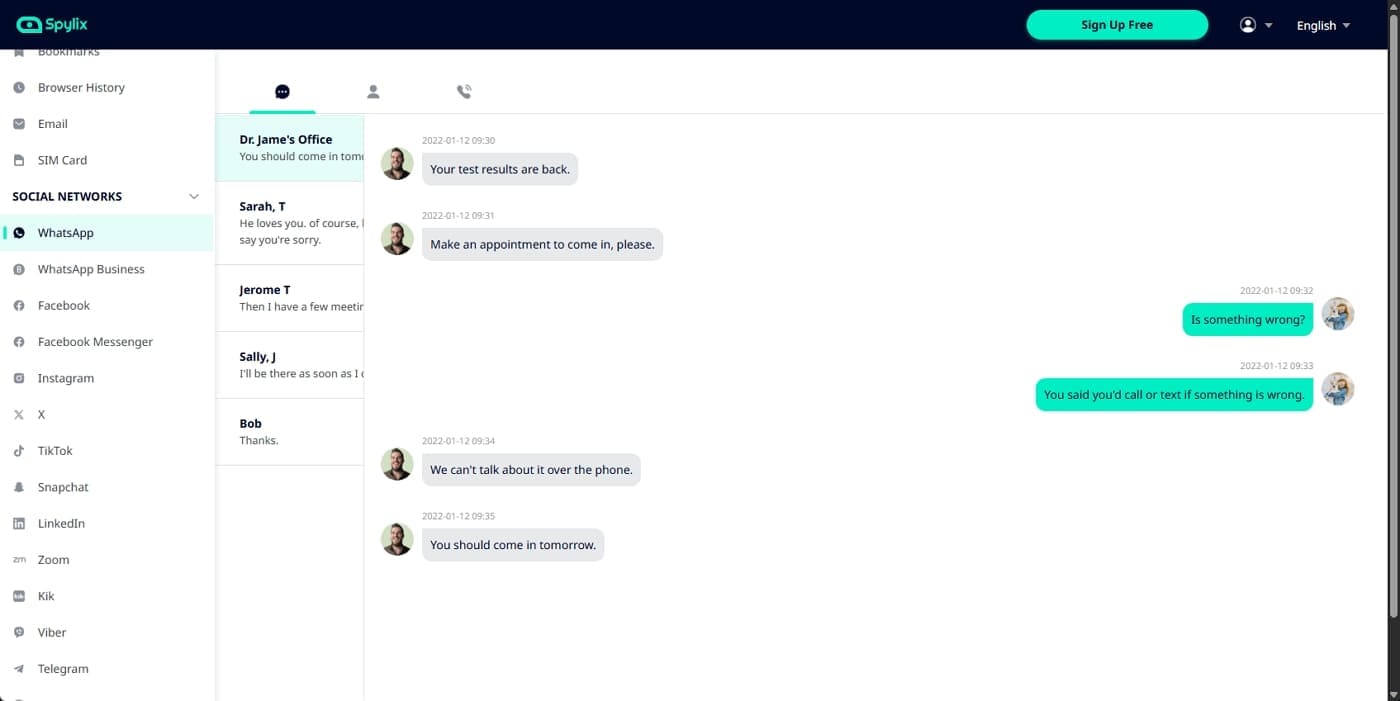
3. Spylix: Verify Permissions and Data Handling
The source also mentions Spylix as advertising phone-activity and WhatsApp monitoring across mobile platforms. That description does not establish that its current service works with your model or that every advertised data type is obtainable.
Check the actual permission list, retention policy, account protection, and deletion process before granting any access. Discuss the arrangement with the supervised person where appropriate and required, establish review and end dates, and never treat a subscription as legal authorization.
Part 4. Recover Available Deleted History Without Confusing Recovery with Tracking
Recovery examines an existing authorized data source; it does not provide continuing access to another person's account. A useful backup may contain a conversation from before deletion, while a device scan can only return supported data that remains available. Neither process guarantees that an erased or expired message can be reconstructed.
The source references Dr.Fone - Data Recovery (iOS)|Dr.Fone - Data Recovery (Android). These are separate recovery modules, not features of Virtual Location. The official Android guide describes Windows Advanced Recovery for supported Android 9–13 devices and selected newer models, with Huawei Android 12–13 excluded. Verify your exact model rather than inferring support from the Android version alone.
On iPhone, follow the applicable iOS workflow and confirm the WhatsApp category available in your installed version. Do not assume that Android's Advanced Recovery sequence applies to iOS or that all deeper-scan categories include WhatsApp. This section remains a related recovery reference, not a promotion of a different GPS product.
A Three-Stage Android Recovery Workflow for Your Own Data
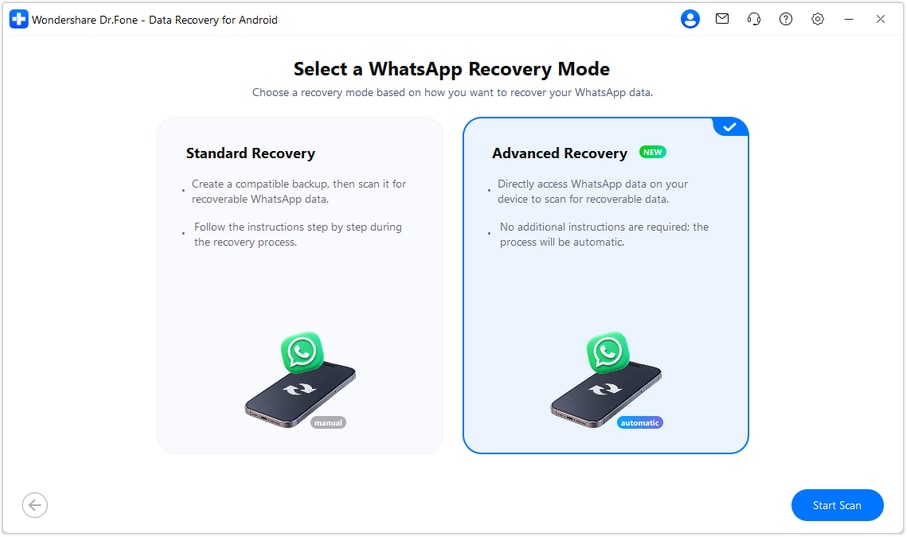
Step 1 Select the supported WhatsApp recovery path
Open the desktop Data Recovery module, select Android, and follow the WhatsApp recovery option offered in your version. Where the dedicated interface presents Recover WhatsApp Data, choose its applicable mode; the general Android recovery flow may instead present app categories. Select Advanced Recovery only for a supported setup, connect your own phone when prompted, and choose WhatsApp separately from incompatible simultaneous categories.
Step 2 Let the authorized scan finish
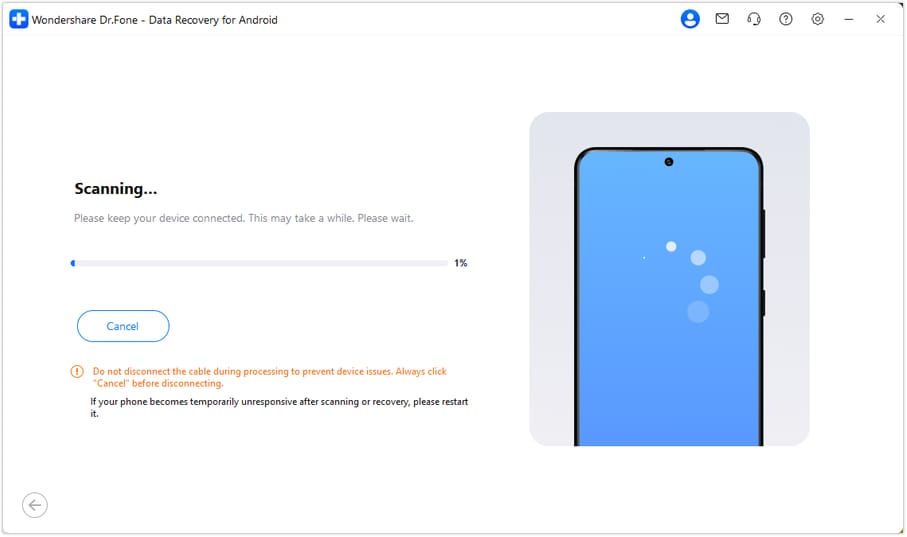
Keep the phone attached while the selected data is examined. Read the on-screen prompts, do not disconnect mid-scan, and cancel through the application if you need to stop. A completed scan is not a promise that deleted content was found.
Step 3 Review before saving recovered items
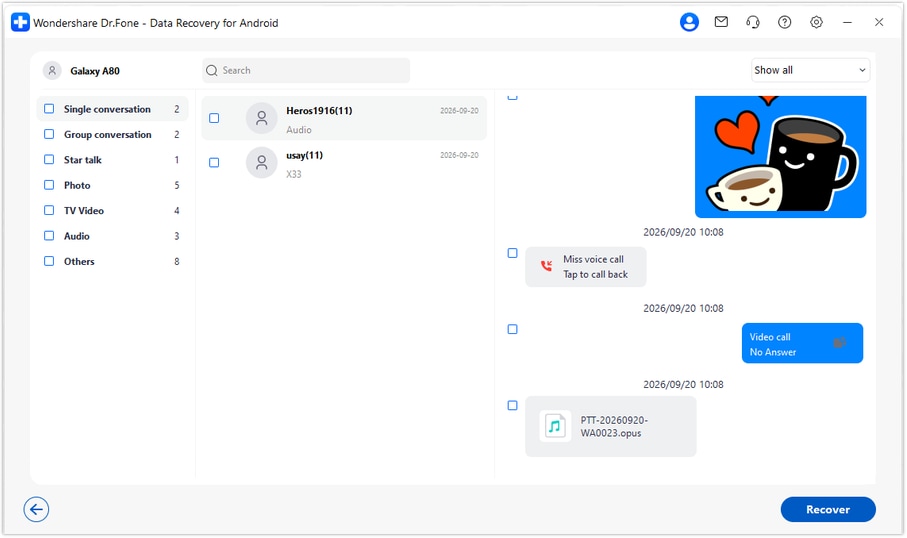
Inspect the available conversation and attachment results. Select only your authorized data and choose Recover to save it to a protected computer folder. The documented Android Advanced Recovery process saves to the PC, not directly back into the phone's live chat database.
Part 5. Protect Your Account, Conversations, and Location Sharing
Unknown sessions deserve attention, but a slow phone or increased battery usage alone cannot prove surveillance. Review account access and device security methodically. If monitoring is connected with coercion or personal danger, use a separate trusted device to seek help before making changes that might alert the other person.
1. Remove Unrecognized Linked Sessions and Strengthen Verification
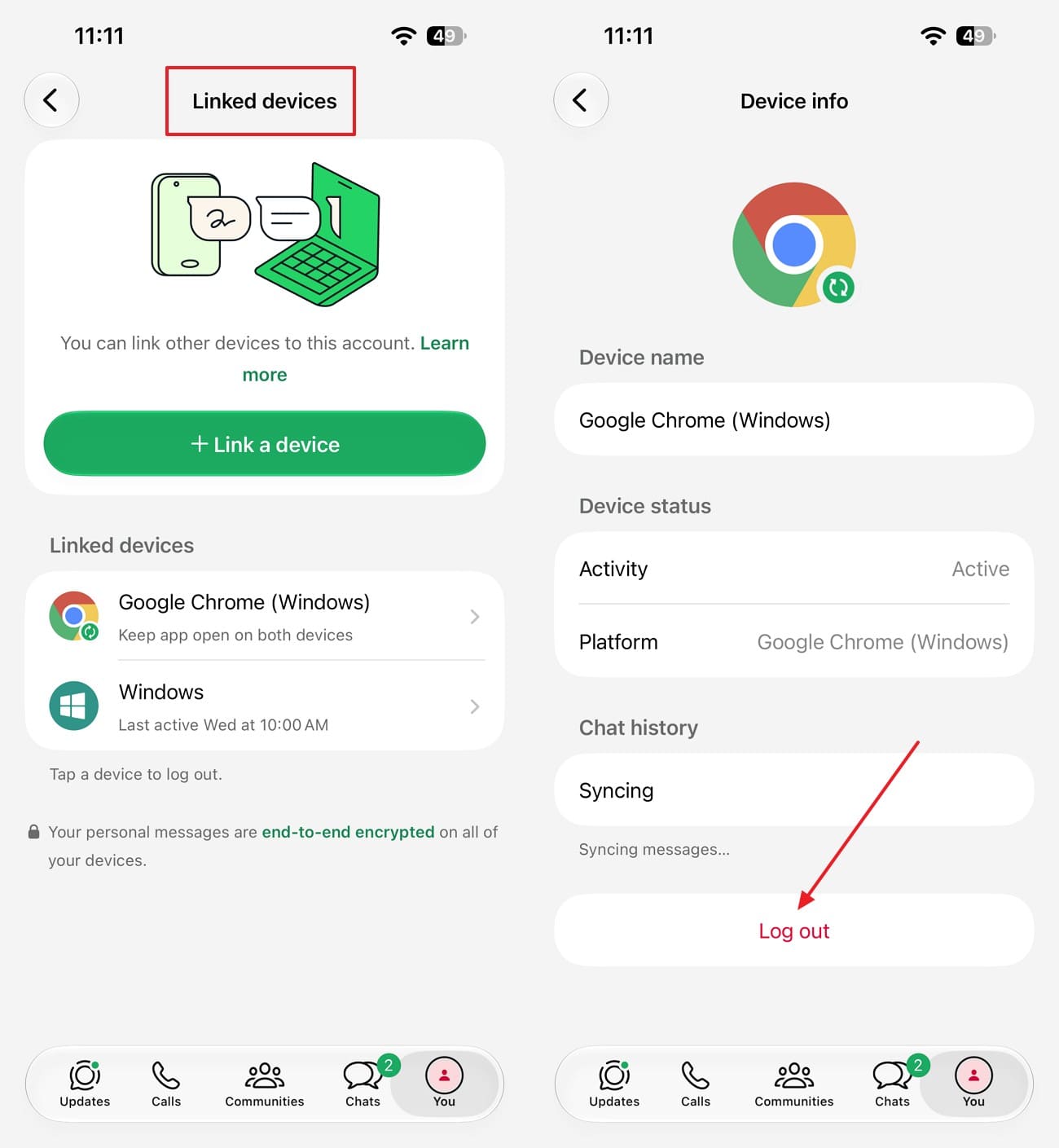
On your primary phone, open Linked Devices and inspect the listed sessions. Select any device you do not recognize or no longer authorize, then choose Log out. On a shared computer, ending the browser tab alone is not the same as revoking the linked session.
Open Account and Two-step verification, then follow the setup to protect registration with its PIN and available recovery options. Keep the PIN private, use a strong device lock, and never disclose SMS registration codes or approve unexpected linking requests.
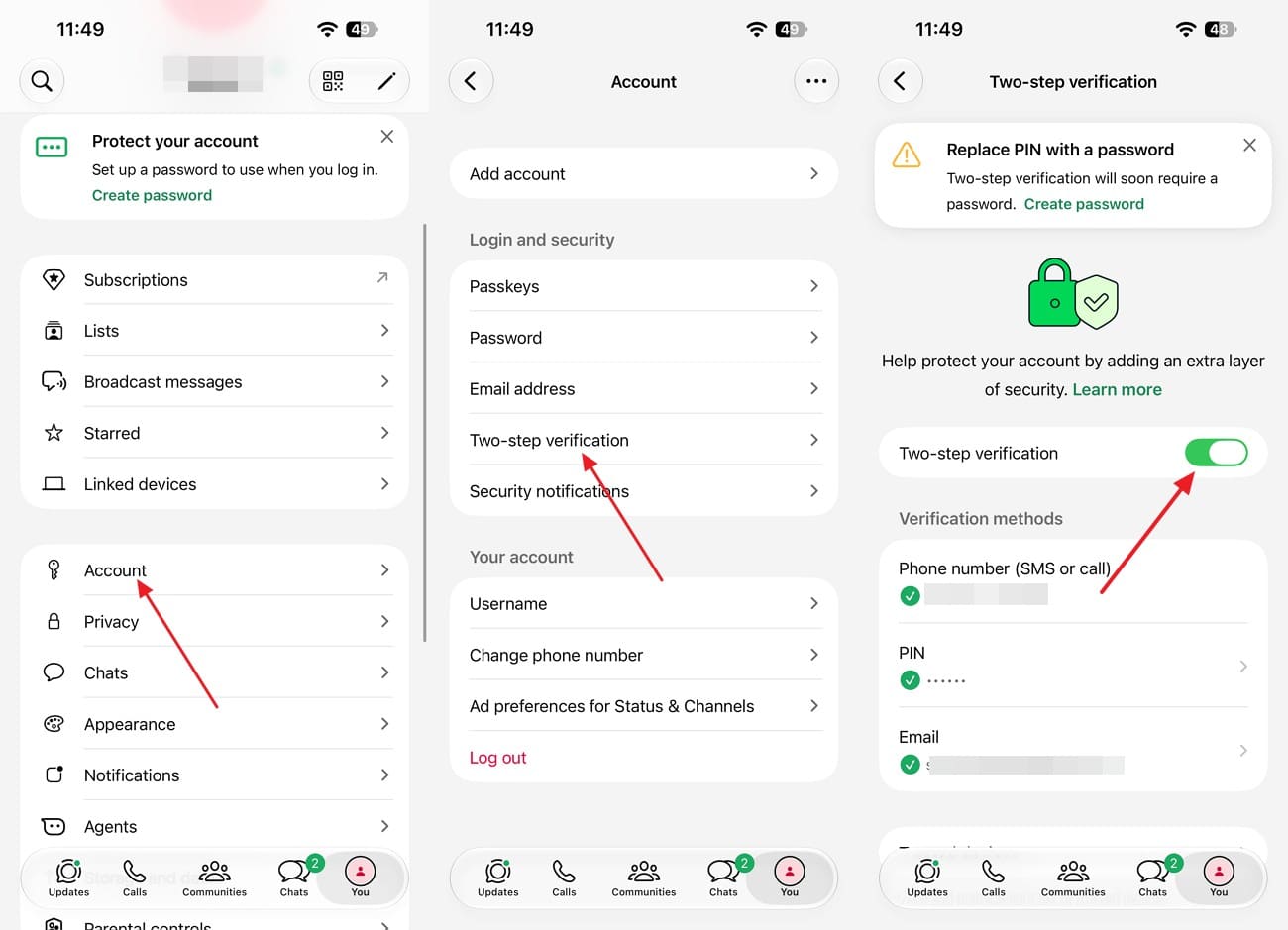
Two-step verification and session removal address different risks. Enabling a PIN is not a substitute for inspecting existing linked devices, and neither step repairs an already compromised operating system.
2. Reduce Activity Visibility and Protect Sensitive Chats
Use the privacy settings to control the information exposed to contacts, rather than looking for a tool that secretly watches their activity. Labels vary by release, so check the explanation beside each option.
Last seen and online: under Privacy, choose the audience for Last seen, such as My contacts or Nobody. Where offered, set online visibility to Same as last seen. This controls an activity indicator, not access to another person's messages.
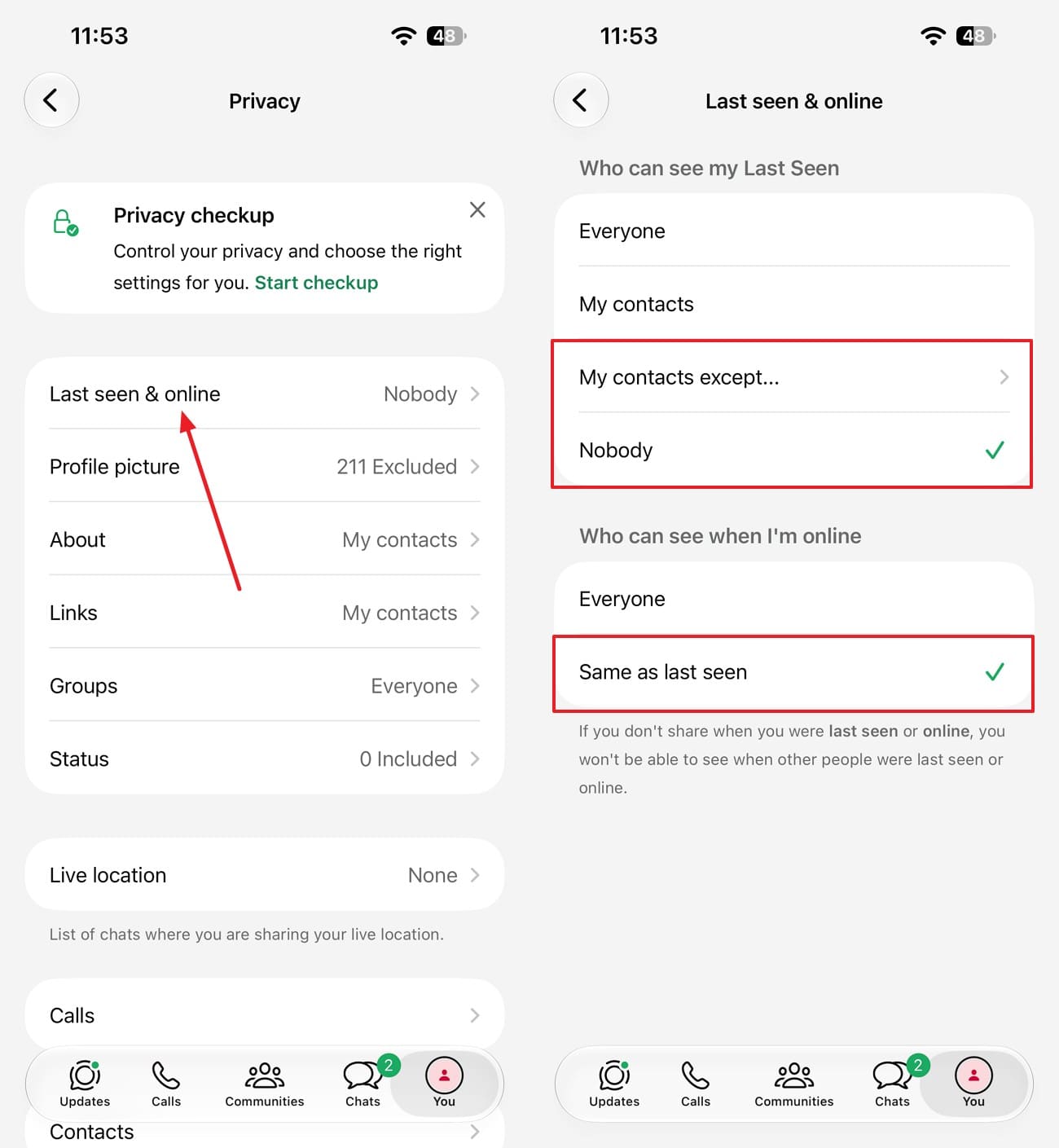
Other audiences: review Profile photo and Status independently. Use the available contact exclusions or selected audience where appropriate. Read receipts are another separate setting; turning them off does not suppress all receipts in all contexts, including group-chat behavior.
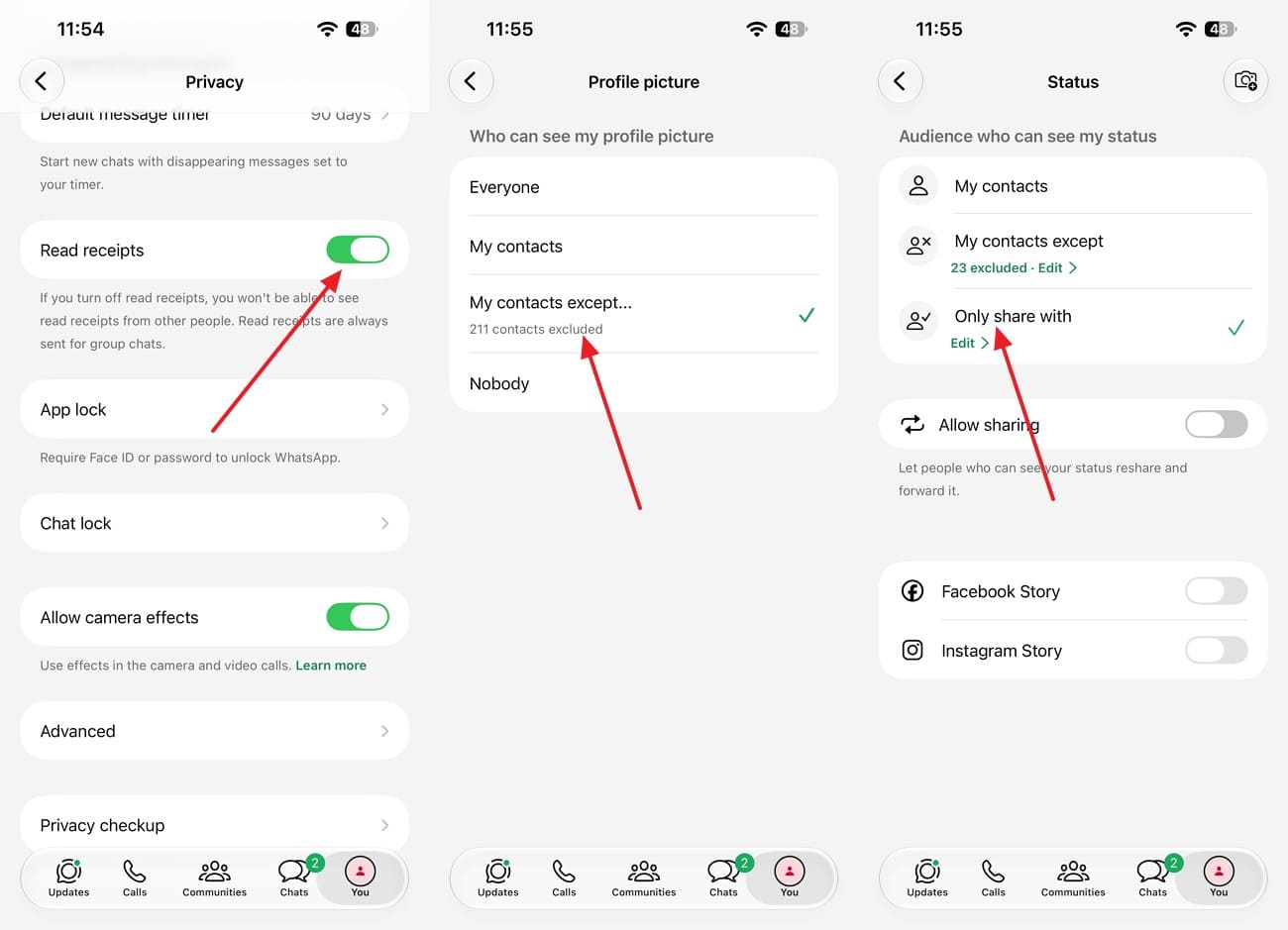
Chat-specific controls: enable Chat lock for sensitive conversations where available and protect the required device authentication. Advanced Chat Privacy can limit export, automatic media downloads, and certain AI-related uses in supported chats. Read its current in-app description rather than assuming it prevents every copy or screenshot.
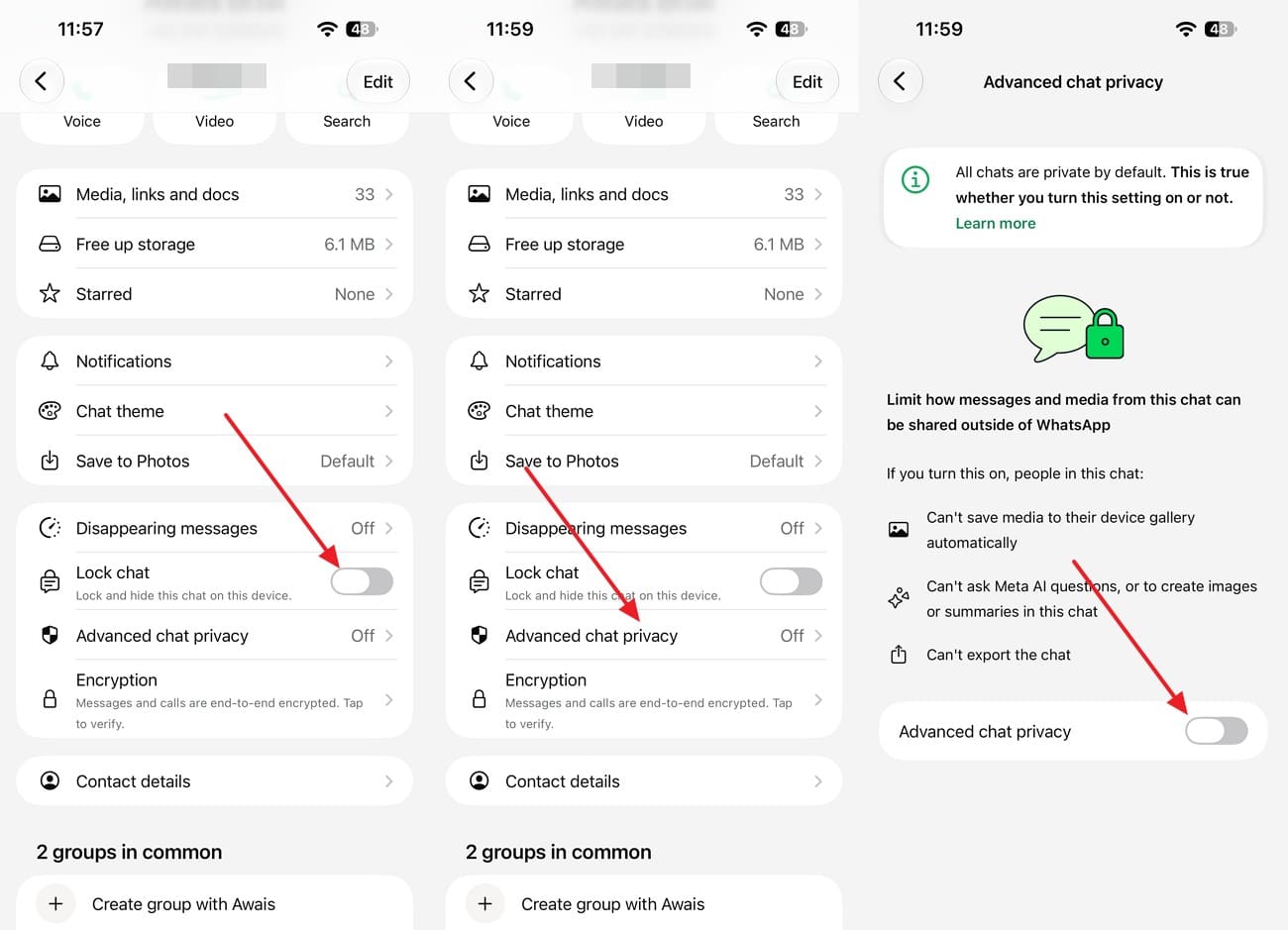
3. End Live Location Through WhatsApp's Sharing Controls
A one-time map pin is different from Live Location, which updates for its selected duration. To stop an existing live share, open the individual or group chat containing it, find the active sharing message, choose Stop sharing, and confirm.
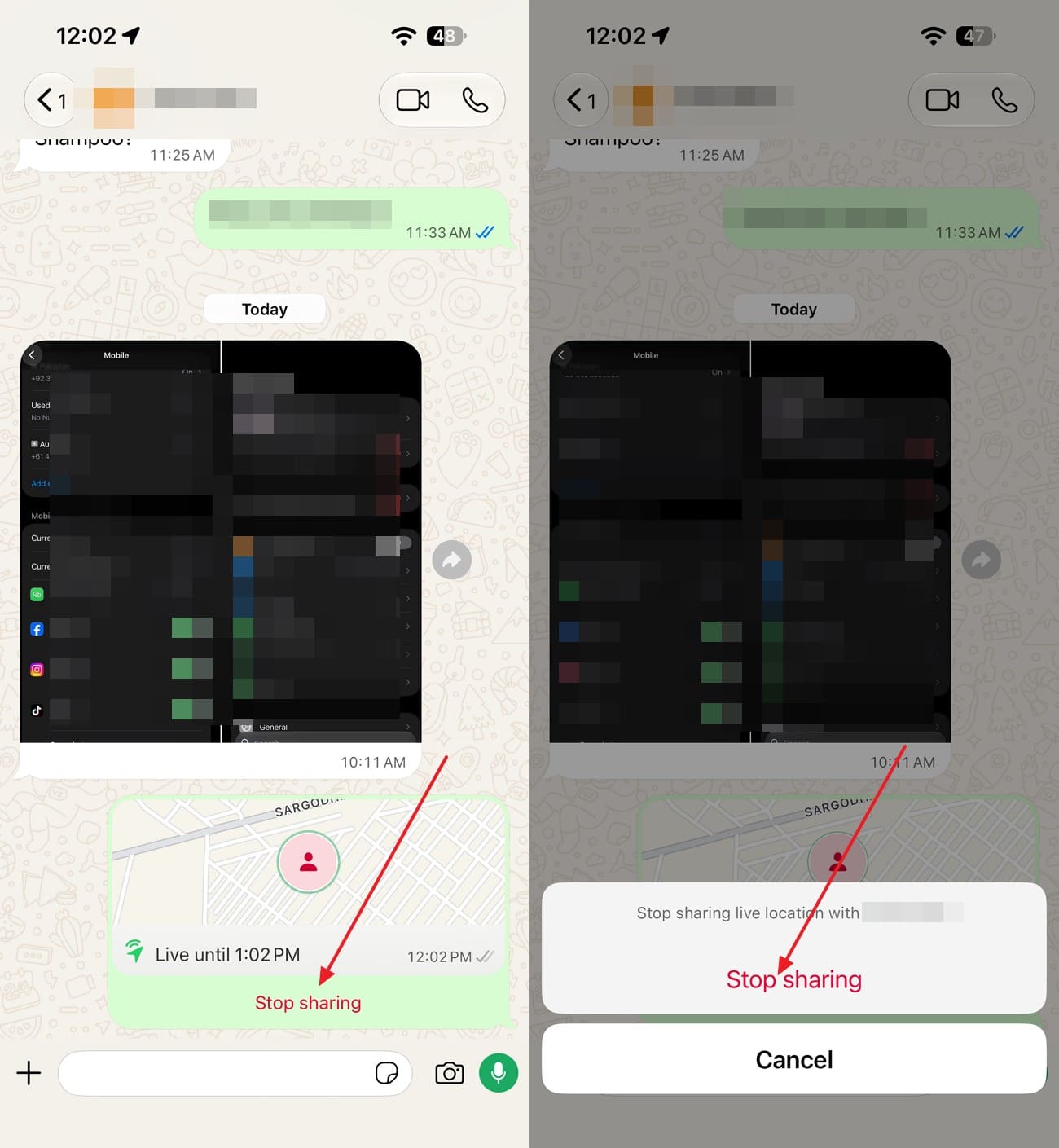
Review any other active shares and the phone's location permissions as well. Stopping future updates does not erase coordinates already seen or saved by recipients. If your goal is privacy, these built-in controls are the appropriate first step.
Pro Tip. GPS Simulation Is Separate from Message Security
 Set your map route to simulate GPS movement.
- Set your wanted movement speed.
- HD and large map view to check location.
- Fake GPS location to anywhere.

Dr.Fone - Virtual Location changes the reported GPS position on supported devices for permitted demonstrations. It cannot read messages, decrypt a backup, revoke a linked device, remove spyware, or stop someone who already has account access.
Its interactive map, destination search, adjustable movement, and route controls are useful when testing a location-aware feature on your own phone. A simulated point is not a privacy boundary, and WhatsApp may handle location differently across versions and configurations. Do not use the test to mislead someone who relies on your real location or to claim that monitoring has been blocked.
A Three-Step Consensual WhatsApp Location Demonstration
Use your own account and, if you send a demonstration location, tell the recipient clearly that it is simulated. For stopping real-time sharing, use the built-in controls above instead.
Step 1 Connect the phone you control
Launch the desktop toolkit, choose Virtual Location, and select your connected iPhone. Follow its supported connection prompts and enable Developer Mode only if required by that documented setup. Wait until the map is ready.

Step 2 Apply a clearly identified test point
Choose Teleport Mode and search for the intended city, address, or coordinates. Review the marker and select Move Here to apply the supported GPS simulation.
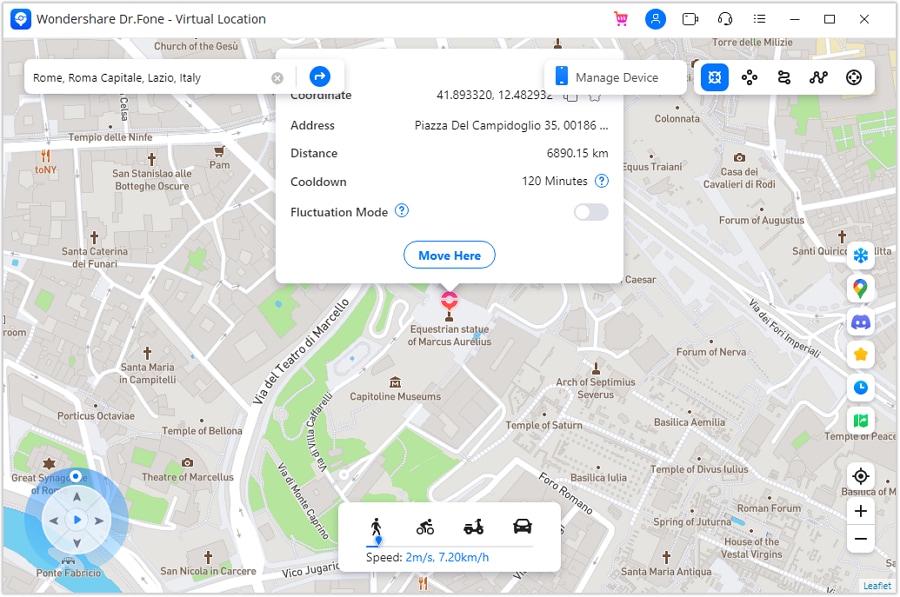
Step 3 Verify the preview and finish the test
Check the position in a map app, then inspect WhatsApp's location preview on your own account. Do not assume every app uses the simulated input. If sharing is part of the test, obtain agreement and label it as a demonstration. End the simulation afterward and verify normal coordinates again.
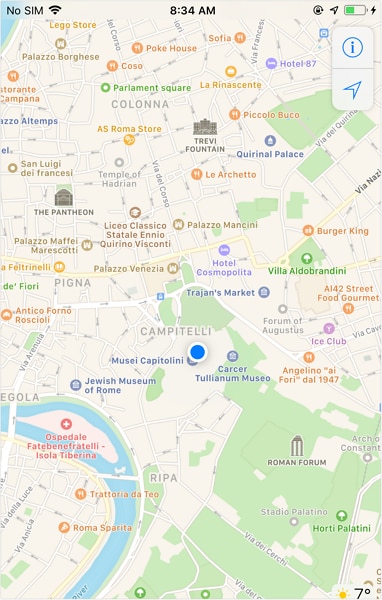
This workflow demonstrates location input only. It does not conceal message access or neutralize monitoring. Review sessions, secure the device, and stop Live Location directly whenever account privacy is the actual concern.




Conclusion
Manage WhatsApp history through legitimate account access, documented linking, and backups you are authorized to restore. Keep parental supervision transparent, proportionate, and lawful, and treat monitoring-vendor promises as claims requiring scrutiny rather than automatic access rights.
For privacy, inspect linked sessions, strengthen registration security, and end unwanted location shares. Recovery modules can examine supported existing data; Dr.Fone - Virtual Location only simulates GPS. None of those functions grants permission to read someone else's conversations.
FAQ
1. Can someone read WhatsApp chats from a phone number alone?
No. The number does not provide authorized chat access. Keep registration codes private, enable two-step verification, and inspect linked sessions if you suspect account misuse.2. Can expired disappearing messages always be recovered?
No. A tool cannot recreate content that no longer exists in a supported source. Recipients may already have retained copies, so disappearing messages are not a guarantee against redistribution.3. Does battery drain prove monitoring software is present?
No. Battery and data-use changes have many explanations. Review unfamiliar apps, permissions, and account sessions, and obtain trusted help if you suspect compromise.4. Does changing GPS stop message tracking?
No. GPS coordinates, message permissions, encryption, and linked sessions are separate. Use WhatsApp's account and sharing controls to address the actual privacy issue.
 Add Wondershare Dr.Fone as a preferred source on Google



