Recover photos, messages, WhatsApp, and more — no backup
needed.
Recover photos, messages, WhatsApp, and more — no backup
needed.

 100% Security Verified | No Subscription Required | No Malware

 :
: 
 ChatGPT
 Perplexity
 Gemini
 Claude
 Grok
Grok
The sudden realization that your important WhatsApp conversations, irreplaceable photos, or crucial work documents have vanished can be incredibly stressful. Since WhatsApp has become the primary communication hub for billions of users worldwide, understanding how to restore data from WhatsApp is a critical digital skill in 2026. Data loss scenarios are unfortunately common, stemming from unintentional accidental deletions, sudden hardware failures, complex software glitches during updates, or complications when transitioning to a brand-new smartphone.
However, before you succumb to panic and assume your digital memories are gone forever, it is essential to recognize that multiple proven recovery strategies exist. Whether you have diligently maintained cloud archives or find yourself completely lacking any recent backups, this comprehensive guide will illuminate exactly how to retrieve data from WhatsApp across various devices. Time is a critical factor in data recovery; the faster you act, the higher the probability of completely salvaging your valuable messages.
In this article
Part 1. Can I Restore WhatsApp Data Without Backup?
Historically, the conventional and most secure method to recover any lost mobile content relies entirely on pre-existing archives. Utilizing established cloud services like Google Drive or iCloud, or accessing local device storage, represents the standard, official avenue to seamlessly reclaim deleted communication histories. Despite this, a massive portion of users frequently ask how to recover deleted WhatsApp data when no formal backup strategy was implemented beforehand. While habitual backups remain the undisputed best practice, life is unpredictable, and many individuals find themselves without this safety net when disaster strikes.
The encouraging news is that retrieving your valuable text exchanges and multimedia attachments remains technically feasible even in the complete absence of a backup file. This specialized recovery relies heavily on the architecture of mobile storage systems. When you delete a message, the device does not immediately obliterate the file; instead, it simply marks the storage space as available for new data. Consequently, leveraging dedicated, professional data extraction software becomes the primary solution for how to recover whatsapp data without backup. These advanced utilities are meticulously engineered to conduct deep scans of your device's internal memory matrix, hunting for these intact but hidden remnants of your deleted files.
While these sophisticated recovery frameworks offer a highly effective answer to the pressing question of how to restore data in WhatsApp, users must be aware of inherent technical constraints. The most critical limitation is the principle of data overwriting. These recovery tools can only salvage information that has not yet been overwritten by newly generated files (such as new app installations, recent photos, or incoming messages). Therefore, immediate cessation of device usage is paramount to maximizing the success rate of any specialized recovery software.
- Eliminates the absolute dependency on cloud storage limits.
- Can recover highly specific, selectively chosen message threads.
- Effective for sudden, unexpected deletions where auto-sync failed.
- Retrieves complex multimedia attachments alongside text.
- Requires immediate action before storage blocks are overwritten.
- May necessitate downloading external third-party software on PC.
- Success rates plummet if the device continues heavy daily usage.
- Some deeply fragmented older files might only be partially restored.
Part 2. How to Restore Data from WhatsApp Without Backup
Realizing that comprehensive chat recovery is achievable entirely without a preconceived backup can alleviate significant anxiety, though selecting the correct technical approach is vital. Fortunately, robust digital solutions exist specifically tailored for this exact predicament. Among the myriad of available options, utilizing professional-grade data extraction software like Dr.Fone - Data Recovery (Android) represents one of the most reliable and highly acclaimed methods. If you are struggling with how to recover deleted data from WhatsApp and possess zero cloud archives, this tool offers a highly engineered lifeline.
Developed with precision to rescue a vast array of lost file types from the entire Android ecosystem, Dr.Fone boasts an exceptional, industry-leading track record in perfectly restoring your erased WhatsApp conversations, audio notes, and rich media files. The software operates by executing a forensic-level deep scan across both your smartphone's internal storage modules and any connected external SD cards, meticulously piecing together the invisible traces of deleted information. Consequently, even in the absolute absence of an initial backup, Dr.Fone possesses the capability to successfully recover your irreplaceable chat histories—provided that the physical storage sectors have not yet been overwritten by fresh incoming data.
 Scan Android phones and tablets directly.
- Preview and recover only what you want.
- Supports WhatsApp, photos, videos, contacts, and more.
- Works with 6000+ Android devices.
What Makes Dr.Fone - Data Recovery (Android) the Best Choice
- Granular Selection: It grants you the intuitive ability to meticulously preview and selectively choose only the specific conversation threads, videos, or documents you genuinely wish to recover, avoiding the chaotic mess of restoring absolute everything in bulk.
- Superior Technology: Integrates sophisticated, proprietary scanning algorithms designed to drastically maximize the overall success probability of accurately recovering heavily fragmented, lost, or rapidly deleted data structures.
- Uncompromised Security: Employs rigid read-only protocols ensuring that absolutely no personal content is ever leaked, modified, or inadvertently overwritten during the scanning operation, thereby fiercely protecting user privacy at every conceivable stage.
Detailed Tutorial on How To Restore Data From WhatsApp Without Backup
For individuals navigating the Android operating system, this utility seamlessly supports comprehensive data recovery targeting both the device's native internal memory blocks and any inserted external memory cards. Carefully adhere to the following meticulously detailed instructions to thoroughly master how to recover deleted data in WhatsApp:
-
Step 1 Initiate the Recovery Protocol and Select WhatsApp Extraction
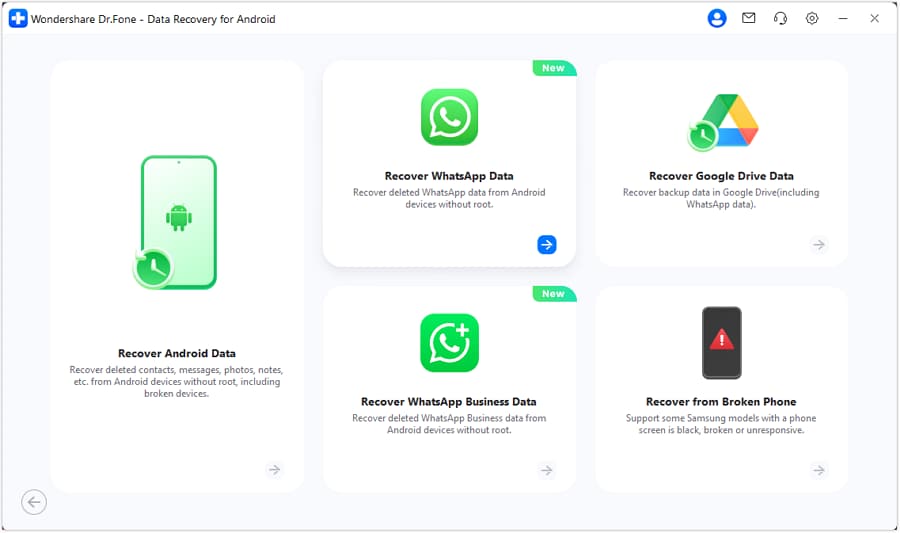
Begin by launching the Dr.Fone desktop suite on your personal computer. Navigate directly to the central "Toolbox" interface and deliberately opt for the robust "Data Recovery" module to initiate the workflow. Subsequently, formally select "Android" as your target mobile operating system environment and definitively click on the designated "Recover WhatsApp Data" function located within the main menu.
-
Step 2 Formulate a Secure Intermediary Backup Following On-Screen Guidance
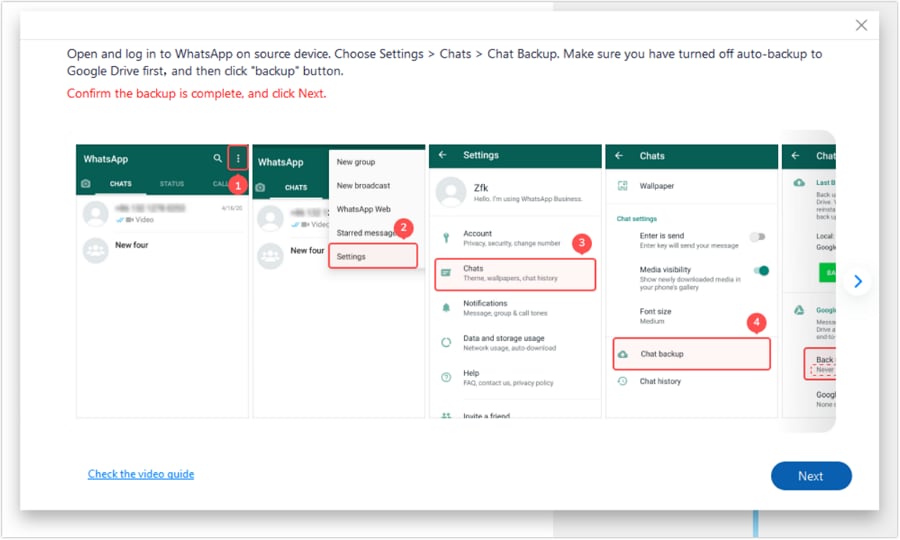
At this pivotal stage, firmly connect your Android smartphone to the computer via a reliable USB cable and click the prominent "Next" button, officially authorizing the program to commence a comprehensive device diagnostic scan. The software interface will now explicitly instruct you to temporarily generate a manual backup of your existing app architecture on your phone; rigorously follow these provided on-screen directions and tap "Next" once completed.
-
Step 3 Authenticate Your Account Profile and Restore the Intermediary Files
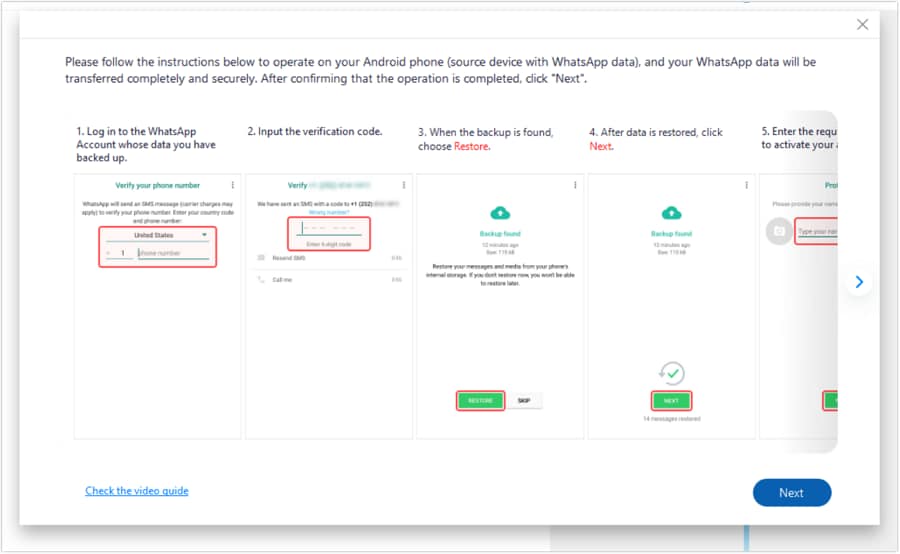
Upon fulfilling the previous requirement, the primary application will intentionally, yet safely, be temporarily uninstalled from your mobile hardware and rapidly reinstalled in a controlled environment. Once this automated sequence finishes, hit the "Next" prompt, immediately log back into your verified user account using your credentials, and deliberately authorize the restoration of the intermediary backup you just created to advance the recovery sequence.
-
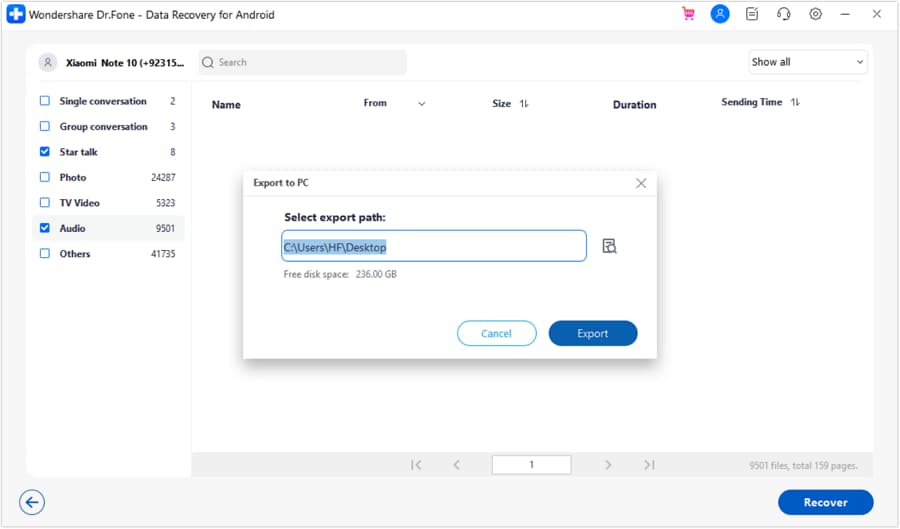
Step 4 Isolate, Select, and Securely Export Your Required Digital Content
Finally, tap "Next" to seamlessly transition to the comprehensive preview dashboard, which methodically lists all the successfully identified data extracted from your previously lost chat logs, voice notes, and media galleries. Carefully review and selectively opt for only the precise files you urgently wish to retrieve, and finally hit the conclusive "Recover" button to permanently export and save the chosen content to a highly secure, desired directory on your computer.
Part 3. How To Restore Data From WhatsApp on Android
When you are confronted with the frustrating scenario of recovering suddenly lost group chats or crucial media attachments, there is absolutely no need to feel immediately overwhelmed by the technical challenge. To significantly streamline and demystify the recovery journey, we will thoroughly explore three highly effective, natively supported approaches that Android users can consistently rely on. These foundational methodologies are surprisingly straightforward once you firmly grasp the core operational steps, providing an excellent probability of successfully answering the vital question of how to restore data from WhatsApp natively.
Way 1. Utilize the Local Backup Feature
For individuals who currently lack an active, stable internet connection to major cloud storage ecosystems, there is still substantial hope buried deep within your smartphone's internal file directory. Robust local backups are, by default, automatically generated and saved by the application every single night (typically around 2:00 AM), fundamentally making it entirely possible to resurrect your recent data. Opting to leverage this built-in, native archiving function empowers you to rapidly retrieve your accidentally lost text messages and deeply embedded media attachments. The comprehensive tutorial below illustrates exactly how to recover deleted WhatsApp data via this offline approach in merely a few minutes:
-
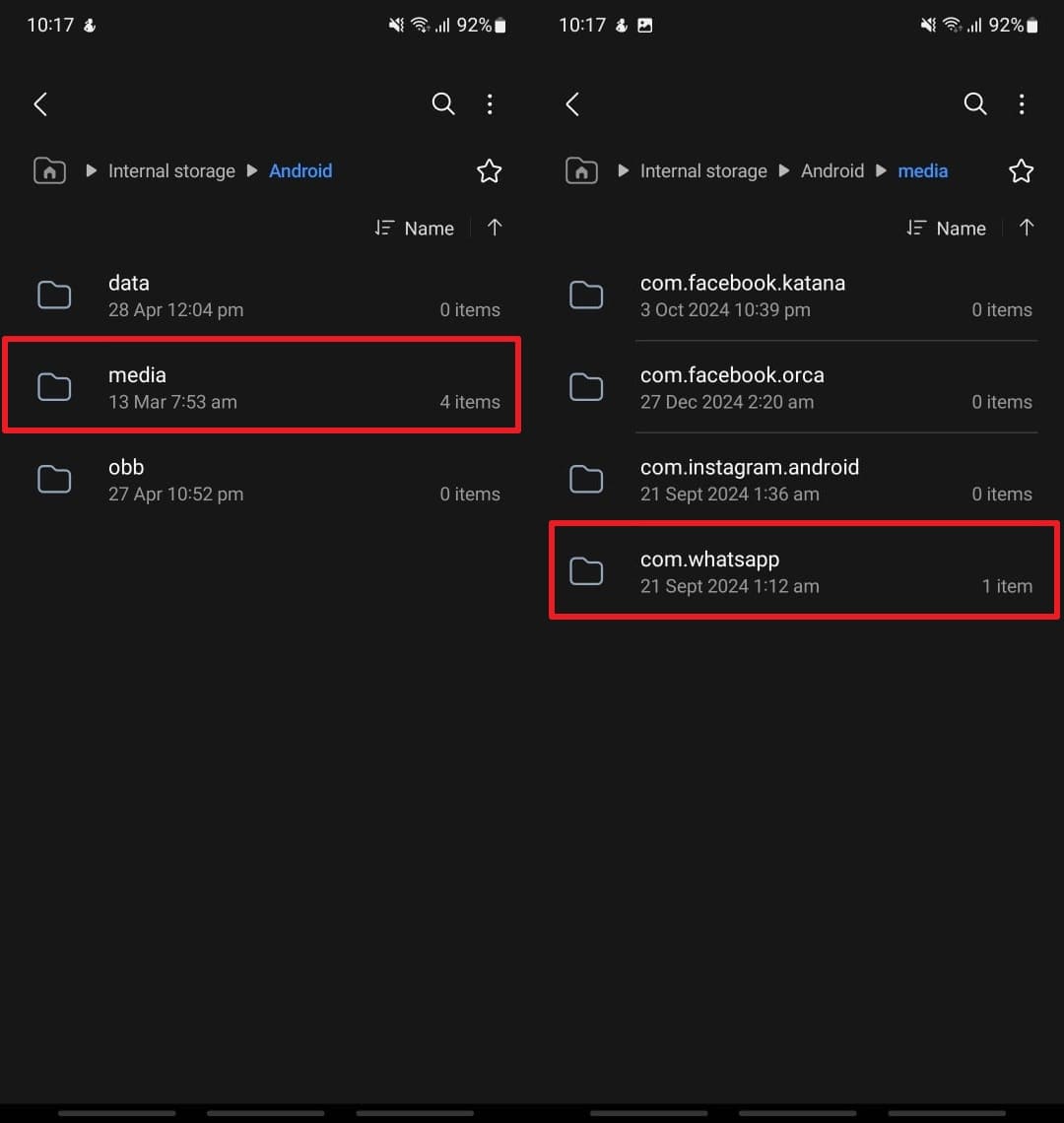
Step 1 Access the Internal Storage Media Directory
Launch the native "File Manager" or "My Files" application explicitly built into your Android OS interface and methodically navigate your way down into the root "Android" directory folder. From this specific juncture, selectively opt for the "Media" subfolder and proceed to open the deeply nested "com.whatsapp" repository in order to fully access the primary "WhatsApp" system folder.
-
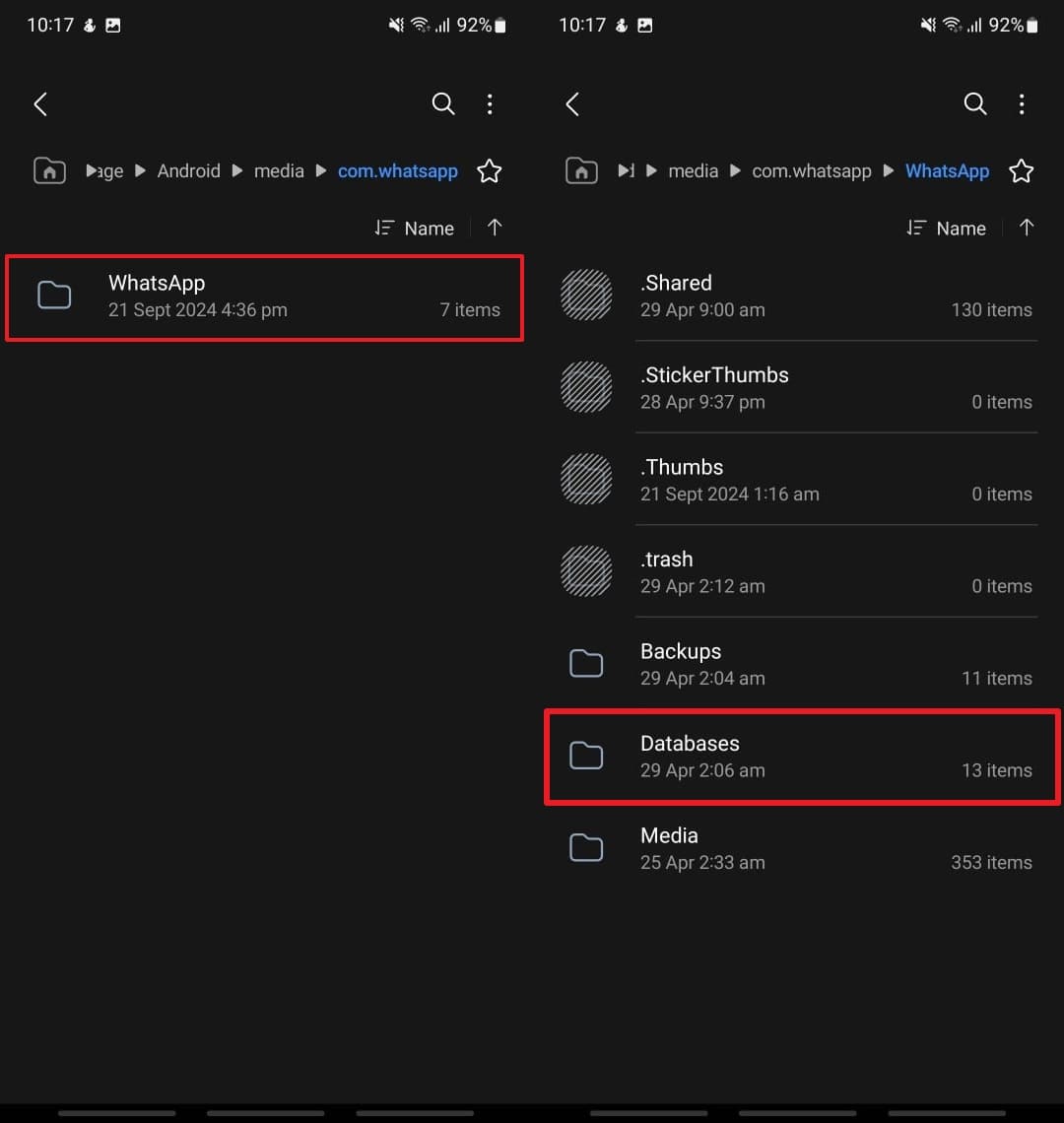
Step 2 Locate the Highly Specific Encrypted Database File
Once you make your way safely inside the central "WhatsApp" operational folder, immediately open the dedicated "Databases" directory hierarchy to move the process forward. At this highly specific point, carefully scan the list and identify the targeted backup image file typically designated with a complex naming convention similar to "msgstore-YYYY-MM-DD.1.db.crypt15" (or crypt14, depending on your app version).
-
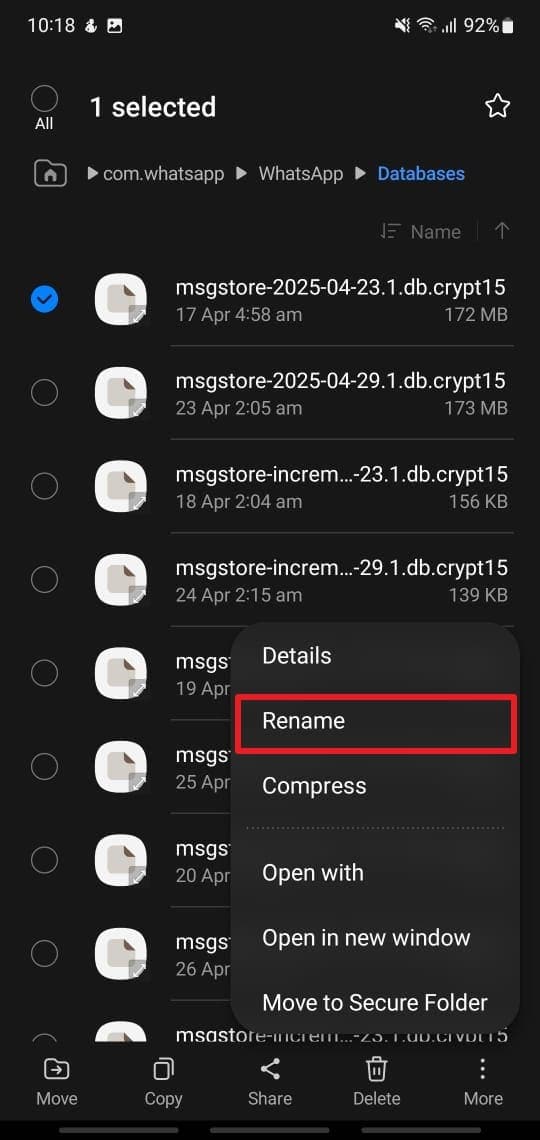
Step 3 Strategically Rename the Desired Archive for Recognition
Here within the file list, deliberately tap and maintain a long hold directly on the exact dated file you desperately want to revert to, and subsequently opt for the "Rename" command from the contextual pop-up menu. Following that critical action, meticulously change its overarching name strictly to "msgstore.db.crypt15" by carefully erasing the specific date formatting section, allowing the system to recognize it as the primary backup file to proceed.
-
Step 4 Completely Uninstall the Application from the Operating System
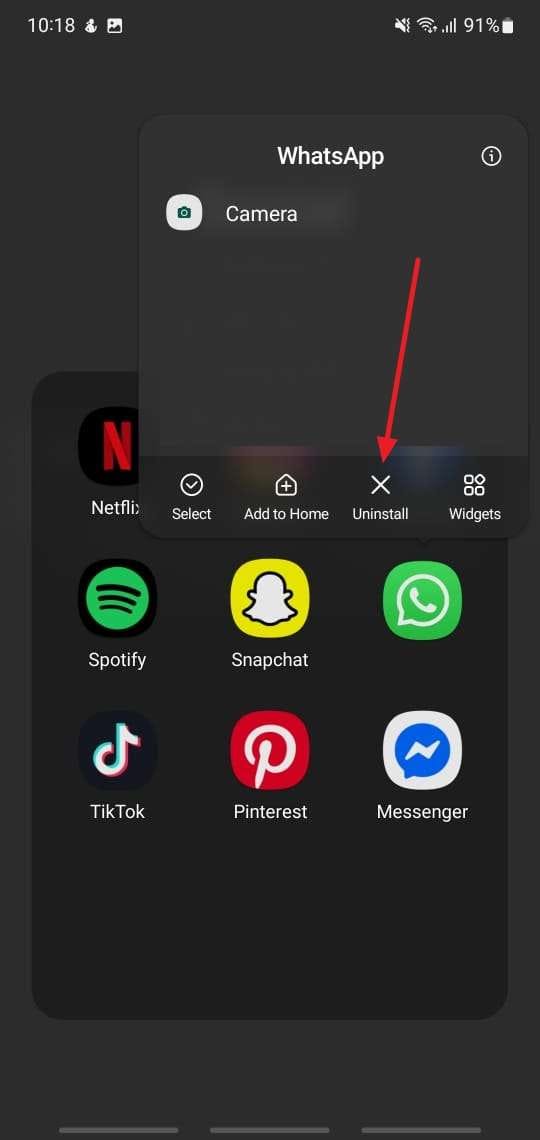
Moving steadily forward, return to your smartphone's primary home screen, approach the "WhatsApp" application icon, execute a deliberate long-press, and intentionally opt for the "Uninstall" directive from the ensuing settings menu. Formally proceed to completely eradicate the application parameters from your mobile device by confidently tapping "OK" or "Confirm" when the system prompt demands authorization.
-
Step 5 Reinstall the Client and Initiate the Core Setup Sequence
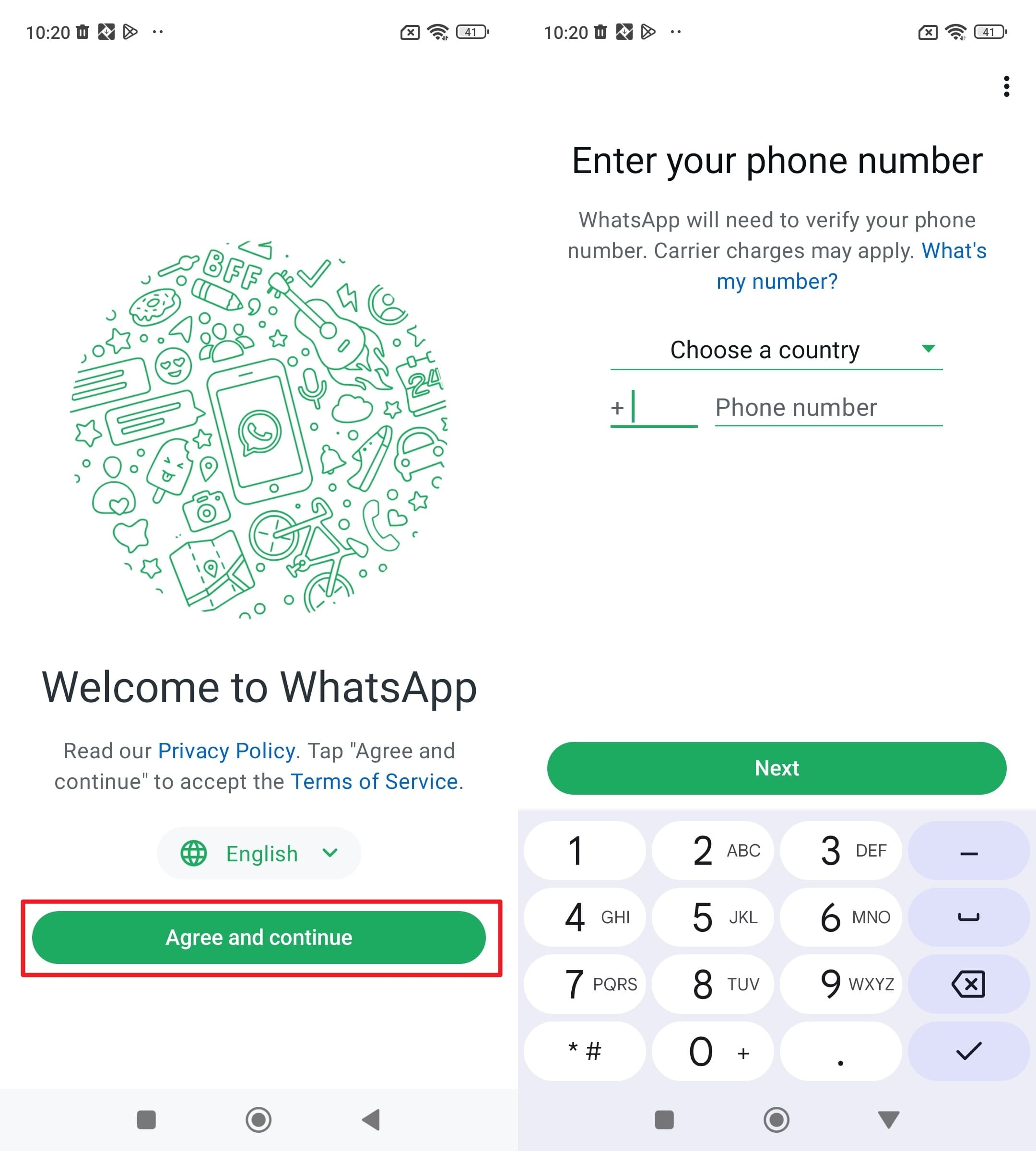
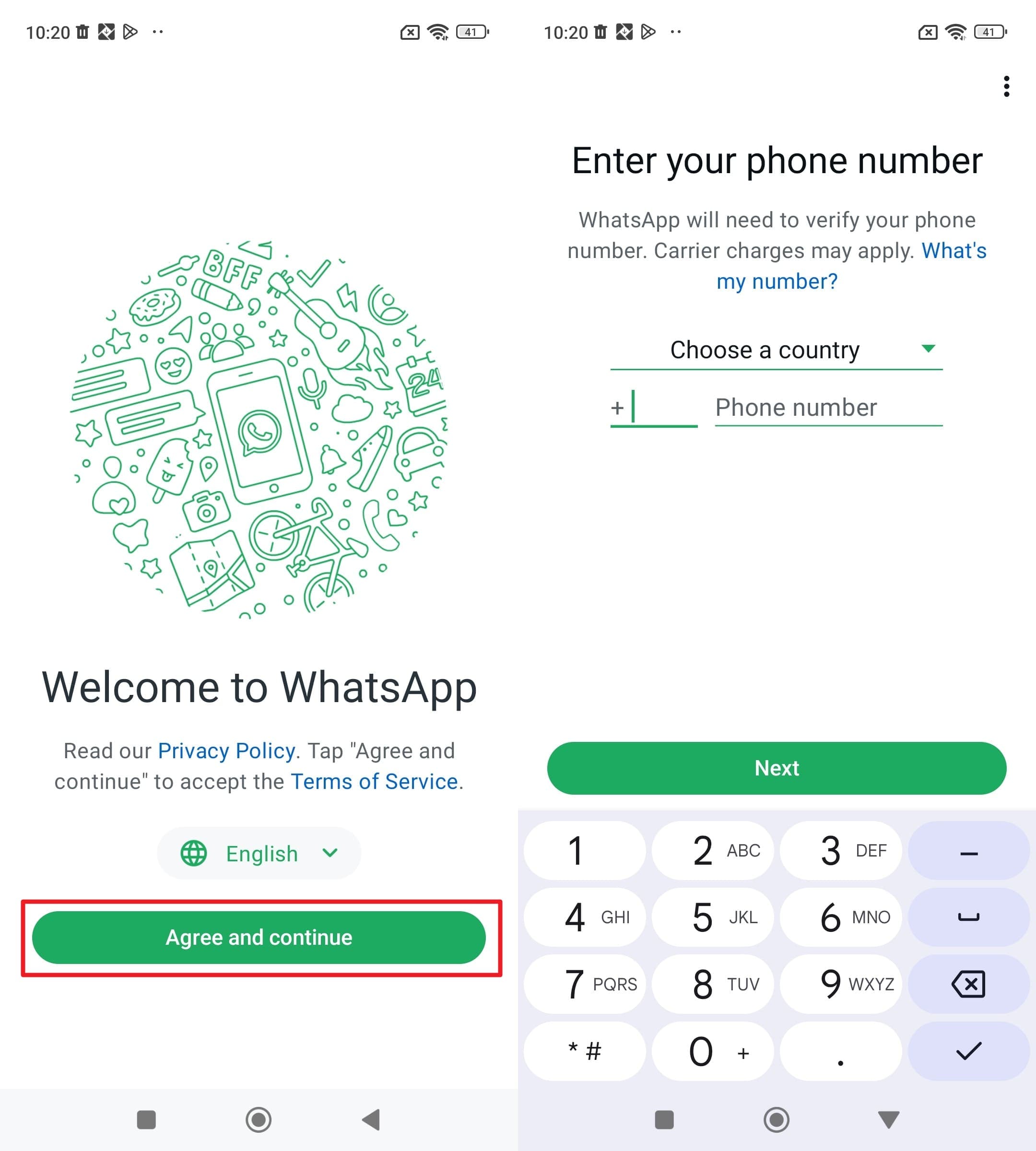
As soon as you successfully download and reinstall a fresh iteration of the application directly from the Google Play Store, immediately run it to tap the required "Agree and Continue" legal button and meticulously input your registered mobile phone number. Moving systematically forward, hit "Next" and flawlessly verify your cellular identity via the automated 6-digit SMS verification code dispatched to your device.
-
Step 6 Execute the Final Restoration Protocol for the Renamed File
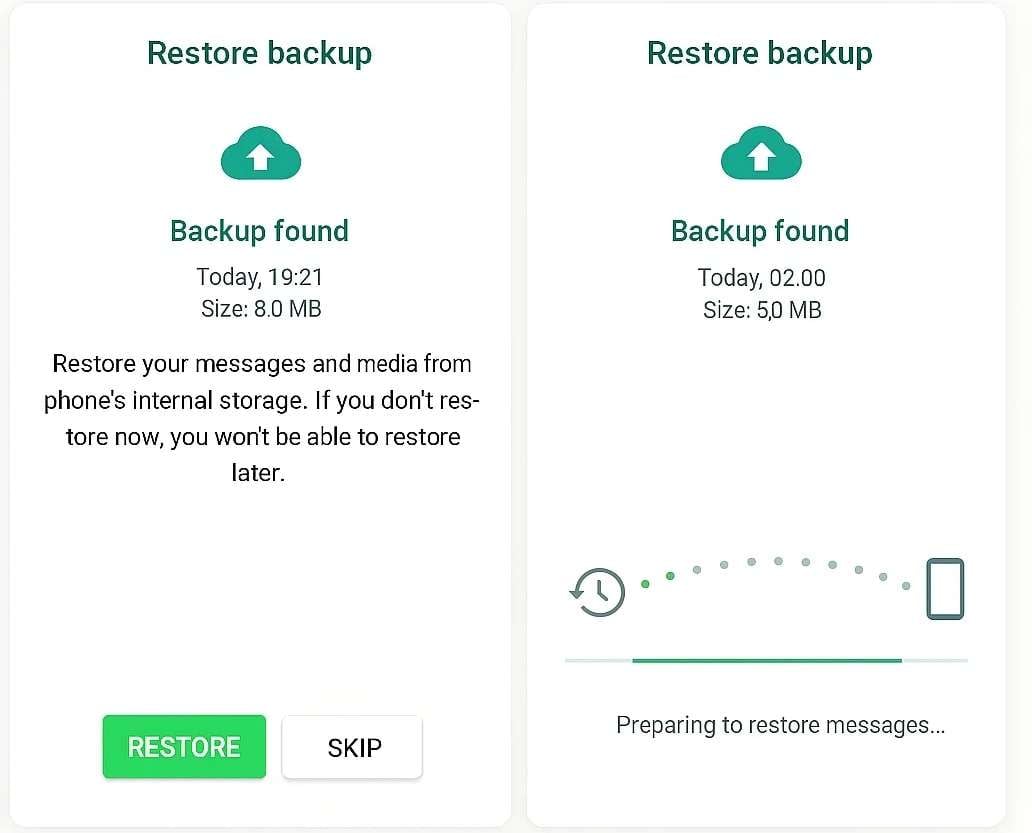
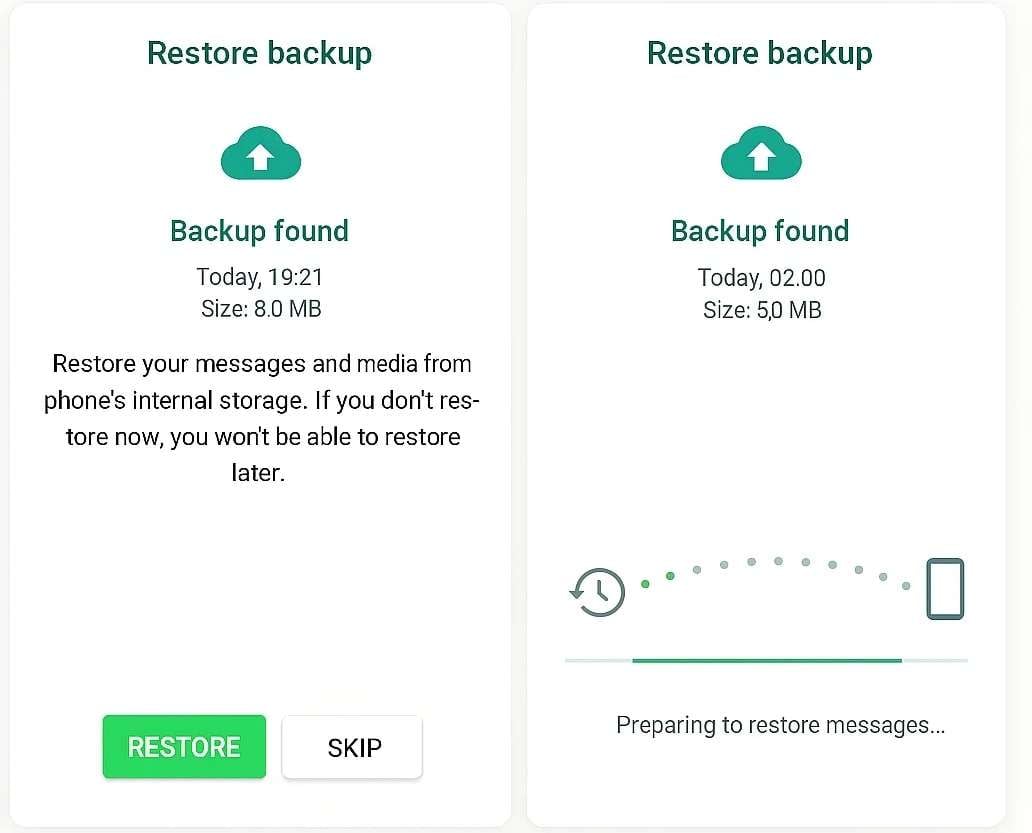
When the security verification firmly concludes, a prominent system message explicitly stating "Backup Found" will triumphantly declare that your manually modified local backup file has been successfully detected by the application architecture. Finally, tap the vibrant green "Restore" button to securely begin the overarching restoration pipeline, and simply allow the processing bar to reach absolute completion to successfully conclude this critical recovery task.
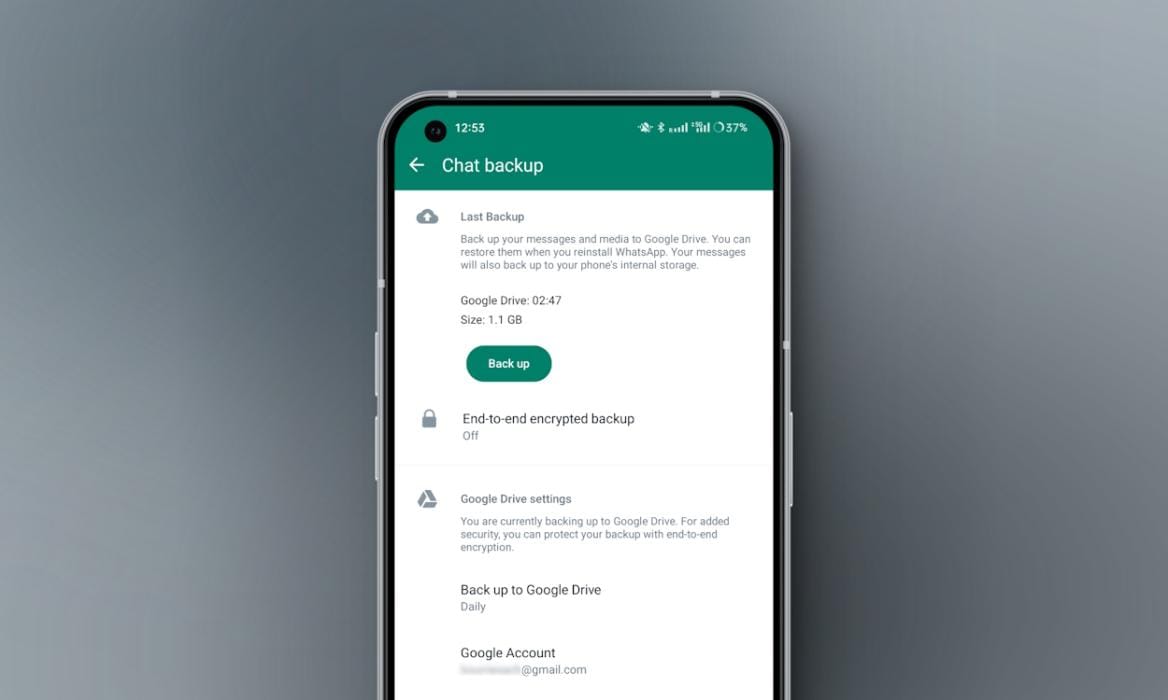
Way 2. Restore the Google Drive Backup
The foremost, universally recognized official approach to swiftly recover your personal chats, voice memos, and vast app data reserves is to seamlessly utilize a synchronized cloud backup. For users heavily entrenched in the Android ecosystem, the primary native service where these expansive communication backups are securely hosted is undeniably Google Drive. The platform grants you the highly flexible option to either sporadically create these secure backups manually or conveniently configure them to run entirely autonomously on a daily, weekly, or monthly schedule. When you are absolutely certain you have this critical feature actively enabled, meticulously adhere to the ensuing comprehensive guide to confidently discover how to recover deleted data in WhatsApp seamlessly:
-
Step 1 Remove the Current Application Instance
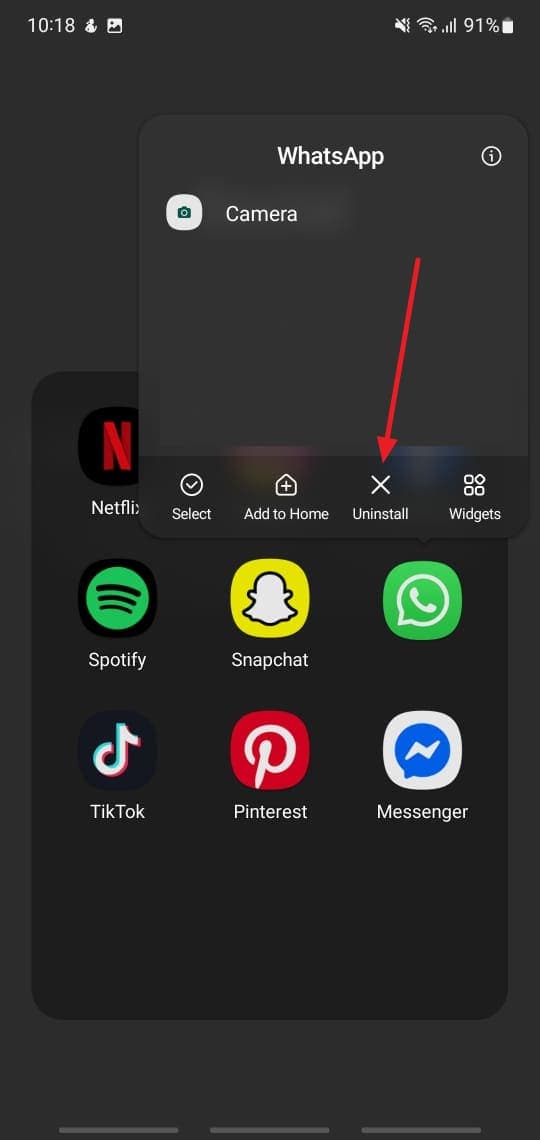
After rigorously verifying through your Google account settings that the Google Drive backup mechanism was indeed previously enabled and that a viable, recently dated backup file explicitly exists in the cloud, you must first delete the existing "WhatsApp" client entirely from your mobile interface. You can effortlessly accomplish this mandatory prerequisite by firmly holding down the main app icon on your home screen or app drawer and utilizing the standard "Uninstall" contextual option or trash can icon.
-
Step 2 Authenticate Your Identity Upon Fresh Reinstallation
Following that crucial deletion step, swiftly navigate to the official Google Play Store to install a pristine, updated version of the application once again; immediately launch the program upon completion and formally agree to its overarching terms of service and privacy conditions. After responsibly granting all the mandatory system permissions (especially contacts and storage access), proceed to verify your active mobile phone number specifically via the newly received OTP code to successfully log back into the server interface.
-
Step 3 Allow the Automated Cloud Detection System to Run
Once your cellular identity is definitively verified, the intelligent platform will automatically, without any further manual prompts, initiate a rapid search looking for a valid, synchronized backup link tethered directly to your connected Google account. Shortly after, on the pivotal "Backup Found" summary screen, you will explicitly view the highly specific Google Drive backup metadata details, notably including the total archive size and the exact timestamp of its creation.
-
Step 4 Finalize the Cloud Download and Data Integration Phase
Moving steadily forward toward completion, firmly tap the decisive "Restore" command button to officially authorize the device to begin sequentially downloading your heavily encrypted chats, photos, and media directly from the Google Drive servers. It is imperative to allow an adequate amount of uninterrupted time for the complex restoration process to finalize, which relies heavily depending on the overall gigabyte size of your archive and the current stability of your Wi-Fi or cellular internet speed. Under no circumstances should you forcefully exit the app environment or intentionally turn off your internet routing during this highly sensitive procedural process.
Way 3. Check Messages in the Notification History
Fascinatingly, even in a scenario devoid of any structured cloud or local backup methodology, there occasionally exists a highly resourceful, slightly hidden system trick that can profoundly assist you in quickly viewing very recently deleted text-based messages. For this clever workaround to function effectively, you fundamentally have to act rapidly and possess the correct underlying OS notification settings proactively enabled prior to the deletion event. When conditions align perfectly, your Android phone's deeply embedded notification history log can brilliantly reveal fragmented parts of critical conversations that would inherently otherwise be considered permanently lost to the digital void.
It is crucial to understand that this highly specific method doesn't technically "restore" the actual core data file back into the application's chat interface, but rather, it uniquely allows you to passively read the textual contents of the deleted messages through system logs. Here is exactly how to retrieve data from WhatsApp utilizing this highly unconventional yet practical OS technique:
-
Step 1 Access the Advanced OS Notification Framework
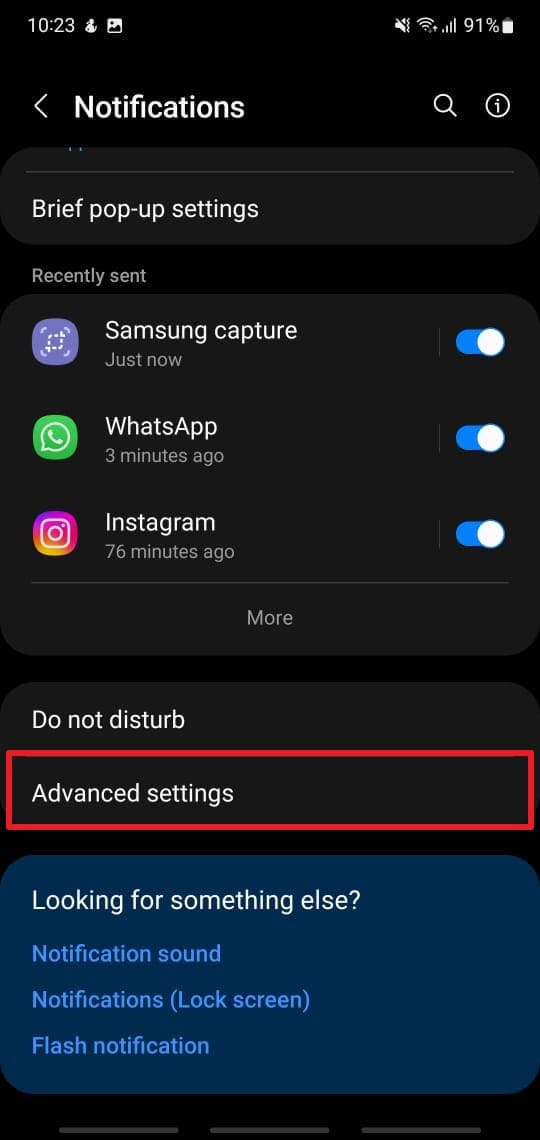
Initiate this diagnostic process by physically approaching the core "Settings" application prominently featured on your mobile device; launch it directly and scroll down to deliberately enter the primary "Notifications" or "Apps & Notifications" management section. Next, systematically continue navigating the hierarchy by intentionally choosing the specific "Advanced Settings" or "More Settings" menu configuration from the expansive list that subsequently populates on your device's screen.
-
Step 2 Review the Historical Notification Log for Erased Texts
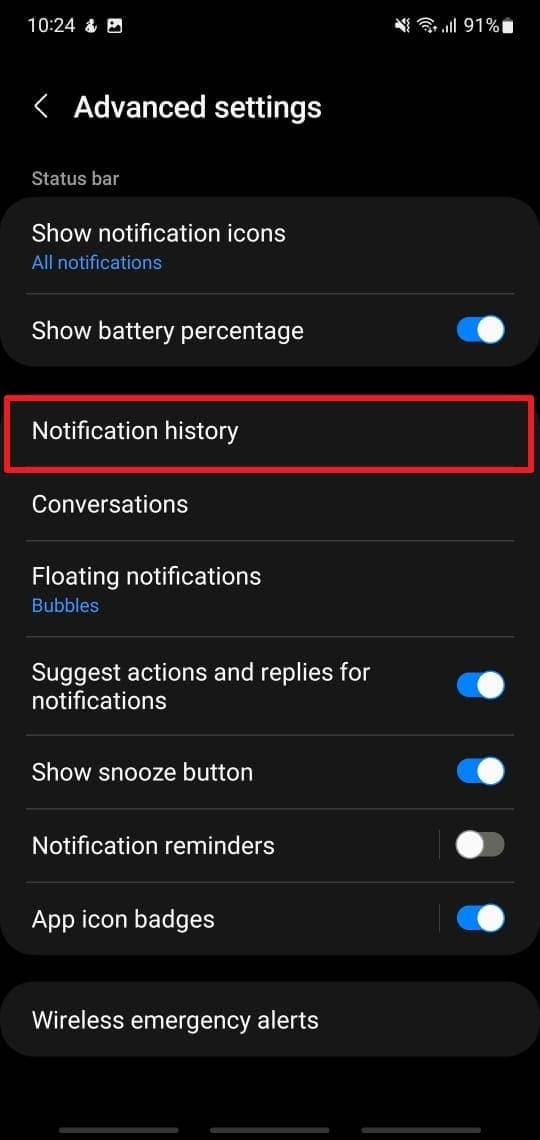
Then, carefully scroll through the provided intricate system options until you successfully pinpoint the critical "Notification History" toggle or menu and decisively tap on it to proceed into the secured log interface. Following this action, assuming the feature was previously toggled on, you will immediately be presented with a chronological list of highly recent system and app notifications where you can intensely scrutinize, check, and manually read the exact text of the message you or the sender accidentally (or intentionally) deleted moments ago.
Part 4. How To Restore Data in WhatsApp on iPhone via iCloud Backup
Dramatically shifting our strategic focus over to dedicated iOS users, the complex art of safely retrieving your heavily guarded chat histories actively brings an entirely different, uniquely Apple-centric set of tools and methodologies into play. Thankfully for most ecosystem users, Apple's highly integrated, native iCloud service architecture undeniably makes the overall synchronization and restoration process feel significantly smoother and considerably more streamlined. However, the foundational caveat remains absolute: that seamless experience is only technically viable if you had explicitly authorized and enabled background app backups within the Apple ecosystem long beforehand. Assuming that crucial prerequisite is met, executing a flawless backup restoration is entirely possible without encountering too much technical friction or convoluted hassle. Comprehensively get to know precisely how to restore data in WhatsApp operating on iOS by intricately utilizing the following series of quick, highly effective procedural steps:
-
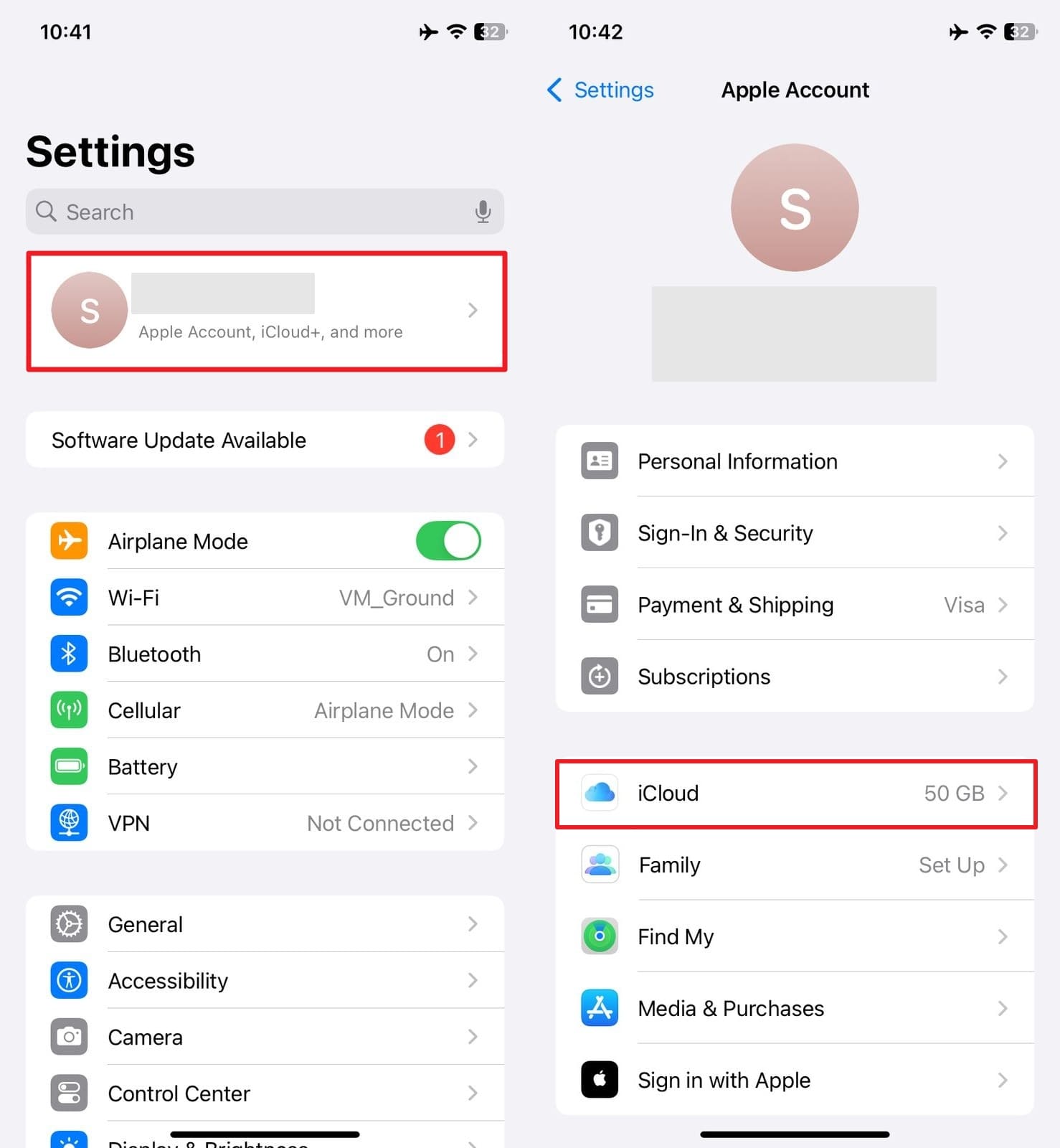
Step 1 Verify Core Apple ID iCloud Connectivity
Commence the vital restoration task with a deliberate tap on the silver gear "Settings" icon securely located on your iPhone's primary home screen, immediately followed by pressing directly onto your personal Apple ID profile banner situated prominently at the very top of the menu. Here within this account management hub, specifically opt for the designated "iCloud" infrastructure option to rigorously ensure and visually confirm that the primary overarching "iCloud" synchronization toggle switch is definitively turned to the active ON position.
-
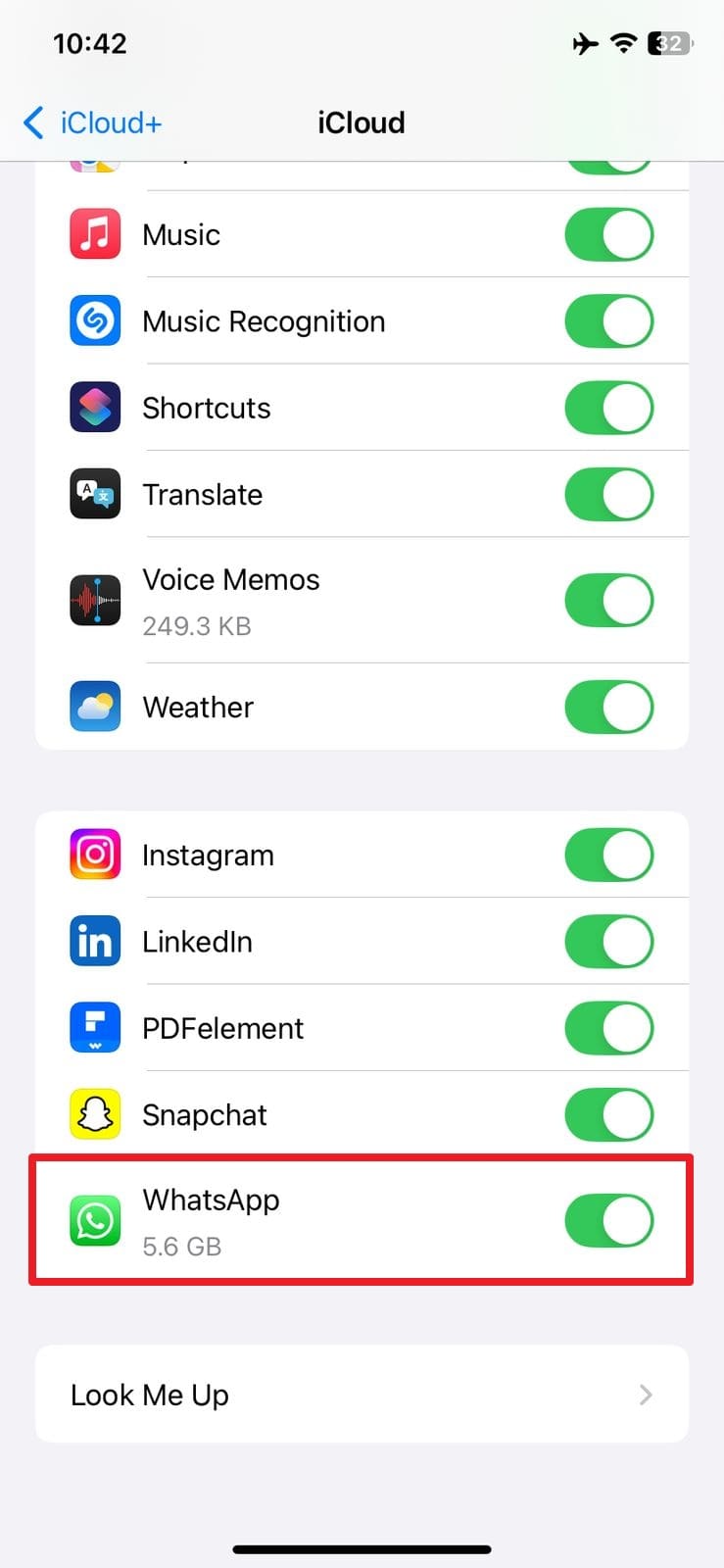
Step 2 Validate Specific App Synchronization Status
Operating entirely in tandem with that overarching system check, explicitly confirm that the specific, isolated toggle switch located directly under the "Apps Using iCloud" (or "Show All" apps list) menu is undeniably enabled and actively glowing green. Following that crucial system-level verification, pivot to physically open the actual communication application itself and meticulously cross-reference the specific date and timestamp of the absolute latest successful cloud upload housed deep within the application's internal "Chat Backup" configuration settings menu.
-
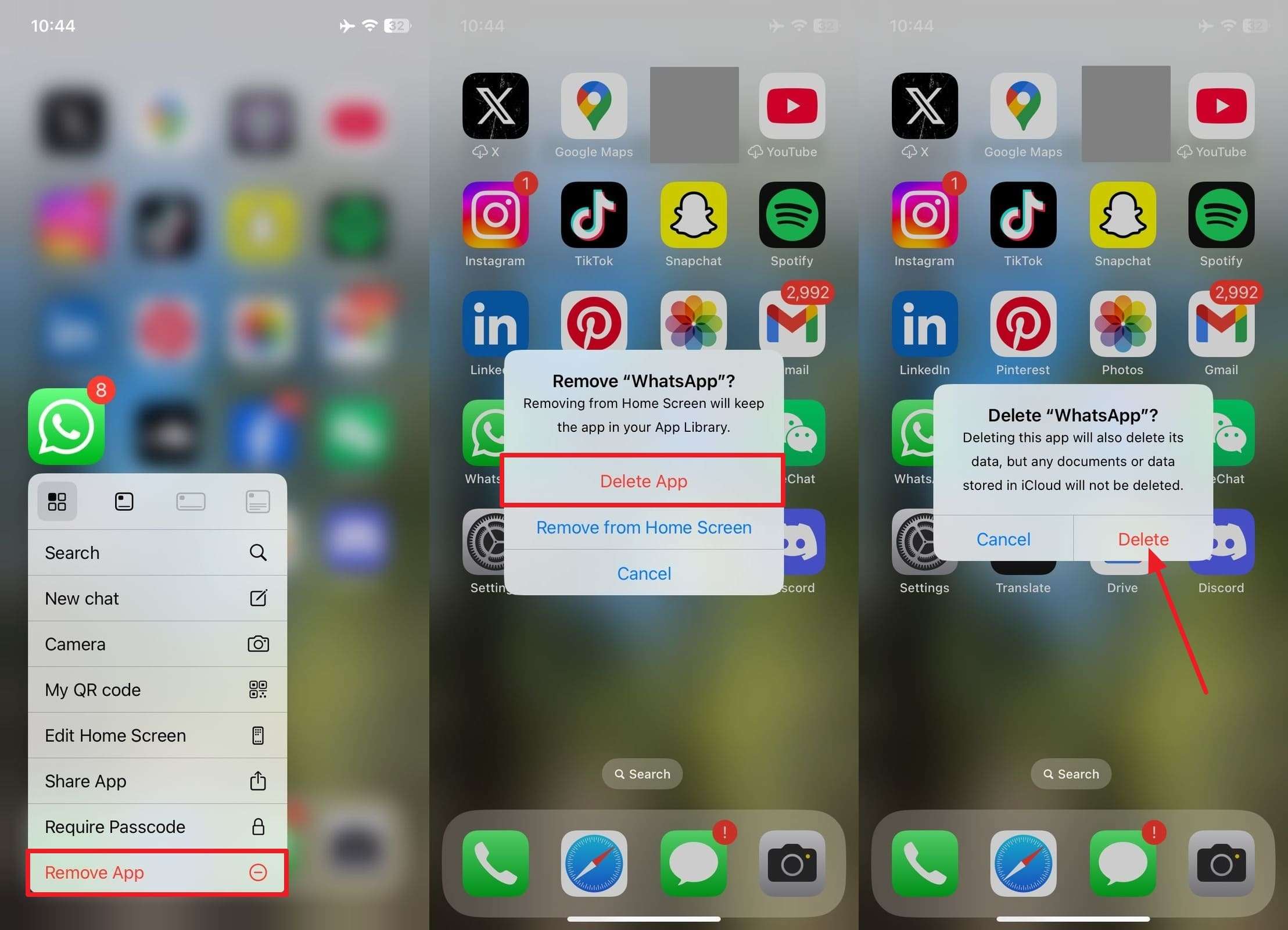
Step 3 Eradicate the Existing Corrupted or Empty App Instance
Once you absolutely confirm the definitive existence of a highly recent, secure cloud backup payload, navigate directly back out to your primary iOS home screen grid to forcefully hold down a long-press strictly on the green application icon until it vigorously jiggles, prompting you to tap the stark red "Remove App" command. Immediately after that contextual menu appears, deliberately select the severe "Delete App" protocol and fiercely confirm your absolute intention to wipe the existing slate clean by tapping the final, destructive "Delete" confirmation prompt.
-
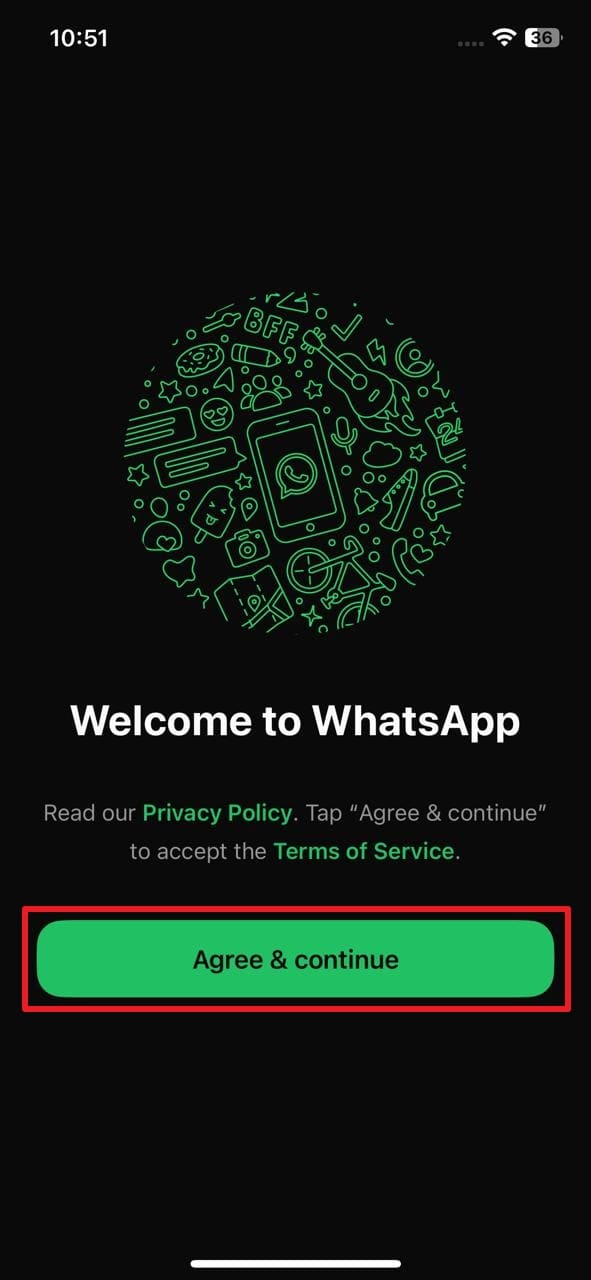
Step 4 Execute a Clean Reinstallation from Apple Servers
When the thorough deletion sequence completely finishes, immediately utilize the official iOS App Store interface, search for the core Messenger client, and tap the recognizable cloud "Get" or download icon to rapidly reinstall a completely fresh, uncorrupted iteration directly onto your mobile hardware. Now that it is safely situated on your device, proceed to initially launch the pristine application by simply selecting the standard "Agree & Continue" onboarding mandate and generously granting all highly required iOS system permissions (especially push notifications and local contact registry access).
-
Step 5 Authenticate Against Apple's Secure Cloud Servers
Following that critical foundational setup phase, you must painstakingly enter your exact mobile phone number—ensuring it is explicitly identical to the highly specific numeric identifier that was actively registered during the exact moment when the target backup was originally compiled—and officially verify it via an incoming SMS numeric code. Shortly afterward, assuming network stability, the intelligent application architecture will automatically interface with Apple's secure servers and flawlessly detect an existing, highly compatible iCloud backup archive firmly linked to your specific user account matrix.
-
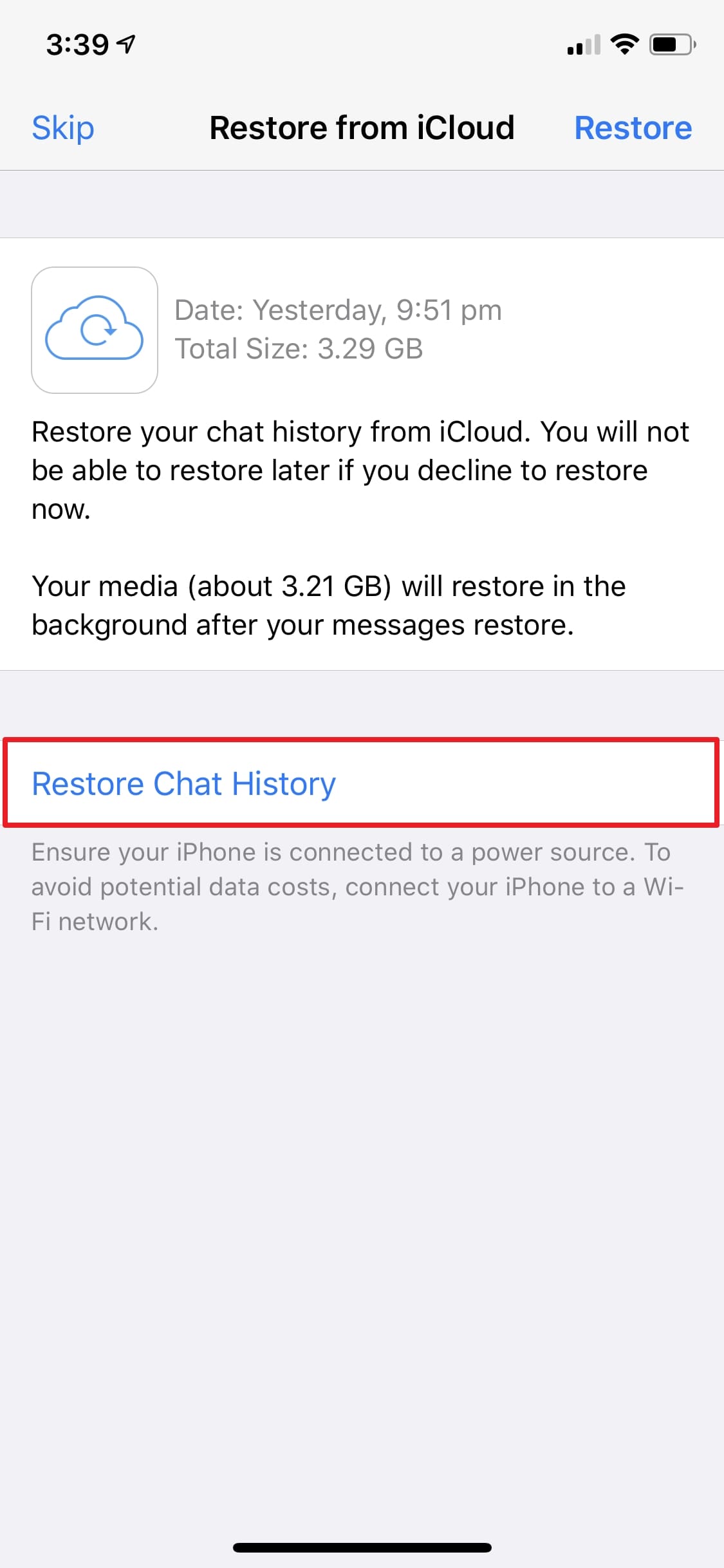
Step 6 Trigger the Final Data Download Sequence
Lastly, confidently tap the prominent "Restore Chat History" interactive prompt immediately when presented on-screen, and patiently wait while the entirety of your dense text messages, voice memos, and rich media assets are sequentially downloaded from the remote iCloud server infrastructure. Once the massive data restoration process reaches 100% complete, swiftly tap the "Next" action button to smoothly continue modifying your user profile and ultimately begin using the fully populated app to joyfully restore your normal, unhindered daily workflow communication.
If an iCloud chat backup does not contain the messages you need, see how to recover deleted WhatsApp messages on iPhone 18 using other available sources, including accessible device data, computer backups, and chats still stored on your previous iPhone.
Conclusion
In comprehensive summary, the sudden, jarring experience of losing access to immensely important, deeply personal communication data can genuinely feel overwhelmingly catastrophic for almost anyone living in the modern digital age. However, as meticulously detailed throughout this extensive 2026 technical guide, there are consistently multiple, highly effective ways to seamlessly bring your fractured conversations, irreplaceable photos, and critical business memories securely back into your immediate possession. Ranging from extracting automated local internal storage backups and pinging massive cloud reservoirs to cleverly utilizing hidden OS notification history logs, possessing a firm, actionable recovery plan can undeniably make all the critical difference between temporary panic and permanent data loss. Each specific method thoroughly outlined above offers a uniquely helpful, deeply tailored solution depending heavily on your precise emergency situation, the specific timing of the loss, and the exact hardware device you operate.
However, when standard protocols fail, choosing to leverage a highly advanced, professional-grade software utility like Dr.Fone - Data Recovery (Android) can undoubtedly prove to be an absolute lifesaver for anyone struggling with how to recover deleted WhatsApp data outside of the traditional cloud safety net. It consistently provides an incredibly intuitive, remarkably easy-to-navigate, and exceptionally reliable pathway to forcibly resurrect your erased chats directly from hardware sectors, even when absolutely no viable backup archive is seemingly available. By carefully equipping yourself with the correct strategic steps and deliberately utilizing the right specialized digital tools, you can firmly stay in absolute control of your digital footprint and ensure your most cherished memories remain protected indefinitely.




FAQ
-
1. Can I recover deleted WhatsApp messages without any backup?
Yes, it is entirely possible to retrieve lost data without a cloud or local backup. When a message is deleted, the file is not instantly erased from the internal storage; the space is simply marked as available for new data. By using specialized third-party software like Dr.Fone - Data Recovery, you can scan these specific memory sectors and extract the raw data, provided it hasn't been overwritten by recent device activity. -
2. Where are local WhatsApp backups stored on my Android phone?
On most Android devices, the platform automatically generates a local archive of your chats every night. These highly encrypted files are typically located deep within your device's internal storage under the directory path: Internal Storage > Android > media > com.whatsapp > WhatsApp > Databases. Accessing this folder allows you to rename older archives and trick the system into restoring an earlier version of your history. -
3. Will restoring an older iCloud backup overwrite my current WhatsApp chats?
Yes, the iCloud restoration process is generally an all-or-nothing procedure for standard users. When you delete the app and trigger a restoration from a previous Apple cloud archive, the incoming data will completely replace and overwrite any active conversations or media currently existing on the application. To avoid losing recent messages, ensure you manually export any crucial new threads before initiating the iCloud rollback. -
4. How long does the Google Drive WhatsApp restoration process typically take?
The total duration required to successfully pull down your data from Google Drive relies heavily on two primary variables: the aggregate gigabyte size of the encrypted backup file and the stability and speed of your active Wi-Fi or cellular connection. While restoring just the text logs is often nearly instantaneous, downloading thousands of high-definition images, extended voice notes, and large video attachments can realistically take anywhere from a few minutes to over an hour.
 Add Wondershare Dr.Fone as a preferred source on Google