
iPhone 16 Black Screen But Still On? 7 Proven Fixes (2026)

Oct 10, 2026 • Filed to: Phone Repair Solutions • Proven solutions
 TL;DR:
A black but responsive iPhone 16 screen is usually caused by an iOS software crash or a depleted battery, and can typically be resolved without data loss by triggering a hardware-level force restart.
● To execute the force restart, quickly press and release Volume Up, then Volume Down, and hold the Side button for 10 to 15 seconds until the Apple logo appears.
● If the display remains unresponsive, putting the device into Recovery Mode via iTunes or Finder using the "Update" option, or utilizing Dr.Fone - System Repair (iOS) under "Standard Repair" mode, addresses deeper firmware corruption while preserving personal data.
● Hardware failures such as dislodged internal flex cables do not respond to software troubleshooting; if resets and 30 minutes of charging with an original Apple 20W USB-C adapter fail to revive the screen, professional display assembly inspection is required.
Ask AI for a summary
 ChatGPT
 Perplexity
 Gemini
 Claude
 Grok
Grok

Has your iPhone 16 black screen issue caught you off guard? A sudden black iPhone screen — where the display goes completely dark while the phone is still on, receiving calls, or playing sound — is one of the most alarming iPhone problems users encounter. Whether you're dealing with an iPhone 16 black screen of death, an iPhone 16 dead screen that won't respond to any input, or an iPhone 16 screen not turning on after a software update, the experience is equally frustrating.
Quick answer: An iPhone 16 black screen is most commonly caused by a drained battery, a software crash, a failed iOS update, a problematic third-party app, or physical damage to the display hardware. In the majority of cases, the fix is a simple force restart — a process that takes under 30 seconds and requires no tools or technical knowledge.
This problem is not limited to one model — the iPhone 16 Pro Max black screen issue has also been widely reported, and similar display problems have even been observed on the iPhone 17 in isolated cases. Regardless of which model is affected, the underlying causes and troubleshooting steps are consistent across the iPhone 16 lineup. In this guide, we'll walk through every cause and provide 7 proven solutions to get your black iPhone screen working again — from quick DIY fixes to a professional system repair with zero data loss.
- Part 1. What Causes the iPhone 16 Black Screen Problem?
- Part 2. How to Fix iPhone 16 Black Screen?
- 2-1. Force Restart Your iPhone
- 2-2. Restore through iTunes
- 2-3. Delete Third-Party Apps
- 2-4. Check Battery Status
- 2-5. Check for Physical Damage

- 2-6. Recommend Method: Use Dr.Fone to Repair iPhone 16 Black Screen
- 2-7. Contact Apple Support
- Part 3. How to Avoid iPhone 16 Black Screen Issue?
Part 1. What Causes the iPhone 16 Black Screen Problem?
Understanding the root cause of your iPhone 16 black screen is essential for choosing the right fix. The black phone screen issue can stem from very different origins — a software crash requires a completely different solution than a hardware failure. Below are the three primary categories of causes behind the iPhone 16 black screen of death, explained in detail so you can diagnose your specific situation before attempting any fix.
1-1. Hardware Issue
Hardware failure is one of the most serious causes of an iPhone 16 Pro Max black screen issue. The iPhone 16 display is connected to the logic board via a series of internal flex cables and connectors. When this connection is disrupted — whether due to an accidental drop, a manufacturing defect, or component aging — the screen loses its signal from the processor and goes permanently dark. In these cases, the phone itself is still running (you may hear notification sounds, feel vibrations from calls, or observe Face ID indicators activating), but the mobile black screen persists because the display assembly can no longer receive or render output. Hardware-related black screens do not respond to force restarts, software updates, or system repair tools. Physical inspection by an Apple-certified technician is required to diagnose and resolve this type of failure.
1-2. Software Glitches
Software glitches are the most common cause of a black on iPhone screen and the easiest to fix. When iOS encounters an unhandled error — such as a memory overflow, a runaway background process, or a failed system call during an app launch — it may cause the display to go black while the device itself continues to operate. This type of iphone went black scenario typically happens after: a failed or interrupted iOS update that left system files in an inconsistent state; installing a third-party app that conflicts with iOS display services; running low on storage, which prevents iOS from completing essential system operations; or an unexpected crash of the SpringBoard (the iOS process responsible for rendering the home screen and display output). Software-caused black screens almost always respond to a force restart, and in more stubborn cases, an iTunes restore or Dr.Fone system repair.
1-3. Battery Problem
A completely drained or severely degraded battery is one of the most straightforward causes of an iPhone 16 dead screen. When the battery level reaches 0%, the iPhone powers off entirely and the display remains dark until the device receives enough charge to restart — typically 5–15 minutes after connecting to a power source. This is a normal behavior and is not the same as the "black screen of death." However, if your iPhone's battery health has degraded significantly (below 80%), the battery may report an incorrect charge level, causing the device to shut down unexpectedly at 20% or even 30%. In these cases, charging the device may not immediately restore the screen, because the degraded battery cannot sustain the power spike required to boot the device. If charging for 30 minutes doesn't bring the screen back, the battery likely needs to be replaced — a service available at any Apple Store or authorized repair provider.
Dr.Fone Unlock Online - Free IMEI Check
iPhone 17 Is Here. Is Your Old Phone Ready to Sell?
Quickly check your iPhone or Android device status for free: Verify Blacklist, iCloud, Carrier Lock, and Warranty Status in Seconds. Ad-free, and globally.
Part 2. How to Fix iPhone 16 Black Screen?
If your iPhone is stuck on a black screen, the fixes below are ordered from least complex to most advanced. For most users, Fix 2-1 (force restart) will resolve the issue in under a minute. If the screen remains dark after the force restart, work through the remaining methods in order. Each fix targets a specific underlying cause — choosing the right one based on your situation will get your iPhone 16 Pro Max screen back from black as quickly as possible.
2-1. Force Restart Your iPhone
A force restart is the first and most effective fix for an iPhone 16 black screen caused by a software crash or frozen system process. Unlike a normal restart — which requires the device to respond to touch input — a force restart uses a hardware button sequence to interrupt the current boot cycle and reload iOS from scratch. This works even when the screen is completely dark and unresponsive. It is safe to perform at any time and does not erase any of your data. Here's how to force restart your iPhone 16:
Step 1: Quickly press and release the Volume Up button.
Step 2: Quickly press and release the Volume Down button.
Step 3: Press and hold the Side (Power) button and continue holding it — do not release when the screen flashes — until the Apple logo appears on screen. This may take 10–15 seconds.

Once the Apple logo appears, release the Side button and allow your iPhone to complete the restart process normally. In most cases, this will fully resolve a software-triggered black mobile screen issue. If the screen remains black after two or three attempts, the cause is likely more serious — continue with the fixes below.
📱 iPhone Frozen? Fix It in 3 Steps – No Data Loss!
Struggling with a frozen iPhone screen? 🤔 Our guide covers 6 common causes, step-by-step fixes for all models (iPhone 6s to iPhone 17), and safe data recovery. 98.6% success rate! ✨
2-2. Restore through iTunes
If the force restart failed to resolve the iPhone 16 black screen of death, the next step is to put the device into Recovery Mode and attempt a restore through iTunes (Windows or macOS Mojave and earlier) or Finder (macOS Catalina and later). This method addresses deeper software issues — such as corrupted firmware, failed iOS updates, or persistent system crashes — that a simple restart cannot fix. Recovery Mode allows iTunes to communicate directly with your iPhone's bootloader, bypassing the broken iOS layer entirely. Use the "Update" option first, as it attempts to reinstall iOS without erasing your personal data. Only use "Restore" as a last resort, as it performs a full factory reset.
Step 1: Quickly press and release the Volume Up button.
Step 2: Quickly press and release the Volume Down button.
Step 3: Press and hold the Side button. Keep holding it even after the screen goes dark, until "Connect to iTunes" (a cable-and-computer icon) appears on your screen — this confirms your device has entered Recovery Mode.

Step 4: On your computer, iTunes (or Finder on Mac) will detect your iPhone in Recovery Mode and display a prompt. Click "Update" to attempt a firmware reinstall without data loss. Wait for iTunes to download the necessary iOS firmware — this typically takes 5–15 minutes depending on your internet speed.

Step 5: After the update completes, your iPhone will restart automatically. Check whether the iphone screen black issue is resolved. If the screen is still black and the device remains unresponsive, repeat the process and choose "Restore" this time to perform a clean reinstall of iOS.
Note: The "Update" option attempts to preserve your data during the iOS reinstall. However, if you proceed with "Restore," all data on the device will be erased. Ensure you have a recent iCloud or iTunes backup before using the Restore option to fix the iPhone 16 black screen.
2-3. Delete Third-Party Apps
Some third-party apps — particularly those with extensive background permissions, always-on location access, or aggressive display management — can cause the iPhone 16 black screen problem by crashing iOS display services or consuming so much RAM that the system forcibly kills the display process. Apps downloaded from outside the App Store (via enterprise certificates) carry an even higher risk, as they bypass Apple's app review process entirely. If the black iPhone screen issue started immediately after installing a specific app, that app is likely the cause.
Delete an app from your iPhone:
Method 1: Tap and hold the app icon until the context menu appears, then tap "Remove App" and confirm by tapping "Delete App."

Method 2: Tap and hold any app icon until all icons begin to jiggle and the (-) icon appears in the top-left corner of each app. Tap the (-) icon on the app you want to remove and confirm deletion.

After deleting the suspected app, perform a force restart (Fix 2-1) to clear any residual processes. If the screen returns to normal, that app was the cause of your iPhone 16 black screen of death. Going forward, only install apps directly from the Apple App Store to prevent a recurrence.
2-4. Check Battery Status
A dead or severely degraded battery is a common cause of an iPhone 16 dead screen that appears as if the device has completely failed. When the battery is drained to 0%, the iPhone shuts down completely and the screen will not turn on until sufficient charge is restored. Additionally, if the battery health has dropped significantly — a condition that affects all batteries after 500+ charge cycles — the battery may fail to deliver the power surge needed to boot the device, even if it shows a charge percentage. To diagnose and address battery-related black screen issues:
Step 1: Connect your iPhone to its original Apple USB-C charging cable and power adapter. Third-party cables or low-wattage adapters may not provide sufficient current to recover a deeply discharged battery. If possible, use the 20W USB-C Apple adapter for faster recovery.

Step 2: Allow your iPhone to charge for a minimum of 15–30 minutes without attempting to turn it on. A severely depleted battery may take up to 5–10 minutes before the low-battery indicator even appears on screen — this is normal behavior and does not indicate a hardware failure.

Step 3: After 15–30 minutes, press the Side button briefly to attempt to power on the device. If the battery was the cause of the iPhone 16 screen not turning on, the Apple logo should appear, followed by the normal iOS boot sequence.

Note: If 30 minutes of charging doesn't revive the screen, navigate to Settings → Battery → Battery Health & Charging once the device is on to check your battery health percentage. A reading below 80% means the battery's capacity has degraded significantly and replacement is recommended to prevent future occurrences of the iPhone 16 dead screen.
2-5. Check for Physical Damage
Physical damage is the second most common hardware cause of the iPhone 16 Pro Max screen went black issue. Dropping the device — even from a relatively short height onto a hard surface — can dislodge the internal display connectors from the logic board, instantly cutting off the display signal and causing a permanent black screen. Liquid damage is another major culprit: even water-resistant iPhones can sustain internal corrosion if exposed to salt water, cleaning chemicals, or water pressure beyond their rated IP68 depth. Screen pressure damage — caused by sitting on the device or placing heavy objects on top of it — can crack the OLED panel internally without visible external damage, resulting in a black screen with the rest of the phone still functional.
Carefully inspect your iPhone for signs of impact damage (cracked corners or edges), display delamination (visible separation between the screen glass and the body), or liquid damage indicators (visible moisture behind the camera lens or speaker grille). If you suspect internal damage, do not attempt to open the device yourself — unauthorized repairs can void the warranty and cause additional damage. Take your device to an Apple Store or Apple Authorized Service Provider for professional diagnostics. If the issue is confirmed as physical damage to the display assembly, a screen replacement will restore full functionality.
2-6. Recommend Method: Use Dr.Fone to Repair iPhone 16 Black Screen
When the standard fixes — force restart, iTunes restore, and app deletion — have all failed to resolve the iPhone 16 black screen, the most likely remaining cause is deep iOS system file corruption: damaged boot sequence files, a corrupted display daemon, or broken system partition data that iTunes cannot fix without a full factory reset. Dr.Fone - System Repair (iOS) is specifically designed to address this type of issue. It repairs the corrupted iOS system components at the firmware level — without triggering a factory reset — which means all your photos, messages, contacts, and app data remain intact throughout the repair process. It's the recommended solution for any iPhone 16 black screen of death scenario where data preservation is a priority.
Dr.Fone - System Repair (iOS)
Repair iPhone 16 Black Screen Without data loss.
- Only fix your iOS to normal, no data loss at all.
- Fix various iOS system issues stuck in recovery mode, white Apple logo, black screen, looping on start, etc.
- Upgrade and Downgrade iOS without iTunes at all.
- Work for all iPhone/iPad/iPod Touch, running on all iOS versions


Step 1: Download and install the Dr.Fone application on your Windows or Mac computer. Launch it and connect your iPhone 16 (or iPhone 16 Pro Max) to your computer via USB cable.
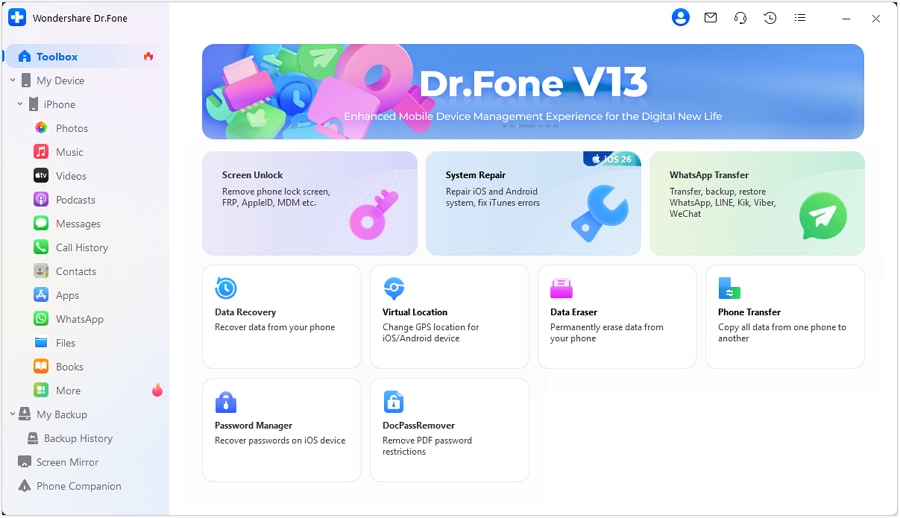
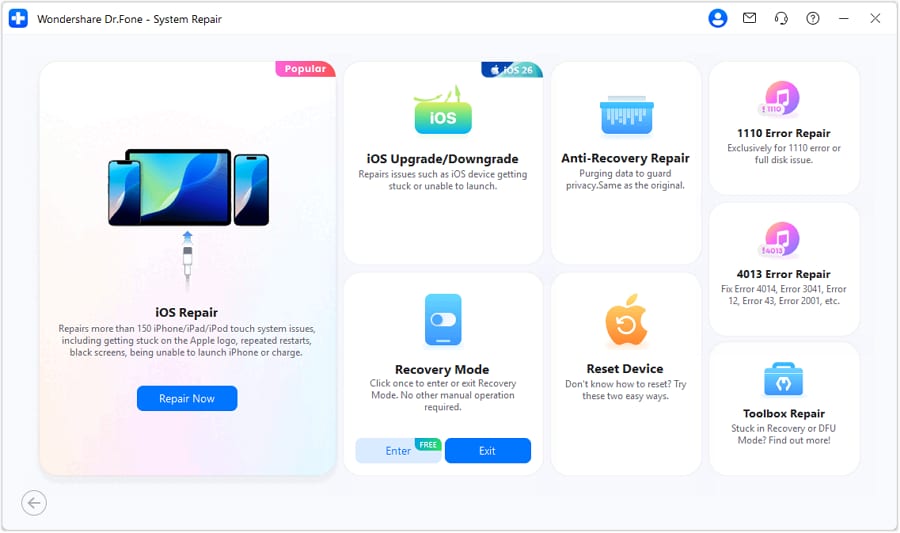
Step 2: From the main Dr.Fone interface, select "iOS Repair" to access the system repair module. Choose "Standard Repair" — this mode fixes iOS system issues including the black iPhone screen without erasing your data. Only use "Deep Repair" if Standard Repair fails, as it performs a more thorough correction that may reset some settings.
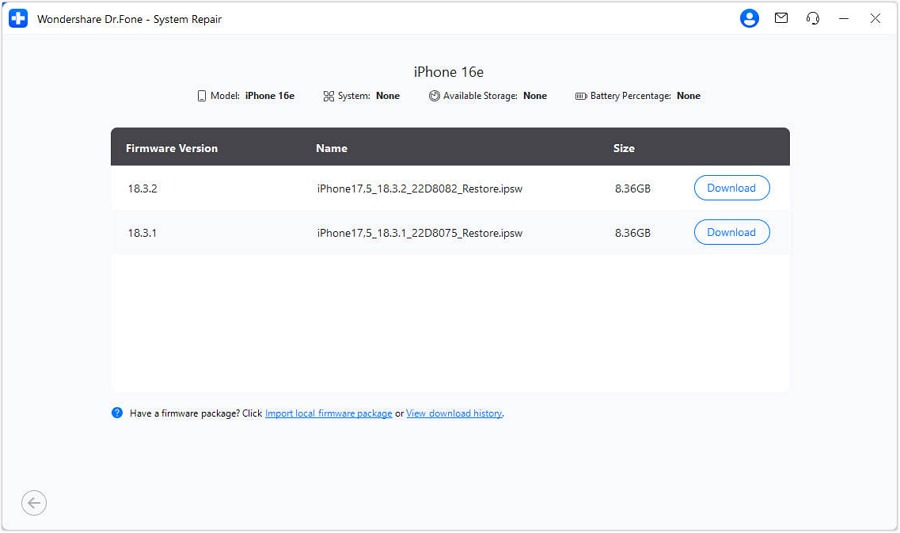
Step 3: Follow the on-screen instructions to put your iPhone into Recovery Mode. Dr.Fone will then scan your device and display a list of available iOS firmware versions. Select the most current version compatible with your iPhone 16 model and click "Download" to begin downloading the firmware package.
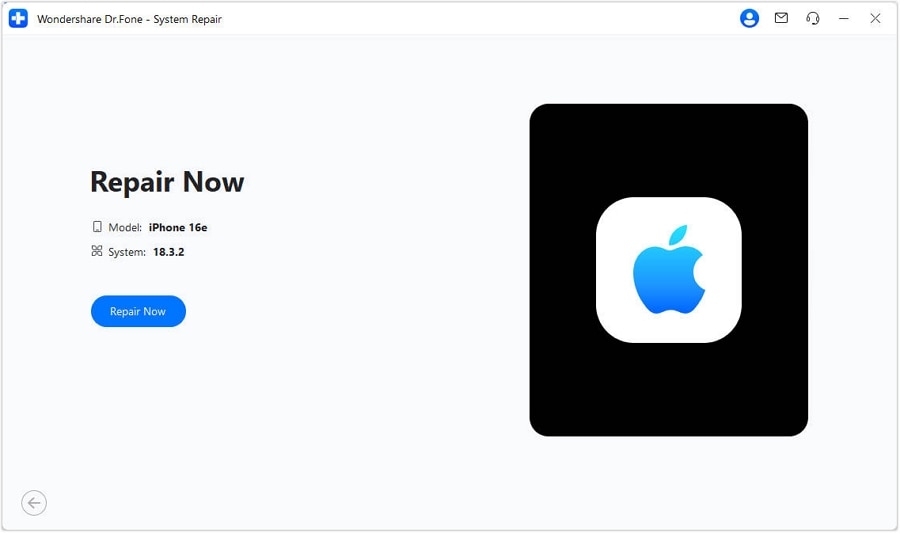
Step 4: Once the firmware downloads and verifies, click "Repair Now" to begin the system repair. Dr.Fone will replace the corrupted iOS system files responsible for the iPhone 16 black screen of death with fresh, verified firmware components. Monitor the progress bar — the repair typically completes in 5–10 minutes. Keep your iPhone connected and do not use the computer for other tasks during the repair.
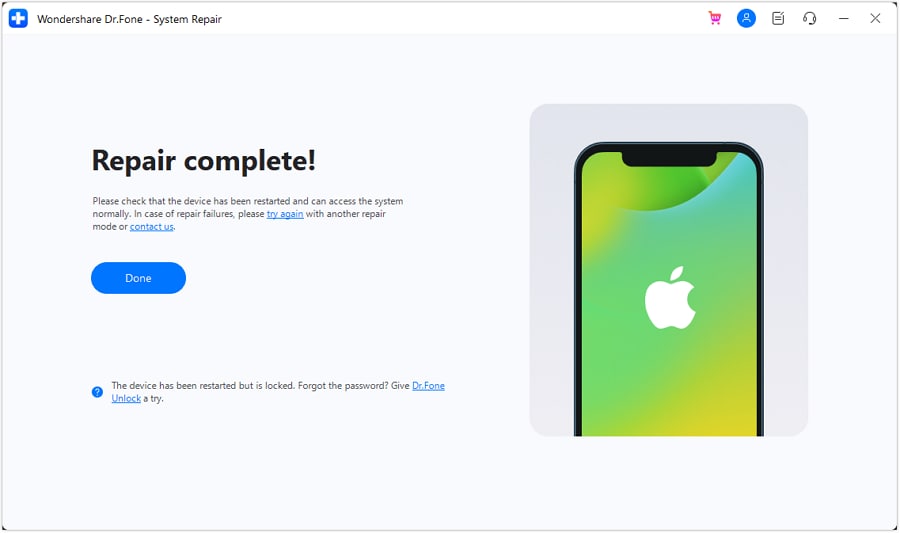
Step 5: When the repair is complete, click "Done." Your iPhone will automatically restart and boot into iOS normally. All your data — photos, contacts, apps, messages — will be preserved exactly as they were before the repair.
2-7. Contact Apple Support
If all seven software-based fixes — force restart, iTunes restore, app deletion, charging, physical inspection, and Dr.Fone system repair — have failed to bring back your iPhone 16 Pro Max black screen, the cause is almost certainly a hardware failure that cannot be addressed through software. This typically means the display assembly, the display connector on the logic board, or the power management IC has been physically damaged and requires professional replacement.
At this point, contact Apple Support or visit the nearest Apple Store or Apple Authorized Service Provider. You can schedule a Genius Bar appointment at apple.com/support or through the Apple Support app. Before you go, check your warranty status: the standard iPhone 16 limited warranty covers manufacturing defects for one year from purchase — display failures not caused by accidental damage are typically covered. If you have AppleCare+, you're entitled to up to two incidents of accidental damage coverage per year at a reduced service fee, which covers cracked screens and other display damage. Note that physical impact damage (cracked screen from a drop) is generally not covered by the standard warranty, but is covered under AppleCare+.
Part 3. How to Avoid iPhone 16 Black Screen Issue?
Prevention is significantly easier than repair. With consistent device maintenance habits, you can dramatically reduce the likelihood of ever encountering the iPhone 16 black screen issue again. The following five practices address the most common root causes of the black screen iPhone problem — covering battery care, software hygiene, physical protection, thermal management, and data backup.
Charge Your Phone Regularly and Correctly:
Avoid letting your iPhone's battery drain to 0% on a regular basis — deep discharge cycles accelerate battery degradation and increase the risk of an iPhone 16 dead screen. Ideally, charge your device before the battery drops below 20%. When charging, always use the original Apple USB-C cable and a compatible Apple-certified power adapter. Third-party cables and chargers that don't support Apple's charging protocols can deliver inconsistent voltage, causing charge cycles to be incomplete and potentially damaging the battery management system over time. Maintaining battery health above 80% is one of the most effective ways to prevent battery-related iphone screen black events.
Keep the iOS Software Updated:
Every iOS update Apple releases includes patches for known bugs, display driver fixes, and system stability improvements. Running an outdated iOS version leaves your iPhone vulnerable to known software glitches that have already been fixed in newer releases — including bugs that cause unexpected iphone went black crashes. Enable automatic updates by going to Settings → General → Software Update → Automatic Updates and turning on both "Download iOS Updates" and "Install iOS Updates." If you prefer to update manually, check for updates at least once a month to stay current with critical security and stability patches.
Handle Your Phone with Care and Use Protective Accessories:
Physical protection is the most direct way to prevent hardware-caused iPhone 16 Pro Max black screen issues. Use a case that covers all four corners of the device — the corners and edges are the most vulnerable points during a drop, as the impact force from those areas can travel directly to the display connector. Add a tempered glass screen protector to distribute impact force across the screen surface rather than concentrating it at one point. Avoid exposing your iPhone to extreme temperatures: leaving it in a hot car (above 35°C) or in freezing conditions (below 0°C) can damage both the OLED display and the battery, increasing the risk of a permanent black iPhone screen.
Prevent Overheating:
The iPhone 16's OLED display and A18 chip generate significant heat during intensive tasks. When the device reaches its thermal threshold (typically around 45°C), iOS automatically throttles performance and may dim or temporarily disable the display to prevent component damage — which can manifest as a black mobile screen during heavy use. To prevent overheating: avoid using the phone while charging for extended gaming or video streaming sessions; remove your phone case when charging rapidly, as cases trap heat; take breaks during processor-intensive tasks; and keep your iPhone out of direct sunlight, especially in warm weather.
Back Up Your Data Regularly:
While a good backup habit won't prevent the iPhone 16 black screen from occurring, it ensures that if a severe fix (such as an iTunes restore or factory reset) becomes necessary, you don't lose any important data. Enable automatic iCloud backups by going to Settings → [Your Name] → iCloud → iCloud Backup → Back Up Now. Alternatively, connect your iPhone to your computer regularly and create a local backup through iTunes or Finder. A recent backup also removes the pressure to avoid data-erasing fixes — if you know your data is safely backed up, you have more flexibility to apply the most effective repair method without hesitation.
Conclusion
An iPhone 16 black screen — whether it's a temporary software crash, an iPhone 16 dead screen caused by battery drain, or a persistent iPhone 16 black screen of death following a failed iOS update — is a solvable problem in the vast majority of cases. The 7 fixes in this guide cover every common scenario, from the 30-second force restart that resolves most software-triggered black iPhone screen incidents, to the Dr.Fone system repair that safely handles deep iOS corruption without erasing your data.
For iPhone 16 Pro Max black screen issues that don't respond to any software fix, hardware inspection at an Apple Store remains the correct final step. To prevent future occurrences, keep your iOS updated, maintain good battery health, use protective accessories, and avoid exposing your device to extreme heat or physical stress. Whether you're dealing with an iphone screen black at startup or an iphone went black during normal use, the solutions above will get your display working again.
 safe & secure
4,624,541 people have downloaded it
FAQs
 Q1: Why is my phone screen black but I can hear it?Q2: Why isn't my iPhone 16 turning on?Q3: Does the iPhone screen go black when updating?Q4: How Do I Fix an iPhone 16 Black Screen That's Still On?


iPhone Issues
- iPhone Storage Full
- 1. Stuck on Apple Logo Storage Full
- 2. Erase Content Settings not Working
- 3. iPhone Lagging
- 4. iPhone Running Slow
- iPhone Update Problems
- 1. Stuck on Updating iCloud Settings
- 2. iPhone Frozen During iOS Update
- 3. iPhone Checking for Update Stuck
- 4. iPhone Cellular Update Failed
- 5. iPhone Software Update Failed
- 6. iPhone Stuck on Update Requested
- 7. iPhone Update Error 1110
- 8. iPhone is Findable and Won’t Turn On
- 9. iPhone Won't Update
- 10. Update Server Couldn't Be Contacted
- 8. iPhone & iPad Security Updates
- 9. Update iPhone with/without iTunes
- 10. Can't Download or Update Apps
- iPhone Media Problems
- 1. Apple Music Song Not Available
- 2. iPhone Not Ringing
- 3. iPhone Echo Problem
- 4. iPhone Ringer Problems
- 5. iPhone Plays Music by Itself
- 6. Ringer Volume Changes by Itself
- 7. Music Won't Play on iPhone
- 8. Blurry Photos & Videos on iPhone
- 9. iPhone Volume Problems
- iPhone Sound Problems
- 1. YouTube no Sound
- 2. iPhone Microphone Problem
- 3. Test iPhone Microphone
- 4. Headphones No Sound from iPhone
- 5. No Sound on iPhone Game
- 6. iPhone Sound Not Working
- 7. iPhone Screen Recording no Sound
- iPhone Calling Problems
- 1. iPhone No Sound on Calls
- 2. Screen Goes Black During Call
- 3. iPhone Recent Calls Not Showing
- 4. iPhone Dropping Calls Issue
- 5. iPhone Calling Problem
- iPhone Camera Problems
- 1. iPhone Camera Black
- 2. iPhone Camera Blurry
- 3. iPhone Camera Not Working
- 4. iPhone Front Camera Not Working
- 5. TrueDepth Camera Not Working
- 6.Out-of-Focus Photos on iPhone 15
- iPhone Network Problems
- 1. Airpods Won't Connect to iPhone
- 2. iPhone Disabled Connect to iTunes
- 3. iPhone Not Syncing Problems
- 4. iPhone Internet Not Working
- 5. iPhone Keep Disconnecting from Wifi
- 6. iPhone WIFI Not Working
- 7. PC Not Recognizing iPhone
- 8. iPhone Stuck on Connect to iTunes
- 9. iPhone Not Showing up in iTunes
- 10. iTunes Not Detecting Your iPhone
- 11. iPhone Bluetooth Disconnect
- 12.Apple CarPlay Keeps Disconnecting
- iPhone Screen Problems
- 1. White Spots in iPhone Screen
- 2. iPhone Bleeding Screen
- 3. Turn Off iPhone When Frozen
- 4. Fix Orange Dot on iPhone
- 5. iPhone Green Screen Flickering
- 6. Green Lines in iPhone Screen
- Other iPhone Problems
- ● Manage/transfer/recover data
- ● Unlock screen/activate/FRP lock
- ● Fix most iOS and Android issues
- Free Download Free Download Free Download




Daisy Raines
staff Editor
Generally rated4.5(105participated)