Fix iOS 18/26 Beta Music Haptics Not Working

Oct 22, 2026 • Filed to: Phone Repair Solutions • Proven solutions
 TL;DR:
Resolve iOS 18 and iOS 26 Beta Music Haptics failures by verifying your hardware and app compatibility, adjusting specific accessibility toggles, and addressing beta firmware glitches through targeted resets or repair tools.
● This feature requires an iPhone 8 or later running at least iOS 18 and functions exclusively within the Apple Music app, completely excluding iPads, third-party services like Spotify, and devices set to Silent or Low Power Mode.
● If the device fails to vibrate or the option is hidden, navigate to Settings > Accessibility to enable Music Haptics, confirm System Haptics is active under Sounds & Haptics, and offload the Apple Music app to clear corrupted cache data.
● For persistent issues caused by corrupted beta firmware installations or failed OTA updates, use Dr.Fone - System Repair (iOS) to reinstall a clean iOS system partition without wiping your personal data.
Ask AI for a summary
 ChatGPT
 Perplexity
 Gemini
 Claude
 Grok
Grok
Music Haptics not working on your iPhone after updating to iOS 18 or iOS 26? You're not alone. Music Haptics is one of the most anticipated accessibility and sensory features introduced in iOS 18, using the iPhone's Taptic Engine to deliver real-time vibrations that sync with the audio playing in Apple Music. When it works correctly, the feature creates a deeply immersive listening experience — but many users have found that iOS 26 haptics not working, or that the option is simply missing from their Accessibility settings. This guide explains exactly why iphone music haptics not working happens and walks you through every fix, from quick restarts to professional iOS repair tools.
Whether you're seeing a "Music Haptics unavailable" message, can't find the toggle in Settings, or the vibration simply stopped after an update, this article covers all seven proven troubleshooting methods. We also introduce Dr.Fone - System Repair (iOS) as the most reliable solution for deeper software-level issues that manual fixes cannot resolve.
- Part 1. What is the Music Haptics feature on the iOS beta?
- Part 2. How to use this new feature?
- Part 3. How can I troubleshoot the issue of Music Haptics not working in iOS 18/26 Beta?
- Method 1: Reboot iPhone
- Method 2. Verify the accessibility settings
- Method 3: Updating the Apple Music app to the most recent version
- Method 4: Remove the cache from Apple Music
- Method 5: Verify the Version of iOS and iPad
- Method 6: Clear all of the settings

- Method 7: Use a specialized tool to fix iOS 18/26 Beta music haptics not working
Part 1. What Is the Music Haptics Feature — and Why Is It Not Working?
Apple Music Haptics is an accessibility-forward feature introduced in iOS 18 that uses the iPhone's built-in Taptic Engine to generate synchronized tactile vibrations as you listen to music in the Apple Music app. Rather than just hearing the beat, your iPhone physically vibrates in time with the audio — replicating rhythms, accents, and musical dynamics through your hands. This creates an entirely new dimension of sensory engagement and is especially valuable for users with hearing impairments who want to feel music rather than just hear it.
Understanding what Music Haptics requires helps explain most cases of music haptics not working or showing as unavailable:
- Supported devices: Music Haptics requires an iPhone with a Taptic Engine — iPhone 8 or later. iPad models do not support this feature, even on iOS/iPadOS 18 or higher.
- Supported iOS version: iOS 18 or later (including iOS 26). If your iPhone is running iOS 17 or earlier, the Music Haptics option will not appear in Accessibility settings at all.
- Supported app: Music Haptics only works within the Apple Music app. It does not function with third-party music apps such as Spotify, YouTube Music, or Tidal, nor with Podcasts, Videos, or other media formats.
- Ring/Silent switch: If your iPhone's physical Ring/Silent switch is set to Silent mode, Music Haptics may be suppressed or significantly reduced.
- Low Power Mode: When Low Power Mode is enabled, the system limits background activities including haptic feedback. This can cause music haptics iphone not working behavior even when the feature is turned on in Settings.
If your device meets all of the above requirements but you're still experiencing music haptics not working iOS 26 or iOS 18 issues, proceed to the troubleshooting methods below. The problem is almost always caused by a software configuration error, an outdated app or OS version, a corrupted cache, or an underlying iOS system glitch that can be fixed with the right steps.
Part 2. How to Turn On Music Haptics on iPhone (Step-by-Step)
If you're not sure whether apple music haptics is enabled on your device, or if you've never set it up before, here is exactly how to turn on Music Haptics on iPhone running iOS 18 or iOS 26. This feature is found inside the Accessibility menu, not the main Sound or Music settings.
Step 1. Open the Settings app on your iPhone.
Step 2. Scroll down and tap on Accessibility.

Step 3. Inside Accessibility, scroll down through the list until you find the Music Haptics option. On iOS 18 and iOS 26, it appears under the "Hearing" or general accessibility section.

Step 4. Tap the toggle next to Music Haptics to switch it on (the toggle should turn green).

Once apple music haptics is enabled, you'll notice a new haptics icon appearing on both the Lock Screen and the "Now Playing" screen inside the Apple Music app. This icon serves as a quick toggle to turn Music Haptics on or off while a song is playing, without needing to return to Settings.
Important note: Some users report that the Music Haptics option disappears from Accessibility settings immediately after navigating away from the menu, or doesn't appear at all. This is a known iOS beta bug. If you're experiencing this, the issue is likely tied to your current iOS version or an underlying system configuration problem. Continue reading to learn how to resolve apple music haptics not working issues with step-by-step troubleshooting methods.
Part 3. How to Fix Music Haptics Not Working in iOS 18/26 — 7 Methods
If music haptics is not working on your iPhone despite being turned on, the issue typically falls into one of three categories: a minor software glitch, an outdated app or iOS version, or a deeper system-level problem. The methods below are ordered from quickest to most thorough. Start with Method 1 and work your way down until the problem is resolved.
Method 1: Reboot Your iPhone
A simple restart is often the most underestimated fix for music haptics not working issues. Many temporary software faults — including feature toggles that fail to apply correctly — are cleared when the iOS system reloads fresh on restart. This should always be your first step before attempting more complex solutions.
Step 1: Press and hold the Side (Power) button and either Volume button simultaneously until the "Slide to Power Off" slider appears on screen.
Step 2: Drag the slider to the right to power off your iPhone completely. Wait at least 30 seconds for the device to shut down fully before restarting.
Step 3: Press and hold the Side button again until the Apple logo appears, then release. Allow the iPhone to fully boot up and try Music Haptics in Apple Music again.

Method 2: Verify the Accessibility Settings for Music Haptics
One of the most common reasons for music haptics iphone not working is simply that the toggle is not enabled in Accessibility settings, or that it was silently disabled after an iOS update or system reset. Before assuming a deeper issue, confirm that the feature is actually turned on.
Step 1: Open Settings and tap Accessibility.
Step 2: Scroll through the Accessibility menu and locate Music Haptics. Verify that the toggle is switched on (green). If it's off, tap it to enable it.

Additionally, check these related settings that can prevent Music Haptics from working even when the toggle is on:
- Go to Settings > Sounds & Haptics and make sure System Haptics is enabled.
- Ensure the physical Ring/Silent switch on the side of your iPhone is set to Ring mode (not Silent).
- Disable Low Power Mode by going to Settings > Battery and toggling it off, as Low Power Mode restricts haptic feedback system-wide.
Method 3: Update the Apple Music App to the Latest Version
The music haptics feature is deeply integrated into the Apple Music app and relies on specific app-level support to function correctly. If you're running an outdated version of Apple Music, the app may not properly communicate with the Taptic Engine or recognize the iOS 18/26 haptics API, resulting in apple music haptics not working even when your iOS version is up to date. Updating the app typically resolves these compatibility issues.
Step 1: Open the App Store on your iPhone.
Step 2: Tap your profile icon in the top-right corner and scroll down to the Available Updates section, or use the Search tab to search for "Apple Music."
Step 3: If an update is available for Apple Music, tap Update to install the latest version. After updating, reopen Apple Music and test Music Haptics again.

Method 4: Clear the Apple Music App Cache
Over time, Apple Music accumulates cached data — temporary files that help the app load content faster. However, cached data can become corrupted, especially after iOS updates or system changes, and this corruption can interfere with features like music haptics. Offloading the app effectively clears its cache while preserving your library and settings, then reinstalling restores it in a clean state.
Step 1: Open Settings > General > iPhone Storage (or iPad Storage). Wait for the app list to load.
Step 2: Scroll down and tap on Music (Apple Music) in the app list.
Step 3: Tap Offload App and confirm when prompted. This removes the app from your device but retains its data and documents.
Step 4: After the offload completes, tap Reinstall App (which appears in the same location) or search for "Apple Music" in the App Store and reinstall it. Open the freshly installed app and check whether music haptics is now working.
Method 5: Verify Your iOS Version and Update if Needed
The Music Haptics feature was introduced exclusively in iOS 18 and is not available on any earlier version of iOS. If your iPhone is running iOS 17 or below, the Music Haptics option will simply not exist in your Accessibility settings — this is not a bug but a version limitation. Similarly, if you're on an early iOS 18 or iOS 26 beta build, a specific build-level bug may be causing ios 26 haptics not working behavior that was later fixed in a subsequent update. Keeping your device on the latest available iOS version resolves the majority of beta-related feature glitches.
Step 1: Go to Settings > General > Software Update. Allow the system to check for available updates.
Step 2: If an update is available, tap Download and Install and follow the on-screen instructions. Ensure your device has at least 50% battery or is connected to a charger before updating. If you are experiencing iOS update errors or installation failures, these must be resolved before Music Haptics can function properly.

Method 6: Reset All Settings on Your iPhone
If none of the above methods have resolved the music haptics not working problem, a misconfigured system setting may be the cause. iOS settings can become corrupted or misconfigured after beta updates, partial system restores, or app conflicts — and a single misaligned setting deep in the accessibility or audio stack can silently disable haptic functionality. Resetting all settings returns every system preference to its factory default without deleting your apps, photos, contacts, or personal data.
What will be reset: Wi-Fi passwords, Bluetooth pairings, VPN configurations, notification preferences, keyboard settings, privacy settings, and all Accessibility settings (including the Music Haptics toggle). You will need to re-enter your Wi-Fi password and reconfigure Accessibility preferences after the reset. Prepare this information before proceeding.
Step 1: Go to Settings > General > Transfer & Reset iPhone.
Step 2: Tap Reset, then select Reset All Settings from the menu.
Step 3: Enter your device passcode if prompted, then confirm the action. The iPhone will apply the reset and restart automatically.

After the restart, go to Settings > Accessibility, re-enable Music Haptics, and re-enable System Haptics under Settings > Sounds & Haptics. Test Apple Music to see if the feature is now functioning.
Method 7: Use a Specialized Tool to Fix iOS 18/26 Music Haptics Not Working
If all six methods above have failed to resolve the music haptics not working issue on iOS 18/26, the root cause is most likely a deep software-level corruption in the iOS system files — something that manual settings changes cannot repair. This type of issue typically originates from a corrupted beta firmware installation, a failed OTA update, or a degraded system partition. In this case, the most effective solution is to use a professional iOS repair tool: Dr.Fone - System Repair (iOS).
Dr.Fone repairs your iPhone's operating system at the firmware level, reinstalling a clean, verified version of iOS without wiping your personal data, apps, or settings. It resolves a wide range of iOS system issues including stuck in recovery mode, white Apple logo, black screen, boot loops, and feature-level glitches like apple music haptics not working.
Dr.Fone - System Repair (iOS)
Fix iOS 18/26 Beta Music Haptics Not Working
- Only fix your iOS to normal, no data loss at all.
- Fix various iOS system issues stuck in recovery mode, white Apple logo, black screen, looping on start, etc.
- Downgrade iOS without iTunes at all.
- Work for all iPhone/iPad/iPod Touch, running on all iOS versions


Here is a step-by-step guide to using Dr.Fone - System Repair (iOS) to fix iOS 18/26 music haptics not working:
Key advantages of Dr.Fone System Repair:
- Zero data loss: Standard Repair mode repairs the system without deleting apps, photos, contacts, or settings.
- Easy to use: The guided interface walks you through every step — no technical knowledge required.
- Fast repair: Most Standard Repair operations complete within 10–15 minutes.
- Broad compatibility: Supports all iPhone models from iPhone 6 through the latest iPhone 16 series, on all iOS versions including iOS 26.
Step 1: Launch Dr.Fone on Your Computer
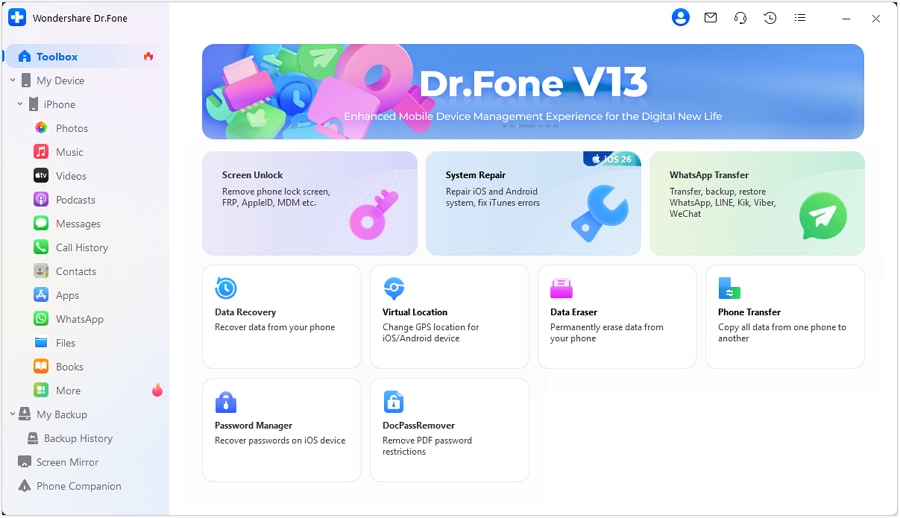
Download and install Wondershare Dr.Fone on your Windows PC or Mac. Launch the program and click on Toolbox from the top-left navigation, then select System Repair from the home screen.
Step 2: Select Your Device Type
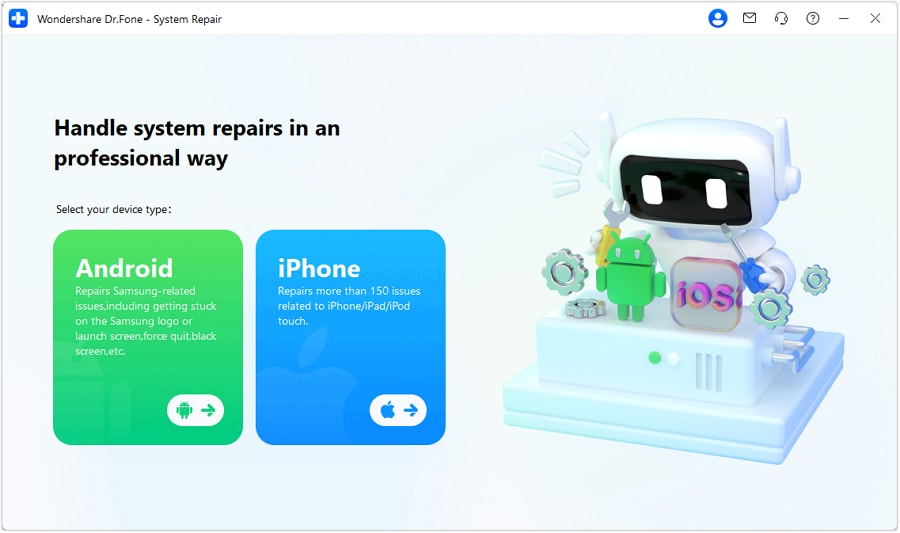
Connect your iPhone to the computer using a USB cable. In the new window that appears, select iOS as your device type to proceed with iOS-specific repair.
Step 3: Choose iOS Repair
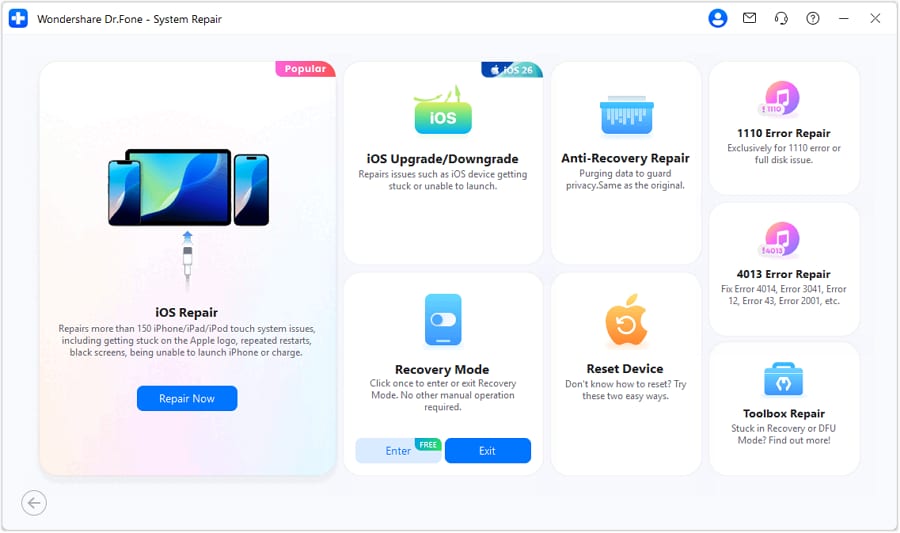
From the repair options displayed, select iOS Repair to enter the iOS system repair workflow.
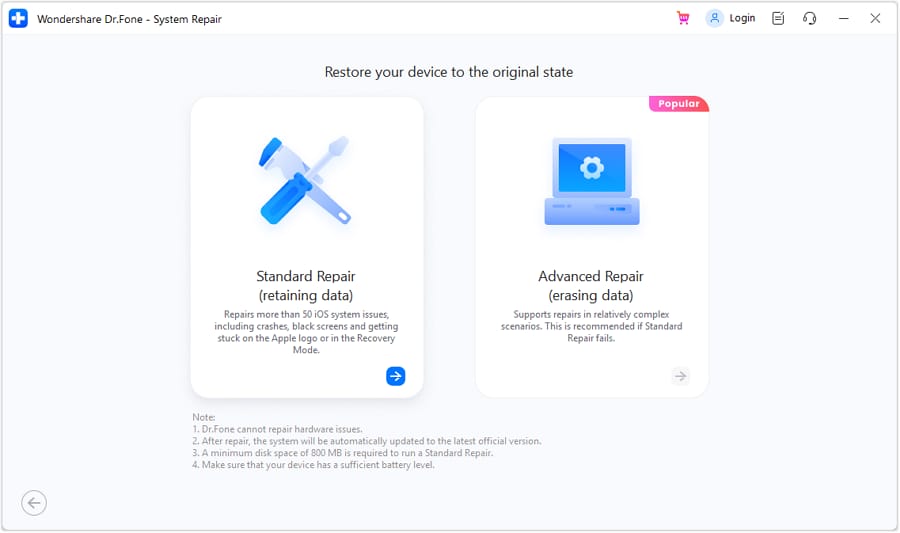
Step 4: Select Standard Repair Mode
Choose Standard Repair from the two available modes. Standard Repair fixes the iOS system while preserving all data on your device. This is the recommended mode for resolving music haptics not working and other feature-level issues.
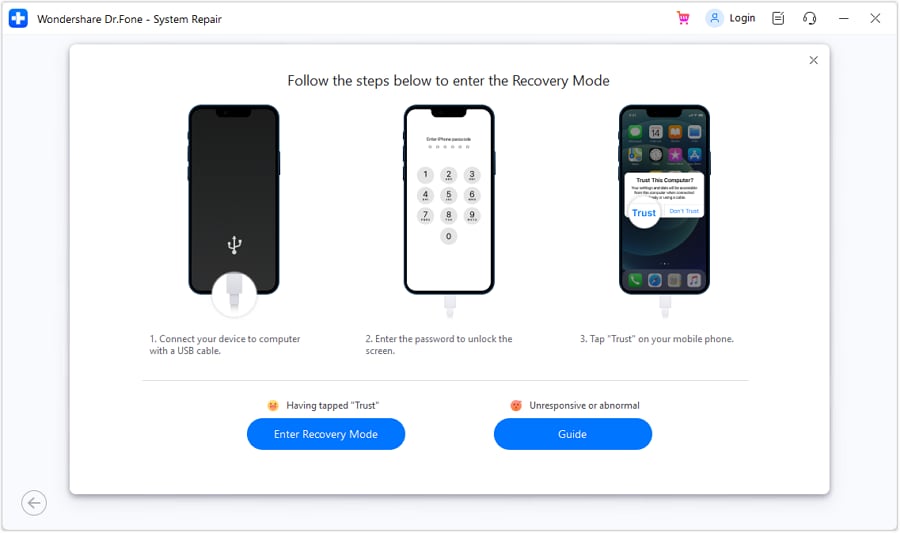
Step 5: Enter Recovery Mode
Follow the on-screen instructions to put your iPhone into Recovery Mode. Dr.Fone provides model-specific button instructions for every iPhone. Once your device is in Recovery Mode, click Enter Recovery Mode to proceed.
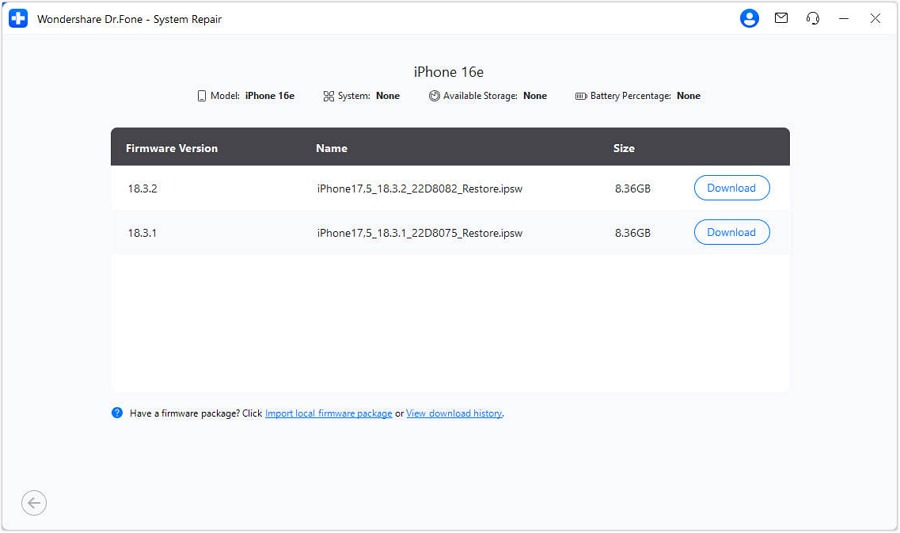
Step 6: Download the Correct iOS Firmware
Dr.Fone automatically identifies your device model and the appropriate iOS firmware version. Click Download to fetch the verified firmware package for your device.
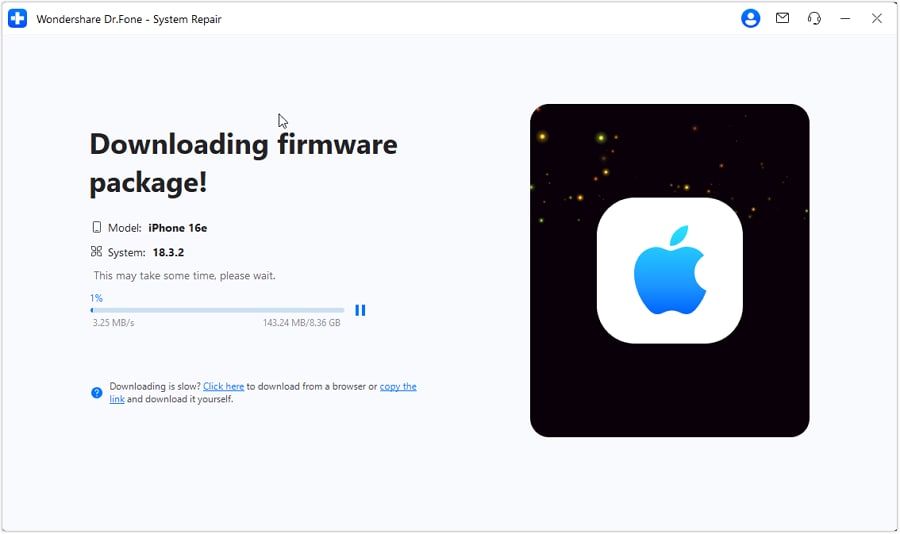
Step 7: Firmware Download in Progress
The platform downloads and verifies the firmware automatically. Keep your device connected and ensure a stable internet connection during this step.
Step 8: Begin the Repair Process
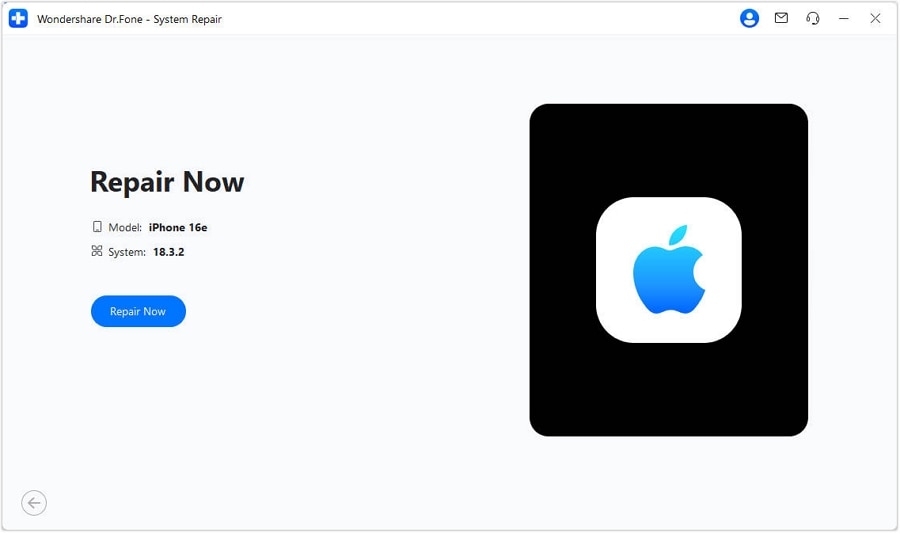
Once firmware verification is complete, click Repair Now to begin installing the repaired iOS firmware onto your device.
Step 9: Monitor the Repair Progress
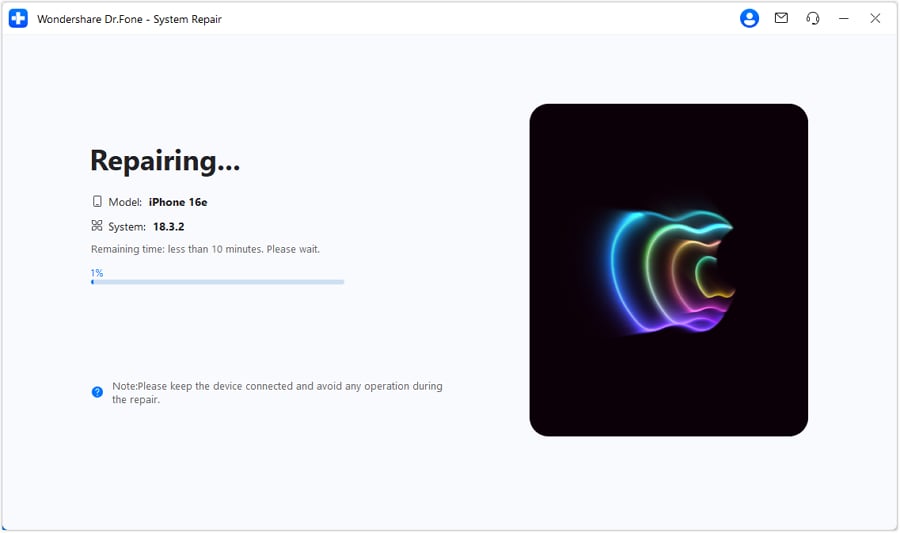
A progress bar displays the status of the repair installation. Keep your iPhone connected throughout — do not disconnect or lock the screen during this phase.
Step 10: Repair Complete — Test Music Haptics
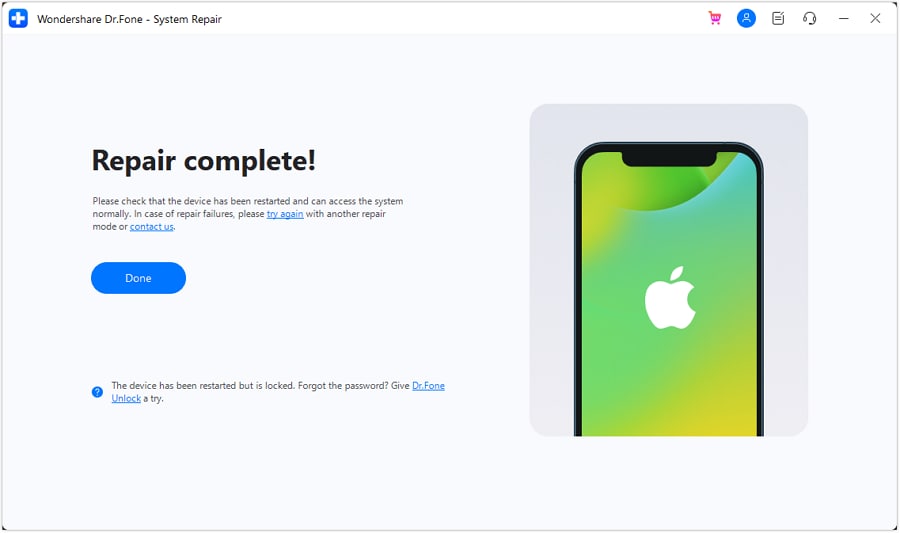
When the repair is complete, click Done. Your iPhone will restart automatically with a clean, repaired iOS installation. Go to Settings > Accessibility, enable Music Haptics, open Apple Music, and confirm that haptic feedback is now functioning correctly.
The Best Solution for iOS 26 Issues
Tips: Dr.Fone - System Repair now enables zero-data-loss solutions for iOS 26 crashes (boot loops/black screen/failed updates) and one-click downgrades to signed versions (e.g. iOS 18.5), completing in 10 minutes. Supports all iPhone models, bypassing iTunes factory reset risks. Downgrades require open Apple signing windows (real-time tool verification). Pre-export critical data when reverting from iOS 26.
 safe & secure
Conclusion
If Music Haptics is not working on your iPhone running iOS 18 or iOS 26, the issue is almost always fixable through one of the seven methods outlined in this guide. Start by confirming that your iPhone model and iOS version actually support the feature (iPhone 8 or later, iOS 18 minimum), then verify the Accessibility toggle and system haptics settings. Quick fixes like restarting your device or updating Apple Music resolve the majority of cases. If the issue persists after a full settings reset, a firmware-level repair via Dr.Fone - System Repair (iOS) is the safest and most comprehensive path to restoring full apple music haptics functionality without data loss.
Recommended action flow:
- Check device & iOS compatibility → Verify Accessibility & System Haptics settings → Restart iPhone.
- If still not working: Update Apple Music → Clear app cache → Update iOS to latest version.
- If still not working: Reset All Settings → Re-enable Music Haptics and System Haptics.
- If issue persists: Use Dr.Fone - System Repair (iOS) for a zero-data-loss firmware repair.
 safe & secure
4,624,541 people have downloaded it
FAQs
 Q1. Why is my Music Haptics not working on iPhone?Q2. How do I turn on Music Haptics on iPhone?Q3. What does "Music Haptics unavailable" mean on iPhone?Q4. Music Haptics stopped working after the iOS 26 update — how do I fix it?


Upgrade & Downgrade
- iOS Beta Install
- 1. Download iOS Beta Profile
- 2. Download the iOS 13 Beta
- 3. iOS 16 Beta Download
- 4. Uninstall iOS Beta
- 5. Install iPhone Beta Profile
- 6. Install Mac Beta Profile
- 7. Install iOS 15 Beta Profile
- 8. Upgrade iPad to iOS 14
- iOS News
- 1. Update iPhone 4s to iOS 9
- 2. Cheaper iPhone
- 3. Customize iPhone Home Screen
- 4. Know About iOS 15 Lock Screen
- 5. Add Lyrics to Song on Apple Music
- 6. Current iOS Version
- 7. Current iOS for iPad
- iPhone Downgrade Tips
- 1. Downgrade iOS Like a Pro
- 2. Roll Back to an Older iOS Version
- 3. Downgrade to iOS 15
- 4. Install Developer Profile
- 5. Downgrade iOS without iTunes
- 6. Downgrade to iOS 14
- iPhone Update Tips
- 1. iPhone & iPad Security Updates
- 2. Undo an Update on iPhone
- 3. Update iPhone with/without iTunes
- 4. Fix iPhone Checking for Update Stuck
- 5. Fix iPad Software Update Failed
- 6. Fix iPhone Stuck On Update
- 7. Fix iPhone Won't Update
- 8. Fix Update Server Not Be Contacted
- 9. Fix iPhone Stuck on Update Requested
- 10. Resolve iPhone Cellular
- 11. Resolve iPhone Error 1110
- 12. Fix iPhone Frozen
- iOS 11/12 Problems
- 1. Fix iPhone Stuck on Waiting
- 2. Fix iPhone Can't Make Calls
- 3. Fix iPhone Stuck on Logo
- 4. Fix Photos Disappeared from iPhone
- 5. Fix iPhone Keeps Freezing
- iOS 13/14 Problems
- 1. Fix Resolve Apps Won't Open
- 2. Fix Song/Playlist Missing
- 3. Fix iPhone Asking for Passcode
- 4. Fix Map Voice Navigation Won't Work
- 5. Fix iMessage Not Working
- 6. Recover Deleted Data on iOS 14
- 7. Recover Disappeared Notes on iOS 14
- iOS 15 Problems
- iOS 16 Problems
- 1. Fix iPhone Wi-Fi Not Working
- 2. Fix iOS 16 Battery Drain Issues
- 3. Fix Screen Mirroring Not Working
- 4. Fix Apple CarPlay is Not Supported
- 5. Fix iPhone Screen Not Responding
- 6. Fix iPhone Apps Keep Crashing
- 7. Fix Call Failed iPhone Issue
- 8. Fix iPhone Stuck On Apple Logo
- 9. Counter iPhone Heating Problems
- 10. Fix iPhone Stuck in Boot Loop
- 11. Fix iPhone Bluetooth Not Working
- iOS 17 Problems
- 1. iPhone Freezing After Update
- 2. iOS 17 Wallpapers Blurry at Top
- 3. Fix iPhone Charging Slow
- 4. Enable Live Activities iOS 17
- 5. Fix iOS 17 Apps Crashing
- 6. Fix iPhone Stuck on Verifying Update
- 7. Overheating after 17 Update
- 8. Fix iOS 17 Keyboard Bug
- 9. Fix iOS 17 Green Screen Issue
- 10. iOS 17 Bugs & Fixes
- 11. No iOS 17 Update on Your iPhone
- 12. iOS 17 Unable to Download
- 13. Missing contacts with iOS 17 update
- iOS 18 Problems
- 1. iOS 18 Black Screen
- 2. iPhone Email Not Working
- 3. iPhone Contacts Disappeared
- 4. iPhone Stuck in Restore Mode
- 5. iPhone Stuck on Preparing Update
- 6. iPhone Flashlight Not Working
- 7. iPhone Bluetooth Issues
- 8. Stuck on Terms and Conditions
- 9. Frozen iPhone iOS 18
- 10. iOS 18 Beta Boot Loop Issue
- 11. iOS 18 Beta Overheating
- 12. iOS 18 Beta Volume Bug
- iOS 26 Topics
- ● Manage/transfer/recover data
- ● Unlock screen/activate/FRP lock
- ● Fix most iOS and Android issues
- Free Download Free Download Free Download



James Davis
staff Editor
Generally rated4.5(105participated)