Move contacts, messages, photos, videos, app data, and more between iOS and Android.

 100% Security Verified | No Subscription Required | No Malware

 :
: 
 ChatGPT
 Perplexity
 Gemini
 Claude
 Grok
Grok
If you are asking why Chinese Android brands feel more innovative, the short answer is that Chinese Android brands often turn hardware ambition into visible user benefits faster than Samsung and Google do. Bigger batteries, faster charging, thinner foldables, more aggressive camera hardware, and more dramatic design updates are easy to notice, easy to compare, and easy to talk about online. Samsung and Google still compete strongly, but they often optimize for stability, broader market support, and software maturity rather than for spec-sheet shock value. That difference in product philosophy is why the gap can feel larger than it may actually be in day-to-day ownership.
In this article
- Why does the innovation gap feel so obvious right now?
- Why do foldables make Chinese Android brands look especially innovative?
- Are Samsung and Google really behind, or just solving different problems?
- How should buyers compare hardware innovation without getting misled?
- How can Dr.Fone Phone Transfer help if you switch brands?

Part 1. Why does the innovation gap feel so obvious right now?
The reason this debate keeps returning is simple: modern phone buyers can spot visible hardware progress instantly. They do not need a benchmark chart to understand a 6,000mAh battery, a 100W charger, a thinner foldable body, or a more ambitious camera module. In contrast, they often need more time to feel the value of better software tuning, cleaner update policies, or stronger long-term support. That is why conversations about whether Samsung and Google are "falling behind" often center on hardware first, even when software still matters a lot in actual ownership.
The original Reddit discussion behind this topic reflected that exact frustration. Users were not only saying that Samsung or Google were "bad." The more specific complaint was that Chinese brands seemed willing to push harder on things enthusiasts can see and feel: larger batteries, faster charging, better foldable packaging, stronger zoom hardware, and more dramatic industrial design. Some commenters defended Samsung by pointing to One UI, ecosystem maturity, and the reality that many mainstream users care more about software comfort than hardware experimentation. But the emotional center of the thread was still hardware momentum.
A useful way to think about this is that innovation in smartphones has two layers. The first layer is visible innovation: battery, charging, foldables, cameras, weight, thickness, brightness. The second layer is ownership innovation: reliability, update consistency, system integration, warranty comfort, and ecosystem behavior. Chinese Android brands often win the first layer more dramatically. Samsung and Google often defend the second. That difference is at the heart of why Chinese Android brands feel more innovative in public discussion.
To see why, compare a few official spec signals.
| Device | Official battery / charging signal | Design / hardware signal | Why it affects the innovation debate |
|---|---|---|---|
| OnePlus 13 | 6,000mAh, 80W SUPERVOOC, up to 100W with compatible adapter, 50W AIRVOOC | very aggressive flagship battery and charging profile | easy to read as "this brand is pushing harder" |
| OPPO Find X8 | 5,630mAh, 80W SUPERVOOC, 50W AIRVOOC | triple 50MP camera system in a slim body | combines battery, camera, and design ambition |
| Pixel 9 Pro | 4,700mAh typical, up to 55% in about 30 minutes with Google 45W charger | balanced, less aggressive spec profile | shows Google's more measured hardware priorities |
Even if a buyer never reads a review, that table already tells a story. OnePlus and OPPO are trying to impress immediately with bigger numbers and more aggressive packaging. Google is clearly pursuing a more controlled flagship balance. Samsung often lands closer to Google's side of the spectrum in recent enthusiast debates, which is one reason the complaint about stagnation keeps resurfacing.
Part 2. Why do foldables make Chinese Android brands look especially innovative?
Foldables make the difference feel sharper because foldables are where design philosophy becomes visible at a glance. In a traditional slab phone, the gap between "safe iteration" and "aggressive engineering" can be subtle. In a foldable, it is much easier to see:
- crease depth and visibility
- folded thickness
- unfolded thinness
- hinge quality
- weight
- battery size
- charging speed
- camera compromise level
That is why the Shane Craig discussion around foldables landed so strongly. His main argument was not that Chinese brands are perfect. In fact, he noted that software does not always match the level of the hardware. But his thesis was clear: on foldable hardware, some Chinese OEMs currently look ahead of the phones most U.S. buyers are used to seeing from Samsung and Google.
The HONOR Magic V3 is the clearest official example in this set. It lists a 5,150mAh typical battery, 66W wired charging, 50W wireless charging, a folded thickness of 9.2mm, an unfolded thickness of 4.35mm, and a weight of about 226g. That combination makes the innovation argument easy to understand. The product is not just "using better marketing." It is demonstrating why battery density, thinness, and foldable engineering matter together.
This was also where the Reddit thread became more concrete. Users pointed to rival foldables that combine larger batteries, much faster charging, better zoom hardware, brighter displays, and less obvious crease trade-offs than Samsung's foldable lineup. Whether every comparison is perfectly fair across all regions and price bands is less important than the deeper point: the community is not inventing the perception out of thin air. There are enough visible hardware examples to keep the complaint alive.
A realistic conclusion is that Chinese brands currently look more innovative in foldables because they are more willing to take engineering risks where consumers can see the result immediately. That does not guarantee they make the best total device for every buyer. It does mean the perception is grounded in real hardware choices, not just brand fandom.
Part 3. Are Samsung and Google really behind, or just solving different problems?
The most honest answer is that they are behind in some visible categories, but not behind in every category that matters.
They often look behind in:
- charging speed
- battery size relative to device size
- foldable packaging
- visible camera ambition
- aggressive industrial design choices
They often look stronger or safer in:
- global software predictability
- ecosystem familiarity
- Western market support
- mainstream user confidence
- long-term "it just works" ownership
That is why this topic gets polarized. Enthusiasts who care about visible hardware are often correct to say Chinese Android brands feel more innovative. Mainstream buyers are often equally correct to say Samsung or Pixel devices feel easier to own.
Another way to put it is this: Chinese brands are often optimizing for product excitement, while Samsung and Google are often optimizing for ownership confidence. Neither goal is irrational. But they create very different impressions in public conversation.
There is also the question of scale. A company shipping broadly across more markets, more carriers, and more support environments usually has less room for risky hardware experimentation. A phone maker can have excellent engineers and still choose slower adoption curves because it is managing larger operational exposure. That is one reason bigger global brands may appear more conservative than faster-moving Chinese competitors.
Google's hardware priorities also differ in a specific way. The Pixel 9 Pro page makes it clear that Google is still emphasizing battery reliability, fast-enough charging, wireless charging convenience, and battery-sharing ecosystem behavior rather than a race for the biggest battery number or fastest charging headline. That may not win enthusiast debates, but it reflects a coherent product strategy.
So when people ask why Chinese Android brands feel more innovative, the answer should not be "because Samsung and Google stopped trying." A better answer is that Chinese brands are currently better at producing visible hardware differentiation, while Samsung and Google often prefer less dramatic but more operationally predictable product decisions.
Part 4. How should buyers compare hardware innovation without getting misled?
A buyer who wants to use this debate intelligently should not ask only, "Who has the biggest numbers?" A better approach is to use a practical comparison framework.
-
Step 1 Compare the daily-use hardware
Look first at battery size, charging speed, weight, thickness, camera configuration, and crease or hinge quality on foldables. These are the categories where visible innovation tends to matter most.
-
Step 2 Ask whether the innovation improves your actual life
A 100W charger is meaningful if you often charge in short bursts. A slimmer foldable matters if you dislike bulky foldables. A larger battery matters if battery anxiety shapes how you use your phone.
-
Step 3 Separate excitement from maintenance
Some innovations are impressive in week one. Others are valuable in year two. The best buying decisions usually weigh both.
-
Step 4 Check whether you are comparing the whole ownership model
Software stability, ecosystem fit, and data migration convenience matter more than many enthusiasts admit.
A good real-world test case here is the user who is happy to trade some ecosystem predictability for clearly better foldable hardware or charging speed. Another real-world case is the buyer who sees the hardware advantage but still stays with Samsung because they know exactly how the ecosystem fits their life. Both are rational decisions.
Part 5. How can Dr.Fone Phone Transfer help if you switch brands?
Many readers searching why Chinese Android brands feel more innovative are not browsing casually. They are evaluating whether it is finally worth moving from Samsung or Pixel to another Android flagship. That's where Dr.Fone - Phone Transfer comes in — it helps you switch without losing data.
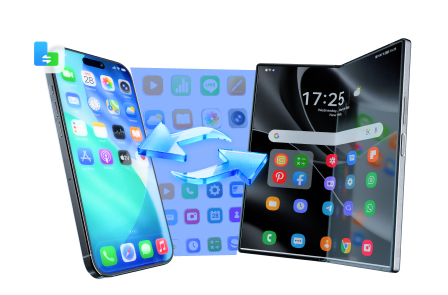
 Move data between iOS to Android and vice versa.
- Transfer contacts, SMS, photos, videos, music, and more types.
- Available with all phones with Android and iOS versions.
- Simple, click-through process.
-
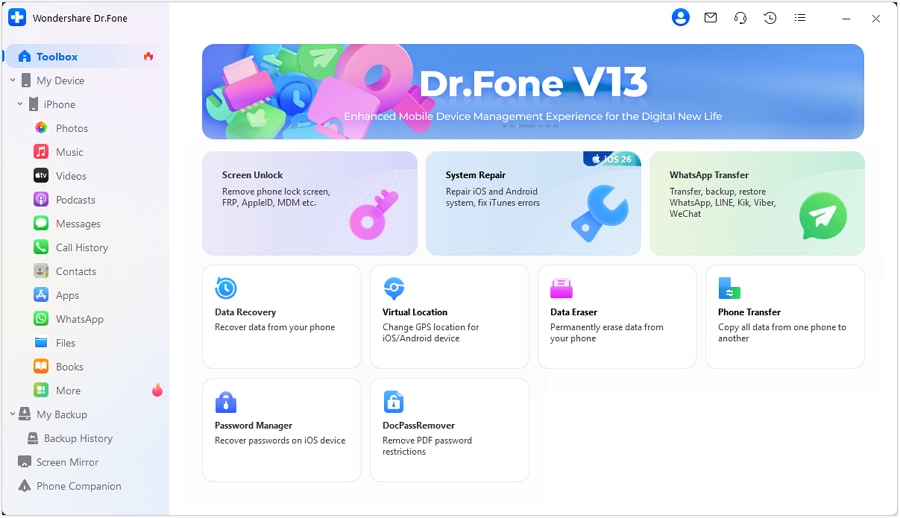
Step 1 Open Dr.Fone on your computer
-
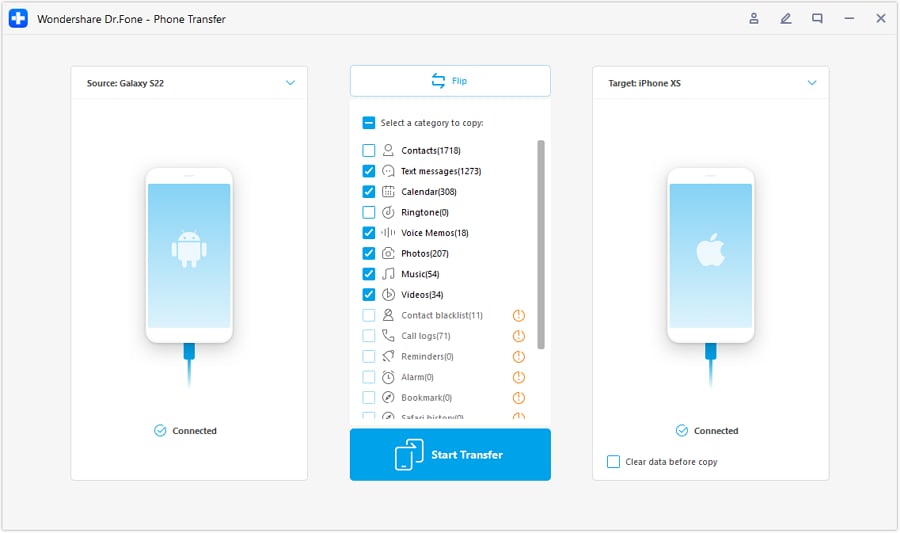
Step 2 Connect both your old phone and your new phone
-
Step 3 Choose Phone Transfer and select the content to migrate

-
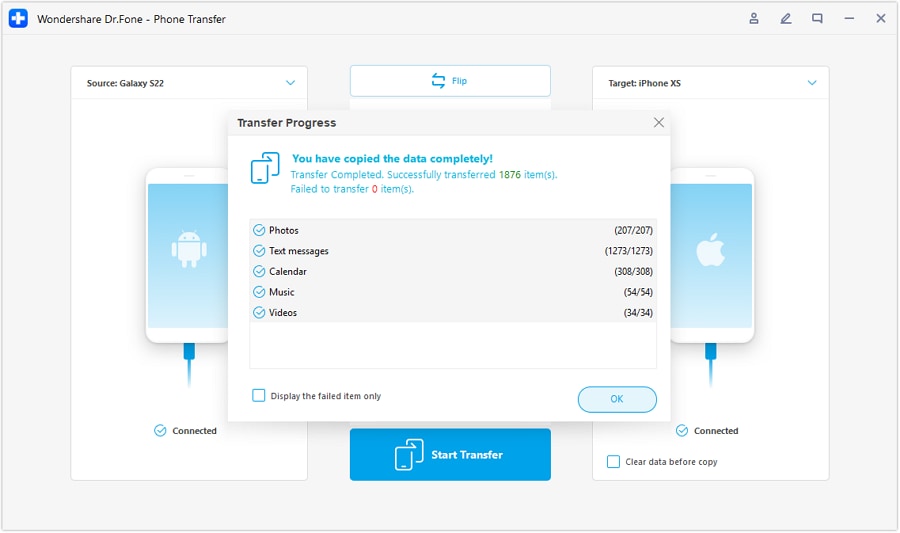
Step 4 Start the transfer and let the move finish before you begin setting up the new device




Conclusion
The best answer to why Chinese Android brands feel more innovative is that they are currently better at turning engineering ambition into visible, persuasive hardware changes. Bigger batteries, faster charging, thinner foldables, and more dramatic packaging make innovation legible in a way that software polish rarely does. Samsung and Google are not irrelevant, and they are not necessarily behind in every area that matters. But in the hardware categories enthusiasts talk about most loudly, Chinese brands often look more daring right now.
If this comparison is pushing you toward a device switch, Dr.Fone - Phone Transfer is the most practical Dr.Fone recommendation to reduce migration friction and make the move less disruptive.
FAQ
-
1. Why do Chinese Android brands feel more innovative than Samsung?
Because they often deliver more visible hardware changes, especially in charging, battery packaging, foldables, and cameras. -
2. Are Samsung and Google really falling behind?
In some visible hardware categories, they can appear behind. In software polish, ecosystem behavior, and mainstream ownership comfort, they can still be highly competitive. -
3. Do Chinese Android brands always make better phones?
No. They often make more visually ambitious hardware, but the better phone depends on what matters most to you. -
4. Why do foldables make the innovation gap easier to notice?
Because foldables reveal thickness, crease quality, battery packaging, and hinge design immediately.
 Add Wondershare Dr.Fone as a preferred source on Google