Move contacts, messages, photos, videos, app data, and more between iOS and Android.

 100% Security Verified | No Subscription Required | No Malware

 :
: 
 ChatGPT
 Perplexity
 Gemini
 Claude
 Grok
Grok

Does anyone else feel stuck between iPhone and Android?
A Reddit User
If you have ever switched from iPhone to Android, loved it for a week, then started missing iOS, you are not alone. And if you have ever moved back to iPhone only to feel bored again a month later, you are also not alone.
A huge number of smartphone users feel stuck between iPhone and Android because each platform solves a different problem. iPhone feels polished, predictable, and easy to trust. Android feels flexible, exciting, and full of possibility. One gives you consistency. The other gives you freedom. That tension is exactly what many users described in Reddit discussions about being unable to settle on one ecosystem. This is why choosing between iPhone and Android is harder than it looks. It is not just about specs. It is about personality, habits, priorities, and tolerance for trade-offs. The good news is that you do not need a perfect phone. You only need the right compromise for the way you actually live.
This is why choosing between iPhone and Android is harder than it looks. It is not just about specs. It is about personality, habits, priorities, and tolerance for trade-offs.
The good news is that you do not need a perfect phone. You only need the right compromise for the way you actually live.
In this article
- Part 1. Why People Feel Torn Between iPhone and Android
- Part 2. The Core Trade-Off: Polish vs Freedom
- Part 3. App Quality and Daily Smoothness
- Part 4. Customization and User Control
- Part 5. Ecosystem Lock-In Is Real
- Part 6. Notifications, Multitasking, and Productivity
- Part 7. Are You Choosing a Phone or Chasing Novelty?
- Part 8. How to Actually Choose Between iPhone and Android
- Part 9. The Best Choice for Most People
- Part 10. Is There a Wrong Choice?
- Part 11. Final Thoughts: Stop Looking for the Perfect Platform
Part 1. Why People Feel Torn Between iPhone and Android
At first glance, the comparison seems simple. iPhone is supposed to be smooth and beginner-friendly. Android is supposed to be customizable and innovative. But real users know the choice is more complicated than that.
What makes iPhone attractive is not usually one killer feature. It is the feeling of stability. Apps tend to be more consistent. The interface feels controlled. Accessories are easy to find. If you use other Apple devices, everything works together in a way that feels almost invisible.
What makes Android attractive is the opposite. It gives you room. You can personalize more, manage files more freely, choose from more hardware designs, use different launchers, and often enjoy features before they arrive on iPhone. For people who like control, Android can feel alive in a way iPhone does not.
So why do users get stuck? Because after living with one side, they start missing the strengths of the other.
Part 2. The Core Trade-Off: Polish vs Freedom
The biggest difference between iPhone and Android is not hardware. It is philosophy.
Apple’s approach is controlled. It aims to reduce friction by limiting variation. This creates a cleaner experience, but it also means less flexibility. You get fewer decisions to make, but also fewer ways to customize your device.
Android’s approach is broader. It gives users more options across brands, price points, settings, and behaviors. That flexibility is powerful, but it can also create inconsistency. Depending on the brand and software skin, the experience can range from elegant to messy.
This is why some users describe iPhone as “boring but reliable” and Android as “exciting but imperfect.” Neither description is entirely fair, but both contain truth.
If you want your phone to fade into the background and just work, iPhone often feels better. If you want your phone to behave exactly how you want, Android usually wins.
Part 3. App Quality and Daily Smoothness
One of the strongest arguments for iPhone is app optimization. Many users feel that apps on iOS are smoother, cleaner, and more consistent. This is especially noticeable in social apps, camera-heavy apps, and services where developers prioritize iPhone first.
There are practical reasons for this. Apple controls the hardware and software environment more tightly, which makes it easier for developers to optimize performance across devices.
On Android, the story depends more on the device manufacturer and app developer. High-end Android phones can feel amazing, but the experience may vary more across apps. Small bugs, visual inconsistencies, and background behavior can be more noticeable.
If your top priority is a dependable, cohesive daily experience, iPhone has a strong advantage. If your top priority is capability and choice, Android may still feel more rewarding despite the rough edges.
Part 4. Customization and User Control
This is where Android continues to stand out.
If you care about launchers, widgets, side-loading, emulators, file freedom, deeper default app choices, and more open workflows, Android remains the more empowering platform. For users who enjoy shaping their devices around their habits, Android can feel dramatically better.
This is also why power users often get restless on iPhone. iOS may be efficient, but it rarely feels adventurous. You can customize parts of the experience, but not to the same depth. The system still pushes you toward Apple’s idea of simplicity.
That is not always bad. Many people do not want to tweak everything. But if customization is part of your enjoyment, iPhone can start to feel restrictive over time.
Part 5. Ecosystem Lock-In Is Real
A major reason people stay with iPhone, even when they admire Android hardware, is the Apple ecosystem. Once you are using iMessage, FaceTime, AirDrop, Apple Watch, iCloud Photos, AirPods, and a MacBook, leaving becomes less about changing phones and more about breaking a whole system of habits.
This does not mean Apple users are trapped. It means the ecosystem creates convenience that is hard to give up. And convenience is one of the most powerful forms of loyalty.
By contrast, Android often plays better with broader services and mixed-device setups. If you prefer cross-platform tools, cloud-first workflows, or non-Apple laptops and tablets, Android may feel more natural.
So the question is not only “Which phone is better?” It is also “Which ecosystem costs me less friction every day?”
Moving between ecosystems doesn’t have to mean losing your photos, messages, contacts, apps, or settings. Tools like Dr.Fone - Phone Transfer make it effortless to transfer data between Android and iPhone in minutes — whether you’re going from Samsung to iPhone 15, or back from iOS to a Pixel.
 Move data between iOS to Android and vice versa.
- Transfer contacts, SMS, photos, videos, music, and more types.
- Available with all phones with Android and iOS versions.
- Simple, click-through process.
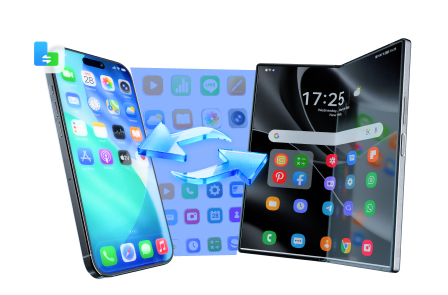
With a simple interface and support for over 8000 device models, Dr.Fone’s Phone Switch lets you bring your entire digital life with you — no matter which platform you choose. It’s especially helpful if you’re still undecided and want to try both without losing data.
In other words, You don’t have to fear the switch anymore. That freedom can actually help you make a more confident decision — because now, changing your mind isn’t a setback. It’s just part of the process.




Part 6. Notifications, Multitasking, and Productivity
A common complaint from people who move to iPhone is that Android still handles certain productivity features better. Notification management, multitasking, split-screen behavior, and file access are often mentioned as areas where Android feels more mature or more practical.
If you use your phone as a mini-computer, Android can be a better tool. It often makes power workflows feel less constrained.
But if your day-to-day use is mostly messages, camera, payments, maps, music, email, and social apps, iPhone may be more than enough. In fact, for users who do not need advanced workflows, the simplicity of iPhone can actually increase satisfaction because there is less to manage.
This is why your own usage pattern matters more than internet debates.
Part 7. Are You Choosing a Phone or Chasing Novelty?
One reason people keep switching between iPhone and Android is that they are not actually dissatisfied. They are just bored.
This is more common than many people admit. A new operating system feels refreshing because it changes your routine. New gestures, new menus, new widgets, and new hardware create stimulation. But novelty wears off. Once it does, you are left with the reality of the platform.
That reality is where your true preference shows up.
If after the excitement fades you still value openness, Android is probably right for you. If after the novelty fades you mostly want stability, iPhone is probably the better fit.
It helps to ask: am I solving a problem, or am I chasing a different feeling?
Part 8. How to Actually Choose Between iPhone and Android
Instead of debating every feature, make the decision based on five practical categories.
-
Step 1 What Frustrates You More?
Do you hate bugs, inconsistency, and rough edges? Choose iPhone. Do you hate restrictions and limited control? Choose Android.
-
Step 2 What Devices Do You Already Use?
If your laptop, tablet, earbuds, and smartwatch already fit one ecosystem, that matters. Convenience compounds.
-
Step 3 What Kind of User Are You?
If you want a phone that disappears into your life, go with iPhone. If you enjoy tweaking, experimenting, and pushing your device further, Android may suit you better.
-
Step 4 What Features Do You Use Weekly?
Not theoretical features. Real ones. File transfers, multitasking, camera tools, messaging apps, wearable integration, default apps, or desktop sync.
-
Step 5 Are You Prone to FOMO?
If you constantly switch because the other platform looks more exciting online, the issue may not be the phone. It may be decision fatigue.
Part 9. The Best Choice for Most People
For most mainstream users, the best choice is the platform that creates the fewest daily annoyances.
That is usually more important than innovation. More important than forums. More important than brand identity. More important than what tech enthusiasts say. A great phone is not the one with the longest feature list. It is the one that fits naturally into your day.
If your life revolves around reliable messaging, social apps, accessories, consistent cameras, and a polished feel, iPhone is likely the better choice.
If you care deeply about customization, flexible workflows, hardware variety, side-loading, and control, Android is probably the stronger option.
The right answer is not universal. It is contextual.
Part 10. Is There a Wrong Choice?
Not really.
Both iPhone and Android are mature platforms. Both can serve most users well. The real mistake is choosing based on someone else’s priorities instead of your own.
A lot of people stay stuck between iPhone and Android because they keep asking which platform is objectively better. That question usually goes nowhere. A better question is this: Which phone makes my everyday life easier, calmer, and more enjoyable?
That question is much more useful because it forces you to think in terms of experience rather than ideology.
Part 11. Final Thoughts: Stop Looking for the Perfect Platform
If you feel stuck between iPhone and Android, that probably means you can see the strengths of both. That is not a bad thing. It means you are paying attention.
But eventually, you have to stop searching for the perfect platform and start choosing the better fit. Choose iPhone if you value:
- smoothness
- consistency
- app optimization
- ecosystem convenience
- low-maintenance daily use
Choose Android if you value:
- customization
- flexibility
- multitasking
- hardware innovation
- user control

With a simple interface and support for over 8000 device models, Dr.Fone - Phone Transfer lets you bring your entire digital life with you — no matter which platform you choose. It’s especially helpful if you’re still undecided and want to try both without losing data.
In other words, you don’t have to fear the switch anymore. That freedom can actually help you make a more confident decision — because now, changing your mind isn’t a setback. It’s just part of the process.
 Add Wondershare Dr.Fone as a preferred source on Google