Transfer WhatsApp Swiftly between iOS and Android.

 100% Security Verified | No Subscription Required | No Malware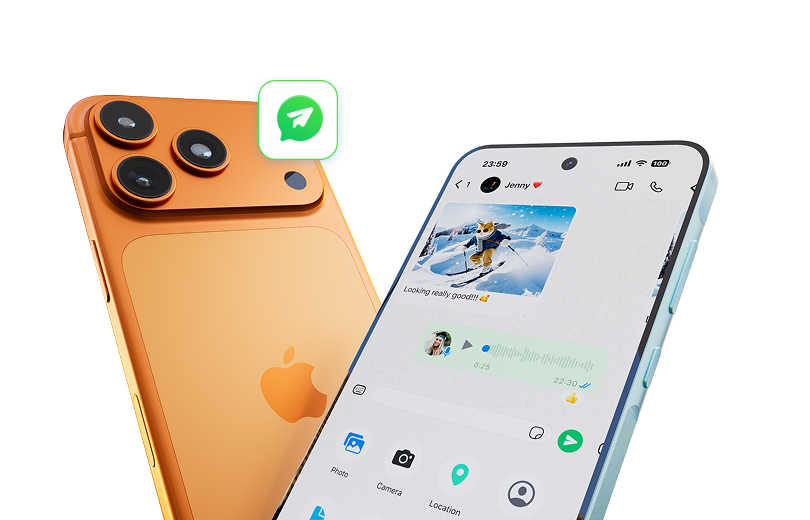

 :
: 
 ChatGPT
 Perplexity
 Gemini
 Claude
 Grok
Grok
Galaxy Z Fold 8 Accessory Buzz: Why Foldable Upgrade Interest Should Start With a Full Data-Transfer Checklist matters now because fresh galaxy z fold 8 chatter is another reminder that foldable upgrade traffic is really transfer traffic in disguise.
In this article
Galaxy Z Fold 8 Accessory Buzz: Why Foldable Upgrade Interest Should Start With a Full Data-Transfer Checklist is drawing attention because fresh galaxy z fold 8 chatter is another reminder that foldable upgrade traffic is really transfer traffic in disguise. That makes it worth pausing before reacting, especially when mobile phones and related connected devices hold data that is expensive to lose or awkward to rebuild. Headlines move fast, but data recovery does not always move at the same speed, which is why a brief verification step can matter more than a quick reaction.
When users search for Galaxy Z Fold 8 transfer data from old phone, the practical task is usually galaxy z fold 8 transfer data from old phone. Search interest alone does not tell anyone what to back up, what to verify, or which step is safe to skip. That gap between headline urgency and personal urgency is exactly where most avoidable mistakes begin, because people tend to act before they check. A structured checklist helps close that gap without turning a simple moment into a project.
This article focuses on what mobile phones and related connected devices users should verify before a major change, why the most common shortcuts create real risk, and how to connect the situation to a safer workflow. That includes photos, chats, app data, downloads, settings, account access, and it matters because platform-native backup, transfer, and feature behavior can vary by device, account state, region, and rollout stage. The goal is not to make users overly cautious; it is to help them make one or two smarter checks before they commit to a change that is harder to reverse.
If you have already seen this story circulating, it is worth remembering that the shared concern is general, but your exposure is specific. Your device model, OS version, account setup, and backup history all influence what is actually at risk. The next sections break that down in a more practical way so you can decide what deserves attention first.
Galaxy Z Fold 8 transfer data from
Interest in Galaxy Z Fold 8 transfer data from old phone tends to spike when a headline makes a change sound immediate, urgent, or unusually disruptive. That attention is understandable, but it also creates a familiar problem: people start reacting to the trend before they understand their own exposure. The result is a wave of searches that looks urgent on the outside but remains vague on the inside, because most users still do not know which data categories are actually affected.
But headline urgency is not the same as personal urgency. The wider search trend does not tell anyone whether their specific device, account setup, or data layout is actually exposed. That distinction matters because the emotional pressure to act quickly is strongest exactly when users know the least about their own backup status. The smarter move is to slow down long enough to check the basics.
For mobile phones and related connected devices, the relevant question is narrower: what exactly does this change affect, and which photos, chats, app data, downloads, settings, account access might become harder to recover if action is taken too soon. Answering that question does not require deep technical knowledge. It usually takes only a few minutes to check backup freshness, account coverage, and offline access — and those few minutes often save hours of avoidable recovery work.
Users who approach Galaxy Z Fold 8 transfer data from old phone as a verification task — not a panic task — usually make fewer mistakes. They ask narrower questions, check fewer assumptions, and avoid the common trap of treating a trending search as proof that something has already gone wrong. A calm, structured approach almost always produces better results than a fast, headline-driven one.
Before moving on to the specific risks, it is also worth noting that some users will already have recent, verified backups in place. If that is the case, the risk is lower. But "lower" is not the same as "zero," and that is why a quick review of what the backup actually covers is still worth doing. Even a small coverage gap can become a significant problem if it affects photos, chats, app data, downloads, settings, account access that are hard to replace.
Galaxy Z Fold 8 Accessory Buzz: Why
The main practical risk is not the change itself but the assumptions people make around it. Most problems in this category do not start with a technical failure. They start with a skipped check, an unverified backup, or an overconfident click through a default setup path. Those shortcuts feel harmless in the moment, but they become expensive when the missing data turns out to be the part that mattered most.
First: backup freshness is assumed instead of verified. A lot of users assume their last backup still covers the important photos, chats, app data, downloads, settings, account access without checking freshness, completeness, or whether the right account is actually synced. Backups that felt complete last week may no longer cover app data, chat histories, or downloaded files after a system change. That gap is easy to miss and hard to fix after the fact, especially when the original setup has already been altered.
Second: users switch, clean, or reset devices before app-level checks are done. People often move from headline to action faster than they move from headline to verification, which is where avoidable data gaps appear. The pressure to act quickly is real, but it usually benefits the platform more than the user. Taking a few minutes to verify coverage is almost always better than rushing into a change that may need undoing later.
Third: message, media, or account continuity is judged from UI changes instead of actual data coverage. Whether the concern is photos, chats, downloads, or account access, users frequently treat visible UI changes as proof that data is safe — even when the actual coverage has not been confirmed. A new icon, a settings toggle, or a confirmation screen can feel reassuring, but none of those things are a substitute for checking whether the data is actually backed up.
If any of those patterns show up, the likely downside is straightforward: important data, account access, or continuity signals become harder to recover after a device action that could have been delayed.. The article will not promise universal recovery success or claim a platform feature fully replaces backup or migration checks.
One additional factor makes this worse: the people most likely to skip verification are often the same people who rely most heavily on the affected data. That includes chat histories, personal photos, downloaded documents, and app-specific settings that take time to rebuild. The less replaceable the data, the more a brief check matters — and the more expensive a mistake becomes.
Galaxy Z Fold 8 Accessory checklist before
A safer workflow starts with the simplest useful check: identify which photos, chats, app data, downloads, settings, account access matter most and confirm they are actually covered. That sounds obvious, but the reason so many people skip it is that the default setup path rarely forces this question. Most users only discover the gap after something has already changed, which is exactly the wrong time to find out what was not protected.
That means checking backup recency, account alignment, offline access, and whether the current setup really covers the scenario that matters. These steps are dull, but they are far more valuable than guessing. A quick look at the most recent backup timestamp, the synced account, and the included data categories usually reveals whether the coverage is real or assumed. If the last backup is older than you expected, that alone is a useful signal.
For anyone still researching Galaxy Z Fold 8 transfer data from old phone, this is a good moment to compare the default backup path against what the actual risk scenario requires. Not every backup covers every category, and not every sync setting behaves the same way across devices. Checking the details now is almost always faster than rebuilding something later.
Only after that verification should users move on to setup, update, cleanup, reset, or device switching. Skipping straight to the action is usually where the avoidable problems begin. The goal is not to delay every change indefinitely; it is to make sure the most important data is protected before the window for easy recovery closes.
If the search path started from Galaxy Z Fold 8 transfer data from old phone, it is worth treating this as a structured preparation moment rather than a quick fix. Users who slow down at this stage usually save themselves time later, because they catch coverage gaps while recovery is still simple. Users who speed through it tend to discover the problem only after the data has become harder to reach.
One more practical note: even users who already have a backup habit benefit from a brief cross-check. Settings change. Accounts drift. Sync behavior updates after OS patches. A five-minute review before a major device move is one of the lowest-cost, highest-value steps a user can take, and it applies to nearly every scenario covered by this topic.
Dr.Fone for WhatsApp Recovery
Dr.Fone fits here through WhatsApp Transfer, because the real problem is not abstract interest in the headline but a continuity problem with practical consequences. Users dealing with this kind of change usually need a tool that reduces uncertainty quickly, not one that adds another layer of complexity to an already stressful moment.
The product fit is legitimate because the user need is concrete continuity control before a higher-risk device change. The strongest use case is not "install another app for the sake of it" but "make sure the most important data is protected before the risk window opens." When the workflow is structured that way, the tool becomes a practical safeguard rather than an optional extra.
In practical terms, that means the product is most useful when it helps users reduce uncertainty before a bigger device move — not as a generic add-on to the story. For mobile phones and related connected devices users, this can mean verifying that the right photos, chats, app data, downloads, settings, account access are actually included, checking that the backup path is complete, and confirming that recovery options are available if something does not go as planned.
For users who are about to galaxy z fold 8 transfer data from old phone, WhatsApp Transfer offers a way to reduce the most common failure points before they become recovery work. The value is not in the feature list itself but in how the tool handles the specific gaps that backup freshness is assumed instead of verified and users switch, clean, or reset devices before app-level checks are done create. When the workflow starts with verification, the tool becomes part of a more reliable process.
If you are comparing options, look for a solution that supports the specific photos, chats, app data, downloads, settings, account access you care about most, offers clear recovery paths, and does not require a complicated setup just to get the basics covered. The best tool is the one that makes a structured, low-risk workflow easy to follow — especially when the stakes involve data that is difficult or impossible to rebuild.
Ultimately, the strongest argument for WhatsApp Transfer in this scenario is simplicity under pressure. When the headline feels urgent and the data matters, users need a clear path forward, not a longer list of unknowns. A focused, structured approach — verify first, act second — is what keeps the risk manageable.
Galaxy Z Fold 8 Accessory Buzz: Why Foldable Upgrade Interest Should Start With a Full Data-Transfer Checklist is most useful when it pushes users to verify what matters before they make a bigger device change. That means checking photos, chats, app data, downloads, settings, account access first, then deciding whether the risk of moving too fast is worth it. Headlines will keep moving, but your data recovery options are much better when you act from a position of information rather than a position of urgency.
For users who are searching for Galaxy Z Fold 8 transfer data from old phone, the most practical takeaway is simple: verify the backup, check the coverage, and only then proceed with the change. That is less exciting than a headline, but it is far more reliable. And when the data matters, reliability is usually worth more than speed.

Dr.Fone
Protect important chats and media before resets, upgrades, or cross-device moves get stressful.
WhatsApp continuity with less guesswork
A natural fit when the real user fear is chat history, media coverage, and restore confidence.
Conclusion
Galaxy Z Fold 8 Accessory Buzz: Why Foldable Upgrade Interest Should Start With a Full Data-Transfer Checklist is most useful when it helps users verify what matters before a bigger device action turns into recovery work.
FAQ
-
Why is this topic relevant now?
Because fresh galaxy z fold 8 chatter is another reminder that foldable upgrade traffic is really transfer traffic in disguise.
-
What should users verify first?
Users should start with the data categories most exposed here: photos, chats, app data, downloads, settings, account access.
-
What should they avoid doing too early?
making a harder-to-reverse device decision before backup, transfer, or continuity checks are finished
-
Where does Dr.Fone fit?
The product fit is legitimate because the user need is concrete continuity control before a higher-risk device change.
 Add Wondershare Dr.Fone as a preferred source on Google