Teleport your device anywhere instantly with one click.


 100% Security Verified | No Subscription Required | No Malware

 :

 ChatGPT
 Perplexity
 Gemini
 Claude
 Grok
Changing a location sent in Viber does not always require changing your phone's GPS. You can manage location attachments in a chat and use a map picker to send a selected point. A separate device-level simulation tool is relevant only when you need to test the coordinates supplied by a supported phone, not merely share a meeting place.
This 2026 guide separates those tasks and explains the limits of each. The source's claim that Viber cannot adjust a shared map position is too broad: the location picker can allow map adjustment. Likewise, attaching location to a message is not automatically a continuous background tracking feed. Review the recipient, current interface and permissions before sending anything sensitive, and disclose simulated positions during a demonstration.
In this article
Part 1. Understand Viber's Message Location and Map Sharing
Viber supports sharing a map location inside a conversation, which is useful when arranging a meeting or identifying a place. A recipient can open that shared point, but it should not be treated as independent proof that the sender is physically there. Selecting a destination and reporting the phone's current position are related but distinct actions.
The source also describes Attach location always, a conversation control that attaches a location to messages where available. That is different from continuously transmitting every movement. Do not assume it is enabled by default on every installation, or that its absence means the app has no location permission. Inspect the particular chat and your phone's settings instead.
For privacy, review both layers: who receives a location in the conversation, and whether Viber may access the operating system's location service. Turning off automatic attachments does not retract coordinates already sent to a recipient. If you have concerns about unwanted access, use the app and device privacy controls rather than relying on an invented GPS point to hide all traces.

Part 2. Turn Chat Location Attachments On or Off
Start with the conversation whose messages you want to manage. The following three-step sequence preserves the source workflow, but menu names and navigation can vary across platforms and releases. The screenshots are examples of the interface shown in the original article, not evidence that every current build uses an identical layout.
Step 1 Select the intended conversation
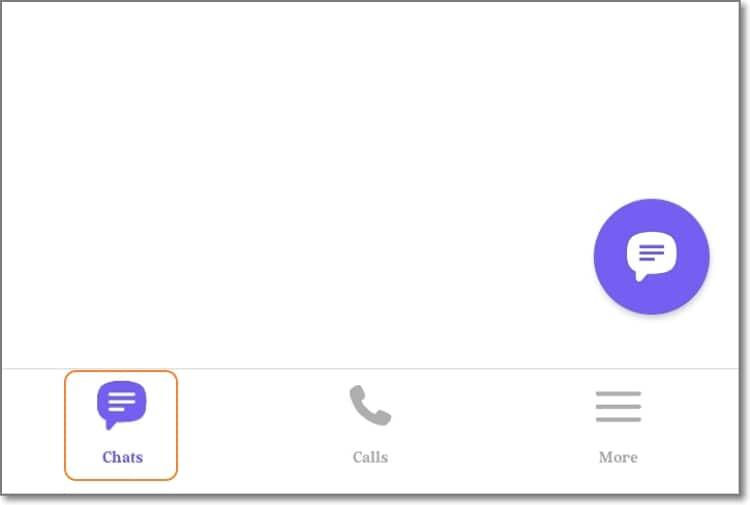
Open Viber on your own phone, go to Chats and open the relevant person or group. Check the recipient carefully: a group conversation may expose a shared place to more people than you expect.
Step 2 Find the conversation information
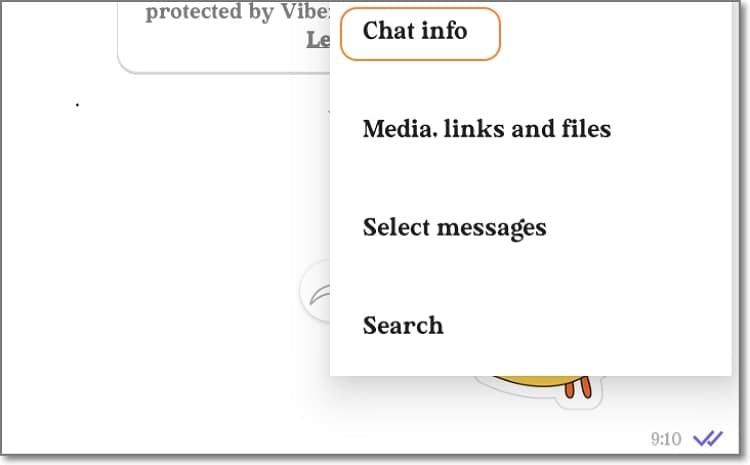
Use the chat information control provided by your app. In the source interface this is reached through the three-dot menu and Chat Info; some versions expose information through the chat header or a swipe. Follow the controls you actually see instead of expecting a single gesture to work everywhere.
Step 3 Review automatic attachment behavior
If Attach location always appears, switch it off to stop adding location to subsequent messages in that chat, or enable it only when you intend that behavior. Read the setting label and state rather than relying on a particular switch color. If the option is not present, inspect the current app's help and permissions instead of assuming location is automatically being broadcast.

To send one map point: open the chat's attachment controls, commonly the plus button, choose Location, and inspect the map. Where supported, expand it and drag to the desired place, then review the point before choosing Send. Older builds may show Share Location among additional options. Tell the recipient whether the point is your current position, a meeting place or a fictional example.
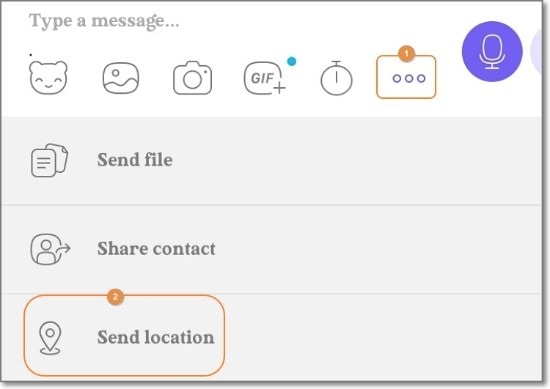
If you want Viber to have no access to device coordinates, review its location permission in Android app permissions or iPhone Location Services. Restricting that permission can disable features that need a location fix. It does not erase the content of existing messages or make your account anonymous.
Part 3. Test a Different Device Position for Viber
 Set your map route to simulate GPS movement.
- Set your wanted movement speed.
- HD and large map view to check location.
- Fake GPS location to anywhere.
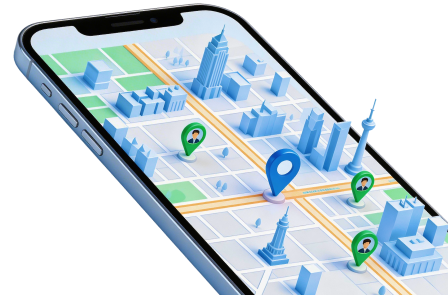
Dr.Fone - Virtual Location offers a desktop map for choosing simulated coordinates on a supported connected iPhone or Android phone. This is a different task from moving Viber's shared map pin. Consider it for an authorized demonstration of how an app responds to device location, not as a prerequisite for sending an ordinary destination.
Teleport mode selects one position, while route controls can simulate movement between points at a selected speed. Compatibility depends on the phone, system release and app. There is no basis to promise that every Viber build will accept the result or that contacts cannot recognize a simulation. Changing reported GPS is not a method for secretly monitoring somebody else or bypassing their account access.
The inherited video illustrates the general location-tool workflow. It should be read alongside the current product requirements rather than treated as proof of compatibility with every app.
- Use address or coordinate search to inspect a destination before applying it.
- Choose a fixed point or a simulated multi-point route according to your test's purpose.
- Confirm current device support rather than repeating the source's all-modern-version claim.
- Related tutorials about Pokemon Go, Snapchat and Instagram concern different services, not universal compatibility evidence. The official product page excludes Android Pokémon GO support, and a game's location rules still apply.
Step 1 Open Virtual Location on the computer
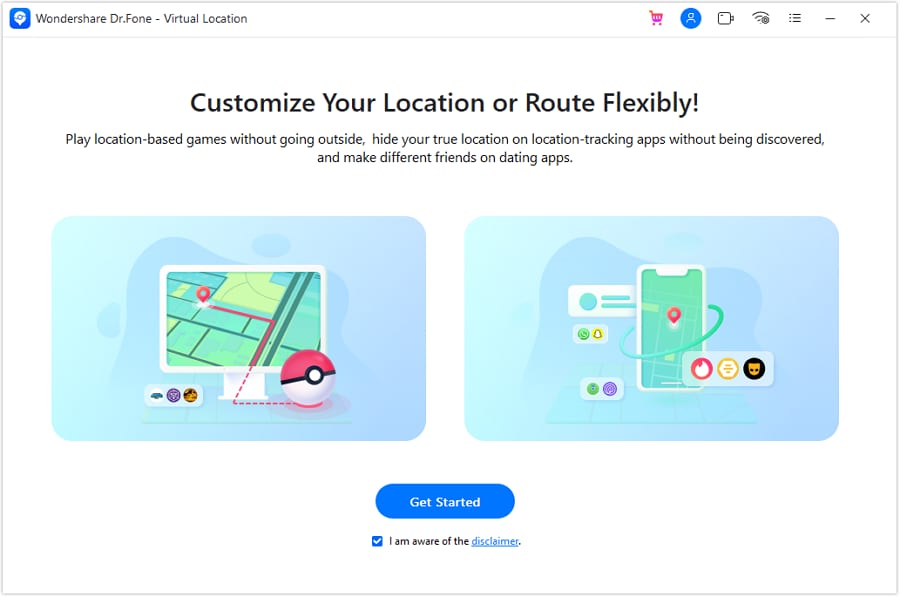
Install the appropriate desktop edition and enter its Virtual Location module. Check the current support requirements for the exact phone you intend to use. The toolkit screenshot below is a visual reference, not a guarantee of matching labels in every edition.
Step 2 Connect the phone with permission
Attach your own device by USB, unlock it and complete the connection prompts. Use Get Started where shown. On Android, follow the software's specific setup instructions for debugging and mock-location configuration; do not assume one setting sequence fits every manufacturer.
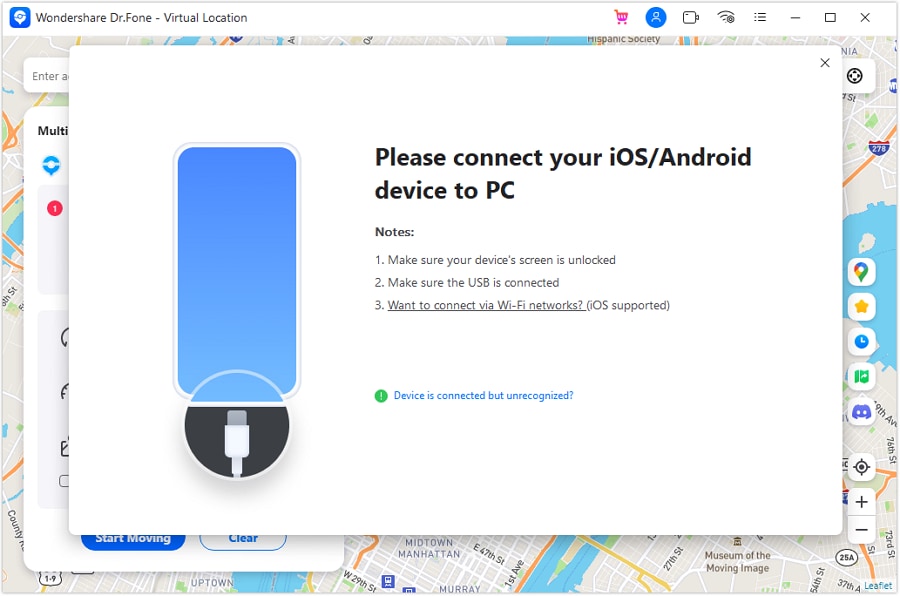
Step 3 Search for the test coordinate
Once the connection is ready, select Teleport Mode and search for the intended address or coordinates. Inspect the destination pin at a useful zoom level. A similarly named city or venue can produce an unintended point, so do not confirm based only on the search text.
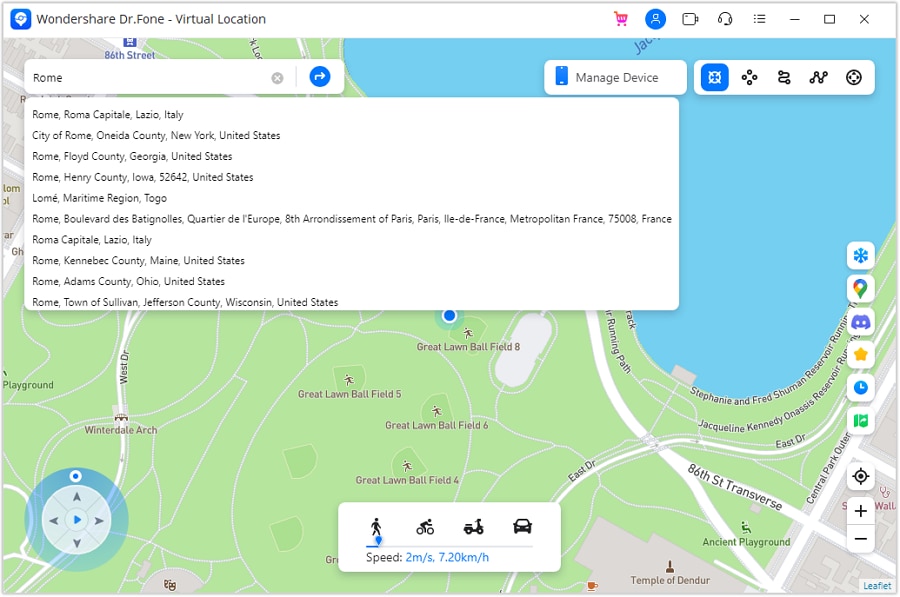
Step 4 Confirm, inspect and end the demonstration
Apply the selected point with Move Here. Verify it in the phone's maps app, then open Viber's location picker and inspect what it proposes. Send a test message only to an informed participant and confirm what they receive. If the result differs, do not claim the test succeeded or assume every app uses the same signal.
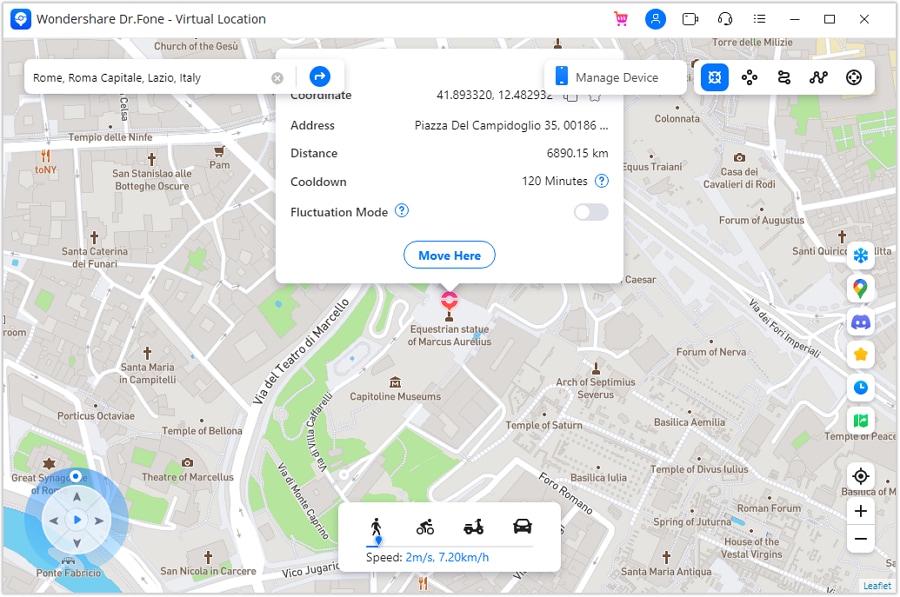
Stop the simulation when the test ends. The official teleport guide describes restarting the connected phone to restore its actual position; follow the restore prompts for your edition and confirm a fresh real location in Maps. Keep navigation, emergency services and real-world booking apps out of the simulation.




Part 4. Choose Responsible Reasons for a Different Viber Location
The useful question is not simply whether a different coordinate can be sent, but whether it communicates the right information. The original privacy, social and business scenarios remain relevant once their limitations are explicit.
Protect Privacy with Settings First
Limit unnecessary location attachments, choose recipients deliberately and review device permissions. These controls address disclosure more directly than a fake point. Coordinate simulation does not guarantee that an app, network provider or recipient cannot infer your region, and it cannot remove an address you already sent in a message.
For a map demonstration, use a nonsensitive example rather than a home address. If somebody depends on your real position for safety, do not replace it with a simulated one. Discuss a sharing arrangement that respects consent instead.
Keep Social Examples Clearly Labeled
A pretend travel destination can be a playful conversation starter when the context is clear. Label it as a joke, wishlist destination or example, rather than causing a friend to believe you need help abroad or are waiting at a distant meeting point. A native map pin may be sufficient for this purpose without any system-level change.
Use Business Location Tests Without Misrepresentation
An authorized team can use sample coordinates to inspect a location-sensitive interface or demonstrate a workflow. Record which device, account and setting were tested, and keep the result separate from real customer communications. A changed phone coordinate does not guarantee a different advertising audience or account market.
Do not use a false Viber position to imply that a business has a local office, deceive potential clients or manufacture trust. Accurate contact details and transparent testing serve a legitimate marketing workflow without promising conversions that this article has not measured.
Conclusion
For most Viber location tasks, begin with chat controls and the built-in place picker. They let you manage message attachments and send a destination without treating a map pin as proof of presence. When an authorized test requires different device coordinates, Dr.Fone - Virtual Location provides a desktop-map option for supported phones. Check the actual outcome, avoid universal compatibility claims and restore normal GPS before resuming location-sensitive activities.
FAQ
1. Is using a third-party location tool risk-free?
No. Review the software source, device permissions, current compatibility and applicable app rules. A no-jailbreak or no-root workflow is not proof that all security, privacy or account risks disappear.2. Can a Viber contact know a location is simulated?
They may infer it from the conversation or other information, and a shared pin is not verified evidence of attendance. This guide does not establish an undetectable method. Disclose simulations instead of relying on a promise that nobody can tell.3. Can the GPS test affect other applications?
Yes. Apps reading the phone's location service may receive simulated data too, although behavior varies. Stop the test and confirm genuine coordinates before using navigation, bookings or any service that requires your real location.4. Must I alter the operating system to share a different meeting place?
No. Where the Viber map picker allows it, move the map to the intended point and send it as a destination. Device-level GPS simulation is a separate workflow; the product describes supported no-jailbreak and no-root use, but you still need to check your exact device.
 Add Wondershare Dr.Fone as a preferred source on Google