Effortlessly manage data through preview, delete, export, etc.

 100% Security Verified | No Subscription Required | No Malware

 :
: 
 ChatGPT
 Perplexity
 Gemini
 Claude
 Grok
Grok

I’m always short on storage, but I’m scared to delete anything because I’m not 100% sure what’s actually backed up—and I don’t want to lose the only original.
Forum user
A quarterly media reset plan keeps photo-heavy phones fast and reliable, but missing one step can lead to lost photos, broken backups, or accidental deletion.
AI can help you design a clear workflow: what to check first, what to archive, what to verify, and what to postpone—so you don’t improvise under time pressure. But AI can’t access your phone or validate what’s truly restorable, so execution still requires real device tools and proof-based checks.
In this article
- Plan a quarterly reset without missing critical steps
- Why quarterly resets fail in practice
- What “generic checklists” miss
- The point-of-no-return gate
- Quick safety summary
- What the AI needs to know
- AI planning prompts (Level 1–3 + refinement)
- AI plan vs. real device constraints (and when to start execution)
- Execute safely on your phone with Dr.Fone
Part 1. Plan a quarterly reset without missing critical steps
You’re running out of space every few months because photos, videos, and chat media balloon quickly. The goal of a quarterly reset is repeatability: archive what matters, verify it’s restorable, then safely clear what you truly don’t need.
The uncertainty usually starts after you ask for “a cleanup checklist” and get generic advice—without a sequence, without verification gates, and without clarity on what to do when storage numbers don’t match between phone and backup.
There’s also a point-of-no-return moment: bulk deleting (or factory resetting) before confirming at least one restorable backup exists and before you’ve spot-checked real files (not just “backup completed” messages).
1. Plan in a strict sequence (not a checklist).
Decide what to keep/archive/delete, then add verification gates and stop-points before any irreversible step.
2. Treat “synced” as unproven until you spot-check real files.
Sampling across months and sources (camera, downloads, chat media) reduces the risk of deleting the only original.
3. Lock the point-of-no-return behind evidence.
Don’t delete in bulk until you have proof (counts, timestamps, open-tests) that your archive is usable for your needs.
Part 2. What the AI needs to know
Share your situation so the workflow can be sequenced and risk-checked correctly:
- Phone OS and model (iPhone/Android; e.g., iPhone 14 Pro, Galaxy S23)
- Current storage status (total used/free; what categories are largest)
- Where your photos/videos currently live (device only, cloud library, external drive, computer)
- Cloud/backups you rely on (iCloud Photos, Google Photos, OneDrive, local backups, etc.)
- Whether you use “optimize storage” or keep originals on device
- Critical apps with media (WhatsApp/Telegram/WeChat, camera apps, screen recordings)
- Your retention rules (what must be kept forever vs. 90 days vs. disposable)
- Your acceptable downtime window (e.g., 30–60 minutes vs. half a day)
- Your risk tolerance (conservative: keep duplicates; aggressive: delete quickly)
- Any constraints (limited Wi‑Fi, no computer available, travel soon)

Part 3. AI planning prompts (Level 1–3 + refinement)
Use the prompts below to make AI produce a workflow with checkpoints, not just advice.

3-1. Level 1: Basic Prompt
Create a quarterly media reset plan for a photo-heavy phone.
Put the steps in the safest order and include a “do not proceed” checklist before any deletion.
Keep it practical and repeatable.
3-2. Level 2: Advanced Prompt
Design a quarterly media reset workflow with three sections: Preparation, Execution, and Verification.
Mark each step as critical or optional, and add explicit stop-points before any irreversible actions (like bulk deletion or resetting).
Include a short “if something looks wrong” branch for mismatched storage totals.
3-3. Level 3: Evidence Prompt
I have a photo-heavy phone and I want a quarterly reset plan that frees space without losing originals.
Context: OS/model (e.g., Android 14 / Galaxy S23), free space (e.g., 8 GB free), biggest categories (e.g., Videos 45 GB, Photos 32 GB, WhatsApp 18 GB), backup targets (e.g., Google Photos + computer), time window (e.g., 90 minutes), and retention rules (e.g., keep family albums forever, keep work screenshots 30 days).
Build a step-by-step workflow with checks before, checks during, and checks after, including:
(1) how to confirm backups are restorable (not just “synced”),
(2) a sampling method (e.g., verify 20 random items across months),
(3) a clear point-of-no-return gate before deleting anything, and
(4) what exact evidence to record (e.g., storage before/after numbers, backup timestamps).
3-4. Prompt Refinement
Output the plan as a table with columns: Step, Goal, Tool/Location, Proof to collect, Risk if skipped, Rollback option.
Add a “media map” step that lists every source of media on my phone (camera roll, downloads, chat media, screen recordings) and the safest handling rule for each.
Insert a verification gate that requires two independent confirmations before deletion (e.g., cloud library shows originals + local backup opens correctly).
Create two variants of the plan: Conservative (maximum safety, slower) and Fast (minimum time, higher risk), and clearly label the tradeoffs.
Add an exception path for: “cloud shows synced but storage doesn’t drop” and “backup completed but spot-check fails.”
Part 4. AI plan vs. real device constraints (and when to start execution)
AI improves planning, but it cannot execute backups, transfers, deletions, or on-device verification. Use the table below as a reality-check layer before you act.
| AI plan output | What can go wrong on the real phone | What to verify before proceeding | How you adapt the plan |
|---|---|---|---|
| “Back up your photos” | Backup may exclude folders/apps, or fail silently on some items | Spot-check random files across months + confirm counts/timestamps | Add an explicit sampling checklist and required evidence |
| “Delete large videos” | You might delete the only original (cloud has compressed copy or none) | Confirm where originals live and whether downloads are originals | Add a “original-quality confirmation” gate |
| “Clear chat media” | App may store media in multiple places; clearing may remove needed threads | Export/backup chat media you must keep; confirm storage location | Add app-specific handling rules and retention window |
| “Free X GB quickly” | Storage categories may lag; “Other/System” won’t shrink immediately | Re-check storage after reboot/refresh; verify actual file removal | Add timing expectations + re-measure steps |
4-1. When to stop planning and start execution
- You have a written sequence with at least one hard stop-point before any irreversible step (bulk delete/reset).
- You’ve defined “proof” you will collect (counts, timestamps, spot-check results, storage screenshots).
- You know exactly what you will keep, archive, and delete (including chat media and downloads).
- You have the tools and time window ready (cables, power, Wi‑Fi, computer/storage destination).
If these are true, you’re ready to move from planning to controlled execution—without improvising mid-cleanup.
Part 5. Execute safely on your phone with Dr.Fone
Execution is where most losses happen: people delete first and verify later. Keep your “point-of-no-return” (bulk deletion/reset) locked until verification evidence is complete.
For the execution stage, you can use Dr.Fone Basic - Data Manager to manage, transfer, and back up phone media as part of the workflow you planned with AI.
-
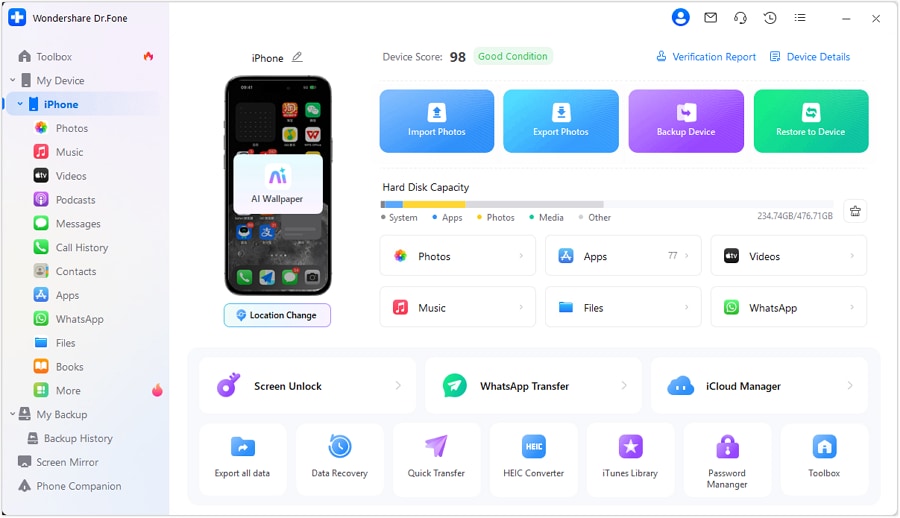
Step 1 Connect your phone and open the device manager
Start your session with power and a stable connection so transfers/backups don’t fail mid-way.
-
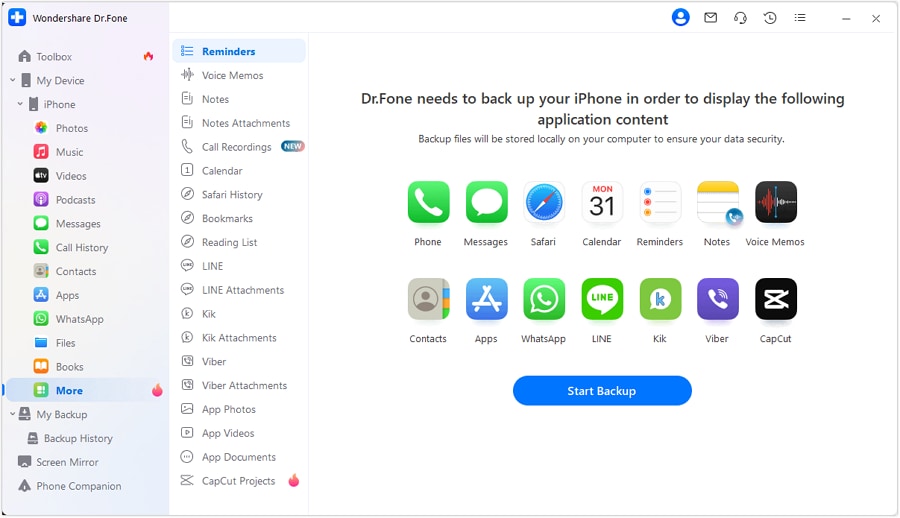
Step 2 Review media categories before moving anything
Preview what you’re about to archive (photos, videos, and other media) so the actions match your retention rules and your AI plan’s “media map.”
-
Step 3 Create a restorable backup/archive (pre-deletion)
Back up or transfer your photos/videos to your chosen safe location(s), and keep that archive intact until the quarter is fully closed.
Limitation: The tool can perform the transfer/backup, but it can’t decide what’s important—follow the AI plan’s evidence checklist.

-
Step 4 Verify with spot-checks, then do high-risk cleanup only after verification passes
Open and spot-check a sample of files from different months and sources (camera, downloads, chat media) and record proof (timestamps, counts, storage screenshots) before you delete anything.
Only after your verification gates pass should you perform the planned deletions/transfers on the device (this is the point of no return).
Limitation: Verification is a human judgment step; if even a small sample fails to open or appears missing, stop and return to verification.
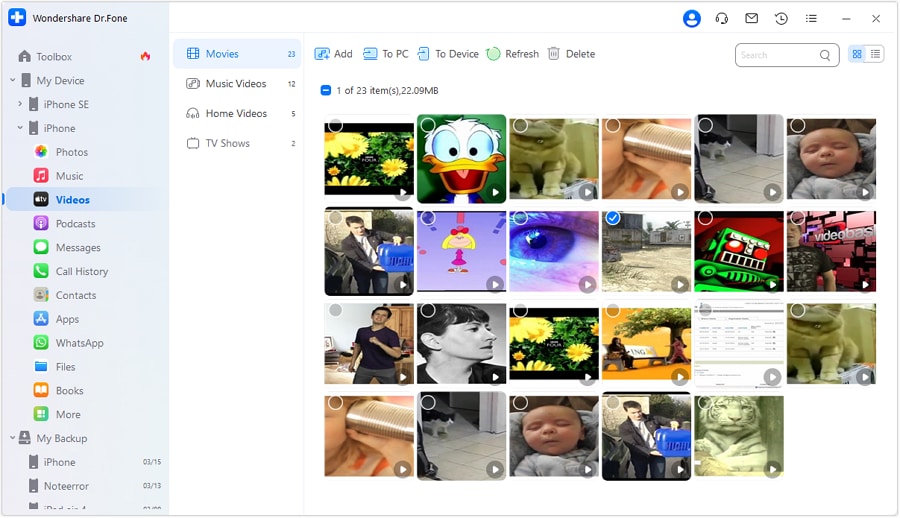
Recommended tool for the execution phase
If your AI plan is finalized and you’re ready to execute with proof-based safeguards, Dr.Fone can help you back up, transfer, and manage photo/video data so you can complete the quarterly reset with less manual risk.
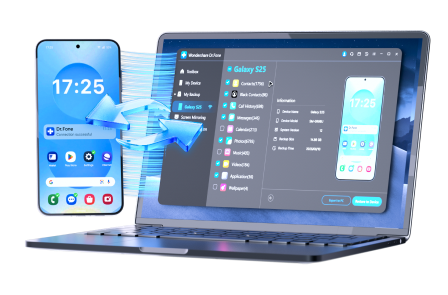
 Easily manage data through preview, delete, export, etc.
- Transfer all data between devices.
- Robust backup solutions for reliable data protection.
- Mirror screens to PC for meetings, teaching, and control.
Keep your archive/backup intact until you’ve completed post-cleanup verification and you’re satisfied the data you care about is accessible and complete enough for your needs.




Conclusion
Use AI to design a quarterly workflow with clear sequencing, proof-based verification, and a strict stop-point before irreversible actions; then use a real tool like Dr.Fone to execute the backup/transfer and cleanup steps on the device safely.
FAQ
-
What’s the biggest risk in a quarterly media reset plan?
Deleting the only original copy (especially videos or chat media) because “synced” was assumed to mean “restorable and complete.” -
How do I verify a backup is actually usable?
Don’t rely on a completion message—spot-check real files across different dates and sources, and confirm they open correctly in the destination. -
When should I do the irreversible step (bulk delete or reset)?
Only after you have documented proof that your archived copy is complete enough for your needs and passes your sampling checks. -
What if my cloud library shows everything, but my phone storage doesn’t drop?
Pause deletion; storage reporting can lag, and “originals vs optimized” settings can mislead. Re-check settings, refresh/reboot, and confirm where originals reside. -
Can AI tell me what to delete?
AI can propose rules and a sequence, but it can’t see your files or understand their true value—your retention rules and verification evidence must drive deletion.
 Add Wondershare Dr.Fone as a preferred source on Google