Effortlessly manage data through preview, delete, export, etc.

 100% Security Verified | No Subscription Required | No Malware

 :
: 
 ChatGPT
 Perplexity
 Gemini
 Claude
 Grok
Grok

I deleted “old” screen recordings to free space, then realized the ones I needed were gone everywhere after sync finished. The worst part is I only noticed after I emptied Recently Deleted.
Apple Support Community user
Clearing old screen recordings sounds simple, but skipping one check can lead to deleting the wrong files, losing recordings you still need, or leaving copies in places you didn’t realize existed.
AI helps by turning a vague goal (“remove old recordings”) into a structured workflow with decision points: what to keep, where files might be stored, how to verify duplicates, and what “done” should look like.
AI can’t actually scan your phone, confirm what’s backed up, or remove files from device storage and cloud services—execution requires real tools and device access.

In this article
- How to plan removal without missing critical steps
- Where screen recordings may be stored
- Why duplicates happen
- Sync & “Recently Deleted/Trash” risks
- Define a clear retention rule
- What the AI needs to know
- Using AI prompts to build a safer workflow
- AI plan vs. real device constraints
- Execute the workflow safely with Dr.Fone
Part 1. How to Plan remove old screen recordings from phone Without Missing Critical Steps
You might be trying to free up storage fast, or tidy up months of screen recordings scattered across Photos/Gallery, a Files app, chat attachments, and cloud backups. The tricky part is that screen recordings often exist in more than one location, sometimes with different filenames or dates.
After an AI answer like “go to Gallery and delete videos,” you may still be unsure about the safest sequence: should you back up first, how do you confirm what’s already synced, and how do you avoid deleting something needed for work/school/legal proof?

Part 2. What the AI Needs to Know
Share the details below so the AI can map a safe plan before you touch any delete button.
- Phone type and OS version (iPhone iOS 17 / Samsung Android 14)
- Where you usually find screen recordings (Photos/Gallery, Files, Google Photos/iCloud Photos, Screen Recorder folder)
- Whether cloud sync is enabled (iCloud Photos / Google Photos backup / OneDrive, etc.)
- Your goal (free X GB, remove everything older than a date, keep only tagged items)
- Any “must-keep” categories (work demos, receipts, bug reports, personal)
- Whether you need an offline backup first (computer, external drive)
- Time constraints (need space in 10 minutes vs. can do a careful cleanup)
- Your risk tolerance (OK to delete aggressively vs. must be reversible)
Part 3. Using AI Prompts to Build a Safer remove old screen recordings from phone Workflow
Use the prompts below to make the AI produce a clear, check-first plan that minimizes irreversible mistakes.
3-1. Level 1: Basic Prompt
I want to remove old screen recordings from my phone to free up space. Create a safe checklist that prioritizes not deleting anything important and tells me what to verify before I delete. Keep it planning-only and include a clear “stop before irreversible steps” checkpoint.
3-2. Level 2: Advanced Prompt
Build a structured workflow to remove old screen recordings from my phone with three sections: Preparation, Execution, and Verification. In each section, label steps as critical or optional, and include a decision point for whether cloud sync is on. Planning only—no tool-specific clicks.
3-3. Level 3: Evidence Prompt
Here’s my context: I’m on (iPhone 13, iOS 17.5). Screen recordings show up in (Photos > Media Types > Screen Recordings) and sometimes in (Files > Downloads). I have (iCloud Photos ON) and my storage is almost full (2 GB free). I want to delete recordings older than (90 days) but keep anything related to (work demos).
Create a plan that includes:
- checks before deletion (backup status, duplicates, where else recordings may exist)
- checks during deletion (batch size limits, spot-checking samples)
- checks after deletion (storage reclaimed, “Recently Deleted,” cloud propagation)
Also include a “point of no return” warning for (emptying Recently Deleted / deleting with sync enabled) and a simple example retention rule (e.g., keep files with “Demo” in name or in a specific album).
3-4. Prompt Refinement
Return the workflow as a table with columns: Step, Goal, Where to check, Evidence to confirm, Risk if skipped, Reversible? (Yes/No).
Split recordings into three buckets: safe-to-delete, review-needed, must-keep; then define the exact criteria for each bucket.
Add a verification gate before any permanent deletion: list the minimum evidence I should collect (e.g., backup timestamp, file count, sample playback).
Assume filenames and dates may be wrong—add a method to spot-check content quickly without opening every video.
Include a rollback plan: if I deleted the wrong set, what are the fastest recovery options and how long do I have?
Part 4. AI Plan vs. Real Device Constraints
| Planning need | What AI can do | What AI cannot do | What you must verify on the device |
|---|---|---|---|
| Identify where recordings might exist | Suggest common storage locations and sync paths | Detect your actual folders/albums | Confirm locations, counts, and sizes |
| Reduce accidental deletion | Create retention rules and review buckets | Enforce your rules during deletion | Double-check selections and filters |
| Prevent irreversible loss | Add decision gates and “stop” checkpoints | Confirm backups are complete/restorable | Validate backup timestamp and sample restores |
| Confirm success | Define post-checks and evidence | Measure real storage reclaimed | Check storage, Recently Deleted/Trash, and sync effects |
AI improves planning, sequencing, and risk control—but it cannot execute deletions, validate your backups, or observe what sync services are doing in real time.
4-1. When to Stop Planning remove old screen recordings from phone and Start Execution
- You have a clear retention rule (date-based and/or folder/album-based) and a “must-keep” list.
- You have verified where the recordings exist (Photos/Gallery, Files, cloud apps) and whether sync will propagate deletions.
- You have a recovery path (backup confirmed or at least “Recently Deleted/Trash” window understood).
- You have defined the irreversible moment you will not cross until verification is complete (e.g., emptying Recently Deleted / clearing Trash).
At this point, planning stops being helpful and careful execution becomes the main risk-control lever.
Part 5. Remove old screen recordings from phone: Execute the Workflow Safely with Dr.Fone
Execution now matters because deleting media can cascade across synced libraries, and one rushed batch-delete can be hard to undo after the trash is emptied or sync completes.
Recommended tool for execution (backup + controlled cleanup)
If you want a hands-on way to back up first and then remove selected screen recordings in a controlled way, use Dr.Fone Basic - Data Manager to work from a clear, reviewable list instead of deleting blindly on-device.
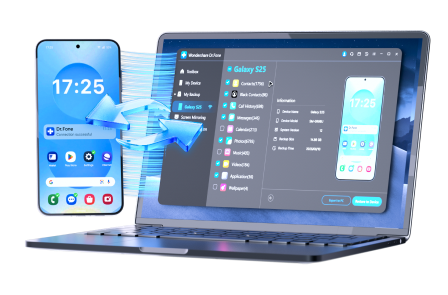
 Easily manage data through preview, delete, export, etc.
- Transfer all data between devices.
- Robust backup solutions for reliable data protection.
- Mirror screens to PC for meetings, teaching, and control.
Use the same safety logic your AI plan produced: back up first, delete in small batches, and verify results before you cross any irreversible step like emptying Recently Deleted/Trash or letting sync propagate deletions across devices.
-
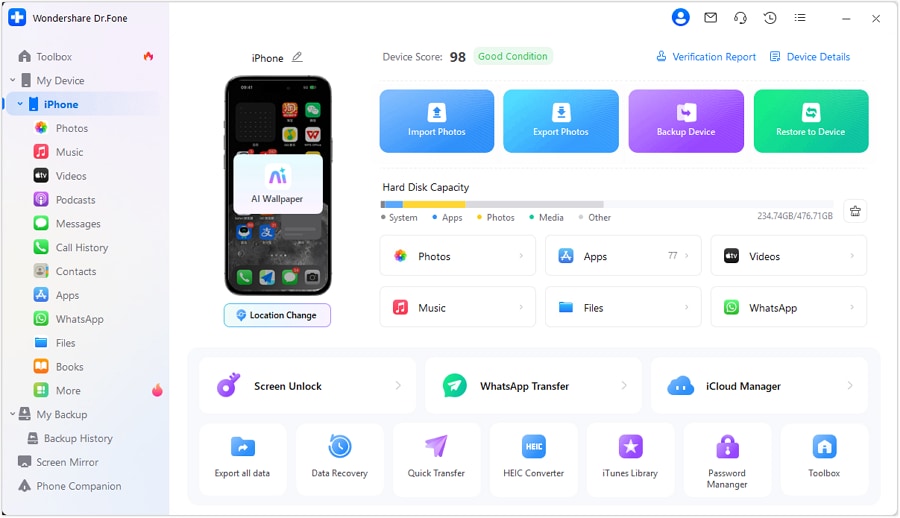
Step 1 Pre-delete safety gate (connect and prepare)
Connect your phone to your computer so you can review and manage recordings with better visibility than on a small screen. Before deleting anything, make sure you have a recovery path (backup confirmed or a clear “Recently Deleted/Trash” window).
-
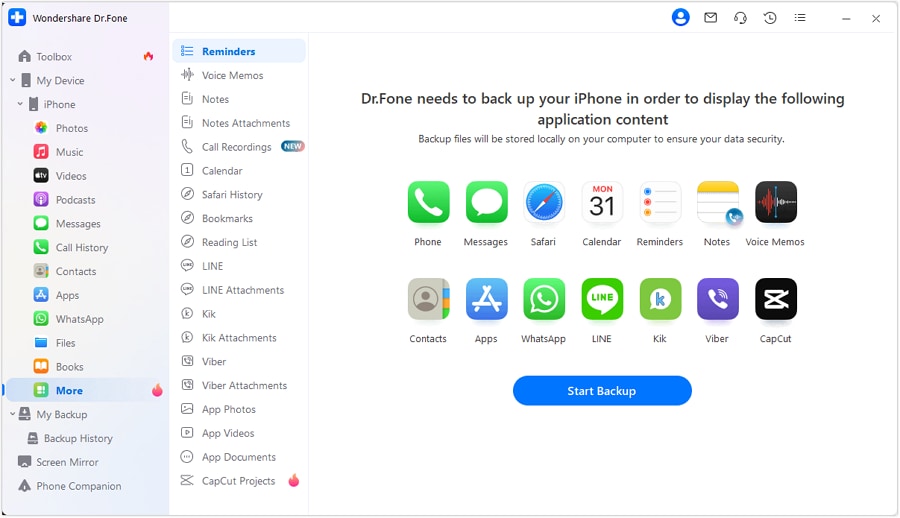
Step 2 Create/confirm an accessible backup (planning becomes real)
Create or confirm an accessible backup of the recordings you might need before you remove anything. AI cannot confirm the backup is valid—you must verify the backup exists and is readable (for example, confirm file counts and play a few samples).
-
Step 3 Controlled cleanup (small batches first)
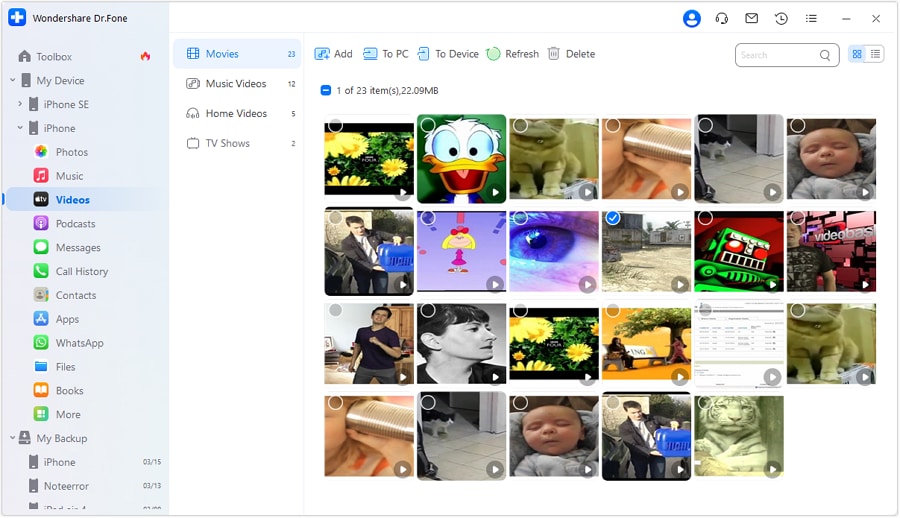
Navigate to where videos/recordings are managed, then apply your retention rule (for example: older than 90 days, excluding “work demo” items). Start with a small batch to validate your criteria.

-
Step 4 Post-delete verification (before irreversible cleanup)
After each batch, spot-check a few remaining and deleted items, confirm storage reclaimed, and confirm what remains. Only proceed to clear Recently Deleted/Trash after you’re confident sync won’t remove needed items elsewhere.




Conclusion
Use AI to define the safest sequence, retention rules, and verification gates; then use Dr.Fone to carry out the actual backup and removal steps on the device with those safeguards in place.
FAQ
-
What’s the biggest risk when removing old screen recordings?
Accidentally deleting something important and then permanently removing it by emptying Recently Deleted/Trash or triggering cloud sync deletions across devices. -
Should I delete from Photos/Gallery or from a Files folder first?
Plan based on where the “source of truth” is for your phone: if Photos is synced, deleting there may propagate; Files folders may contain separate copies. Verify duplicates before choosing. -
How do I know I’m not deleting the only copy?
Confirm at least one restorable backup path (cloud album with recovery window, computer backup, or Dr.Fone backup) and spot-check by opening a few files from the backup. -
When is deletion irreversible?
After you empty Recently Deleted/Trash, or after a synced cloud library finishes propagating deletions and the recovery window expires. -
How many files should I delete at once?
Start with a small batch (e.g., 10–25 recordings) to validate your rule and verification checks, then scale up once you’re confident the right set is being removed.
 Add Wondershare Dr.Fone as a preferred source on Google