Effortlessly manage data through preview, delete, export, etc.

 100% Security Verified | No Subscription Required | No Malware

 :
: 
 ChatGPT
 Perplexity
 Gemini
 Claude
 Grok
Grok

I factory reset my old phone thinking “everything is in the cloud,” then realized my authenticator and a few apps didn’t carry over. Getting back into accounts was way harder than the transfer itself.
Reddit user, r/AndroidQuestions
Cleaning an old phone before moving to a new device sounds simple, but one missed step can mean lost photos, broken two‑factor logins, or a factory reset done too early. The risk is usually not the transfer itself—it’s the sequence.
AI can help you map the workflow in the right order, identify “don’t cross yet” points, and produce a checklist you can verify before you touch anything irreversible. It’s especially useful for surfacing edge cases (eSIM, authenticator apps, encrypted backups, work profiles).
AI can’t see your phone, confirm what synced, or actually back up/transfer/erase data. You still need real device tools to execute the plan safely—after the plan is verified.
In this article
- How to plan a clean-old-phone workflow (without missing steps)
- Where people get stuck
- Backed up vs. synced (and how to avoid guessing)
- The “do not proceed” point of no return
- What “verification gates” should look like
- What the AI needs to know
- AI prompts to build a safer workflow
- AI plan vs. real device constraints
- When to stop planning and start execution
Part 1. How to Plan Clean Old Phone Before Transferring to New Device Without Missing Critical Steps
1-1. Where people get stuck
You’re switching to a new phone and want the old one cleaned for trade‑in, resale, or hand‑down. You’ve already asked AI “what should I do,” but the answer often feels like a list—not a sequence—with no clear verification gates.
1-2. Backed up vs. synced (and how to avoid guessing)
The uncertainty usually shows up around: what must be backed up vs. what is already synced, which accounts need to be signed out (and when), and how to avoid lockouts from banking apps and 2FA.
The most common mistake is assuming “cloud = done” without checking what actually uploaded.
1-3. The “do not proceed” point of no return
Your point of no return is factory reset / erase all content. You should not reach that step until you’ve verified: backups are complete, the new phone is working, critical apps are re‑authenticated, and you can still access accounts without the old device.
1-4. What “verification gates” should look like
A verification gate is a required check you must pass before moving forward—especially before sign‑outs and erase. Good gates are evidence‑based (counts, timestamps, “open and confirm”), not “I think it synced.”
Part 2. What the AI Needs to Know
Share the specifics below so the AI can plan a sequence that matches your devices and risk level:
- Old phone OS and model (e.g., “iPhone 12 iOS 17” or “Samsung S21 Android 14”)
- New phone OS and model (e.g., “iPhone 15” / “Pixel 9”)
- Transfer goal (full migration vs. only contacts/photos/messages)
- What you must keep (photos, videos, SMS, WhatsApp/LINE/WeChat chats, notes, call logs, app data)
- 2FA/authenticator setup (Google Authenticator/Authy/Microsoft Authenticator; hardware keys; SMS fallback)
- eSIM/physical SIM status (eSIM active? need to move carrier profile?)
- Cloud usage (iCloud/Google, OneDrive, Dropbox) and whether storage is near full
- Encryption/lock settings (device passcode, encrypted backups, password manager)
- Work constraints (MDM, work profile, corporate apps, compliance wipe requirements)
- End state for old phone (trade‑in, resale, gift to family, recycle)
Part 3. Using AI Prompts to Build a Safer Clean Old Phone Before Transferring to New Device Workflow
Use the prompts below to force a clear order, explicit verification, and a “stop before erase” gate.
3-1. Level 1: Basic Prompt
Create a step-by-step plan to clean my old phone before transferring to a new device, with the correct order and a short checklist.
Include a “do not proceed” gate before any irreversible step like factory reset.
Ask me only the minimum questions you need first.
3-2. Level 2: Advanced Prompt
Build me a structured workflow with three sections: Preparation, Execution, and Verification for cleaning my old phone before transferring to a new device.
Mark each step as Critical or Optional, include the risk if skipped, and define explicit verification checks before moving to the next section—especially before sign-outs and factory reset.
3-3. Level 3: Evidence Prompt
Here’s my context: old phone (iPhone 12 iOS 17), new phone (Android Pixel 9), transfer goal (full migration), must keep (Photos, Contacts, SMS where possible, WhatsApp chats), 2FA (Google Authenticator + SMS fallback), SIM (eSIM), old phone will be traded in.
Create a workflow that includes:
- checks before transfer (e.g., storage space, cloud sync status, app list export)
- checks during transfer (e.g., verify item counts like Photos (8,200), Contacts (430), WhatsApp backup date (yesterday))
- checks after transfer (logins, 2FA, bank apps, messaging history)
Then list the exact “hold points” where I must stop and verify evidence before I’m allowed to proceed to sign-out and factory reset.
3-4. Prompt Refinement (follow-up prompts)
Re-write the plan as a table with columns: Step, Critical/Optional, What could go wrong, How to verify, Stop/Go rule.
Identify anything that could cause account lockout (2FA, passkeys, banking apps) and add a dedicated sub-checklist for it before I sign out of the old phone.
Add a “minimum viable transfer” fallback plan if a full transfer fails (what to save first, in what order, and how to prove it’s saved).
Create a final pre-erase checklist that I can read out loud in under 60 seconds, with a hard “STOP if any item is unknown.”
Part 4. AI Plan vs. Real Device Constraints
| Planning need | What AI can do | What AI cannot do | What you must verify on-device |
|---|---|---|---|
| Prevent missed steps | Create ordered checklists and hold points | Detect what’s already synced or missing | Sync status, counts, last backup timestamps |
| Reduce lockout risk | Flag 2FA/eSIM/banking risks in sequence | Confirm you can log in without old device | Test logins, recovery methods, authenticator migration |
| Evidence-based verification | Define proof to collect (screenshots, timestamps) | Read your settings screens or backups | Backup completion, encryption status, restored data checks |
| Safe end-state (trade-in) | Provide “erase-ready” criteria | Erase data or confirm wipe success | Confirm sign-outs, remove device from account lists, factory reset results |
AI improves the plan and the checks, but it cannot perform transfers, backups, sign-outs, or wipes. Execution needs real device tools once your verification gates are satisfied.
Part 5. When to Stop Planning Clean Old Phone Before Transferring to New Device and Start Execution
- You have a single ordered checklist with Critical steps clearly marked and no open questions about what data must be kept.
- You have defined evidence checks (counts, timestamps, login tests) and know exactly what “success” looks like.
- You have identified the irreversible step (factory reset) and placed it only after post-transfer verification.
- You have a fallback plan for the top failure modes (not enough storage, chat backup fails, 2FA migration confusion).
At this point, you’re no longer debating what to do—you’re ready to follow the sequence and collect proof as you go.
Clean old phone before transferring to new device: Execute the Workflow Safely with Dr.Fone
Execution now matters because this is where most mistakes happen: doing sign-outs too early, skipping verification, or wiping before confirming the new phone is fully usable. If you want a structured way to run the transfer portion of your plan, Dr.Fone - Phone Transfer can help you move data between phones while you stay focused on your verification gates.
 Move data between iOS to Android and vice versa.
- Transfer contacts, SMS, photos, videos, music, and more types.
- Available with all phones with Android and iOS versions.
- Simple, click-through process.
-
Step 1 Open Phone Transfer and get ready to run your planned transfer
Run the transfer and/or backup actions you’ve already defined. Start with your most critical data first, and follow the order you planned.
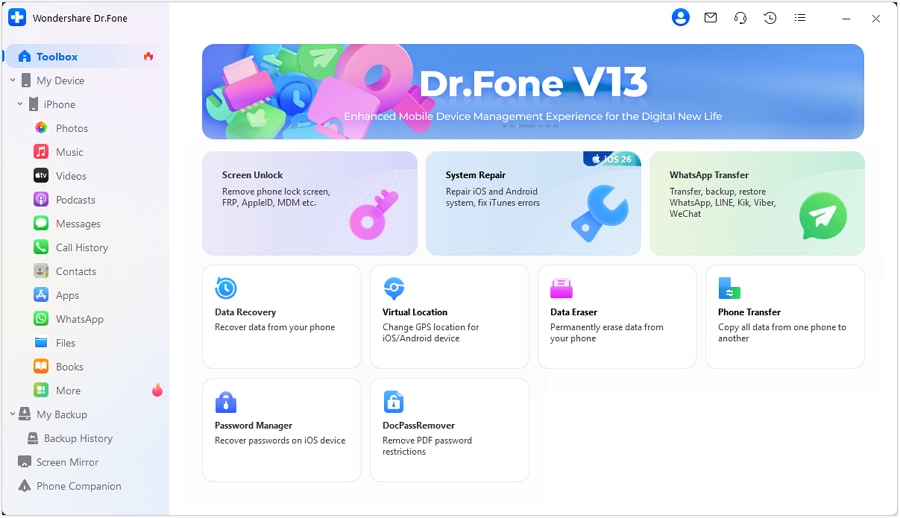
Limitation: The tool executes actions, but it won’t decide what “complete” means unless you check the evidence you planned (counts, timestamps, open-and-check).
-
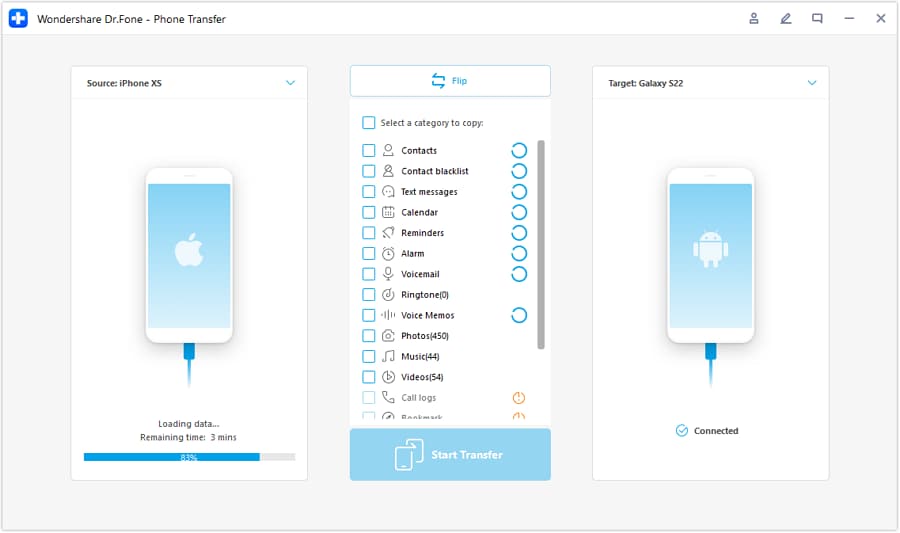
Step 2 Set the correct transfer direction (old phone → new phone)
Select the correct source and destination devices so you don’t overwrite the wrong phone and so your checks match the direction of movement.
-
Step 3 Choose what to transfer, then verify on the new phone
Select the data types you’re moving. After the transfer, follow your verification checklist: open key apps, confirm messages/chats, compare photo/contact counts, and test 2FA and banking access.
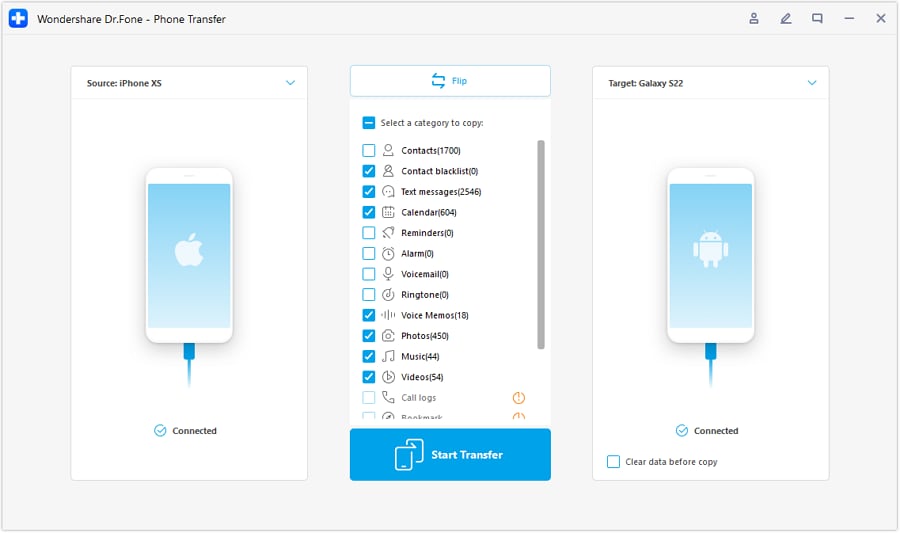
Limitation: AI cannot confirm what you see on-device; you must personally confirm each check is true before proceeding.
-
Step 4 Only after verification, sanitize the old phone for handoff
Only after all checks pass, proceed with sign-outs (if required by your plan) and then follow the device’s erase/factory reset procedure for trade‑in/resale.
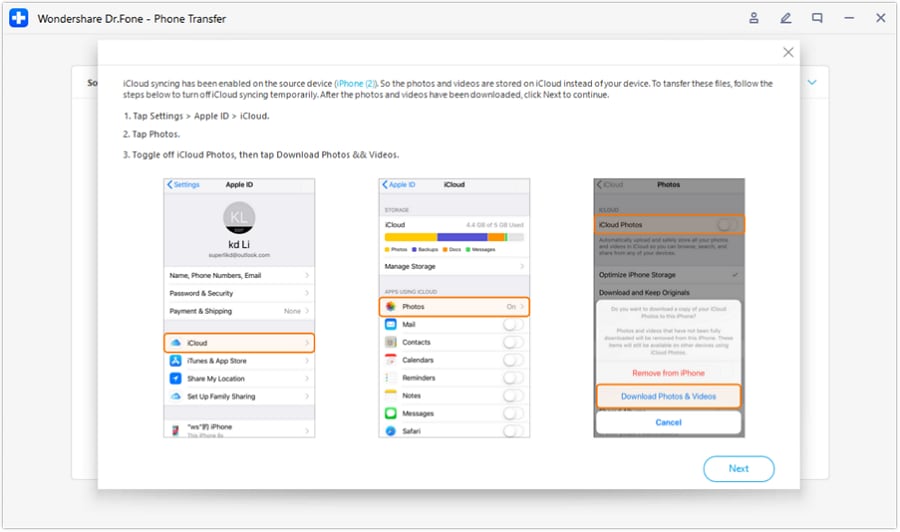
Limitation: Factory reset is irreversible; if any verification item is unknown or untested, stop—do not erase until the evidence is complete.




Conclusion
Use AI to design the sequence, define evidence-based checks, and prevent you from reaching the irreversible wipe too early; then use real device tools to execute the transfer/backup/cleanup actions once your plan is clear and your verification gates are in place.
FAQ
-
What’s the most common way people lose data in this process?
Factory resetting (or trading in) the old phone before confirming backups/restores and before testing logins/2FA on the new phone.
-
How do I know what’s “Critical” vs. “Optional”?
Critical = anything you cannot easily recreate (photos, chats, 2FA access, password manager vaults) and anything that can lock you out (eSIM, passkeys).
Optional = cosmetic items and low-risk preferences.
-
When should I sign out of Apple ID/Google account on the old phone?
After the new phone is verified and you’ve confirmed you won’t need the old device for 2FA prompts, recovery approvals, or accessing encrypted backups.
-
What should I verify before I even start transferring?
Storage space, last sync/backup timestamps, whether your chat apps have a recent backup, and that you have working recovery methods for key accounts.
-
Can AI tell me whether my backup is complete?
No. AI can tell you what to look for (timestamps, sizes, item counts), but you must confirm it in your device settings and by opening restored content.
 Add Wondershare Dr.Fone as a preferred source on Google