Effortlessly manage data through preview, delete, export, etc.

 100% Security Verified | No Subscription Required | No Malware

 :
: 
 ChatGPT
 Perplexity
 Gemini
 Claude
 Grok
Grok

I thought I was “ready to travel” until I realized my MFA prompts were going to my old phone and my key files weren’t available offline at the airport.
Reddit user, r/sysadmin
Cross-device workspace setup for business travel sounds simple until one skipped step breaks access to files, accounts, or authenticator codes when you’re already on the road. The risk is usually not the “setup” itself—it’s missing a dependency (backup, 2FA, VPN profiles, or device encryption) that you only discover when it’s too late.
AI is useful here because it can turn a vague goal (“make my laptop and phone ready for travel”) into a sequenced workflow with prerequisites, checkpoints, and clear “stop and verify” moments before anything irreversible happens. AI still can’t touch your devices, validate what’s actually installed, or guarantee that accounts and sync are working in the real world—so once the plan is solid, you’ll need real tools to execute backups, transfers, restores, and device-level changes safely.
In this article
- Why cross-device travel setups fail (and how to avoid missed steps)
- Common dependencies people miss
- Where AI helps vs. where it can’t
- “Point of no return” risk gates
- When to stop planning and start execution
- What the AI needs to know (inputs checklist)
- AI prompts: build a safer workflow
- AI plan vs. real device constraints
- Execute the workflow safely with Dr.Fone

Part 1. Why cross-device travel setups fail (and how to avoid missed steps)
1-1. Common dependencies people miss
You’re traveling for work with at least two devices (for example, a phone + laptop, or a phone + tablet), and you need your business workspace to “just work” across them: mail, calendars, files, messaging, MFA, and offline access. The problem is you’re not sure what to do first—especially when some steps depend on others.
People often miss dependencies such as backup coverage, MFA recovery options, VPN profiles, encryption requirements, storage headroom, and offline availability—then discover the gap only after leaving reliable connectivity behind.
1-2. Where AI helps vs. where it can’t
AI can help you structure a workflow: sequencing, prerequisites, verification checkpoints, and “stop and verify” gates. But it cannot confirm what’s actually installed, whether your sign-ins succeed, whether sync is healthy, or whether offline access truly works on your real devices.
1-3. The “point of no return” risk gates
Even after an AI answer, uncertainty often remains around sequencing and verification: whether to set up accounts before copying files, whether MFA should be migrated early, or how to confirm offline availability. People also forget constraints like corporate policies, MDM restrictions, and limited travel connectivity.
There’s usually a point of no return: initiating a device reset, restoring from a backup, or deleting “old device” data to reduce risk. Do not reach any wipe/reset/restore step until you have verified backups, MFA access, and a rollback plan.
1-4. When to stop planning and start execution
- You have a finalized sequence with clear prerequisites and no unresolved dependencies (especially MFA and backup).
- You can state the point of no return steps (reset/restore/wipe/deleting old data) and the exact checks required before them.
- You have a verification list that includes offline tests and a second-device access test for critical accounts.
- You have a rollback option you can actually perform within your time window (storage, power, connectivity).
If those conditions are true, further planning is usually just adding noise—and it’s time to move into controlled execution.
Part 2. What the AI needs to know (inputs checklist)
Share the minimum details needed to create a safe, checkable plan.
- Devices involved (make/model/OS versions; example: iPhone 15 iOS 18, Windows 11 laptop, iPadOS tablet)
- Which device is “source” vs “travel device” vs “backup-only”
- Work accounts and identity setup (Microsoft 365/Google Workspace, Slack/Teams, VPN, SSO provider)
- MFA method(s) in use (authenticator app, SMS, hardware key), and whether you have backup codes
- Data categories that must be present (email/calendar, files, photos, notes, passwords, documents, app data)
- Storage constraints and connectivity limits (hotel Wi‑Fi only, no roaming, limited time window)
- Security requirements (encryption, screen lock, remote wipe, company policy/MDM)
- What must work offline (documents, tickets, maps, contact lists)
- Your risk tolerance and rollback needs (can you tolerate any downtime; do you need “no surprises” verification)
Part 3. AI prompts: build a safer workflow
Use the prompts below to force a sequence, reduce ambiguity, and add verification gates before any irreversible step.
3-1. Level 1: Basic Prompt
I’m setting up a cross-device workspace for business travel across my devices. Create a step-by-step plan with prerequisites and a “stop and verify” checklist before any risky action (like reset/restore/deleting data). Keep it planning-only and include a quick rollback plan.
3-2. Level 2: Advanced Prompt
Design a structured workflow for my cross-device workspace setup for business travel with these sections: Preparation, Execution, Verification.
Within each section, label steps as Critical vs Optional, and add explicit checks (what I should see/confirm) before moving to the next stage.
Include at least one “do not proceed past this point unless…” gate for backups + MFA.
3-3. Level 3: Evidence Prompt
Here’s my situation: I’m traveling in (5 days) and need my workspace working on (iPhone + Windows laptop + iPad). My work uses (Microsoft 365 + Teams) and MFA via (Authenticator app). I must have offline access to (boarding passes, key documents, contact list) and I may have limited internet.
Create a planning-only workflow with:
- Before checks (backup status, storage, encryption, MFA backup codes, VPN)
- During checks (account sign-in confirmations, sync status, file availability)
- After checks (offline tests, “airplane mode” test, remote-wipe readiness)
Also include a compact table listing: Step → Evidence to capture (example: “MFA migration complete → screenshot of backup codes stored in password manager”).
3-4. Prompt Refinement (follow-up prompts)
Convert the workflow into a dependency map: list each step with “depends on / blocks / verifies,” so I can’t accidentally do steps out of order.
Add a travel failure-mode checklist: “If hotel Wi‑Fi blocks VPN,” “If MFA prompt goes to old device,” “If sync is stuck,” with actions and safe fallback options.
Produce a minimum viable travel setup vs full setup: what I must do in 60 minutes vs what I can postpone until after arrival, with verification for each.
Write a pre-flight verification script I can follow: 10 checks in order, including an offline test, an MFA test, and a rollback confirmation.
Part 4. AI plan vs. real device constraints
| AI can help with (planning) | Real-world constraint (device/tools) |
|---|---|
| Sequencing steps and identifying dependencies | Device prompts, OS restrictions, MDM policies can block actions |
| Risk-gating irreversible moments (wipe/reset/restore) | You must confirm backups and access using actual accounts/devices |
| Defining verification evidence (what to check) | Only real sign-ins, sync states, and offline tests prove readiness |
| Creating rollback and fallback paths | Restores/transfers require tools and enough time/storage/bandwidth |
AI improves planning and reduces missed steps, but it cannot execute actions on your devices or confirm that transfers, backups, and sign-ins actually worked.
Part 5. Execute the workflow safely with Dr.Fone
Execution now matters because this is where mistakes become real: incomplete backups, partial transfers, or overwritten data can lock you out while traveling. Run the workflow in a single focused window, and do not cross the irreversible steps until verification is complete. To move data between devices as part of your execution plan, use Dr.Fone - Phone Transfer.
 Move data between iOS to Android and vice versa.
- Transfer contacts, SMS, photos, videos, music, and more types.
- Available with all phones with Android and iOS versions.
- Simple, click-through process.
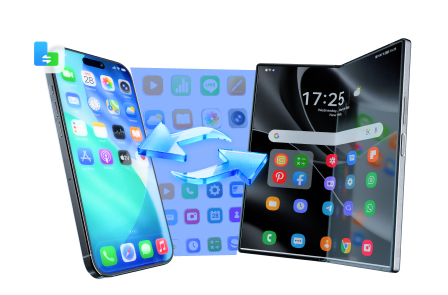
Use your AI-generated plan as the “source of truth,” then execute only one gate at a time: prepare the environment, run the transfer/backup/restore actions in the decided order, and verify outcomes (including offline) before any cleanup like deleting old data or resetting a device.
-
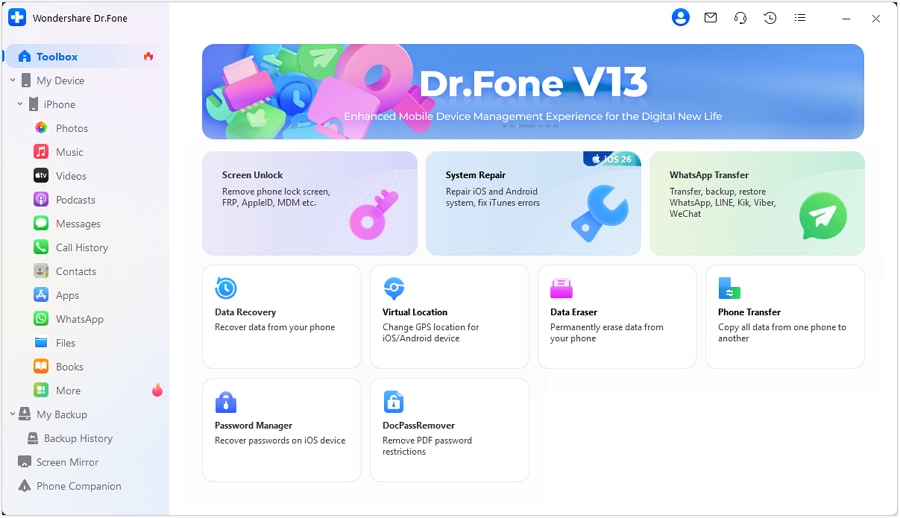
Step 1 Prepare the execution environment
Consolidate the verified plan, ensure stable power and connectivity, and confirm you can access all required accounts and MFA methods before initiating any transfer/backup/restore.
-
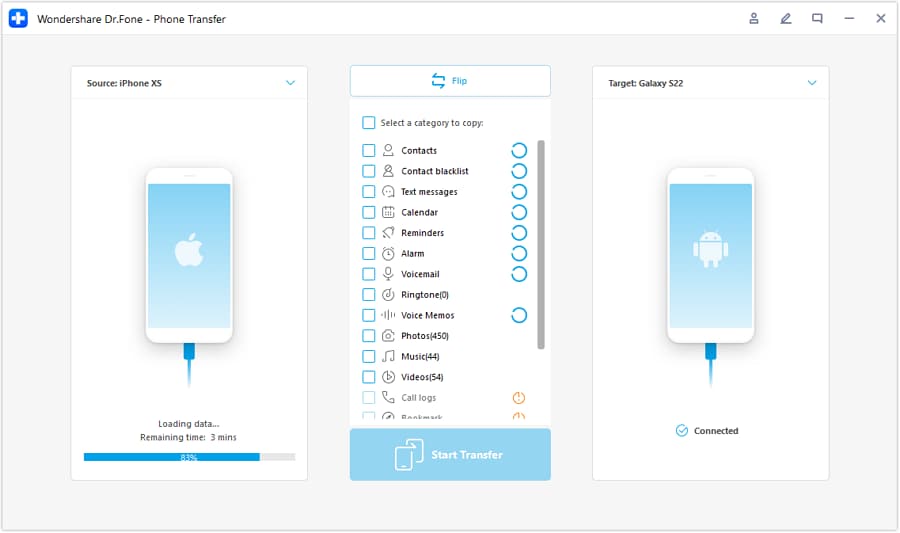
Step 2 Set the transfer direction to match your plan
Choose the correct source device and destination device path (for example, iOS to Android or Android to iOS) to prevent copying data the wrong way.
-
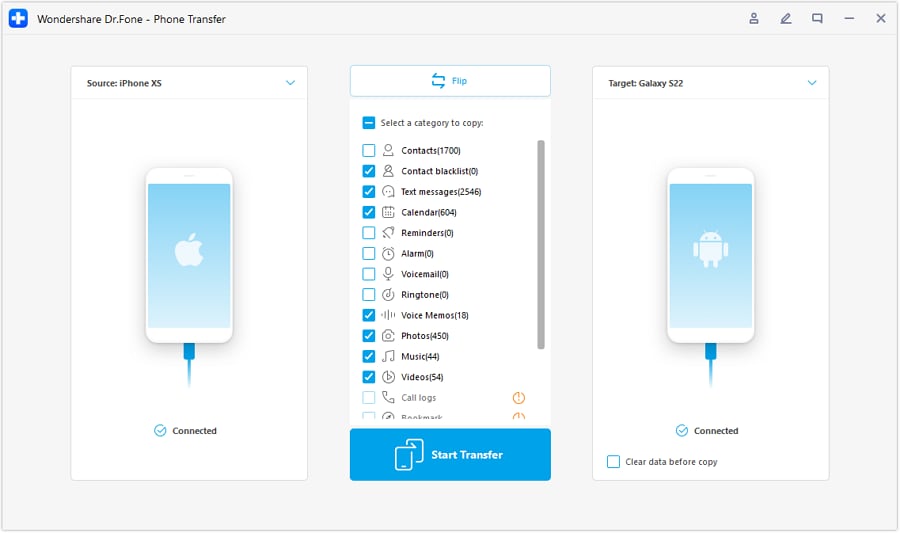
Step 3 Select exactly what to transfer (avoid overwrites)
Pick only the data categories you decided in the plan, and pause at your “stop and verify” gate before starting any action that could overwrite or replace existing content.
-
Step 4 Verify and then run your travel-readiness checks (including offline)
After transfer/restore completes, perform sign-in checks, sync checks, and offline/airplane-mode checks. Only then consider any cleanup such as removing old data.
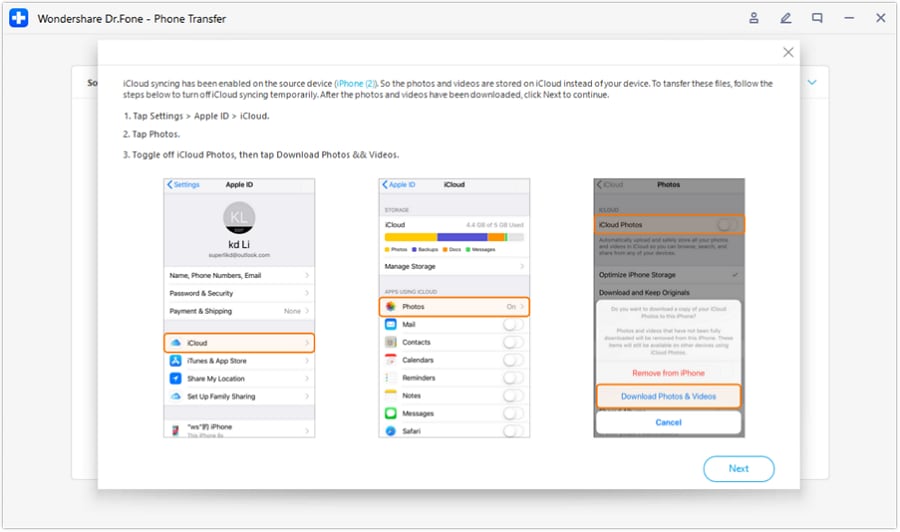




Conclusion
Use AI to design a strict, checkable sequence with risk gates and verification, then use real tools to execute backups/transfers/restores on actual devices—planning prevents avoidable mistakes, but execution is where readiness is proven.
FAQ
-
What’s the biggest risk in cross-device workspace setup before travel?
Locking yourself out (MFA/SSO) or losing access to key files due to incomplete backup/transfer or missing offline availability.
-
When is the “point of no return” in this workflow?
Any reset/restore/wipe, deleting data from an old device, or replacing an authenticator without confirmed recovery options. Don’t proceed until backups and MFA fallbacks are verified.
-
How do I verify I’m truly ready if I’ll have limited internet?
Do an airplane-mode test for the items that must be offline (documents, tickets, contacts) and confirm you can still open them without network access.
-
Can AI tell me whether my backup is good?
No. AI can tell you what to check (timestamps, size, test-restore idea), but only real tools and device checks can validate backup integrity.
-
Should I migrate MFA early or late?
Early enough that you still have time to fix issues, but only after you’ve secured backup codes/recovery methods and confirmed access from at least one secondary method.
 Add Wondershare Dr.Fone as a preferred source on Google