Effortlessly manage data through preview, delete, export, etc.
 100% Security Verified | No Subscription Required | No Malware

 :
: 
 ChatGPT
 Perplexity
 Gemini
 Claude
 Grok
Grok

I start “cleaning” my phone at the end of the semester by deleting screenshots and downloads, then I realize later some of them were class info or receipts I still needed.
Reddit user, r/college
A semester phone declutter sounds simple, but missing one step (like backing up class notes or verifying cloud sync) can create permanent loss or broken logins.
AI can help you design a safe, repeatable workflow: what to review first, what to archive, what to delete, and what to verify before any irreversible action.
AI can’t actually scan your phone, confirm what’s synced, or recover what you deleted; execution requires real device tools and real checks.

In this article
- Part 1. Plan a semester phone declutter workflow without missing critical steps
- What the AI needs to know
- Level 1–3 prompts (basic to evidence-based)
- Prompt refinement follow-ups
- Verification gates and point-of-no-return rules
- Part 2. Use AI prompts to build a safer workflow
- Part 3. AI plan vs. real device constraints
- Part 4. When to stop planning and start execution
- Part 5. Execute the workflow safely with Dr.Fone
Part 1. Plan a semester phone declutter workflow without missing critical steps
You want a clean phone at the end of every semester: fewer screenshots, fewer duplicates, fewer random downloads, and a tidy camera roll—without losing coursework, receipts, or project files you’ll need later.
The uncertainty usually isn’t what to clean; it’s when to clean it. If you delete first and verify later, you can end up trying to reconstruct timelines, re-download files that no longer exist, or discover that “synced” didn’t mean “backed up.”
The point-of-no-return moment is when you permanently delete items (for example, emptying “Recently Deleted,” deleting chat media that isn’t stored elsewhere, or running a secure erase). Don’t design your workflow so you can reach that step before verification is complete.
1-1. What the AI needs to know
Answer these so the plan matches your actual semester routine and risk tolerance:
- Phone type and OS version (iPhone iOS X / Android Y)
- Storage pressure and goal (free up 10–30 GB, reduce clutter, speed up backups, etc.)
- Your “must-not-lose” categories (lecture recordings, notes PDFs, lab photos, receipts, group chat attachments)
- Where your data currently lives (iCloud/Google Photos, OneDrive/Google Drive, device-only, SD card)
- Messaging apps that matter (WhatsApp/Telegram/iMessage) and whether media is device-only
- Your semester structure (end-of-term only vs monthly mini-declutters)
- Time available (15 minutes, 1 hour, half-day)
- Your risk tolerance (archive-first vs delete-first; “never permanently erase” vs “ok to wipe”)
- Any constraints (school policy, parental controls, shared Apple ID, limited data plan)
Part 2. Use AI prompts to build a safer workflow
Use the prompts below to force a clear sequence with verification gates before any deletion.
2-1. Level 1: Basic prompt
Create a safe end-of-semester phone declutter plan for a student.
I need a simple sequence: what to review first, what to archive, and what to delete.
Include a “stop and verify” checkpoint before anything permanent.
2-2. Level 2: Advanced prompt
Design a semester phone declutter workflow with three phases: Preparation, Execution, and Verification.
Mark each step as critical or optional, and add explicit go/no-go rules so I cannot reach permanent deletion until backups/sync are confirmed.
2-3. Level 3: Evidence prompt
Build me a semester phone declutter workflow tailored to this situation:
- Device: (iPhone 13, iOS 17) / or (Samsung S22, Android 14)
- Current free space: (3 GB free of 128 GB)
- Must-keep: (lecture audio, PDFs, scanned notes, internship receipts, family photos)
- High-clutter sources: (screenshots, TikTok/Instagram downloads, duplicates, large videos, WhatsApp media)
- Storage targets: (free 20 GB; reduce Photos count by 2,000 items)
- Cloud status: (Google Photos “Backup on,” but unsure if complete; Drive has some PDFs)
Create:
1) A step-by-step sequence with checks before/during/after each risky action
2) A shortlist of “evidence to collect” (examples: backup timestamp, photo count in cloud, sample file open test)
3) A clear definition of the point of no return (examples: empty Recently Deleted; secure erase) and the conditions required before it.
2-4. Prompt refinement
Convert the plan into a checklist with pass/fail gates, where each gate has “how to verify” and “what to do if it fails.”
Separate my data into Keep on phone / Archive off phone / Delete, and define one rule for each bucket (with examples).
Identify the top 5 biggest space wins for my situation and rank them by risk level (low/medium/high) with the safest order.
Add a minimum-viable declutter (15 minutes) and a full declutter (90 minutes), both using the same verification checkpoints.
Write a short “do not do yet” list that prevents me from taking irreversible steps before verification.
Part 3. AI plan vs. real device constraints
| AI plan element | Real device constraint |
|---|---|
| “Confirm backup is complete” | Only the phone/tool/account can show backup status, timestamps, and failures |
| “Remove duplicates safely” | Duplicates detection varies; some “duplicates” are edited variants you may need |
| “Archive school files” | Real files may be inside apps (notes, LMS apps) and not visible as simple folders |
| “Permanent deletion” | Once securely erased or removed from all recovery folders, it may be unrecoverable |
AI improves the workflow and the safety checks, but it cannot access your phone to verify sync, move files, or perform deletions.
Part 4. When to stop planning and start execution
- You can name your must-keep categories and where each one will live after declutter (on phone vs archived).
- You have at least one verified backup path (not just “I think it syncs”), with a way to spot-check files.
- Your plan has a single irreversible step clearly labeled, with conditions that must be true before you reach it.
- You know your success criteria (for example: “free 20 GB,” “camera roll down by 2,000,” “all lecture audio accessible”).
If all four are true, you’re no longer guessing—you’re ready to execute carefully.
Part 5. Execute the workflow safely with Dr.Fone
Execution matters now because the real risk isn’t planning—it’s mis-clicking during cleanup, deleting the wrong category, or discovering too late that your “backup” didn’t include what you assumed.
5-1. Run the execution steps with a real device tool
For hands-on backup, preview, and cleanup on the actual device, you can use Dr.Fone Basic - Data Manager.
-
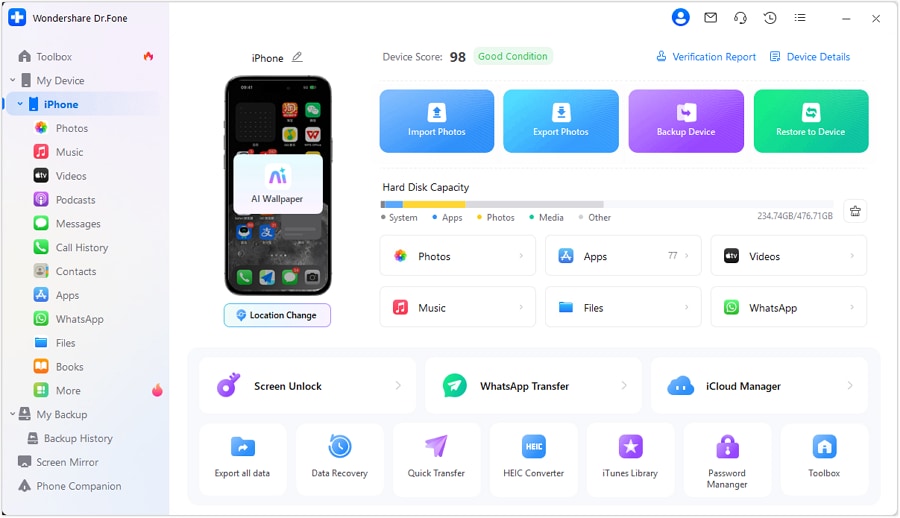
Step 1 Connect your phone and open device management
Connect your iPhone/Android to the computer and open the device management view so you can review and handle content deliberately (instead of deleting blindly on the phone).
-
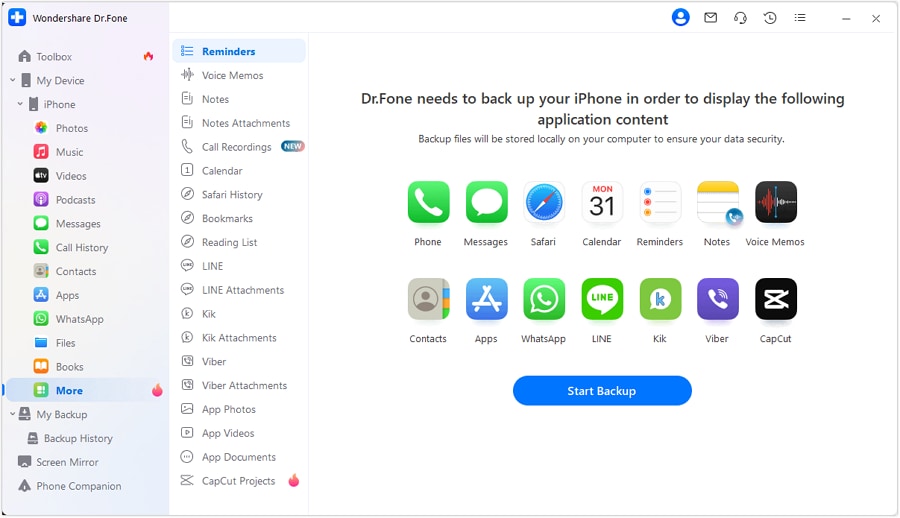
Step 2 Create a verified safety backup (then spot-check)
Back up the data categories you decided are critical, then verify by previewing/restoring a few representative items (for example: one lecture recording, one PDF, and a small batch of photos).
Limitation: AI cannot confirm what was actually captured in your backup or whether every app’s data is included.
-
Step 3 Reduce clutter with lowest-risk removals first
Remove obvious low-risk clutter you pre-approved (for example: known junk downloads, exported duplicates, or large media you already archived) before touching anything you might need for grades, reimbursements, or portfolios.
Limitation: AI can suggest safe ordering, but it cannot see which specific files are junk vs meaningful on your device.

-
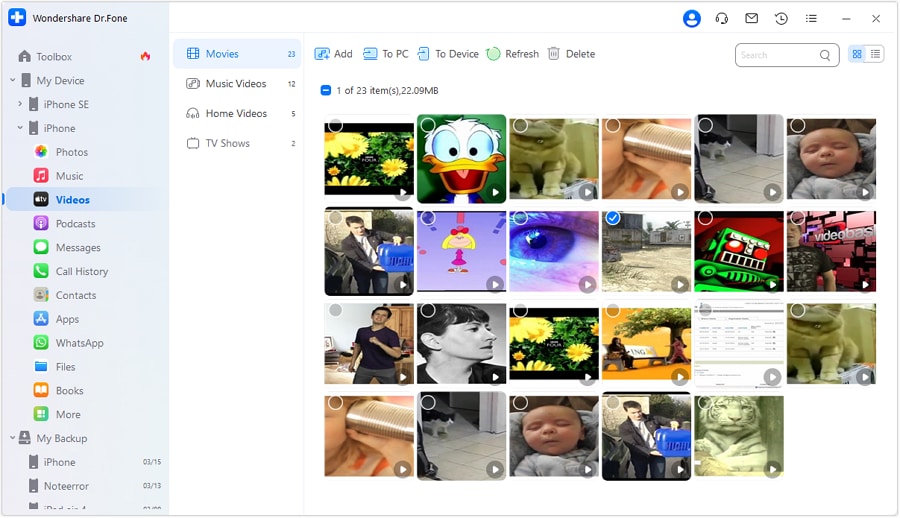
Step 4 Only after verification, do the irreversible cleanup
If (and only if) your verification gates passed, perform the permanent step you defined (for example: emptying recovery folders after confirming backups, or removing already-archived media).
Limitation: This is the point of no return; AI cannot recover what gets permanently erased if your verification was wrong or incomplete.
Recommended tool for semester cleanup
If you want a repeatable semester workflow that emphasizes “backup first, verify, then clean,” Dr.Fone Basic - Data Manager can help you manage, transfer, and back up key categories before you remove clutter.
 Easily manage data through preview, delete, export, etc.
- Transfer all data between devices.
- Robust backup solutions for reliable data protection.
- Mirror screens to PC for meetings, teaching, and control.
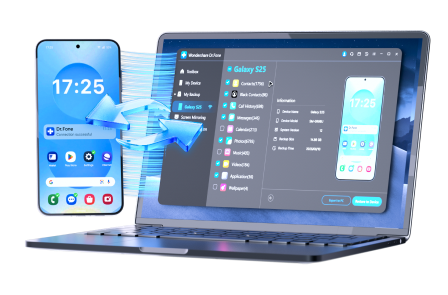
Use it to (1) create and validate a safety backup, (2) review and remove low-risk clutter categories you’ve already approved, and (3) avoid “delete first, verify later” mistakes that can cost you coursework or important files.




Conclusion
Use AI to design a semester declutter workflow with verification gates and a clearly marked point of no return, then use a real tool like Dr.Fone to execute backups and cleanup safely on the actual device.
FAQ
-
What’s the biggest mistake students make when decluttering each semester?
Deleting first and verifying later—especially with photos, chat attachments, and scanned notes that weren’t actually backed up. -
What should I verify before I delete anything “important”?
That a backup exists, has a recent timestamp, and that you can open a few sample files from the backup (not just see a “synced” label). -
How do I handle “must-keep” items that are scattered across apps?
Plan by category (notes, PDFs, recordings, receipts) and require an “export/backup confirmed” check for each app before you remove anything from the phone. -
When is it safe to empty “Recently Deleted” or do a secure erase?
Only after your backup is verified and you’ve confirmed you won’t need the files for grades, appeals, reimbursement, or portfolio use. -
Can AI tell me what to delete on my phone?
AI can help you decide rules and order (what’s low-risk vs high-risk), but it can’t see your actual files or confirm what’s safe to remove.
 Add Wondershare Dr.Fone as a preferred source on Google