Effortlessly manage data through preview, delete, export, etc.

 100% Security Verified | No Subscription Required | No Malware

 :
: 
 ChatGPT
 Perplexity
 Gemini
 Claude
 Grok
Grok

I tapped “Format” on my SD card by mistake and now it looks empty. My folders are gone, and I’m scared that trying random fixes will overwrite everything.
Forum user
Formatting an SD card can instantly make photos, videos, and documents “disappear,” especially if it happened right after you tapped Format in your phone’s storage settings or a camera prompt. The card may look empty, or Android may show it as newly initialized.
AI (like ChatGPT or Gemini) can help you describe the symptoms clearly, narrow down likely causes (quick format vs encryption vs card failure), and choose low-risk next steps based on what you did right before the loss.
AI can’t see your SD card’s real condition, and repeated trial-and-error (reformatting again, copying new files, running random “fix” options) can overwrite recoverable data and reduce your chances.
In this article
- Part 1. Why recovering files from a formatted SD card is sometimes possible
- How “format” affects the file index
- Common real-life triggers on Android
- Device mismatch prompts (phone/reader)
- Before you prompt the AI
- Part 2. Using AI prompts to diagnose SD card format data loss safely
- Part 3. When to stop SD card recovery attempts to avoid overwriting
- Part 4. Unlock Android screen to access a formatted SD card with Dr.Fone
- Part 5. Low-risk checklist to protect recoverability

1. Recovery may still be possible after formatting.
A format often changes the file index first; recovery chances drop fast if new data overwrites the old space.
2. Use AI to clarify what happened and pick low-risk next steps.
Good prompts help separate “what you did” from “what you saw,” rank likely causes (quick format vs encryption vs failure), and avoid high-risk actions.
3. Stop risky actions early, then execute carefully.
Don’t reformat or keep writing to the card; if phone access is blocked, regain access first so you can verify key evidence without accidental overwrites.
Part 1. Why recovering files from a formatted SD card is sometimes possible
1-1. How “format” affects the file index
A “format” usually changes how the SD card’s file index is stored, not necessarily erasing every byte immediately. That’s why recovery is sometimes possible—until new data overwrites the old space.
1-2. Common real-life triggers on Android
In real life, this often happens on an Android phone after selecting Erase & format, or after a restart when the device asks to “set up” the card again.
1-3. Device mismatch prompts (phone/reader)
If your SD card was used in a different device (for example, moved between a phone and a reader connected to an iPhone 13 or iPhone 14), the mismatch can also trigger confusing prompts.
A common feeling is: you wait several minutes, but nothing changes—your folders are gone, and it’s unclear whether the phone is still “preparing” the card or if the data is already lost.
1-4. Before you prompt the AI
Collect the basics first so the AI can reason without guesswork:
- What device(s) touched the SD card last (phone model, camera model, PC/Mac)?
- Exactly what you tapped (Format / Erase & format / “Fix” / “Use as portable storage”)
- Whether you saved new photos/files onto the SD card after formatting
- Any messages (e.g., “corrupted,” “needs to be formatted,” “read-only,” capacity shows 0)
- Whether the phone is locked and you can’t access storage settings or files
Part 2. Using AI prompts to diagnose SD card format data loss safely
2-1. Level 1: Basic Prompt
I formatted my SD card and now my files are missing.
Ask me the minimum questions needed to estimate whether recovery is still possible, and list the safest next steps in order, prioritizing avoiding overwriting data.
2-2. Level 2: Advanced Prompt
Act as a data-loss triage assistant.
Based on my answers, rank the most likely causes of “files missing after SD card format” (quick format, full format, encryption/adoptable storage, file system mismatch, counterfeit/failing card, accidental overwrite).
For each cause, give: (1) key evidence to confirm, (2) what NOT to do (risk of overwriting), (3) the lowest-risk next action.
If uncertainty is high, say so and tell me what evidence would reduce it.
2-3. Level 3: Evidence Prompt
Help me diagnose formatted SD card data loss without increasing risk.
Use my details to:
1) separate what happened vs what I observed,
2) rank likely causes with confidence levels,
3) propose a low-risk plan.
Details:
- Phone model: (e.g., Samsung Galaxy S21)
- Android version: (if known)
- Phone lock status: (locked / can’t access files / normal access)
- SD card brand & size: (e.g., SanDisk 128GB)
- SD card usage: (portable storage / adoptable as internal)
- What triggered the format: (e.g., tapped “Format” after a warning)
- Format type: (quick/full/unknown)
- What I did after formatting: (copied files? took photos? ran “repair”?)
- Current symptoms: (empty folders, wrong capacity, asks to format again, errors)
- Where I need the files for: (photos/videos/documents)
- What devices I can use now: (Windows/Mac/another Android)
Constraints: prioritize steps that reduce overwrite risk; tell me when to stop.
2-4. Prompt Refinement
Use these follow-ups to make the AI’s output more reliable:
What one missing detail would most change your ranking of causes, and why?
Separate the possibilities into categories: overwrite risk, encryption/adoptable storage, hardware failure, file system mismatch.
Rank the top 3 causes again, but only using evidence I provided—don’t assume.
What is the single most important piece of evidence I should check next, without writing new data to the SD card?
If my phone is locked, how does that change the safest workflow to avoid accidental overwrites?
2-5. AI Output vs Reality
AI can help you choose a safer path, but it can’t verify the SD card’s real state.
| What AI can infer | What you must verify on the device |
|---|---|
| Whether your description sounds like quick format vs other scenarios | Whether any new data has been written since formatting |
| Whether adoptable storage/encryption is a strong possibility | Whether the SD card was set as internal (adoptable) on that phone |
| Whether symptoms match file system mismatch or corruption | What capacity/error messages the OS actually shows right now |
| Whether your next step is high-risk or low-risk | Whether you can safely access settings/files without triggering writes |
The gap matters because the “best” next step depends on facts only your device can reveal (lock state, storage mode, error messages, and what actions are available without writing data).
Part 3. When to stop SD card recovery attempts to avoid overwriting
If your goal is recovery, the safest mindset is to stop actions that create new writes or repeated changes—especially when the situation is unclear.
- You already wrote new photos/files to the SD card after formatting (overwrite risk is rising).
- The SD card repeatedly asks to be formatted again or shows incorrect capacity (possible failure/counterfeit).
- The SD card was used as adoptable/internal storage and now the original phone is unavailable (encryption risk).
- Your phone is locked and your attempts to “try things” may trigger background storage operations you can’t control.
Once you’ve used AI to narrow the likely causes and pick the lowest-risk approach, the next step is controlled execution—especially if device access is blocked by a lock screen.
Part 4. Unlock Android screen to access a formatted SD card with Dr.Fone
If the SD card is in an Android phone you can’t access (forgotten PIN/pattern, broken screen input, or lockout), your recovery workflow can stall before you can even confirm key evidence (storage mode, SD card status, error prompts). At that point, Dr.Fone - Screen Unlock (Android) becomes relevant as an execution step to restore access to the device interface so you can proceed with careful, low-write checks and next actions.
 Unlock Android phone in seconds.
- Remove PIN, pattern, password, fingerprint.
- Bypass Google FRP lock easily.
- Works on all Android brands & models.
- No tech skills required – user-friendly.
-
Step 1 Confirm the goal (access, not experiments)
Decide what you need to open on the phone (Settings → Storage, Files app, SD card prompts) and avoid tapping “format” or “optimize” options.
-
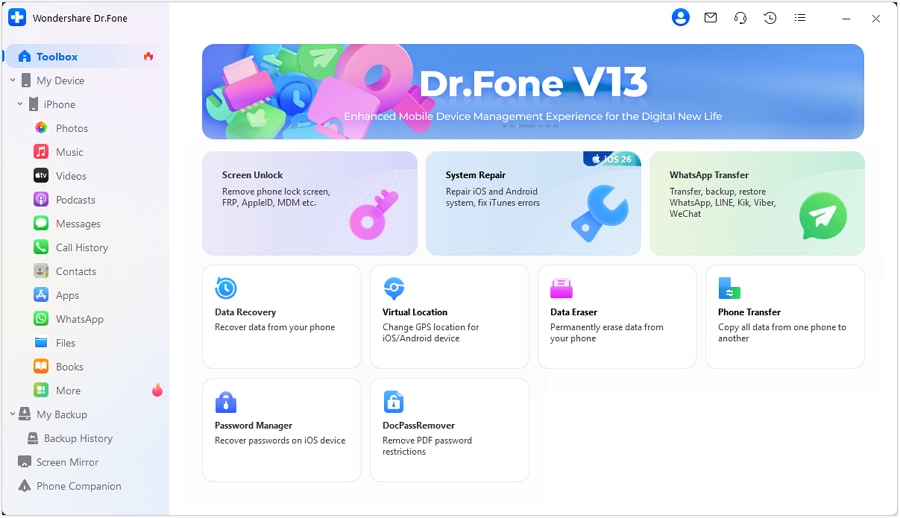
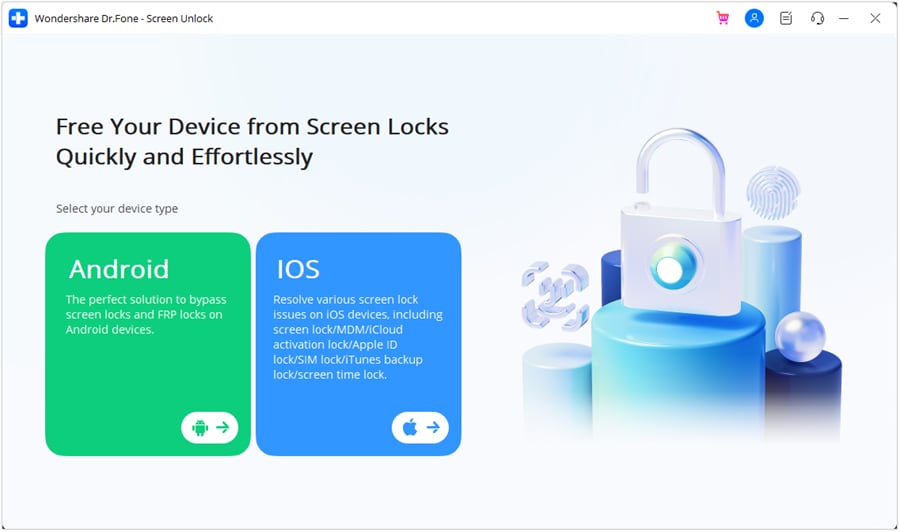
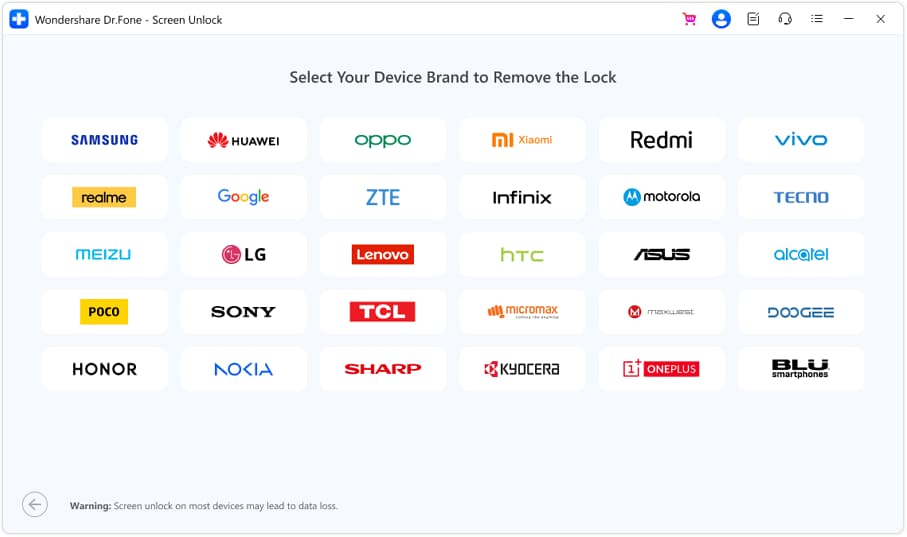
Step 2 Open Dr.Fone and choose Unlock Android Screen
On your computer, launch Dr.Fone and select the Android screen unlock flow from the Unlock Android Screen feature.
-
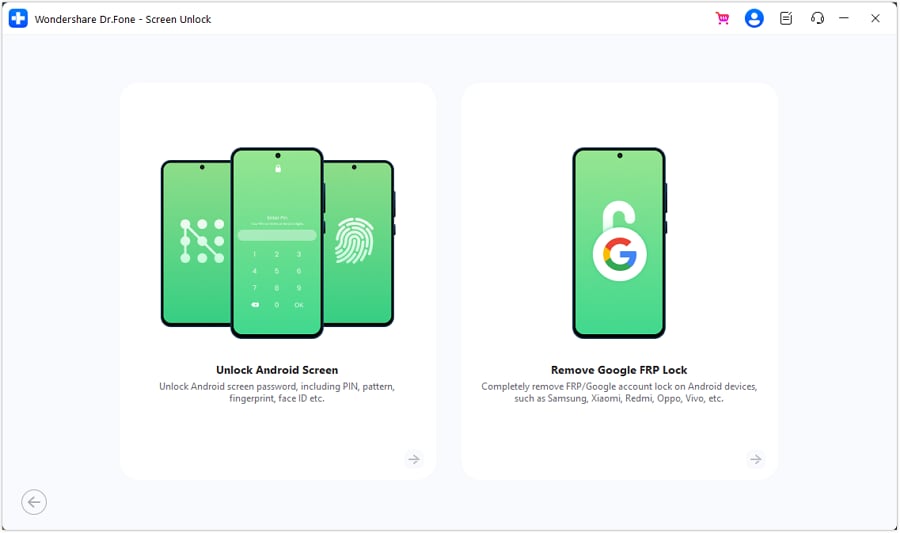
Step 3 Follow the model-specific unlock instructions
Use the guided steps in the Android lock screen removal guide to match your device path, and proceed carefully to avoid unnecessary resets.
-
Step 4 After access, check SD card status without writing new data
Once you can navigate the phone, review Storage/SD card status and avoid saving new files, moving apps, or reformatting while you confirm whether it was portable vs adoptable storage.
-
Step 5 Proceed with your chosen recovery workflow on the right device
If AI suggests computer-based scanning, remove the SD card and use a reader—don’t keep “testing” in the phone if it risks background writes.

Part 5. Low-risk checklist to protect recoverability
Use this checklist to keep your situation “recoverable” while you triage with AI and verify facts on the device:
- Stop using the SD card immediately (no photos, downloads, app moves, or “repair/optimize” actions).
- Don’t reformat again, and avoid repeated trial-and-error that could create new writes.
- Confirm whether the SD card was portable storage vs adoptable/internal storage before changing devices.
- If your phone access is blocked, regain access first so you can check storage status and prompts without guesswork.




Conclusion
Use AI to structure what happened, rank the most likely causes of formatted SD card data loss, and choose low-risk next steps that minimize overwriting—then hand off execution to Dr.Fone when device access is blocked, so you can confirm evidence and continue the recovery plan safely.
FAQ
-
Can files be recovered after formatting an SD card?
Sometimes, especially after a quick format and if you haven’t written new data. The key variable is whether the original data blocks have been overwritten. -
What should I do immediately after accidental SD card format?
Stop using the SD card (no new photos, downloads, or app moves), and gather evidence (format type if known, prompts, capacity shown, and device history) for a safe triage. -
Does using the phone after formatting overwrite recoverable data?
It can. Some apps and system processes write thumbnails, caches, or updates, which may overwrite space that previously held your missing files. -
What if the SD card was adopted as internal storage?
Adoptable storage is typically tied to that specific Android device and may involve encryption; moving the card to a computer can look like unreadable data rather than normal files. -
How does unlocking my Android phone help SD card recovery?
Unlocking restores access to storage settings, SD card prompts, and file management so you can verify key facts and proceed with a controlled, low-risk workflow.
 Add Wondershare Dr.Fone as a preferred source on Google