Effortlessly manage data through preview, delete, export, etc.

 100% Security Verified | No Subscription Required | No Malware

 :
: 
 ChatGPT
 Perplexity
 Gemini
 Claude
 Grok
Grok

I just need it to last all day.
Forum user
Generic “best battery saver” advice rarely helps because your bottleneck might be screen brightness, aging battery health, heavy apps, or simply not having a reliable way to top up between classes.
AI helps by turning “I just need it to last all day” into a structured comparison of options—what to change, what to buy, what to repair, and when upgrading is the least painful path.
AI can’t validate how your specific tablet behaves in your real schedule (Wi‑Fi quality, app bugs, classroom rules about charging), so the final fit still depends on real-life use—and what you’ll need to do after deciding (like switching devices or preparing one for resale).

In this article
- How to Compare Based on Real Priorities
- Define what you’re optimizing for
- Understand the trade-off (quick wins vs reliable fixes)
- Factor in constraints beyond specs
- Identify your real “failure mode.”
- What the AI Needs to Compare
- Using AI Prompts to Evaluate More Clearly
- AI Recommendation vs Real-World Fit
- When to Stop Researching and Make the Call
1. Compare options by your real priority, not generic tips.
The “right” fix depends on what you’re optimizing for (reliability in class, lowest cost, least hassle, or longest lifespan) and the trade-off you can accept.
2. Give the AI your day, your drains, and your constraints.
Model/age, time away from outlets, top draining tasks, brightness and connectivity habits, charging rules, and budget make the AI’s comparison specific instead of vague.
3. Validate the recommendation with a short real-world test.
A 1–2 day school-like trial (same apps, brightness, and network conditions) helps confirm whether the problem is settings/workflow or battery health before spending money.
Part 1. How to Compare Extend Tablet Battery Life for Long School Days Based on Real Priorities
1-1. Define what you’re optimizing for
For a long school day, the “right” solution depends on what you’re optimizing for: zero hassle during class, lowest cost, longest lifespan, or the fewest behavior changes.
1-2. Understand the trade-off (quick wins vs reliable fixes)
The main tension is usually this: quick wins (settings tweaks) are cheap but may not be enough, while reliable fixes (power accessories, battery service, or upgrading) cost more but reduce daily anxiety.
1-3. Factor in constraints beyond specs
A good comparison also accounts for constraints that often matter more than specs—whether you’re allowed to charge in class, whether your bag can handle extra weight, and whether your apps (notes, textbooks, video) are the true drain.
1-4. Identify your real “failure mode”
Your best choice is the one that prevents the specific way your day fails (for example: dying during the last two classes, breaking during exam days, or causing interruptions during lectures).
Part 2. What the AI Needs to Compare
To compare your options fairly, the AI needs a simple picture of your day and what “failure” looks like.
- Your tablet model/age (or approximate age) and typical battery health signals (rapid drops, shutdowns, heat)
- Hours away from an outlet and whether charging between classes is realistic
- Top battery drains (video calls, streaming, note apps with stylus, gaming, hotspot use)
- Brightness habits (indoors/outdoors), Bluetooth/stylus use, and Wi‑Fi vs cellular use
- Your “must-not-fail” window (e.g., last 2 classes, exam days)
- Budget range and tolerance for carrying accessories
- Your preference: change settings vs buy gear vs repair vs replace
- Whether you might switch tablets soon (data transfer/resale implications)
Part 3. Using AI Prompts to Evaluate Extend Tablet Battery Life for Long School Days More Clearly
Use these prompts to force a trade-off-based comparison instead of a generic list of tips.
3-1. Level 1: Basic Prompt
I need my tablet to last a full school day without dying. Compare these options for me: (1) settings + habit changes, (2) carrying a power bank/charger, (3) battery repair/replacement, (4) upgrading to a newer tablet. Ask me any key questions you need, then recommend the best path.
3-2. Level 2: Advanced Prompt
Act as a decision assistant and compare four approaches to extending my tablet battery for long school days: optimize settings, add charging accessories, repair/replace the battery, or replace the tablet.
Rank them by (a) reliability during class, (b) total cost over 12 months, (c) inconvenience/behavior change, and (d) risk of still running out of power. Explain which type of student each option fits best and why.
3-3. Level 3: Evidence Prompt
Here’s my context: [tablet model/age], I’m away from outlets for [X] hours, I use [apps/tasks] most, brightness is usually [low/medium/high], and I can/can’t charge between classes. My budget is [$X], and I’m willing/not willing to carry extra gear.
Recommend one primary approach and one backup approach. For each option, tell me **what I gain / what I give up**, and name **one assumption** (about my schedule, battery condition, or charging access) that would change your recommendation.
3-4. Prompt Refinement
If my real problem is *battery aging* rather than settings, what signs would I notice, and which option becomes the best value?
Assume I’m not allowed to charge in class and I often forget cables—how does that change the ranking, and what’s the least-forgetful setup?
What’s the “regret risk” for each option (the most likely reason I’ll wish I chose differently after two weeks)?
What minimum experiment should I run for 2 school days to verify the top recommendation before I spend money?
If I prioritize “no interruptions during lectures” over cost, which option wins and what trade-off am I accepting?
If I upgrade, what’s the simplest plan to avoid losing notes/files and to protect my privacy on the old tablet?

Part 4. AI Recommendation vs Real-World Fit
| Likely AI recommendation or conclusion | What real-life use may change or reveal |
|---|---|
| “Start with settings/habit tweaks first—they’re free and often enough.” | Your actual drain may be one specific app (background sync, video, hotspot) that ignores “common” tweaks. |
| “If you can’t reliably access outlets, a power bank is the most dependable day-to-day fix.” | School rules, cable clutter, bag weight, or forgetting the bank can make the “reliable” option fail in practice. |
| “If the battery is aging, repair/replacement is the best long-term value.” | Service availability, turnaround time, cost, and whether the device is worth investing in can flip the value. |
| “If you need guaranteed all-day performance with heavy use, upgrading reduces ongoing friction.” | New device setup time, accessory compatibility, and app workflows can introduce new friction even if battery improves. |
AI can clarify your most likely best-fit path, but hands-on use, workflow friction (charging rules, forgetting gear), and daily habits ultimately determine whether the choice feels effortless or annoying.
Part 5. When to Stop Researching Extend Tablet Battery Life for Long School Days and Make the Call
- You can name your top priority (reliability, lowest cost, least hassle, or longest lifespan) and accept the trade-off it implies.
- You’ve identified the most realistic constraint (no outlets, heavy video use, aging battery signs, forgetting chargers) that dominates the decision.
- You’ve chosen a primary option and a fallback plan for exam days or unusually long schedules.
- You’ve run (or committed to run) a short 1–2 day test that would prove your choice is “good enough.”
Once you can predict your likely annoyance points ahead of time, you’re ready to choose instead of continuing to compare.
After Choosing: Switch or Prepare Smoothly with Dr.Fone
After you decide, the practical work is usually about continuity (keeping notes/files), minimizing downtime, and protecting privacy—especially if you repair, replace, or sell your tablet. If you need help with device handling tasks during that process, Dr.Fone - Screen Unlock (Android) is one option to consider depending on your situation.
 Unlock Android phone in seconds.
- Remove PIN, pattern, password, fingerprint.
- Bypass Google FRP lock easily.
- Works on all Android brands & models.
- No tech skills required – user-friendly.
-
Step 1 Move what matters first (if you’re switching devices)
Use transfer tools to move key photos, contacts, and essential files so school-critical items aren’t stuck on the old device.
Limitation: Some app-specific data (certain notes or encrypted app content) may still require the app’s own sync/export.
-
Step 2 Make a safety backup before repair or reset
Use a backup/restore workflow so you can recover quickly if a repair, update, or reset goes sideways.
Limitation: A backup won’t fix battery issues—it only reduces the risk of data loss and setup downtime.
-
Step 3 Prepare the old tablet for handoff or resale
Use a data eraser option (or an equivalent secure wipe flow) before you give the device to someone else.
Limitation: Secure erasure can take time and doesn’t increase resale value unless the device is also clean, functional, and account-free.
5-1. Optional: Unlock an Android tablet for handoff if you’re locked out
If your plan involves selling, handing down, or resetting an Android tablet but you can’t access it due to a forgotten screen lock, you may need to remove the lock before you can finish cleanup and handoff tasks.
-
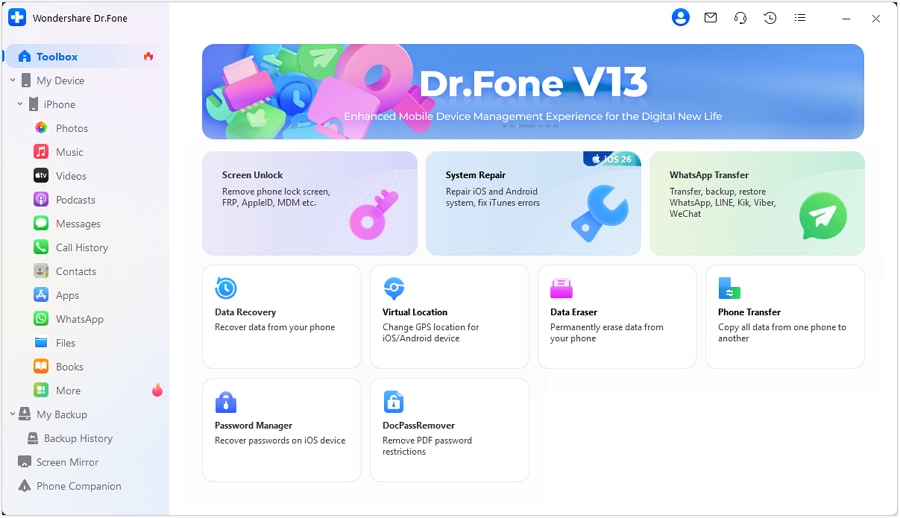
Step 1 Launch the screen unlock tool
Open Dr.Fone and enter the Android screen unlock flow.
-
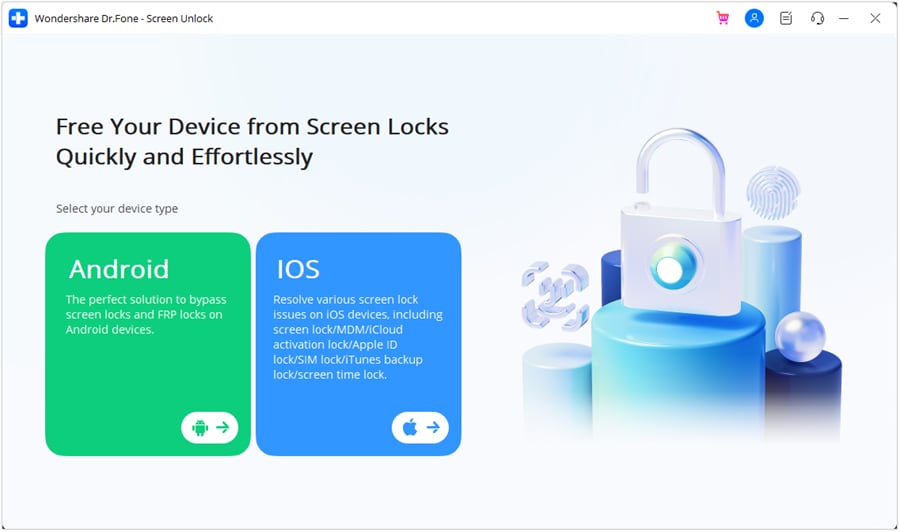
Step 2 Select the Android unlock option
Choose the option that matches the type of lock you need to remove on your device.
-
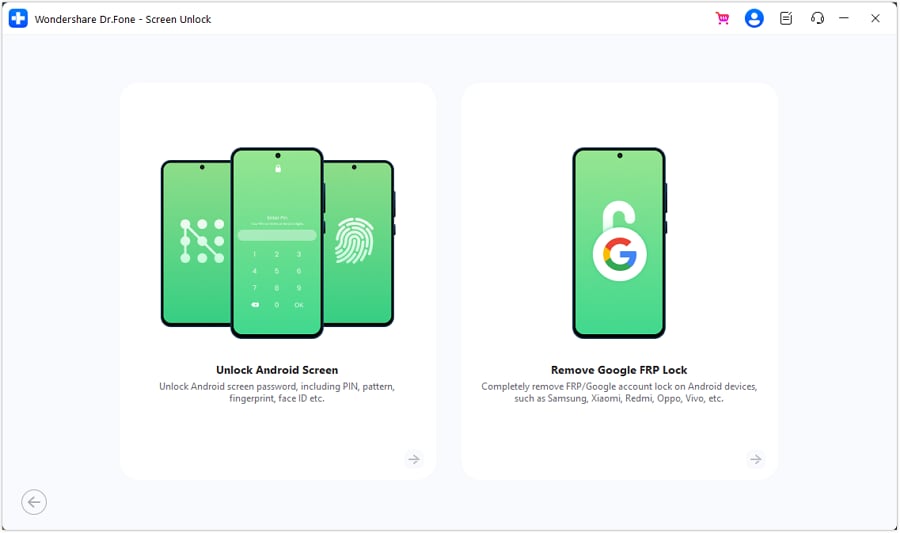
Step 3 Access the remove screen lock function
Proceed to the feature used for removing the screen lock so you can continue with your handoff/resale preparation.
-
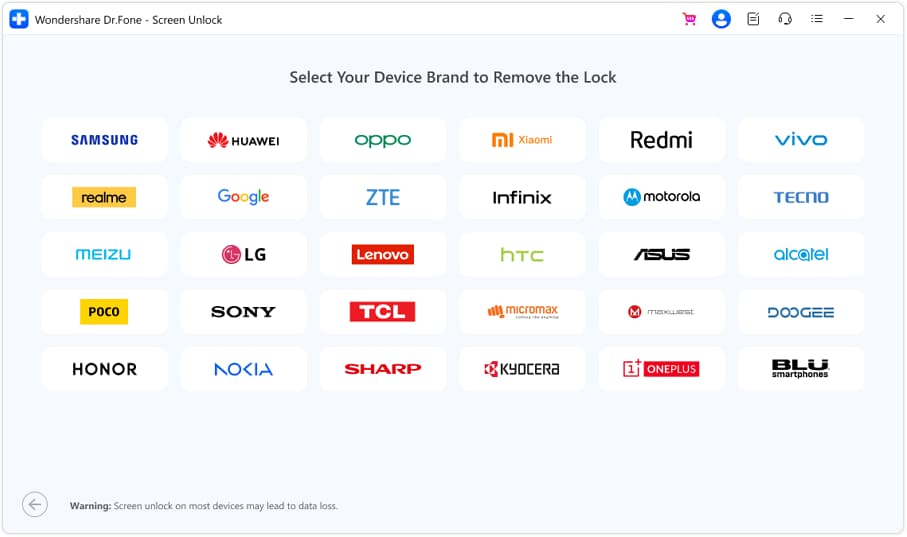
Step 4 Select your device brand and follow the on-screen instructions
Pick the correct brand/model path and complete the guided steps shown in the tool.




Conclusion
AI is most useful here as decision support—clarifying trade-offs, surfacing regret risks, and identifying the one assumption that could flip your choice—while real daily use proves whether the fix actually holds. Once you’ve decided (especially if you’re repairing, upgrading, or reselling), a tool like Dr.Fone helps handle the practical follow-through: transfer, backup, and secure cleanup.
FAQ
-
Can I trust AI to tell whether I need a new tablet or just better settings?
Trust it for decision structure and trade-offs, not diagnosis. Battery aging vs app drain often requires your observations (shutdowns, heat, rapid % drops, time-on-screen patterns).
-
What’s the biggest trade-off across all options?
Reliability vs inconvenience. Settings tweaks are low effort but may be insufficient; accessories add reliability but increase carry/forget risk; repair/upgrade costs more but reduces daily friction.
-
How do I avoid a pointless spec-based comparison?
Compare by your day: hours away from outlets, your top 2–3 battery-draining tasks, and whether interruptions during class are acceptable. Then choose the option that minimizes your specific failure mode.
-
What quick test should I run before spending money?
Do a 1–2 day “school simulation”: same apps, same brightness, same network conditions, and track when/why battery drops fast. Use that to confirm whether drain is behavioral or battery health.
-
If I upgrade, what should I prepare so the switch doesn’t disrupt school?
List must-have items (notes, PDFs, photos, logins), back up the old device, then transfer essentials first. Plan time for re-login and verifying files before relying on the new device in class.
-
If I’m selling or handing down the tablet, what’s the key risk?
Leaving accounts or personal files behind. Back up what you need, sign out of accounts, and securely erase data before the device leaves your control.
 Add Wondershare Dr.Fone as a preferred source on Google