Effortlessly manage data through preview, delete, export, etc.

 100% Security Verified | No Subscription Required | No Malware

 :
: 
 ChatGPT
 Perplexity
 Gemini
 Claude
 Grok
Grok

I deleted some stuff (or ran a cleanup app / restarted), and now my photos or chats are missing. I can’t tell if it’s truly gone or just not syncing—what should I check first without making recovery harder?
Forum user
Losing photos, chats, or documents on your phone can feel urgent—especially right after you tapped Delete, ran a cleanup app, or hit Restart and noticed files missing. It’s often unclear whether the data is truly gone or just no longer visible.
AI (like ChatGPT or Gemini) can help you map where the data might still exist (cloud, SD card, app servers, local storage), narrow likely causes, and choose low-risk next steps in the right order. AI can’t see your accounts or scan your device, so the goal is safe diagnosis first—then careful execution with the right tool if needed.
In this article
- Why check cloud backups first after losing Android data
- Before you prompt the AI: what to collect
- Common reasons “missing” data isn’t truly deleted
- Why cloud-first checks are the lowest risk
- What to avoid while you’re still diagnosing
- AI prompts to identify if missing files are in cloud storage
- When to stop DIY checks to avoid overwriting deleted Android data
- AI output vs reality: what you must still verify
- Recover data from an Android device with a scan-based workflow
Part 1. Why check cloud backups first after losing Android data

On Android, “missing data” often isn’t a single problem. It could be: the item was deleted locally, the app signed you out, syncing is paused, you switched accounts, or the file only lived in a cloud-backed app.
A common scenario: after clearing storage or updating an app, you open Google Photos/Drive/WhatsApp and nothing looks right. You may wait a few minutes, but nothing changes—so it’s hard to tell if sync is still happening.
Even if you’re thinking “What would I do on an iPhone 13 or iPhone 14?”, the same principle applies: check cloud and account state first because it’s low-risk and can prevent actions that reduce recovery chances.
1-1. Before you prompt the AI: what to collect
Collect the basics so the AI can reason accurately:
- Android model + version (and whether it has an SD card)
- What you did right before data disappeared (delete, update, reset, cleanup app, account change)
- What data type is missing (photos, messages, contacts, files) and which app
- Whether you see storage usage change or “recently deleted/trash” folders
- Whether you changed Google account / app login recently
1-2. Common reasons “missing” data isn’t truly deleted
“Missing” can mean the app is showing a different account, sync is paused, network/battery settings are blocking sync, or you’re looking in the wrong folder (for example, archive or trash). In cloud-backed apps, the data may still exist on the server even if the local view is incomplete.
1-3. Why cloud-first checks are the lowest risk
Checking cloud status (account, sync state, trash/recently deleted) is typically read-only and doesn’t write new data to your phone storage. That makes it safer than “trying fixes” that can overwrite deleted space or remove local app databases.
1-4. What to avoid while you’re still diagnosing
Avoid actions that change storage or app data (reinstalls, clearing app data, resets, “optimizer/cleaner” tools) until you’ve confirmed whether the data is still present in cloud/trash or likely deleted on-device.
Part 2. AI prompts to identify if missing files are in cloud storage
2-1. Level 1: Basic Prompt
I lost data on my Android phone and I’m not sure if it’s deleted or just not syncing.
Help me decide whether I should check cloud backups first, and give me the safest order of checks to avoid overwriting anything.
2-2. Level 2: Advanced Prompt
Act like a cautious mobile data triage assistant.
Based on my situation, rank the most likely places my missing data still exists (cloud account, app server, SD card, phone storage, recently deleted/trash) and list low-risk checks first.
Constraints: avoid steps that could overwrite deleted data; flag any step with “risk: low/medium/high.”
My situation: [briefly describe what disappeared, which app, and what I did right before].
2-3. Level 3: Evidence Prompt
Help me diagnose missing phone data and decide whether cloud checks should come before recovery attempts.
Use my evidence below, then:
1) list the top 5 likely causes,
2) rank where the data most likely still exists,
3) give a low-risk checklist in order,
4) tell me what NOT to do yet (overwrite risks).
Evidence:
- Phone model: (e.g., Samsung Galaxy S22)
- Android version: (e.g., Android 13)
- Missing data type: (e.g., photos, WhatsApp messages, contacts)
- App involved: (e.g., Google Photos / WhatsApp / Files by Google)
- Account status: (e.g., same Google account? multiple accounts?)
- Trigger event: (e.g., cleared cache, factory reset, OS update, deleted items)
- SD card: (e.g., none / yes and removed / yes and still inserted)
- Network/sync: (e.g., Wi‑Fi on, battery saver on, sync paused)
- What I already checked: (e.g., trash/recently deleted, web version of Drive)
- Time since loss: (e.g., 2 hours / 3 days)
- Any new downloads/photos since loss: (yes/no)
2-4. Prompt Refinement
Use these follow-ups to make the AI’s reasoning more specific:
Ask me the missing questions you need to choose between “sync issue” vs “deleted data,” and explain why each question matters.
Separate causes into categories: account/sync, app behavior, storage cleanup, SD card, and true deletion—then rank within each category.
Give me 3 key pieces of evidence that would most strongly confirm the top-ranked cause, and how to check each safely.
If I must choose only one next step that is lowest risk, what is it—and what outcome should I expect if the data is cloud-only?
Tell me which actions could reduce recovery chances (like continued use, installs, cache-clearing, or resets) and what to pause immediately.
Part 3. When to stop DIY checks to avoid overwriting deleted Android data
Stop “trying random fixes” when the situation shifts from visibility/sync questions into potential deletion, because some actions can reduce recovery odds.
- You suspect true deletion and you’ve continued using the phone (new photos, installs, large downloads) since the loss
- You’re tempted to factory reset, flash firmware, or run “cleaner/optimizer” tools to “force it back”
- The missing data involves app databases (e.g., messaging apps) and you’re about to reinstall/clear app data
- You can’t confirm the correct cloud account or trash status, but you’re about to take irreversible steps
Once you’ve used AI to narrow the most likely location (cloud vs device) and you still can’t find the data in cloud/trash, it’s time to switch from diagnosis to careful execution.
Part 4. AI output vs reality: what you must still verify
AI can guide reasoning, but it can’t directly validate what’s on your device or accounts. It helps you choose a safer order of operations; execution requires checking the actual account states and, if needed, using a tool that can scan the device.
| What AI can infer | What you still need to verify |
|---|---|
| Whether the pattern looks like account mismatch or paused sync | Which account is signed in on the phone and on the web |
| Whether “recently deleted/trash” is likely available for your app | Whether items exist in trash, archive, or a secondary folder |
| Whether your actions suggest true deletion vs display/indexing issue | Whether files exist in local storage or only in cloud/app servers |
| Which next steps are low-risk vs overwrite-risk | Whether the device needs a recovery scan to confirm recoverable data |
AI helps you choose a safer order of operations; execution requires checking the actual account states and, if needed, using a tool that can scan the device.
Part 5. Recover data from an Android device with a scan-based workflow
If your AI triage suggests the files aren’t in cloud/trash (or the device was wiped, storage cleaned, or data appears truly deleted), you’ll likely need a device-level approach to confirm what’s still recoverable. Dr.Fone - Data Recovery (Android) is relevant at this point because it focuses on executing the recovery workflow on the Android device while you follow the safer order you established during diagnosis, rather than continuing high-risk trial-and-error. Use it specifically for the moment you’ve finished low-risk cloud checks and want a more concrete scan-based answer. (You can follow the in-app flow alongside the official guide for Android data recovery.)
 Scan Android phones and tablets directly.
- Preview and recover only what you want.
- Supports WhatsApp, photos, videos, contacts, and more.
- Works with 6000+ Android devices.
-
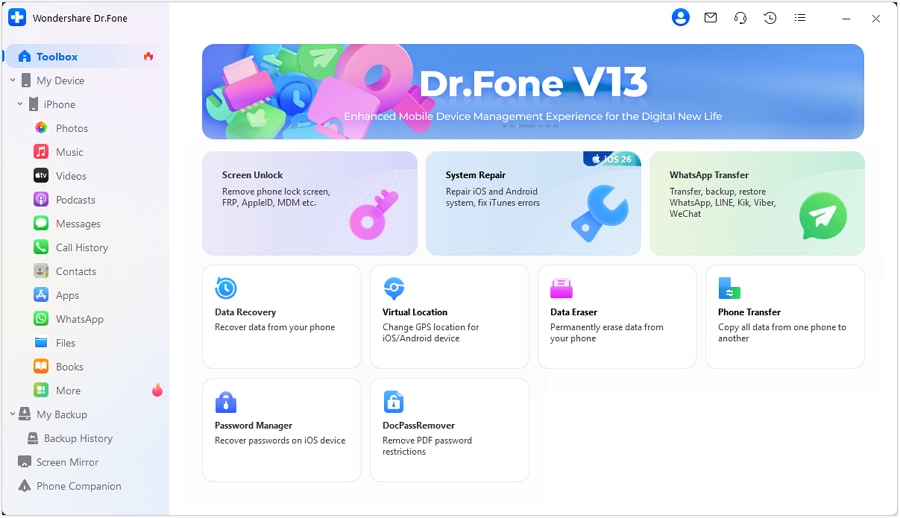
Step 1 Pause overwrite sources
Stop new installs/downloads and avoid resets so you don’t overwrite recoverable space.
-
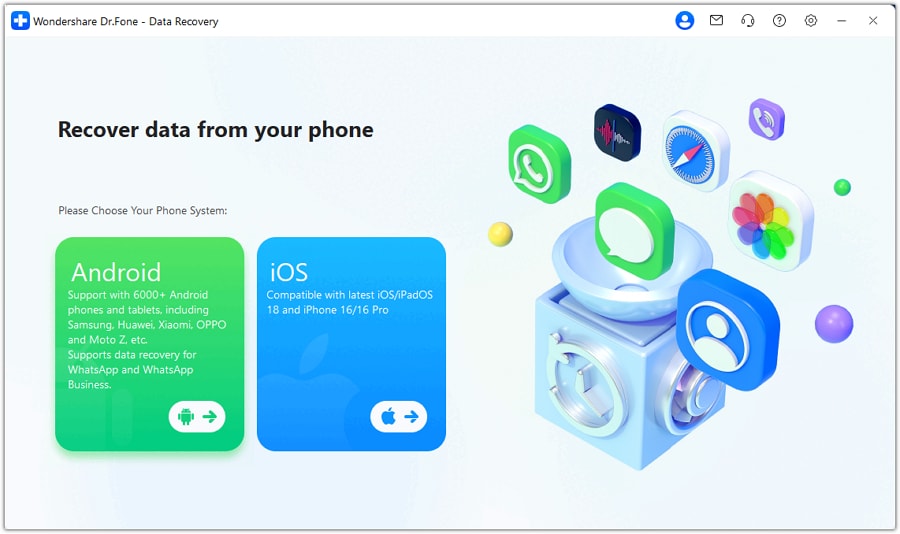
Step 2 Connect Android to a computer
Open Dr.Fone and connect your phone via USB, keeping the connection stable to avoid scan interruptions.
-
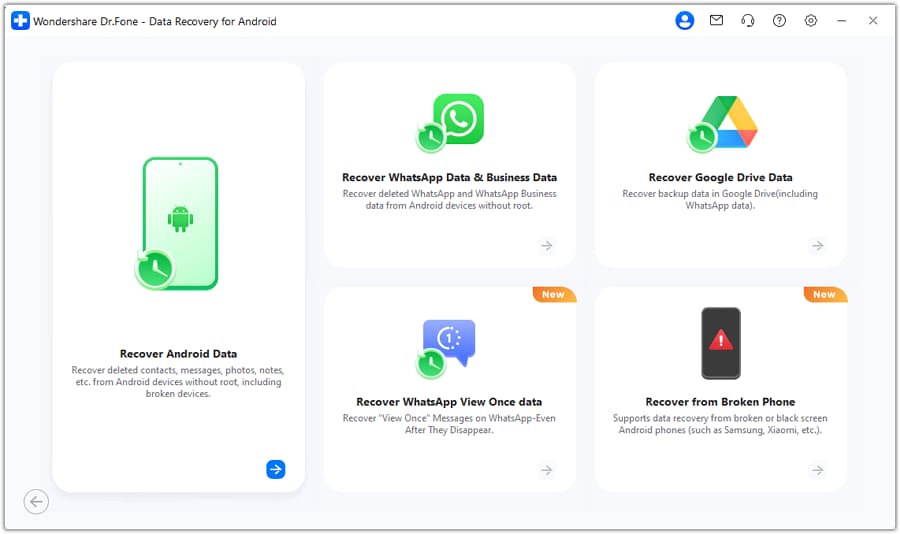
Step 3 Select “Recover Data from Android Device”
Choose the data categories you need (photos, messages, etc.) so you don’t run broader operations than necessary.
-
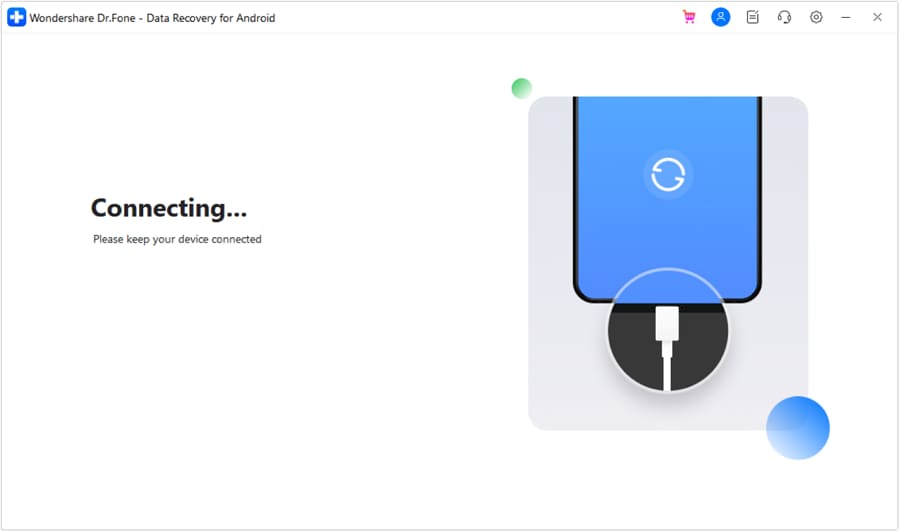
Step 4 Run the scan and review results
Let Dr.Fone scan and then preview what it can detect before you decide what to export.
-
Step 5 Export recovered items to the computer
Save results to the computer (not back onto the same phone storage) to reduce overwrite risk.




Conclusion
Use AI prompts to quickly sort “cloud/account/sync” possibilities from true deletion and to choose the lowest-risk order of checks; once cloud and trash paths are ruled out, hand off execution to Dr.Fone for a scan-based recovery workflow on Android without relying on guesswork.
FAQ
-
Should I check Google Photos or Google Drive first after data loss?
Yes—cloud and trash checks are low-risk and can quickly confirm whether the data is still tied to your account rather than deleted locally. -
What if I’m signed into multiple Google accounts?
Account mismatch is common; verify the active account on the phone and also check the web versions of Photos/Drive for each account. -
Does turning sync on help if items were deleted?
Sync helps if it’s a visibility/sync pause issue; if the items were deleted, syncing may propagate deletion across devices, so confirm trash status first. -
Is it safe to reinstall the app where data is missing?
Often not—reinstalling or clearing app data can remove local databases. Use AI to assess risk before taking actions that change app storage. -
Why avoid using the phone after realizing data is missing?
New data writes can overwrite space where deleted files might still be recoverable, reducing chances of a successful scan.
 Add Wondershare Dr.Fone as a preferred source on Google