Effortlessly manage data through preview, delete, export, etc.

 100% Security Verified | No Subscription Required | No Malware

 :
: 
 ChatGPT
 Perplexity
 Gemini
 Claude
 Grok
Grok

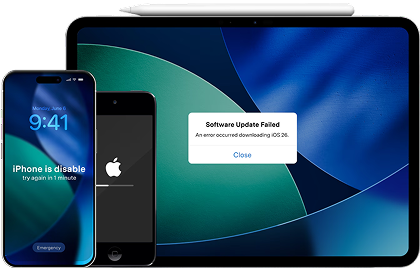
My old iPad felt fine until I tapped “Install Now.” After the reboot, it got stuck on the Apple logo, drained fast, and I couldn’t tell if it was still updating or just failing.
Forum user
An older iPad can suddenly feel “done” after you tap Install Now, reboot, or try to free up storage—then it slows down, gets stuck on a logo, drains fast, or won’t finish updating. Nothing changes after several minutes, and it’s unclear whether it’s still working or silently failing.
AI can help you sort symptoms into likely buckets (battery aging vs iPadOS issues vs storage pressure vs hardware faults), compare scenarios, and identify what evidence would change the decision. You can use tools like ChatGPT or Gemini to keep the reasoning organized and risk-aware.
AI can’t verify your device condition or safely run system actions for you, and trial-and-error can increase risk (data loss, boot loops, repeated update failures). Use AI to decide what to try first, then hand off execution to a controlled tool when needed.

In this article
- Why the fix-or-replace question appears after an update or restart
- Common triggers after updates/restarts
- Why older iPads feel worse
- Software-state vs hardware deterioration
- Before you prompt the AI
- Using AI prompts to diagnose safely
- When to stop troubleshooting to avoid data loss
- A controlled iOS system repair workflow (when “fix” is likely)
- Conclusion
Part 1. Why should i fix or replace my old tablet comes up after an update or restart
If your “old tablet” is an iPad (for example, an older iPad or iPad mini), the fix-or-replace question often appears right after a trigger: a system update, a forced restart, or storage cleanup. You might see long boot times, random reboots, freezing, or the Apple logo screen that doesn’t progress.
This can look similar across Apple devices—someone with an iPhone 13 or iPhone 14 might describe the same “stuck after update” feeling—but on older iPads it’s more likely you’re also hitting battery wear, low RAM, or limited storage headroom.
The key meaning: you’re not deciding “repair vs replace” yet—you’re deciding whether the issue is software-state (often lower-risk to address) or hardware deterioration (more likely to justify replacement).
1-1. Before You Prompt the AI
Collect a quick snapshot first:
- iPad model and approximate age
- iPadOS version you were on and what changed (update/restart/app install)
- Storage free space (rough % is fine)
- Battery behavior (rapid drops, shutdown at 20–40%, gets hot)
- Current symptom (stuck logo, boot loop, slow, won’t charge, black screen)
- Whether you have a recent backup (iCloud/Finder/iTunes)
Part 2. Using AI prompts to diagnose should i fix or replace my old tablet safely
2-1. Level 1: Basic Prompt
I have an older iPad and I’m unsure if I should fix or replace it. After [what I just did], it now shows [symptom]. Ask me the minimum questions needed, then list the top likely causes and the safest next steps that avoid data loss.
2-2. Level 2: Advanced Prompt
Act as a risk-aware Apple device triage assistant.
Based on my answers, rank likely causes of my old iPad issues (software, storage, battery, charging port/cable, display, logic board).
For each cause, give:
1) why it fits
2) what evidence would confirm/deny it
3) a low-risk action to try first
4) what actions to avoid
End with a “fix vs replace” recommendation with confidence level and what would change your mind.
2-3. Level 3: Evidence Prompt
Help me decide whether to fix or replace my old tablet (iPad). Use only the info I provide and clearly label assumptions.
Device info
- iPad model: (e.g., iPad (6th gen))
- Purchase year / age: (e.g., ~6 years)
- iPadOS version (if known):
- Storage free: (e.g., 2 GB free / 64 GB total)
- Battery health clues: (e.g., shuts down at 30%, gets hot, drains overnight)
What happened right before
- Last action: (e.g., tapped Install Now / forced restart / app install)
- Any error message:
Current symptoms
- Boot state: (normal / stuck on Apple logo / boot loop / black screen)
- Charging behavior: (charges slowly / not charging / accessory not supported)
- Performance: (lagging / freezing / apps crashing)
- Time since problem started:
Constraints
- Backup available: (yes/no/unsure)
- Data importance: (low/medium/high)
- I’m willing to try: (settings only / computer connection / repair tools)
Output:
1) Top 3 most likely causes (ranked)
2) A low-risk decision tree (what to try first)
3) “Fix vs replace” recommendation with estimated cost-risk reasoning (no made-up prices)
4) Red flags that mean stop and seek service
2-4. Prompt Refinement
Use these follow-ups to tighten the diagnosis:
“What 5 questions are you missing that would most change your ranking?”
“Separate the possibilities into software-state, power/battery, storage, and hardware—then rank each category.”
“What single piece of evidence would best distinguish battery aging from iPadOS corruption in my case?”
“Based on my symptoms, what actions are highest risk for data loss that I should avoid?”
“Give me a minimal decision tree with stop points if the device heats up, reboots repeatedly, or won’t be detected by a computer.”
2-5. AI Output vs Reality
AI can guide the thinking, but your device may behave differently than the “typical” case.
| AI suggests | Reality to verify |
|---|---|
| “It’s probably low storage causing update failure.” | Confirm actual free space and whether the iPad can complete boot reliably. |
| “A battery issue explains random shutdowns.” | Check whether shutdowns correlate with charge level, heat, or specific apps. |
| “A forced restart should resolve a temporary freeze.” | Repeated forced restarts can worsen boot loops if the system state is unstable. |
| “Restore/update via computer is the next step.” | Some restore paths erase data; detection failures may indicate cable/port or deeper faults. |
AI helps you choose what to check and what to avoid; execution still requires tools and careful steps that match your risk tolerance (especially if you don’t have a backup).
Part 3. When to stop troubleshooting should i fix or replace my old tablet to avoid data loss
Stop “trying random things” when the situation shifts from inconvenience to compounding risk.
- The iPad is stuck in a boot loop or on the Apple logo for a long time and repeats after restarts
- The device gets unusually hot, swells, smells, or the screen lifts (possible battery safety risk)
- You have no current backup and troubleshooting options start requiring erase/restore steps
- The iPad is not detected reliably by a computer, or charging is intermittent despite known-good cable/adapter
Once you’ve used AI to narrow likely causes and pick the least risky path, it’s usually time to move from analysis to a controlled execution method that targets iOS/iPadOS system-state problems without guesswork.
Part 4. should i fix or replace my old tablet with a controlled iOS system repair workflow
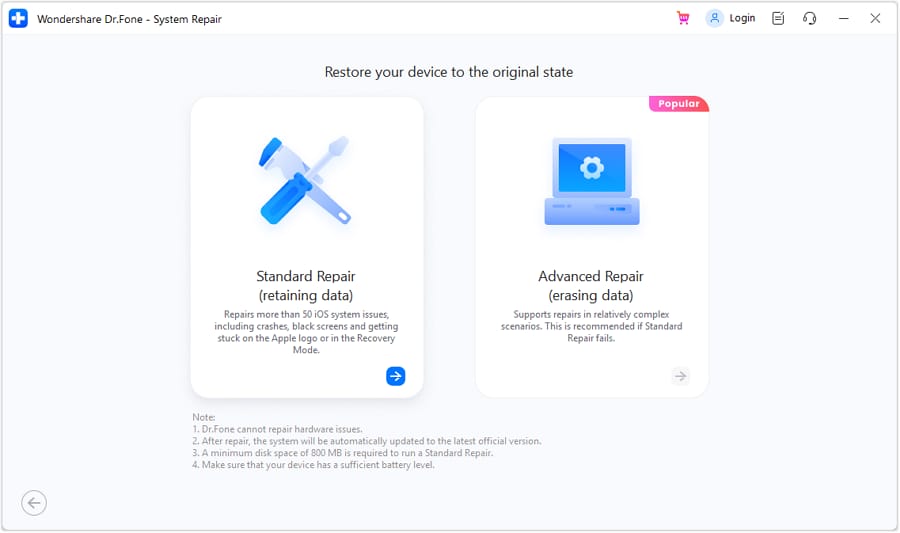
If your decision is leaning “fix” because the iPad’s hardware seems fine but the system feels stuck (post-update boot issues, repeated restarts, or persistent freezes), a purpose-built workflow matters more than repeated trial-and-error. Dr.Fone - System Repair (iOS) is relevant at this stage because it’s designed to execute iOS/iPadOS system repair steps in a guided way—useful when you want to address system-state faults before concluding the device is beyond saving. After AI helps you rank likely causes and identify red flags (backup status, heat, detection issues), you can use Dr.Fone’s Repair iOS Issues flow to attempt stabilization and then re-evaluate whether performance and reliability justify keeping the tablet.
 Fix iOS issues, no data loss.
- One-click repair for all iOS problems.
- Solve recovery mode, Apple logo, black screen, etc.
- Upgrade or downgrade iOS without iTunes
-
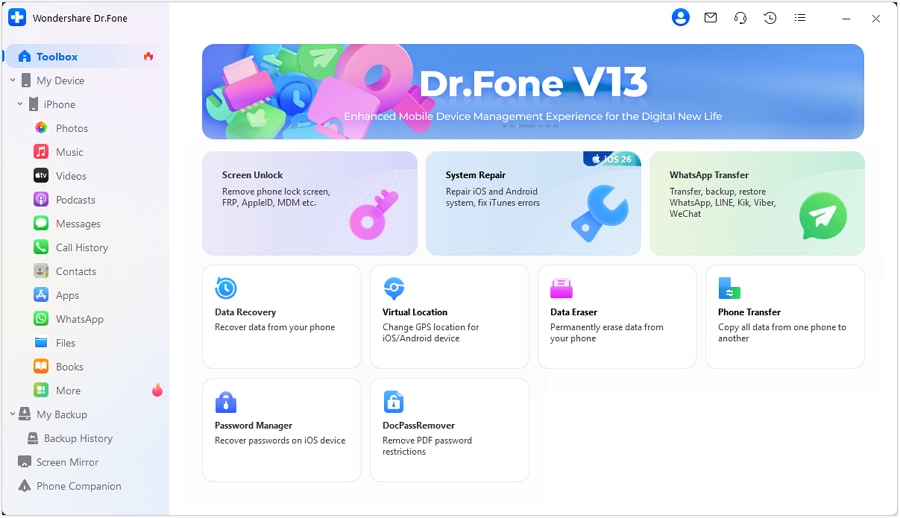
Step 1 Confirm your goal
Decide whether you’re prioritizing data retention or a clean reset, and avoid any option that explicitly mentions erasing if you don’t have a backup.
-
Step 2 Connect iPad to a stable computer
Use a reliable cable/port and keep the device powered to reduce interruptions during system operations.
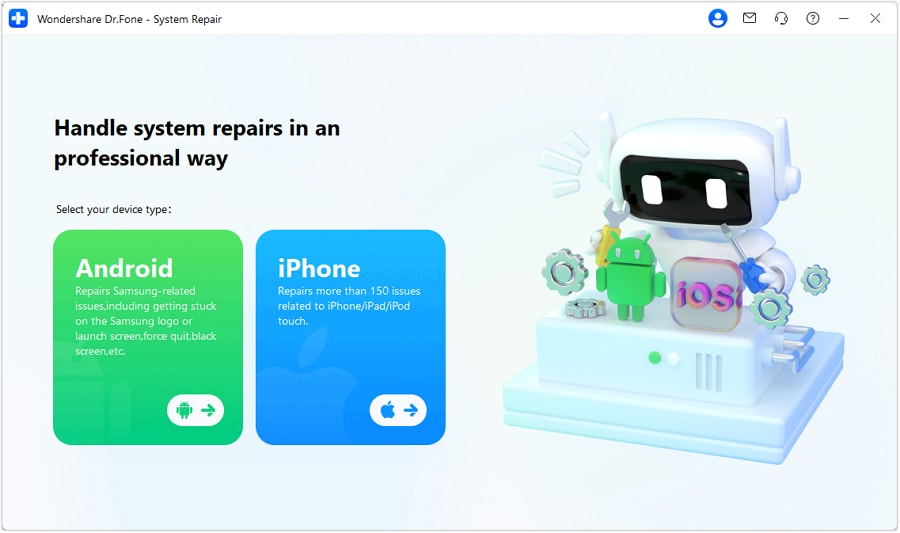
-
Step 3 Run System Repair (iOS) mode
Follow the on-screen guided steps to address system-state issues (like boot loops or update failures) while minimizing unnecessary trial-and-error.
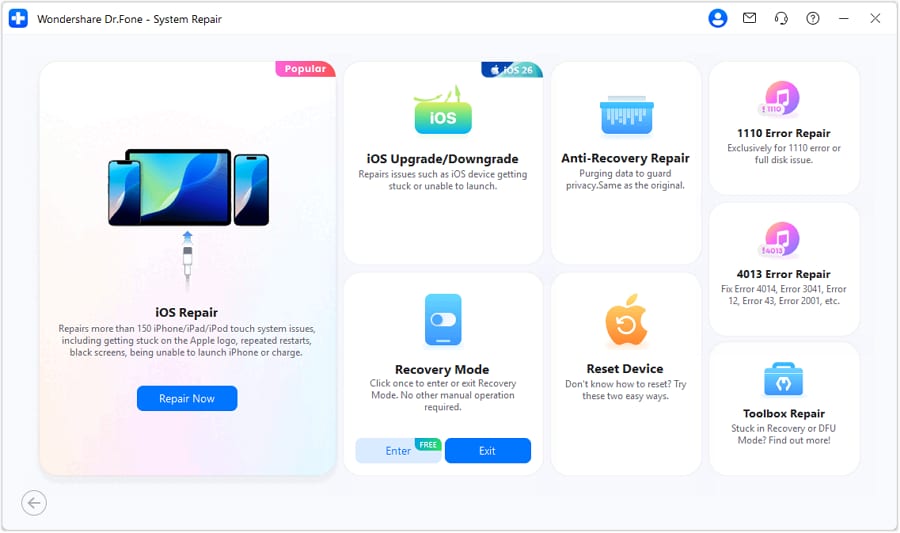
-
Step 4 Re-check stability signals
After the process, verify boot time, charging behavior, heat, storage headroom, and whether the symptom returns under normal use.
-
Step 5 Decide fix vs replace with evidence
If the iPad is stable but still slow due to aging hardware limits, replacement may be the practical call; if stability returns, you can keep it longer.




Conclusion
Use AI to turn vague symptoms into a ranked shortlist of causes, identify the evidence that matters, and choose the lowest-risk next step; then hand off execution to a controlled workflow like Dr.Fone System Repair (iOS) when you need to act on system-state issues and make a clearer fix-versus-replace decision.
FAQ
-
Is an old iPad worth fixing if it’s only slow?
Often yes if the slowness is linked to storage pressure, background load, or an unstable iPadOS state; if it’s limited by aging hardware (low RAM/older chip), replacement may be more satisfying. -
How do I tell if it’s battery aging or an iPadOS issue?
Battery aging usually shows charge-level shutdowns, heat, and fast drains; iPadOS issues more often show boot loops, stuck update screens, or sudden instability after an update/restart. -
Will troubleshooting erase my iPad data?
Some paths (restore/reset) can erase data; use AI to identify which steps are destructive and avoid them if you lack a backup. -
What symptoms suggest I should replace instead of fix?
Recurring charging failures across known-good cables, visible damage, swelling, or persistent instability even after system-state remediation usually point toward replacement. -
When should I stop using prompts and get hands-on help?
When the iPad won’t be detected, overheats, or you’re forced into erase/restore options without a backup—those are high-risk decision points.
 Add Wondershare Dr.Fone as a preferred source on Google