Effortlessly manage data through preview, delete, export, etc.

 100% Security Verified | No Subscription Required | No Malware

 :
: 
 ChatGPT
 Perplexity
 Gemini
 Claude
 Grok
Grok

I tried to reset our shared tablet so the whole family can use it, but now I’m worried I erased something important—or that it’ll get stuck asking for an old account I can’t sign into.
Apple Support Community user
A clean setup for a family-shared tablet can go wrong fast if you miss one step—especially around backups, account sign-ins, and what data will be erased.
AI helps by turning a vague goal (“reset and set it up for everyone”) into a clear sequence with decision points, risk checks, and a verification plan before anything irreversible happens.
AI can’t touch your tablet, confirm what’s truly backed up, or run a reset—so once the workflow is solid, you still need real device tools to execute safely.

In this article
- Plan a clean setup without missing critical steps
- What the AI needs to know
- AI prompt levels (basic → evidence)
- Prompt refinement follow-ups
- When to stop planning and start execution
- What the AI needs to know
- Use AI prompts to build a safer workflow
- AI plan vs. real device constraints
- Execute the workflow safely with Dr.Fone
Part 1. Plan a clean setup without missing critical steps
You’re setting up one tablet that multiple family members will use, and it already has someone’s photos, messages, app logins, and saved passwords. You want it “clean,” but you also don’t want to accidentally delete something important or lock the device to the wrong account.
After asking AI for advice, you may get a list of general tips—yet still feel unsure about the exact order: when to back up, when to sign out, when to verify the backup, and when to create new family-ready restrictions and accounts.
The point of no return is any factory reset / erase action. If you do that before confirming backups and account removal steps, you may permanently lose data or trigger activation/account locks that prevent setup later.
1. Treat “erase/reset” as the irreversible moment.
Build a plan that includes a hard “stop and verify” gate before any reset, so you don’t trigger data loss or account/activation lockouts.
2. Separate “backup exists” from “backup is usable.”
Define evidence checks (what files, previews, screenshots, and account lists you must see) before you proceed.
3. Use AI for structure, not execution.
AI can produce an ordered checklist and verification criteria, but real tools and on-device confirmation are required for backup, reset, and restore.
Part 2. What the AI needs to know
Share the details below so the plan matches your exact tablet and family setup.
- Tablet brand/model and OS version (e.g., iPadOS 17 / Android 14 tablet)
- Who currently “owns” the tablet (adult/child) and whose accounts are signed in
- Whether the tablet is Wi‑Fi only or has cellular
- What must be preserved (photos, notes, messages, app data, downloaded files)
- What can be discarded (old apps, browsing history, cached files)
- Whether you want one shared account or separate profiles/users
- Existing parental controls / family management setup (if any)
- Any concerns about activation/lock screens, passcodes, or forgotten credentials
- Target end state (shared family tablet, kid-only tablet, guest mode, etc.)
- Time constraints and internet availability during setup
Part 3. Use AI prompts to build a safer workflow
Use the prompts below to make the sequence explicit, reduce guesswork, and add verification gates before you touch anything irreversible.
3-1. Level 1: Basic prompt
I need a planning checklist for a clean setup of a family-shared tablet.
Make it a step-by-step workflow with “stop and verify” checkpoints before any erase/reset.
Include the most common mistakes that cause data loss or account lockouts.
3-2. Level 2: Advanced prompt
Design a structured workflow for a clean setup of a family shared tablet with three phases: Preparation, Execution, and Verification.
In each phase, label steps as critical vs optional, and include a “do not proceed unless…” gate before the factory reset/erase step.
3-3. Level 3: Evidence prompt
Create a clean-setup plan for a family shared tablet using this context, and include checks before / during / after each risky step.
Context: device (Android tablet, Wi‑Fi only), current state (one parent account signed in, lots of photos), must keep (photos + notes), can delete (apps + downloads), target state (shared family tablet with restricted installs), constraints (2 hours, stable Wi‑Fi).
Also include: a short pre-flight list of what evidence I should capture (e.g., account emails listed in Settings, storage usage screenshots) and a rollback plan if something fails.
3-4. Prompt refinement (follow-up prompts)
Convert the workflow into a table with columns: Step, Why it matters, What could go wrong, How to verify, Stop condition.
Add a “credential readiness” checklist: exactly what usernames/passwords/recovery methods must be confirmed before proceeding.
Separate “backup exists” from “backup is usable” and tell me how to confirm usability without erasing the tablet yet.
Produce two variants: one for single shared family account and one for separate users/profiles, and tell me which is safer for privacy.
Identify the one irreversible moment and write a pre-reset verification script I can read aloud and check off line-by-line.
Part 4. AI plan vs. real device constraints
| Planning with AI | Real device constraint |
|---|---|
| Creates an ordered checklist with risk gates | The tablet may still require the exact passcode/account to proceed |
| Highlights where data loss usually happens | Some app data can’t be backed up or restored the way you expect |
| Defines what “verification” should look like | You can’t truly confirm a restore works until you attempt one |
| Helps decide target end state (shared vs profiles) | Your OS/tablet model may limit user profiles or parental controls |
AI improves planning and reduces avoidable mistakes, but it cannot execute backups, sign-outs, resets, or restores on the actual tablet.
4-1. When to stop planning and start execution
- You can list every account currently signed in and you have the credentials/recovery methods ready.
- You have a written definition of “must-keep data,” plus where it will be backed up and how you will confirm it’s accessible.
- You have a single, unbroken sequence that includes a hard stop before any erase/reset action.
- You’ve chosen the target setup (shared vs separate users/profiles) and know what restrictions you will apply first.
Once those are true, planning has done its job and the remaining risk is mostly in execution accuracy.
Part 5. Execute the workflow safely with Dr.Fone
Execution now matters because this is where data can be lost, accounts can become locked, and settings can be applied in the wrong order. Move only when your pre-reset verification gate is fully satisfied.
5-1. Execution intent (what you’re trying to accomplish)
Lock in backups and proof before any erase: Use Dr.Fone to perform the backup you planned, then confirm the backup output is present and readable according to your verification checklist. Dr.Fone can run the backup, but it can’t decide whether you captured every “must-keep” item unless you verify against your own list.
Perform the irreversible reset only after the gate is green: After verifying backups and account readiness, carry out the reset/cleanup step you planned (this is the point of no return). If credentials are missing or a lock is triggered, no tool can replace the correct account recovery information—pause and resolve before continuing setup.
Restore essentials and validate the shared-family end state: Restore only what you decided to keep, then check the tablet against your post-setup verification list (accounts, restrictions, apps, storage, and privacy). Some apps and services may require re-login or may not restore certain in-app data; treat any missing items as a verification failure to investigate.
5-2. Execution checklist (tool steps)
-
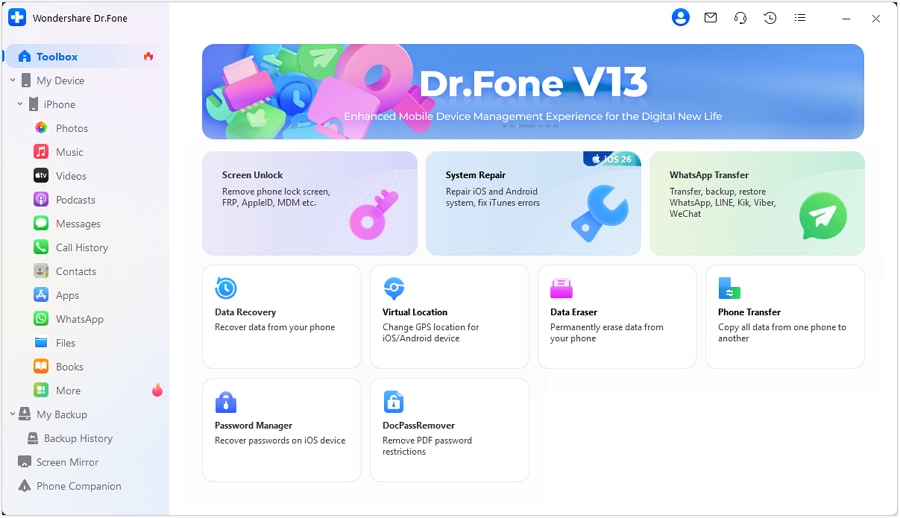
Step 1 Launch the transfer tool and connect devices
Open the tool on your computer and get to the phone-to-phone transfer workflow so you can move “must-keep” data to a safe destination before any reset.
-
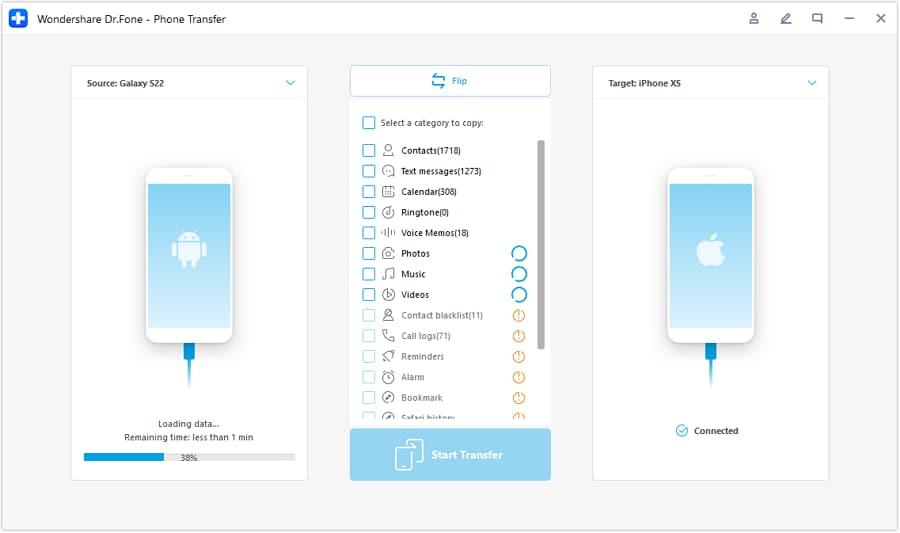
Step 2 Set the device path (source → destination)
Confirm which device is the source (the tablet you’re cleaning) and which is the destination (the device/location you’ll use to hold preserved data temporarily).
-
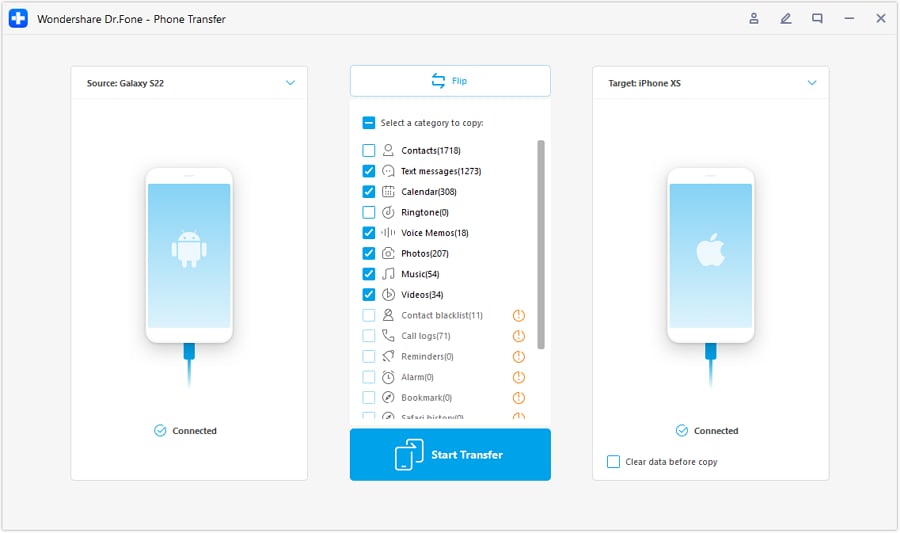
Step 3 Choose data types and run the transfer
Select only the categories you defined as “must-keep” (for example, photos and notes) and start the transfer so your pre-reset “backup usable” checks have something concrete to verify.
-
Step 4 Monitor progress and verify outcomes
Watch the transfer complete, then verify your evidence checklist (file presence, previews/accessibility where possible, and any screenshots you planned to capture).

Recommended tool for the execution phase
If your plan requires moving essential data off the tablet before a reset (and then bringing it back afterward), Dr.Fone - Phone Transfer can serve as the execution layer for device-to-device transfers while you follow your own verification gates.
 Move data between iOS to Android and vice versa.
- Transfer contacts, SMS, photos, videos, music, and more types.
- Available with all phones with Android and iOS versions.
- Simple, click-through process.

Keep your execution disciplined: only proceed when your pre-reset “stop condition” is satisfied, and treat any missing items after transfer/restore as a verification failure that must be investigated before you declare the tablet “clean and ready.”




Conclusion
Use AI to design a single, verified workflow with clear stop conditions—especially before the irreversible reset—then use Dr.Fone as the execution layer to back up, reset, and restore according to the plan.
FAQ
-
What’s the biggest risk in a clean setup for a shared family tablet?
Erasing/resetting before confirming you have a usable backup and the right account credentials (which can lead to permanent data loss or lockouts). -
How do I know my backup is “usable,” not just “created”?
You need evidence-based checks (file presence, preview/accessibility where possible, and a documented restore plan). AI can define the checks; you must perform them. -
When should I apply parental controls—before or after restoring data?
Plan it as a sequence decision: restoring first can make verification easier, but restrictions early can reduce accidental installs/logins. Choose one order and verify outcomes. -
Can AI tell me exactly which settings screens I’ll see on my tablet?
Not reliably—screens vary by OS version, manufacturer, and management features. AI can outline the logic and checkpoints, but you must confirm on-device. -
What if the tablet becomes locked to an old account after reset?
Stop and use the proper account recovery path with the correct credentials. Do not keep retrying random logins; that can escalate lockout issues.
 Add Wondershare Dr.Fone as a preferred source on Google