Effortlessly manage data through preview, delete, export, etc.

 100% Security Verified | No Subscription Required | No Malware

 :
: 
 ChatGPT
 Perplexity
 Gemini
 Claude
 Grok
Grok

“I reset my Android phone and now my contacts are missing. I want them back, but I don’t want to do a full restore that overwrites my current setup—can I recover just my contacts?”
Reddit user, r/Android
Contacts can go missing after a phone reset, a device switch, or a sync change—and you may want them back without doing a full restore that overwrites your current Android setup (for example, on a Samsung Galaxy S23 or Google Pixel 8). This often happens right after you tapped Restore, Sync now, or signed back into your Google account.
AI (like ChatGPT or Gemini) can help you describe the symptoms clearly, narrow down likely causes (sync vs backup vs account mismatch), and choose low-risk next steps based on what you still have access to.
However, AI can’t verify what’s inside your backup or extract data by itself, and trial-and-error (random restores, account toggles, factory resets) can cause overwrites or make the situation harder to reverse.

In this article
- Part 1. Why contacts won’t restore without a full reset on Android
- What “without full restore” really means on Android
- Common sync/account scope mismatches
- Before you prompt the AI: what to collect
- How to separate sync vs backup vs display issues
- Part 2. Using AI prompts to diagnose missing contacts without full restore
- Part 3. When to stop trying to restore contacts and avoid overwriting data
- Part 4. AI output vs reality: what you still must verify
- Part 5. Recover contacts from backup without full restore with Dr.Fone
Part 1. Why contacts won’t restore without a full reset on Android
“Recover contacts from backup without full restore” usually means you’re trying to avoid replacing today’s data with an older snapshot. On Android, contacts can live in multiple places at once: Google Contacts sync, SIM, local device storage, OEM cloud (Samsung Cloud), or within app-specific backups.
A common pattern is: you signed into a Google account, expected contacts to appear, and nothing changes after several minutes—so it’s unclear whether the phone is still syncing or the contacts were never in that account’s sync set.
Another frequent cause is scope mismatch: you restored the phone partially, but the toggle for Contacts sync is off, the wrong Google account is selected, or contacts are filtered (hidden) in the Contacts app—making it look like they’re gone when they’re just not displayed.
1-1. Before You Prompt the AI
Collect a few facts first so the AI can sort “sync issue” vs “backup content” vs “display/filter issue” quickly:
- Android model and Android version
- Where the contacts originally lived (Google / SIM / phone storage / Samsung account)
- What you did right before the issue (sign-in, restore, device-to-device transfer)
- Whether you still have the old phone, a PC, or access to contacts.google.com
- Any recent changes (new Google account, work profile, MDM, new Contacts app)
Part 2. Using AI prompts to diagnose missing contacts without full restore
2-1. Level 1: Basic Prompt
My Android contacts are missing and I want to recover them without a full restore. Ask me the minimum questions needed to determine whether this is (1) Google sync, (2) contacts stored locally/SIM, or (3) a backup that needs extraction, then give the lowest-risk next steps.
2-2. Level 2: Advanced Prompt
Diagnose my missing contacts on Android without doing a full restore.
Task: Rank the top 5 most likely causes and suggest steps from lowest risk to highest risk.
Constraints: Avoid anything that could overwrite newer data; call out any step that may cause data loss or account conflicts.
Output format:
1) Likely cause (with probability)
2) What evidence would confirm/deny it
3) Safest next action
4) “Do not do this yet” warnings
2-3. Level 3: Evidence Prompt
Help me recover missing contacts without full restore by analyzing these details and proposing a low-risk plan.
Device: Android model: (e.g., Samsung Galaxy S23) / Android version: (e.g., Android 14)
Trigger: What I did right before the issue (e.g., signed into Google, tapped “Sync now”, switched phones)
Current symptom: (e.g., contacts list empty, some contacts missing, duplicates)
Where contacts used to be stored: (Google / SIM / phone storage / Samsung account / unknown)
Accounts on phone now: (list Google accounts, work profiles)
Contacts app checks: Any filters/labels enabled? Default account for new contacts?
Google Contacts web: Do contacts appear at contacts.google.com? (yes/no/unknown)
Old device access: Do I still have the previous phone? (yes/no)
Backups available: Google One backup? Samsung Cloud? Exported .vcf?
Risks I want to avoid: (e.g., overwriting current photos/messages, factory reset)
Request:
1) Separate likely causes into Sync / Display / Account mismatch / Backup content / Device storage
2) Rank causes by likelihood
3) Give a step-by-step checklist starting with reversible steps
4) Tell me what evidence to capture at each step
2-4. Prompt Refinement
Use these follow-ups to force clarity and reduce guesswork:
What are the 3 missing questions you still need from me to choose between sync vs backup extraction?
Split your diagnosis into categories: account mismatch, sync disabled, contacts hidden, contacts stored locally, backup not containing contacts.
Rank the causes again after assuming contacts.google.com shows zero contacts—what changes?
What single piece of evidence would most strongly confirm each cause, and how can I check it safely?
Identify any steps that could overwrite newer data and list safer alternatives.
Part 3. When to stop trying to restore contacts and avoid overwriting data
If the situation is uncertain, prioritize non-destructive checks first and stop when actions start increasing overwrite risk.
- You’re about to factory reset, flash firmware, or “restore backup” that will replace current data you care about.
- You’re switching accounts repeatedly and creating duplicates or losing track of which account had the original contacts.
- You see signs of device instability (boot loops, storage errors) that could worsen with repeated sync/restore attempts.
- You no longer have a clear record of what you tried, and each new attempt changes what appears in Contacts.
Once AI has narrowed the most likely cause and you’ve gathered evidence, the next step is execution—using a method that can retrieve contacts without forcing a full device restore.
Part 4. AI output vs reality: what you still must verify
AI can propose a clean decision tree, but it can’t validate your backup contents or access your device storage directly.
| AI says (plan) | Reality check (what you verify) |
|---|---|
| “It’s probably Google sync.” | Confirm the correct Google account and whether contacts exist on contacts.google.com. |
| “Contacts might be hidden by filters.” | Check Contacts app display settings, labels, and default account. |
| “They may be on SIM/local storage.” | Verify SIM contacts view and whether the old phone still shows them offline. |
| “Use a tool to extract contacts without full restore.” | You still need a compatible method to read device/backups without overwriting current data. |
AI helps you choose the safest path; execution requires tools and actions that can actually scan, read, and export the data you’re trying to recover.
Part 5. Recover contacts from backup without full restore with Dr.Fone
When you’ve confirmed the issue isn’t just a Contacts filter or the wrong Google account, you may need a practical way to pull contact data back onto your Android without wiping the phone. This is where Dr.Fone - Data Recovery (Android) becomes relevant: it’s designed to help you recover data from an Android device in a more controlled way than full-restore workflows, so you can focus on retrieving contacts while avoiding unnecessary resets.
 Scan Android phones and tablets directly.
- Preview and recover only what you want.
- Supports WhatsApp, photos, videos, contacts, and more.
- Works with 6000+ Android devices.
Use it after you’ve used AI to decide what you’re looking for (missing contacts vs hidden contacts vs account mismatch) and what risks to avoid (overwriting newer data). You can follow the product guide as you go to keep each step consistent and reversible where possible.
-
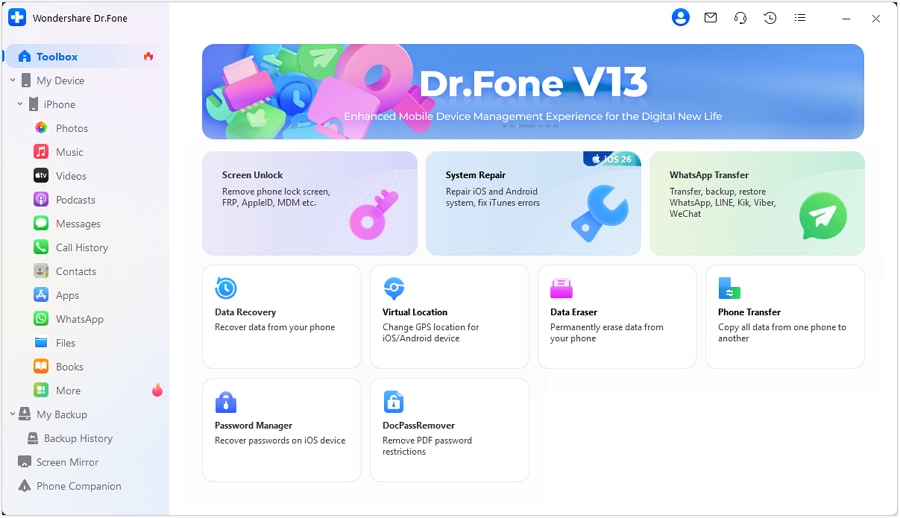
Step 1 Define the target (and pause risky restores)
Decide whether you’re trying to retrieve all contacts or only specific missing entries, and pause any risky restore prompts that could overwrite current data.
-
Step 2 Connect and prepare
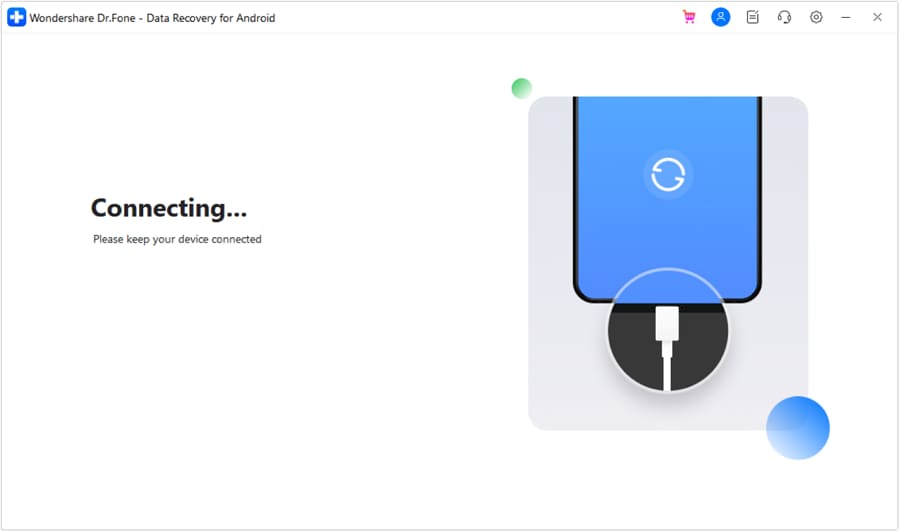
Install and open Dr.Fone, connect your Android device, and follow the on-screen device permission prompts carefully to avoid interrupting transfers.
-
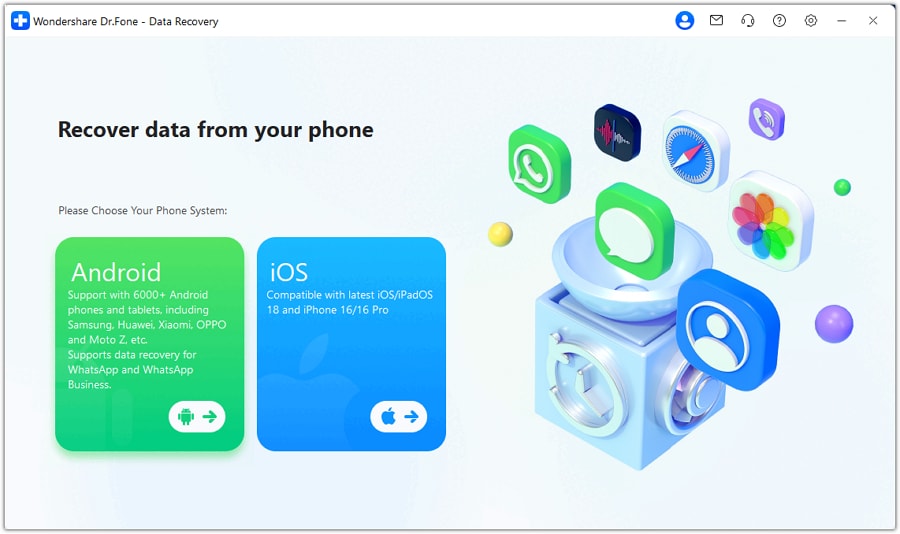
Step 3 Run a contacts-focused scan
Select the appropriate data types (prioritize Contacts) and proceed with scanning so you don’t create extra noise from unrelated categories.
-
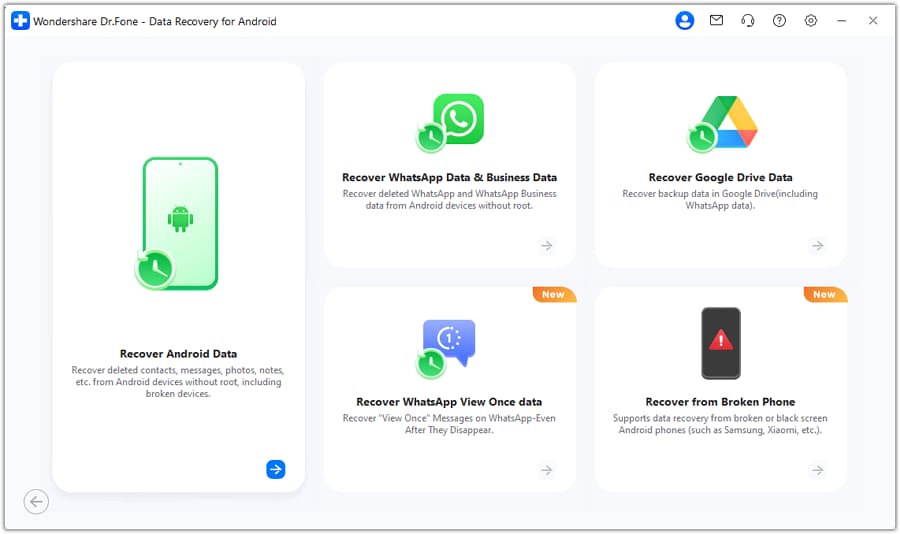
Step 4 Preview and verify before recovery
Review the discovered contacts and confirm they match what’s missing (names, numbers, duplicates) before committing to any export/recovery action.
-
Step 5 Recover deliberately, then re-check where contacts land
Recover the selected contacts and then re-check your Contacts app account/default settings so recovered entries land where you expect.




Conclusion
AI helps you map symptoms to likely causes and pick the lowest-risk checks for missing contacts without a full restore, but it can’t access your device or extract data itself; once the diagnosis is clear, a dedicated execution tool like Dr.Fone - Data Recovery (Android) can handle the actual retrieval steps in a more controlled way.
FAQ
-
Can I recover contacts without restoring the whole phone?
Often, yes—if the contacts exist in sync (Google), an export file (VCF), or can be extracted from the device; full restore is not always required. -
Why are my contacts missing after signing into Google?
Common causes include signing into the wrong Google account, Contacts sync disabled, or contacts not actually stored in Google (they were local/SIM/OEM cloud). -
How do I check if my contacts are in Google without changing my phone?
Sign into contacts.google.com on a computer or browser; this is typically a low-risk verification step. -
What if I only see some contacts, not all of them?
That can indicate multiple sources (Google + SIM + local), filters/labels hiding entries, or partial sync due to account/profile separation. -
Will restoring a backup overwrite my current data?
It can, depending on the backup type and restore method; that’s why it’s safer to confirm where contacts are stored before initiating a restore.
 Add Wondershare Dr.Fone as a preferred source on Google