Effortlessly manage data through preview, delete, export, etc.

 100% Security Verified | No Subscription Required | No Malware

 :
: 
 ChatGPT
 Perplexity
 Gemini
 Claude
 Grok
Grok

My voice memo looks “saved” on my phone, but it won’t play. Sometimes it exports as 0 bytes or stops halfway, and I’m afraid every “fix” I try will overwrite the only good copy.
Reddit user, r/AndroidQuestions
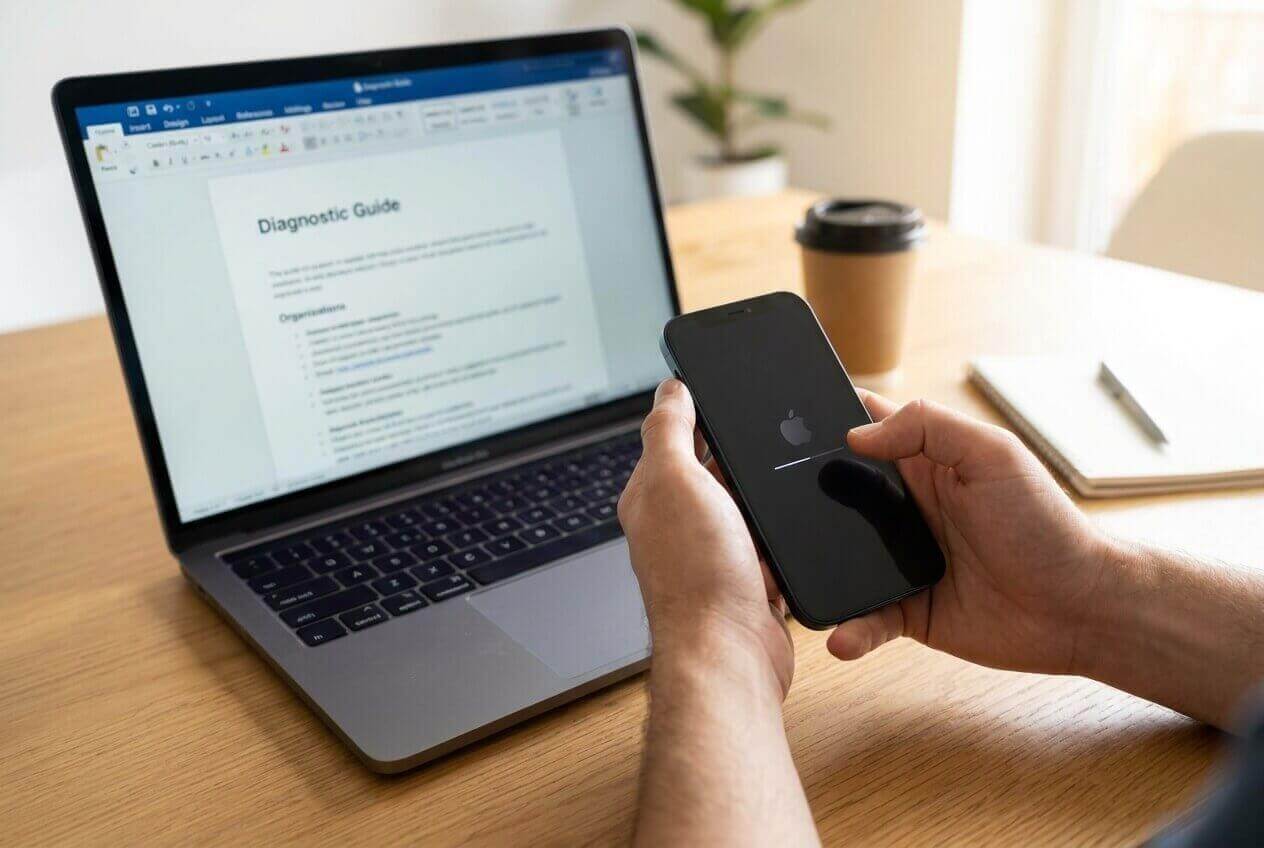
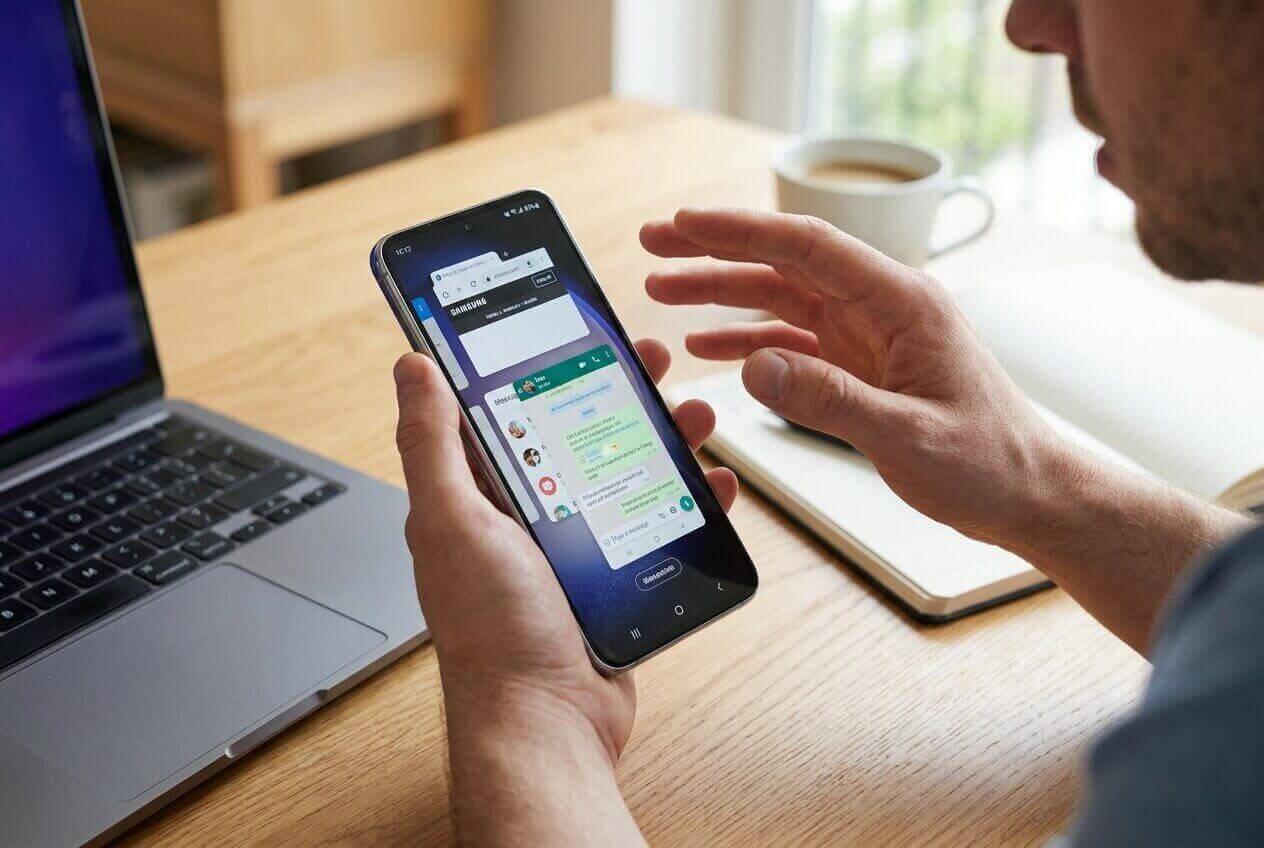
A voice memo can look “saved” on your phone but won’t play, exports as 0 bytes, or stops halfway—often noticed right after you tap Stop, move it to an SD card, or share it to an app. This can happen on many devices, from an iPhone 13/iPhone 14 to Android phones where the file is ultimately stored or edited.
AI (like ChatGPT or Gemini) can help you describe the symptoms clearly, narrow the most likely causes (codec, container, storage, app crash), and suggest low-risk checks so you don’t make things worse.
AI can’t confirm what’s inside your specific file without evidence, and repeated “trial fixes” (re-encoding, editing, syncing) can overwrite the only good copy. Use AI for diagnosis and decision-making, then switch to a safer execution path when needed.

In this article
- Why audio recordings get corrupted on a phone
- What “corruption” means for phone audio files
- Common triggers (crash, storage, SD card, transfer)
- Why the file can look normal but won’t play
- Before you prompt the AI: what to collect
- Using AI prompts to diagnose a corrupted audio file on Android
- When to stop trying to fix a corrupted voice recording
- Recover corrupted audio recording from phone with Dr.Fone Android data recovery
- Conclusion & FAQ
Part 1. Why audio recordings get corrupted on a phone
Corruption usually means the recording’s audio data, file header, or index is incomplete or inconsistent, so players can’t decode it. On Android, it often shows up as “Can’t play this file,” a duration of 00:00, or a recording that plays silence.
Common triggers include the recorder app closing unexpectedly, the phone restarting mid-recording, low storage, a failing SD card, or an interrupted transfer (USB copy, share to messaging apps, cloud sync). Sometimes the audio exists but the container metadata (like M4A/MP4 headers) is broken.
It’s also normal to feel unsure: the file is there, the size looks non-zero, but nothing changes after several minutes of trying different players—so it’s unclear whether it’s truly damaged or just incompatible.
1-1. Before You Prompt the AI
Gather a few details first so the AI can narrow causes without guessing:
- Phone brand/model and Android version
- Where the recording was created (built-in recorder, WhatsApp, third-party app)
- File type/extension (e.g.,
.m4a,.aac,.wav,.3gp,.mp3) - File size and whether the duration shows correctly
- Where it’s stored (internal storage, SD card, cloud)
- What you did right before it broke (transfer, edit, rename, share, update, reboot)
Part 2. Using AI prompts to diagnose a corrupted audio file on Android
2-1. Level 1: Basic Prompt
My phone audio recording won’t play. Help me diagnose the likely cause and the safest next steps without overwriting the original. Ask me only the minimum questions you need first.
2-2. Level 2: Advanced Prompt
Act as a digital triage assistant for a corrupted phone audio recording.
Goal: identify the most likely cause and low-risk checks first, then higher-risk options.
Output format:
1) Top 5 likely causes ranked (with brief “why”)
2) Questions you still need (max 6)
3) Low-risk checks (no editing/overwriting)
4) Medium-risk actions (explain what could go wrong)
5) Stop-and-escalate conditions (to avoid data loss)
2-3. Level 3: Evidence Prompt
Diagnose my corrupted audio recording using the evidence below, and recommend the safest plan that avoids overwriting any original files.
Device & OS
- Phone: (e.g., Samsung Galaxy S22)
- Android version: (e.g., Android 13)
- Storage: (internal / SD card brand + size)
Recording details
- Recording app: (e.g., Samsung Voice Recorder / WhatsApp / Otter)
- File extension/container: (e.g., .m4a / .3gp / .wav)
- Codec if known: (e.g., AAC)
- File size: (e.g., 48 MB)
- Expected length: (e.g., ~25 minutes)
- Reported duration in player: (e.g., 00:00 or 25:03)
Symptoms
- Error message: (paste exact text)
- What happens when playing: (no sound / stops / crash)
- Works on other apps/devices?: (yes/no; which)
What happened right before
- (e.g., moved to SD card, shared to Telegram, phone rebooted, storage was nearly full)
Constraints
- I want steps that preserve the original file and avoid destructive edits.
Please provide
- A ranked cause list with confidence levels
- The most informative next 3 checks
- A safe decision tree (what to do depending on what I find)
2-4. Prompt Refinement
If the AI output feels generic, push it to separate possibilities and request evidence-based branching:
What single detail would most strongly distinguish between file-header corruption vs unsupported codec vs incomplete transfer?
Rank causes separately for internal storage vs SD card vs cloud-synced recordings.
List checks that do not modify the file, and explain why each check is low risk.
If the file size is non-zero but duration is 00:00, what are the top 3 explanations and what evidence confirms each?
What signs suggest the recording was never finalized (app crash) versus later corruption during copying?
2-5. AI Output vs Reality
AI can suggest good hypotheses, but you still need to validate them with what your phone and file actually show.
| AI guess | Reality check you should do |
|---|---|
| “It’s just an unsupported format” | Try a second trusted player and confirm the extension/codec, not just the filename. |
| “The file is corrupted” | Compare file size vs expected length and check if duration reads correctly anywhere. |
| “It got damaged during transfer” | Re-check the source location (original folder/app) before assuming the copied version is authoritative. |
| “An SD card issue caused it” | Test whether other files on the SD card are slow/missing and whether the recording plays when copied to internal storage. |
AI helps you choose the most likely branch; execution still depends on what’s actually stored on your device and whether the original file can be accessed without being overwritten.
Part 3. When to stop trying to fix a corrupted voice recording
If you’re not sure what changed the file, prioritize preservation over experimentation.
- You only have one copy and every “fix attempt” requires saving/exporting over the same filename.
- The recording is on an SD card showing other glitches (missing files, read errors, very slow access).
- The phone is low on storage and apps keep crashing while you test playback or sharing.
- You’ve already tried multiple players and transfers, and the file is now changing in size or timestamp unexpectedly.
Once you’ve used AI to narrow the likely cause and identify the safest path, the next step is using a tool that can handle the recovery workflow more carefully than repeated manual re-saves.
Part 4. Recover corrupted audio recording from phone with Dr.Fone Android data recovery
When the recording is missing, inaccessible, or you suspect it was deleted or lost during a crash/transfer, it helps to switch from “guessing” to a structured recovery attempt. Dr.Fone - Data Recovery (Android) is relevant at this point because it’s designed to recover data from an Android device in a controlled workflow, reducing the need for repeated manual operations that can overwrite evidence. Use the AI prompts above to decide what likely happened (deleted vs inaccessible vs transfer issue), then use Dr.Fone to carry out the recovery steps based on that decision.
 Scan Android phones and tablets directly.
- Preview and recover only what you want.
- Supports WhatsApp, photos, videos, contacts, and more.
- Works with 6000+ Android devices.
-
Step 1 Stabilize the phone state
Stop recording new audio and avoid “cleaner” apps so you don’t overwrite recoverable traces.
-
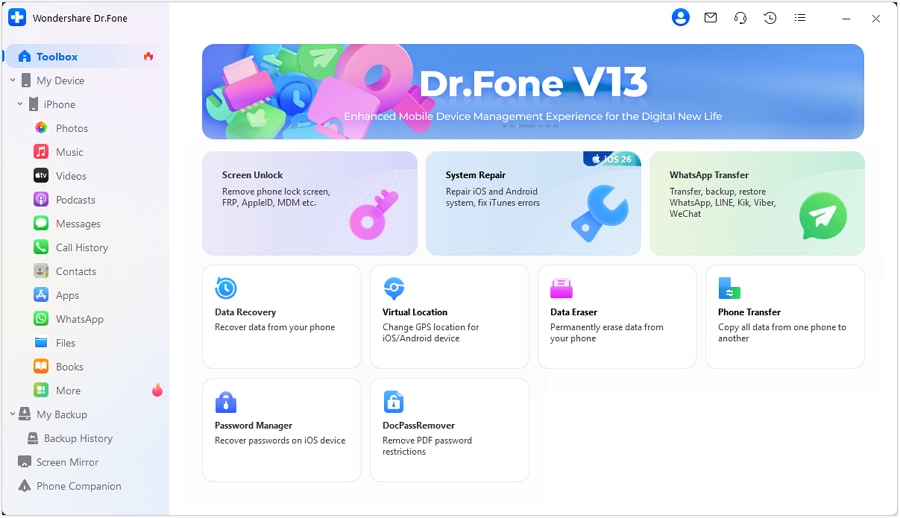
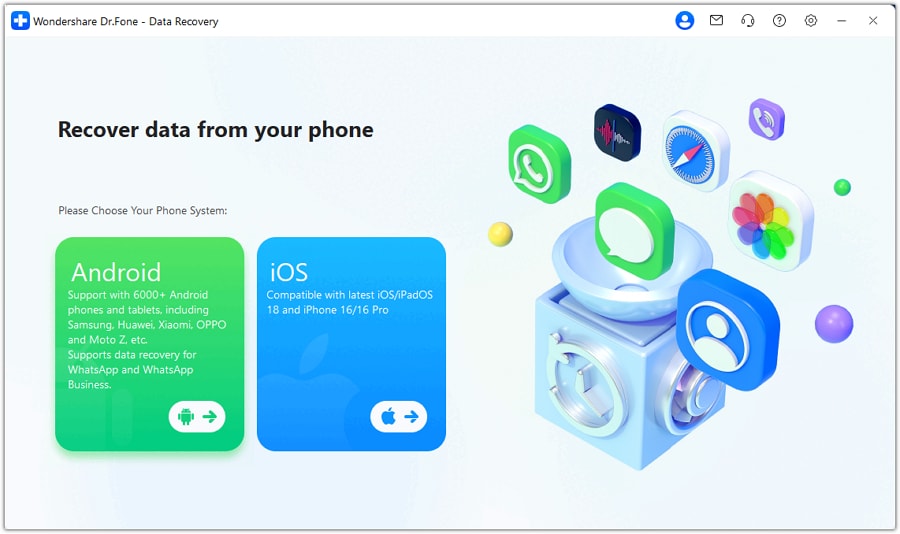
Step 2 Connect and launch Android Data Recovery
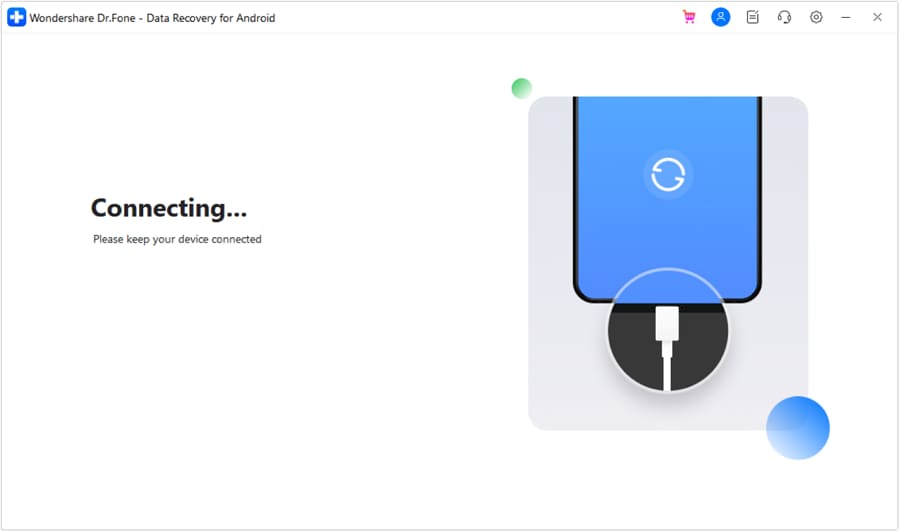
Open Dr.Fone – Data Recovery (Android) on your computer and connect your Android phone via USB, following on-screen permission prompts carefully.
-
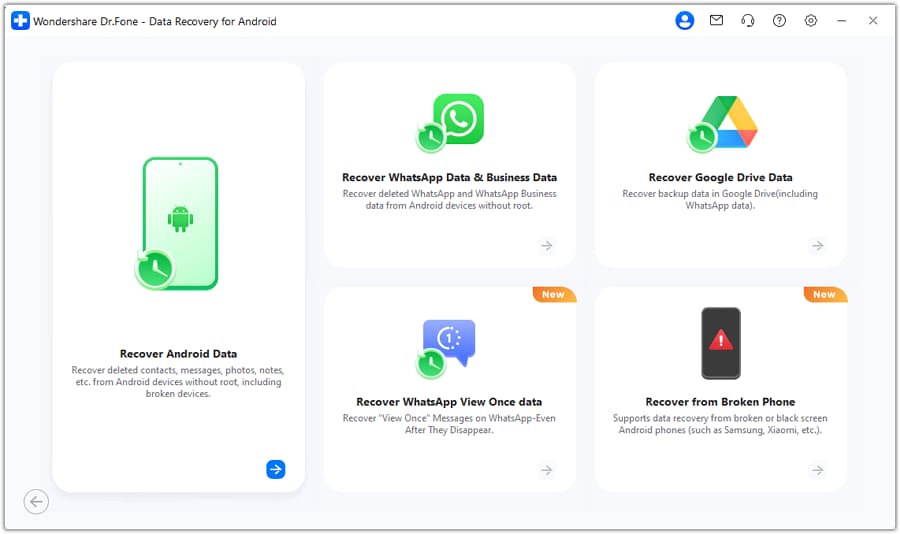
Step 3 Select what to scan
Choose audio-related categories where available, and proceed with scanning while keeping the phone connected and unlocked to prevent interruptions.
-
Step 4 Preview and restore
Preview found items when possible and restore to a safe location on your computer rather than saving back onto the phone immediately.
-
Step 5 Validate the recovered file
Test playback using a trusted player and confirm duration/size consistency before deleting any originals.




Conclusion
Use AI to turn vague symptoms into a ranked set of likely causes and a low-risk plan (preserve originals, verify storage, confirm what changed), then hand off execution to Dr.Fone - Data Recovery (Android) when recovery needs a more structured, less error-prone workflow than repeated manual trial-and-error.
FAQ
-
Why does my audio recording show the correct file size but won’t play?
Often the audio data exists but the file header/index is broken (common after an app crash or interrupted finalization), so players can’t interpret duration or decode correctly. -
What is the safest first thing to do when I notice corruption?
Make a copy of the file (without editing it) to a computer, and avoid exporting/saving over the original while you diagnose. -
Can changing the file extension fix a corrupted recording?
Renaming rarely fixes true corruption; it can help only if the file was mislabeled (e.g., AAC in an M4A container) and the player relies on extension guessing. -
How do I know if an SD card is the problem?
If other files are slow to open, disappear, or copy with errors, treat it as a storage reliability issue and minimize reads/writes until you’ve copied what you can. -
Where can I find the steps for Dr.Fone Android Data Recovery?
Use the official Dr.Fone Android Data Recovery guide for the current workflow and supported options: https://drfone.wondershare.com/guide/android-data-recovery.html
 Add Wondershare Dr.Fone as a preferred source on Google