Effortlessly manage data through preview, delete, export, etc.

 100% Security Verified | No Subscription Required | No Malware

 :
: 
 ChatGPT
 Perplexity
 Gemini
 Claude
 Grok
Grok

My phone keeps saying there isn’t enough storage, and now the camera won’t save photos. I’m scared to delete anything because these pictures aren’t backed up yet—what’s the safest way to free space fast?
Reddit user, r/AndroidQuestions
When your camera says it can’t save photos, it’s usually a storage problem—but rushing can lead to accidental deletion of the only copy of your pictures or videos.
AI is useful here because it can turn a messy situation (“storage full”) into a clear, ordered workflow with checks, priorities, and “stop points” before you do anything irreversible.
AI can’t actually move files, confirm what’s truly backed up, or perform device actions; once the plan is verified, you still need real tooling to execute safely.
In this article
- How to Plan Free Space Fast Without Missing Critical Steps
- Why quick decisions are risky
- What AI answers usually miss
- Irreversible actions to avoid
- Stop points + verification before deletion
- What the AI Needs to Know
- Using AI Prompts to Build a Safer Workflow
- AI Plan vs. Real Device Constraints
- Execute the Workflow Safely with Dr.Fone
Part 1. How to Plan free space fast when camera cannot save photos Without Missing Critical Steps
You’re mid-event or traveling, the camera fails to save, and you need space now—but you also can’t afford to lose today’s photos. You may have multiple storage locations (internal storage + SD card) and multiple photo sources (camera roll, WhatsApp/Telegram media, screen recordings), which makes quick decisions risky.

After you ask AI “how do I free space fast,” you typically get a list of ideas—but not a sequence, not a verification method, and not a clear “do this before that” workflow. That’s how people end up deleting the wrong thing first.
One concrete point of no return: deleting items from DCIM/Camera, emptying “Recently Deleted/Trash,” or formatting an SD card before confirming the files exist elsewhere and are viewable.
Part 2. What the AI Needs to Know
Answer these so the workflow can be specific and safe:
- Device type (Android model / iPhone model) and OS version (if known)
- Current free space and what the warning says (e.g., “Storage full” / “Can’t save photo”)
- Where photos are stored (internal storage, SD card, iCloud Photos, Google Photos, OneDrive, etc.)
- Whether “Optimize Storage” / “Storage Saver” is enabled (if applicable)
- What you can access right now (Wi‑Fi, computer, cable, external drive)
- What matters most (free space in 2 minutes vs preserve originals vs keep apps intact)
- Any “must not delete” data (work chats, offline maps, recordings, RAW photos)
- Your backup confidence level (none / partial / unsure / confirmed)
Part 3. Using AI Prompts to Build a Safer free space fast when camera cannot save photos Workflow
Use these prompts to make AI produce a sequence with verification, not a random checklist.
3-1. Level 1: Basic Prompt
Help me plan the fastest safe way to free space because my camera can’t save photos.
Ask me the minimum questions you need, then give me an ordered workflow with a verification step before I delete anything.
Include a “stop point” for anything irreversible.
3-2. Level 2: Advanced Prompt
Build a structured workflow to free space fast when the camera cannot save photos.
Separate it into **Preparation / Execution / Verification**, and mark each action as **critical** or **optional**.
Include risk notes for irreversible steps (like deleting DCIM, emptying trash, clearing app data, or formatting an SD card) and tell me exactly what must be confirmed before those steps.
3-3. Level 3: Evidence Prompt
I’m on **Android (Samsung A54)** with **0.8 GB free**; the camera shows **“Not enough storage”**.
Photos are stored on **internal storage** (no SD card).
I have **a laptop + USB cable**, limited Wi‑Fi, and I cannot lose photos from **today (about 180 photos + 12 videos)**.
Create a plan with checks **before/during/after** execution.
Include:
- A quick triage to identify top space users (e.g., videos, downloads, messaging media, screen recordings)
- A safe transfer plan to the laptop (e.g., copy DCIM to `Laptop\Photos\Trip_2026-05-19`)
- A verification checklist (e.g., open 10 random transferred files; confirm file count; confirm videos play)
- A deletion plan only after verification (and what *not* to delete)
- A fallback path if transfer fails (e.g., temporary cleanup without touching DCIM)
3-4. Prompt Refinement
Convert the workflow into a **decision tree** with “IF/THEN” branches for: *no computer*, *no Wi‑Fi*, *SD card present*, *cloud sync enabled but uncertain*.
List the **top 5 quickest space wins** on my device *ranked by speed and risk*, and include a “proof required” line for each (what I must check before doing it).
Create a **two-pass plan**: “Immediate 5-minute relief” vs “Full cleanup later,” and label what must be postponed to avoid mistakes.
Give me a **verification script**: exact checks to confirm backups/transfers are real (file counts, spot-checking, viewing metadata, checking ‘Recently Deleted’ behavior).
Identify **deceptive pitfalls** (e.g., cloud thumbnails vs originals, “sent” media still stored locally, duplicate albums, hidden large files like screen recordings).
Part 4. AI Plan vs. Real Device Constraints
| AI Plan | Real Device/Tool Constraints |
|---|---|
| AI can draft a safe sequence and checks. | Only the device/tools can actually move files, measure storage, and confirm success. |
| AI can warn what’s irreversible and define stop points. | The device can still delete instantly; one wrong tap can be permanent after trash is emptied. |
| AI can suggest verification (counts, spot checks, playback). | Only you can confirm files open correctly and exist where you think they do. |
| AI can propose options (transfer, backup, cleanup targets). | App/OS menus differ by model; execution steps must match your exact device state. |
AI improves planning, but it cannot execute transfers, create backups, or perform cleanup actions on your phone—those require real device access and tools.
4-1. When to Stop Planning free space fast when camera cannot save photos and Start Execution
- You can state where your photos currently live (internal vs SD vs cloud) and your backup confidence level (confirmed vs unsure).
- You have chosen your primary safe path (transfer/backup first) and a fallback path (temporary cleanup without touching DCIM).
- You have written down verification checks you will perform before any irreversible deletion (file count + random open tests + video playback).
- You have identified the irreversible step you will not reach until verification is complete (e.g., deleting from DCIM and emptying Recently Deleted/Trash).
If those are true, the next move is no longer “more ideas”—it’s careful execution against your checklist.
Part 5. Free space fast when camera cannot save photos: Execute the Workflow Safely with Dr.Fone
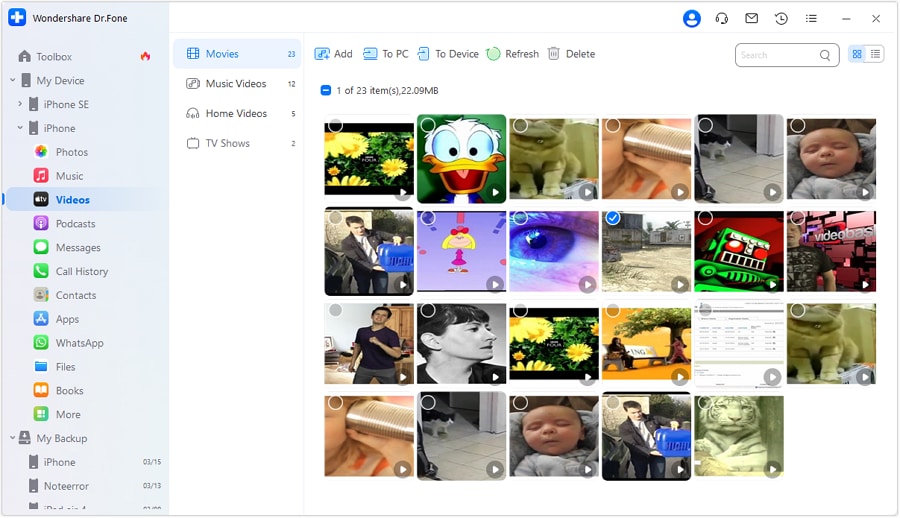
Execution now matters because the fastest safe space recovery usually requires transferring or backing up large media, then deleting only after you’ve proven the copy is real and usable. To do that in a controlled way, you can use Dr.Fone Basic - Data Manager as the execution tool alongside your AI checklist.
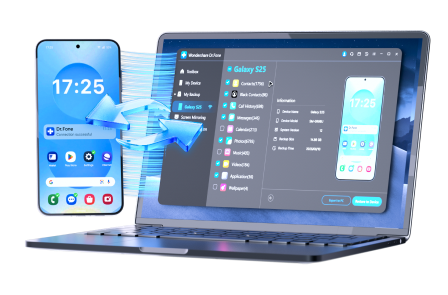
 Easily manage data through preview, delete, export, etc.
- Transfer all data between devices.
- Robust backup solutions for reliable data protection.
- Mirror screens to PC for meetings, teaching, and control.
The key safety rule is simple: copy first, verify second, delete last. AI can define the checks and stop points, but you should only delete after verification is complete.
-
Step 1 Connect your phone to a computer (do not delete anything yet)
Connect the device using a cable so you have a stable path to export camera media. The goal of this step is to prepare for a transfer/backup before any irreversible cleanup.
-
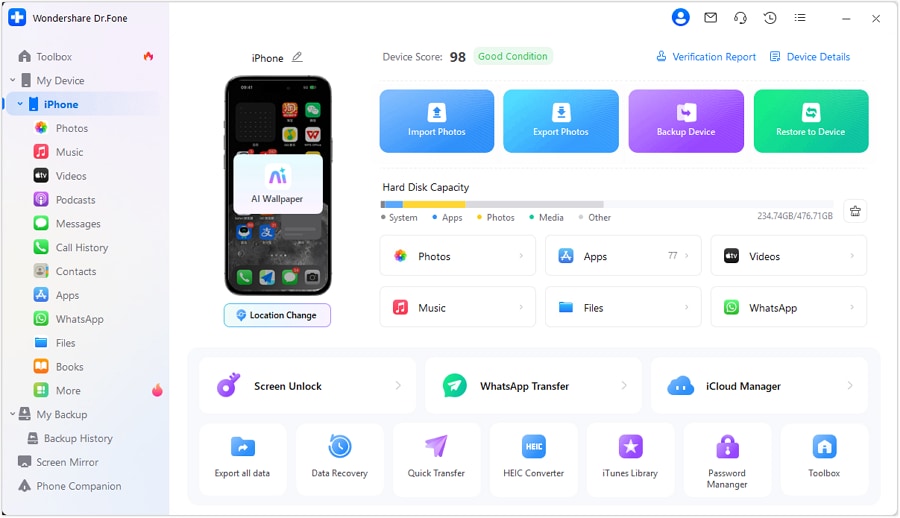
Step 2 Open your media management view and locate the largest items
Navigate to the section where photos and videos can be reviewed and exported. Prioritize items that typically consume the most space (often videos and screen recordings) so your “space win” is fast but controlled.
-
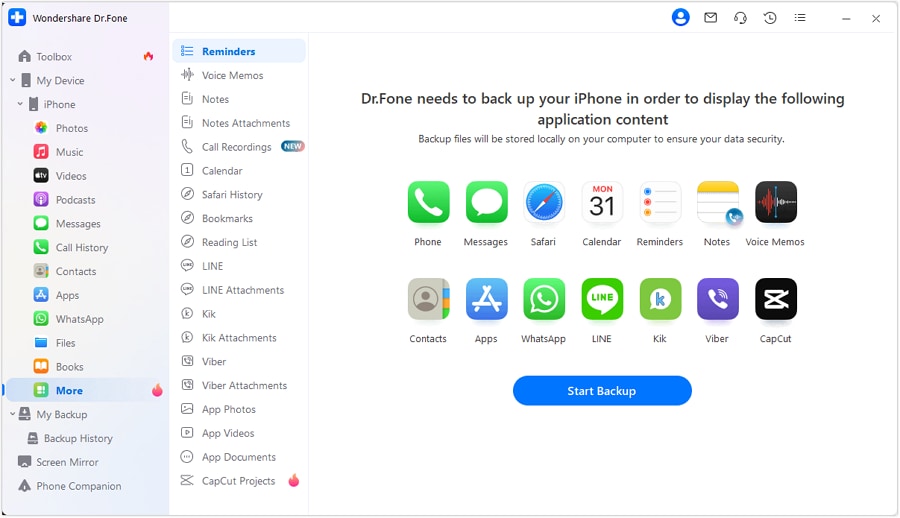
Step 3 Export/transfer camera media to your computer (create your safe copy)
Export the camera folder/media to a clearly named destination on your computer (for example, a dated trip/event folder). After export, verify the copy by opening random files and playing multiple longer videos from the computer (not from the phone).

-
Step 4 Delete only after verification (treat Trash/Recently Deleted as a stop point)
Once verification checks pass (counts look right, photos open, videos play), remove only the items you have confirmed are safely copied. Do not empty “Recently Deleted/Trash” until you’re fully confident—emptying it can be the point of no return.




Conclusion
Use AI to design a sequenced workflow with clear stop points and verification checks, then rely on real tools to perform the actual transfer/backup and cleanup—planning prevents avoidable loss, execution creates the space your camera needs.
FAQ
-
What’s the fastest safe way to fix “camera can’t save photos”?
Transfer/backup the camera media first, verify it opens elsewhere, then delete verified-backed-up large items (usually videos) to free space quickly. -
What’s the biggest mistake people make in this situation?
Deleting from DCIM/Camera (or emptying Trash/Recently Deleted) before confirming the files exist elsewhere and are viewable. -
Is clearing cache a safe quick fix?
Sometimes, but it’s unpredictable for freeing large amounts of space; also, “clear storage/data” (not cache) can remove app content and settings—treat that as higher risk and verify what it impacts first. -
Why isn’t “it’s in the cloud” enough?
Cloud apps can show placeholders/thumbnails, partial uploads, or “optimized” versions; verification requires checking that originals (or acceptable-quality versions) are truly accessible and downloadable. -
When should I stop and do a full backup instead of quick cleanup?
If you’re unsure where originals are stored, you see sync errors, or today’s photos are critical—prioritize a confirmed backup/transfer before any deletion.
 Add Wondershare Dr.Fone as a preferred source on Google