Effortlessly manage data through preview, delete, export, etc.

 100% Security Verified | No Subscription Required | No Malware

 :
: 
 ChatGPT
 Perplexity
 Gemini
 Claude
 Grok
Grok

My phone keeps saying “Storage almost full.” I want to clear space, but I’m scared I’ll delete something important or lose photos that aren’t actually backed up.
Reddit user, r/Android
Cleaning up phone storage sounds simple, but one missed step can erase the wrong photos, remove offline files you still need, or break app data you can’t easily restore.
AI helps by turning a vague goal (“free up space”) into a clear sequence: what to check first, what to categorize, what to back up, and what to delete only after verification.
AI can’t see your actual storage, confirm what’s backed up, or recover mistakes in real time—execution requires real device tools and deliberate verification before any irreversible action.
In this article
- How to plan a safe storage cleanup (no file loss)
- Why order matters
- What still feels uncertain after an AI answer
- Point-of-no-return actions
- How to reduce risk before deleting
- What the AI needs to know (your device context)
- AI prompts to build a verification-first workflow
- AI plan vs. real device constraints (and when to start)
- Execute the workflow safely with Dr.Fone

Part 1. How to Plan clean phone storage without deleting important files Without Missing Critical Steps
You’re out of storage, your phone is lagging, and you keep getting “Storage almost full” alerts. You want to clear space fast, but you’re not sure what’s safe to remove because photos, chat media, downloads, and app caches are mixed together.
Even after an AI answer, the uncertainty usually remains: What should I back up first? Which categories are high-risk? How do I confirm what’s already synced? Without a clear order, you can delete the wrong “duplicate,” remove a file that isn’t actually in the cloud, or wipe local-only items.
Your point of no return is the moment you empty “Recently Deleted/Trash,” clear app data (not just cache), or delete chat media that isn’t backed up—those actions can be irreversible or extremely difficult to recover from if verification wasn’t done first.
Part 2. What the AI Needs to Know
Share your device context so the plan can prioritize safety over speed.
- Phone type and OS version (e.g., iPhone iOS 17 / Samsung Android 14)
- Current storage situation (total used/free; biggest categories if known)
- What “important files” means for you (photos, work PDFs, chat media, voice notes, offline maps, etc.)
- What is (and isn’t) synced (iCloud/Google Photos/OneDrive/Dropbox; messaging backups)
- Any constraints (no PC available, limited Wi‑Fi, low battery, traveling, deadline)
- Apps that matter most (WhatsApp/LINE/Telegram, Notes, Files, Camera, screen recordings)
- Your risk tolerance (conservative vs. aggressive cleanup)
Part 3. Using AI Prompts to Build a Safer clean phone storage without deleting important files Workflow
Use the prompts below to make the AI produce a checklist-driven plan with verification gates before any deletion.
3-1. Level 1: Basic Prompt
I need to clean phone storage without deleting important files.
Create a safe, step-by-step plan that prioritizes backups and verification before any deletions.
Keep it practical and include “stop and confirm” checkpoints.
3-2. Level 2: Advanced Prompt
Build a structured workflow for cleaning my phone storage without deleting important files, split into Preparation / Execution / Verification.
Mark steps as Critical vs Optional, and include a “do not proceed unless…” condition before anything irreversible (like emptying Trash/Recently Deleted or clearing app data).
3-3. Level 3: Evidence Prompt
Create a risk-controlled storage cleanup plan for my phone using the details below, and include checks before, during, and after cleanup.
Provide a short “evidence to confirm” list for each critical step.
- Device: (iPhone 13, iOS 17.5)
- Free space target: (at least 12 GB)
- Biggest storage categories: (Photos 70 GB, Messages 18 GB, Apps 35 GB, Downloads 9 GB)
- Important data: (family photos/videos, work PDFs, WhatsApp chats/media, voice memos)
- Current sync/backup: (iCloud Photos ON but “Optimize iPhone Storage” OFF; WhatsApp backup unsure; Google Drive installed)
- Constraints: (no laptop today; Wi‑Fi available tonight; battery 40%)
Also: list high-risk actions I should avoid until I have verified backups (e.g., emptying Recently Deleted, deleting “large videos,” clearing app data), and give a minimal “safe wins first” sequence to free space quickly.
3-4. Prompt Refinement
Re-write the plan as a decision tree with clear “If yes / If no” branches for cloud sync confirmation, chat backup confirmation, and large-file deletion.
Give me a top 10 cleanup list ranked by safety, and separately a top 10 ranked by space saved, then reconcile them into one sequence.
Define verification evidence for each step (e.g., “photo count matches,” “backup timestamp today,” “spot-check 10 random items,” “files open from cloud”).
Identify the three most common irreversible mistakes for my device type and how to prevent each with a checkpoint.
Create a rollback plan: if I discover something missing after cleanup, what should I check first, and what actions should I stop immediately?
Part 4. AI Plan vs. Real Device Constraints (and When to Start Execution)
4-1. AI Plan vs. Real Device Constraints
| Planning Item | What AI Can Do | What AI Can’t Do | What You Must Verify on Device |
|---|---|---|---|
| Identify safe-first categories | Recommend a low-risk sequence | See your real files and their value | Which folders/apps contain one-of-a-kind items |
| Backup readiness gating | Define checkpoints and evidence | Confirm backups actually completed | Backup timestamp, sync status, spot-check restores |
| Deletion risk control | Flag irreversible moments | Prevent you from tapping delete/empty trash | Trash/Recently Deleted contents and retention windows |
| Space impact forecasting | Estimate typical gains by category | Calculate your exact reclaimed space | Storage before/after per category and app |
AI improves planning, sequencing, and risk checks—but it cannot execute actions on your phone or confirm outcomes. Treat the plan as a checklist that requires real verification before you proceed.
4-2. When to Stop Planning clean phone storage without deleting important files and Start Execution
- You have a written safe-first sequence with “stop and confirm” gates before any irreversible action.
- You can state exactly what is backed up (photos, chats, files) and how you will verify it.
- You’ve chosen a realistic storage target and know the top 2–3 categories likely to deliver it.
- You’ve identified the point-of-no-return actions you will not do until verification is complete.
Once those conditions are true, planning is no longer the bottleneck—your next risk reduction comes from careful execution and checking results as you go.
Part 5. Clean phone storage without deleting important files: Execute the Workflow Safely with Dr.Fone
Execution now matters because the safest plan still fails if you skip verification, rush deletions, or don’t confirm backups before you reclaim space.
To carry out the verification-first workflow on an actual device, you can use Dr.Fone Basic - Data Manager as an execution toolset for managing, reviewing, exporting, and organizing your phone data before any irreversible deletion.
 Easily manage data through preview, delete, export, etc.
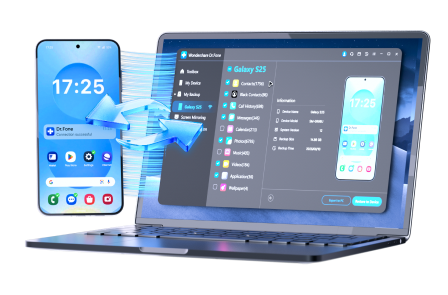
- Transfer all data between devices.
- Robust backup solutions for reliable data protection.
- Mirror screens to PC for meetings, teaching, and control.
-
Step 1 Secure a recoverable baseline
Before deleting anything, connect your phone and prepare a recoverable baseline so you can verify what’s safely backed up and what’s still local-only.
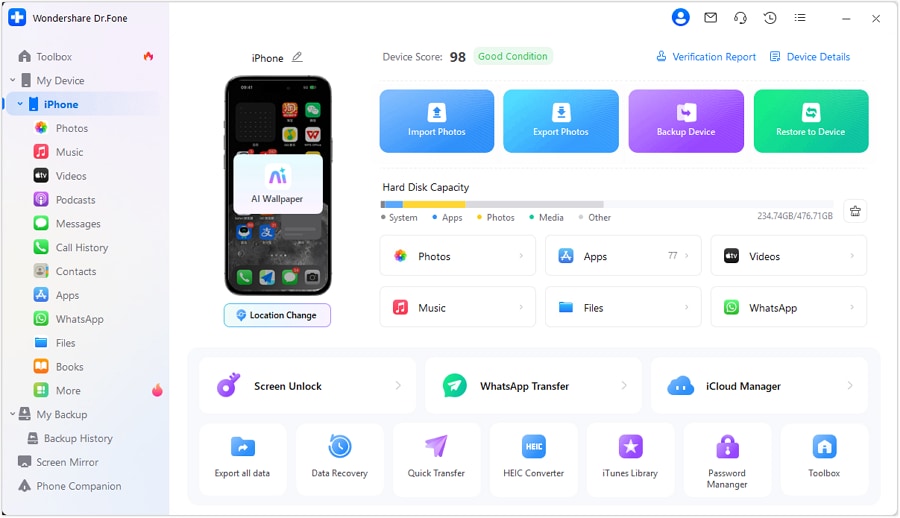
Limitation: AI can’t see whether the backup is complete or restorable—you must confirm the process finishes and the result is accessible.
-
Step 2 Reclaim space in a controlled order
Follow your “safe wins first” sequence. Review items by category (instead of mass deletion), and only proceed when your checkpoints are met.
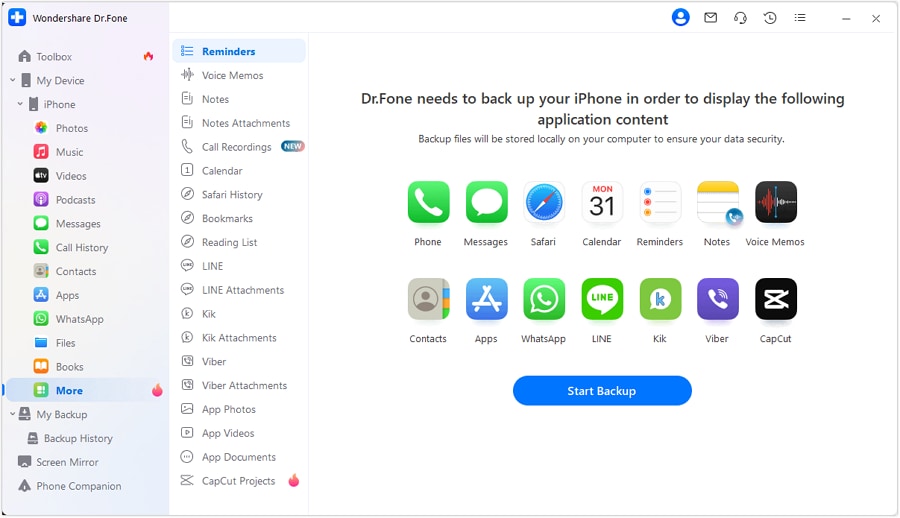
Limitation: AI can’t validate which items are truly unneeded; you must review what’s selected and avoid irreversible actions until your evidence checks pass.
-
Step 3 Review large items by category (example: videos)
Target high-impact categories only after confirming backup/sync status. For example, review videos (often large) and decide whether to export/keep/delete based on your plan’s verification gates.

-
Step 4 Verify, then finalize irreversible cleanup
After spot-checking key items and confirming backups are current, complete final cleanup. Only do irreversible actions (like emptying Trash/Recently Deleted or clearing app data) after verification.
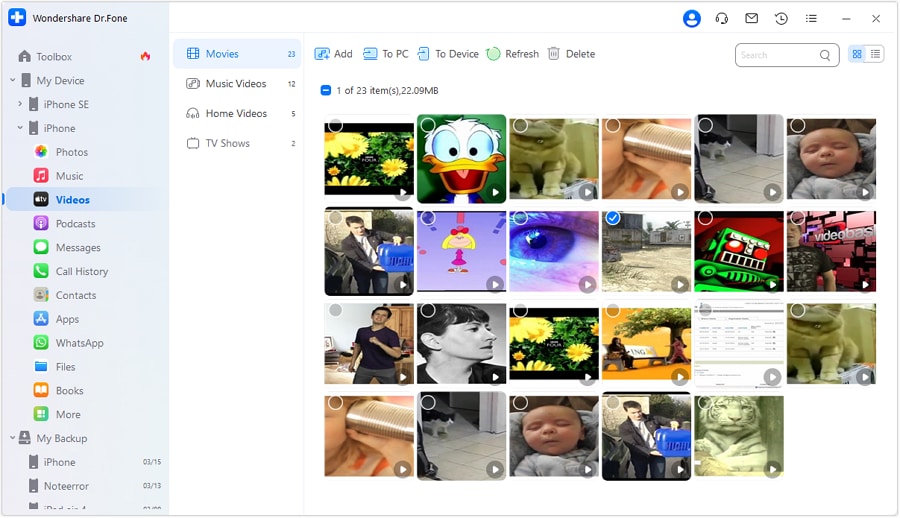
Limitation: Once you empty trash/recently deleted or remove unbacked media, recovery may not be possible—AI cannot undo it.




Conclusion
Use AI to design a verification-first cleanup workflow with clear stop points and irreversible-action gates, then use real tools to execute and confirm results—planning reduces risk, but execution and verification prevent loss.
FAQ
-
What’s the biggest risk when cleaning phone storage?
Deleting local-only items that you assumed were synced (photos, chat media, downloads) and only discovering the loss after emptying Trash/Recently Deleted. -
What should I verify before I delete anything?
Backup/sync status and a spot-check: confirm recent backup timestamps and open a sample of important photos/files/chats from the backup or cloud location. -
When is the “point of no return”?
Emptying Recently Deleted/Trash, clearing app data (not cache), deleting chat media without confirmed chat backup, or removing files from a cloud app that also deletes them everywhere. -
How do I avoid deleting something important that looks like a duplicate?
Require evidence: compare file size/date/location, and spot-check content. If unsure, move to a “review later” folder/album instead of deleting. -
Can AI tell me exactly what to delete to free the most space?
No—AI can suggest categories and a safe sequence, but it can’t inspect your storage contents or judge file importance. You must review on-device before deleting.
 Add Wondershare Dr.Fone as a preferred source on Google