Effortlessly manage data through preview, delete, export, etc.

 100% Security Verified | No Subscription Required | No Malware

 :
: 
 ChatGPT
 Perplexity
 Gemini
 Claude
 Grok
Grok

My old Android just keeps restarting on the logo after I tapped “Install now.” I can’t tell if it’s still updating or if it’s basically dead—should I even bother repairing it?
Reddit user, r/AndroidQuestions
An older Android that’s stuck in a boot loop can make you wonder whether it’s even worth repairing—or if you should replace it and move on. This often happens right after tapping Install now, freeing up storage, or doing a restart, and then the phone keeps cycling on the logo.
AI (like ChatGPT or Gemini) can help you clarify symptoms, narrow likely causes, and estimate whether the situation is more “simple fix” or “hardware decline.” It’s especially useful when you’re trying to make a cost-and-risk decision fast.
AI can’t see your device or run tests, and repeated trial-and-error can increase risk (battery stress, storage corruption, or lockouts). Use prompts to decide on low-risk next steps, then use a dedicated tool for execution if access becomes the blocker.
In this article
- Part 1. Why an old Android boot loop happens and what it means for repair value
- What a boot loop indicates
- Common triggers
- Repair value: software vs hardware
- Before you prompt the AI
- Part 2. Using AI prompts to decide if an old boot loop phone is worth repairing
- Part 3. When to stop troubleshooting a boot loop to avoid data loss
- Part 4. Unlock Android Screen with Dr.Fone when boot loop recovery blocks access
- Part 5. AI Output vs Reality: what to verify on-device
Part 1. Why an old Android boot loop happens and what it means for repair value
A boot loop usually means the phone can’t complete startup, so it repeatedly restarts at the logo or boot animation. On an older device (for example, a Galaxy S9 or Pixel 3), that can be caused by software instability, low storage, aging battery behavior, or failing internal storage.

Common triggers include installing an OS update, restoring apps, changing security settings, or a sudden restart during charging. Nothing changes after several minutes, and it’s unclear whether the phone is still updating or just stuck.
“Worth repairing” depends on what the boot loop is telling you: a recoverable software conflict is different from symptoms consistent with aging hardware. (People face similar “repair or replace” decisions on newer devices too—like an iPhone 13 or iPhone 14—but older Androids have different wear-related risk patterns.)
1-1. Before You Prompt the AI
Gather the basics first so the AI can classify risk accurately:
- Device brand/model and approximate age
- What happened right before the loop (update, restart, low storage, drop, water)
- Current behavior (logo loop, vibrating, heats up, can reach Recovery/Download mode)
- Battery/charging details (percentage known, charges or not)
- Whether you need data off the phone or just need it usable
Part 2. Using AI prompts to decide if an old boot loop phone is worth repairing
2-1. Level 1: Basic Prompt
My Android is old and stuck in a boot loop (keeps restarting on the logo). Right before this, I [describe what you did]. Can you list the most likely causes and the lowest-risk steps to try first, and tell me what signs suggest hardware failure vs software issues?
2-2. Level 2: Advanced Prompt
Act as a mobile triage assistant. Based on my symptoms, rank the top 5 causes of an Android boot loop from most to least likely. For each cause, include: (1) why it fits, (2) what evidence would confirm/deny it, (3) a low-risk next step, and (4) what NOT to do to avoid data loss or making it worse.
My phone details: [brand/model], age: [years], trigger: [update/restart/etc.], behavior: [loop pattern], battery/heat: [details], can enter Recovery/Download mode: [yes/no], data priority: [high/low].
2-3. Level 3: Evidence Prompt
Diagnose whether this boot loop is more likely software or hardware, and estimate whether repair is “worth it” based on risk and effort. Use only the evidence I provide, and call out what’s missing.
Evidence
- Android phone model: (e.g., Samsung Galaxy S9)
- Approx. device age: (e.g., 6 years)
- Trigger event: (e.g., tapped “Install now” for a system update, then rebooted)
- Boot loop pattern: (e.g., logo for 10 seconds → restart; or boot animation freezes)
- Battery state: (e.g., was below 20%, or unknown)
- Charging behavior: (e.g., charges normally / only charges on certain cable)
- Heat/noise/vibration: (e.g., warm near camera, vibrates every reboot)
- Storage situation before issue: (e.g., “storage almost full”)
- Can enter Recovery mode: (yes/no/unknown)
- Can enter Download/Fastboot mode: (yes/no/unknown)
- Any prior symptoms: (e.g., random restarts, slow performance)
- Data priority: (e.g., photos are critical)
Output format
1) Most likely category (software vs hardware) with confidence level
2) Top 3 causes with reasoning
3) Safest next steps in order (avoid data-destructive steps unless I approve)
4) Stop signals that mean I should not keep trying at home
5) If it boots again, how to reduce lockout risk and regain access safely
2-4. Prompt Refinement
Use these follow-ups to force clarity and reduce guesswork:
What 5 questions do you need me to answer to separate software crash from failing storage or battery?
Split your diagnosis into categories: update failure, app conflict, storage corruption, battery/power instability, internal storage wear.
Re-rank the likely causes if I tell you I can reach Recovery mode but normal boot always loops.
What single piece of evidence would change your recommendation the most (and how can I check it safely)?
Given my data priority is high, which steps are lowest risk and which are irreversible?
Part 3. When to stop troubleshooting a boot loop to avoid data loss
If your goal is deciding “repair vs replace,” knowing when to stop is part of the decision—not a failure.
- The phone gets unusually hot, smells, swells, or power-cycles rapidly even on a stable charger.
- You can’t reliably enter Recovery/Fastboot/Download mode after multiple careful attempts.
- Your next “suggested step” is data-destructive (wipe/reset) but your data priority is high.
- The loop started after impact/water exposure, or symptoms point to hardware decline (random restarts for weeks, charging instability).
Once you’ve used AI to narrow the likely cause and you decide the device is still worth trying, shift from diagnosis to a controlled execution step—especially if the phone finally boots but access is blocked by a lock screen.
Part 4. Unlock Android Screen with Dr.Fone when boot loop recovery blocks access
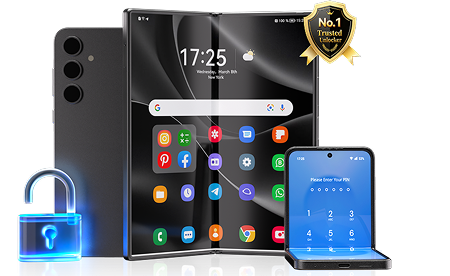
If your old phone stops looping (or boots intermittently) but you’re now blocked by a forgotten PIN/pattern after repeated restarts, the problem shifts from “why it won’t start” to “how to regain access safely.” At that point, a focused execution tool like Dr.Fone - Screen Unlock (Android) is relevant because it’s designed to handle the lock-screen removal workflow in a guided way—without you improvising risky steps that can increase lockouts or mistakes.
 Unlock Android phone in seconds.
- Remove PIN, pattern, password, fingerprint.
- Bypass Google FRP lock easily.
- Works on all Android brands & models.
- No tech skills required – user-friendly.
-
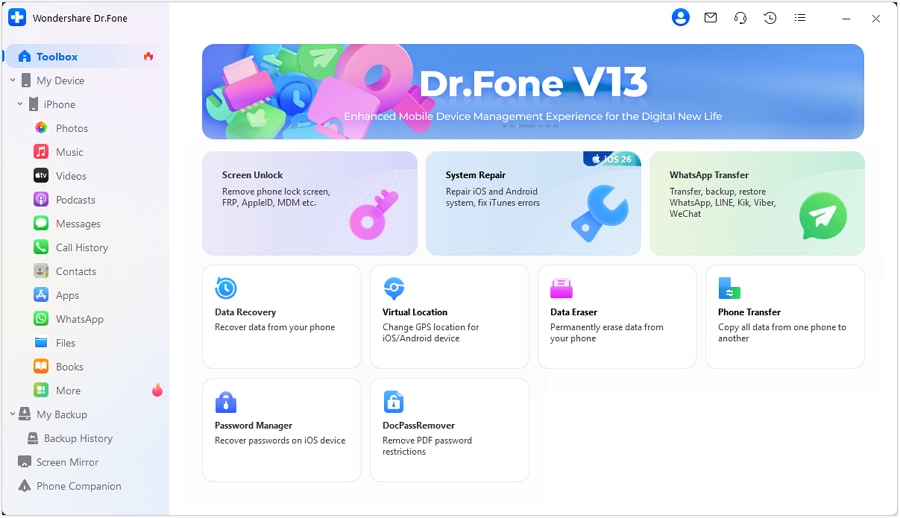
Step 1 Confirm the phone can stay powered on
Keep it on stable power and only proceed if it can remain on long enough to complete an unlock workflow.
-
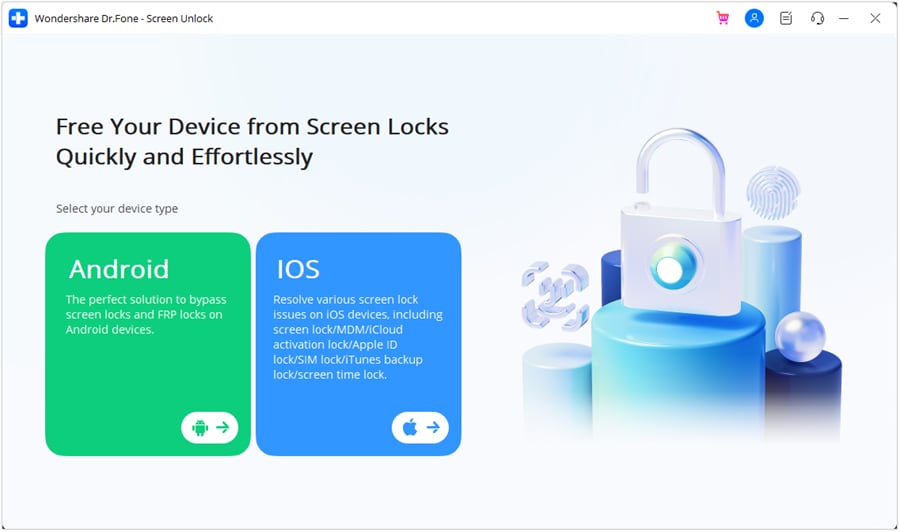
Step 2 Open Dr.Fone and choose Screen Unlock
On your computer, launch Dr.Fone and select Unlock Android Screen, ensuring you pick the correct device type to avoid mismatched steps.
-
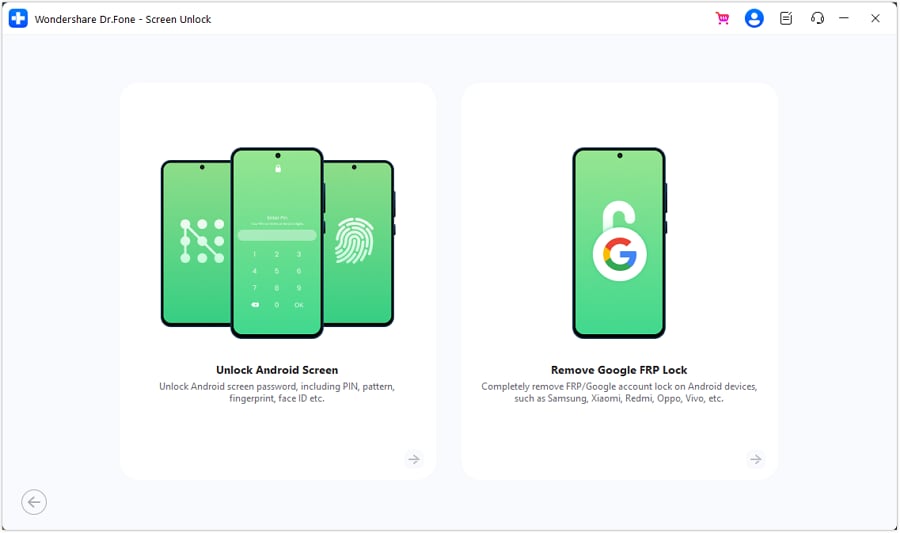
Step 3 Connect the Android phone by USB
Use a reliable cable/port and avoid moving the device during the process to reduce disconnect errors.
-
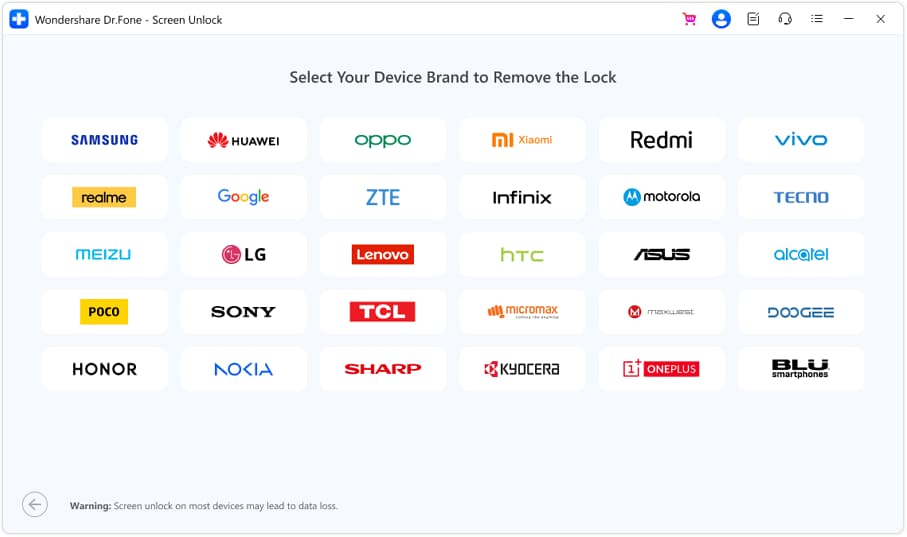
Step 4 Follow the on-screen guided steps
Proceed carefully through the prompts, and stop if anything doesn’t match your model’s screens or modes.
-
Step 5 Re-check access and secure your sign-in method
Once you regain entry, update your lock method and backup plan before further troubleshooting or updates.




Part 5. AI Output vs Reality: what to verify on-device
AI can suggest logic; your device’s behavior decides what’s actually possible.
| What AI may conclude | What you should verify on-device |
|---|---|
| “It’s probably a minor update glitch.” | Whether it can boot after enough charge time and whether Recovery mode works consistently. |
| “Factory reset will likely fix it.” | Whether you can accept data loss, and whether you’ve exhausted non-destructive checks first. |
| “It’s likely failing battery/power.” | Whether it loops more on battery than on stable power, and whether it heats or shuts off suddenly. |
| “It may be storage wear; repair may not be worth it.” | Whether the phone shows prior lag/restarts, and whether it fails to enter modes reliably. |
AI helps you choose the safest diagnostic path, but it can’t run the actions for you—especially when you reach steps that affect access, authentication, or device security.
Conclusion
Use AI to interpret the boot loop symptoms, rank likely causes, and choose low-risk next steps that fit your “repair vs replace” decision—then hand off execution to a purpose-built tool when the device boots but access is blocked, such as using Dr.Fone’s Android screen unlock workflow in a controlled, guided way.
FAQ
-
Is an old boot loop phone worth repairing if I only need the photos?
Often yes—if the loop seems software-related and the phone can enter modes reliably. If signs point to failing storage, prioritize data-safe options and avoid repeated resets. -
Does a boot loop usually mean the motherboard is failing?
Not always. Boot loops can come from update failures or corrupted system data, but frequent prior restarts, charging instability, and worsening symptoms can raise hardware suspicion. -
What’s the safest first action if the phone is boot looping?
Stabilize power (quality charger/cable), wait for a sufficient charge period, and check whether Recovery/Fastboot modes are accessible before attempting anything irreversible. -
If the phone finally boots, why am I suddenly locked out?
After repeated reboots or security changes, you may be required to enter the correct PIN/pattern/password; failed attempts can escalate delays and lockouts. -
Can Dr.Fone be used if the phone still won’t boot at all?
Screen unlock workflows typically require the device to reach specific states or modes; if the phone cannot stay on or enter required modes, address stability first.
 Add Wondershare Dr.Fone as a preferred source on Google