Effortlessly manage data through preview, delete, export, etc.

 100% Security Verified | No Subscription Required | No Malware

 :
: 
 ChatGPT
 Perplexity
 Gemini
 Claude
 Grok
Grok

I’m trying to restore my iPhone, but iOS shows multiple backups with almost the same date and name. I don’t want to pick the wrong one and lose recent messages—how do I know which backup is actually the right one?
Apple Support Community user
You’re about to restore an iPhone (for example, an iPhone 13 or iPhone 14) and iOS shows multiple backups with similar dates, device names, or sizes—so it’s unclear which one will bring back the right data. This often happens right after tapping Restore from iCloud Backup, Restore from Mac/PC, or Erase All Content and Settings.
AI (like ChatGPT or Gemini) can help you compare what you see on-screen, interpret backup metadata, and narrow down the most likely “best” restore choice based on your priorities (photos, WhatsApp, device settings, app data). It’s especially useful for turning vague clues (backup size, timestamp, iOS version) into a ranked shortlist.
AI can’t see your actual backup contents, and trial-and-error restores can create risks (overwriting current data, losing recent messages, or getting stuck in repeated setup). Use prompts to decide before you commit.
In this article
- Part 1. Why “which iPhone backup should I restore from” happens
- Before you prompt the AI
- What metadata can (and can’t) tell you
- Why similar backups are normal
- What to collect before deciding
- Part 2. Using AI prompts to diagnose which iPhone backup to restore safely
- Part 3. When to stop comparing iPhone backups and avoid data loss
- Part 4. Unlock Android screen to support iPhone restore decisions with Dr.Fone
- Part 5. Pre-restore checklist: what to give the AI and what to verify

Part 1. Why which iphone backup should i restore from happens and what it means
The “which backup should I restore from” moment usually appears when you have more than one valid backup: iCloud backups from different days, an older computer backup, or backups tied to similarly named devices. After a reset or a failed update, the list can look nearly identical.
It also happens when you changed phones, used the same Apple ID across multiple devices, or restored once already—creating a chain of backups that don’t clearly indicate what you need (e.g., “the backup with the latest photos” vs “the backup with the latest app logins”).
The uncertainty is normal: the restore screen shows metadata, not a preview of what’s inside. After several minutes of staring at timestamps and sizes, it can feel like nothing helps you decide.
1-1. Before You Prompt the AI
Collect these details first so the AI can reason from evidence, not guesses:
- Your iPhone model and iOS version (if known)
- The restore method you’re using (iCloud vs Finder/iTunes)
- A screenshot or written list of backups (name, date/time, size, iOS version)
- What must be present after restore (e.g., photos, Messages, WhatsApp, Authenticator)
- Whether you still have any other devices signed in (old iPhone, iPad, Android)
Part 2. Using AI prompts to diagnose which iPhone backup to restore safely
2-1. Level 1: Basic Prompt
I’m restoring my iPhone and I see multiple backups. Based on the backup timestamps, sizes, device names, and iOS versions I provide, help me choose the best backup to restore from for my goal: [state goal]. Ask me only the missing questions needed to decide safely.
2-2. Level 2: Advanced Prompt
Act as a cautious diagnostic assistant. I will list my available iPhone backups (source: iCloud or computer), plus what data I must recover.
1) Rank the backups from most likely to contain what I need → least likely.
2) Explain the key evidence behind the ranking (timestamp, size, device name, iOS version, restore method).
3) Flag any risks (overwriting newer data, restoring wrong device backup, missing encrypted data, WhatsApp/iMessage gaps).
4) Give low-risk next steps to confirm before I commit to restoring.
2-3. Level 3: Evidence Prompt
Help me decide which iPhone backup to restore from using evidence-based reasoning.
My goal: (e.g., get back photos + Messages; or recover WhatsApp chats)
iPhone model: (e.g., iPhone 13 Pro)
What I just did before this screen: (e.g., tapped “Erase iPhone” / started setup after update)
Restore options shown: (iCloud / Mac / Windows)
Current status: (e.g., on Hello screen; still signed into Apple ID on another device: yes/no)
Backup list (copy exactly):
- Backup A: source, device name, date/time, size, iOS version (if shown)
- Backup B: source, device name, date/time, size, iOS version (if shown)
- Backup C: source, device name, date/time, size, iOS version (if shown)
Critical data checklist:
- Photos: (must-have / nice-to-have)
- Messages/iMessage: (must-have / nice-to-have)
- WhatsApp: (must-have / nice-to-have)
- App logins/2FA: (must-have / nice-to-have)
- Notes/Contacts/Files: (must-have / nice-to-have)
Constraints: (e.g., limited iCloud storage, slow internet, no computer available)
Output:
1) Best backup choice + why
2) Second-best fallback + why
3) What I might lose with each option
4) The safest confirmation steps before restoring
2-4. Prompt Refinement
If the answer still feels uncertain, use these follow-ups to force clearer reasoning:
“What specific missing questions would change your recommendation, and why do they matter?”
“Separate causes into: (A) iCloud backup confusion, (B) computer backup confusion, (C) Apple ID/device-name confusion, (D) app-specific data like WhatsApp—then reassess the ranking.”
“Rank the top 3 failure modes if I pick the wrong backup, from highest impact to lowest impact, with prevention steps.”
“Which single piece of evidence is most decisive here: backup size, date/time, iOS version, device name, or encryption status? Explain.”
“Given my must-have data, which backup is most likely to include it, and which data types are least reliably restored?”
2-5. AI Output vs Reality
AI can help you decide, but restore outcomes depend on what was actually captured and how apps store data.
| What AI can infer | What you must verify in reality |
|---|---|
| Which backup is most plausible based on metadata | Whether the backup truly contains the app data you care about |
| Likely mismatches from device names/iOS versions | Whether you’re restoring the correct device’s backup under your Apple ID |
| Risk factors (encryption, app-specific restore behavior) | Whether you have required passwords/2FA to complete setup and app sign-ins |
| Low-risk decision steps before committing | Actual restore results and any data gaps discovered after setup |
AI helps narrow the choice and reduce avoidable mistakes; the actual restore is an execution step where account access, encryption, and app rules can change the outcome.
Part 3. When to stop comparing iPhone backups and avoid data loss
If your decision process starts looping, pause and switch from “guessing” to “protecting what’s left” before you restore.
- You’re not sure whether any backup is encrypted (computer) or complete (iCloud), and you can’t confirm credentials.
- Your must-have data is app-specific (e.g., WhatsApp, Authenticator), and you can’t confirm how it was backed up.
- You still have access to another device with important info, but restoring now could disrupt logins or 2FA.
- You’re considering restoring multiple times “to test,” which raises the chance of overwriting or losing newer local-only data.
Once you’ve used AI to narrow the most likely backup, the next step is executing access safely—especially if you need another device to retrieve passwords, verification codes, or account details before you restore.
Part 4. Unlock Android screen to support iPhone restore decisions with Dr.Fone
If part of your restore uncertainty is actually account access—for example, your Apple ID verification codes, email recovery links, password manager, or Google Authenticator are on a locked Android phone—then unlocking that Android screen can help you confirm what you need before you commit to an iPhone restore. In that situation, Dr.Fone - Screen Unlock (Android) becomes relevant as an execution tool: it helps you regain access to the Android device so you can retrieve the information needed to complete iPhone setup and validate your backup choice (without relying on repeated iPhone restores).
 Unlock Android phone in seconds.
- Remove PIN, pattern, password, fingerprint.
- Bypass Google FRP lock easily.
- Works on all Android brands & models.
- No tech skills required – user-friendly.
-
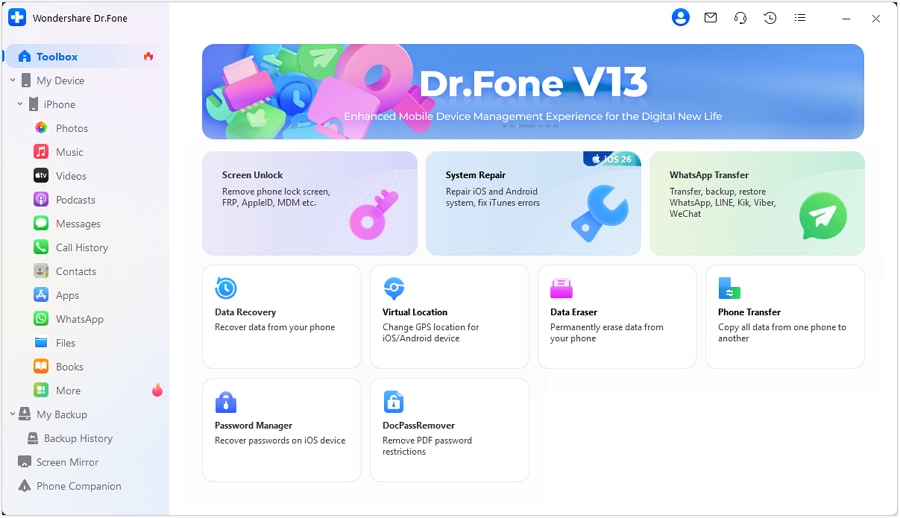
Step 1 Confirm what you need from the Android device
List the exact items (2FA app, recovery email access, password manager) so you don’t unlock unnecessarily.
-
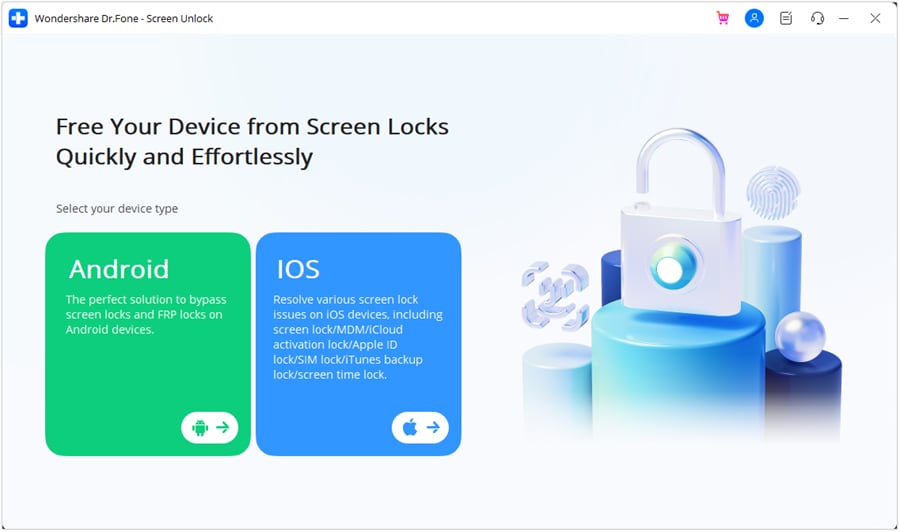
Step 2 Open Dr.Fone – Screen Unlock (Android)
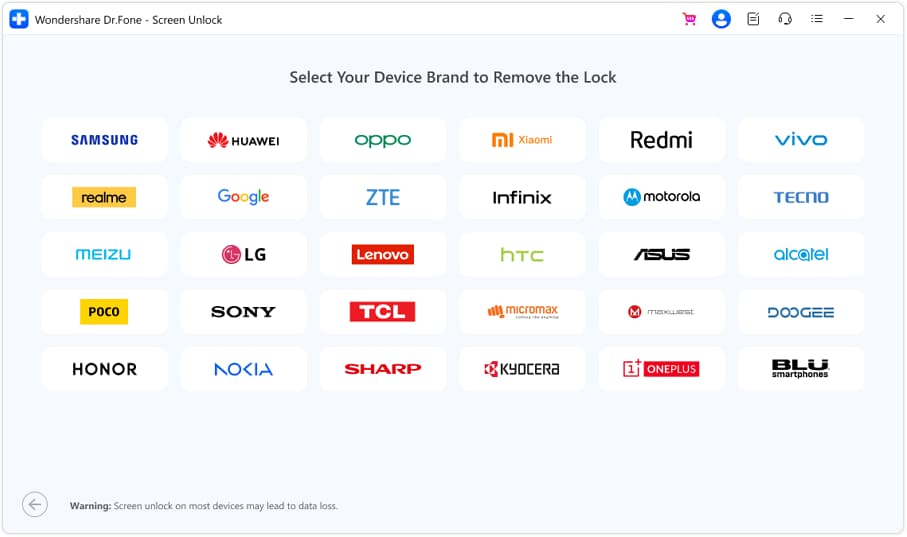
Use the Unlock Android Screen workflow and follow the on-screen device/brand selections carefully to avoid choosing the wrong method.
-
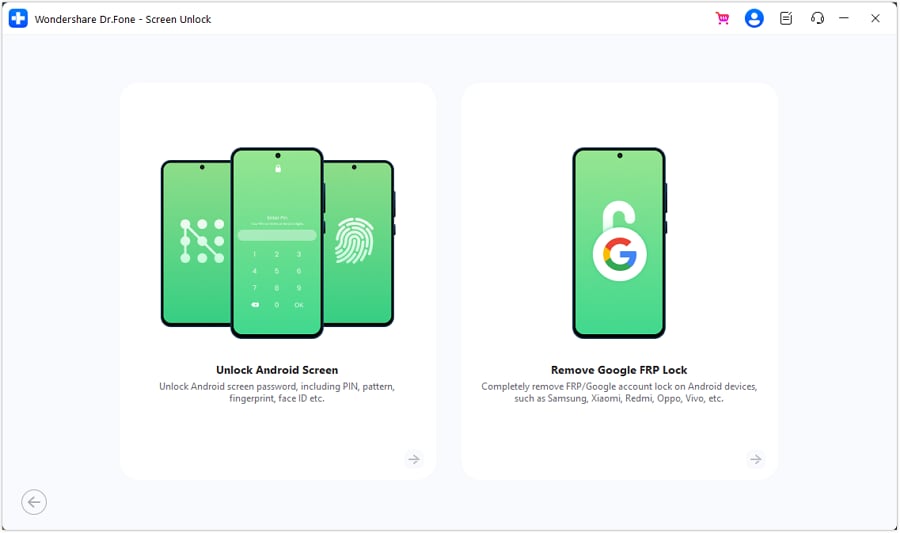
Step 3 Proceed with the recommended unlock path
Continue only if you understand potential data impact for your device model and you’ve ruled out simpler options (like known PINs or biometric access).
-
Step 4 Retrieve and secure your verification info
After access is restored, capture recovery codes or sign-in details securely before returning to iPhone restore.
-
Step 5 Re-attempt the iPhone restore with fewer unknowns
Choose the backup you and the AI already ranked highest, now that account/2FA blockers are removed.




Part 5. Pre-restore checklist: what to give the AI and what to verify
To get a safer recommendation, provide the AI with what the restore screen actually shows (backup date/time, size, device name, iOS version, and whether the source is iCloud vs computer) plus your must-have data list (photos, Messages/iMessage, WhatsApp, app logins/2FA, Notes/Contacts/Files).
Then, separate what’s plausible from metadata from what must be confirmed in real life—especially app-specific restore behavior, encryption/password requirements for computer backups, and whether you can complete Apple ID sign-in and 2FA during setup.
Conclusion
Use AI to turn backup metadata and your must-have data list into a ranked, risk-aware restore choice, then shift to execution only when the key blockers (credentials, 2FA, device access) are resolved—where a tool like Dr.Fone Screen Unlock (Android) can help if the missing piece is access to a locked Android device needed for verification.
FAQ
-
Which iPhone backup should I restore from if two backups have the same date?
Prefer the one with the larger size only if the device name and iOS version also match your previous daily-use phone; otherwise treat size as a weak signal and confirm the device identity first. -
Does the latest iCloud backup always contain the newest photos and messages?
Not always—some data may sync separately (iCloud Photos) or depend on app-specific backup settings, so “latest backup” isn’t a guarantee for every data type. -
How can I tell if my computer backup is encrypted?
In Finder/iTunes, encrypted backups are indicated by an encryption setting (and require a password); if you can’t supply that password, plan around that limitation before restoring. -
Why am I missing WhatsApp chats after restoring an iPhone backup?
WhatsApp restoration depends on how WhatsApp was backed up (and to where), so a full device restore doesn’t always recreate chats unless the app’s own backup path was set up. -
What does unlocking an Android phone have to do with choosing an iPhone backup?
If your Apple ID, recovery email, or 2FA codes are on a locked Android device, you may need access to complete iPhone setup and validate which backup is usable—unlocking supports the decision process, not the backup contents.
 Add Wondershare Dr.Fone as a preferred source on Google