Effortlessly manage data through preview, delete, export, etc.

 100% Security Verified | No Subscription Required | No Malware

 :
: 
 ChatGPT
 Perplexity
 Gemini
 Claude
 Grok
Grok

Switching phones sounds simple until you realize one missed step can leave you with duplicate photo libraries, broken albums, or missing originals.
Forum user
AI helps by turning a messy goal (“move my photos”) into a clear sequence with decision points, checks, and a defined “stop—verify first” moment before anything irreversible happens.
AI can’t access your devices, confirm what’s truly stored locally vs in the cloud, or run transfers—so once the plan is verified, you’ll still need real tools to execute safely.
In this article
- Part 1. How to plan a phone switch without duplicating photo libraries
- Define the goal and what “duplicate” means
- Where duplicates usually come from
- Identify the point of no return
- Decide your source of truth
- Part 2. What the AI needs to know
- Part 3. Using AI prompts to build a safer workflow
- Part 4. AI plan vs. real device constraints
- Part 5. When to stop planning and start execution
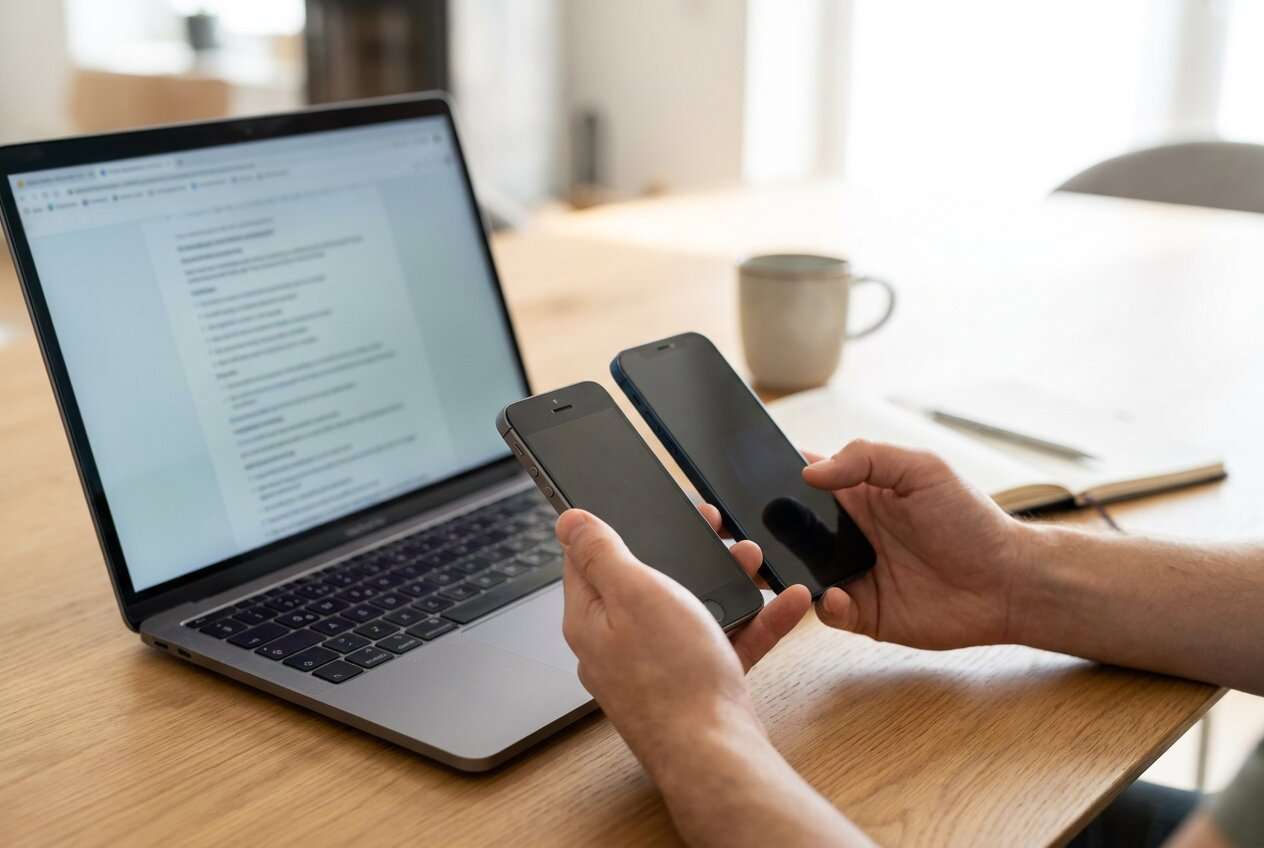
Part 1. How to plan a phone switch without duplicating photo libraries
1-1. Define the goal and what “duplicate” means
You’re moving from an old phone to a new one, and you want your photos to appear once—properly organized—without triplicates from iCloud/Google Photos/local camera folders.
1-2. Where duplicates usually come from
The uncertainty usually starts after you read generic advice: “Just enable cloud sync” or “Just transfer everything.” That skips the hard parts—where duplicates come from (multi-source sync, “optimized storage,” messenger downloads, Live Photos/HEIC conversions, DCIM merges).
1-3. Identify the point of no return
The point of no return is the moment you turn on full sync on the new phone or run a full-device restore before confirming what’s already in the cloud vs only on-device—because it can rapidly multiply duplicates and make cleanup risky and time-consuming.
1-4. Decide your source of truth
Before you execute anything, define a single “source of truth” (for example, your cloud library vs. your old phone’s local library) and treat everything else as secondary until verification passes.
Part 2. What the AI needs to know
Share only what matters so the plan can be sequenced correctly:
- Old phone OS + model (e.g., iPhone 12 on iOS 17 / Samsung S21 on Android 14)
- New phone OS + model
- Primary photo system in use now (iCloud Photos / Google Photos / Samsung Gallery / OneDrive / none)
- Whether “optimized storage” is enabled (iOS) or similar space-saving options (Android/OEM)
- Approx photo/video count and size range (e.g., 18,000 photos, 600 videos)
- What you must preserve (albums, favorites, metadata, Live Photos/Motion Photos, portrait effects)
- Where duplicates have appeared before (DCIM, Downloads, WhatsApp/Telegram, shared albums)
- Current cloud status (does the cloud library look complete on a web browser?)
- Storage headroom on both phones + Wi‑Fi availability
- Your tolerance for change: “keep same library” vs “fresh start, only essentials”
Part 3. Using AI prompts to build a safer workflow
Use the prompts below to force a clear plan with verification gates before any transfer or sync.
3-1. Level 1: Basic prompt
I’m switching phones and want to avoid duplicating my photo library. Ask me the minimum questions you need, then outline a safe sequence with at least two verification checkpoints before I move anything.
Keep it planning-only: no app-specific step-by-step, just the decisions and order of operations.
3-2. Level 2: Advanced prompt
Design a workflow to switch phones without duplicating photo libraries, split into **Preparation / Execution / Verification**.
In each phase, label steps as **Critical** or **Optional**, and list the top duplication causes you’re preventing (cloud resync, folder merges, messenger media reimports, “optimized storage” confusion).
Include a “Do Not Cross Yet” gate: the exact conditions that must be true before I enable sync on the new phone or run any full restore.
3-3. Level 3: Evidence prompt
Here’s my situation: Old phone: (iPhone 12, iOS 17), new phone: (iPhone 15). I use (iCloud Photos ON), storage is (optimized on old phone), approx library size (18,000 photos / 500 videos). I also have media from (WhatsApp + Downloads). My goal: (preserve albums, favorites, metadata; avoid duplicates).
Build a step-by-step **plan** with:
- **Before** checks (what to confirm in iCloud on the web; how to estimate if cloud is complete vs local-only)
- **During** checks (what to watch for that indicates resync/duplication is starting)
- **After** checks (spot-check rules: recent photos, oldest photos, album counts, video count, “Recents” vs “Library” differences)
- A short risk list: what actions could cause irreversible duplication, and how to avoid them
3-4. Prompt refinement follow-ups
Convert your plan into a table with columns: **Step / Purpose / Evidence to Collect / Pass-Fail Criteria / If Failed, Do This Instead**.
List the exact “stop signs” that indicate I’m about to create duplicates (e.g., cloud re-indexing, unexpected upload spikes, duplicate bursts by date) and what to do immediately.
Give me a minimal-duplication strategy for my messenger media: separate rules for (WhatsApp), (Telegram), and (Downloads) so those don’t re-enter the main library twice.
Provide a verification checklist that compares: (cloud web view), (old phone local view), (new phone view) and states what mismatches are acceptable vs not acceptable.
Part 4. AI plan vs. real device constraints
AI improves planning, but cannot execute transfers, read your library state, or validate results—those require real device access and tooling.
| Planning need | What AI can do | What AI cannot do | What you should verify on-device |
|---|---|---|---|
| Identify duplication risks | Map common duplication patterns by setup | Detect your actual duplicates | Counts, date clusters, “recently added” spikes |
| Sequence steps safely | Create gated workflow with pass/fail checks | Enforce those gates automatically | Confirm cloud completeness before sync/restore |
| Define evidence checkpoints | Specify what to compare and when | Access iCloud/Google Photos account state | Web library vs device library consistency |
| Reduce irreversible mistakes | Highlight point-of-no-return actions | Prevent you from tapping “restore/sync” | You confirm backups and source-of-truth |
Part 5. When to stop planning and start execution
- You’ve defined the single source of truth (cloud library vs old-phone local) and documented it.
- You can prove the cloud library is complete enough for your goal (via web view + counts/spot checks).
- You’ve chosen one transfer approach (cloud-first vs direct transfer) and ruled out conflicting ones.
- You’ve written down the point-of-no-return actions you will not do until verification passes.
At this point, the remaining risk comes less from “not knowing” and more from “doing steps in the wrong order.”
Recommended execution tool: transfer with one controlled path
Execution matters now because the safest plan still fails if the transfer method mixes multiple sources or skips verification right before an irreversible action. If you want a single, controlled device-to-device transfer path, Dr.Fone - Phone Transfer can help you run the transfer after you’ve locked your source of truth and evidence checks.
 Move data between iOS to Android and vice versa.
- Transfer contacts, SMS, photos, videos, music, and more types.
- Available with all phones with Android and iOS versions.
- Simple, click-through process.
-
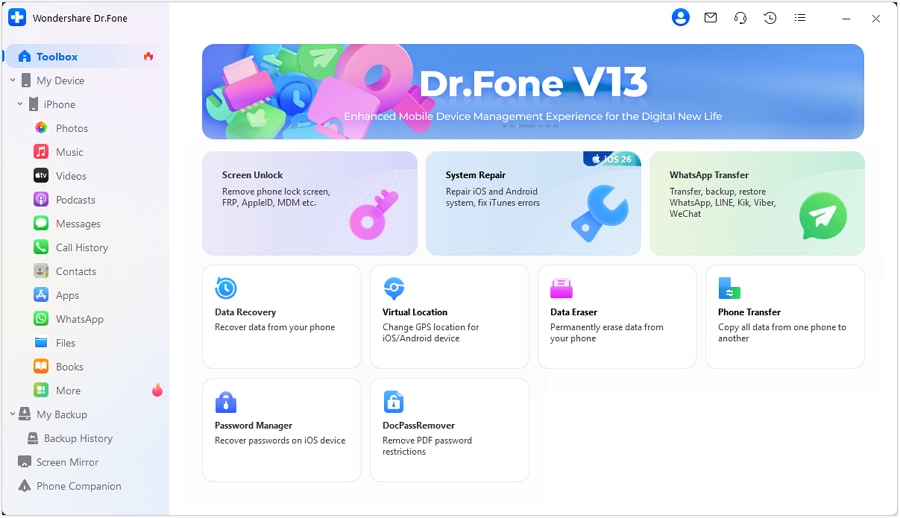
Step 1 Lock the source of truth and capture baseline evidence
Action: Confirm your chosen source of truth and gather your baseline evidence (library counts, key date ranges, album essentials) before moving data.
Limitation: AI can tell you what evidence to collect, but it cannot see your library or confirm completeness.
-
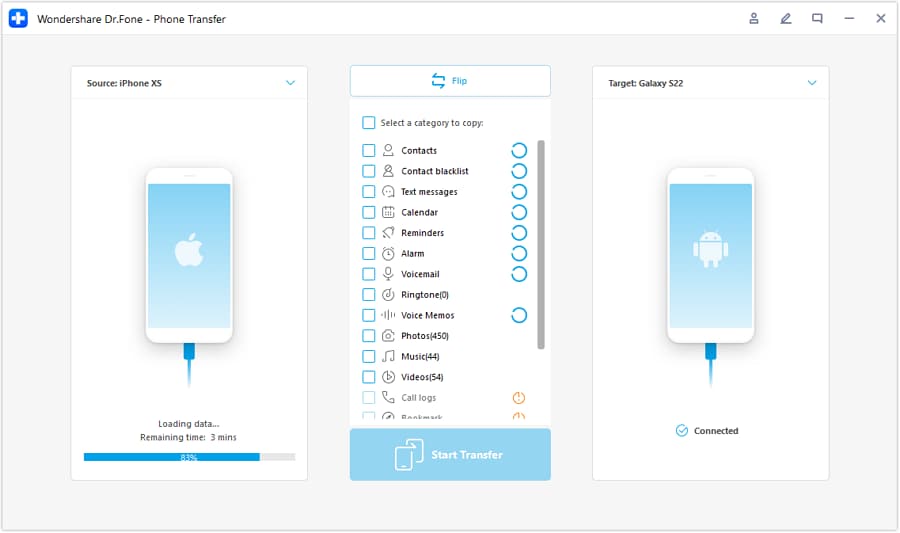
Step 2 Set a single, controlled transfer direction
Action: Choose one transfer approach and avoid running multiple parallel import/sync methods during the same window.
Limitation: The transfer tool can execute the path, but it won’t decide your source of truth or resolve ambiguous “cloud vs local” assumptions for you.
-
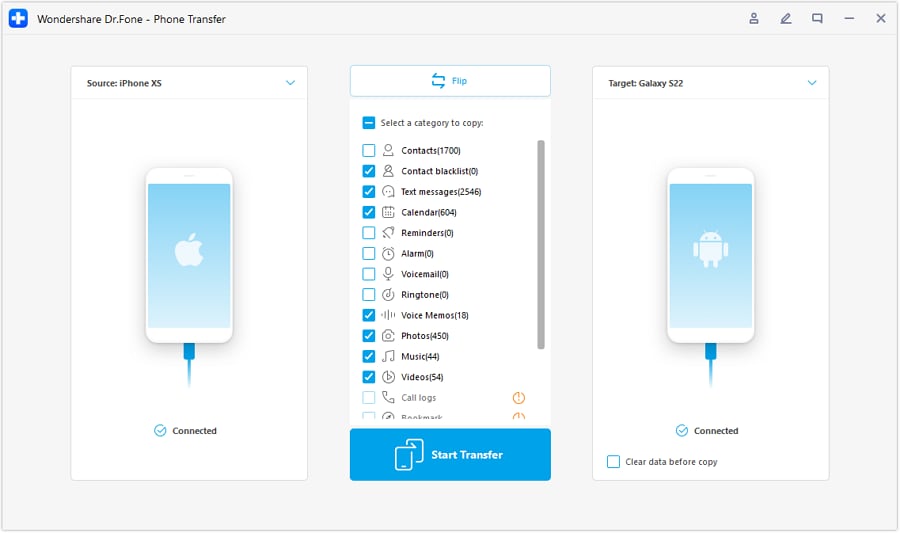
Step 3 Select what to transfer, then run the transfer once
Action: Transfer only what matches your plan (for example, photos/videos as a single path) to reduce the chance the same items enter from multiple sources.
Limitation: A transfer tool moves data, but verification still depends on your before/after counts and spot checks.
-
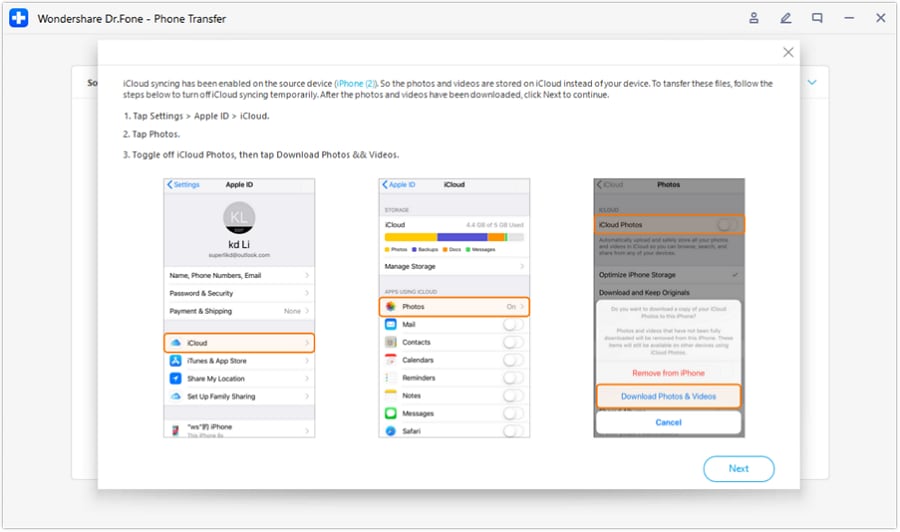
Step 4 Verify results before enabling broad sync, cleanup, deletion, or reset
Action: Compare post-transfer evidence against your baseline and only then proceed to enabling full sync or removing anything from the old device.
Limitation: AI can define the verification rules, but you must confirm pass/fail on the devices before any deletion or reset.




Conclusion
Use AI to plan the sequence, identify duplication risks, and define verification gates; then use a real execution tool like Dr.Fone to carry out the transfer once you’ve proven your source of truth and checks are ready.
FAQ
-
What’s the most common cause of duplicate photo libraries when switching phones?
Mixing transfer methods (cloud sync + device-to-device copy + folder import) so the same items enter the new phone from multiple sources. -
What’s the highest-risk, irreversible moment in this workflow?
Enabling full photo sync or restoring a full backup on the new phone before confirming the cloud library is complete and matches your intended source of truth—duplicates can multiply quickly and be hard to unwind. -
How can I verify the cloud library is “complete” if my old phone uses optimized storage?
Use the cloud provider’s web view plus spot checks (oldest items, newest items, video count, key albums). Optimized storage can hide whether originals are truly local, so your verification must be cloud-based, not just on-device. -
Should I delete duplicates during the move to “keep it clean”?
Not until after you’ve finished the transfer and passed verification. Early deletion can remove the only copy of items that weren’t actually in your chosen source of truth. -
What can AI do here that’s genuinely useful if it can’t access my phone?
Force a safe sequence with explicit gates, define what evidence to collect, and clarify which actions are high-risk so you don’t “fix” duplicates by causing data loss.
 Add Wondershare Dr.Fone as a preferred source on Google