Effortlessly manage data through preview, delete, export, etc.

 100% Security Verified | No Subscription Required | No Malware

 :
: 
 ChatGPT
 Perplexity
 Gemini
 Claude
 Grok
Grok

My iPhone keeps crashing right before a trip—apps close suddenly, the screen freezes, and sometimes it restarts at random after I tapped “Install Now.”
Forum user
Your iPhone keeps crashing right before a trip—apps close suddenly, the screen freezes, or the phone restarts at random. This often happens after you tapped Install Now for an iOS update or after a restart, and nothing seems to improve even after waiting a few minutes.
AI (like ChatGPT or Gemini) can help you describe the symptoms clearly, narrow down likely causes, and choose the lowest-risk next step based on what you’re seeing on your device.
AI can’t verify what’s happening inside your phone or safely “test” fixes for you. Trial-and-error right before travel can increase the risk of data loss, missed backups, or getting stuck in a boot loop—so the goal is careful diagnosis first, then controlled execution.

In this article
- Why a crashing iPhone before travel happens and what it means
- Common triggers before travel
- App-level vs iOS-level symptoms
- What to collect before asking AI
- Stabilize now vs replace before you leave
- Using AI prompts to diagnose phone crashes before a trip safely
- When to stop troubleshooting phone crashes before travel and avoid risks
- Repair or replace a crashing phone before travel with Dr.Fone - System Repair (iOS)
- Quick pre-travel checklist to reduce risk
Part 1. Why a crashing iPhone before travel happens and what it means
A “crashing phone” before travel is usually a mix of timing and load: last-minute updates, heavy travel apps (maps, airline apps, eSIM tools), low storage, or unstable system state. On an iPhone 13 or iPhone 14, this can show up as repeated app quits, random reboots, or the device becoming unusually hot.
What it means depends on scope. If only one app crashes, the issue is likely app-level (corrupted cache, outdated version, permissions). If multiple apps crash or the whole phone restarts, it’s more consistent with iOS-level instability, storage pressure, or a failed/partial update.
The tricky part is uncertainty: it can look like “just a glitch,” but if crashes are increasing or the phone restarts during normal use, you may be deciding between stabilizing the device now or replacing it before you leave.
1-1. Before You Prompt the AI
Collect a few basics first so the AI can narrow causes quickly:
- iPhone model and iOS version (if known)
- What changed right before the crashes (update, restore, new app, low storage)
- Whether it’s one app or many apps/system restarts
- Storage free space estimate
- Battery health status (if you can access it)
- Any patterns (on Wi‑Fi only, during charging, when opening camera/maps)
Part 2. Using AI prompts to diagnose phone crashes before a trip safely
2-1. Level 1: Basic Prompt
My iPhone is crashing before travel. Describe the most likely causes based on these symptoms: [apps close / phone restarts / freezes], started after [update/restart/new app], affects [one app or multiple], and I have about [X] GB free. Give the lowest-risk checks first and what evidence would confirm each cause.
2-2. Level 2: Advanced Prompt
Act as a cautious mobile triage assistant. My iPhone has repeated crashes and I’m traveling soon.
**Symptoms:** [list exact behaviors + frequency]
**Trigger:** [what changed right before it started]
**Scope:** [single app vs system-wide]
**Constraints:** I must avoid data loss and can’t spend more than [time] today.
**Task:**
1) Rank the top 5 likely causes with confidence levels.
2) For each cause, list 1–2 low-risk checks and the specific evidence that would confirm/deny it.
3) Flag any actions that increase risk (e.g., resets, restores) and suggest safer alternatives.
2-3. Level 3: Evidence Prompt
Help me decide whether to stabilize or replace my crashing iPhone before travel using evidence-based reasoning.
**Device:** iPhone model (e.g., iPhone 13 Pro)
**iOS version:** (e.g., iOS 17.5 / unknown)
**What I did before it started:** (e.g., tapped Install Now, restarted, installed airline apps)
**Crash type:** (app closes / springboard crash / random reboot / freeze)
**Scope:** (one app name / multiple apps / system-wide)
**Frequency:** (e.g., 3x/day, every time I open Maps)
**Storage free:** (e.g., 2–5 GB / 20+ GB)
**Battery health:** (e.g., 79% / unknown)
**Temperature:** (normal / warm / hot)
**Network context:** (Wi‑Fi, cellular, roaming, VPN)
**Charging context:** (only while charging / also on battery)
**Any error text:** (quote exactly)
**What I tried:** (restart, offload app, update apps, free space)
**Output format I want:**
A) Most likely causes ranked (with why)
B) Key missing questions to ask me
C) Lowest-risk next steps in order
D) “Replace soon” indicators vs “repair is reasonable” indicators
E) What NOT to do right now because it increases risk
2-4. Prompt Refinement
If the AI feels too general, force it to ask and separate evidence:
“What are the minimum questions you need to distinguish app-level crashes from system-level instability?”
“Separate causes into storage, battery/power, software/iOS, and specific app categories—then rank within each.”
“Give me one decisive piece of evidence for each top cause (what I should look for on-screen or in Settings).”
“If I can only do three low-risk actions before travel, which three reduce risk the most and why?”
“Based on my details, what signs suggest I should stop troubleshooting and avoid making it worse?”
2-5. AI Output vs Reality
AI suggestions are only as good as the evidence you can provide and safely act on.
| AI says | Reality check |
|---|---|
| “It’s probably just one buggy app.” | If crashes happen across multiple apps or include reboots, it may be iOS-level. |
| “Free up storage and it will stabilize.” | Low storage is common, but not the only cause; repeated reboots can persist after cleanup. |
| “A restart is enough.” | Frequent restarts can mask the pattern without removing the underlying trigger. |
| “Do a reset to be safe.” | Resets can increase risk if you’re not backed up or if the system is already unstable. |
AI can help you choose the safest path and reduce guesswork, but execution still requires a tool and a controlled process—especially when system instability is involved.
Part 3. When to stop troubleshooting phone crashes before travel and avoid risks
If your travel window is close, the safest strategy is to stop experimenting once symptoms suggest escalation or uncertainty that could jeopardize access.
- Crashes escalate into random reboots, boot loops, or the phone can’t stay on long enough to back up
- You see overheating or battery drain spikes alongside instability
- You can’t keep enough stability to complete essentials (backup, boarding pass access, eSIM setup)
- Fix attempts start stacking (multiple resets/reinstalls) without clear evidence of improvement
Once you’ve used AI to narrow likely causes and identify the lowest-risk next step, hand off execution to a controlled system-repair approach rather than adding more trial-and-error.
Part 4. Repair or replace a crashing phone before travel with Dr.Fone - System Repair (iOS)
When the crashes look system-wide (multiple apps failing, freezes, repeated restarts), you’re no longer just “tweaking settings”—you’re trying to stabilize iOS safely before you travel. At this stage, Dr.Fone - System Repair (iOS) is relevant as an execution tool for “Repair iOS Issues” in a more structured way than ad-hoc resets, helping you attempt stabilization without piling on risky guesses.
 Fix iOS issues, no data loss.
- One-click repair for all iOS problems.
- Solve recovery mode, Apple logo, black screen, etc.
- Upgrade or downgrade iOS without iTunes
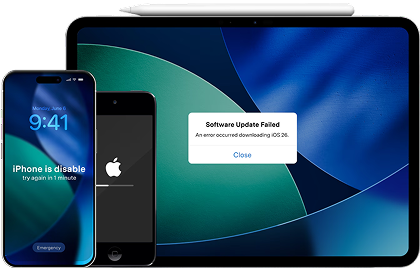
-
Step 1 Confirm your risk level
Check whether the phone can stay on long enough to back up, and avoid any action that might interrupt power mid-process.
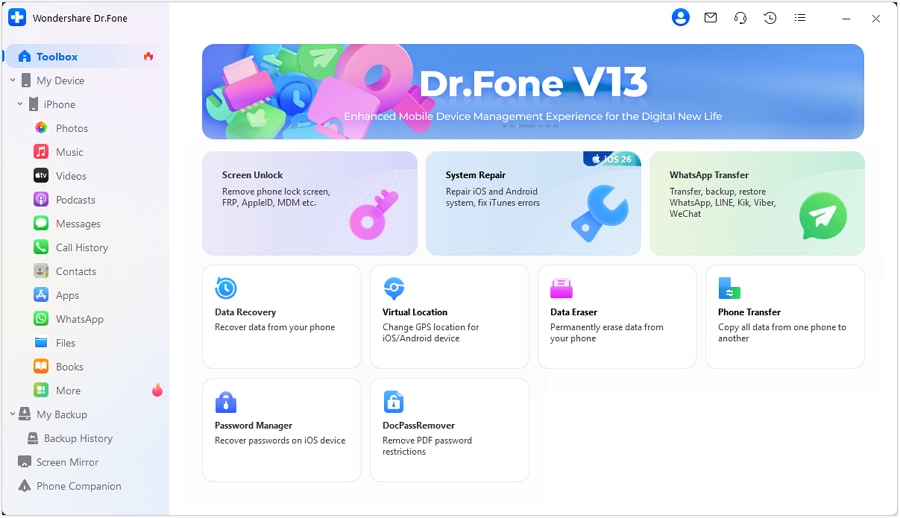
-
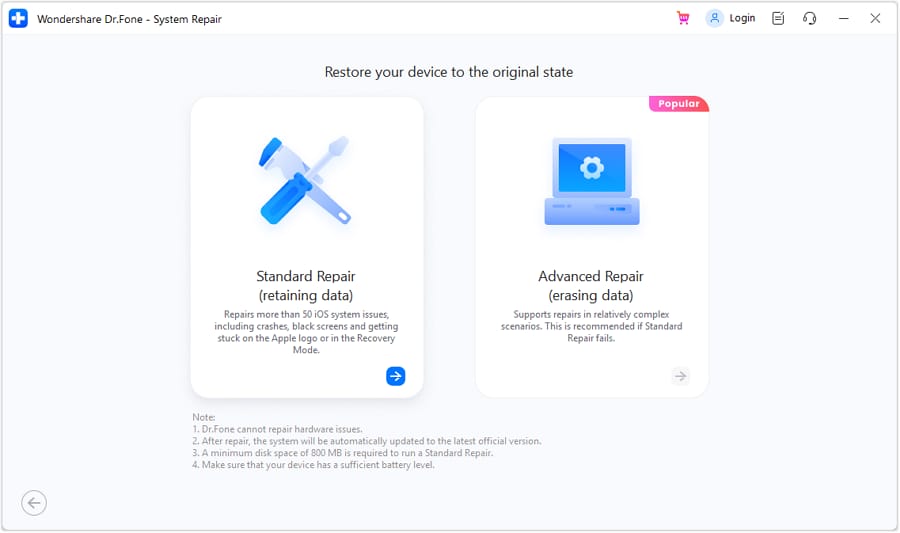
Step 2 Launch System Repair (iOS)
Open Dr.Fone and select the iOS System Repair option that matches your situation, choosing the least disruptive mode first when available.
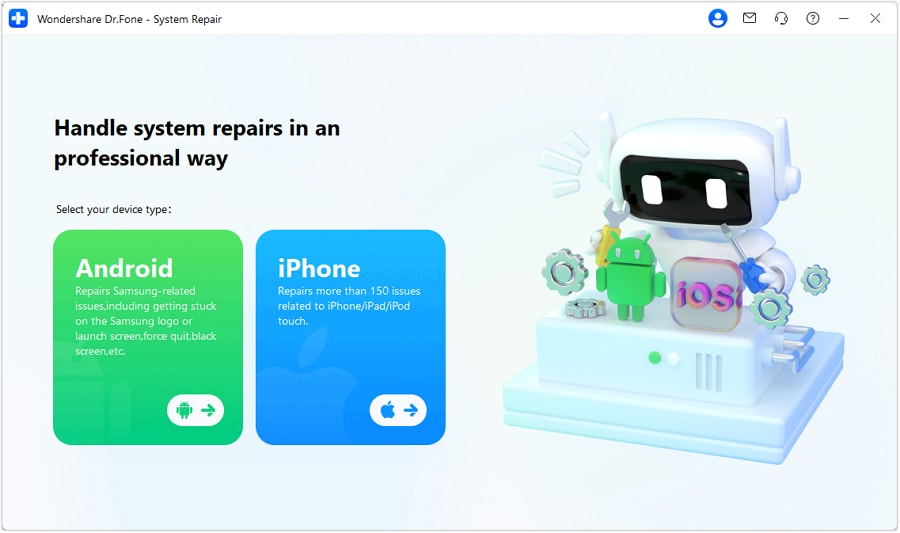
-
Step 3 Connect iPhone reliably
Use a stable cable/port and keep the computer powered so the connection doesn’t drop during the procedure.
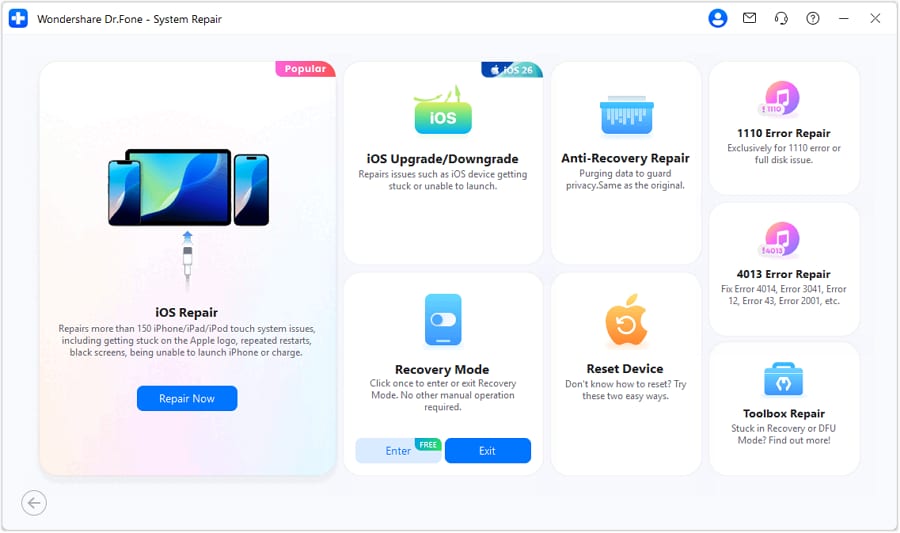
-
Step 4 Follow the on-screen repair flow
Let the tool complete each step without multitasking on the computer or force-restarting the phone mid-run.
-
Step 5 Re-check stability for travel essentials
After completion, test the specific actions that were crashing (Maps, camera, airline app login, eSIM settings) before reinstalling extra apps.

Part 5. Quick pre-travel checklist to reduce risk
- Stop “random” experimenting once crashes escalate (reboots/boot loops), overheating appears, or you can’t stay stable long enough to back up.
- Use AI prompts to separate app-level vs iOS-level scope, then pick the lowest-risk check that produces clear evidence.
- Prioritize essentials testing (backup, boarding pass access, eSIM setup, Maps/camera) over installing or reconfiguring non-essential apps.
- Avoid high-risk actions (resets/restores) unless you have verified backups and a stable window to complete them.




Conclusion
AI helps you turn “my phone keeps crashing before travel” into a structured diagnosis—what changed, what’s most likely, and which low-risk checks matter—while avoiding risky trial-and-error. Once you’ve narrowed the cause to probable system instability, Dr.Fone - System Repair (iOS) is the practical next step for executing a controlled repair workflow.
FAQ
-
Should I replace my phone if it crashes only on one app?
Not usually. AI triage will often point to app-specific causes first (update the app, reinstall, check permissions), which is lower risk than replacing hardware.
-
How do I know if the crashes are iOS-level or app-level?
If multiple unrelated apps crash, or the device restarts/freezes outside one app, that’s more consistent with iOS-level instability than a single buggy app.
-
Is it risky to troubleshoot right before traveling?
It can be. Actions like resets or repeated reinstall cycles can waste time and add uncertainty, especially if you haven’t confirmed backups and stability.
-
What evidence should I give AI to get a useful diagnosis?
Model, what changed before the issue, whether it’s one app or system-wide, frequency, storage free space, battery health, heat, and any exact error text.
-
Can a recent iOS update trigger repeated crashes?
Yes—especially if the update was interrupted, storage was low during install, or the system state became unstable afterward. AI can help you rank this versus other causes.
 Add Wondershare Dr.Fone as a preferred source on Google