Effortlessly manage data through preview, delete, export, etc.

 100% Security Verified | No Subscription Required | No Malware

 :
: 
 ChatGPT
 Perplexity
 Gemini
 Claude
 Grok
Grok

After a restart and an update prompt, my work documents in Drive/OneDrive look like they vanished on my Android. I can’t tell if they’re deleted or just not showing up.
Forum user
Work documents can seem to “vanish” on an Android phone after a restart, a work profile change, or after you tapped Install now on an update—especially if you rely on apps like Google Drive, OneDrive, or a company-managed workspace. Nothing changes after several minutes, and it’s unclear whether the files are gone or just not showing up.
AI (like ChatGPT or Gemini) can help you organize symptoms, narrow likely causes (sync, storage, permissions, work profile, app cache), and decide the lowest-risk next checks based on what you can still access.
AI can’t see your phone, your employer policies, or your storage state—so trial-and-error (clearing data, reinstalling apps, factory reset attempts) can make things worse. Use prompts to diagnose first, then use the right tool for execution.
In this article
- Part 1. Why work documents missing on android phone happens and what it means
- What “missing” usually means
- Visibility vs access vs deletion
- Before you prompt the AI
- What to collect first
- Part 2. Using AI prompts to diagnose missing files on Android safely
- Part 3. When to stop troubleshooting missing documents on Android and avoid risks
- Part 4. Unlock Android screen to check missing work documents
- Part 5. AI output vs reality: what to verify before acting

1. Treat “missing” as a visibility/access problem first.
In many cases, files are still in cloud storage or inside a work profile container, but you’re viewing the wrong account, the wrong profile, or sync is paused.
2. Use AI to rank causes and choose low-risk checks.
Well-structured prompts help you separate sync/account issues from work profile/MDM restrictions and avoid risky actions like clearing storage or uninstalling before confirming where files live.
3. Stop before you do anything that could erase local app data.
Clearing app storage, uninstalling, removing a work profile, or attempting resets can reduce your chances of finding offline/local-only documents intact.
Part 1. Why work documents missing on android phone happens and what it means
“Work documents missing on Android phone” often means the files are still somewhere—just not where you’re currently looking. Common patterns include: documents stored inside an app’s private storage, files moved into a work profile container, or cloud files that haven’t re-synced after a network or account change.
This can show up on a personal Android device or a company phone. Sometimes it happens right after a reboot, after changing a screen lock method, or after an MDM/work policy prompt. If you also use another device (e.g., an iPhone 13 or iPhone 14) for the same account, the mismatch between what each device shows can add confusion.
The key is to determine whether this is a visibility problem (filters, account, work profile, offline mode), an access problem (locked screen, disabled account, policy restriction), or an actual deletion (trash, retention rules).
1-1. Before You Prompt the AI
Collect a few specifics first:
- Android brand/model and Android version
- Where the documents were last seen (app name + folder/path if known)
- Whether this is a work profile / company-managed phone
- What changed right before the issue (update, reboot, password/lock change, app reinstall)
- What you can still access (Files app, Drive/OneDrive, computer web portal)
Part 2. Using AI prompts to diagnose missing files on Android safely
2-1. Level 1: Basic Prompt
My Android phone can’t find my work documents. They were last seen in [app/folder], and this started after [what changed]. Give me the top 5 likely causes and the safest first checks that don’t risk deleting anything.
2-2. Level 2: Advanced Prompt
Diagnose why my work documents appear missing on Android.
Context: device [model], Android [version], documents were stored in [app + location], work profile: [yes/no/unsure], change before issue: [update/restart/lock change/account change].
Task:
1) Rank the most likely causes from 1–7 with short reasoning.
2) For each cause, list “low-risk checks” vs “higher-risk actions” (flag anything that might erase local app data).
3) Tell me what evidence would confirm or rule out each cause.
2-3. Level 3: Evidence Prompt
Act like a diagnostic assistant. Use only the info I provide; if something is missing, ask targeted questions first. Then produce a cause-ranking with confidence levels and a low-risk action plan.
Evidence:
- Android phone model: (e.g., Samsung Galaxy S22)
- Android version: (e.g., Android 13)
- File type(s): (e.g., .docx, .xlsx, PDF)
- Last known location: (e.g., OneDrive > Work > Projects)
- Access method: (Files app / app-only / SD card / USB)
- Work profile present: (yes/no/unsure)
- Account(s) signed in: (e.g., personal Google + work Microsoft)
- Network state: (Wi‑Fi/cellular/offline/VPN)
- Storage state: (e.g., “almost full”, “plenty free”)
- What changed right before: (e.g., “restarted after update”, “changed lock screen PIN”)
- What I already tried: (e.g., “reinstalled app”, “cleared cache”)
Output format:
A) Clarifying questions (max 7)
B) Ranked causes with brief evidence-based reasoning
C) Lowest-risk next steps (ordered)
D) Red-flag actions to avoid and why
2-4. Prompt Refinement
If the first AI answer feels generic, push it with focused follow-ups:
Ask me the minimum missing questions needed to decide between sync issue vs work profile issue vs deletion.
Separate causes into cloud sync, local storage, work profile/MDM, and account/permissions—then rank within each.
Based on my evidence, what single check would most quickly confirm the top cause without data loss?
List the key artifacts I should look for (Trash/Recently deleted, offline files, work profile badge, account switching indicators).
Which steps are risky because they may remove local app data (clear storage, uninstall, profile removal), and what should I do before them?
Part 3. When to stop troubleshooting missing documents on Android and avoid risks
Stop and reassess when continuing could reduce your odds of finding the documents intact.
- You’re about to clear storage/data for the app where the documents were last seen, and you don’t know if files were stored locally.
- The phone is company-managed (MDM/work profile) and you’re considering removing the work profile or device admin controls.
- You can’t reliably authenticate (forgot PIN/pattern, too many attempts, policy lock), so you’re forced into guesswork.
- You notice storage errors, boot instability, or encryption/credential prompts after an update or restart.
Once you’ve narrowed likely causes with AI, the next step is choosing a practical execution path—especially if the blocker is simply that you can’t get into the phone to verify storage, accounts, or work apps.
Part 5. AI output vs reality: what to verify before acting
AI can guide your decision-making, but it can’t verify what’s on your device. Use this gap-check:
| What AI suggests | What you verify in the real world |
|---|---|
| “It’s likely a sync/account mismatch.” | Confirm the exact account in the app, and check web portal (Drive/OneDrive) for the files. |
| “It may be a work profile container issue.” | Check for a Work profile tab/badge and whether the work profile is paused/removed. |
| “The app cache may be corrupted.” | Prefer cache-only clearing first; avoid clearing storage unless you understand local-only loss risk. |
| “You might be locked out of the device/app.” | Confirm whether a lock screen, policy, or disabled account is blocking access to files. |
AI helps you choose safer diagnostics; execution still depends on what your phone allows you to access, and what controls (especially work/MDM) are in place.
Part 4. Unlock Android screen to check missing work documents
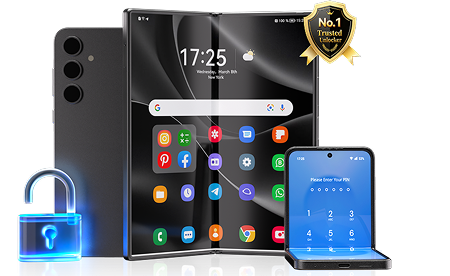
If your documents seem “missing” because you can’t access the device (forgotten PIN/pattern, lockout after too many attempts, or a lock change right before the files disappeared), Dr.Fone - Screen Unlock (Android) becomes relevant as an execution step: it helps you regain access so you can validate where the documents actually are (work profile, cloud app, internal storage, or trash). At this stage, you’re not trying random resets—you’re restoring the ability to check evidence safely and proceed based on what you find.
 Unlock Android phone in seconds.
- Remove PIN, pattern, password, fingerprint.
- Bypass Google FRP lock easily.
- Works on all Android brands & models.
- No tech skills required – user-friendly.
-
Step 1 Confirm the goal (access vs recovery)
Decide whether your immediate need is to unlock the phone to check accounts/apps, and avoid actions that could erase local app storage before you’ve verified where files live.
-
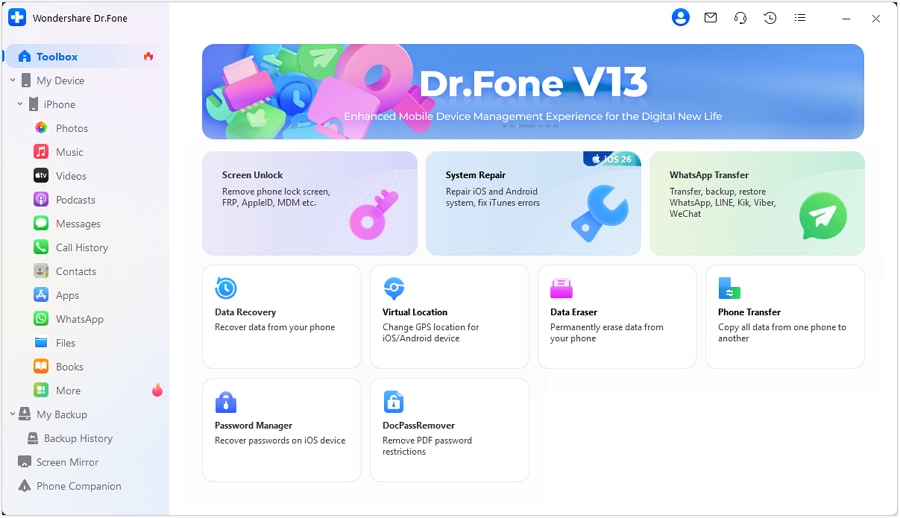
Step 2 Open Screen Unlock (Android)
Launch Dr.Fone and choose Screen Unlock (Android).
-
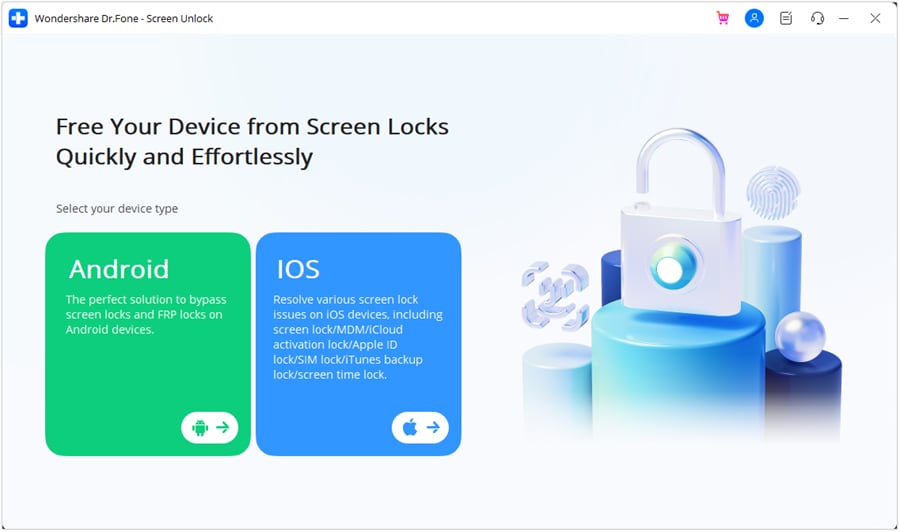
Step 3 Select the correct Android unlock option
Make sure you select the correct device/brand prompts to reduce mistakes during the unlock flow.
-
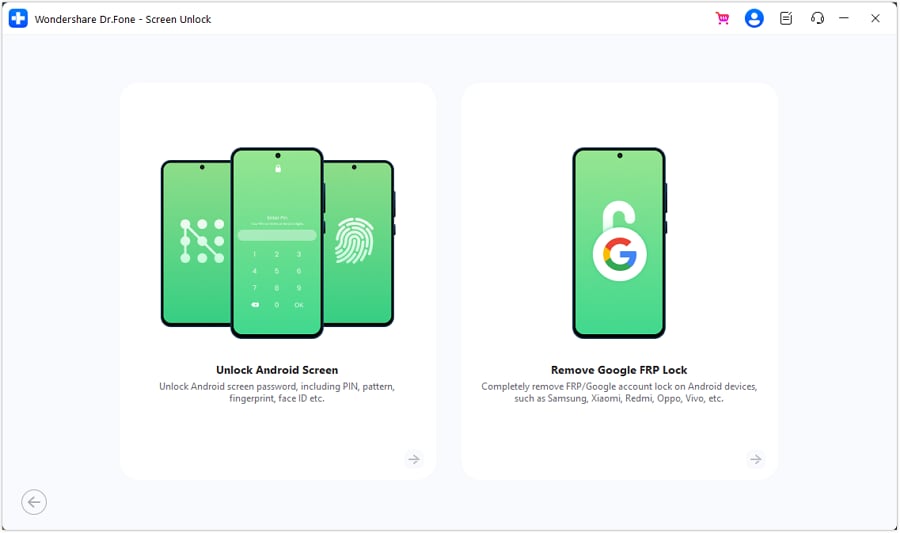
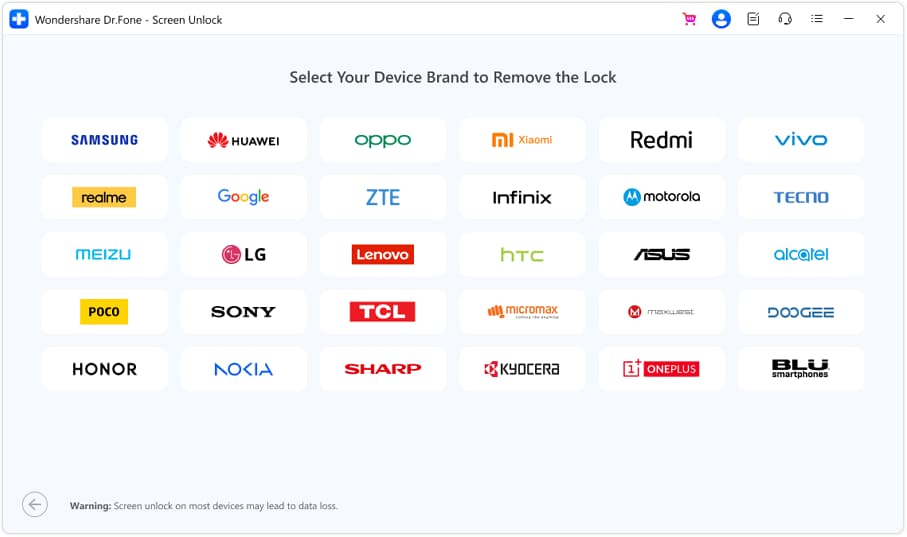
Step 4 Follow the on-screen unlock flow carefully
Proceed step-by-step, and pause if the tool indicates a method that may wipe data on certain devices—don’t continue until you understand that risk for your model.
-
Step 5 After access, verify file locations systematically
Check the Files app, the relevant work app (Drive/OneDrive), account switching, Trash/Recently deleted, and whether a work profile is present/paused. Then re-enable sync and confirm the same folder from a computer web portal to distinguish “not synced” from “not stored locally.”




Conclusion
Use AI to structure the diagnosis—what changed, where the documents were last stored, and which low-risk checks best separate sync/account/work-profile issues from real deletion—then hand off execution to a practical step like unlocking device access with Dr.Fone when the lock screen is the barrier to verifying and restoring visibility.
FAQ
-
Why do work documents disappear after an Android update or restart?
Because the app may sign you out, pause sync, switch accounts, or change access to a work profile container—making files look missing even when they still exist in cloud storage. -
How can I tell if the files are in a work profile?
Look for a Work tab/badge in apps, separate “Work” versions of apps, or a work profile toggle in Android settings; if the profile is paused/removed, work files may not display. -
Should I clear app storage to fix missing documents?
Not until you confirm whether the documents are cloud-only or stored locally inside the app; clearing storage can remove local-only files and offline copies. -
Can AI tell whether my documents were deleted or just hidden?
AI can’t confirm deletion, but it can help you choose checks that distinguish deletion (trash/retention logs) from visibility issues (account mismatch, filters, offline mode, work profile). -
Will unlocking my Android screen delete my files?
It depends on the device and security state; some unlock approaches may wipe data, so check the method’s warning for your model before you proceed.
 Add Wondershare Dr.Fone as a preferred source on Google