Effortlessly manage data through preview, delete, export, etc.

 100% Security Verified | No Subscription Required | No Malware

 :
: 
 ChatGPT
 Perplexity
 Gemini
 Claude
 Grok
Grok

I deleted chats and now I’m worried things are still syncing in the background—nothing seems to change after several minutes, and I don’t know if I’m making it worse.
Forum user
Deleting chats can feel urgent—especially if it happened right after you tapped Delete for me/everyone, cleared a conversation, or reinstalled a messaging app. Whether it’s on an iPhone 13/iPhone 14 or an Android phone, it’s often unclear if anything is still syncing in the background, and nothing seems to change after several minutes.
AI (like ChatGPT or Gemini) can help you think clearly: what “deleting chats” likely did on your device, what might still be recoverable from backups or other devices, and whether turning on Airplane Mode reduces the chance of further changes.
AI can’t see your phone’s real state, and trial-and-error (logging out, reinstalling, “cleaner” apps, repeated restores) can create more overwrites or account sync changes. The goal is to make low-risk choices first, then use the right tool to carry them out.
In this article
- Part 1. Why airplane mode after deleting chats can help and what it means
- How Airplane Mode can act as containment
- What Airplane Mode doesn’t do
- Typical uncertainty scenarios
- Before You Prompt the AI
- Part 2. Using AI prompts to assess deleted chat risks
- AI Output vs Reality
- Part 3. When to stop trying to fix deleted chats and prevent data loss
- Part 4. Unlock Android screen to continue your chat triage with Dr.Fone

Part 1. Why airplane mode after deleting chats can help and what it means
If you deleted chats and immediately worry about “making it worse,” Airplane Mode can be a containment step: it reduces new network activity like sync, message downloads, and cloud refreshes. This matters most when your chat app mirrors changes across devices or clouds quickly.
What Airplane Mode doesn’t do: it doesn’t magically restore deleted messages, and it won’t stop changes that happen locally (like the app tidying caches or the OS optimizing storage). It mainly limits new incoming data and account syncing while you decide next steps.
Typical uncertainty looks like this: you deleted chats after a restart or after tapping Install/Update, then you notice messages vanish on another device, or you’re not sure whether the deletion has propagated yet.
Before You Prompt the AI
Gather a few facts first so the AI can reason from evidence instead of guesses:
- Phone model and OS version
- Messaging app name and version
- What exactly you deleted (single chat, media, entire app data, “delete for everyone”)
- Whether you have other devices logged into the same account
- Whether cloud backup is enabled (and last backup time, if shown)
- Whether you turned Airplane Mode on yet (and when)
Part 2. Using AI prompts to assess deleted chat risks
Level 1: Basic Prompt
I deleted chats in [app name] on [Android/iPhone] about [time] ago. Should I turn on Airplane Mode now, and what low-risk steps should I do in the next 10 minutes to avoid making things worse?
Level 2: Advanced Prompt
Act like a cautious mobile data triage assistant. I deleted [what] in [app name] on [device + OS] after [trigger action].
1) List the top 5 likely explanations for what happened (local deletion, cloud sync, multi-device sync, app cache, backup overwrite).
2) Rank them by likelihood and by risk if I keep using the phone normally.
3) Tell me whether Airplane Mode helps in my situation, and what I should avoid for the next hour.
Keep the plan low-risk and reversible.
Level 3: Evidence Prompt
Use my details to decide if Airplane Mode is a good containment step and what evidence to check next.
Device: (e.g., iPhone 13 Pro / Samsung Galaxy S23)
OS version: (e.g., iOS 17.5 / Android 14)
Messaging app + version:
What I deleted: (single chat / multiple chats / media only / app data)
Delete option used: (“for me” / “for everyone” / unknown)
Time since deletion:
Network status now: (Wi‑Fi / mobile data / already in Airplane Mode)
Other devices logged in: (yes/no; what devices)
Backup/sync settings: (Google Drive/iCloud/app-specific backup; last backup time if known)
What I did after deletion: (reinstalled app, restarted phone, cleared cache, logged out, etc.)
Current symptom: (chat list empty, media missing, other device changed, app asks to verify, etc.)
Output:
- A) Most likely cause (ranked)
- B) What Airplane Mode changes and what it doesn’t
- C) 5 low-risk checks I can do without overwriting more data
- D) Stop/do-not-do list (high-risk actions)
Prompt Refinement
If the AI answer feels generic, narrow it with these follow-ups:
What one question do you need answered to decide whether Airplane Mode helps most in my case?
Separate the possibilities into local-only deletion vs account/cloud sync deletion, and tell me what evidence supports each.
Rank the next actions by lowest risk of overwriting and explain why each is low-risk.
What specific signs on my phone would indicate the deletion already synced to other devices?
If I already reopened the app after deleting chats, how does that change the risk picture?
AI Output vs Reality
AI can help you reason, but it can’t verify what your device already synced or stored.
| What AI might suggest | What you should confirm on-device |
|---|---|
| “Turn on Airplane Mode to prevent syncing.” | Whether the app was already online and sync already occurred. |
| “Don’t reinstall or clear data yet.” | Whether the app is using cloud history/backup or only local storage. |
| “Check other logged-in devices.” | Whether another device shows the chats (and whether it’s online). |
| “Look for backups.” | Last backup timestamp and whether backups overwrite automatically. |
Use AI to choose the least risky path, then use real device evidence to validate before you take an action you can’t undo.
Part 3. When to stop trying to fix deleted chats and prevent data loss
If your goal is “don’t make it worse,” stopping is sometimes the best move when actions start increasing overwrite/sync risk.
- You’re unsure whether the deletion has already synced, and you’re about to log out/reinstall/restore without a plan.
- The app is repeatedly re-syncing, re-downloading, or re-indexing (activity that may change local storage).
- You’re being prompted to verify, re-encrypt, or reset account/session keys and you don’t understand the consequence.
- You’re locked out of the phone or app and feel tempted to brute-force tries that could trigger timeouts or data wipes.
Once you’ve used AI to narrow the likely scenario and define “do-not-do” actions, the next step is execution: securing access to your device so you can follow the safest plan consistently.
Part 4. Unlock Android screen to continue your chat triage with Dr.Fone
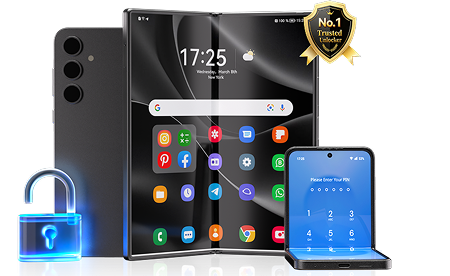
If you’re trying to contain risk after deleting chats but you’re blocked by a lock screen (forgotten PIN/pattern, disabled screen, or too many attempts), you can’t reliably verify backup settings, network state, or multi-device sessions. At that point, Dr.Fone - Screen Unlock (Android) is relevant as an execution tool to regain access so you can apply the low-risk steps your AI triage identified (like disabling sync, checking backup timestamps, and avoiding high-risk resets) without improvising.
 Unlock Android phone in seconds.
- Remove PIN, pattern, password, fingerprint.
- Bypass Google FRP lock easily.
- Works on all Android brands & models.
- No tech skills required – user-friendly.
-
Step 1 Confirm your device situation
Identify your Android brand/model and whether you can still receive notifications, because some unlock paths vary by device and Android version.
-
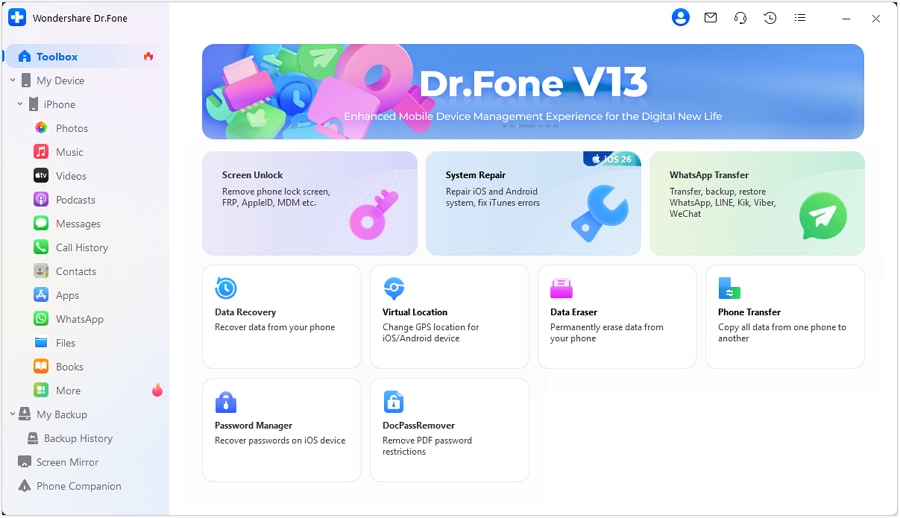
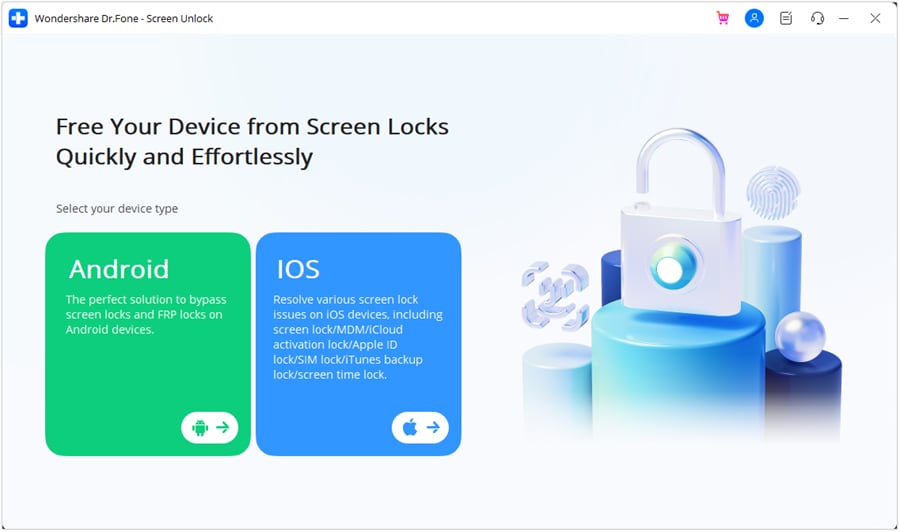
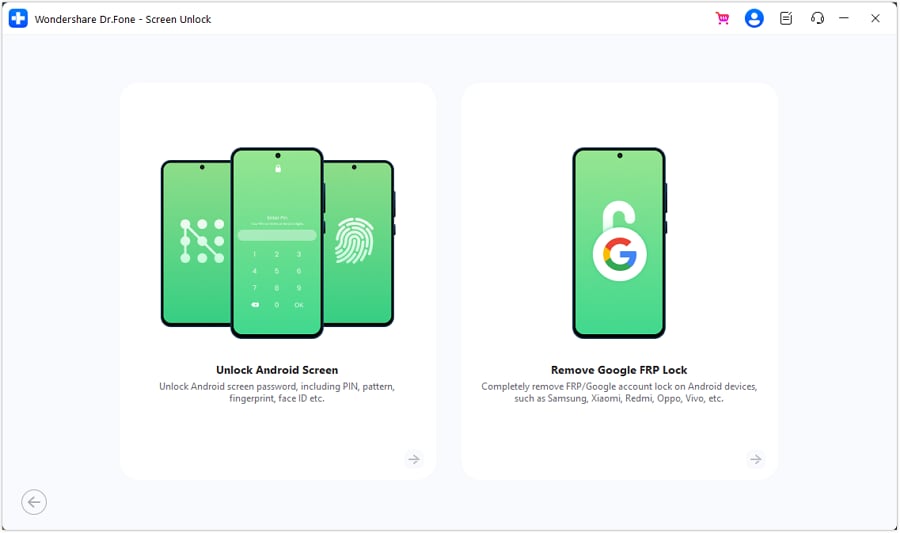
Step 2 Open Screen Unlock (Android)
Launch the module and select the Android screen unlock option, proceeding carefully if the workflow warns about data impact.
-
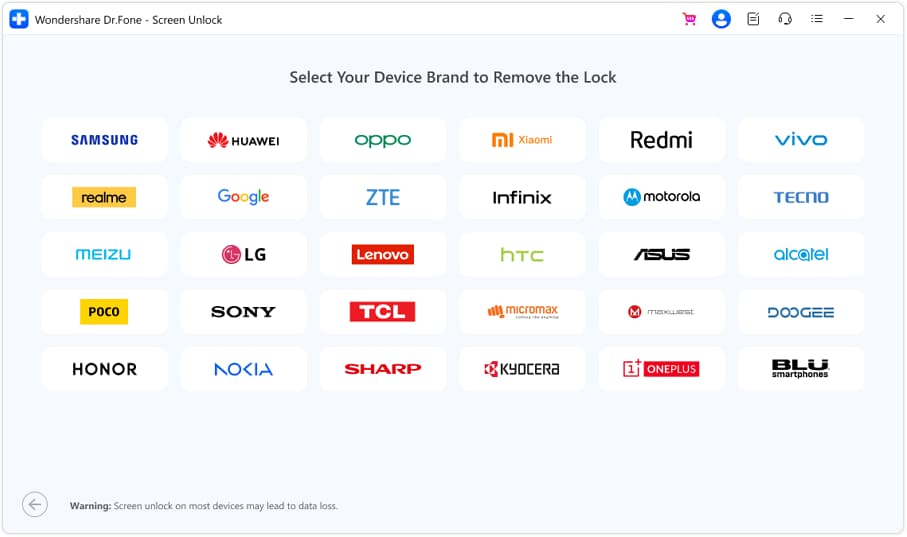
Step 3 Follow the on-screen device steps
Put the device into the required mode only as instructed, avoiding repeated manual restart attempts that can complicate access.
-
Step 4 Regain access and stabilize settings
Once you can enter the phone, immediately review network/sync and backup settings before reopening apps repeatedly.
-
Step 5 Document what you see
Record timestamps (last backup, last sync, other devices) so your AI prompts can stay evidence-based.




Conclusion
AI is best used here to interpret symptoms, rank likely causes, and choose low-risk containment steps (like when Airplane Mode helps and what to avoid), while Dr.Fone – Screen Unlock (Android) becomes relevant when you need practical access to your device to carry out that cautious plan without escalating risk.
FAQ
-
Should I turn on Airplane Mode immediately after deleting chats?
If you suspect syncing across devices/cloud could propagate the deletion further, Airplane Mode can be a low-risk containment step while you assess backups and other logged-in devices. -
Will Airplane Mode bring deleted messages back?
No. It mainly limits new network sync and incoming data; it doesn’t reverse a deletion that already happened locally or already synced. -
Is it risky to reopen the messaging app after deleting chats?
It can be, depending on the app’s sync behavior—reopening may trigger re-sync or cleanup; AI can help you decide what to check first based on your app and backup setup. -
What should I avoid doing right after deleting chats?
Avoid reinstalling the app, clearing app data/storage, restoring backups blindly, or logging out/in repeatedly until you understand whether the app uses cloud sync and whether backups overwrite. -
How does being locked out of my Android phone affect my next steps?
It prevents you from confirming key facts (sync toggles, backup timestamps, linked devices), which increases guesswork; regaining access first helps keep actions controlled and low-risk.
 Add Wondershare Dr.Fone as a preferred source on Google