Effortlessly manage data through preview, delete, export, etc.

 100% Security Verified | No Subscription Required | No Malware

 :
: 
 ChatGPT
 Perplexity
 Gemini
 Claude
 Grok
Grok

I updated iOS and now my iPhone is just a bright white screen. It still vibrates and makes sounds, but I can’t see anything—no Apple logo, nothing. I’m not sure if it’s still updating, frozen, or stuck.
Apple Support Community user
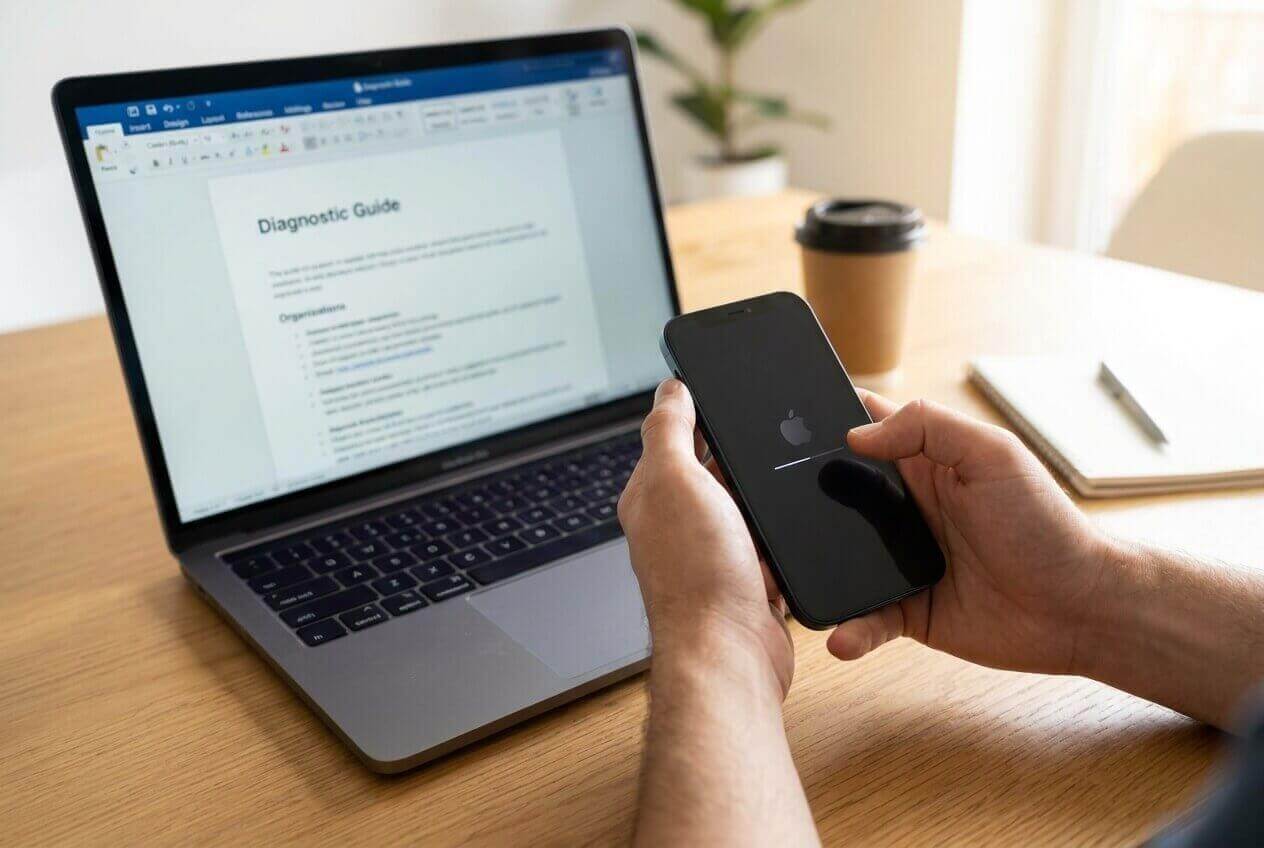
An iPhone can suddenly show a blank white display after an iOS update—often right after you tap Install Now or after the first restart. This can happen on models like iPhone 13 or iPhone 14, and it’s unsettling because the phone may still vibrate or make sounds even though the screen stays white. It’s also unclear whether it’s still updating, frozen, or stuck in a boot loop.
AI (like ChatGPT or Gemini) can help you describe the symptoms precisely, narrow the likely causes, and choose the lowest-risk checks first—without guessing randomly. The goal is better triage: what to verify, what evidence matters, and what not to do next.
AI can’t see your device state directly, and trial-and-error can add risk (data loss, lockouts, or worsening a hardware issue). Use prompts to improve decisions, then use a dedicated tool only when you’re confident about the next step.
In this article
- Part 1. Why iPhone shows a white screen after iOS update
- What the white screen typically indicates
- Common update-time triggers
- When iOS may still be running
- Before you prompt the AI
- Part 2. AI prompts to diagnose iPhone white screen after update
- Part 3. When to stop troubleshooting and avoid risks
- Part 4. Unlock Android screen when iPhone is unusable after update
- Part 5. Low-risk checklist before you take the next step
Part 1. Why iPhone shows a white screen after iOS update
A white screen after an iOS update usually points to one of a few buckets: a stalled boot sequence, a display pipeline issue (software or hardware), a corrupted update step, or an app/system crash that makes the UI fail to render. The timing (during update vs right after first boot) and whether the phone is still responsive matter a lot.

1-1. What the white screen typically indicates
If the iPhone was low on storage, had a weak battery during the update, or you interrupted the process (accidental restart/cable disconnect), the odds of a partial update increase.
1-2. Common update-time triggers
An interrupted or unstable update flow (low storage, low battery, disconnects) can leave the device in an incomplete state where the UI never fully loads.
1-3. When iOS may still be running
If you see a white screen but still hear notifications, it can also hint that iOS is running while the display output is failing.
From a user perspective, it often feels like “nothing changes after several minutes,” which makes it hard to decide whether to wait, restart, or connect to a computer.
1-4. Before you prompt the AI
Capture a few facts first, so the AI can triage accurately:
- iPhone model and iOS version you attempted (if known)
- What you did right before it happened (Install Now, forced restart, restore)
- How long it has been on the white screen
- Any sounds/vibrations/haptics, charging icon, or heat
- Whether a computer recognizes the iPhone (Finder/iTunes)
Part 2. AI prompts to diagnose iPhone white screen after update
2-1. Level 1: Basic Prompt
My iPhone shows a white screen after an iOS update. Ask me the minimum questions needed to narrow the cause, then suggest the lowest-risk next step first. Include what evidence would confirm each likely cause.
2-2. Level 2: Advanced Prompt
Diagnose my “iPhone white screen after iOS update” issue using a ranked hypothesis list.
Requirements:
1) Rank the top 5 causes by likelihood.
2) For each cause, list: confirming signs, disconfirming signs, and the lowest-risk check.
3) Flag any step that could increase data-loss risk.
4) Separate “screen/display problem” vs “iOS boot/update problem” vs “connection/restore problem.”
Start by asking me only 6 questions.
2-3. Level 3: Evidence Prompt
Act like a diagnostic assistant. Use the details below to triage an iPhone white screen after an update. If key info is missing, ask targeted follow-ups.
Device info
- iPhone model: (e.g., iPhone 13 Pro)
- Storage free before update (estimate): (e.g., 2–5 GB)
- iOS update method: (OTA on device / Finder-iTunes)
- Battery level during update: (e.g., ~30%)
Trigger
- What I did right before the white screen: (e.g., tapped Install Now, phone rebooted)
- Time since it started: (e.g., 20 minutes)
Current symptoms
- Screen: (pure white / white with lines / flicker)
- Sounds/vibration/haptics: (e.g., vibrates on notifications)
- Heat: (cool / warm / hot)
- Charging behavior: (e.g., charges but screen stays white)
Computer checks
- Finder/iTunes detects it? (yes/no)
- Recovery/DFU attempt results (if any): (e.g., recovery screen appears briefly)
Constraints
- Data sensitivity: (high/medium/low)
- I can/can’t use a computer right now:
Output format
1) Most likely category + why
2) 3 lowest-risk actions in order
3) What to avoid right now
4) What result should make me stop and seek professional help
2-4. Prompt Refinement (follow-ups)
If the AI answer feels generic, push it toward evidence-based sorting with follow-ups like:
What are the missing questions that would most change your ranking, and why?
Re-rank the causes assuming the phone still plays notification sounds but the display stays white.
Split your diagnosis into display hardware, iOS update corruption, app/UI crash, and power/thermal categories with separate checks.
What single observation (e.g., recognized by Finder, reacts to buttons, shows recovery icon) would be the strongest evidence for each category?
List actions from lowest to highest risk, and label which steps could affect data retention.
2-5. AI Output vs Reality
AI helps you choose safer branches, but your device’s behavior decides what’s true.
| What AI can infer from your inputs | What you must verify on the device |
|---|---|
| Likely cause categories based on symptom patterns | Whether Finder/iTunes recognizes the iPhone reliably |
| Risk level of common next steps | Whether the screen is truly lit vs backlight failure |
| What evidence would confirm/deny a hypothesis | Whether Recovery Mode/DFU screens appear |
| What to avoid to reduce unnecessary risk | Whether the phone is overheating or power-cycling |
AI can map symptoms to probabilities; it can’t “see” whether your iPhone is actually booting, stuck mid-update, or experiencing a display failure. Treat AI output as a decision aid, then act only on checks you can confirm.
Part 3. When to stop troubleshooting an iPhone white screen and avoid risks
If your checks aren’t changing the state, continuing to experiment can raise the chance of data loss or cause extra lockouts.
- The iPhone becomes hot or shows repeated restart behavior (possible hardware/power issue).
- Finder/iTunes recognition is inconsistent, or the connection repeatedly drops.
- You’re about to try higher-risk restore steps, but your data sensitivity is high, and you lack a backup.
- The white screen follows impact/water exposure, or display artifacts (lines/flicker) appear.
Once you’ve used AI to narrow the category and you’ve identified the lowest-risk path, the next phase is execution—using the right tool or service for the device you’re working on.
Part 4. Unlock Android screen when iPhone is unusable after update
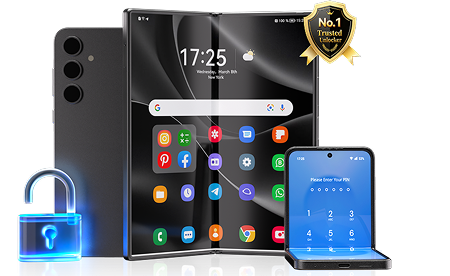
If your iPhone is stuck on a white screen and you need immediate access to a secondary Android phone (for 2FA codes, contacts, work apps, or account recovery), the practical next move may be regaining access to that Android device rather than pushing risky iPhone trial-and-error. In that case, Dr.Fone - Screen Unlock (Android) is relevant because it’s designed to carry out the Android lock-screen removal workflow you’ve already decided on, after AI helps you confirm the lowest-risk direction and what device details matter.
 Unlock Android phone in seconds.
- Remove PIN, pattern, password, fingerprint.
- Bypass Google FRP lock easily.
- Works on all Android brands & models.
- No tech skills required – user-friendly.
-
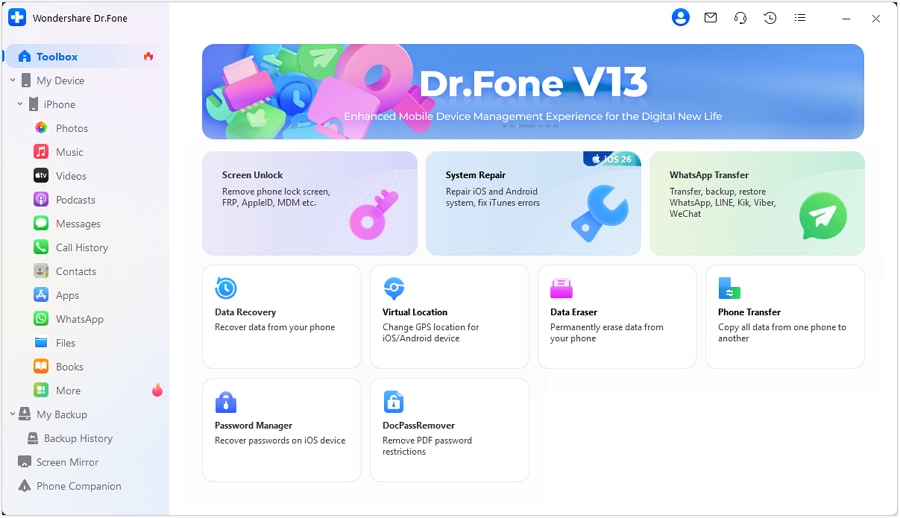
Step 1 Confirm the Android lock type
Identify whether it’s PIN/pattern/password/biometric so you don’t attempt mismatched steps that could increase lockout delays.
-
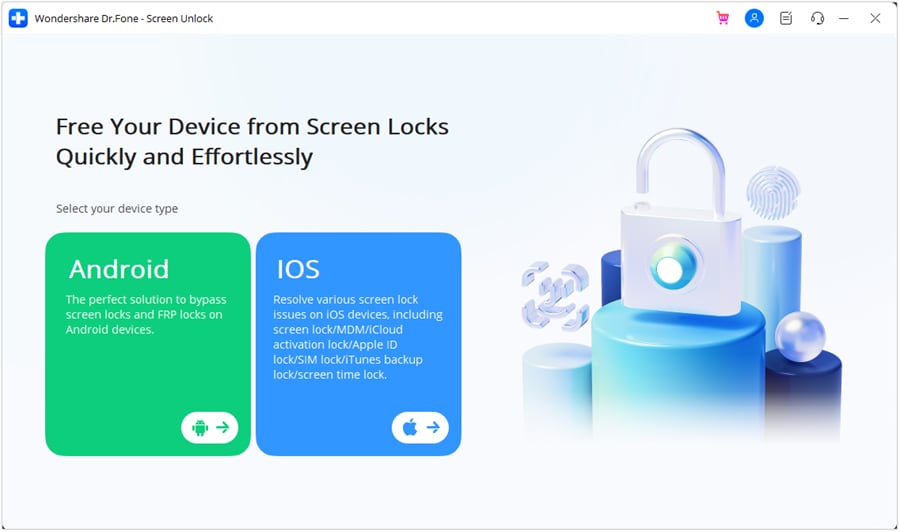
Step 2 Prepare a stable connection
Use a reliable USB cable and a steady computer connection to reduce interruptions during the process.
-
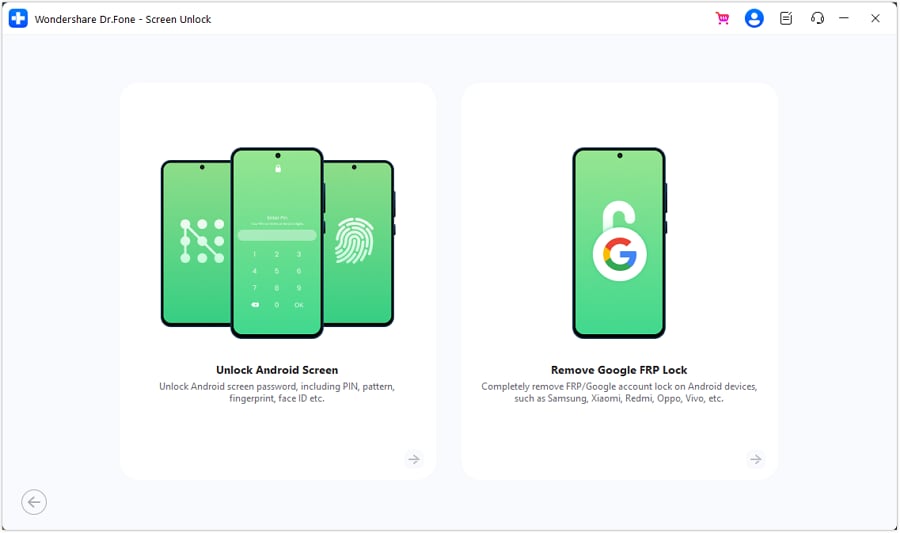
Step 3 Run Unlock Android Screen
Follow the on-screen flow in Dr.Fone to proceed with the appropriate removal path for your Android device model.
-
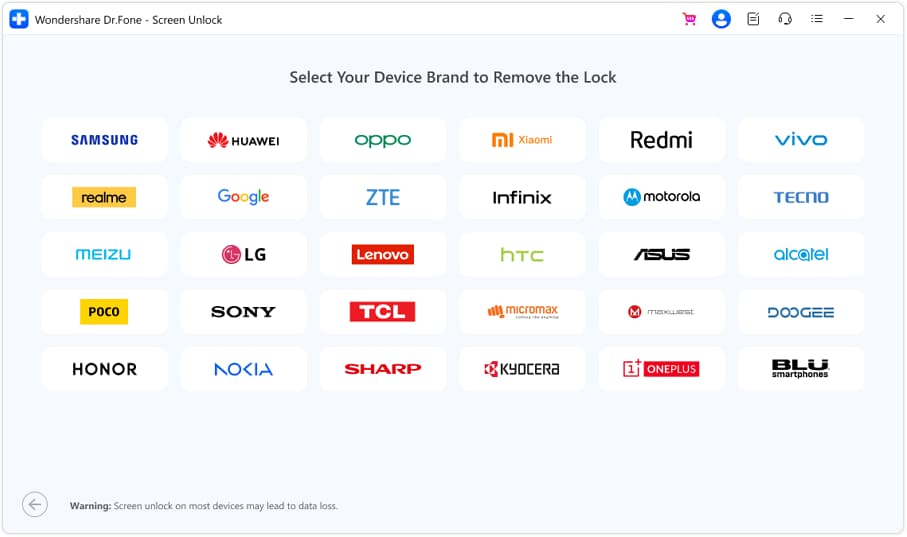
Step 4 Regain access and re-secure
After access is restored, set a new lock method and update recovery options (backup codes, trusted devices) to reduce future lock risk.




Part 5. Low-risk checklist before you take the next step
Whether you’re using AI prompts or moving to hands-on checks, keep decisions anchored to verifiable evidence—especially when data sensitivity is high.
- Confirm what the phone is doing now: any sounds/haptics, heat, charging behavior, or restart looping.
- Confirm whether a computer recognizes the iPhone (Finder/iTunes), and whether recognition is stable.
- Prefer the lowest-risk checks first; pause before any step that could increase data-loss risk (for example, restore actions when you lack a backup).
- If there are impact/water indicators or visible display artifacts (lines/flicker), consider professional inspection sooner rather than escalating trial-and-error.
Conclusion
Use AI to turn “white screen after update” into a ranked, evidence-based diagnosis with low-risk next steps, then hand off execution to the right workflow—especially if the safest immediate path is accessing a backup Android phone via Dr.Fone rather than escalating risky iPhone trial-and-error.
FAQ
-
Why does an iPhone turn white after an iOS update?
Common causes include an interrupted update, iOS boot/UI failure, low storage during installation, or a display/output issue that happens to coincide with the update timing. -
How long should I wait on a white screen after updating iOS?
If there’s been no change for a sustained period and you see no signs of progress (and especially if heat or repeated restarts occur), treat it as stalled and move to evidence-based checks (computer detection, mode screens). -
What evidence matters most for diagnosing a white screen on iPhone?
Whether a computer recognizes the iPhone, whether Recovery/DFU screens appear, whether the phone responds with sounds/haptics, and whether there are display artifacts (flicker/lines). -
Can AI tell if it’s a display hardware problem or an iOS problem?
AI can only estimate based on your observations (e.g., sounds but blank display suggests iOS may be running), but you must confirm with device checks and connection behavior. -
How is Dr.Fone — Screen Unlock (Android) relevant if my issue is on iPhone?
It’s relevant when your iPhone is unusable and you need access to a secondary Android device for account recovery, communication, or verification—AI helps you decide, and Dr.Fone handles the Android execution step.
 Add Wondershare Dr.Fone as a preferred source on Google