Effortlessly manage data through preview, delete, export, etc.

 100% Security Verified | No Subscription Required | No Malware

 :
: 
 ChatGPT
 Perplexity
 Gemini
 Claude
 Grok
Grok

My iPad ran out of storage, I restarted it to “clear space,” and now it’s just stuck on the Apple logo with no progress. I can’t tell if it’s still booting or frozen.
Reddit user, r/ipad
Your tablet can get stuck on the boot screen right after it ran low on storage—often after you tapped Install Now, restarted to “clear space,” or the device shut down unexpectedly. On an iPad, this can look like the Apple logo sitting there with no progress, and it’s hard to tell if it’s still starting up or already stuck.
AI (like ChatGPT or Gemini) can help you describe the symptoms clearly, narrow likely causes, and decide which low-risk checks make sense before you try anything that could increase risk.
AI can’t see your device state or safely “try things” for you, and repeated trial-and-error (forced restarts, random firmware tools, or resets) can raise the chance of data loss—so use AI for decision-making, then switch to an execution tool when you’re confident.
In this article
- Part 1. Why it happens and what it means
- What low storage interrupts during boot
- Common “logo screen” patterns
- Slow boot vs boot loop uncertainty
- Before you prompt the AI
- Part 2. Using AI prompts to diagnose safely
- Part 3. When to stop troubleshooting and avoid risks
- Part 4. After it boots: reassess storage safely
- Part 5. Fix it safely with Dr.Fone (execution workflow)
Part 1. Why tablet frozen on boot screen after low storage happens and what it means
Low storage can interrupt critical background tasks (updates, indexing, app offloading, temporary file creation). If the system can’t allocate space while booting, it may hang on the boot screen instead of finishing startup.

This often shows up after a restart following a “Storage Almost Full” warning, or right after an iPadOS update attempt that needed more room. On some devices (including iPhone 13 or iPhone 14), the visible symptom can look similar—logo screen that doesn’t move—so the same diagnostic thinking applies.
A common uncertainty: you may wait several minutes and nothing changes, making it unclear whether it’s still completing a slow boot or stuck in a boot loop.
1-1. Before You Prompt the AI
Collect a few quick facts first:
- Device type and model (iPad model if possible)
- Rough free storage before the issue (even a guess helps)
- What happened right before it froze (update, restart, battery drain)
- What you see now (logo only, progress bar, looping, black screen)
- Any recent accessory use (computer, hub, external storage, cable)
Part 2. Using AI prompts to diagnose iPad stuck on boot screen safely
2-1. Level 1: Basic Prompt
My tablet (iPad) is frozen on the boot screen after it ran low on storage. I restarted it and now it won’t finish booting. Ask me the minimum questions needed, then list the 3 most likely causes and the safest next steps that won’t increase data-loss risk.
2-2. Level 2: Advanced Prompt
Act as a cautious troubleshooting assistant. My iPad is stuck on the Apple logo after low storage.
1) Give a ranked list of likely causes (with brief reasoning).
2) For each cause, list “low-risk checks” vs “higher-risk actions.”
3) Clearly label any step that could cause data loss or lock me out.
4) End with a decision tree: what to do if it boots, if it loops, or if it stays on the logo for 20+ minutes.
2-3. Level 3: Evidence Prompt
Diagnose my “tablet frozen on boot screen after low storage” issue using the details below.
**Device**: iPad model: (e.g., iPad Air 4)
**iPadOS version (if known)**:
**Storage situation before failure**: (e.g., under 1 GB free / “Storage Almost Full”)
**Trigger event**: (e.g., tapped Install Now, then restarted / battery died during update)
**Current screen**: (Apple logo only / logo + progress bar / looping logo / black screen)
**How long it stays there**: (e.g., 30 minutes)
**Charging status**: (plugged in with official charger? yes/no)
**Computer available**: (Mac/Windows/none)
**Cable type**: (USB-C / Lightning)
**Recent changes**: (new apps, profiles/MDM, beta, storage cleanup apps)
**Data priority**: (must preserve data / ok to restore)
Output format:
A) Top 5 likely causes (ranked)
B) What evidence would confirm/deny each cause
C) Safest next steps first (no data loss)
D) Clear stop signals that mean I should avoid further trial-and-error
2-4. Prompt Refinement
If the AI’s answer feels too generic, tighten it with:
What 5 questions would most change your diagnosis, and why?
Separate causes into: storage-related boot hang, failed update, hardware/power, and computer-connection/USB issues.
Rank the causes again assuming I had less than 500 MB free—what changes?
What single observation on-screen (progress bar behavior, looping timing, heat, charging icon) is the best discriminator here?
List steps in order of *lowest risk to data* and mark anything that could trigger a restore.
2-5. AI Output vs Reality
AI can suggest what’s most plausible, but your device behavior determines what’s true.
| AI says | Reality check you do |
|---|---|
| “It’s probably just a slow boot.” | Time it on charger for 20–30 minutes and watch for any progress bar movement. |
| “A failed update is likely.” | Confirm whether the screen shows a progress bar or repeated reboot cycles. |
| “Storage exhaustion is the root cause.” | Recall recent “Storage Almost Full” alerts and whether the issue started right after freeing space or updating. |
| “Try escalating steps.” | Stop before any erase/restore step if data preservation is critical and symptoms are worsening. |
AI helps you choose a safer path and avoid random escalation; execution still requires the right tool and careful step selection based on what the iPad actually does.
Part 3. When to stop iPad boot screen troubleshooting and avoid risks
Stop and switch to a more controlled execution approach if you notice any of these:
- The iPad repeatedly reboots (logo appears, disappears, returns) for 10+ minutes.
- The progress bar never advances after 30+ minutes on a reliable charger.
- The device gets unusually hot, won’t charge normally, or disconnects from a computer repeatedly.
- You’re about to try actions that erase data (restore/reset) but you haven’t decided your data priority.
Once you’ve used AI to narrow the likely cause and risk level, the next step is using a dedicated iOS system workflow that matches your scenario rather than stacking more guesswork.
Part 4. After it boots: reassess storage safely
If your iPad eventually starts, treat “storage nearly full” as an immediate stability risk. Free space in a controlled way so you don’t trigger another hang during indexing or updates.
- Check available storage first, then remove one or two large items (videos, offline downloads) rather than many small deletions.
- Avoid repeated restarts while storage is critically low; let the device finish background tasks.
- Delay major OS updates until you have comfortable free space again.
Part 5. Tablet frozen on boot screen after low storage: fix it safely with Dr.Fone
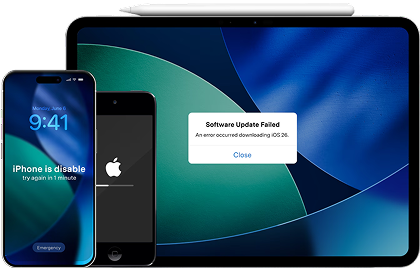
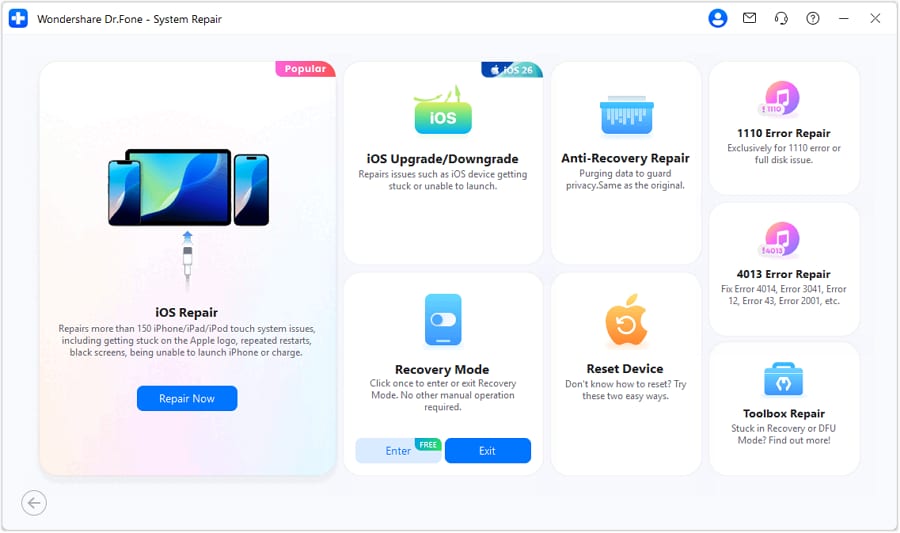
When an iPad is frozen on the boot screen after low storage, the goal is usually to resolve the startup state without escalating into unnecessary data loss. After AI helps you classify what’s most likely (storage-related boot hang vs update failure vs power/connection issues), Dr.Fone - System Repair (iOS) can be the practical execution tool to apply a guided iOS system repair flow (the “Repair iOS Issues” feature) rather than trying random steps. Follow the product’s on-screen mode choices carefully, especially if your priority is preserving data.
 Fix iOS issues, no data loss.
- One-click repair for all iOS problems.
- Solve recovery mode, Apple logo, black screen, etc.
- Upgrade or downgrade iOS without iTunes
-
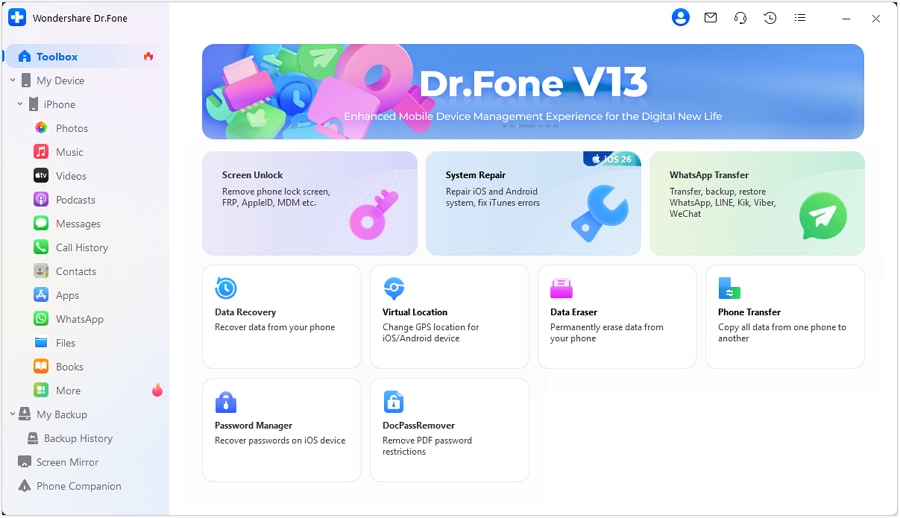
Step 1 Choose System Repair (iOS)
Open Dr.Fone and select System Repair (iOS), then confirm you’re addressing a boot issue (avoid unrelated modules to reduce mistakes).
-
Step 2 Connect the iPad carefully
Connect the iPad to your computer with a reliable cable; keep it charging during the process to avoid another interruption.
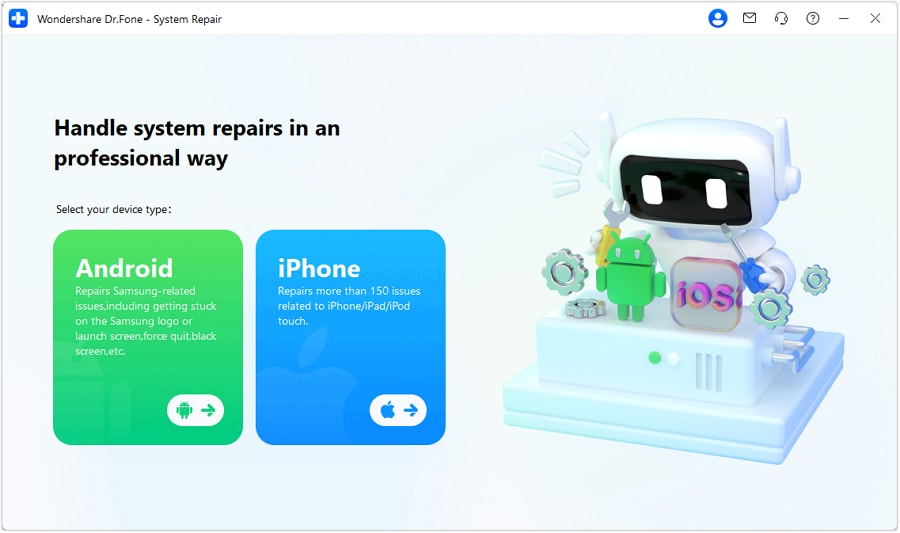
-
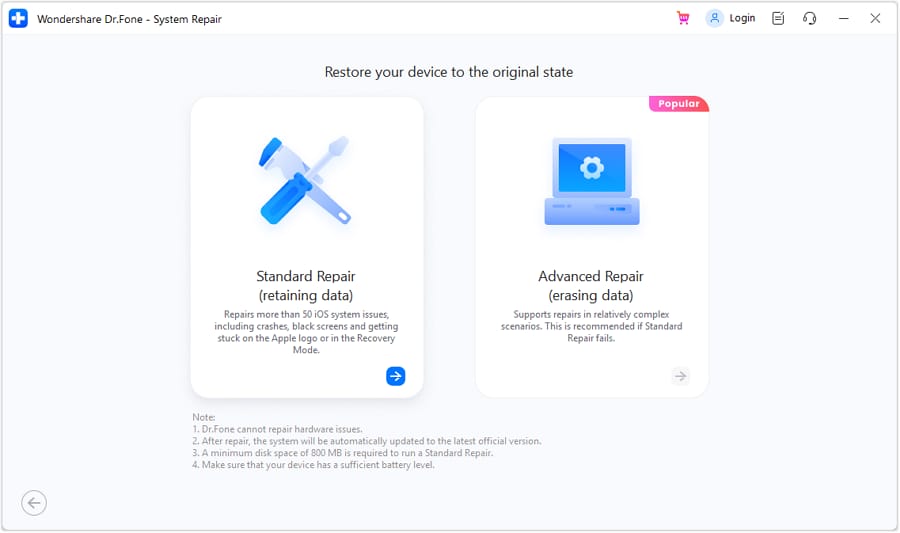
Step 3 Pick the appropriate repair mode
Select the repair option that aligns with your data priority; start with the least invasive mode presented before considering options that may remove data.
-
Step 4 Follow the guided firmware steps
Let the tool match/download the correct firmware and proceed exactly as prompted; don’t disconnect if the screen stays unchanged for a while.
-
Step 5 Verify boot and reassess storage
After the iPad starts, immediately check storage and free space in a controlled way (delete large items first, avoid repeated restarts while storage is critically low).




Conclusion
Use AI to turn vague symptoms into a ranked, risk-aware diagnosis and a short list of safest next steps; once you know which path fits your situation, hand off the execution to a controlled iOS system repair workflow so you’re not escalating through guesswork.
FAQ
-
Why does low storage cause an iPad to get stuck on the Apple logo?
Boot and update processes need temporary working space; if storage is too tight, the system may fail to complete startup tasks and hang or loop. -
How long should I wait on the boot screen before assuming it’s stuck?
If there’s no visible progress after ~20–30 minutes on a stable charger, treat it as stuck and avoid repeating force restarts indefinitely. -
Is it safer to keep force restarting to “unstick” the iPad?
A single correct force restart can be reasonable, but repeated cycles can increase instability and make diagnosis harder—especially after a low-storage event. -
Will updating or restoring through a computer erase my data?
Some options can preserve data and some will erase it; always identify which path you’re taking before confirming prompts, especially if data preservation matters. -
What information should I give AI to get a more accurate diagnosis?
Model, what happened right before the issue, current screen behavior (logo/progress/loop), how long it’s been stuck, charging status, and whether a computer recognizes the device.
 Add Wondershare Dr.Fone as a preferred source on Google