Effortlessly manage data through preview, delete, export, etc.

 100% Security Verified | No Subscription Required | No Malware

 :
: 
 ChatGPT
 Perplexity
 Gemini
 Claude
 Grok
Grok

I hit “Erase all data” during setup and only realized after the reset that my photos and chats were gone. I’m not sure what I should do next without making recovery worse.
Reddit user, r/Android
Accidentally resetting your phone can feel final—especially right after you tapped “Erase all data” or confirmed a reset during setup, and then realized important photos, chats, or notes are missing. After a few minutes, nothing seems to change, and it’s unclear what’s still recoverable.
AI (like ChatGPT or Gemini) can help you triage the situation: identify what kind of reset likely happened, what data may still exist, what actions increase overwrite risk, and what evidence to collect before you try any recovery steps.
AI has limits: it can’t see your device state, and guesswork can push you into risky trial-and-error (like installing apps or restoring backups) that reduces the chance of recovery. The goal is to decide on the safest next move before you do anything that writes new data.
In this article
- Part 1. What to do after accidental phone reset before recovery starts with protecting what’s left
- Why the first minutes matter
- What “overwrite risk” looks like
- What to collect before you prompt the AI
- What to do if you already restored something
- Part 2. AI prompts to assess data loss after a factory reset without making it worse
- Part 3. When to stop after a factory reset to avoid overwriting data
- Part 4. Recover data from Android device after reset with Dr.Fone when you’re ready to execute
- Conclusion

Part 1. What to do after accidental phone reset before recovery starts with protecting what’s left
A “reset” can mean different things: a full factory reset, a reset during troubleshooting, or a reset during Android setup. The first minutes matter because many normal actions (app installs, updates, restores) can overwrite storage space where deleted data might still be referenced.
Even if you’ve experienced something similar on other devices (like an iPhone 13 or iPhone 14), Android recovery odds depend heavily on device model, Android version, encryption, and what you do next. Right now, your uncertainty (“Did it really wipe everything?”) is normal—your next steps should prioritize not writing new data.
If you already connected to Wi‑Fi, signed into Google, or started restoring apps, that doesn’t automatically mean recovery is impossible—but it can change which options are worth trying first.
1-1. Before You Prompt the AI
Gather a few details first so the AI can narrow causes without guesswork:
- Android phone model and Android version (if known)
- What you clicked right before it happened (factory reset menu, recovery mode, setup screen)
- Whether the phone was encrypted / had a screen lock enabled
- Whether you signed into Google and started restoring after reset
- What’s missing (photos, WhatsApp, contacts, internal storage files, SD card files)
- Whether you saved anything new since the reset (photos, downloads, app installs)
Part 2. AI prompts to assess data loss after a factory reset without making it worse
2-1. Level 1: Basic Prompt
I accidentally reset my Android phone and now my data is missing. Ask me the minimum questions needed to determine what kind of reset likely happened, what actions I should avoid to reduce overwrite risk, and what safest next steps to try first.
2-2. Level 2: Advanced Prompt
Act as a mobile data-loss triage assistant. Based on my answers, do the following:
1) List the most likely reset scenario(s) (ranked).
2) Explain what data categories might still be recoverable vs unlikely, and why (include encryption/backup factors).
3) Give a risk-aware “do not do” list to avoid overwriting.
4) Provide a low-risk next-step plan (ranked), prioritizing steps that don’t write new data.
If information is missing, ask clarifying questions before concluding.
2-3. Level 3: Evidence Prompt
Help me diagnose post-reset recoverability on Android using evidence.
Device details
- Phone model: (e.g., Samsung Galaxy S21)
- Android version: (e.g., Android 12)
- Storage: (e.g., 128 GB)
- SD card used: (Yes/No)
- Screen lock before reset: (PIN/pattern/none)
- Google account signed in after reset: (Yes/No)
What happened
- What I did right before the reset: (e.g., Settings > System > Reset options > Erase all data)
- Did I see “Wiping data / Factory reset” or a setup wizard after: (Yes/No)
- Time since reset: (e.g., 2 hours)
After-reset actions
- Connected to Wi‑Fi/mobile data: (Yes/No)
- Restored apps/settings from Google: (none/partial/full/unsure)
- Installed any apps or updates after reset: (Yes/No)
- Saved new photos/files after reset: (Yes/No)
Data I need back
- Items missing: (photos/videos, contacts, SMS, WhatsApp, documents, other)
- Where they were stored: (internal storage / SD card / cloud / unsure)
Output format
- Provide: (1) ranked likely scenario, (2) recoverability estimate by data type, (3) overwrite-risk score for my current situation (low/medium/high), (4) safest next steps, (5) what evidence I should check on-device without installing anything new.
2-4. Prompt Refinement
Use these follow-ups to tighten the diagnosis and avoid vague advice:
What 5 questions do you still need answered to separate “factory reset” vs “launcher reset” vs “account sync issue”?
Rank the top 3 causes of my missing data and list one confirming sign and one disconfirming sign for each.
Separate my situation into categories: internal storage, SD card, cloud sync, app-specific backups—and tell me what to check for each.
Identify the single most important piece of evidence I can verify on the phone without installing apps.
Given my “after-reset actions,” what is the biggest overwrite risk I’ve already introduced, and what should I stop doing immediately?
2-5. AI Output vs Reality
AI can help you decide, but it can’t verify your storage state or perform device-level operations.
| AI can help you decide | What reality still requires |
|---|---|
| Whether it sounds like a true factory reset vs a sync/setup issue | Checking the phone’s actual reset state and storage behavior |
| Which actions are likely to overwrite recoverable space | Physically stopping high-write activities (restores, downloads, updates) |
| Which data sources to prioritize (cloud, SD card, internal) | Using appropriate tools and access methods for that source |
| A lowest-risk sequence of next steps | Running a recovery workflow on a computer with a dedicated utility |
The handoff is: AI narrows the likely scenario and safest order of operations, then a practical recovery tool carries out the scanning/extraction steps where possible.
Part 3. When to stop after a factory reset to avoid overwriting data
If your goal is recovery, the safest decision is often to stop “trying random fixes” as soon as risk rises.
- You already started restoring apps/media and the phone is actively downloading a lot in the background
- You’re about to install multiple recovery apps directly on the phone “to test,” which writes new data
- You can’t clearly tell whether the missing data was on internal storage vs SD card vs cloud, and you’re guessing
- You’re considering repeated resets, “cleaner” apps, or OS updates in hopes files reappear
Once you’ve used AI to pin down the likely reset type and the safest data source to target, move from diagnosis to a controlled execution path.
Part 4. Recover data from Android device after reset with Dr.Fone when you’re ready to execute
After an accidental reset, the priority is to avoid further overwrite and use a purpose-built workflow that can attempt recovery in a structured way. If your AI diagnosis suggests you should try a computer-based approach (instead of installing more apps on the phone), Dr.Fone - Data Recovery (Android) can be the execution tool for the Recover Data from Android Device task, guiding you through connecting the device and running the appropriate scan/retrieval flow based on what your phone supports.
 Scan Android phones and tablets directly.
- Preview and recover only what you want.
- Supports WhatsApp, photos, videos, contacts, and more.
- Works with 6000+ Android devices.
4-1. Execute a controlled recovery workflow (computer-based)
-
Step 1 Stabilize your phone state
Stop downloads/restores and keep the phone on battery or power so it doesn’t restart mid-process.
-
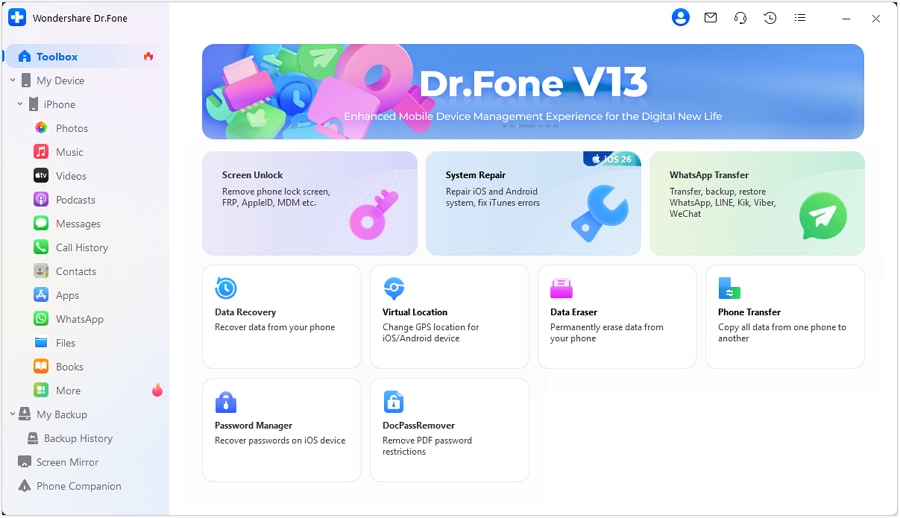
Step 2 Install Dr.Fone on a computer
Use the official Dr.Fone – Data Recovery (Android) package from Wondershare and avoid third-party bundles.
-
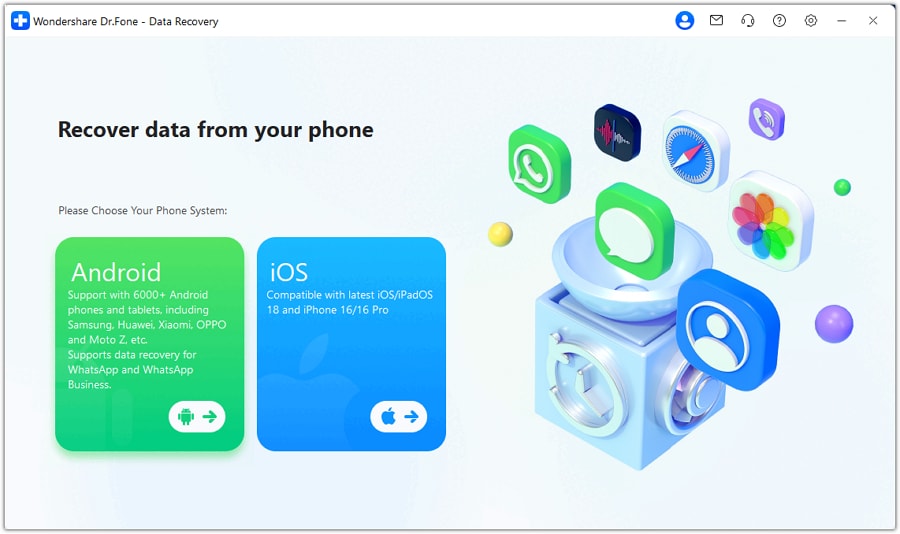
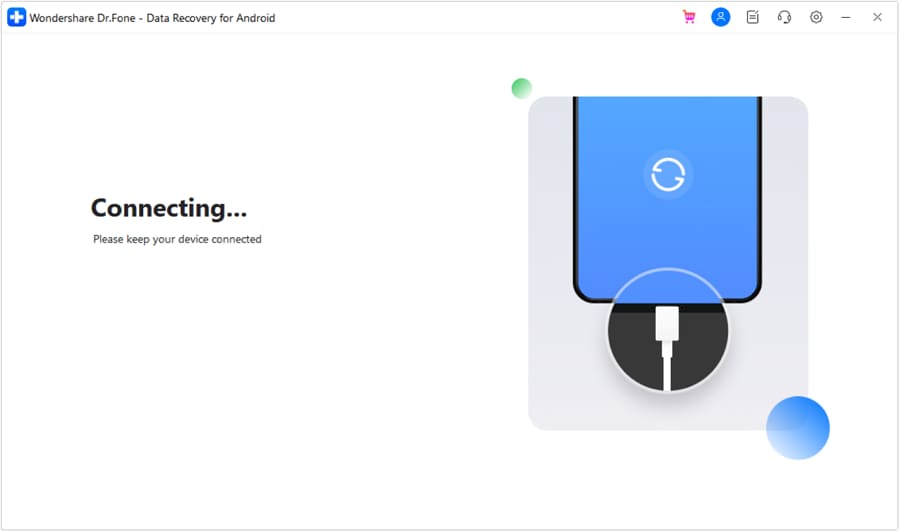
Step 3 Connect your Android device
Plug in via USB and follow the on-screen prompts carefully; avoid enabling options you don’t understand unless the app explains why they’re needed.
-
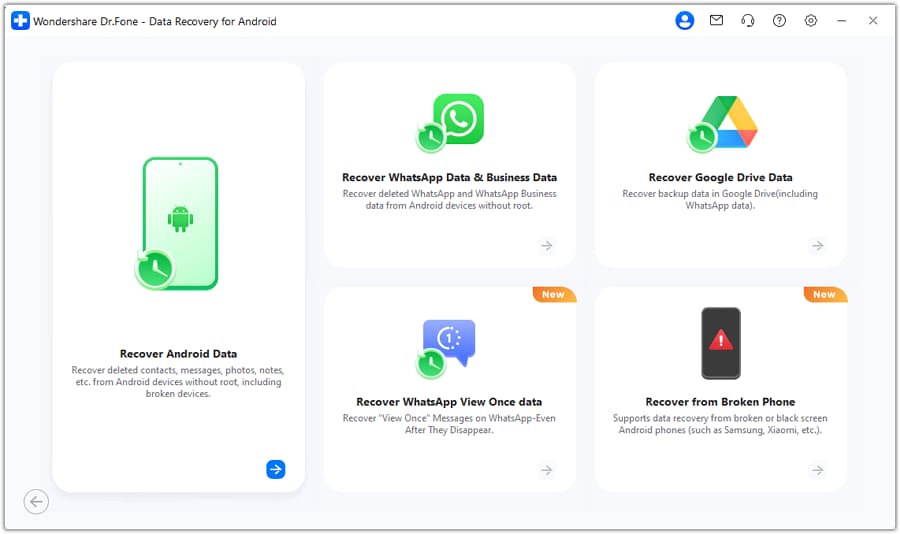
Step 4 Select data types to scan
Choose only what you need first (e.g., photos or messages) to keep the process focused and reduce unnecessary actions.
-
Step 5 Preview and save recovered items
Save recovered files to the computer (not back onto the phone) to avoid writing new data to the device.




Conclusion
Use AI to clarify what kind of reset likely happened, what evidence matters, and which actions increase overwrite risk, then hand off to an execution tool like Dr.Fone – Data Recovery (Android) when you’re ready to attempt a structured recovery workflow without guesswork.
FAQ
-
What should I do immediately after an accidental phone reset?
Stop using the phone for non-essential actions (downloads, app installs, restores), keep it powered, and first confirm whether your missing data might exist in cloud backups or an SD card. -
Does signing into Google after reset reduce recovery chances?
It can, because restoring apps and media may write new data to storage; minimize restores until you’ve decided on a recovery path. -
Can I recover photos after a factory reset on Android?
Sometimes—results depend on model, Android version, encryption, and how much new data was written after the reset; avoid actions that create new files. -
Should I install a recovery app directly on my reset phone?
Usually it’s higher-risk because installation writes new data; a computer-based workflow is often the lower-overwrite option. -
What’s the difference between SD card recovery and internal storage recovery?
SD card data may remain recoverable if it wasn’t formatted or overwritten, while internal storage recovery is more constrained on modern Android due to encryption and security controls.
 Add Wondershare Dr.Fone as a preferred source on Google