Effortlessly manage data through preview, delete, export, etc.

 100% Security Verified | No Subscription Required | No Malware

 :
: 
 ChatGPT
 Perplexity
 Gemini
 Claude
 Grok
Grok

I tried to “move everything to the cloud” to free space, but I’m worried I’ll end up with duplicates or accidentally delete originals before they’re really backed up.
Reddit user, r/iPhone
Deciding what stays on your phone versus what moves to the cloud sounds simple—until one missed step causes duplicates, broken albums, or accidental deletion. AI can help you plan a safer order of operations, but it can’t see your real library state or sync status—so execution must be done with real tools after you verify what’s actually backed up.
In this article
- How to plan a local vs cloud photo move without missing critical steps
- Why planning matters
- Order of operations (avoid duplicates/loss)
- The point-of-no-return moment
- What “done safely” looks like
- What the AI needs to know
- Using AI prompts to build a safer workflow
- When to stop planning and start execution
- Execute the workflow safely with Dr.Fone

Part 1. How to Plan decide which photos should stay local or move to cloud Without Missing Critical Steps
You’ve got years of photos, some already syncing, some only on the device, some in chats, and some “optimized” versions. You want less local storage usage, but you also want a reliable offline set of your most important memories.
After an AI answer, the uncertainty usually isn’t “what is cloud storage?”—it’s the order of operations: whether to back up first, how to detect what’s already in the cloud, and how to avoid creating a mess of duplicates or missing originals.
The point-of-no-return moment is deleting local originals (or turning off a sync setting that triggers removals) before you’ve proven that full-resolution originals exist somewhere else and are recoverable.
Part 2. What the AI Needs to Know
Share the minimum facts the AI needs so it can propose a workflow you can safely follow.
- Device(s) and OS (e.g., iPhone 13 iOS 17 / Samsung S22 Android 14)
- Current photo system (e.g., iCloud Photos, Google Photos, OneDrive, none)
- Current settings (e.g., “Optimize iPhone Storage” on/off; Google Photos “Backup” on/off)
- Approx library size (photos/videos count or GB) and free space remaining
- What “local” means for you (on device only vs on computer drive vs external drive)
- What must always stay offline (e.g., IDs, legal docs, kids’ albums, travel)
- Network constraints (metered data, slow upload, limited Wi‑Fi windows)
- Your tolerance for duplicates and cleanup work (low/medium/high)
- Deadline and risk tolerance (need done today vs can run for a week)
Part 3. Using AI Prompts to Build a Safer decide which photos should stay local or move to cloud Workflow
Use the prompts below to make the AI produce a checklist-driven plan with verification gates—so you don’t accidentally hit the irreversible step too early.
3-1. Level 1: Basic Prompt
Help me decide which photos should stay local on my phone vs move to the cloud.
Give me a safe sequence of steps with “do not proceed until” checkpoints so I avoid losing originals or creating duplicates.
Keep it planning-only (no device actions).
3-2. Level 2: Advanced Prompt
Design a workflow to decide which photos should stay local vs move to the cloud.
Split it into:
1) Preparation (inventory + settings to record + risks)
2) Execution (high-level actions only, no tool-specific clicks)
3) Verification (before/during/after checks)
Mark each step as CRITICAL or OPTIONAL.
Include a “point of no return” section listing actions I must not do until verification is complete (e.g., deleting local originals, disabling sync).
3-3. Level 3: Evidence Prompt
Context:
- Device: (iPhone 13, iOS 17)
- Photo system: (iCloud Photos ON, Optimize Storage ON)
- Library size: (~18,000 photos, 900 videos, 220 GB in iCloud)
- Free space: (6 GB)
- Goal: keep important albums offline; move the rest to cloud; reduce device storage risk-free
- Constraints: (Wi‑Fi only uploads; 2 weeks timeline)
Task:
1) Propose decision rules for what stays local vs moves (examples: “Family album stays local”, “Screenshots cloud-only after 30 days”).
2) Give checks I should do BEFORE, DURING, and AFTER any changes.
3) Tell me exactly what evidence to collect (screenshots/metrics) to prove originals exist in the cloud (not just thumbnails).
4) Identify the irreversible moment(s) and the exact verification criteria required before I do them.
3-4. Prompt Refinement
Rewrite the plan as a checklist with gates: “Stop and verify X before continuing to Y.”
Add a section: “How to detect what is device-only vs cloud-synced” using observable signals (counts, status messages, recent upload activity).
Make the decision rules concrete: propose 5 categories (e.g., IDs, family, work, receipts, memes) and define local/cloud policy + retention for each.
Include a rollback strategy: if I see missing items or massive duplicates, what should I pause, what should I NOT delete, and what evidence should I capture?
Add a “time & bandwidth plan” that estimates upload duration and suggests batching (videos first/last) based on my constraints.
3-5. AI Plan vs. Real Device Constraints
| Planning with AI | Real-world constraint |
|---|---|
| Define categories and rules for local vs cloud | Your library may include “optimized” files, hidden albums, and app-specific media stores |
| Add verification gates before deletion | Cloud services may show “synced” while still processing full-resolution originals |
| Predict duplication risks | Different apps create duplicates (edited copies, HDR versions, imports) that only appear after syncing |
| Propose rollback steps | Actual recovery depends on device storage, “Recently Deleted,” cloud trash windows, and prior backups |
AI improves planning and reduces avoidable mistakes, but it cannot read your live sync state or execute actions—so you still need real tools and careful verification before any irreversible change.
Part 4. When to Stop Planning decide which photos should stay local or move to cloud and Start Execution
- You have written decision rules (what stays local, what moves, what gets deleted later) that you can apply consistently.
- You have a verification checklist that proves “originals exist elsewhere” (not just previews) before any deletion.
- You have identified the irreversible moment(s) you will not cross until checks pass (especially deleting local originals or disabling sync).
- You have a rollback plan (what to pause, what evidence to capture, and what not to touch if something looks wrong).
Once those are true, you’re no longer guessing—you’re ready to execute carefully.
Part 5. Decide which photos should stay local or move to cloud: Execute the Workflow Safely with Dr.Fone
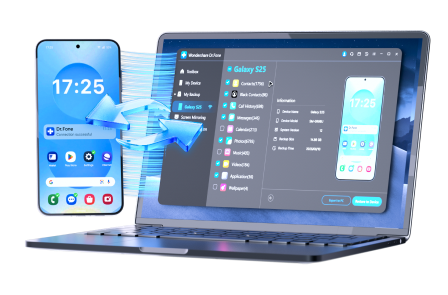
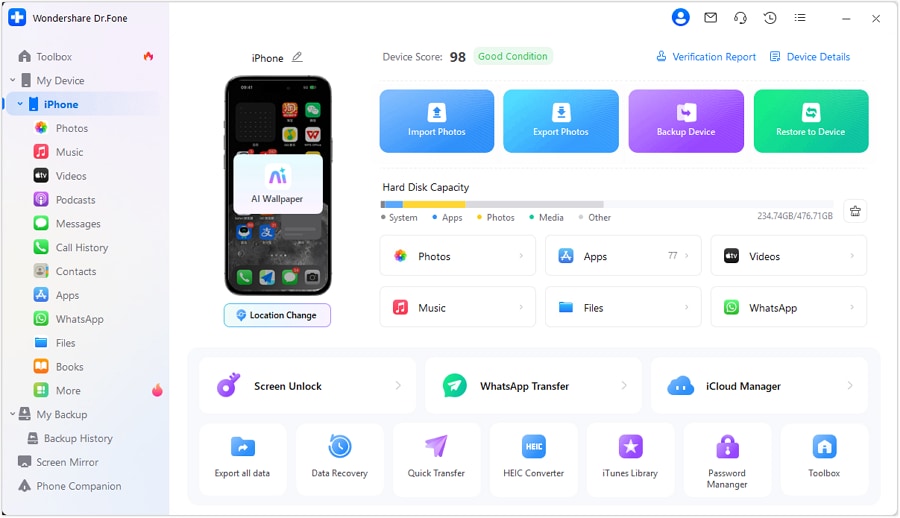
Execution now matters because this is where mistakes become permanent—especially if you delete local originals before you’ve confirmed recoverable copies exist elsewhere. To create an offline safety copy first, you can use Dr.Fone Basic - Data Manager to export photos and videos to a computer before changing sync settings or deleting anything.
 Easily manage data through preview, delete, export, etc.
- Transfer all data between devices.
- Robust backup solutions for reliable data protection.
- Mirror screens to PC for meetings, teaching, and control.
-
Step 1 Create a “no-loss” local safety copy first
Back up/export your photos and videos to a computer as your offline safety set before you change sync settings or delete anything.
Limitation: Dr.Fone can’t decide what’s important or confirm your cloud provider has full-resolution originals—you must verify those separately.
-
Step 2 Apply your local-vs-cloud decision rules with a verification gate
Move only the categories you planned, and pause at each gate to confirm counts, recent uploads, and spot-check full-resolution playback/download.
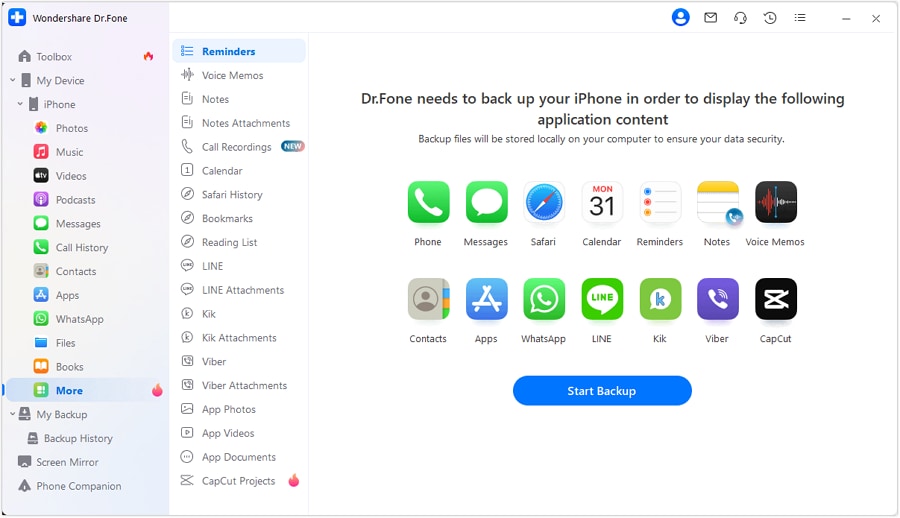
Limitation: AI can’t see what changed and Dr.Fone doesn’t control cloud upload logic—cloud confirmation must be done in the cloud service/app.
-
Step 3 Verify with spot-checks (especially large videos and recent items)
Confirm that downloaded items open correctly at expected resolution/length, and that your cloud service reports completed uploads/processing.

-
Step 4 Only after verification: do the irreversible cleanup
After you confirm originals are recoverable (downloads open correctly, counts match, and cloud trash/recovery windows are understood), remove the local-only copies you intended to offload.
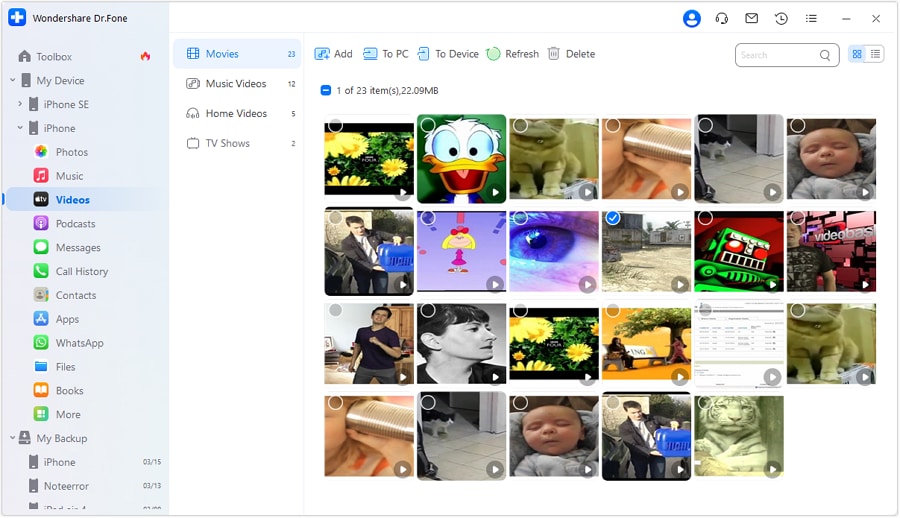
Limitation: Deletion is irreversible past recovery windows—if anything is uncertain, stop and restore from your backup instead of continuing.




Conclusion
Use AI to define decision rules, sequence the steps, and add verification gates; then use real tools for execution—because planning prevents loss, but only careful, verified execution keeps your photos safe.
FAQ
-
What’s the biggest risk in “move photos to cloud” projects?
Deleting or offloading local originals before proving the cloud has the full-resolution originals and you can successfully download/open them. -
How do I verify “it’s really in the cloud” (not just a thumbnail)?
Spot-check by downloading a few items (including long videos and recent photos) and confirming they open at expected resolution/length, and that counts/status indicators match your expectations. -
When should I do cleanup (deleting local copies)?
Only after you’ve completed verification and you have a separate offline backup you can restore from if you discover missing items later. -
Can AI tell me what’s already synced or device-only?
No—AI can only suggest signals to check. You must confirm using your device and cloud service indicators. -
What if I start seeing duplicates after enabling backup/sync?
Pause further changes, stop deletion, document examples, and follow your rollback plan—then adjust rules (imports/edits/screenshots) before continuing.
 Add Wondershare Dr.Fone as a preferred source on Google